
Reviewed · COMMUNIST HISTORY TOURS
Bucharest: Dinner at the Museum of Communism & tour after closing
Communism comes with dinner in Bucharest. This intimate evening at the Museum of Communism combines a guided visit with a homemade Romanian meal served in a reconstructed living room. I like the hands-on exhibits, and I like the way guides such as Catalina, Katerina, Alexandra, and Ali connect objects to family memories. The one thing to keep in mind is that the dinner may feel lighter than expected on some evenings.
You meet at 6:30 pm at the Museum of Communism Bucharest, Undeva in Comunism, on Strada Soarelui 1. The experience lasts about two and a half hours, costs $59.03 per person, and accepts a maximum of 12 people. The small group suits the personal format, though the evening depends heavily on the guide and on how substantial the meal is that night.
In This Review
- Key points to know before you book
- Why this small museum tells the story well
- The first hour: a guided look at communist-era life
- The living room meal and what you actually eat
- Conversation is the real extra course
- How the two-and-a-half-hour schedule works
- Is $59.03 a fair price?
- Who will enjoy this Bucharest experience most?
- Practical details and cancellation terms
- Should you book the Museum of Communism dinner?
- FAQ
- Where does the experience begin?
- What time does the tour start?
- How long does the experience last?
- What food and drinks are included?
- How many people can join the tour?
- Can I cancel for a full refund?
Key points to know before you book
- You can touch the exhibits: Try on old clothes, handle household objects, drink from period cups, and look through everyday items rather than viewing everything behind glass.
- The museum feels like a home: The visit takes place in rooms arranged around domestic life during Romania’s communist period, including a living room used for the meal.
- The guide is part of the experience: Guides including Catalina, Katerina, Alexandra, and Ali have used personal family stories to explain how the period affected parents and grandparents.
- Romanian food is central: Expect homemade starters, a traditional main course, unusual desserts, two alcoholic drinks, and one non-alcoholic drink.
- The evening stays small: The maximum group size is 12, and some sessions have had only two, four, or six people.
- It is best for curious history fans: The experience works especially well if you want context and conversation, not just a quick museum visit.
Why this small museum tells the story well
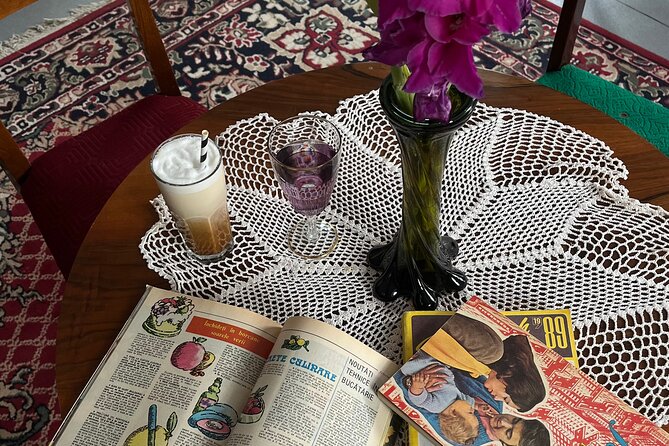
Romania’s communist period can be difficult to understand from grand monuments alone. The Museum of Communism approaches it through ordinary life: clothing, cups, magazines, books, household objects, and the look of a family home.
That choice matters. Political history becomes easier to grasp when you can see what people wore, what they read, what they used at home, and what surrounded them during an ordinary evening. The setting gives you a sense of restriction and routine without reducing the period to a list of dates.
This is also an interactive museum. You are allowed to touch all the exhibits, try on clothes, drink from old cups, and handle objects that would normally sit behind glass. That makes the visit more physical and memorable, though it may not suit you if you prefer a formal museum with labels and a quiet, self-guided pace.
The exhibits are described as powerful, and the museum includes a recurring visual detail: an image of Nicolae Ceaușescu hidden in books and magazines. It is a small touch, but it rewards close attention and gives you something specific to look for as you move through the rooms.
The museum is presented as the only interactive museum of its kind in Bucharest. It is also moving toward a larger location because more historical objects are available to display. That suggests the current space may feel compact, but it also means you are seeing an evolving project rather than a polished, oversized institution.
More communist-era history walks:
- The Real tour of Communism
★ 5.0 · 666 reviews - Life under Communism
★ 5.0 · 358 reviews - 3-Hour Guided Tour of Communist Bucharest
★ 4.9 · 303 reviews
The first hour: a guided look at communist-era life
The evening begins with an overview tour led by your guide. The guided part has taken around 30 minutes in some sessions, followed by about 30 minutes to explore independently. That pace is sensible. You get enough explanation to understand the objects, then time to notice details at your own speed.
Your guide may shape the tone more than any single exhibit. Ali has been praised for an organized presentation and a strong command of the subject. Catalina has brought displays to life with personal stories and answered questions across a wide range of topics. Katerina has been described as especially engaging, explaining both the museum objects and wider Romanian customs.
Alexandra has used the home setting to explain what daily life felt like during the communist years. Her tour included discussion of a three-course meal and the traditions connected with it. Another guide connected the exhibits to stories about how communism affected parents and grandparents.
These details are important because the museum is not only about objects. It is about interpretation. A cup tells you little on its own. A cup explained through family memory, scarcity, routine, or social custom becomes part of a much larger picture.
You should feel free to ask questions. The small group size makes that easier than on a large city tour. If only a few people attend, the session can feel almost like a private conversation. If the full group of 12 arrives, the format will be less personal, but still far smaller than a typical coach excursion.
The living room meal and what you actually eat
After the museum visit, you sit down in the museum’s living room for dinner. This is the part that makes the experience different from a standard Bucharest museum ticket. You are not simply walking through a display and then leaving for a restaurant. The meal takes place in the same domestic setting that frames the collection.
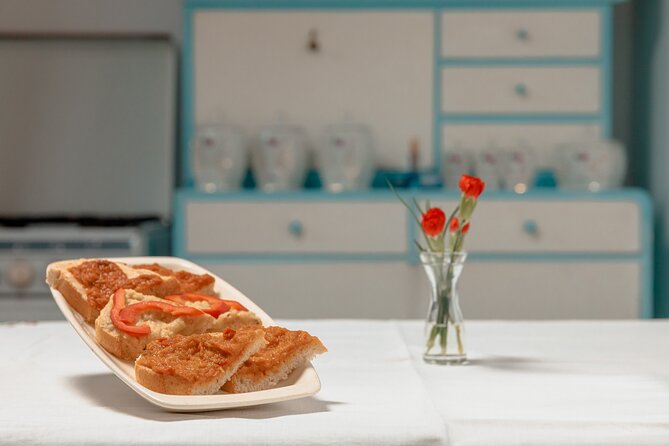
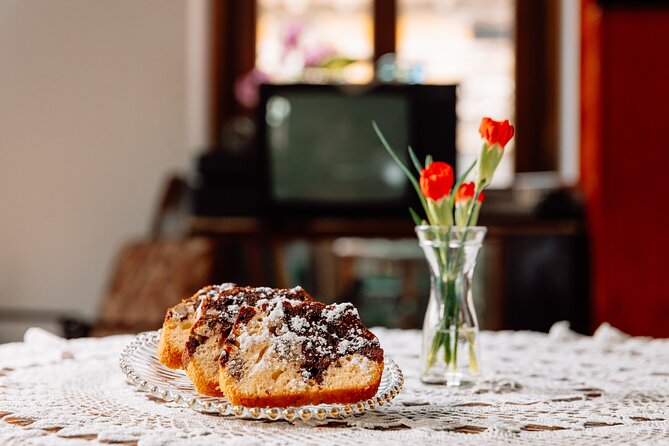
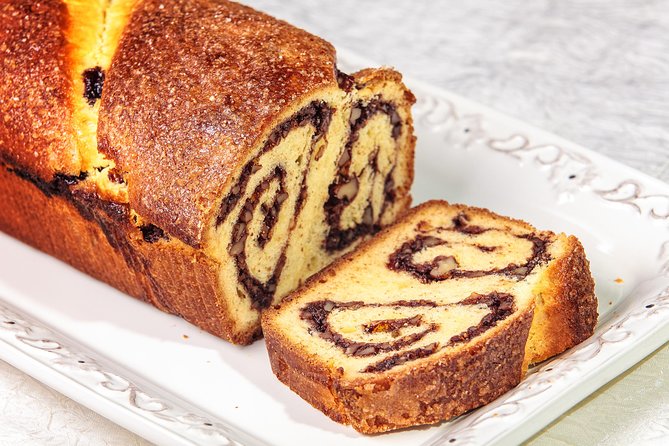
The food includes Romanian starters, most of them homemade, a typical Romanian main course, and desserts that are not usually found in restaurants. You also receive two alcoholic drinks and one non-alcoholic drink. The drinks may include Romanian wine and palinca, a traditional fruit brandy, depending on the evening and the serving arrangement.
The meal has been described as plentiful and as a three-course dinner. Guides have explained each dish and used the table to discuss Romanian customs, including Christmas meals and traditional drinks. That conversation adds real value because food is one of the easiest ways to connect with local culture.
You may also hear about Romanian wines, regional habits, and other parts of the country’s past. One evening included discussion that ranged from food traditions to Vlad the Impaler and the Ottoman period. That broader conversation can turn dinner into an informal cultural lesson rather than a simple meal.
Still, I would set your expectations carefully. One account described the starters and overall presentation as good but found no substantial main course. That person felt the meal did not fully match the promise of an evening dinner. Other accounts describe a generous meal with traditional starters, mains, and homemade-style desserts.
The safest way to read this is that the food is an important part of the evening, but the exact quantity and menu may vary. If you want a large restaurant dinner with several heavy courses, this may not always satisfy you. If you value homemade tastes, explanation, and the chance to eat in a historic domestic setting, the meal should feel worthwhile.
Conversation is the real extra course
The guides do not simply serve food and disappear. They join the meal, explain what you are eating, and continue the discussion from the museum.
That arrangement is one of the strongest features of the experience. You can ask about Romanian customs, communist life, the transition after communism, food, wine, and family memories in one sitting. It also creates a relaxed table atmosphere when the group is small.
The personal stories matter most. Hearing how the communist period affected a guide’s parents or grandparents gives you a connection that a textbook cannot provide. It also allows for a more balanced understanding. You hear about daily routines and food, but also about limits, pressure, and the ways families adapted.
The conversation can be especially useful if you are visiting Bucharest with only a short time in Romania. You will not learn every detail of the country’s past in one evening, but you can leave with a clearer sense of how recent events shaped ordinary households.
The social side is less predictable than the museum itself. A small group of strangers may lead to a warm shared dinner, while a larger or quieter group may produce less conversation. Since the guide sits with you, the host still gives the evening structure.
A few more trips worth weighing up before you book
- Bucharest: Dinner+Tour at Museum of Communism after closing
★ 4.9 · 46 reviews - Bucharest Evening Tour and Traditional Dinner
★ 4.5 · 19 reviews - Bucharest Evening Tour and Traditional Dinner – 3 hours
★ 5.0 · 9 reviews - Bucharest: VIP Dining, Limo ride & Clubbing
★ 4.7 · 3 reviews
How the two-and-a-half-hour schedule works
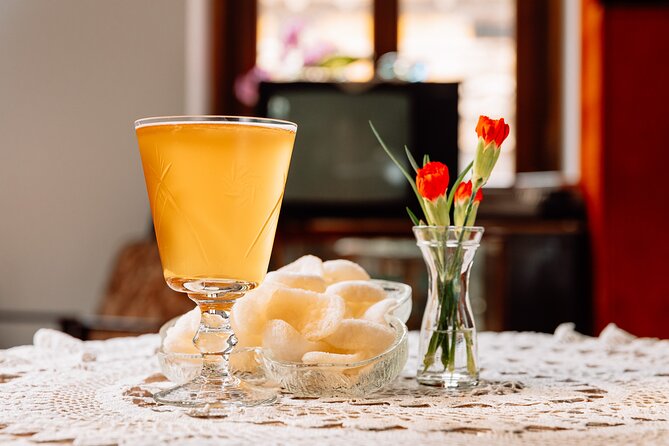
The experience starts at 6:30 pm and returns you to the same meeting point. The total duration is about two hours and 30 minutes, although the practical division between touring, free exploration, and dinner may vary.
A typical rhythm looks like this:
- An introductory guided tour of the museum
- Time to explore the displays independently
- Dinner in the living room
- Conversation about the food, Romanian traditions, and the country’s recent past
This is a good evening activity because it does not ask you to rush between several city sights. You stay in one place and let the subject build gradually.
The meeting point is near public transportation, which makes it practical to reach without arranging a private vehicle. The activity ends where it begins, so you do not need to plan a separate return point. Confirmation arrives at booking, and the experience is offered in English.
The maximum group size is 12. Most people can participate, according to the activity information, but the meal and museum arrangement mean you should still consider your own comfort with a hands-on indoor setting and a seated group dinner.
Is $59.03 a fair price?
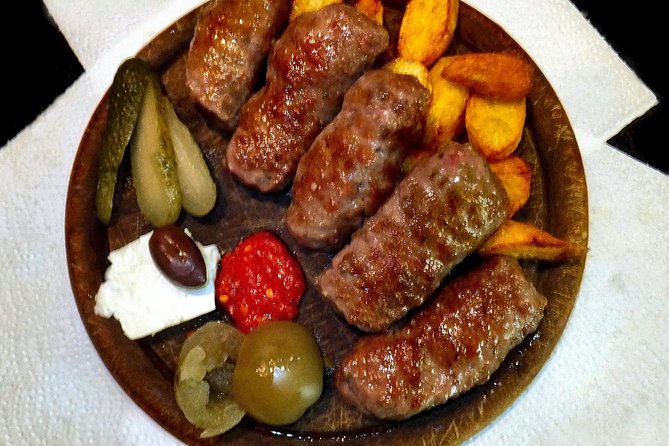
At $59.03 per person, this is more expensive than a simple museum admission and a casual Romanian meal. That comparison is not quite fair, because your price includes the museum tour, the interactive format, dinner, two alcoholic drinks, one non-alcoholic drink, and the guide’s time at the table.
The value improves if you would otherwise book a separate history tour and restaurant meal. You get both in one evening, with the added benefit of a guide who can explain the food and connect it to the museum.
The price also buys access to an experience that is difficult to reproduce independently. You could visit museums and order Romanian dishes elsewhere, but you would not automatically get a meal inside a communist-era home setting with a guide discussing family memories and food customs.
The weaker value comes if your main goal is simply to eat a large dinner. Since one account found the main course disappointing, you should not book this expecting a fixed fine-dining menu. Think of the meal as part of a cultural event, not the sole reason to pay.
The 96 percent recommendation rate and 4.9 rating from 24 reviews suggest a strong overall response, but the sample is small. I would treat those numbers as encouraging rather than absolute proof that every evening will feel identical.
Who will enjoy this Bucharest experience most?
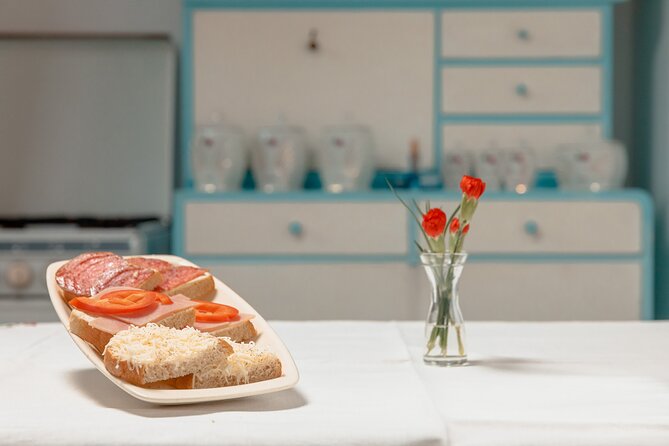
I would recommend it first to anyone interested in Romania’s recent past. The tour gives you a setting, objects, food, and personal interpretation in one compact evening.
It is also a strong choice if you enjoy meeting people around a table. The guide joins the meal, and the small group often allows natural conversation. Couples, solo visitors, and families with older children who can engage with political history may all find it rewarding.
Food-focused visitors should book with the right expectations. You will receive Romanian starters, a main course, desserts, and drinks, but the exact menu and portion size may vary. The special feature is the setting and explanation, not a restaurant-style tasting menu.
You may want to choose another activity if you dislike touching displays, prefer a large formal museum, or need a guaranteed substantial dinner. This is a personal, home-style experience with an educational purpose.
The tour is offered in English, so it is useful if you want historical context without arranging a Romanian-language guide. The guide’s personality can shape the evening, but the strongest accounts describe a warm and informed presentation.
Practical details and cancellation terms
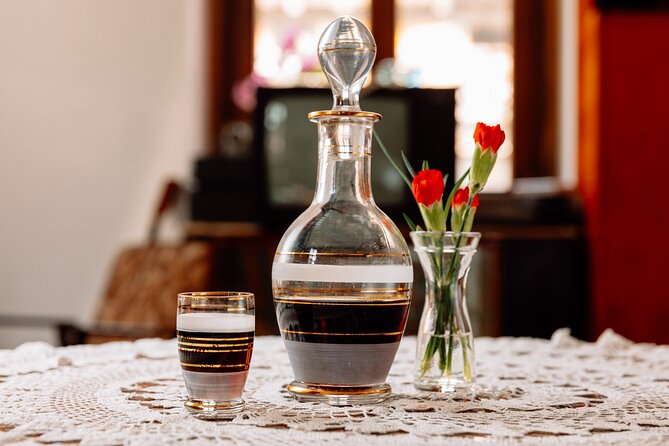
The meeting point is Museum of Communism Bucharest, Undeva in Comunism, Strada Soarelui 1, București 030167, Romania. The start time is 6:30 pm, and the activity returns to that same address.
Only the listed drinks are included. Any additional drinks are paid for separately at your request. Keep that in mind if you plan to order more wine or spirits during dinner.
You can cancel for a full refund up to 24 hours before the start time. Changes or cancellations made less than 24 hours before the experience are not accepted for a refund. Cut-off times follow local time in Bucharest.
The activity requires good weather and a minimum number of participants. If poor weather or insufficient bookings cause cancellation, you are offered another date or experience, or a full refund.
Should you book the Museum of Communism dinner?
Yes, if you want history explained through ordinary life. The strongest reason to book is the combination of touchable household exhibits, personal stories, and a Romanian meal in the museum’s living room.
I especially like the small-group format and the fact that the guide stays for dinner. Catalina, Katerina, Alexandra, and Ali have each brought different personal detail to the experience, and that human element gives the museum its force.
Book it with one warning: dinner portions and the balance of courses may not always match your idea of a full evening meal. If you need a hearty restaurant dinner, eat a little beforehand or choose another dining plan. If you want a thoughtful, intimate introduction to Romania’s communist past, the $59.03 price is reasonable for the amount of guiding, food, drinks, and conversation included.
FAQ
Where does the experience begin?
It begins at the Museum of Communism Bucharest, Undeva in Comunism, at Strada Soarelui 1, București 030167, Romania.
What time does the tour start?
The experience starts at 6:30 pm.
How long does the experience last?
It lasts approximately two hours and 30 minutes.
What food and drinks are included?
The dinner includes Romanian starters, a typical Romanian main course, Romanian desserts, two alcoholic drinks, and one non-alcoholic drink. Additional drinks are not included.
How many people can join the tour?
The activity has a maximum of 12 participants.
Can I cancel for a full refund?
Yes. You can cancel at least 24 hours before the start time for a full refund. Cancellations made less than 24 hours before the start time are not refunded.
More Museums
- Bucharest: Museum of Senses Entry Ticket
★ 4.2 · 364 reviews - Communism in Bucharest – Landmarks, Museum & Communist Appetizers
★ 5.0 · 111 reviews - Bucharest: Entry ticket at the Museum of Communism
★ 4.6 · 57 reviews - Bucharest: Museum of Communism Ticket with Communist Coffee
★ 4.6 · 52 reviews
More Dining Experiences
- Probably the Best Restaurant and Wine Cellar near Bucharest
★ 4.5 · 3 reviews
Just added around Bucharest
- 10 hours Private Apiary Tour in Romania – From Bucharest★ 5.0 · 3 reviews
- 4-Day Inside Transylvania & Transfagarasan Tour from Bucharest★ 5.0 · 3 reviews
- Bucharest: Charm of the Belle Époque Private Tour★ 5.0 · 3 reviews
- Bran & Peles Castles through the Best Road in the World: Transfagarasan road★ 4.5 · 3 reviews
- Private Wine Tasting at Bucharest’s First Wine Bar★ 5.0 · 3 reviews
- 2-Day Small-Group Tour in Transylvania from Bucharest – Maximum 5 Persons★ 5.0 · 3 reviews
- Probably the Best Restaurant and Wine Cellar near Bucharest★ 4.5 · 3 reviews
- Bucharest to Brasov – Fast Private Transfer★ 5.0 · 3 reviews
Communist History Tours, compared.




Bucharest Essential Tour: Old Town, Calea Victoriei & Communism
Read our review →
Communism in Bucharest – Landmarks, Museum & Communist Appetizers
Read our review →


Browse the lists this tour appears in