
Reviewed · COMMUNIST HISTORY TOURS
Communism in Bucharest – Landmarks, Museum & Communist Appetizers
Communist Bucharest still shapes the city today. This three-hour walking tour links the Palace of Parliament, Revolution Square, old churches, and a small interactive museum to explain how Nicolae Ceausescu changed Bucharest and how the 1989 revolution ended his rule. I especially like the small-group format and the chance to see major sights while hearing the human stories behind them. The final museum visit adds something you will not get from a standard city walk: clothes, household objects, a communist-era snack, and coffee.
I also like that the tour does not treat communism as a dry political lecture. Guides such as Ali, Maria, and Gabriela bring personal stories and explain difficult points in a way that works for families as well as adults. The main limitation is important: you do not enter the Palace of Parliament, and the tour spends only a short time at most outdoor stops. If you want an inside visit to the famous building, you will need a separate ticket and tour.
In This Review
- Key points before you book
- Why this tour helps explain modern Bucharest
- Starting at the Palace of Parliament
- Antim Monastery and the buildings that survived
- Bloc 6 and Ceausescu’s broad boulevard
- Revolution Square and the final days of the regime
- University Square and the difficult move to democracy
- Undeva in Comunism: the most personal part of the experience
- The guides and the small-group setting
- Who will get the most from the $48.37 price
- Should you book Communism in Bucharest?
- FAQ
- How long does the Communism in Bucharest tour last?
- What time does the tour start?
- Where does the tour begin?
- Where does the tour end?
- Does the tour enter the Palace of Parliament?
- Is the museum ticket included?
- What food and drink are included?
- Can I cancel for a full refund?
Key points before you book
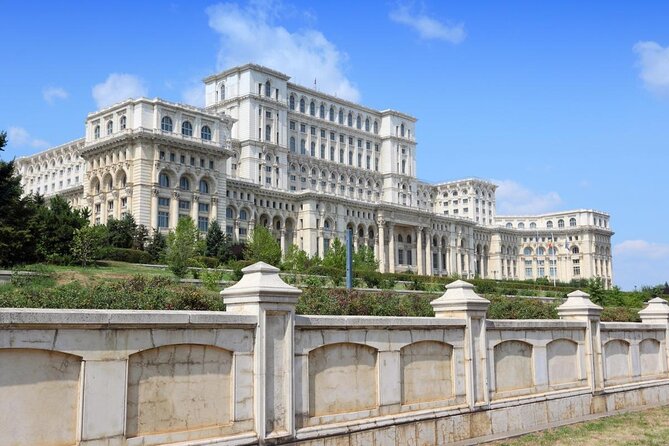
- A walking route through the heart of communist Bucharest: Follow the boulevard built for Ceausescu’s grand plan, then continue to the places linked with the 1989 revolution.
- A hands-on museum visit: At Undeva in Comunism, you can interact with displays, try on clothing, and sit inside a recreated communist living room.
- Romanian sweets and communist coffee included: The snack may be sweet or salty, depending on availability, and other drinks cost extra.
- A useful choice for families: Guides explain the political story clearly, including the transition after 1989, without making the subject too heavy for children.
- A genuinely small group: The tour is advertised for no more than 15 people, while the additional details give a maximum of 8. Either way, it is far smaller than a large city sightseeing group.
- A one-way route with a practical finish: The walk starts on Bulevardul Unirii and ends at Revolution Square, leaving you in a central part of Bucharest.
Why this tour helps explain modern Bucharest
Bucharest can look like a mix of grand government buildings, Orthodox churches, broad avenues, and ordinary apartment blocks. That mix makes more sense once you understand Ceausescu’s building program. He wanted a capital that projected power, order, and control, even when that meant demolishing old neighborhoods and moving buildings.
This tour gives you that context on foot. Instead of looking at the Palace of Parliament as just a huge photo stop, you learn why it was built, what Ceausescu hoped it would represent, and how the boulevard in front of it served his vision. You also connect those state projects with the more personal story of people who lived under communism and later took part in the revolution.
I find the route especially useful early in a Bucharest visit. The walk gives you a basic map of the historic center and helps you recognize why some parts of the city feel formal and oversized, while others feel older and more intimate.
The experience costs $48.37 per person. That is not the cheapest walking tour in Bucharest, but the price includes an English-speaking guide, all fees and taxes, a skip-the-line ticket for the Communism Museum, coffee, and a traditional communist snack. Since the tour lasts about three hours and covers six substantial stops, the value is reasonable if you want history rather than a quick orientation walk.
More communist-era history walks:
- The Real tour of Communism
★ 5.0 · 666 reviews - Life under Communism
★ 5.0 · 358 reviews - 3-Hour Guided Tour of Communist Bucharest
★ 4.9 · 303 reviews
Starting at the Palace of Parliament
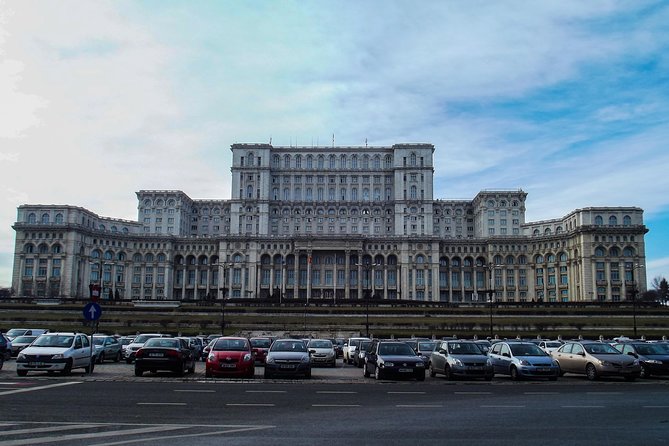
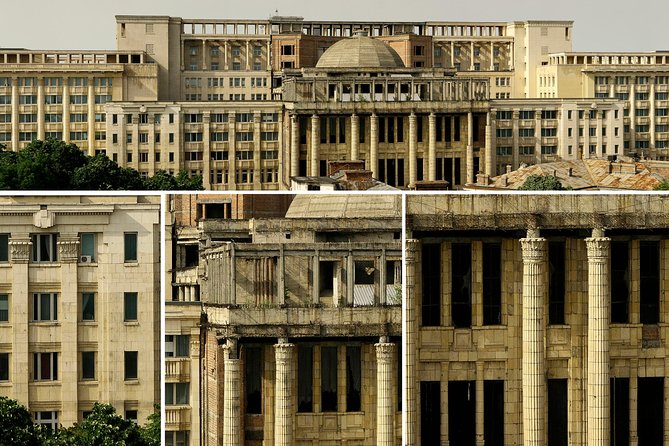
The first stop is the Palace of Parliament, where the guide spends about 20 minutes explaining Ceausescu’s plans and the strange scale of the building. You will hear how and why it was constructed, along with the ambitions behind what was described as the dictator’s crazy dream.
The key thing to know is that this is an exterior visit. You will not go inside the Palace of Parliament as part of this experience. That may disappoint you if grand interiors are the main reason you want to see the building, but the outside is still central to understanding communist Bucharest.
The building was not created in isolation. Its position, the surrounding boulevard, and the cleared area around it all formed part of one political project. The tour uses the first stop to set up that story before moving into the details of what was changed and who was affected.
Bring your camera, but pay attention to the scale as well as the view. A quick photograph can make the Palace look impressive without explaining why it dominates this part of town. The guide’s commentary is what gives the stop its value.
Antim Monastery and the buildings that survived
The next stop is Manastirea Antim, an 18th-century monastery that escaped the demolition carried out during the communist period. Its survival gives you a useful contrast with the surrounding grand projects.
The tour also explains that part of the monastery was moved entirely to make room for Ceausescu’s plans. That detail makes the building story more startling. In Bucharest, preservation was not always a matter of leaving a building untouched. Sometimes survival meant physically shifting it out of the path of redevelopment.
You spend about 15 minutes here. That is enough for the guide to explain the monastery’s place in the city’s changing shape, but not enough for a long architectural visit. If religious buildings are a major interest for you, consider returning another time to look more closely.
This stop also helps break up the political material. After the imposing state architecture of the Palace of Parliament, the monastery offers a different sense of age and scale. You begin to see what the redevelopment threatened to erase.
Bloc 6 and Ceausescu’s broad boulevard
At Bloc 6, the guide focuses on the boulevard constructed in front of the Palace of Parliament and the secrets connected with it. The stop lasts about 10 minutes, so expect a compact explanation rather than a long building visit.
This is where the city’s design becomes easier to read. The boulevard was not just a transport route. It was part of the visual setting for the Palace and a symbol of the power Ceausescu wanted to project.
A short stop like this works best when you think of the street as evidence. Look at the width, the sightlines, and the relationship between the road and the government building. The guide fills in the political purpose behind what might otherwise seem like an oversized avenue.
The tour is done on foot, so wear comfortable shoes. The route includes several outdoor stops, and the experience requires good weather. If rain or poor conditions cause a cancellation, you can accept another date or receive a full refund.
More museums and galleries:
- Bucharest: Museum of Senses Entry Ticket
★ 4.2 · 364 reviews - Bucharest: Entry ticket at the Museum of Communism
★ 4.6 · 57 reviews - Bucharest: Museum of Communism Ticket with Communist Coffee
★ 4.6 · 52 reviews - Bucharest: Dinner+Tour at Museum of Communism after closing
★ 4.9 · 46 reviews
Revolution Square and the final days of the regime
The walk then reaches Revolution Square, or Piata Revolutiei. This is one of the most important places in the tour because it connects the dictatorship with the events that brought it down.
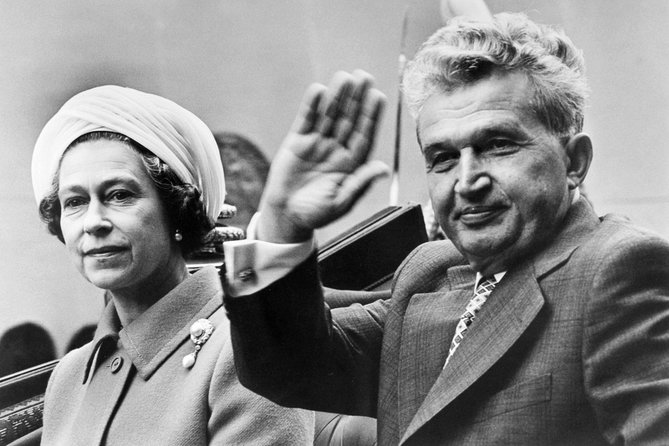
Here, Ceausescu delivered his last speech. The revolution began in Bucharest on December 21, 1989, and the square became a setting for the rapid collapse of his authority. The guide explains what happened at this location and why the speech became such a crucial moment.
You spend roughly 20 minutes here. That gives the guide room to explain the sequence of events, but the subject is complex, so listen closely. The value is not only in seeing the square. It is in understanding how public space became a place of protest and political change.
I would pay attention to the human side of this stop. The tour is not simply about dates and leaders. It addresses what happened when people challenged the regime and how the end of communism was experienced in the city.
University Square and the difficult move to democracy
The University of Bucharest stop takes you to the small square next to the university, which carries the name December 21, 1989. This area played a major part in the Romanian revolution.
The guide then moves beyond the fall of Ceausescu and discusses post-communist Romania. That is a strong choice. Many history tours end when the dictator is removed, but the hard work of building democracy began afterward. The tour addresses mistakes made along the way and explains that the transition was not simple or instant.
You spend about 15 minutes here. As with the other outdoor stops, the time is limited, but the subject gives the walk a broader reach. You are not only learning what communism did to Bucharest. You are also hearing about the uncertain years that followed.
This section may be particularly useful if you know little about Romania after 1989. It gives you a basic framework for understanding why the country’s political story did not end with the revolution.
Undeva in Comunism: the most personal part of the experience
The final stop is the Museum of Communism Bucharest, also called Undeva in Comunism. The visit lasts about 40 minutes and includes admission, with a skip-the-line ticket.
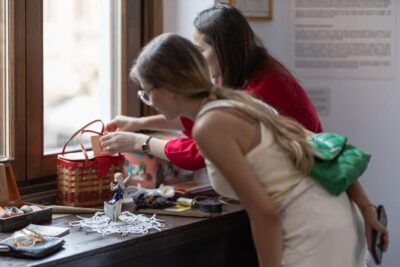
This is likely to be the most memorable section for many people. Rather than only viewing labels behind glass, you can interact with exhibits and try on clothing. The museum includes a living room setting where the group has a communist snack and coffee inside the display space.
The snack is included, but you do not choose from a fixed menu. It may be sweet or salty, depending on availability. Communist coffee is also included, while other drinks are not. That makes the refreshment part fun and concrete, but you should not treat it as a full meal.
A recreated living room can explain daily life in a way that a list of political dates cannot. Household objects, clothing, and an ordinary sitting room help you think about how ideology entered the home. The museum is small, so do not expect a vast collection. Its strength is the hands-on format and the way it makes the subject easier to picture.
The museum also gives the guide a chance to answer questions. Ali is praised for being friendly and professional, while Maria is noted for explaining the communist period clearly to children. Gabriela is described as interesting, professional, and fun, and her personal stories add a human touch to the political material. Guide quality can vary by date, but these comments point to a tour style that values clear explanation and personal connection.
The guides and the small-group setting
The tour is offered in English and includes an English-speaking guide. The guide is central to the experience because several stops are open public spaces without admission tickets. The Palace of Parliament, Manastirea Antim, Bloc 6, Revolution Square, and the University of Bucharest all depend on explanation rather than entry access.
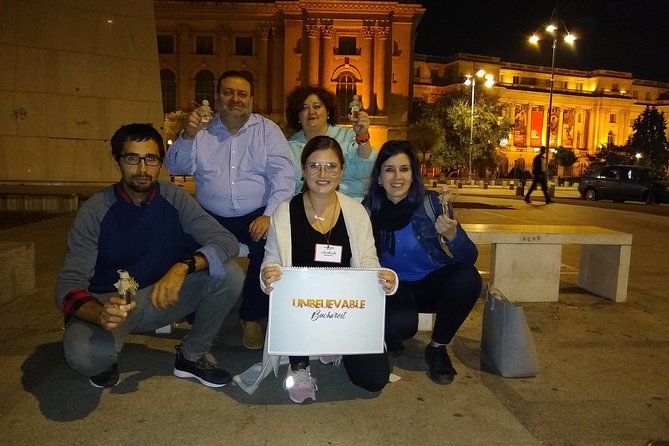
The group size should suit you if you prefer to ask questions and stay close to the guide. The tour information gives a maximum of 15 people, while another detail lists a maximum of 8 travelers. Because those figures differ, confirm the group size at booking, but either limit suggests a small walking group rather than a crowded outing.
The tour needs at least two people to operate. You must book at least 12 hours ahead, and confirmation is sent at booking. It begins at 10:00 a.m. at Bulevardul Unirii 1-3 and ends at Revolution Square. There is no hotel pickup or drop-off unless you select an option that includes it.
The one-way design is useful. You do not finish where you started, so plan your day around Revolution Square. The endpoint places you near other central Bucharest sights, but the tour itself does not include transport between stops.
Who will get the most from the $48.37 price
I would recommend this tour to you if you want a clear introduction to Romania’s communist period and prefer walking to sitting on a bus. It works well for first-time visitors, families, and anyone who wants more context for the Palace of Parliament and Revolution Square.
The price makes the most sense when you value the guide and the museum visit. Several outdoor stops are free on their own, and the tour does not include entry to the Palace of Parliament. You are paying for the route, the explanations, the organization, the museum admission, and the small food-and-coffee experience.
Families may find the museum helpful because clothing and interactive displays give children something concrete to engage with. The political material is serious, but the guides can explain it in a way that does not require an advanced background in Romanian history.
You may want a different experience if your main goal is entering the Palace of Parliament, seeing a large museum collection, or sampling a full range of Romanian food. This is a focused history walk, not a general Bucharest food tour or an interior architecture tour.
Free cancellation is available if you cancel at least 24 hours before the start time. Changes or cancellations made later are not refundable. The tour may also be moved or refunded if bad weather prevents it from running or if the minimum number of participants is not reached.
Should you book Communism in Bucharest?
Book it if you want the story behind Bucharest’s oversized avenues, the Palace of Parliament, and the 1989 revolution. The best parts are the small group, the well-paced walking route, the guides’ personal explanations, and the museum’s ordinary household setting.
Skip it if you need to see the inside of the Palace of Parliament or prefer a broad survey of all Bucharest history. For most people interested in modern Romania, though, this is a useful three-hour introduction. It turns imposing buildings and public squares into places with a clear political and human meaning.
FAQ
How long does the Communism in Bucharest tour last?
The tour lasts approximately three hours.
What time does the tour start?
It starts at 10:00 a.m.
Where does the tour begin?
The meeting point is Bulevardul Unirii 1-3, București 040101, Romania.
Where does the tour end?
The tour ends at Revolution Square, also called Piața Revoluției.
Does the tour enter the Palace of Parliament?
No. The Palace of Parliament is viewed from outside, and the tour does not include entry.
Is the museum ticket included?
Yes. Admission to the Communism Museum of Bucharest, Undeva in Comunism, is included, with skip-the-line entry.
What food and drink are included?
You receive one communist snack, either sweet or salty depending on availability, and communist coffee. Other drinks are not included.
Can I cancel for a full refund?
Yes, if you cancel at least 24 hours before the experience start time. Cancellations made less than 24 hours in advance are not refunded.
Just added around Bucharest
- 10 hours Private Apiary Tour in Romania – From Bucharest★ 5.0 · 3 reviews
- 4-Day Inside Transylvania & Transfagarasan Tour from Bucharest★ 5.0 · 3 reviews
- Bucharest: Charm of the Belle Époque Private Tour★ 5.0 · 3 reviews
- Bran & Peles Castles through the Best Road in the World: Transfagarasan road★ 4.5 · 3 reviews
- Private Wine Tasting at Bucharest’s First Wine Bar★ 5.0 · 3 reviews
- 2-Day Small-Group Tour in Transylvania from Bucharest – Maximum 5 Persons★ 5.0 · 3 reviews
- Probably the Best Restaurant and Wine Cellar near Bucharest★ 4.5 · 3 reviews
- Bucharest to Brasov – Fast Private Transfer★ 5.0 · 3 reviews
Communist History Tours, compared.




Bucharest Essential Tour: Old Town, Calea Victoriei & Communism
Read our review →


Museum of Communism Ticket with Communist Coffee
Read our review →Browse the lists this tour appears in