
Reviewed · COMMUNIST HISTORY TOURS
Life under Communism
Communist Bucharest still speaks from its walls. This three-hour walk links political monuments, religious buildings, grand state architecture, and ordinary places that help explain how Romanians lived under Nicolae Ceausescu. I especially like the mix of personal stories and major events, and the way the tour connects famous sites with easy-to-miss traces of daily life, such as old food shops and former security offices. The main drawback is simple: this is a walking tour, so comfortable shoes and sensible clothing matter.
I also like the guide’s effort to present communism without turning the tour into a one-sided political speech. Cristina, Stefan, and Victor are praised for clear English, thoughtful answers, and family stories that make the period easier to grasp. Allow extra time to find the meeting point and identify your guide, since one participant reported a missed connection before the group moved on.
In This Review
- Key details before you book
- Why this walk helps explain Bucharest
- Starting at the Patriarchal Cathedral
- The Palace of Parliament and the cost of grand ambition
- Antim Monastery and religion under state control
- Old Town, Caru’ cu bere, and the public face of Romania
- The overlooked details of everyday life
- Revolution Square and Ceausescu’s downfall
- The guides and the value of personal stories
- Is $42.33 a fair price?
- Walking conditions and practical advice
- Who should book this Bucharest walk?
- Should you book Life Under Communism?
- FAQ
- How long does the Life Under Communism tour last?
- Where does the tour begin?
- Where does the tour end?
- Is the tour offered in English?
- What is included in the price?
- Are food and drinks included?
- Is hotel pickup available?
- Is admission to the Palace of Parliament included?
- What happens if it rains?
- Can I cancel for a full refund?
Key details before you book
- Personal accounts from the communist period: Cristina often adds stories from her own family, giving you several generations of Romanian perspectives.
- A useful three-hour route: The walk begins near the Patriarchal Cathedral and ends at Revolution Square, so it follows a clear story from communism’s violent beginning to its collapse.
- Big monuments and ordinary places: You see the Palace of Parliament, but also smaller communist-era buildings, an old Alimentara food shop, and a former Securitate office.
- A balanced approach: The guides aim to explain both the claimed benefits and the human costs of the system rather than simply praise or condemn it.
- Small-group setting: The maximum group size is 20, with some departures much smaller, allowing time for questions and discussion.
- Good value for history-minded visitors: At $42.33 per person, the price pays for a professional guide and three hours of context, not food, transport, or entry tickets.
Why this walk helps explain Bucharest
Communism can feel abstract when you meet it only in textbooks. In Bucharest, it is difficult to keep it abstract. The city contains huge state buildings, religious landmarks affected by political control, memorial sites, and ordinary structures that still look slightly out of place.
This tour works because it moves between those scales. You begin with the political and religious foundations of the period, see the oversized architecture built under Ceausescu, then finish at the place where his rule ended violently in 1989.
The guides focus on Romania from the period before World War II through the postwar shift toward socialism, Ceausescu’s rise, his 24-year rule as president, and the 1989 Revolution. That wider frame matters. You are not simply shown a few gray buildings and told that life was difficult. You get a clearer sense of how power developed, how it affected families, and how ordinary people adjusted.
I would choose this tour early in a Bucharest visit if modern Romanian history interests you. It can give later sightseeing more meaning, especially when you pass another state building or see the broad avenues created during the communist period.
More communist-era history walks:
- The Real tour of Communism
★ 5.0 · 666 reviews - 3-Hour Guided Tour of Communist Bucharest
★ 4.9 · 303 reviews - Bucharest Essential Tour: Old Town, Calea Victoriei & Communism
★ 5.0 · 142 reviews
Starting at the Patriarchal Cathedral
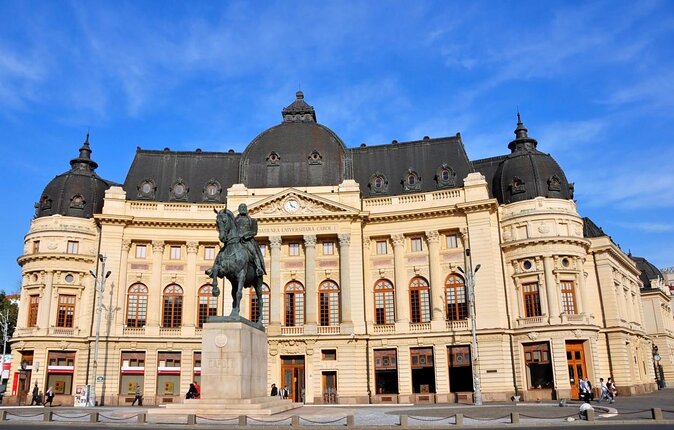
The meeting point is Aleea Dealul Mitropoliei 19, near the Patriarchal Cathedral. The first stop takes about 10 minutes and is free to enter.
The cathedral provides an important opening because the discussion begins with the violent rise of communism. The subject is not treated as a neat political change. Instead, the guide uses the setting to explain how the new system affected power, public life, and religious institutions.
That connection between place and story is one of the walk’s strengths. You are not beginning with a lecture in a room. You are standing at a religious site while hearing how faith was treated under communist rule.
The stop is brief, so do not expect a long architectural visit. Its purpose is to establish the political and social tension that shaped the rest of the tour. If you want a detailed account of the cathedral’s medieval and religious art, this is not that kind of visit.
Arrive a little early. The tour is a group experience, and the guide may need to keep moving once the scheduled start time arrives. The meeting point is near public transportation, but the exact way you reach it depends on where you are staying.
The Palace of Parliament and the cost of grand ambition
The Palace of Parliament receives about 15 minutes of attention. The building is one of Bucharest’s most striking communist-era landmarks and is described as the world’s second largest administrative building.
The tour’s focus is the real story behind its scale. This is not just a photo stop for a giant government building. The guide explains how architecture became a political tool under Ceausescu, and why such an enormous project mattered in a country where everyday life could be marked by shortages and strict control.
That contrast is central to the tour. The Palace of Parliament represents official power, public spectacle, and the desire to make the state physically overwhelming. It also gives you a visual way to understand how the regime reshaped Bucharest.
Admission is not included. The short stop is mainly an exterior and historical explanation, so you should not assume that this experience includes a full interior visit. If entering the building is important to you, check the separate admission arrangements before booking.
I like the way this stop keeps the building in context. It is easy to admire the sheer size of the Palace and forget the human decisions behind it. A good explanation helps you see both the engineering feat and the political message.
Antim Monastery and religion under state control
After the Palace of Parliament, the route reaches Antim Monastery, or Manastirea Antim. This picturesque medieval monastery is another free stop and takes around 10 minutes.
Its value comes from the contrast with the Palace. The monastery is older, smaller, and more intimate. Here the guide explains how religion was affected by communist rule, adding another layer to the story of state control.
You get a useful reminder that communism did not only change government offices and city streets. It also shaped religious life and the position of churches in Romanian society. The monastery’s setting makes that topic easier to picture.
Again, the stop is short. Think of it as a focused historical visit rather than a full religious sightseeing session. You may find the contrast especially useful if the enormous state architecture has begun to dominate your impression of Bucharest.
The route also makes clear that the communist period did not erase everything that came before it. Medieval religious buildings, modern state projects, and neglected everyday structures can appear within the same walk. That layering is part of what makes this subject worth exploring on foot.
A few more trips worth weighing up before you book
- Bucharest: Dracula’s Castle, Peles Castle, & Brasov Old Town
★ 4.5 · 17,858 reviews - Bucharest: Dracula Castle, Peles Castle & Brasov Old Town
★ 4.6 · 10,891 reviews - Bucharest: Dracula’s Castle, Peleș Castle & Brașov Day Trip
★ 4.5 · 5,919 reviews - Bucharest: Palace of Parliament Tickets and Guide
★ 4.3 · 3,182 reviews
Old Town, Caru’ cu bere, and the public face of Romania
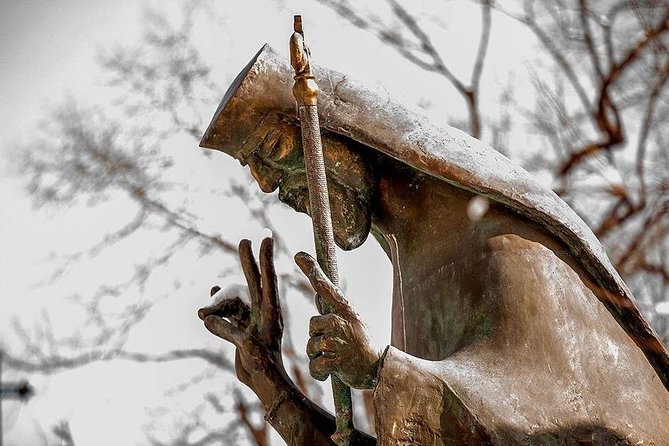
In Bucharest’s Old Town, the tour pauses near the famous Caru’ cu bere restaurant for roughly 10 minutes. The restaurant is discussed in connection with foreign policy during communism.
That detail adds a more surprising side to the tour. Restaurants were not only places to eat. Some could also serve official purposes, including the presentation of Romania to foreign visitors and political contacts. Caru’ cu bere helps show how public spaces could have a role in the country’s external image.
The stop is free, although food and drinks are not included. You might choose to return later for a meal, but the tour itself does not provide one. The brief visit is about the restaurant’s political role rather than a dining experience.
Old Town also gives you a change of pace from the major political sites. The route moves through a part of Bucharest that many people visit for architecture, food, and nightlife, then adds a less obvious layer of meaning. I appreciate that approach because it shows how communist history is not confined to official monuments.
The overlooked details of everyday life
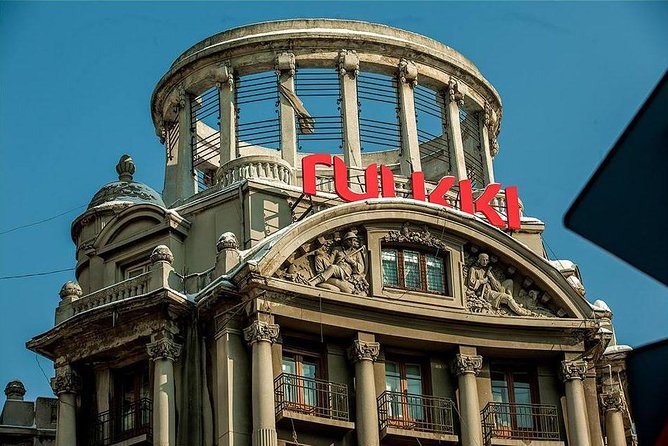
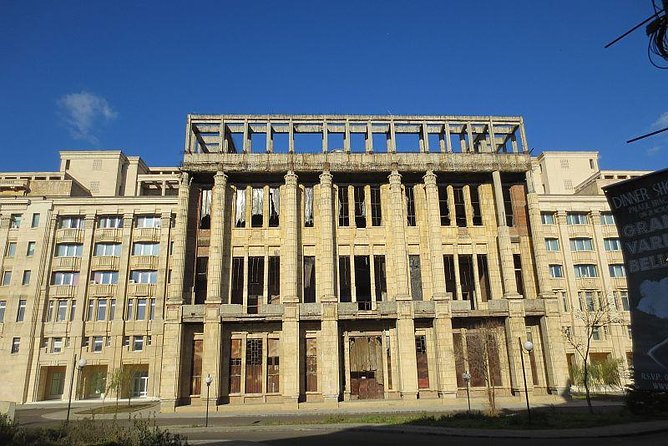
Some of the most useful parts of the walk are the smaller places that you could easily pass without noticing. The route may include communist-era buildings scattered through ordinary parts of the city, a former Securitate office now occupying an unremarkable, run-down building, and an old Alimentara shop connected with the food system of the period.
These details help answer the question most visitors actually have: What did daily life feel like?
The Palace of Parliament explains the regime’s power from above. An old food shop or food line points toward the practical realities below. Shortages, queues, and the routines of getting basic goods can be more revealing than another grand monument.
The guides also use personal family experiences to make those details concrete. Cristina has been praised for sharing different perspectives from her own life, her parents, and her grandparents. That generational approach is useful because not every Romanian experienced the period in the same way.
The snack offered during one tour was another small touch that connected the past with the present. It is not part of the advertised inclusions, so you should not book expecting refreshments. Still, it shows the kind of informal detail that can make a history walk feel less remote.
Revolution Square and Ceausescu’s downfall
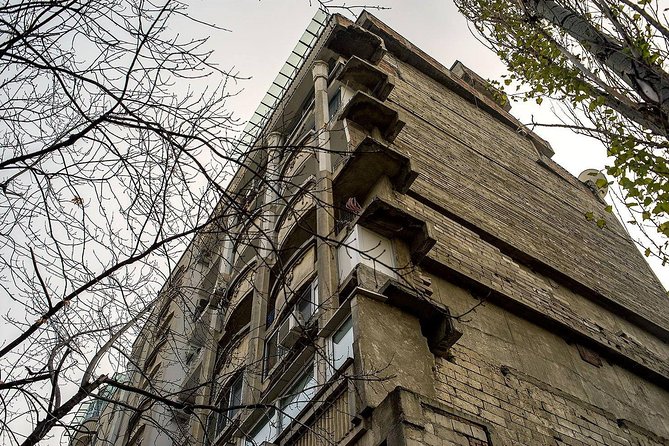
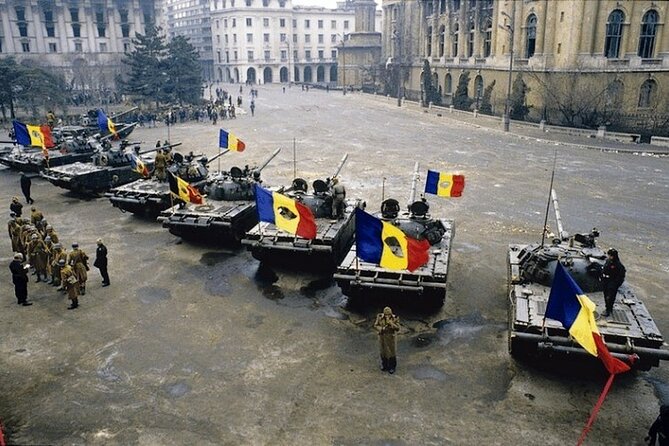
The final stop is Revolution Square, or Piața Revoluției. The tour ends here after about 15 minutes at the square, with no admission charge.
This is where the story reaches its violent end. You hear about the collapse of communism, Ceausescu’s downfall, and the role the square played in the 1989 Revolution. The site also includes political memorials and visible evidence connected with the fighting, including bullet holes on buildings.
Ending here is a smart choice. The beginning of the walk deals with the violent arrival of communism. The final stop shows how that system came apart. The route gives you a clear arc rather than a disconnected collection of landmarks.
Revolution Square can be emotionally heavy, especially when the guide links the physical setting to individual experiences. The stop is not only about dates and political change. It is about the point at which public fear gave way to open resistance.
The tour finishes at the square rather than returning to the starting point. That is convenient if you plan to continue sightseeing in central Bucharest. It also means you should plan your route back to your hotel separately.
The guides and the value of personal stories
The strongest feature of this experience is the guiding. Cristina is repeatedly praised for excellent English, clear delivery, warmth, and the ability to answer detailed questions. She also adjusts her pace when people need more time, including one group traveling with an older parent and another participant with difficulty walking.
Stefan and Victor also receive praise for their personal connections to the subject and their willingness to discuss questions openly. Since guides can vary by departure, you should not assume that Cristina will lead every tour. The experience provider is Guided Stories, and the available guide may be Cristina, Stefan, Victor, or another member of the team.
The best guides here do not force one conclusion on you. They explain the political system, its effects on people, and the different ways Romanian families remember it. That is important for anyone arriving with a simple Cold War picture of communism.
The tour also suits curious people. You can ask about politics, culture, family life, or what changed after 1989. Several groups found that the question-and-answer time made the experience especially personal.
Is $42.33 a fair price?
At $42.33 per person, this is not the cheapest way to walk around Bucharest. You can see many of the exterior landmarks on your own for free, and the tour does not include food, drinks, hotel pickup, or drop-off.
The value comes from the interpretation. You are paying for roughly three hours with a professional English-speaking guide who links places, political events, and personal memories. If you already know Romania’s twentieth-century history well, the price may feel high for a route with short stops.
For someone new to Bucharest, I think the price is reasonable. The tour helps you notice details that are easy to miss, such as the former Securitate office and old food-related sites. It also saves you from trying to piece together Ceausescu’s rise, the communist system, and the 1989 Revolution from separate museum visits.
The small-group limit of 20 is helpful. Some departures are much smaller, even with only two people, which allows more questions and a more relaxed conversation. Group size can vary, so do not count on a private tour.
Walking conditions and practical advice
The experience lasts about three hours and takes place outdoors in all weather conditions. Wear comfortable shoes, since the route involves walking between several central sites and standing during explanations.
Dress for the forecast. Rain did not stop one departure, and the guide kept the group engaged, but wet streets and a slower pace can make the walk less comfortable. The cancellation terms allow a full refund if you cancel at least 24 hours before the start time. Changes or cancellations within 24 hours are not refunded, except when the provider cancels because of poor weather.
The tour is offered in English and uses a mobile ticket. Service animals are allowed, and most people can take part. If walking distances are a concern, contact the provider before booking and explain what you need. The guide may be able to adjust stops and pacing, but this should not be treated as a fully accessible tour without asking first.
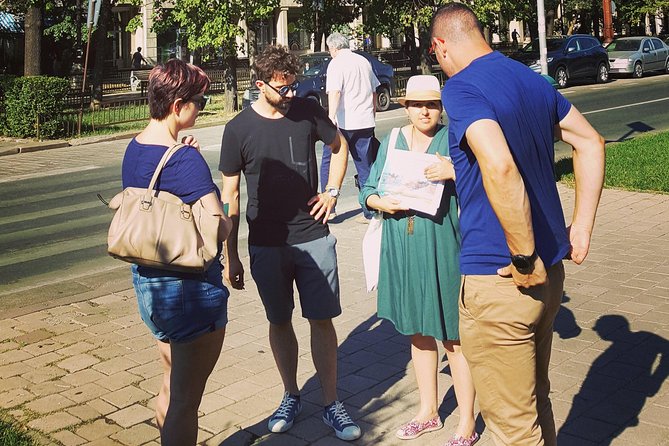
Most importantly, arrive early at Aleea Dealul Mitropoliei 19. One reported problem involved a participant and guide failing to connect at the meeting point. The provider stated that the guide waited 15 minutes and attempted to call and message before continuing with the group. This is a good reason to keep your phone on, read the meeting instructions closely, and make yourself easy to identify.
Who should book this Bucharest walk?
I would recommend it to you if you enjoy modern political history, Cold War stories, architecture, or local perspectives. It is especially useful during a first visit because it gives context to parts of Bucharest you might otherwise see only as large buildings or attractive old streets.
It also suits visitors who prefer a conversation over a museum label. The strongest moments come when the guide connects a site with a family story or explains an ordinary object from the communist period.
You may want a different experience if you dislike walking, want extensive interior access to the Palace of Parliament, or prefer a tour devoted mainly to architecture. The stops are short, and the focus is interpretation rather than long visits inside each building.
Should you book Life Under Communism?
Yes, if you want to understand how communism shaped Romanian politics and ordinary life. The route is well planned, the subject has real weight, and the guides bring personal perspective without reducing the past to a simple slogan.
Book it early in your Bucharest stay, wear good shoes, and arrive well before the meeting time. At $42.33, the walk is worthwhile for the context and conversation, especially if Cristina, Stefan, or Victor is leading your group. Skip it only if you want a low-cost self-guided stroll or a full interior tour of the Palace of Parliament.
FAQ
How long does the Life Under Communism tour last?
The tour lasts approximately three hours.
Where does the tour begin?
It begins at Aleea Dealul Mitropoliei 19, București 030167, Romania.
Where does the tour end?
The tour ends at Revolution Square, also called Piața Revoluției, in Bucharest.
Is the tour offered in English?
Yes. The experience is offered in English.
What is included in the price?
A professional guide is included.
Are food and drinks included?
No. Food and drinks are not included unless specifically stated.
Is hotel pickup available?
No. Hotel pickup and drop-off are not included.
Is admission to the Palace of Parliament included?
No. Admission to the Palace of Parliament is not included.
What happens if it rains?
The tour operates in all weather conditions, so you should dress appropriately. If the experience is canceled because of poor weather, you will be offered another date or a full refund.
Can I cancel for a full refund?
Yes. You can cancel at least 24 hours before the start time for a full refund. Cancellations or changes made less than 24 hours before the start time are not refunded or accepted.
Just added around Bucharest
- 10 hours Private Apiary Tour in Romania – From Bucharest★ 5.0 · 3 reviews
- 4-Day Inside Transylvania & Transfagarasan Tour from Bucharest★ 5.0 · 3 reviews
- Bucharest: Charm of the Belle Époque Private Tour★ 5.0 · 3 reviews
- Bran & Peles Castles through the Best Road in the World: Transfagarasan road★ 4.5 · 3 reviews
- 2-Day Small-Group Tour in Transylvania from Bucharest – Maximum 5 Persons★ 5.0 · 3 reviews
- Private Wine Tasting at Bucharest’s First Wine Bar★ 5.0 · 3 reviews
- Bucharest to Brasov – Fast Private Transfer★ 5.0 · 3 reviews
- Probably the Best Restaurant and Wine Cellar near Bucharest★ 4.5 · 3 reviews
Communist History Tours, compared.



Bucharest Essential Tour: Old Town, Calea Victoriei & Communism
Read our review →
Communism in Bucharest – Landmarks, Museum & Communist Appetizers
Read our review →


Museum of Communism Ticket with Communist Coffee
Read our review →Browse the lists this tour appears in