
Reviewed · COMMUNIST HISTORY TOURS
Bucharest: Museum of Communism Ticket with Communist Coffee
Old coffee tells a surprising story. Bucharest’s Museum of Communism turns recent Romanian history into a hands-on visit, with rooms where you can type on an old typewriter, read original magazines, try on period clothing, and ask questions of the English-speaking staff. I like the touchable exhibits and the chance to taste nechezol, the coffee substitute linked to Romania’s final communist years. The $10 price also makes this an easy addition to an Old Town walk.
I also like the museum’s informal living-room setup. Sitting on a communist couch with an original cup makes the subject feel close to daily life, not locked behind glass. The main drawback is scale: you may finish in 45 minutes to one hour, and some displays rely heavily on text and broad explanations rather than detailed historical analysis.
In This Review
- Key Points Before You Go
- What the Museum Sets Out to Show
- Starting With Hands-On Displays
- Why the Guides Matter
- The Communist Coffee Tasting
- A Visit That Takes About an Hour
- What the $10 Ticket Buys You
- The Atmosphere, Facilities, and Setting
- Who Will Enjoy It Most
- Booking Flexibility and Practical Notes
- Should You Book the Museum of Communism?
- FAQ
- How much does the Museum of Communism ticket cost?
- What does the ticket include?
- What is nechezol?
- How long does the museum visit take?
- Can I touch the exhibits?
- Can I ask questions during the visit?
- Is the coffee served in the museum?
- What language is available?
- Is the museum suitable for wheelchair users?
- Can I cancel the booking?
Key Points Before You Go
- Nechezol is part of the ticket: You receive a cup of this communist-era coffee substitute, served in an old-style cup.
- Touch is encouraged: You can use the typewriter, handle selected objects, read original magazines, and try on old clothing.
- The museum is small: Plan on about 45 minutes to an hour, though careful readers may spend longer.
- English help is available: An English-speaking host or greeter is present, and staff can answer questions in the rooms.
- It works best as a social stop: Music, dressing up, and photo opportunities make it more enjoyable with company.
- Wheelchair users should choose another attraction: The experience is specifically listed as unsuitable for wheelchair users.
What the Museum Sets Out to Show

Romania’s communist period is still recent enough to shape family memories, buildings, habits, and conversations in Bucharest. This museum focuses on that everyday side of the period rather than presenting only major political events.
You learn about the impact of communism on Romania and Bucharest, but the presentation is designed around ordinary objects. That choice matters. A typewriter, a magazine, a cup, or a jacket can explain daily life in a way that a timeline alone cannot.
The museum is not a vast national institution. It is a small private museum, and that helps explain its relaxed tone. You are not simply directed from one sealed display case to another. You can handle many of the objects and ask questions as you go.
That format suits visitors who want a quick introduction to Romania’s recent past. If you already know the political story well, you may find the written material fairly basic. The experience works best when you treat it as a practical, human-scale introduction rather than a complete academic account.
More communist-era history walks:
- The Real tour of Communism
★ 5.0 · 666 reviews - Life under Communism
★ 5.0 · 358 reviews - 3-Hour Guided Tour of Communist Bucharest
★ 4.9 · 303 reviews
Starting With Hands-On Displays
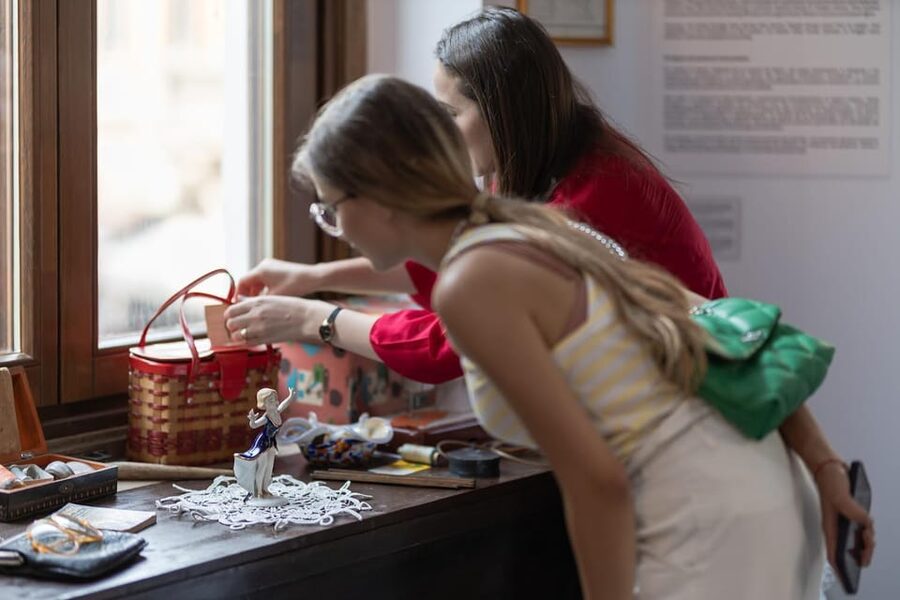
The first part of the visit is built around objects and activities. You can sit at an old typewriter and try it yourself, look through original magazines, and examine clothing from the period.
These details give the visit some playfulness, but they are not just photo props. They help you think about what people read, wore, used, and kept in their homes. The museum asks you to engage with the material directly, which is useful if you find traditional museums tiring.
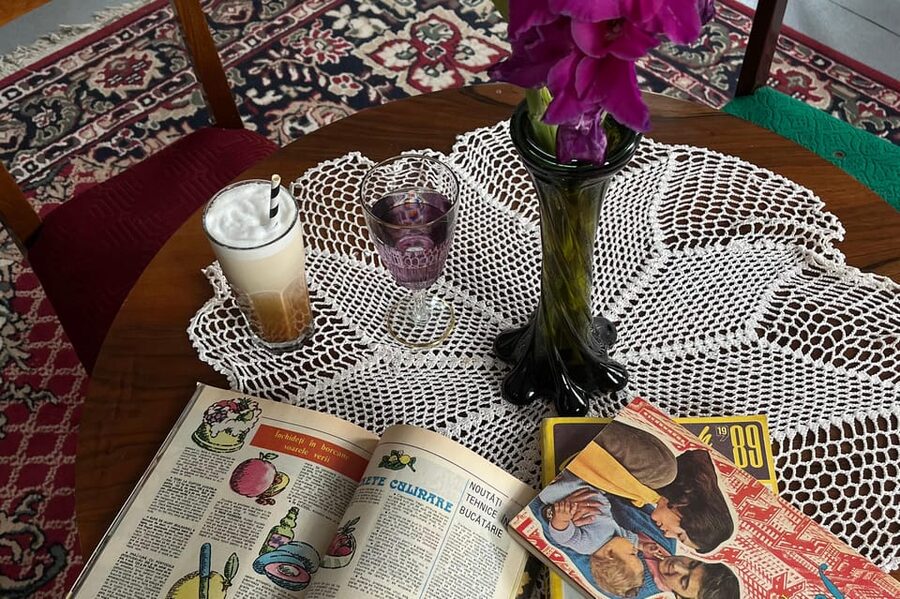
The old magazines are particularly valuable because they show the tone and design of printed material from the time. You can take your time with them, though much of the museum’s explanatory content is text-based. If you read every poster carefully, your visit may last longer than the quick 45-minute stop.
The clothing adds another layer. Trying on old garments creates good photo opportunities and gives the museum a more social feel. I would not expect a large costume collection, but the option helps break up the reading and makes the subject easier to approach for families and groups of friends.
Music is also part of the atmosphere. Combined with the clothing and hands-on objects, it gives the rooms an informal character. Some visitors will enjoy this lighter approach. Others may prefer a quieter museum with more documents, dates, and expert interpretation.
Why the Guides Matter

The museum has an English-speaking host or greeter, and you can ask questions in the rooms. This is important because the displays cannot explain every detail of Romanian communism on their own.
The staff are one of the strongest parts of the experience. The people working in the museum have been praised for being friendly, engaged, and willing to explain the exhibits. Their energy can make a major difference, especially if you are unsure how a particular object fits into Romanian life.
I recommend asking questions instead of walking silently from poster to poster. Ask about the typewriter, the magazines, the coffee substitute, or the clothing. The answers can turn a simple object into a useful point of connection with the period.
The tone appears to be especially welcoming for international visitors. English is the stated language, so you can expect to receive help in English rather than needing Romanian to follow the visit.
There is one fair limitation. The written explanations may sometimes feel too simple, and some displays can treat ordinary life from the 1950s through the 1990s as if every aspect belonged only to communism. If you want a detailed historical argument with careful distinctions, the museum may leave you wanting more.
That does not make the visit useless. It means you should see it as a starting point. Use the staff interaction to add depth, and consider reading more about Romania’s communist period if the subject catches your interest.
The Communist Coffee Tasting
The most unusual part of the ticket is the cup of nechezol. During the final years of communism, Romania imported coffee in very small amounts. As a result, people used a substitute called nechezol, commonly associated with the shortages of the 1980s.
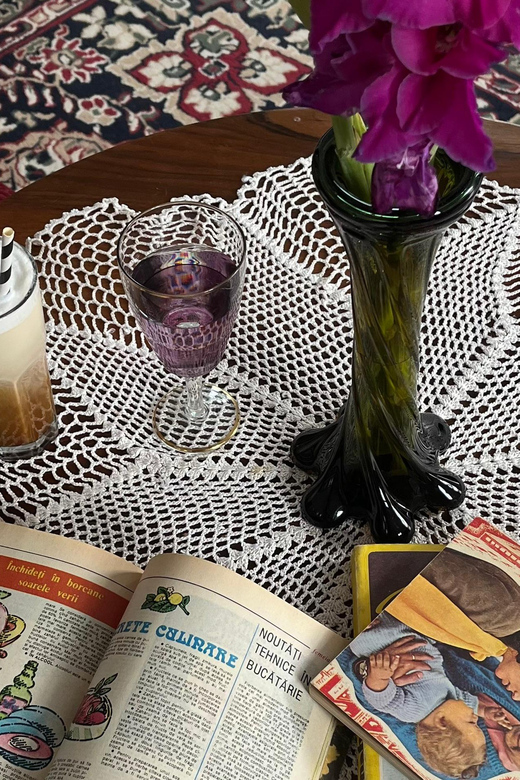
The museum explains this story and lets you taste the drink. You receive a cup and sit in the museum’s living room, using an original old cup while seated on a communist couch.
This is a small experience, but it gives the visit a clear sense of place. Shortages can sound abstract when you read about them. Tasting the substitute connects the economic story to an everyday routine: making and drinking coffee at home.
Do not expect a rare delicacy. The appeal is the context, not gourmet flavor. One visitor found it surprisingly close to instant coffee, while also admitting to having an untrained palate. That is probably the right way to approach it. The cup is a historical detail and a conversation starter, not a reason to visit a specialty café.
The living-room setting is just as important as the drink. You are not tasting nechezol at a modern counter. You sit among the period furnishings, which helps the coffee story feel connected to domestic life.
I like that the coffee is included rather than sold as an optional extra. At a $10 admission price, it adds a distinctive element without making the ticket feel padded with unrelated extras.
A few more trips worth weighing up before you book
- Brasov city of legends and good coffee
★ 4.0 · 4 reviews
A Visit That Takes About an Hour
Although the ticket is valid for one day, the actual museum visit is much shorter. A realistic plan is 45 minutes to one hour.
A quick visit could take less. One person moved through the rooms in about five minutes, while a more careful reader spent much longer examining the posters. Your timing depends on how much you read, how many objects you try, and how much you talk with the staff.
Here is a sensible way to pace it:
- Allow time at the written displays to understand the basic story.
- Try the typewriter and examine the magazines rather than simply photographing them.
- Leave room for the clothing, music, and photo opportunities.
- Ask the host questions when an object or explanation seems unclear.
- Finish with the nechezol in the living room.
The museum can work well before lunch, after a nearby Old Town walk, or as a short cultural stop between larger sights. You do not need to give it half a day. That is an advantage if your Bucharest schedule is full.
The short duration is also the main reason to set your expectations correctly. This is not a large museum with an extensive sequence of galleries. If you want a long, research-heavy visit, you may feel the admission is paying for atmosphere and interaction more than volume.
What the $10 Ticket Buys You
At $10 per person, the ticket is reasonably priced for a compact museum visit with a distinctive tasting included. You are paying for entry, access to the hands-on displays, the English-speaking assistance, and one cup of nechezol.
The value is strongest for first-time visitors to Bucharest who want context for the city’s communist-era buildings and recent past. The museum gives you vocabulary and images that can make the rest of your time in Romania more meaningful.
It is also good value if you enjoy interactive attractions. Being able to handle objects and try on clothing adds something that a book or a row of posters cannot provide.
The value is weaker for readers who want an expert-level historical account. The displays can be text-heavy without always offering enough depth, and the museum’s small size limits how much ground it can cover. If you dislike staged photo moments or period props, you may find parts of the visit lightweight.
Still, the price keeps the risk low. You are not committing to a long tour, and the coffee gives the visit a memorable finish.
The Atmosphere, Facilities, and Setting
The museum is in Bucharest’s Old Town, making it easy to pair with other central sightseeing. Its small size gives it a personal feel rather than the grand scale of a major state museum.
The living-room area is a key part of the atmosphere. The couch, old cup, and coffee tasting make the visit feel domestic. You are thinking about what life felt like at home, not only what happened in government offices.
There is also a small bar area and clean toilet facilities. Those are useful comforts during a day of walking, though you should not expect a gift shop. The absence of a shop is not a serious problem, but it confirms that this is a focused visit rather than a large museum complex.
The setup is more fun with another person or a group. Dressing up, listening to music, and taking photos are naturally social activities. You can visit alone, but the experience may feel quieter and shorter without someone to share the objects and coffee with.
Who Will Enjoy It Most

I would recommend this museum to:
- First-time visitors who want a basic introduction to Romania’s communist period.
- People interested in daily life, shortages, clothing, household objects, and printed material.
- Families and friends who enjoy photo opportunities and hands-on exhibits.
- Visitors with only an hour available in Bucharest Old Town.
- Anyone curious about nechezol and the practical effects of limited coffee imports.
- Those who prefer informal museums to strictly formal displays.
You may want to skip it if you expect a large collection, advanced historical commentary, or a long guided tour. You should also reconsider if you need step-free access, since the experience is not suitable for wheelchair users.
The museum is likely to work better for adults and older children who can connect objects with the wider story. Very young children may enjoy the typewriter and clothing but may not understand the historical setting.
Booking Flexibility and Practical Notes
You can cancel up to 24 hours before the visit for a full refund, and the reserve-now-pay-later option lets you hold a place without paying immediately. The ticket is valid for one day, with starting times shown according to availability.
The host or greeter speaks English, which makes the experience accessible to international visitors. Since the museum is small, I would check the available starting time before you go rather than assuming you can arrive at any moment.
The $10 cost is per person. Entry and one cup of nechezol are included.
Because the visit may take less than an hour, pair it with a walk through Bucharest’s Old Town. That gives the museum a useful place in your day instead of making it your only planned activity.
Should You Book the Museum of Communism?
Book it if you want a short, unusual, and approachable look at Romanian communism. The hands-on objects, helpful English-speaking staff, and nechezol tasting give the experience more character than a standard room of posters.
Go with realistic expectations. You are buying a small private museum visit, not a full scholarly survey. Some explanations may feel broad, and the amount of material may not satisfy you if you read quickly.
For $10, I think it is a worthwhile stop for curious visitors, especially when shared with friends or family. Ask questions, handle the objects, and save time for the living-room coffee. If you do that, the museum’s simple displays become a useful window into how political history reached ordinary Romanian homes.
FAQ
How much does the Museum of Communism ticket cost?
The ticket costs $10 per person.
What does the ticket include?
It includes entry to the Museum of Communism and one cup of nechezol coffee.
What is nechezol?
Nechezol is a coffee substitute associated with the final years of communism in Romania, when imported coffee was available only in very small amounts.
How long does the museum visit take?
The visit can take about 45 minutes to one hour, depending on how much you read and how much time you spend with the interactive displays.
Can I touch the exhibits?
Yes. You can type on an old typewriter, read original magazines, and try on old clothing.
Can I ask questions during the visit?
Yes. An English-speaking host or greeter is available in the museum, and you can ask questions about the exhibits.
Is the coffee served in the museum?
Yes. You can drink the nechezol in the museum’s living room, sitting on a communist couch and using an original old cup.
What language is available?
The stated language for the experience is English.
Is the museum suitable for wheelchair users?
No. The experience is listed as unsuitable for wheelchair users.
Can I cancel the booking?
Yes. You can cancel up to 24 hours in advance for a full refund. The reserve-now-pay-later option is also available.
More Museums
- Bucharest: Museum of Senses Entry Ticket
★ 4.2 · 364 reviews - Communism in Bucharest – Landmarks, Museum & Communist Appetizers
★ 5.0 · 111 reviews - Bucharest: Entry ticket at the Museum of Communism
★ 4.6 · 57 reviews - Bucharest: Dinner+Tour at Museum of Communism after closing
★ 4.9 · 46 reviews
Just added around Bucharest
- 4-Day Inside Transylvania & Transfagarasan Tour from Bucharest★ 5.0 · 3 reviews
- 10 hours Private Apiary Tour in Romania – From Bucharest★ 5.0 · 3 reviews
- Bucharest: Charm of the Belle Époque Private Tour★ 5.0 · 3 reviews
- Bran & Peles Castles through the Best Road in the World: Transfagarasan road★ 4.5 · 3 reviews
- 2-Day Small-Group Tour in Transylvania from Bucharest – Maximum 5 Persons★ 5.0 · 3 reviews
- Private Wine Tasting at Bucharest’s First Wine Bar★ 5.0 · 3 reviews
- Bucharest to Brasov – Fast Private Transfer★ 5.0 · 3 reviews
- Probably the Best Restaurant and Wine Cellar near Bucharest★ 4.5 · 3 reviews
Communist History Tours, compared.




Bucharest Essential Tour: Old Town, Calea Victoriei & Communism
Read our review →
Communism in Bucharest – Landmarks, Museum & Communist Appetizers
Read our review →


Browse the lists this tour appears in