
Reviewed · COMMUNIST HISTORY TOURS
3-Hour Guided Tour of Communist Bucharest
Communism left a visible scar on Bucharest. I like how this three-hour walking tour connects grand monuments with ordinary homes, street corners, and family stories, rather than treating history as a list of dates. I also like the contrast between demolished districts and the elegant inter-war neighborhoods that survived.
The tour is especially strong when Cristina guides it. Her photos, personal anecdotes, humor, and clear explanations have helped make difficult subjects easier to grasp. The main consideration is practical: you will spend much of the three hours on foot, and standing in direct sun can be tiring on hot days.
In This Review
- Key points at a glance
- Why Communist Bucharest needs a walking tour
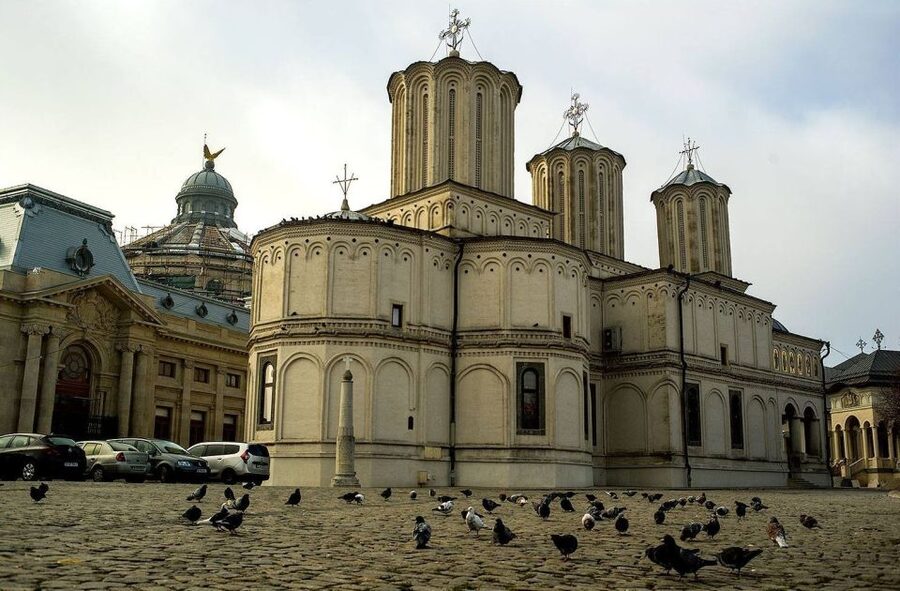
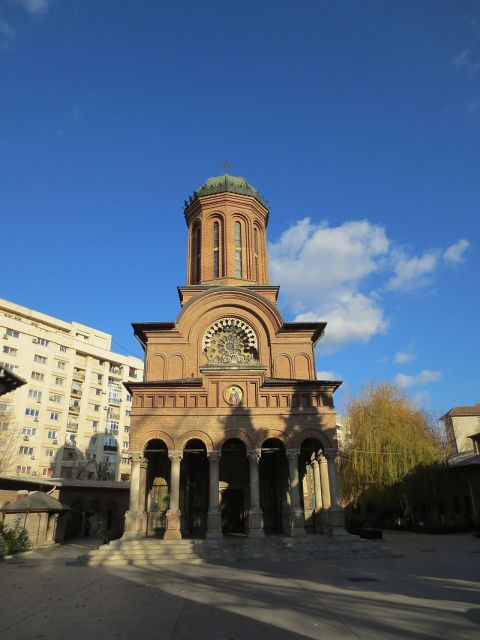
- Meeting at the Patriarchy bell tower
- From inter-war Bucharest to communist control
- The Palace of Parliament and the price of spectacle
- Uranus and the neighborhoods that disappeared
- Daily life under Ceausescu
- The 1989 Revolution and the fall of the regime
- The guide makes the difference
- Is $29 good value for three hours?
- Who should book this experience?
- Practical advice before you go
- Should you book the Communist Bucharest tour?
- FAQ
- How long does the Communist Bucharest tour last?
- What language is the tour offered in?
- Where does the tour meet?
- How much does the tour cost?
- Is the Palace of Parliament visited inside?
- Are museum entrance fees included?
- Are drinks at the café included?
- Are any snacks included?
- What should I bring?
- Can I cancel the booking?
Key points at a glance
- Start beside the Patriarchy bell tower: The meeting point near Piata Unirii is easy to reach and places you near an important religious and civic part of Bucharest.
- See the Palace of Parliament from outside: You learn why Ceausescu ordered this huge building and what its construction meant for the city.
- Walk through the remains of Uranus: This is where the cost of communist urban planning becomes most personal.
- Compare old and new Bucharest: Surviving inter-war neighborhoods help you see what was lost during forced redevelopment.
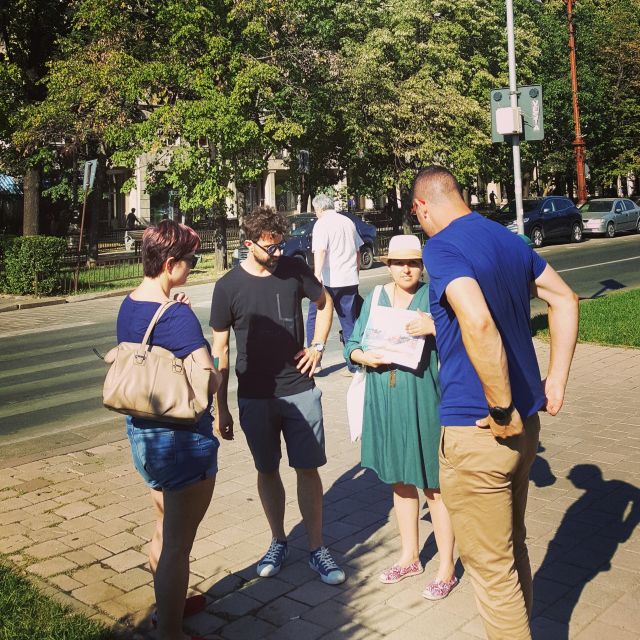
- Learn through local stories: Cristina and other guides use family memories, photos, and everyday examples to explain life under communism.
- Expect a café break, not a full meal: Small snacks are included, but drinks and anything you buy at the café cost extra.
Why Communist Bucharest needs a walking tour
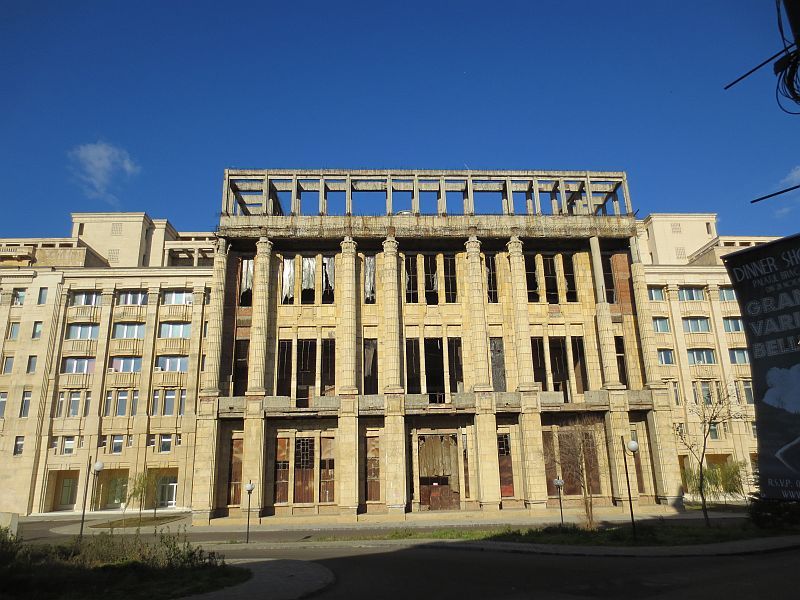
Bucharest can seem visually confusing at first. An ornate nineteenth-century building may sit close to a severe concrete block, while a quiet old lane suddenly opens onto a huge boulevard built for political display.
This tour gives that contrast a clear explanation. You are not only looking at architecture. You are learning how political power changed streets, neighborhoods, families, and daily routines.
The focus is Romania under communist rule, especially the rise and fall of Nicolae Ceausescu. Yet the story begins earlier, with the more prosperous inter-war city and the violent establishment of communism.
That wider frame matters. If you only visit the Palace of Parliament, you see the regime’s grand ambition. If you also walk through surviving old neighborhoods and the remains of Uranus, you understand the human cost behind the monumental image.
I find this approach far more useful than a tour that simply labels buildings as communist. The city becomes a record of competing ideas about what Bucharest should be.
More communist-era history walks:
- The Real tour of Communism
★ 5.0 · 666 reviews - Life under Communism
★ 5.0 · 358 reviews - Bucharest Essential Tour: Old Town, Calea Victoriei & Communism
★ 5.0 · 142 reviews
Meeting at the Patriarchy bell tower
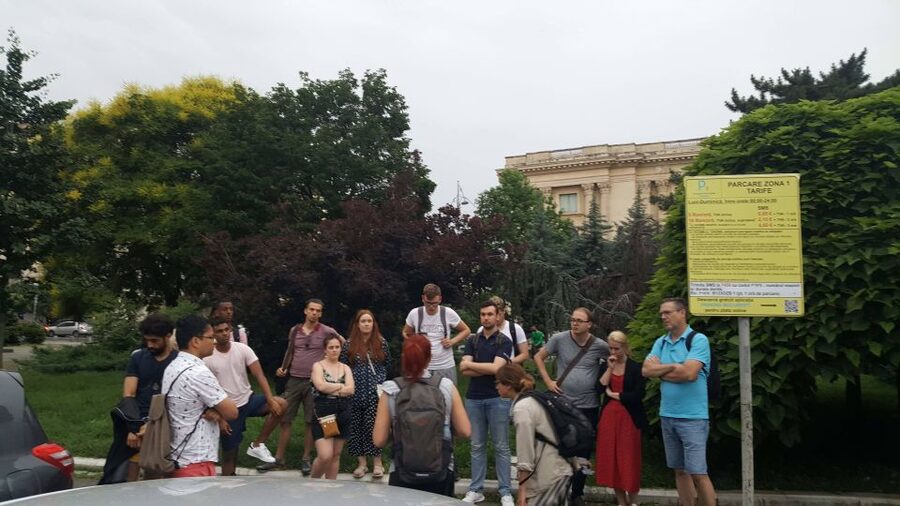
The tour begins near the red-brick bell tower of the Patriarchy, at Aleea Dealul Mitropoliei 19. The meeting point is within walking distance of Piata Unirii, one of Bucharest’s main central areas.
This is a sensible starting place because it places you near a major religious and civic setting before the walk turns toward the communist remaking of the city. It also gives you a clear landmark to look for, which is helpful in a city where street names and large open spaces can be confusing.
Wear comfortable shoes. That advice is not filler here. Three hours of walking, with pauses for explanations, means your feet will notice poor footwear long before the history lesson ends.
Bring water, especially in warm weather. One participant specifically found this useful even though the route includes a stop for drinks. The café pause comes partway through the tour, not at the start, and hot weather can make the earlier walking feel longer.
From inter-war Bucharest to communist control
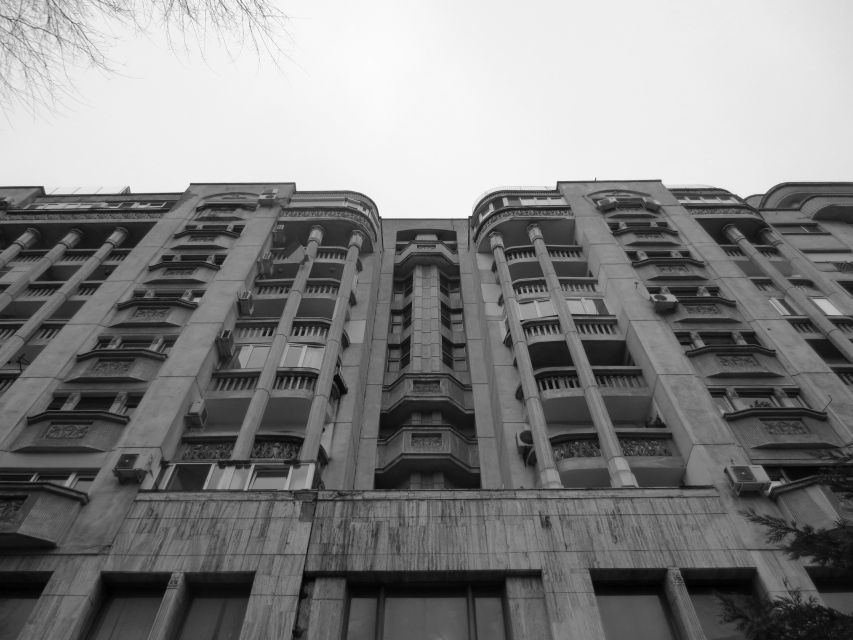
One of the tour’s strongest features is the comparison between two Bucharests. The first is the inter-war city, with its attractive neighborhoods and mixture of architectural influences. The second is the city reshaped under communist rule.
Your guide explains how different governments left physical marks on Bucharest. This helps you read the city as you walk, rather than seeing unrelated buildings with no connection between them.
The account also covers the violent beginnings of the communist regime. That subject is important because it prevents the tour from treating communism as only an architectural style or a period of shortages.
You learn about nationalization and the forced demolition of homes. These topics give real meaning to the large-scale redevelopment that followed. A new boulevard or monumental building could represent progress to the authorities, but it could also mean that families lost their homes with little choice in the matter.
The guides use photographs to show how places looked before and after redevelopment. Cristina has been praised for carrying a binder of images, a simple tool that makes vanished streets easier to picture.
I particularly like this use of visual material. Bucharest changed so dramatically that spoken descriptions alone can leave you guessing. Old images let you compare the present street with the city that once occupied it.
The Palace of Parliament and the price of spectacle
The Palace of Parliament is the tour’s most obvious landmark. Its scale is hard to ignore, but the explanation around it is more important than the photograph.
You hear about Ceausescu, his family, and the political purpose behind the building. The palace was not simply an office complex. It was part of a grand plan to reshape central Bucharest and project the power of the regime.
The tour does not include entry inside the Palace of Parliament. That keeps the price at $29, but it also means you should book a separate interior visit if seeing the rooms is important to you. The walking tour’s value lies in the surrounding story and city context, not in an indoor palace experience.
This distinction matters when you compare the tour with a standard sightseeing walk. You are paying for interpretation, not merely access to a famous building.
The palace can look like an abstract monument when viewed without context. After hearing about the homes demolished, the Uranus neighborhood, and the political climate of the period, its size carries a different weight.
That is one reason the tour works well early in a Bucharest visit. It can change how you look at the rest of the city, especially the contrast between official grandeur and ordinary residential life.
A few more trips worth weighing up before you book
- Bucharest: 3-Hour Dark History Tour with a Local
★ 4.9 · 301 reviews - Bucharest: Alternative Sightseeing 2.5-3h-Hour Guided Tour
★ 4.9 · 80 reviews - Bucharest: Relics of Communism 3-Hour Walking Tour
★ 4.9 · 77 reviews - Bucharest: 3-Hour Walking Tour
★ 4.9 · 77 reviews
Uranus and the neighborhoods that disappeared
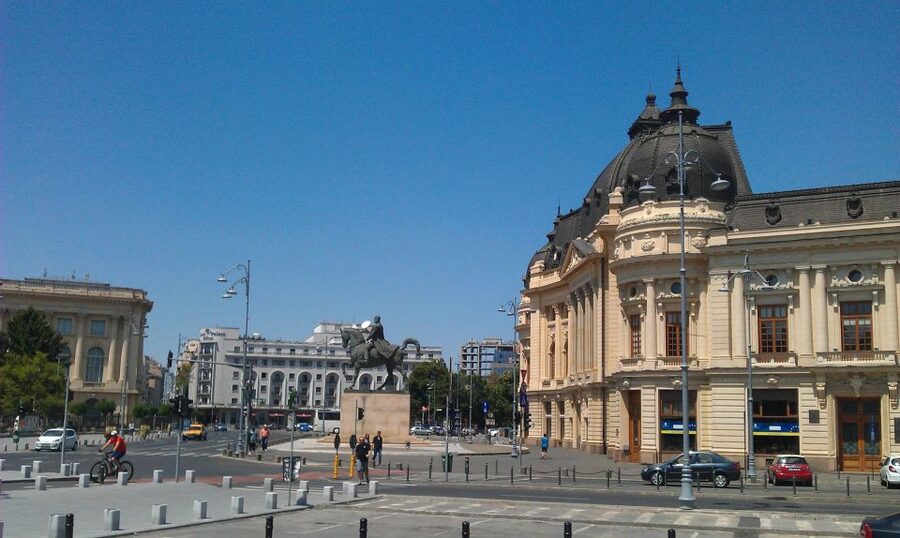
The remains of the Uranus neighborhood provide some of the most affecting moments of the route. This part of the tour moves the story away from famous monuments and toward the city’s lost homes.
Uranus was affected by communist redevelopment, and the surviving traces help you understand what was erased. The subject is not presented as an architectural curiosity. It is tied to forced demolition and the lives of people who lived there.
You might find this section more sobering than the palace stop. That is a strength, but it is worth knowing in advance. The tour deals with repression, displacement, and the violence surrounding the end of the regime, so it is not a light sightseeing outing.
The contrast becomes sharper when you later see inter-war neighborhoods that escaped the full force of communist urban remodelling. These areas are described as charming and relatively little known, which gives the walk a useful change of pace.
I like this part because it shows both absence and survival. You see not only what the authorities built, but also what remained outside their preferred plan.
Daily life under Ceausescu
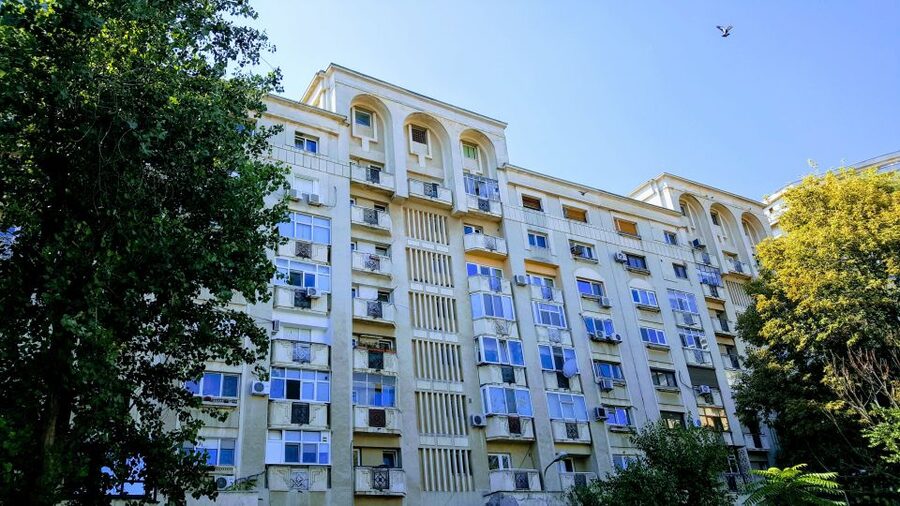
The political story is only half of the experience. A major part of the tour explains what everyday life was like under communism.
Your guide discusses the gap between official claims and ordinary experience. Family anecdotes help put national events into practical terms, showing how political decisions affected people at home and in the city.
Cristina has been praised for using personal and family stories without presenting only one narrow version of the past. She explains different perspectives and allows you to form your own view of how the period is remembered.
That balance is useful. Romania’s communist era remains a sensitive subject, and a guide who simply delivers slogans would make the history feel flat. Here, the personal material helps you understand why memories of the period can be complicated.
The small snack included in the tour adds a modest but memorable touch. One guide brought an old snack for the group to try, linking food with the everyday experience of the period. It is not a full tasting session, so do not book this expecting a culinary tour, but the gesture makes the subject more tangible.
The café break offers time to rest and ask questions. Drinks and snacks purchased there are not included, so carry a little money if you want coffee, water, or something to eat.
The 1989 Revolution and the fall of the regime
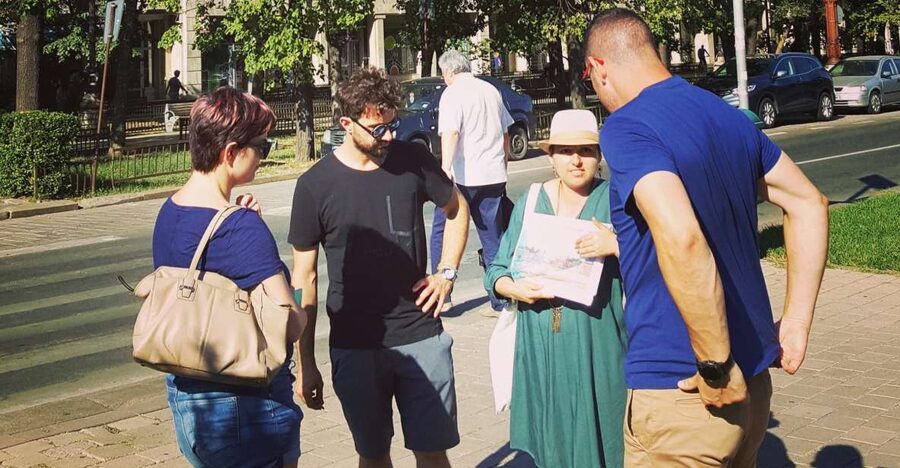
The final part of the tour turns toward the anti-communist revolution of 1989. You visit political memorials and places connected with the uprising, while your guide explains how Ceausescu’s rule ended.
The tour presents the revolution as a violent and complicated event, not as a tidy moment when one system simply disappeared. You hear about the bloody anti-communist uprising and the fall of the Iron Curtain in a Bucharest setting.
This local focus is valuable. European history books often give 1989 a few paragraphs, but the streets of Bucharest reveal that the change came with fear, confusion, and real loss of life.
The route also connects the revolution with the city you see today. Bucharest’s relative prosperity and peace are not treated as a complete break from the past. The modern city still carries physical and emotional traces of the old system.
The guides’ willingness to answer questions is a repeated strength. Cristina, Elena, Florycica, Andreea, and other guides have been described as friendly and flexible, adjusting the pace when the group needed more time at a stop or wanted to ask about a side topic.
The guide makes the difference
The subject is serious, but the presentation is not stiff. Cristina is often singled out for her humor, warmth, clear storytelling, and family anecdotes.
She also uses photos and answers questions in detail. One participant described her as easy to follow, while another appreciated how she found shade for the group on a sunny day.
Those practical choices matter. A history walk can become exhausting if you stand too long in one place while listening to a dense lecture. The guide’s pacing appears to be a real strength, although you should still expect some standing.
The experience is not tied only to one guide. Past departures have also been led by Elena, Andreea, Florycica, Ene, and others. Guide assignments can vary, so you may not receive Cristina specifically.
The broader pattern is reassuring: the guides are expected to be well prepared, personable, and able to explain Romanian history in English. One guide even explained the tour in near-perfect Spanish for a Spanish-speaking participant, but the advertised tour language is English.
Is $29 good value for three hours?
At $29 per person, this is a fair price for a three-hour guided walk in central Bucharest. The value comes from the interpretation and route, not from paid admissions.
The tour includes the guide and small snacks. It does not include drinks or snacks bought at the café, museum fees, or entry to the Palace of Parliament.
That makes the cost easy to understand. You pay one modest fee for a focused history walk, then decide for yourself if you want to spend more on food or an additional attraction.
I would consider it particularly good value if you are curious about twentieth-century European history or want to understand Bucharest beyond its old-town streets. A general city walk may show you attractive buildings, but this experience explains why the city looks so uneven and why certain areas vanished.
The tradeoff is that you do not get an interior palace visit. If your main goal is to enter the Palace of Parliament, this tour will not replace that ticket.
Who should book this experience?
I would recommend it to first-time visitors who want context before exploring more of Bucharest. It suits adults, older teenagers, history-minded couples, and anyone interested in how political systems shape cities.
It also works well for people who prefer small details to grand claims. You see memorials and monuments, but you also hear about demolished homes, family memories, old photographs, and a snack associated with daily life.
You may want to choose another activity if you dislike walking, standing, or serious historical subjects. Hot summer days can make the route harder, and one participant specifically wished there had been less standing during explanations.
The tour is also less suitable if you want a relaxed architectural stroll with little politics. Ceausescu’s dictatorship, repression, nationalization, forced demolition, and the 1989 violence are central to the experience.
Practical advice before you go
Meet near the red-brick bell tower of the Patriarchy and allow enough time to find Aleea Dealul Mitropoliei 19. The location is near Piata Unirii, but a clear landmark is still useful in central Bucharest.
Wear comfortable shoes and carry water. In warm weather, a hat and light clothing would also be sensible, although the tour information specifically requires only comfortable footwear.
Keep some money available for the café. The break is included in the schedule, but drinks and purchased snacks are not part of the tour price.
You can cancel up to 24 hours before the start for a full refund, and the reserve-now, pay-later option gives you some flexibility when arranging a Bucharest stay. Starting times vary, so check availability for your chosen date.
Should you book the Communist Bucharest tour?
Book it if you want to understand Bucharest rather than simply photograph it. The combination of the Palace of Parliament, Uranus, surviving inter-war neighborhoods, political memorials, and local family stories gives you a much fuller picture of the city.
At $29, it is a sensible use of three hours, especially early in your visit. Just bring water, wear good shoes, expect serious subject matter, and remember that the Palace of Parliament is viewed from outside.
I would make this a strong choice for history-minded visitors. If Cristina is leading your departure, her photos, humor, and personal connection to the subject may make an already worthwhile route especially memorable.
FAQ
How long does the Communist Bucharest tour last?
The tour lasts three hours.
What language is the tour offered in?
The advertised tour language is English.
Where does the tour meet?
It meets near the red-brick bell tower of the Patriarchy at Aleea Dealul Mitropoliei 19, Bucharest 030167, Romania. The meeting point is within walking distance of Piata Unirii.
How much does the tour cost?
The listed price is $29 per person.
Is the Palace of Parliament visited inside?
No. The tour includes the Palace of Parliament as an exterior sight, but entry inside is not included.
Are museum entrance fees included?
No. Any museum fees you choose to pay are separate.
Are drinks at the café included?
No. Drinks and snacks purchased at the café are at your own expense.
Are any snacks included?
Yes. Small snacks are included with the guided tour.
What should I bring?
Bring comfortable shoes. Water is also a useful practical choice, especially on sunny or hot days.
Can I cancel the booking?
Yes. You can cancel up to 24 hours in advance for a full refund. The activity also offers a reserve-now, pay-later option.
Just added around Bucharest
- 10 hours Private Apiary Tour in Romania – From Bucharest★ 5.0 · 3 reviews
- 4-Day Inside Transylvania & Transfagarasan Tour from Bucharest★ 5.0 · 3 reviews
- Bucharest: Charm of the Belle Époque Private Tour★ 5.0 · 3 reviews
- Bran & Peles Castles through the Best Road in the World: Transfagarasan road★ 4.5 · 3 reviews
- 2-Day Small-Group Tour in Transylvania from Bucharest – Maximum 5 Persons★ 5.0 · 3 reviews
- Private Wine Tasting at Bucharest’s First Wine Bar★ 5.0 · 3 reviews
- Bucharest to Brasov – Fast Private Transfer★ 5.0 · 3 reviews
- Probably the Best Restaurant and Wine Cellar near Bucharest★ 4.5 · 3 reviews
Communist History Tours, compared.



Bucharest Essential Tour: Old Town, Calea Victoriei & Communism
Read our review →
Communism in Bucharest – Landmarks, Museum & Communist Appetizers
Read our review →


Museum of Communism Ticket with Communist Coffee
Read our review →Browse the lists this tour appears in