
Reviewed · COMMUNIST HISTORY TOURS
The Real tour of Communism
Romania’s recent past still shapes Bucharest. This three-hour walking tour connects the Palace of Parliament, Revolution Square, churches, restaurants, and ordinary streets with the decades of communist rule that changed them. Guides such as Octavian, Daniela, Andreea, Mihai, and John Sever explain not only what happened, but how those events affected food, homes, families, religion, and daily routines.
I like the tour’s small maximum of 15 people, which gives you room to ask questions. I also like the personal touch: guides share memories of rationing, political pressure, and the final days of Nicolae Ceaușescu’s rule. The main drawback is simple: three hours on foot can be tiring in freezing rain or strong heat, and some stops last only about 15 minutes.
The tour costs $32.65 per person. That is a fair price for a focused introduction to Bucharest’s communist era, especially if you want context before visiting more museums and monuments on your own. It is not a full interior tour of the Palace of Parliament, and admission there is not included.
In This Review
- Key points to know before booking
- Why Bucharest needs a communist history walk
- Starting at the Patriarchal Cathedral and National Assembly site
- The Palace of Parliament and Ceaușescu’s grand vision
- Mihai Voda Monastery and the churches that were moved
- Old Town restaurants and the private world of the leadership
- Revolution Square and the violent end of the regime
- What the guides do best
- How much walking and waiting to expect
- Is $32.65 a fair price?
- Who should book this Bucharest walking tour?
- Final verdict: book it for context, not spectacle
- FAQ
- How long does The Real Tour of Communism last?
- Where does the tour begin?
- Where does the tour finish?
- Is admission to the Palace of Parliament included?
- Is food included?
- What happens if the weather is poor?
- How many people can join the tour?
Key points to know before booking
- The route links five important Bucharest stops, beginning at the Patriarchal Cathedral and ending at Revolution Square.
- The Palace of Parliament is viewed as part of the walking route, but entry is not included in the price.
- Personal stories are a major strength, with guides explaining rationing, food, politics, architecture, and family life.
- A communist-era snack is included, adding a small but memorable taste of the period.
- The group is capped at 15 people, making it easier to hear the guide and ask questions.
- The tour requires moderate fitness, and you should dress for the weather because much of the experience is outdoors.
Why Bucharest needs a communist history walk
Bucharest can look confusing at first. Orthodox churches sit near huge government buildings. Elegant older streets meet broad avenues and oversized blocks. A tour like this helps you read those contrasts.
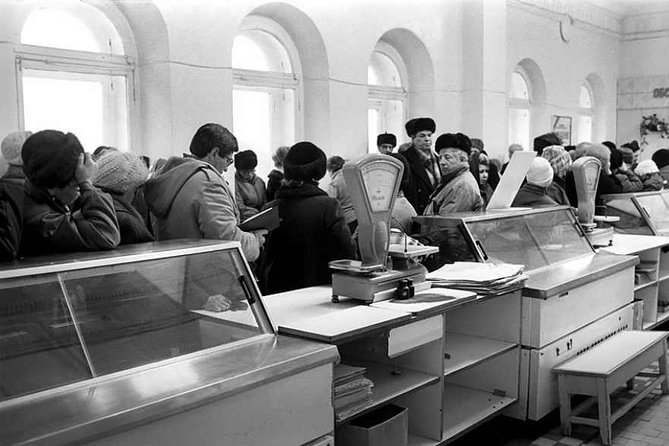
Communism in Romania was not just a political system discussed in textbooks. It affected what people could buy, where they lived, how they worked, what they watched, and how they spoke in public. The tour focuses on those everyday effects alongside the better-known story of Ceaușescu and the 1989 revolution.
I especially like that the route does not treat communism as a sealed-off period. The guides connect the past with present-day Bucharest, including the condition of older buildings, the use of former palaces, and the way the revolution is remembered. Daniela, Andreea, Octavian, and other guides are praised for giving both the broad political picture and the human details.
That balance matters. You will hear about grand state projects and power struggles, but also about rationing and the small ways people adapted. Personal memories make the period easier to understand without turning the tour into a dry lecture.
More communist-era history walks:
- Life under Communism
★ 5.0 · 358 reviews - 3-Hour Guided Tour of Communist Bucharest
★ 4.9 · 303 reviews - Bucharest Essential Tour: Old Town, Calea Victoriei & Communism
★ 5.0 · 142 reviews
Starting at the Patriarchal Cathedral and National Assembly site
The meeting point is the Patriarchal Cathedral at Aleea Dealul Mitropoliei 25. The cathedral sits within the Patriarchal complex, so allow time to walk up the slope to the meeting place. One review specifically points out that the meeting location can be easy to misunderstand if you expect to meet directly on a main street.
The first stop is the Patriarchal Palace, formerly the headquarters of the Great National Assembly during the communist period. You get about 15 minutes here, with no admission charge listed.
This is a useful opening because it introduces the relationship between religion and the communist state. Romania remained officially atheist under communist rule, yet important religious buildings survived. The tour uses this setting to show how political power occupied and reshaped existing spaces.
Do not expect a long interior visit at this stop. The value comes from the guide’s explanation and the location itself. If you arrive early, check that you are inside the correct complex and ready for a walking start.
The Palace of Parliament and Ceaușescu’s grand vision
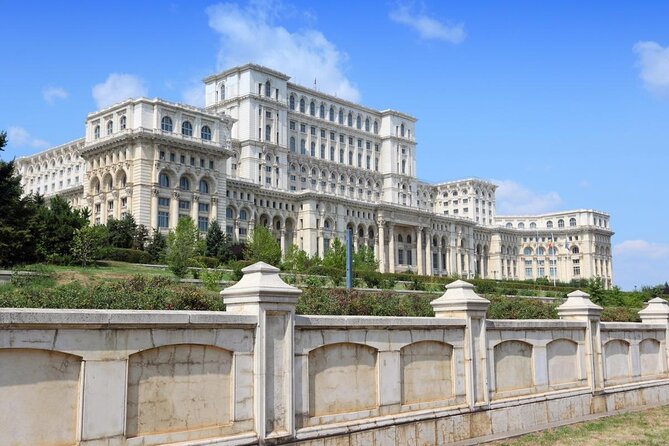
The route then reaches the Palace of Parliament, one of Bucharest’s most striking and controversial buildings. The guide explains the story of what is described as the second-largest building in the world.
The building is closely tied to Nicolae Ceaușescu’s plans for a reshaped capital. Its scale helps you understand the priorities of the regime: monumental power, strict control, and a city rebuilt to reflect the leader’s image. The tour places the building within the wider story rather than presenting it as an isolated architectural curiosity.
The scheduled time here is about 15 minutes. That is enough for an exterior explanation and photographs, but not enough for a full study of the building. Admission is not included, so this tour should not be your only plan if you want to go inside the Palace of Parliament.
That limitation is worth considering before you book. The walking tour gives you historical context around the building. A separate interior visit would be needed for a fuller look at its rooms and construction.
Still, the short stop works well in a walking route. You hear why the palace was built, what it represented, and how its presence changed Bucharest. Guides also discuss the demolition and reshaping of parts of the city, including the effect on old homes and religious buildings.
Mihai Voda Monastery and the churches that were moved
At Mihai Voda Monastery, the tour turns to one of the more surprising parts of Bucharest’s communist story. Some churches from the 16th and 17th centuries were physically moved rather than destroyed.
The idea of translating a church sounds almost unbelievable until you understand the pressure created by the regime’s redevelopment plans. Religious buildings stood in the way of new roads, government projects, or large urban changes. Moving them offered a way to preserve selected monuments while still making room for the new city plan.
You have about 15 minutes here, and admission is free. The stop is short, but it gives the guide a chance to explain how architecture became part of the political struggle. The churches were not simply old buildings. They carried cultural and religious meaning, and their survival was never guaranteed.
I find this one of the most useful stops for understanding that communist architecture was not only about what was built. It was also about what disappeared, what was damaged, and what was saved in altered form.
A few more trips worth weighing up before you book
- Bucharest: Dracula’s Castle, Peles Castle, & Brasov Old Town
★ 4.5 · 17,858 reviews - Bucharest: Dracula Castle, Peles Castle & Brasov Old Town
★ 4.6 · 10,891 reviews - Bucharest: Dracula’s Castle, Peleș Castle & Brașov Day Trip
★ 4.5 · 5,919 reviews - Bucharest: Palace of Parliament Tickets and Guide
★ 4.3 · 3,182 reviews
Old Town restaurants and the private world of the leadership
The walk continues into Bucharest’s Old Town. Here, the subject shifts from monuments to privilege and daily life.
The guide points out restaurants favored by the communist leadership and explains the stories connected with them. This creates a sharp contrast between the official promise of equality and the special access enjoyed by people close to power. Food becomes a simple way to understand the system.
That subject also connects with the included snack. The tour provides a small food item that has survived from the communist period. It is not presented as a full meal, and additional food or drinks are not included, but the taste gives the history a practical edge.
The restaurant stop also helps explain why personal stories are so valuable. A guide can describe shortages, restricted choices, and rationing in a way that dates and speeches cannot. Reviews repeatedly praise guides for explaining how communism affected food, household routines, and ordinary decisions.
A coffee and restroom break may take place around the middle of the tour. One group stopped at a coffee shop during cold, rainy weather, and another praised the pause on a hot day. Treat this as a helpful possibility rather than a guaranteed formal part of the published schedule. Food and drinks beyond the included snack are your own expense.
Revolution Square and the violent end of the regime
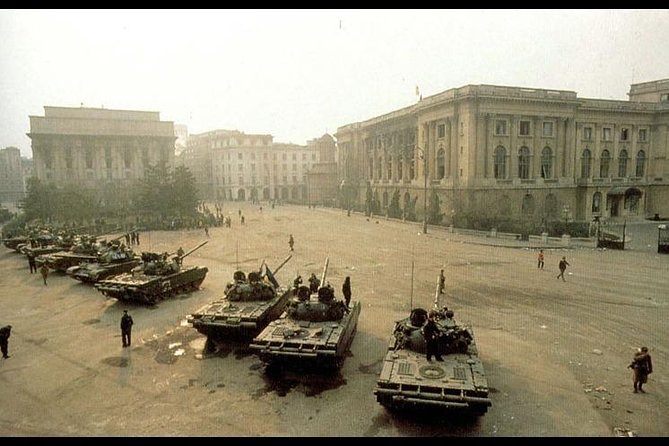
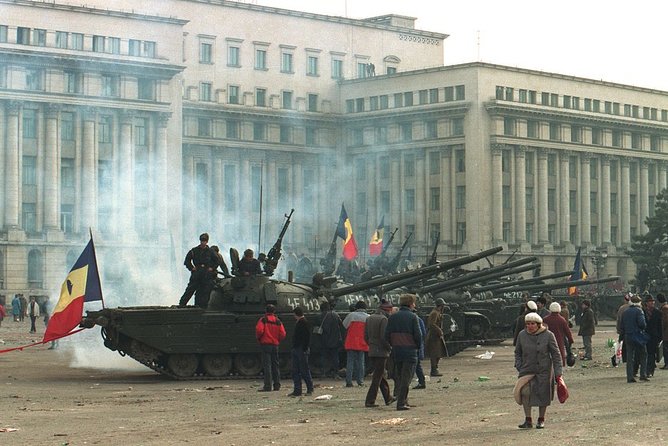
The final destination is Revolution Square, or Piața Revoluției. This is where the tour reaches its strongest political moment.
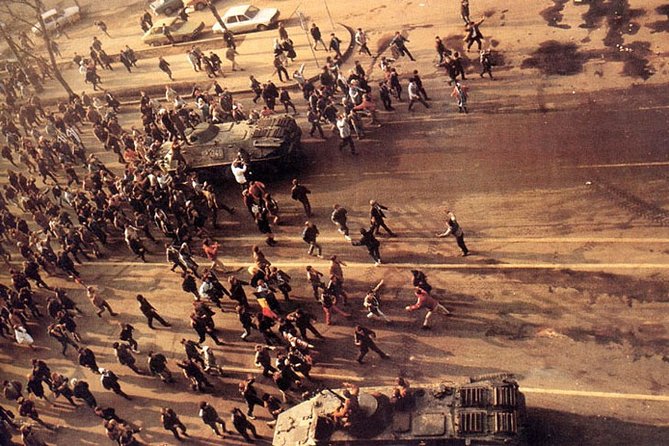
Romania’s 1989 revolution was the only bloody uprising against a communist government in the former Iron Curtain, according to the tour description. Here you learn about Ceaușescu’s last days in power, the public uprising, and the first days after more than four decades of communist rule.
The guide explains the events in sequence, but the best part is the connection between public history and private memory. Guides including Octavian and John Sever have been praised for describing how the period affected themselves, relatives, and close friends. Those details help you understand why the fall of the regime still carries such emotional weight.
The square also gives you a place to think about the difference between political change and everyday change. Freedom arrived quickly in December 1989, but the effects of decades of control did not disappear overnight. The tour closes by showing how the old system still influences Bucharest’s buildings, institutions, and public memory.
You finish at Revolution Square, not back at the starting point. That makes the tour useful as a bridge to other central sights, though you will need to arrange your own way afterward.
What the guides do best
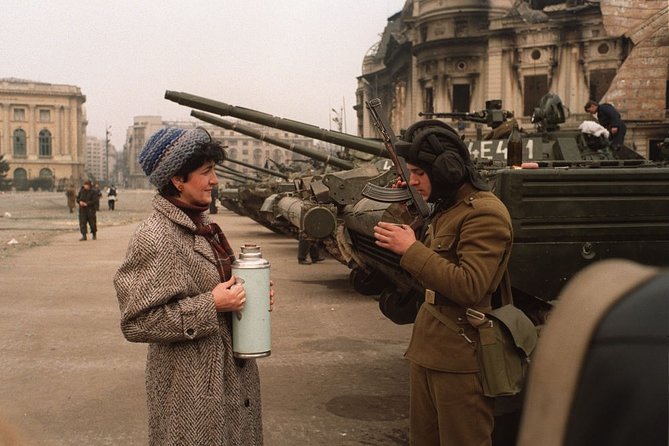
The strongest part of this tour is the guide’s storytelling. The content covers difficult material, but the guides are praised for explaining it clearly and keeping the pace moving.
Octavian is repeatedly praised for sharing personal memories and lesser-known details. Daniela receives strong marks for presenting the period with the right amount of detail while linking it to current events. Andreea is praised for placing Romanian communism in context and explaining how it differed from other Eastern European systems. John Sever is noted for adding personal stories and even sharing samples of period sweets.
Names may vary by departure, so you should not book solely to meet one particular guide. Still, the repeated praise suggests that the company has several guides who can handle both facts and questions.
I like that the guides encourage questions rather than rushing through a prepared script. That matters in a subject where many visitors arrive with a general idea of communism but little understanding of Romania’s particular version of it.
The tour also appears to work well for mixed interests. A serious student of history can ask for more detail, while someone new to the subject can follow the main story without getting lost.
How much walking and waiting to expect
The tour lasts about three hours and uses a walking route through central Bucharest. Each listed stop lasts about 15 minutes, but the movement between sites makes up a large part of the experience.
You need a moderate level of physical fitness. The route includes outdoor walking, and the starting point involves a slope within the cathedral complex. Wear comfortable shoes and dress for the forecast. The tour operates in all weather conditions, although poor weather may lead to a different date or a full refund under the stated conditions.
The weather can strongly affect your enjoyment. Cold rain made one reported tour challenging, yet the coffee break helped. A hot day was manageable because the guide kept the pace moving. Still, you will have a better time in comfortable conditions.
The small group limit of 15 is a real advantage. You can generally hear the guide more easily than on a large city walk, and questions are less likely to disappear into a crowd. If you prefer a private guide or a slower pace, this group format may feel less personal, but it keeps the price moderate.
Is $32.65 a fair price?
At $32.65 per person, this is good value if you want a guided introduction to Bucharest’s communist period. You receive roughly three hours of interpretation, a carefully connected route, and a small period snack. The tour also saves you the work of finding the relevant locations and piecing their stories together.
The value comes from the context, not from paid admissions. Most listed stops are free, and Palace of Parliament entry is not included. You are paying for the guide’s research, personal perspective, route planning, and ability to connect architecture with politics and daily life.
Group discounts may be available, which can make the cost more attractive for families or friends. A mobile ticket also keeps booking simple, and confirmation is provided when you book.
The price is less compelling if you only want to see the exterior of one building or take a general sightseeing walk. This tour is focused. You should choose it because you want Romania’s communist past explained in place, not because you want a broad introduction to every part of Bucharest.
Who should book this Bucharest walking tour?
I would recommend it most strongly to you if:
- You want to understand Romania beyond its medieval and royal stories.
- You are interested in the 1989 revolution and Ceaușescu’s rule.
- You prefer real places and personal stories to a museum-only visit.
- You want a small group with time for questions.
- You plan to visit other former communist countries and want a useful starting point.
- You are comfortable walking outdoors for three hours.
It may not suit you if you dislike political history, need frequent seated stops, or want extensive interior access to the Palace of Parliament. Families with older children may find the subject engaging, but the amount of political detail may be too much for very young children.
Service animals are allowed, and the meeting area is near public transportation. Hotel pickup and drop-off are not included, so you must reach the Patriarchal Cathedral yourself.
Final verdict: book it for context, not spectacle
The Real Tour of Communism offers a clear, human explanation of a period that still shapes Bucharest. I like its mix of major landmarks, moved churches, restaurant stories, food memories, and first-person accounts of life under Ceaușescu.
Book it if you want the city’s architecture and public squares to make more sense. The 4.9 rating from 666 reviews and 99 percent recommendation rate fit the tour’s main strengths: strong guides, useful detail, small groups, and a story that keeps moving.
Skip it if you want a full palace visit or a relaxed sightseeing stroll with little political content. For everyone else, $32.65 buys a thoughtful introduction to modern Romanian history, and the final stop at Revolution Square leaves you better prepared to explore Bucharest on your own.
FAQ
How long does The Real Tour of Communism last?
The tour lasts approximately three hours.
Where does the tour begin?
It begins at the Patriarchal Cathedral, Aleea Dealul Mitropoliei 25, Bucharest, Romania.
Where does the tour finish?
The tour ends at Revolution Square, or Piața Revoluției, in Bucharest.
Is admission to the Palace of Parliament included?
No. Admission to the Palace of Parliament is not included in the tour price.
Is food included?
A snack from the communist period is included. Other food and drinks are not included unless specifically stated.
What happens if the weather is poor?
The tour operates in all weather conditions, so you should dress appropriately. If the experience is canceled because of poor weather, you will be offered another date or a full refund.
How many people can join the tour?
The maximum group size is 15 people.
Just added around Bucharest
- 10 hours Private Apiary Tour in Romania – From Bucharest★ 5.0 · 3 reviews
- 4-Day Inside Transylvania & Transfagarasan Tour from Bucharest★ 5.0 · 3 reviews
- Bucharest: Charm of the Belle Époque Private Tour★ 5.0 · 3 reviews
- Bran & Peles Castles through the Best Road in the World: Transfagarasan road★ 4.5 · 3 reviews
- Private Wine Tasting at Bucharest’s First Wine Bar★ 5.0 · 3 reviews
- 2-Day Small-Group Tour in Transylvania from Bucharest – Maximum 5 Persons★ 5.0 · 3 reviews
- Bucharest to Brasov – Fast Private Transfer★ 5.0 · 3 reviews
- Probably the Best Restaurant and Wine Cellar near Bucharest★ 4.5 · 3 reviews
Communist History Tours, compared.



Bucharest Essential Tour: Old Town, Calea Victoriei & Communism
Read our review →
Communism in Bucharest – Landmarks, Museum & Communist Appetizers
Read our review →


Museum of Communism Ticket with Communist Coffee
Read our review →Browse the lists this tour appears in