
Reviewed · COMMUNIST HISTORY TOURS
Bucharest: Relics of Communism 3-Hour Walking Tour
Communism still shapes Bucharest’s streets. This three-hour walk connects the 1989 Revolution with the massive Civic Centre built under Nicolae Ceausescu, while also making room for the less visible story of daily life under the regime. I especially like the small group limit of 10 people and the way the route combines grand political buildings with tucked-away churches and personal stories. The main drawback is simple: you spend three hours on foot, often discussing serious and troubling subjects, so this is not a light sightseeing stroll.
I also like that the tour begins at Revolution Square, exactly where Ceausescu gave his final speech, rather than starting with a broad lecture in an unrelated part of town. The English-speaking guides have been praised for clear explanations, thoughtful answers, photographs, old school materials, and a balanced view of life before and after 1989. At $44 per person, the price is fair if you want context and conversation, but less compelling if you only want to photograph the Palace of the Parliament.
In This Review
- Key points to know before you book
- Why this communist-era walk matters in Bucharest
- Revolution Square and the final speech
- The Michael the Voivode Church and the buildings communism tried to erase
- Piața Unirii and the city reshaped from above
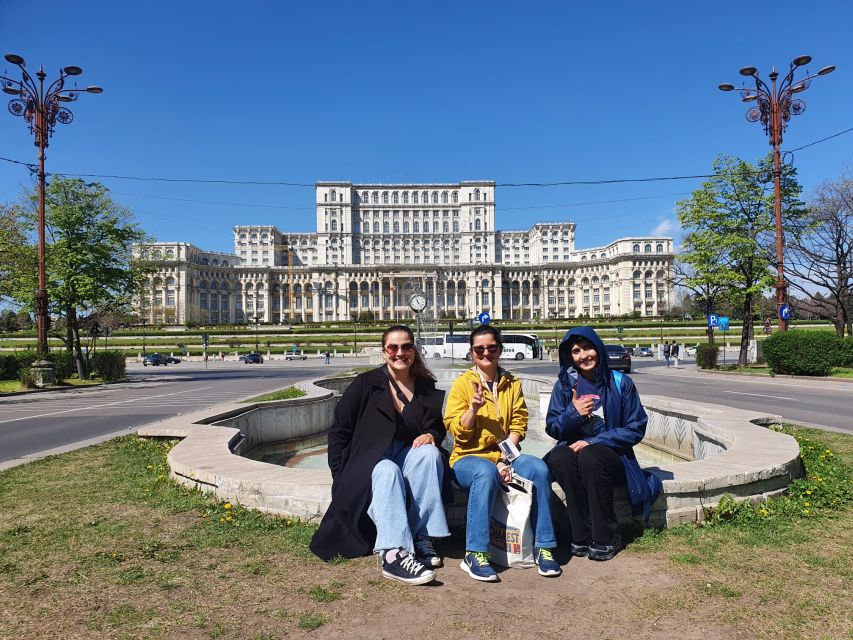
- The Palace of the Parliament and Ceausescu’s Civic Centre
- What daily life under Ceausescu actually means on this walk
- Pace, group size, and what to bring
- Is $44 a fair price?
- Booking details that matter
- Who should book this Bucharest walking tour?
- FAQ
- Where does the tour begin?
- Where does the tour end?
- How long does the walking tour last?
- Is the tour conducted in English?
- Is entry inside the Palace of the Parliament included?
- What is included in the price?
- Should you book it?
Key points to know before you book
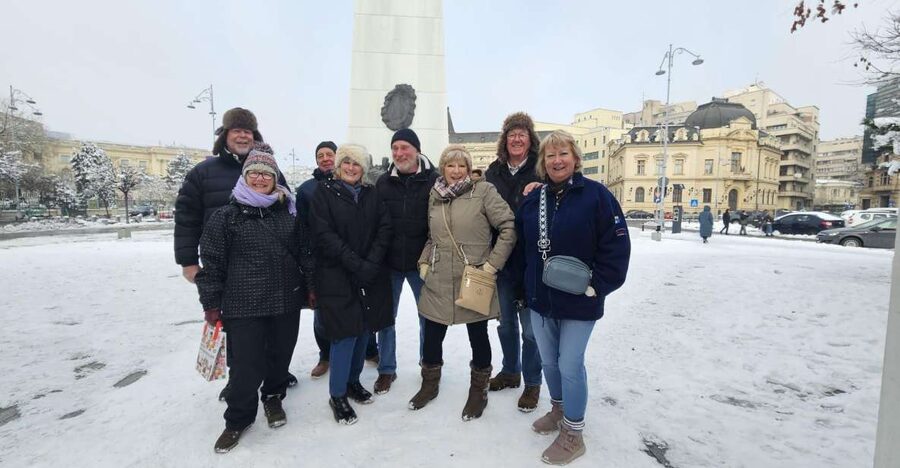
- The tour starts at the Memorial of Rebirth, in Revolution Square, where the story of the 1989 uprising begins.
- You see both official and overlooked Bucharest, from Ceausescu’s power buildings to the Michael the Voivode Church.
- The route explains daily life, including ration cards, black-market shopping, propaganda, and the secret police.
- The Palace of the Parliament receives about 20 minutes of guided attention, but the walking tour does not promise an interior visit.
- Guides such as Elena, Stefan, and Tudor have earned strong praise for warmth, clear English, photos, and personal stories.
- A Romanian snack souvenir is included, while transport, hotel pickup, and drop-off are not.
Why this communist-era walk matters in Bucharest
Bucharest can look like several cities at once. Elegant older buildings sit near blunt apartment blocks, broad avenues cut through historic neighborhoods, and the Palace of the Parliament dominates the city with its sheer scale. Without context, these sights can seem disconnected.
This tour gives you the political link between them. You learn how more than four decades of communist rule altered the capital, how Ceausescu shaped the city around state power, and how ordinary Romanians managed daily shortages and surveillance.
The focus is not only on leaders and architecture. You discuss ration cards, queues, the black market, official propaganda, and the role of the secret police. That matters because communism is easy to reduce to concrete buildings and dramatic photographs. The stronger part of this experience is the attention to how the system affected food, information, education, movement, and family life.
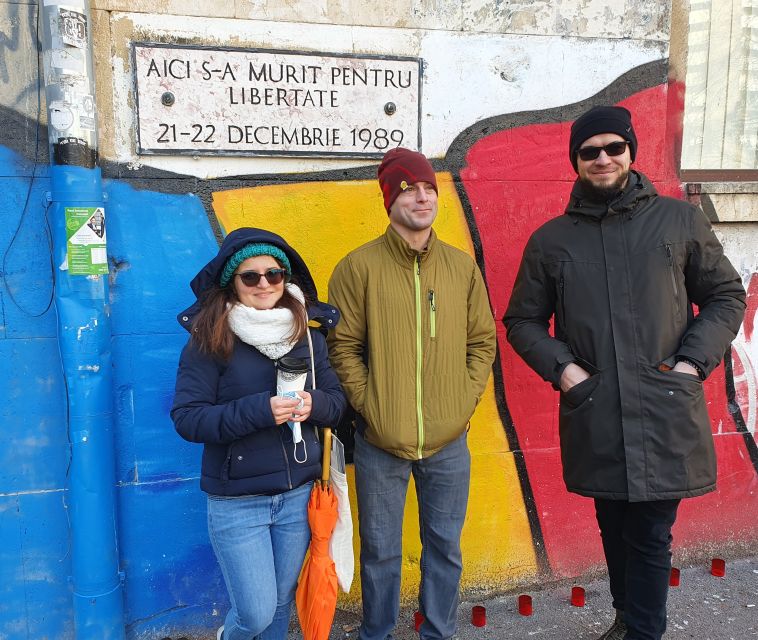
The 1989 Revolution receives special attention. You hear about Romania’s move toward democracy in the same central places connected with the uprising. That setting gives the political story a physical shape. You are not simply being told that change happened. You are standing where the last public speech of the old regime took place and where the transition began.
More Walking Tours in Bucharest
- Bucharest: City Highlights Guided Walking Tour
★ 4.9 · 1,482 reviews - Bucharest Highlights Walking Tour
★ 5.0 · 469 reviews - Bucharest: Ghost Stories & Romanian Mythology Walking Tour
★ 4.9 · 287 reviews
Revolution Square and the final speech
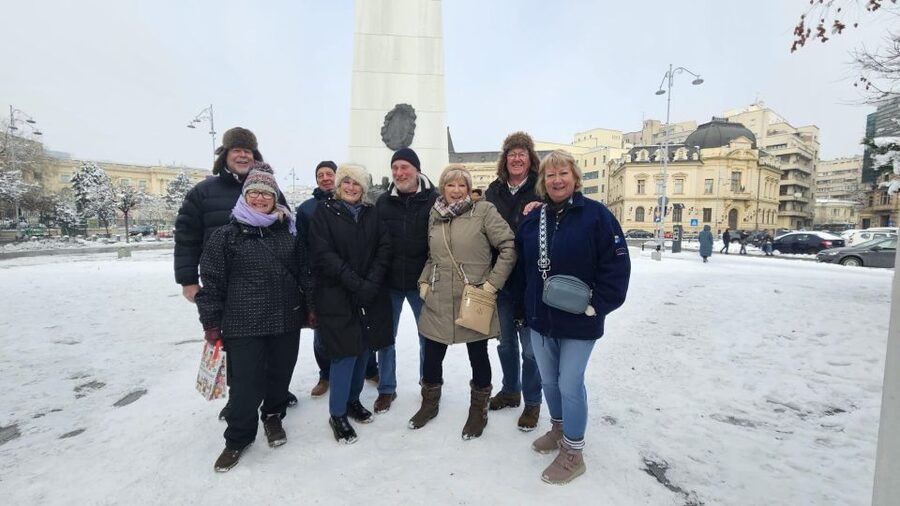
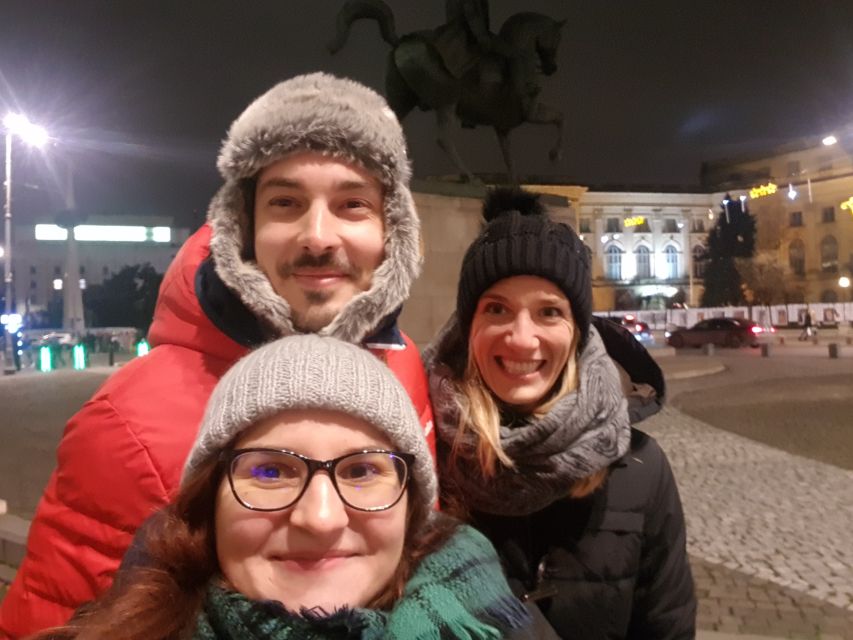
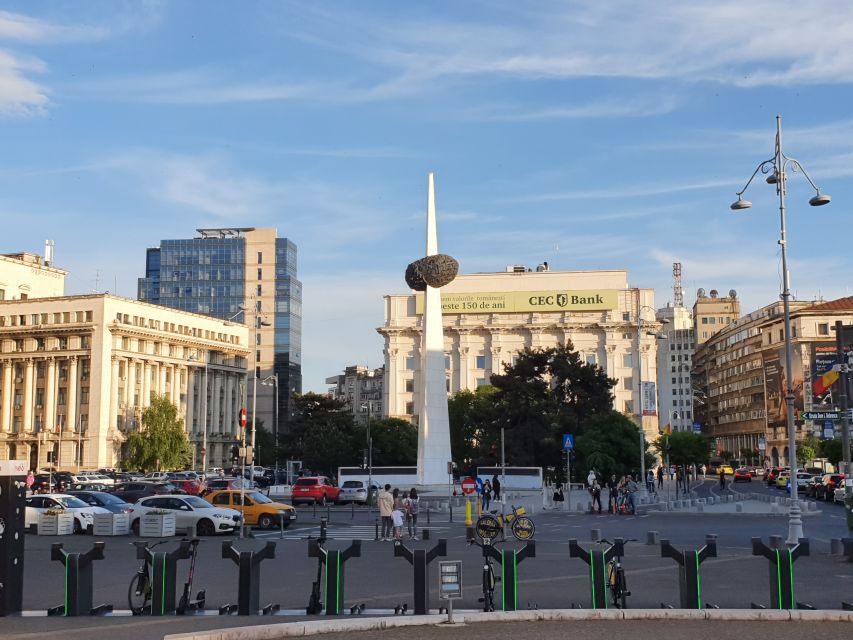
The meeting point is the Memorial of Rebirth in Revolution Square. This is a practical location in central Bucharest, and it gives the guide an immediate visual starting point.
The first guided section lasts about 20 minutes. The subject is Ceausescu’s final speech and the events of 1989. Starting here works well because the square links architecture, memory, and political drama in one place.
You should expect a serious opening rather than a quick introduction to Bucharest’s prettiest buildings. The guide explains what happened during the revolution and how Romania moved toward democracy. The tour also helps you read the square as more than a collection of monuments.
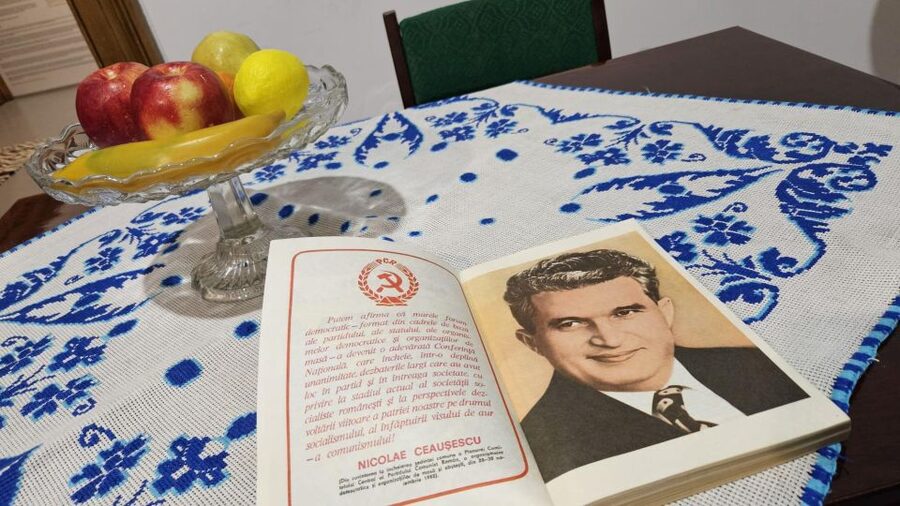
The Memorial of Rebirth itself invites questions about how a country remembers a violent political break. Depending on the guide, you might also see photographs or other visual material connected with the revolution. Elena, one of the guides praised for this experience, has used photographs and documentary material to make the events easier to follow.
The next stop, Piața 21 Decembrie 1989, receives about 15 minutes. Its name points directly to the date associated with the revolution, so the route keeps the story grounded in place and time.
This portion should appeal most to you if modern European history interests you. It also gives you a useful frame for the rest of the walk. The churches, boulevards, and government buildings you see later are easier to understand once you know what kind of political system created them and how that system ended.
The Michael the Voivode Church and the buildings communism tried to erase
The route then turns to the Michael the Voivode Church for about 15 minutes. This is one of the most interesting changes of pace on the walk.
After discussing public speeches, revolution, and state power, you encounter a religious building tied to the older city. The point is not just to admire a church. You learn about the communist effort to reshape Bucharest and push certain religious and historic places out of sight.
The tour description refers to churches that the communists wanted to forget. This makes the church stop especially useful for understanding the cost of the Civic Centre project. Ceausescu’s grand rebuilding program did not simply add new buildings. It also changed what could remain visible.
The contrast is sharp: older religious architecture on one side, large-scale communist planning on the other. I like this part because it prevents the tour from becoming a procession of government monuments. You get a clearer sense of what was displaced, what survived, and why some places are easy to miss if you explore Bucharest without a local guide.
A practical note: the church visit is listed as a 15-minute stop, so do not expect a long religious tour or a separate museum visit. Its value comes from the explanation of the setting and its place in the city’s political story.
Piața Unirii and the city reshaped from above
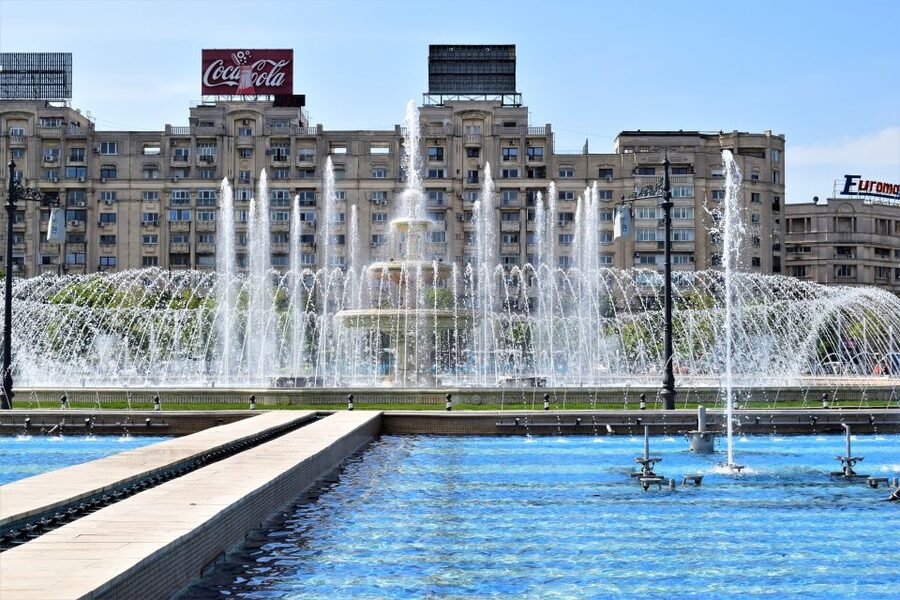
Piața Unirii receives another 15 minutes of guided commentary. Here, the walk continues the shift from historic Bucharest toward the broad avenues and monumental planning associated with the communist period.
The square helps you understand scale. Communist city planning often favored wide spaces, long sightlines, and buildings that communicated state control. The route uses this part of Bucharest to explain how the capital’s older character was cut through by a new urban order.
You may find this section more architectural than personal, but the guide keeps returning to the people who lived with these changes. That balance is important. Socialist realism is not only a style of concrete and stone. It was also a political language, designed to make the state look permanent, organized, and all-powerful.
The contrast between elegant pre-communist architecture and rows of communist apartment blocks becomes easier to see as you walk. Bucharest’s visual confusion is part of its appeal, but it can also be hard to interpret. This tour gives you a set of questions to ask: What was demolished? Who benefited from the rebuilding? Where did residents go? What did the new boulevards symbolize?
The answer will not come from photographs alone. It comes from hearing the guide connect the buildings to everyday life and the state’s public message.
More communist-era history walks:
- The Real tour of Communism
★ 5.0 · 666 reviews - Life under Communism
★ 5.0 · 358 reviews - 3-Hour Guided Tour of Communist Bucharest
★ 4.9 · 303 reviews - Bucharest Essential Tour: Old Town, Calea Victoriei & Communism
★ 5.0 · 142 reviews
The Palace of the Parliament and Ceausescu’s Civic Centre
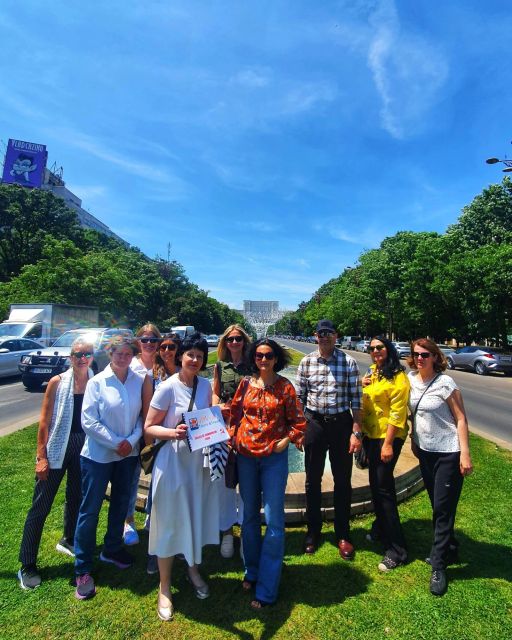
The biggest architectural stop is the Palace of the Parliament, with about 20 minutes of guided attention. You also explore the surrounding buildings of the Civic Centre project, created during Ceausescu’s rule.
The Palace was designed as the absolute center of power. Its scale is the point. It was not built merely as an office complex. It was meant to project authority through size, position, and formal design.
This is where the tour’s architectural and political strands meet. You learn how the building related to Ceausescu’s leadership and how the larger Civic Centre changed the capital. The route makes clear that this was a major urban intervention, not an isolated construction project.
You should be clear about one limitation. This is a walking tour with a roughly 20-minute guided section at the Palace, not a listed interior tour of the building. If you want to see the inside, you will need to arrange a separate Parliament visit. One past participant found the outdoor explanation useful before taking an interior tour later, since the walk provided the political context needed to understand what the building represented.
The tour finishes at Piața Constituției. That ending is fitting because the square gives you another strong view of the Civic Centre and its oversized public spaces. It also leaves you in a central part of Bucharest rather than returning you to the original meeting point, so plan your next move from there.
What daily life under Ceausescu actually means on this walk
The strongest subject here is not just Ceausescu’s personality or the appearance of the Palace. It is the texture of ordinary life.
You discuss ration cards, which controlled access to basic goods, and the black market, which became important when official supply was poor. You also hear about propaganda and the secret police, two forces that shaped what people said publicly and what they kept private.
This makes the tour useful even if you already know the broad outline of Eastern European communism. Romania had its own specific experience, and the guide connects national politics to Bucharest streets and buildings.
Past participants have particularly valued personal stories and physical teaching aids. Elena has used old communist school books, a mandatory school scarf, photographs comparing old and new Bucharest, and a photographic account of the revolution. Those details can make an abstract political system feel more concrete.
The guide style appears to be conversational rather than overloaded with dates. Stefan has been praised for combining serious information with light, witty storytelling, while Tudor has been noted for using photographs and pausing to answer questions. Elena has also been praised for a personal approach and for sending additional book and web recommendations after the walk.
Guide assignments can change, so you should not assume you will meet a particular person. Still, the repeated praise for Elena, Stefan, and Tudor points to a tour culture built around discussion rather than memorized speeches.
Pace, group size, and what to bring
The activity lasts three hours and covers several central areas on foot. The route includes at least seven named points, with guided segments of 15 to 20 minutes at the main stops, plus the walking time between them.
A small group of no more than 10 participants is a real advantage. You can ask about family memories, architecture, the revolution, or daily shortages without trying to interrupt a large crowd. One past booking even operated with a single participant, and the guide still ran the tour rather than canceling it.
The pace has generally been described as relaxed, and some outings have lasted longer than the scheduled time because the guide continued answering questions. You should not count on extra time, but the pattern suggests an experience that values conversation over rushing from one photo stop to another.
Wear comfortable shoes and be ready for outdoor walking. That is practical advice based on the format, not a promise about weather or surfaces. Since there is no hotel pickup or drop-off, you also need to reach the Memorial of Rebirth independently.
The included Romanian snack souvenir is a small touch, but it adds local flavor to an otherwise serious experience. One past participant also enjoyed a break at a typical Romanian bar during the walk. That stop is not listed as a guaranteed part of the itinerary, so treat it as something that might happen rather than a fixed inclusion.
Is $44 a fair price?
At $44 per person, the value depends on what you want from Bucharest. If you only want a fast introduction to the Palace of the Parliament, the price may feel high for a three-hour walk that gives the building about 20 minutes of focused attention.
If you want a clear explanation of communist Bucharest, the cost is easier to justify. You are paying for a small English-speaking group, a route that includes places many independent visitors could pass without understanding, and the chance to ask detailed questions.
The value also improves if this is your first visit. Bucharest’s communist buildings can look forbidding or simply oversized when seen without context. After this walk, the Palace, Civic Centre, apartment blocks, broad avenues, and surviving churches form a connected story.
The experience may be especially worthwhile for people interested in the 1989 Revolution, twentieth-century European politics, architecture, or family history in Romania. It also suits curious visitors who prefer a local guide’s explanation to reading plaques and taking photographs alone.
You may want to skip it if you dislike walking, have little interest in political history, or mainly want an interior tour of the Palace. In that case, a shorter architectural visit may better match your plans.
Booking details that matter
The tour is offered in English with a live guide. The group is limited to 10 people, and the listed duration is three hours.
You meet at the Memorial of Rebirth in Revolution Square. Hotel pickup and drop-off are not included, and the tour ends at Piața Constituției.
The booking terms are flexible: you can reserve now and pay later, and cancellation is allowed up to 24 hours before the start for a full refund. Starting times vary, so you need to check availability for your chosen date.
The listed rating is 4.9 from 77 reviews, with praise focused on the guides’ warmth, preparation, clear English, personal stories, and willingness to answer questions. The most repeated positive point is the quality of the guiding, not simply the number of landmarks.
Who should book this Bucharest walking tour?
I would choose this tour if you want to understand why Bucharest looks the way it does. The route gives you a useful mix: Revolution Square for the political break, a church for the older city, Piața Unirii for urban change, and the Palace of the Parliament for Ceausescu’s vision of absolute power.
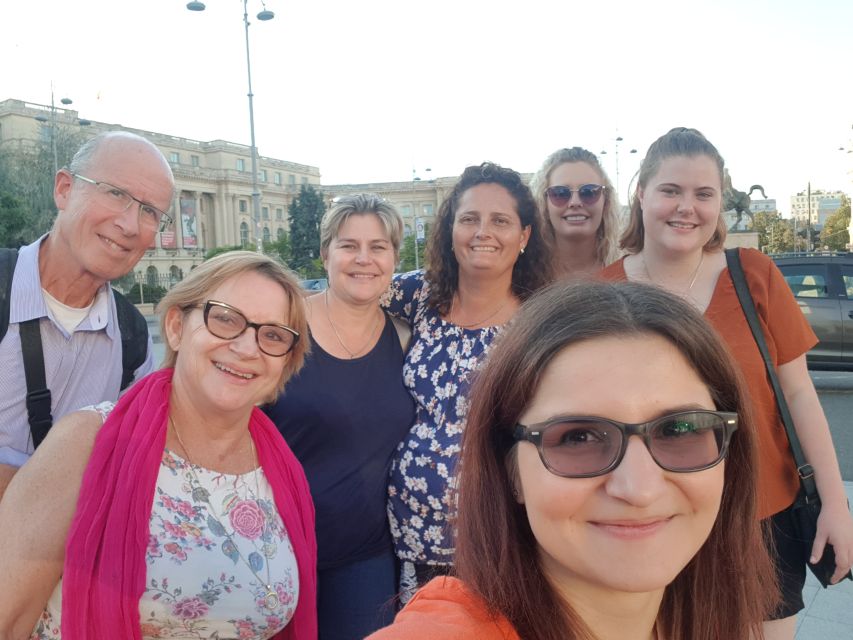
It is also a good choice if you like asking questions. The small group makes that easier, and the guides have been praised for adapting the conversation, extending explanations, and using photographs or old objects to make the past clearer.
Families with younger children should consider the subject matter and walking time. The tour deals with shortages, surveillance, propaganda, and revolution, so it is more suited to older children and adults who can engage with difficult history.
FAQ
Where does the tour begin?
It begins at the Memorial of Rebirth in Revolution Square, Bucharest.
Where does the tour end?
The tour finishes at Piața Constituției.
How long does the walking tour last?
The scheduled duration is three hours.
Is the tour conducted in English?
Yes. It includes a live English-speaking guide.
Is entry inside the Palace of the Parliament included?
The tour includes a guided stop at the Palace of the Parliament, listed at about 20 minutes. An interior visit is not included in the stated tour details.
What is included in the price?
The price includes the walking tour with an English guide and a Romanian snack souvenir. Hotel pickup and drop-off are not included.
Should you book it?
Book this tour if you want Bucharest’s communist past explained through real places, not just dates and slogans. The route is focused, the group is small, and the guides have earned especially strong praise for making serious history personal and easy to follow.
I would not book it solely for a Palace of the Parliament photo stop. Book it for the connections: the last speech in Revolution Square, the revolution of 1989, churches pushed aside by redevelopment, daily life shaped by rationing, and the monumental Civic Centre built to display state power. That combination gives you a far better sense of Bucharest than any single landmark can provide.
More Walking Tours
- Bucharest: Guided Walking Tour with Romanian Snack
★ 4.9 · 228 reviews - Best of Bucharest | Private Walking Tour
★ 5.0 · 199 reviews - Walking Tour- Delightful Bucharest (Highlights, Stories, Sights)
★ 5.0 · 145 reviews - 4h Bucharest Private Tour (2h by Car and 2h Walking in Old Town)
★ 5.0 · 90 reviews
Just added around Bucharest
- 4-Day Inside Transylvania & Transfagarasan Tour from Bucharest★ 5.0 · 3 reviews
- 10 hours Private Apiary Tour in Romania – From Bucharest★ 5.0 · 3 reviews
- Bucharest: Charm of the Belle Époque Private Tour★ 5.0 · 3 reviews
- Bran & Peles Castles through the Best Road in the World: Transfagarasan road★ 4.5 · 3 reviews
- 2-Day Small-Group Tour in Transylvania from Bucharest – Maximum 5 Persons★ 5.0 · 3 reviews
- Private Wine Tasting at Bucharest’s First Wine Bar★ 5.0 · 3 reviews
- Bucharest to Brasov – Fast Private Transfer★ 5.0 · 3 reviews
- Probably the Best Restaurant and Wine Cellar near Bucharest★ 4.5 · 3 reviews
Communist History Tours, compared.




Bucharest Essential Tour: Old Town, Calea Victoriei & Communism
Read our review →
Communism in Bucharest – Landmarks, Museum & Communist Appetizers
Read our review →

Museum of Communism Ticket with Communist Coffee
Read our review →Browse the lists this tour appears in