
Reviewed · COMMUNIST HISTORY TOURS
Timisoara: Grand Communism Tour
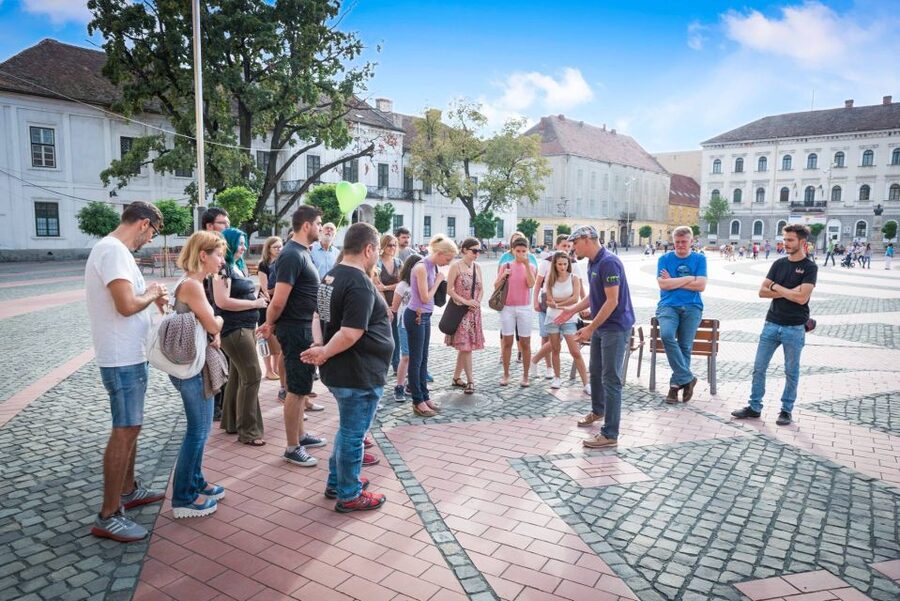
History is still visible in Timisoara. This 3.5-hour tour connects the city’s communist past with the 1989 Revolution, taking you beyond the polished central squares to places where political change began. I especially like the small group of no more than 10 people, and I like the way the route combines political facts with family stories and ordinary life under the regime. The main consideration is that the subject is often grim, so this is not a light sightseeing outing.
The $70 price is reasonable if you want context rather than a quick look at monuments. Transportation between stops is included, and the English or Romanian-speaking guides add personal detail that can make a difficult period easier to understand. I would set aside enough energy for serious discussion, some walking, and the additional 20 RON entrance fee for the Revolution Memorial.
In This Review
- Key points to know before booking
- Why Timisoara is the right place for this tour
- Meeting at the Orthodox Cathedral
- SCARTZ club and the Communist Consumer Museum
- The 50-year political story
- The Anti-Communist Resistance Movement Monument
- The Reformed Hungarian Church and the start of the uprising
- The former Communist Party headquarters
- Cemetery of the Revolution Heroes
- The Revolution Memorial and the tour’s final stop
- Guide quality and the small-group advantage
- What the $70 price includes
- Who should book this Timisoara tour?
- Practical advice for a better visit
- Should you book the Grand Communism Tour?
- FAQ
- How long does the Grand Communism Tour last?
- How much does the tour cost?
- Where does the tour meet?
- Which languages are available?
- How large is the group?
- Is transportation included?
- Is the Revolution Memorial entrance fee included?
- What places does the tour visit?
- Can I cancel for a full refund?
Key points to know before booking
- Start at the Orthodox Cathedral, a central meeting point that places you close to the story of the 1989 uprising.
- See the Communist Consumer Museum in the basement of SCARTZ club, where objects from daily life help explain more than political speeches can.
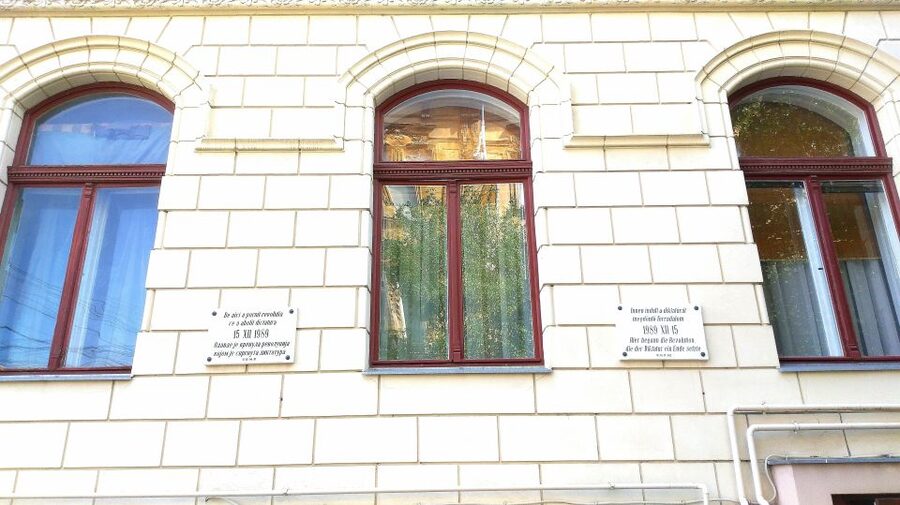
- Visit the Reformed Hungarian Church, the place connected with the start of the December 1989 uprising.
- Hear about resistance in the 1950s and 1960s at the Anti-Communist Resistance Movement Monument.
- Finish at the Revolution Memorial, with a separate entrance fee of 20 RON.
- Expect a personal, small-group experience, with guides such as Andrei, Roberta, Sergiu, and Sergio praised for clear storytelling and strong language skills.
Why Timisoara is the right place for this tour
Timisoara is closely tied to the collapse of Nicolae Ceausescu’s rule. The December 1989 uprising began here before spreading across Romania, so the city gives you a direct way to understand how a national revolution grew from local events.
What I like about this approach is that the tour does not treat communism as a set of dates and political names. It links the larger story to churches, monuments, apartment districts, cemeteries, and household objects. You get a sense of how decisions made in Bucharest affected ordinary people in Timisoara.
The route also covers roughly 50 years of political change. That matters because the 1989 Revolution did not appear from nowhere. The guide explains the earlier communist takeover, the resistance movements of the 1950s and 1960s, the later rule of Ceausescu, and the pressure that eventually broke the regime.
If you know little about Romanian history, the tour gives you a useful framework. If you already know the broad outline, the local places and family accounts can add the missing human scale.
More communist-era history walks:
- The Grand Tour of Communist Ages at Timisoara
★ 5.0 · 17 reviews - The Real tour of Communism
★ 5.0 · 666 reviews - Life under Communism
★ 5.0 · 358 reviews
Meeting at the Orthodox Cathedral
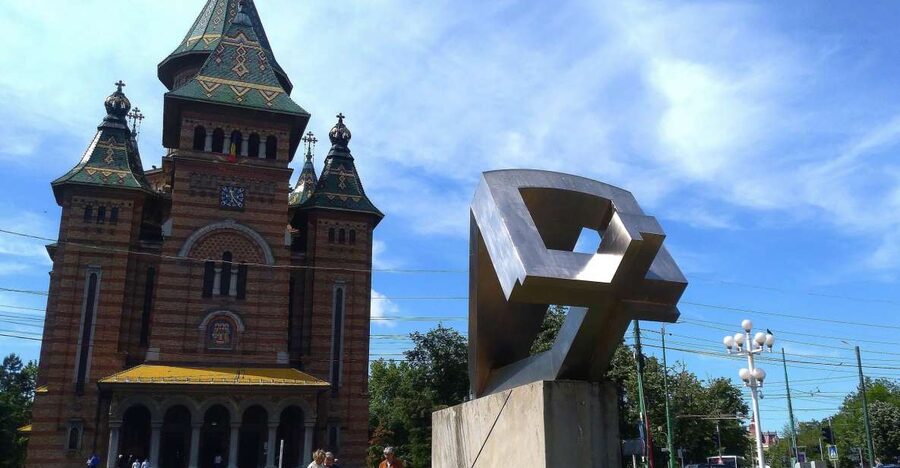
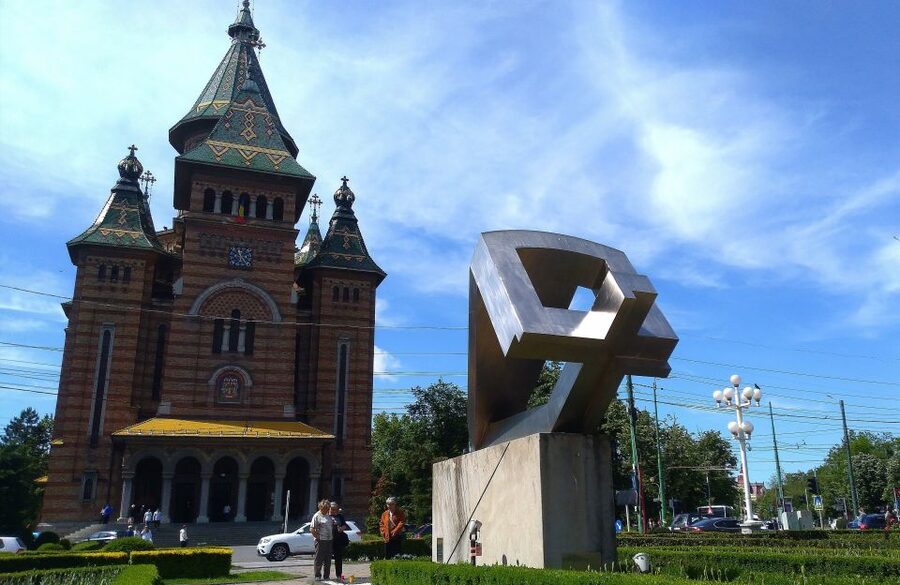
The tour begins in front of the Orthodox Cathedral. This is a practical meeting point in central Timisoara, and it gives the guide a natural place to introduce the final days of the communist period.
You should arrive ready to listen rather than rush into photographs. The opening discussion sets up the political background, including Ceausescu’s role and the conditions that led to the 1989 Revolution.
The cathedral also helps place the later events in a real city setting. You are not starting with an abstract lecture in a conference room. You are standing near the places connected with the movement that changed Romania.
The meeting point is straightforward, but it is still wise to confirm the exact starting time when booking. The activity runs for 3.5 hours, and several stops are linked by included transportation.
SCARTZ club and the Communist Consumer Museum
One of the tour’s more unusual stops is SCARTZ club, described as a misfit location with a Communist Consumer Museum in its basement. This is likely to be one of the most memorable parts of the route because it focuses on the material side of life under communism.
Political history can feel remote. Household objects, consumer goods, and everyday items make it easier for you to picture how people lived, what they could buy, and what shortages or restrictions meant in practice. The museum gives the guide something concrete to point to while explaining the period.
I appreciate this stop because it avoids reducing communism to Ceausescu alone. Dictators and party structures matter, but daily life often reveals the system more clearly. A basement collection inside a club may sound informal, yet that setting can make the subject feel less like a school lesson and more like a conversation about how people actually got through each day.
SCARTZ is also a reminder that Timisoara’s historical memory does not exist only in grand civic buildings. Some of the most useful objects and stories can appear in unconventional spaces.
The 50-year political story
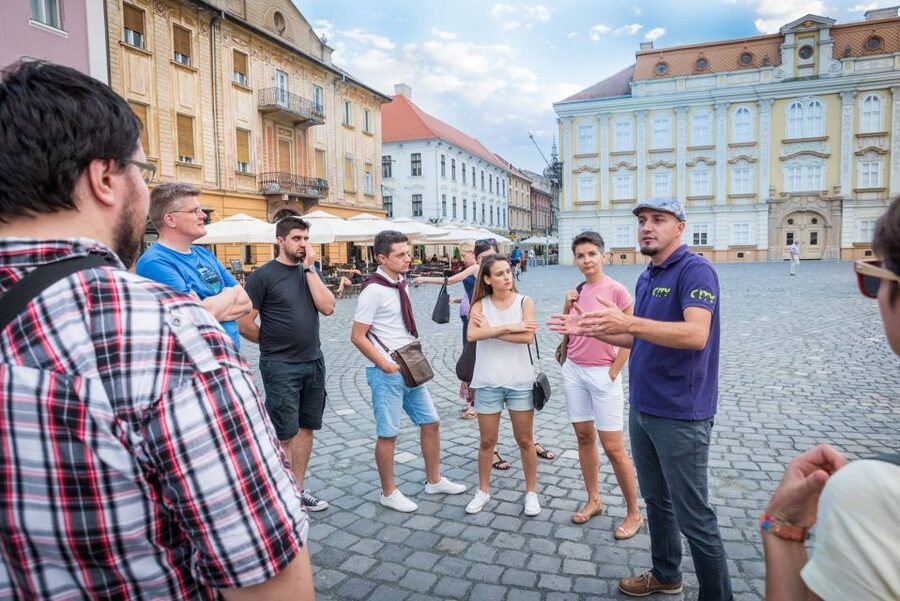
The guide then builds the wider political picture. You hear about Ceausescu, but also about the decades that came before his fall. The tour presents the geopolitical changes that shaped Romania and explains how those pressures fed into the events of 1989.
This part is important for visitors who may know Ceausescu mainly as the communist leader executed after the Revolution. His end was dramatic, but the causes were gradual. A good guide needs to connect government policy, public discontent, resistance, and the final uprising without losing you in names and dates.
The strongest guide accounts appear to be personal as well as factual. Andrei has been praised for adding stories from his family, while another guide, Roberta, was described as having direct experience of the period through her family and her own life. That kind of connection can clarify what official summaries often leave out.
Andrei has also been praised for flawless English, an easy manner, and engaging storytelling. That matters on a history tour because clear delivery is just as important as the information itself. You want someone who can explain a serious subject without turning every stop into a speech.
A few more trips worth weighing up before you book
- The Classic Tour of Timisoara
★ 5.0 · 154 reviews - Weekly Guided Tour in English – Tuesday, Thursday, Saturday
★ 5.0 · 84 reviews - Timisoara All in One – Walking and Tram Tour
★ 5.0 · 72 reviews - Timisoara: Guided Walking Tour
★ 4.9 · 38 reviews
The Anti-Communist Resistance Movement Monument
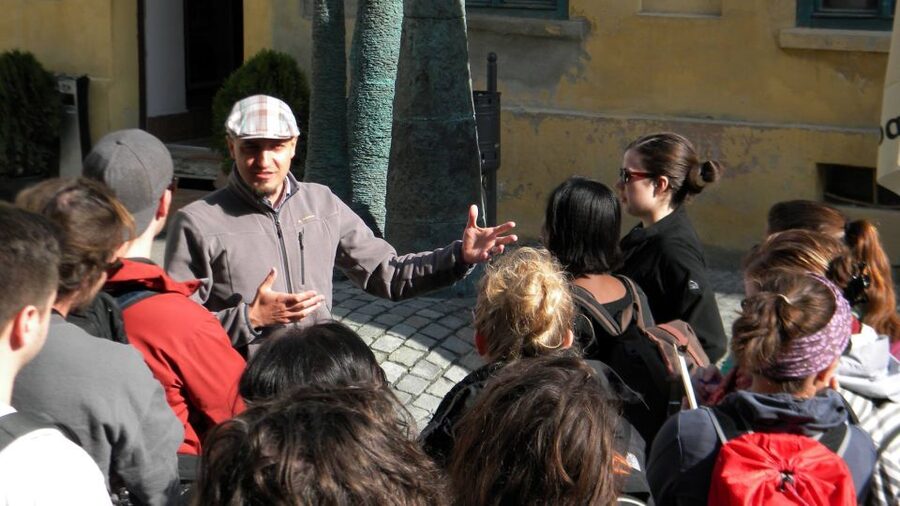
At the Anti-Communist Resistance Movement Monument, the focus shifts to the 1950s and 1960s. You hear how Romanians opposed the communist authorities during those difficult decades.
This stop broadens the story beyond the better-known events of 1989. Resistance did not begin in the final days of Ceausescu’s rule. People had already opposed the system, often under harsh conditions, long before the movement became visible to the outside world.
The monument gives those earlier struggles a physical place. Instead of treating resistance as a footnote, the guide can show you how it fits into the city’s memory.
The subject is serious, and the tour does not appear designed to soften it. That is a strength for anyone seeking an honest account, though families with young children may want to think about the tone before booking. The experience is best suited to people who want political and social context rather than a cheerful city walk.
The Reformed Hungarian Church and the start of the uprising
The Reformed Hungarian Church is the key stop for understanding how the December 1989 uprising began. From here, the guide explains the local events that set the movement in motion.
This is where the tour’s strength becomes clearest. You are not simply hearing that a revolution happened in Timisoara. You are learning how a protest developed in a specific place and how local opposition grew into a challenge to the entire regime.
The church also adds an important reminder about the city’s mixed cultural identity. Timisoara’s story includes Romanian and Hungarian communities, and the location connects the Revolution with that wider social setting.
The tour then takes you to the former headquarters of the Communist Party. That contrast is useful. One stop represents the beginning of public opposition, while the other represents the political power that opposition confronted.
I like routes that place opposing forces close together in the same historical conversation. The guide can show how control operated and how people pushed back, rather than presenting the Revolution as a single dramatic moment.
The former Communist Party headquarters
At the former Communist Party headquarters, you get a clearer sense of the local machinery of power. This is not simply another old building. It represents the institutions that shaped public life during the communist period.
The guide’s role here is to explain how political authority affected the city. You might hear about the relationship between local officials, the party, and the wider regime. The exact detail will depend on the guide, but the stop gives the earlier history a strong physical anchor.
This is also a useful place to pause and consider the difference between official power and popular support. A government can control offices, police, and public messaging, yet still lose its grip when people decide to act together. The tour uses Timisoara’s locations to make that change easier to follow.
Included transportation helps keep the route practical. You are not expected to find every site alone, and the small group makes it easier to stay with the guide and ask questions.
Cemetery of the Revolution Heroes
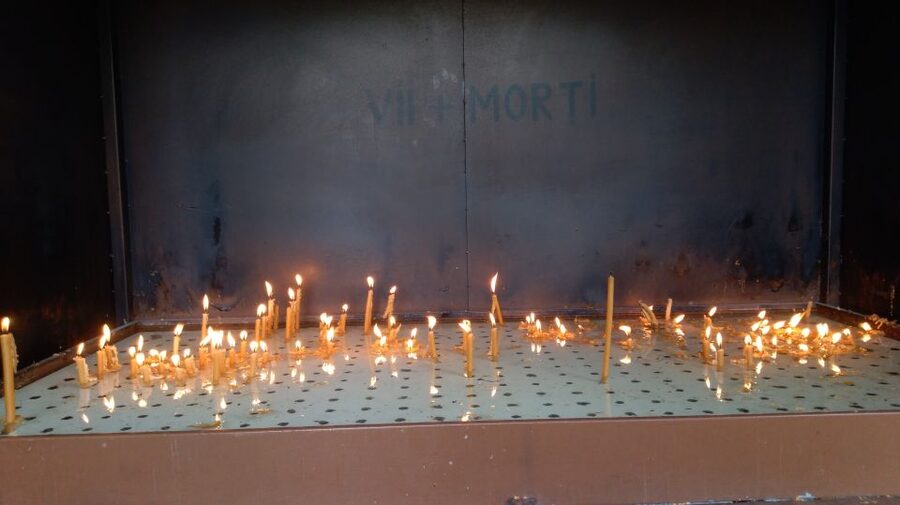
The Cemetery of the Revolution Heroes brings the final events into personal focus. Here, the guide explains the people who died and the events that led to the end of Ceausescu’s rule.
A cemetery changes the pace of the tour. Political history can feel distant until you encounter the names and memory of those who lost their lives. This stop gives the Revolution a human cost that no timeline can fully convey.
You should expect a reflective part of the experience. It is less about checking off a sight and more about understanding what the uprising demanded from the people who took part.
The guide also discusses the Anti-Communist and Anti-Ceausist Revolution of Timisoara in greater detail. That wording matters because the movement was not only a general protest against communism. It was also a direct rejection of Ceausescu’s personal rule.
The Revolution Memorial and the tour’s final stop
The tour ends at the Revolution Memorial of Timisoara. The site honours the people of the Anti-Ceausist Revolution and connects the city’s local uprising with the eventual end of the national regime.
Admission is not included, and the entrance fee is 20 RON. That is a modest extra cost, but you should include it in your budget because the memorial is intended to complete the story rather than serve as an optional afterthought.
This final stop works best after you have visited the church, party headquarters, cemetery, and resistance monument. By then, you have seen the locations and heard the background needed to understand why the memorial matters.
I would not treat the Revolution Memorial as a quick photo stop. Give yourself time to look around and let the guide explain what the site represents. The value lies in the connection between memory, place, and the final collapse of the regime.
Guide quality and the small-group advantage
The guide can make or break a history tour, and the feedback here is especially strong. Andrei has been praised for engaging storytelling, excellent English, and an easygoing way of leading the group. Sergio or Sergiu has been praised for professionalism and for guiding in polished Italian, while Roberta has been singled out for her strong grasp of the period.
The published tour languages are English and Romanian, so you should confirm your preferred language when arranging your visit. The individual guide may vary, and language availability could depend on the date.
A group limited to 10 people is a real advantage. You can hear the explanations more easily, ask questions without holding up a large crowd, and discuss sensitive subjects in a more relaxed setting. It also helps the guide adjust the amount of political background to your level.
The personal stories are particularly valuable. Accounts connected to a guide’s family can show how communism affected ordinary homes, not just public institutions. They should add feeling without replacing the broader historical explanation.
What the $70 price includes
At $70 per person, this is not the cheapest way to see Timisoara. You are paying for a 3.5-hour guided history experience, transportation between stops, and a small group rather than a large coach outing.
The price makes more sense if you value interpretation. The monuments and churches can be visited independently, but you would miss much of the political connection between them. You might also struggle to understand why the Reformed Hungarian Church, the former party headquarters, and the cemetery belong in one route.
The included transportation is helpful because the stops extend beyond the standard central sightseeing area. One particularly useful feature is the chance to see neighborhoods and buildings associated with the communist period, rather than staying only among the city’s more polished tourist areas.
The Revolution Memorial costs an additional 20 RON. There is no indication that food or drinks are included, so plan the tour as a focused historical outing rather than a meal-based activity.
Free cancellation up to 24 hours before the start and the option to reserve now and pay later add flexibility. Those terms are useful if your Timisoara plans are still shifting.
Who should book this Timisoara tour?
I would recommend it most strongly to:
- History lovers who want more than attractive architecture
- Visitors interested in the Cold War and the fall of communism
- People who want to understand the 1989 Revolution at a local level
- First-time visitors seeking places outside the most polished central areas
- Anyone who values personal stories and small-group discussion
It is less suitable if you want a relaxed sightseeing walk with little political detail. The tour covers repression, resistance, death, and the end of a dictatorship. It asks you to pay attention for several hours.
The experience can also work well early in a Timisoara visit. Once you understand the city’s communist past and revolutionary sites, later walks through its neighborhoods may carry more meaning.
Practical advice for a better visit
Meet in front of the Orthodox Cathedral and check the start time before you go. Since transportation between stops is included, you do not need to plan the route yourself, but you should still wear comfortable shoes for time spent moving around historic sites and cemeteries.
Bring an open mind about the period. Romania’s communist years cannot be reduced to one simple story of hardship or one heroic moment. The best parts of this tour appear to be the links between government policy, daily life, resistance, and personal memory.
If you already have strong knowledge of Romanian politics, tell the guide. A small group gives you a better chance to ask about local details rather than hearing only an introductory lecture.
Also budget for the 20 RON Revolution Memorial entrance fee. It is small, but the memorial is an important final part of the route.
Should you book the Grand Communism Tour?
Book it if you want to understand why Timisoara mattered in Romania’s 1989 Revolution, and if you prefer places connected to real events over a standard list of sights. The strongest reasons are the small group, the unusual Communist Consumer Museum, the church where the uprising began, and the guides’ clear storytelling.
The main caution is the subject itself. This is a serious tour about political control, resistance, deaths, and national change. If that sounds worthwhile rather than heavy, the $70 cost offers good value for 3.5 hours of guided context and included transport. For a first visit to Timisoara, I would consider it one of the better ways to understand the city beyond its handsome historic center.
FAQ
How long does the Grand Communism Tour last?
The tour lasts 3.5 hours.
How much does the tour cost?
The price is $70 per person.
Where does the tour meet?
The meeting point is in front of the Orthodox Cathedral.
Which languages are available?
The tour is offered with a live guide in English or Romanian.
How large is the group?
The tour is limited to 10 participants.
Is transportation included?
Yes. Transportation between the tour stops is included.
Is the Revolution Memorial entrance fee included?
No. The Revolution Memorial requires a separate entrance fee of 20 RON.
What places does the tour visit?
The route includes SCARTZ club and its Communist Consumer Museum, the Anti-Communist Resistance Movement Monument, the Reformed Hungarian Church, the former Communist Party headquarters, the Cemetery of Revolution Heroes, and the Revolution Memorial.
Can I cancel for a full refund?
Yes. You can cancel up to 24 hours in advance for a full refund. You can also reserve now and pay later.
Just added around Timisoara
- Timisoara Dream Tour in Elisabetin Neighborhood★ 5.0 · 3 reviews
- Timisoara: Jewish Heritage Walking Tour★ 5.0 · 4 reviews
- Nera Gorge National Park – Private Day Tour from Timisoara★ 4.5 · 4 reviews
- Timisoara Dream Tours: Trip to Hunedoara Castle and to Sibiu★ 4.7 · 4 reviews
- Timisoara Downtown Dream Tour★ 5.0 · 5 reviews
- Timisoara: Private Walking Tour with a Local Guide★ 4.5 · 5 reviews
- The Jewish Heritage Tour of Timisoara★ 5.0 · 9 reviews
- Day Trip to Turda Salt Mine and Corvin Castle from Timisoara★ 5.0 · 10 reviews
Communist History Tours, compared.




Bucharest Essential Tour: Old Town, Calea Victoriei & Communism
Read our review →
Communism in Bucharest – Landmarks, Museum & Communist Appetizers
Read our review →


Browse the lists this tour appears in