
Reviewed · COMMUNIST HISTORY TOURS
The Grand Tour of Communist Ages at Timisoara
Communism left marks you can still see. This tour makes Timisoara’s 1989 Revolution easier to understand by linking ordinary housing, household objects, churches, and public squares. I like the small group of up to 10 and the comfortable vehicle, which lets you cover more ground than a walking tour. I also like the personal angle, with guides such as Dan and Ludovic bringing strong historical detail to the route.
The main consideration is the price, about $66.08 per person, for roughly three to four hours. That is fair if you want context and transportation, but less appealing if you prefer a quick sightseeing walk or already know Romania’s Communist period well.
In This Review
- Key points worth knowing
- Why Timisoara’s Communist story deserves a full afternoon
- Șagului: seeing Communism through a neighborhood
- Muzeul Consumatorului Comunist and the objects people used
- The Reformed Church and December 15, 1989
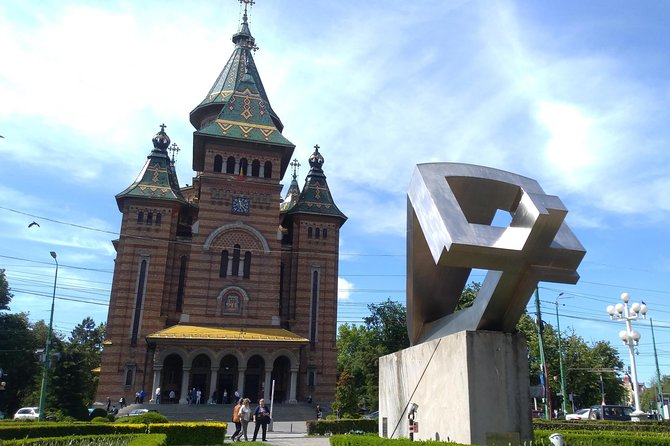
- The Orthodox Cathedral and the cost of protest
- Piața Victoriei and the moment Timisoara declared freedom
- How the vehicle and small group change the experience
- Is $66.08 a fair price?
- The guides make or break this subject
- Who should book this Timisoara tour?
- Should you book it?
- FAQ
- Where does the tour start?
- What time does the tour begin?
- Where does the tour end?
- How long does the experience last?
- How many people can join the tour?
- Is the tour offered in English?
- Can I cancel for a full refund?
Key points worth knowing
- Șagului neighborhood: See how Communist-era daily life shaped one of Timisoara’s residential districts.
- Private consumer collection: Examine Romanian-made objects from the Communist years at Muzeul Consumatorului Comunist.
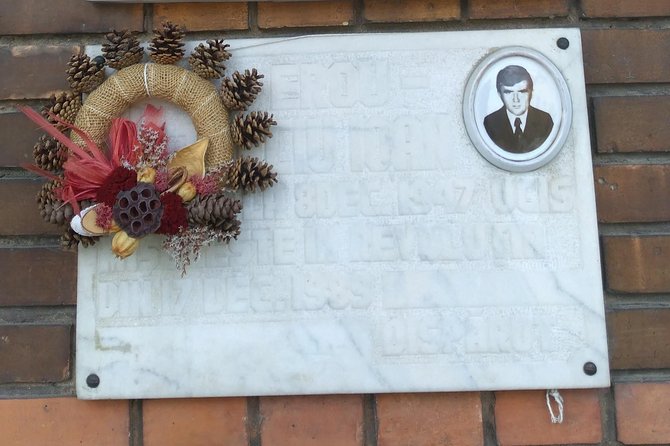
- Revolution starting point: Learn how events at the Reformed Church on December 15 and 16, 1989, helped ignite the uprising.
- Visible evidence: Find bullet holes at the Orthodox Cathedral and around Piața Victoriei.
- Efficient transport: Ride between sites instead of spending much of the tour walking across town.
- Strong guide-led history: Dan and Ludovic have been praised for clear explanations, patience, and detailed answers.
Why Timisoara’s Communist story deserves a full afternoon
Timisoara is often introduced through its elegant squares, Austro-Hungarian buildings, and café life. Those are good reasons to visit, but they do not explain the city’s most important modern chapter. In December 1989, Timisoara became the first city in Romania declared free of Communist rule.
This tour gives that moment a physical setting. You do not simply hear that protests happened. You go to the church where the first stand formed, the cathedral where soldiers fired on demonstrators, and the square where a huge crowd celebrated freedom.
I like that the route begins with ordinary life rather than rushing straight to dramatic events. The Communist period was not only party speeches and political repression. It also meant housing estates, restricted goods, state-made products, crowded public spaces, and a daily routine shaped by shortages and official control.
The tour is offered in English and begins at 3:00 pm near the Three Holy Hierarchs Metropolitan Cathedral on Bulevardul Regele Ferdinand I. It ends in Piața Victoriei, a useful location for continuing an evening in central Timisoara.
More communist-era history walks:
- Timisoara: Grand Communism Tour
★ 4.9 · 13 reviews - The Real tour of Communism
★ 5.0 · 666 reviews - Life under Communism
★ 5.0 · 358 reviews
Șagului: seeing Communism through a neighborhood
The first substantial stop is Șagului, where you spend about two hours looking at a neighborhood shaped by the Communist period. This is likely the part that will feel least like a standard city tour and most like a lesson in how people actually lived.
Instead of treating Communism as a political topic floating above daily life, the guide uses the neighborhood to explain its practical effects. You learn about the built environment and the experience of residents during those years. The focus is on the setting where families lived, traveled, worked, and dealt with the limits of the system.
That extended time matters. Ten minutes beside a monument can give you a date. Two hours in a neighborhood gives the guide room to explain cause and effect. You can ask how policies affected housing and how the official system translated into routine life.
The drawback is that this portion may feel less immediately dramatic than the Revolution sites. There is no single famous building to photograph and move on from. You need to be willing to listen, look closely, and let the guide connect the surroundings to the period.
For anyone traveling with a child or young adult, this can be especially useful. One strong point from the tour feedback came from a parent who joined so a daughter raised outside Romania could understand the world the parent had known. The experience also revealed how much of that past had been distorted by the regime, even for someone who lived through it.
That is a good warning for all visitors: personal memory and official history do not always match. A careful guide can help sort them out.
Muzeul Consumatorului Comunist and the objects people used
The Muzeul Consumatorului Comunist, or Museum of the Communist Consumer, shifts the focus from streets and buildings to material culture. You spend about 30 minutes here discussing how the Communist regime began in Romania, how it was installed, and how it developed.
The museum also contains a private collection of objects made in Romania during the Communist era. This gives the discussion something concrete. Household items can reveal more about an economic system than a page of political theory, especially when the guide explains what people could buy, what was hard to find, and how production worked.
I appreciate this stop because it helps you picture the period at home. Political history can become abstract. A collection of everyday Romanian-made goods brings it back to kitchens, living rooms, shops, and family routines.
Thirty minutes is enough for an introduction, though not enough for a long museum visit. You should treat it as one part of the larger story, not as a stand-alone museum tour. The main value comes from the guide’s explanations and the way this collection supports the wider discussion.
This is also where Dan’s strengths would be useful. He has been praised for answering questions carefully and covering many sides of the Communist period. That matters in a subject full of slogans, half-truths, and family memories.
The Reformed Church and December 15, 1989
At the Reformed Church, the tour reaches the point where Timisoara’s story changes from long-term pressure to open resistance. You spend about 15 minutes learning about December 15 and 16, 1989.
The church is presented as the place where the first events began. In the afternoon of December 16, a young man stopped a tram, and a friend climbed aboard and called for the removal of Nicolae Ceausescu. That small act captures something important about revolutions: a public challenge can spread when people decide they are no longer willing to remain silent.
The stop is short, but its meaning is large. You are not looking at a distant battlefield. You are at an urban point where people gathered and where protest became visible. The guide connects the scene to the causes of the Romanian Revolution, helping you understand why Timisoara became the first major center of revolt.
This is a place where the guide’s storytelling matters more than the amount of time spent on site. Without context, you might see only a church and a street. With context, you can picture the tension of those December days and the risk taken by the first demonstrators.
Ludovic has been praised for making this period understandable and for arranging the route in a logical order. That quality is important here. The sequence from neighborhood life to consumer goods to the start of protest gives the Revolution a human and political background.
A few more trips worth weighing up before you book
- The Classic Tour of Timisoara
★ 5.0 · 154 reviews - Weekly Guided Tour in English – Tuesday, Thursday, Saturday
★ 5.0 · 84 reviews - Timisoara All in One – Walking and Tram Tour
★ 5.0 · 72 reviews - Timisoara: Guided Walking Tour
★ 4.9 · 38 reviews
The Orthodox Cathedral and the cost of protest
The Timisoara Orthodox Cathedral is one of the tour’s most sobering stops. The visit lasts about 10 minutes, and the subject is direct: young people were killed on the cathedral steps when the Army opened fire without warning.
You also see some of the bullet holes. That physical evidence changes the tone of the tour. Dates and casualty figures can feel remote, but marks left in a building bring the danger close. The cathedral becomes more than a grand religious structure. It becomes a witness to the violence of the final days of Communist rule.
The brief stop works because it follows the account of the first protests. You have already heard how resistance began. Here, you confront the response from the state.
You should not expect a large memorial visit or a long museum presentation. The stop is concise. Its value comes from the guide’s explanation and from the chance to see the building itself. If you want extensive time for photographs or private reflection, the schedule may feel tight.
Still, this is one of the places where the vehicle-based format helps. You can arrive without spending much of the afternoon crossing town on foot, then continue while the story remains connected.
Piața Victoriei and the moment Timisoara declared freedom
The final named stop is Piața Victoriei, formerly Opera Square. On December 20, 1989, about 150,000 people gathered here and shouted victory as Timisoara was proclaimed the first city in Romania free of Communism.
The square was later named Victory Square in memory of that moment. You also see bullet holes on buildings around the square, another reminder that the celebration came after real danger and loss.
This is a fitting end because the square gives the Revolution a public conclusion. The Reformed Church marks the beginning of resistance. The cathedral shows the human cost. Piața Victoriei shows the scale of the public response and the sense that political power had shifted.
The route ends here, rather than returning to the starting cathedral. That is useful if you want to continue exploring Timisoara’s center after the tour. It also gives the experience a clear finish at the place where the city’s declaration of freedom is remembered.
I would allow a little time after the tour to remain in the square on your own. The official visit lasts about 10 minutes at this stop, but the setting rewards a slower look at the surrounding buildings and their bullet marks.
How the vehicle and small group change the experience
The tour runs for about three to four hours and uses a comfortable vehicle to connect the locations. That is a practical advantage in Timisoara. The route covers at least eight locations, while the named stops include Șagului, the consumer museum, the Reformed Church, the Orthodox Cathedral, and Piața Victoriei.
A walking tour could handle the central sites, but it would be less effective for the neighborhood portion. You would spend more time getting from place to place and less time hearing the story. The vehicle lets the guide build a wider picture of Communist Timisoara.
The group limit is 10 people. That is small enough for questions and personal attention without making the experience feel like a private tour. The positive feedback about Dan and Ludovic repeatedly centers on their ability to explain the period and respond to questions, so a smaller group has real value here.
The tradeoff is that vehicle tours can feel less spontaneous than walking tours. You may not linger at every site as long as you would on your own. The schedule is designed to cover ground and keep the historical sequence moving.
The start time, 3:00 pm, suits a visitor who has already spent the morning seeing Timisoara’s central architecture. It also means you should plan your earlier sightseeing carefully if you want a relaxed lunch and enough time to reach the Three Holy Hierarchs Metropolitan Cathedral.
Is $66.08 a fair price?
At about $66.08 per person, this is not the cheapest way to see Timisoara. The price makes more sense when you count what is included in the format: an English-speaking guide, several historical sites, transportation between locations, and a small group.
You are paying for interpretation, not simply entry. The listed stops have no admission charge, so the central value is the guide’s time and the ability to connect places that you might otherwise see without understanding.
I would call it good value for three types of people:
- You have a strong interest in Romanian history or Eastern European Communism.
- You want to understand the 1989 Revolution beyond a few dates.
- You are short on time and prefer a vehicle to a long walk between sites.
It is less convincing for someone who only wants a general introduction to Timisoara. If your main goal is architecture, food, or relaxed central sightseeing, a standard city walk may offer better value.
Group discounts may be available, which could improve the price for families or larger parties. The tour accepts mobile tickets, and confirmation is sent within 48 hours, subject to availability.
The guides make or break this subject
Communist history needs a guide who can explain facts without turning the tour into a lecture or a political argument. Dan has been praised for thorough answers and for covering many parts of the Communist period and Revolution. Ludovic has been praised for being engaging, highly educated, and for placing the stops in a strong order.
You should expect the guide to do more than recite dates. The route covers how the Communist Party rose and ruled in Romania, how ordinary people lived, and why the Revolution began in Timisoara.
The personal nature of the subject is one of the tour’s assets. Someone who grew up under the regime found that the tour challenged memories shaped by official distortion. That suggests the experience is not only for people starting from zero. It may also help Romanian visitors and families compare personal recollections with a broader account.
The tour is offered in English. If you want a discussion rather than a simple sightseeing ride, use the small group to ask questions. The guide’s willingness to answer them is a major part of what you are buying.
Who should book this Timisoara tour?
I would recommend it to adults, older children, students, and anyone curious about how dictatorship shaped ordinary life. The subject is serious, but the mix of neighborhoods, household objects, religious sites, and public squares keeps it grounded.
It is also a good choice if you have only a short stay in Timisoara. In a single afternoon, you can connect the city’s Communist-era residential life with the specific events of December 1989.
I would hesitate if you dislike guided discussion or want complete freedom to set your own pace. The 3:00 pm start, fixed route, and short site visits are designed for structure. You also need to be comfortable with material about shootings and deaths.
Most people can participate, the tour is near public transportation, and service animals are allowed. Free cancellation is available if you cancel at least 24 hours before the local start time. Changes or cancellations inside that window are not accepted for a refund.
Should you book it?
Book this tour if you want Timisoara’s Communist past explained through real places rather than a quick timeline. The best parts are the Șagului neighborhood, the private collection of Romanian-made goods, and the Revolution sites where bullet holes remain visible.
The $66.08 cost is justified by the small group, vehicle, and strong guide-led context, though it is more than you need for casual sightseeing. If the Romanian Revolution is one of your reasons for visiting Timisoara, this is a focused and worthwhile afternoon. If it is not, spend your budget elsewhere.
FAQ
Where does the tour start?
It starts at the Three Holy Hierarchs Metropolitan Cathedral on Bulevardul Regele Ferdinand I in Timisoara.
What time does the tour begin?
The tour starts at 3:00 pm.
Where does the tour end?
It ends at Piața Victoriei, also known historically as Opera Square.
How long does the experience last?
The tour lasts approximately three to four hours.
How many people can join the tour?
The maximum group size is 10 travelers.
Is the tour offered in English?
Yes, the tour is offered in English.
Can I cancel for a full refund?
Yes. You must cancel at least 24 hours before the experience start time for a full refund. Cancellations or changes made less than 24 hours before the start are not accepted for a refund.
Just added around Timisoara
- Timisoara Dream Tour in Elisabetin Neighborhood★ 5.0 · 3 reviews
- Timisoara: Jewish Heritage Walking Tour★ 5.0 · 4 reviews
- Nera Gorge National Park – Private Day Tour from Timisoara★ 4.5 · 4 reviews
- Timisoara Dream Tours: Trip to Hunedoara Castle and to Sibiu★ 4.7 · 4 reviews
- Timisoara Downtown Dream Tour★ 5.0 · 5 reviews
- Timisoara: Private Walking Tour with a Local Guide★ 4.5 · 5 reviews
- The Jewish Heritage Tour of Timisoara★ 5.0 · 9 reviews
- Day Trip to Turda Salt Mine and Corvin Castle from Timisoara★ 5.0 · 10 reviews
Communist History Tours, compared.




Bucharest Essential Tour: Old Town, Calea Victoriei & Communism
Read our review →
Communism in Bucharest – Landmarks, Museum & Communist Appetizers
Read our review →


Browse the lists this tour appears in