
Reviewed · HISTORICAL TOURS
Bucharest: 3-Hour Dark History Tour with a Local
Bucharest keeps its darkest stories close. This three-hour walking tour links cemeteries, revolution sites, communist prisons, interwar sex work, and a notorious 1970s killer into one engaging look at the city’s past. I like the visit to Bellu Cemetery, where grand tombs and sad stories turn a graveyard into an open-air gallery. I also like the way the tour connects the 1989 Revolution with the everyday fear of communist rule, rather than treating history as a list of dates.
The main drawback is simple: you will walk a lot, often stopping outdoors while the guide talks. On a cold day, you need warm clothing, not just a fashionable coat. The subject matter also includes murder, torture, political violence, and sexual exploitation, so this is not the right outing for young children or anyone seeking a light city stroll.
In This Review
- Key points at a glance
- Why Bucharest’s darker past makes a good walking tour
- Starting near the National Theatre
- Six cemeteries on one Bucharest street
- University Square and the cost of protest
- Little Paris, brothels, and the Vampire of Bucharest
- Revolution Square and life under Ceaușescu
- Walking, metro rides, and the three-hour pace
- What the $55 price includes
- Who should book this experience
- Practical advice before you go
- Should you book the Bucharest Dark History Tour?
- FAQ
- How long is the Bucharest Dark History Tour?
- What language is the tour offered in?
- Where does the tour meet?
- Is Bellu Cemetery included?
- Does the tour use public transportation?
- Is food included?
- Can children join the tour?
- How large is the tour group?
Key points at a glance
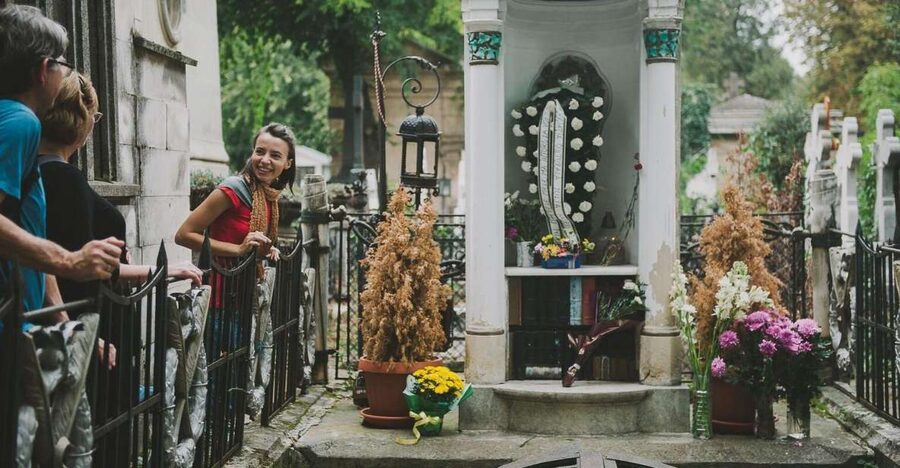
- Bellu Cemetery brings architecture and human stories together: Expect ornate tombs, unusual monuments, folklore, love stories, mysteries, and a glimpse into the way Romania remembers its dead.
- The route covers several centuries of Bucharest: You move from interwar Little Paris to the communist dictatorship and the bloodshed of the 1989 Revolution.
- University Square and Revolution Square add political weight: These locations help explain the fall of Ceaușescu and the protests that followed.
- The guide makes the difference: Alex, Elena, Andra, Vlad, Irina, and others have been praised for clear storytelling, humor, personal insight, and answers to detailed questions.
- Public transport is part of the plan: Metro tickets are included, along with a traditional Romanian snack.
- The small group keeps the walk personal: Numbers are capped at 12, and some departures may feel almost private.
Why Bucharest’s darker past makes a good walking tour
Bucharest is often introduced through grand avenues, old churches, ornate public buildings, and its former nickname, Little Paris. Those sights matter, but they can leave out the harder parts of the city’s story: political killings, state surveillance, prison camps, forced labor, prostitution, and the social wounds left by communism.
This tour gives you a different frame. It shows how a cemetery can explain Romanian beliefs about death, how a university square can reveal the cost of protest, and how a quiet central street can hold several layers of tragedy.
I especially like the local scale. The route is not built around distant legends alone. It deals with places where people lived, protested, worked, suffered, and died. Guides may point out small details such as bullet holes, street art, buildings, or local plants. Those observations help you read Bucharest as a real city rather than a backdrop for dramatic stories.
The tone is serious but not gloomy from start to finish. Guides use humor, folklore, personal memories, and architecture to keep the pace moving. Several guides have also offered restaurant, café, and food suggestions after the walk, which is useful if this is your first day in Bucharest.
More Historical Tours in Bucharest
- Bucharest: Small Group History, Art & Secrets Tour
★ 4.7 · 152 reviews - Guided Walking Tour of Historical Bucharest
★ 5.0 · 84 reviews - Bucharest Jewish Heritage | Holocaust Memorial | Private Car Tour
★ 5.0 · 38 reviews
Starting near the National Theatre
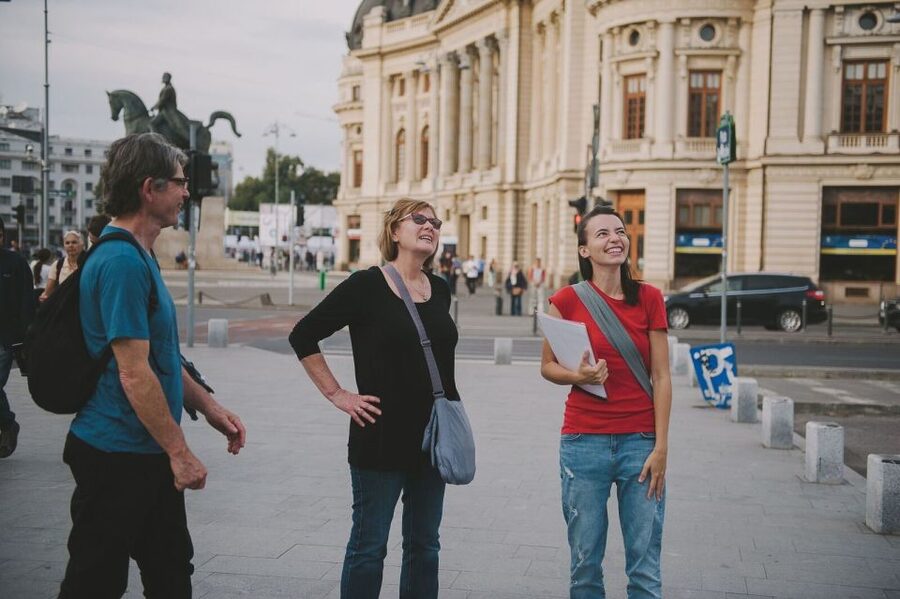
The meeting point is the main entrance of the Ion Luca Caragiale National Theatre at Bulevardul Nicolae Bălcescu 2. This is a practical place to begin because it is near the center and easy to connect with from central Bucharest.
At the start, your guide sets out the wider story of the city. You can expect an English-language tour led by a local, with time for questions. Past guides have included Alex, Elena, Andra, Vlad, Irina, Bogi, and others. The guide assigned to your departure can vary, but the strongest pattern is clear: this experience depends heavily on the person leading it.
That is not a criticism. It is useful information. A good guide can make difficult subjects understandable without turning the walk into a lecture. Alex has been praised for drawing attention to small city details and using photos to add context. Elena has been praised for warmth, humor, and personal stories. Andra has been noted for explaining complicated events clearly. Vlad has shared personal memories of life under communism and sometimes sent additional material for further reading.
You should arrive ready to ask questions. The guides appear comfortable moving beyond the planned subjects when your interests point in another direction.
Six cemeteries on one Bucharest street
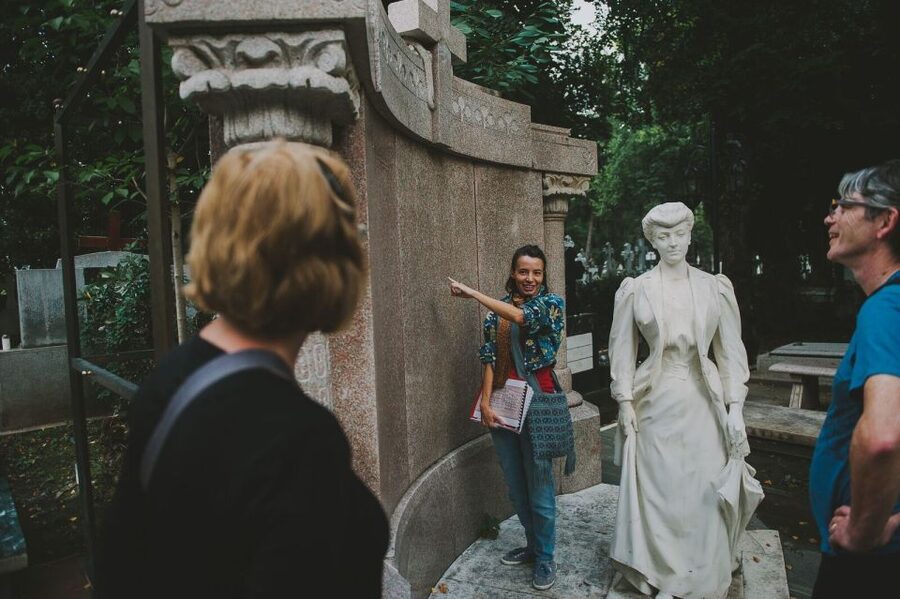
One of the tour’s most unusual details comes early. A street not far from the city center accommodates six cemeteries. The group discusses several of them, including the Cemetery of the Victims of the Revolution in 1989, the Jewish Cemetery, and the Cemetery of the Russian Soldiers.
This concentration of burial grounds gives you a fast lesson in Bucharest’s changing political and religious identity. Different cemeteries reflect different communities, wars, regimes, and moments of national grief. You do not need to be a cemetery enthusiast to appreciate the contrast.
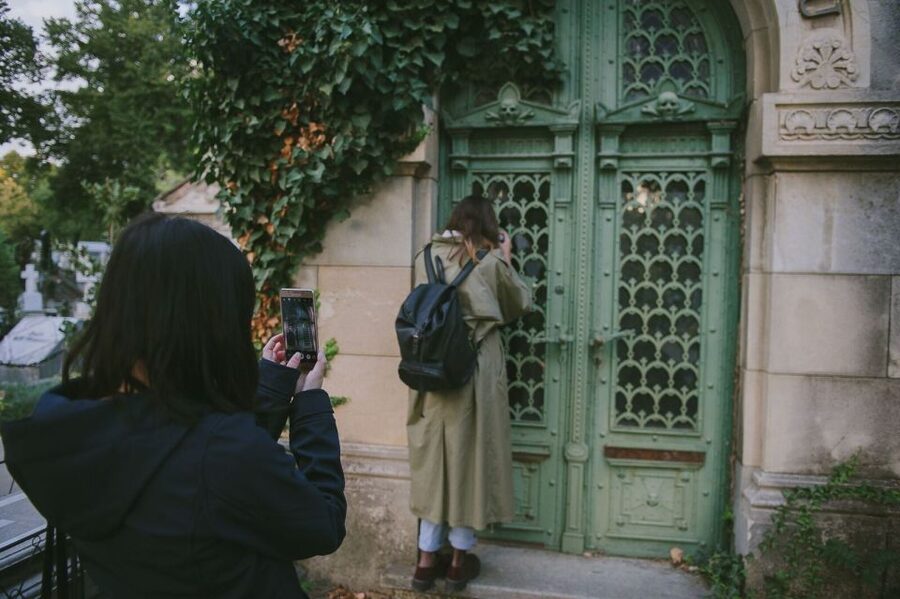
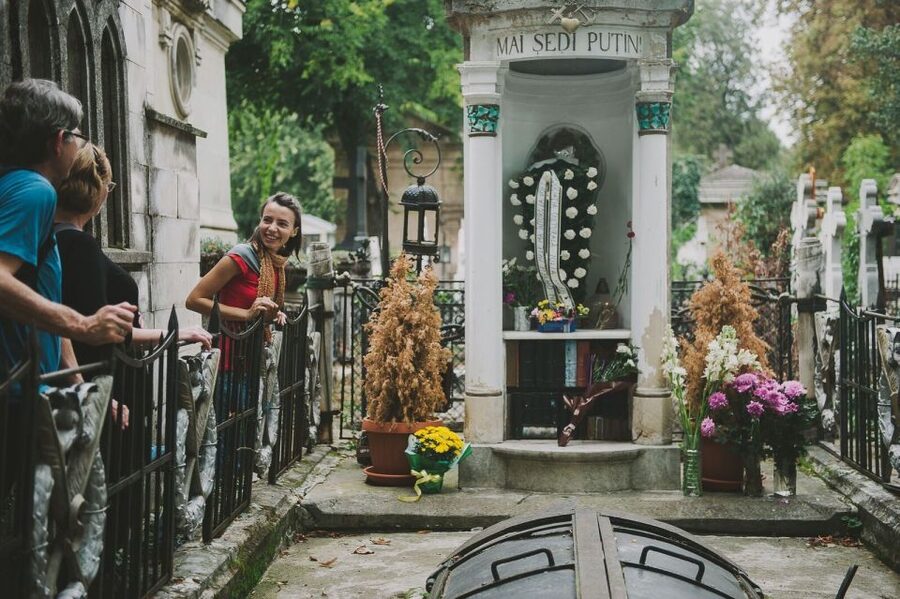
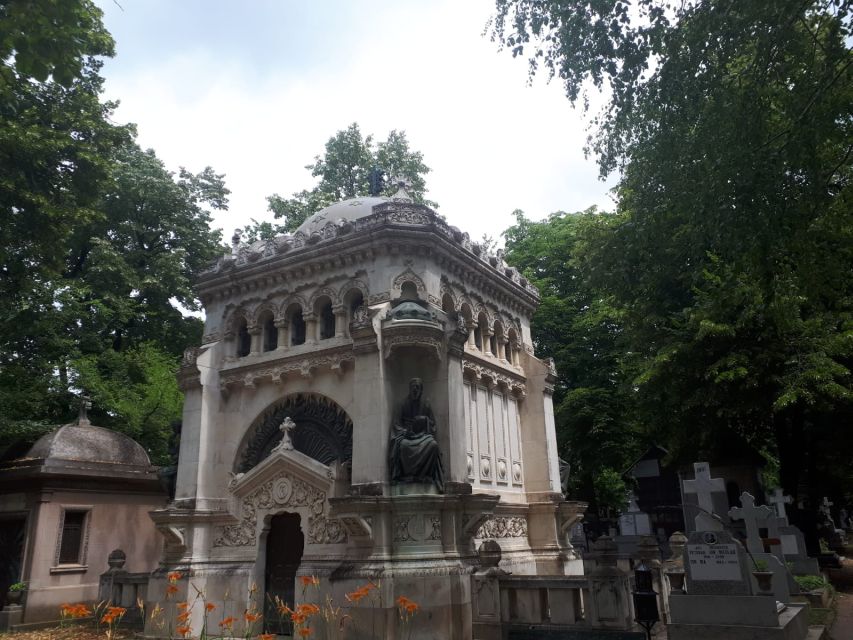
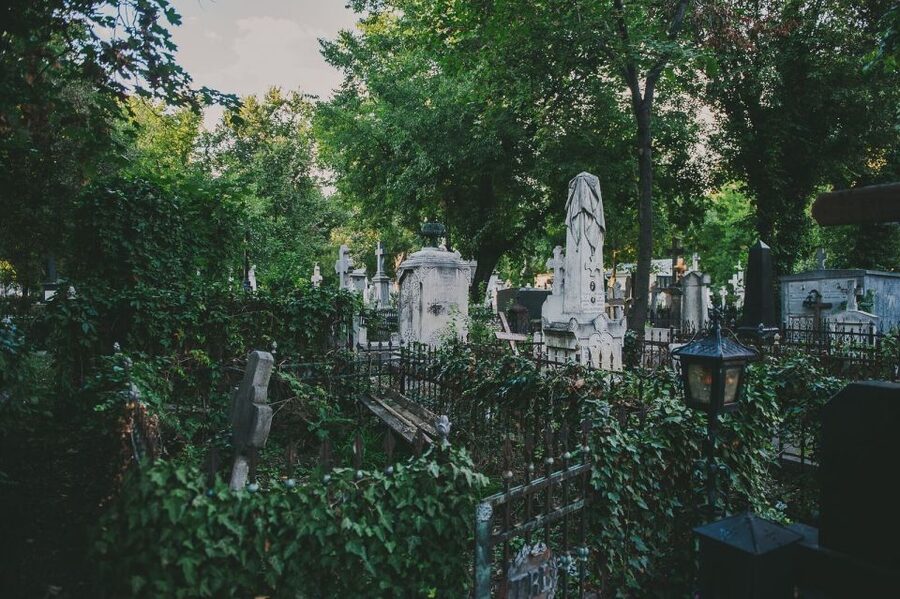
The central visit is Bellu Cemetery, the oldest and most visually striking stop on the route. It is a national historical monument filled with funerary architecture. The tombs and monuments can feel almost like a sculpture park, but the guide keeps them connected to real people and real stories.
Expect a mix of sad love stories, famous figures, folklore, and sinister mysteries. The cemetery is attractive, but the point is not simply to admire stonework. You learn how families expressed status, faith, grief, and memory through elaborate graves.
Some guides also care for the cemetery’s stray cats and dogs. Visitors have been able to feed the cats or pet the cemetery dogs, a small and unexpected human touch. It is not the main purpose of the stop, and you should not count on a particular animal being present, but it can soften an otherwise heavy visit.
Allow time for stillness here. The guide may stop at several monuments, and the group can spend longer than expected listening to individual stories. That makes Bellu the emotional center of the outing for many people.
The tradeoff is weather. A cemetery visit involves standing outside, and winter cold can become uncomfortable while you listen. Comfortable shoes are essential, and warm layers matter more than you may expect.
University Square and the cost of protest
The tour then turns toward University Square, one of Bucharest’s key public spaces. Its importance comes from two periods of unrest: the 1989 Revolution and the anti-communist student protests of the 1990s.
These events are easier to understand when you are standing in the actual square. The guide can explain how public space became a place for speeches, demonstrations, confrontation, and bloodshed. You get a sense of how quickly a familiar city center can become a political stage.
The 1989 Revolution ended Nicolae Ceaușescu’s dictatorship, but the transition was not neat or painless. The tour places the square within that wider upheaval and explains why memory of the period remains complicated.
This is one part of the walk where a local guide adds real value. Dates alone cannot show what political fear feels like, how rumors spread, or why ordinary people took enormous risks. Guides may also share personal or family memories of communist Romania, giving the history a more immediate human scale.
The stop is not a museum visit with objects behind glass. You are outside, looking at the city while the story unfolds. That is powerful, but it also means traffic, weather, and city noise can occasionally compete with the guide’s voice.
More history-led tours:
- Private Bucharest: History & Food with Traditional Meal
★ 5.0 · 34 reviews - Bucharest Historical Food Tour in Old Center
★ 5.0 · 21 reviews - Half-Day Jewish Heritage Walking Tour in Bucharest
★ 5.0 · 20 reviews - Bucharest: Sweet Delights History and Desserts Walking Tour
★ 5.0 · 18 reviews
Little Paris, brothels, and the Vampire of Bucharest
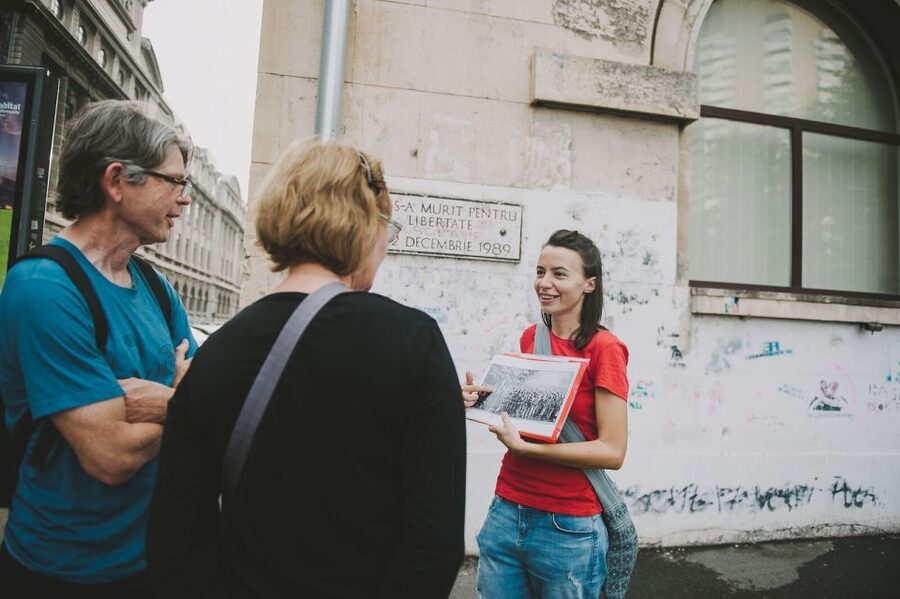
The tour jumps back to Bucharest’s interwar years, when the city cultivated its Little Paris image. This was the era of elegant social life, changing fashions, entertainment, and a visible sex trade.
Rather than presenting the period as pure glamour, the route looks at the people and businesses that existed behind that polished image. You may see what remains of a former interwar brothel and hear how prostitution operated in Bucharest.
This section gives the tour useful balance. The city’s past was not only kings, architects, revolutionaries, and dictators. It also included workers, entertainers, prostitutes, criminals, and people living at the edges of respectable society.
The guide also tells the story of the serial killer nicknamed the Vampire of Bucharest, who terrorized the city at the beginning of the 1970s. The subject is unsettling, but it fits the tour’s larger purpose: showing how fear could come from both private criminals and the state itself.
I would not book this experience expecting a theatrical ghost walk. The focus is historical storytelling, not staged scares. The crime material adds tension, but the larger emphasis remains Bucharest’s social and political past.
Revolution Square and life under Ceaușescu
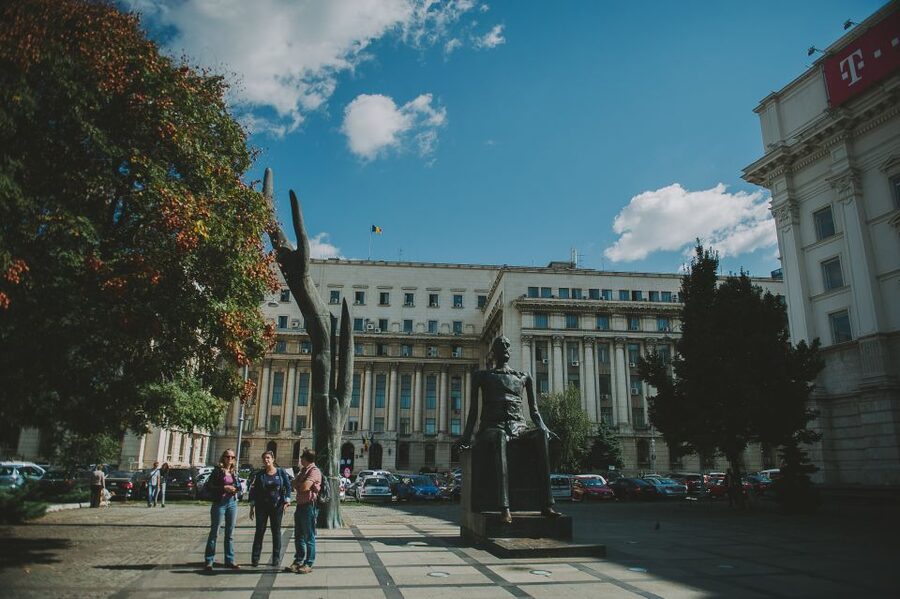
The final major stop is Revolution Square, where the 1989 Revolution began in Bucharest. This is the place where the tour’s themes come together: public protest, dictatorship, surveillance, imprisonment, torture, and the risk of speaking openly.
Here, you learn about the communist regime’s prisons, labor camps, and methods of silencing critics. The guide explains the fear created by the Securitate, Romania’s secret police, often compared in the tour’s presentation to the Soviet KGB.
The most valuable part is the focus on daily life. Political history can seem distant when reduced to Ceaușescu’s speeches and the date of his downfall. This route also asks how people survived day to day under shortages, surveillance, pressure, and uncertainty.
The stop may be particularly meaningful if you know little about Romania before visiting. It provides a basic structure for understanding why the revolution mattered and why the years after it were also tense.
You should expect difficult material. The tour discusses torture, prison conditions, labor camps, and deaths connected to political repression. The guide’s job is to explain rather than sensationalize, but the subject itself is heavy.
Walking, metro rides, and the three-hour pace
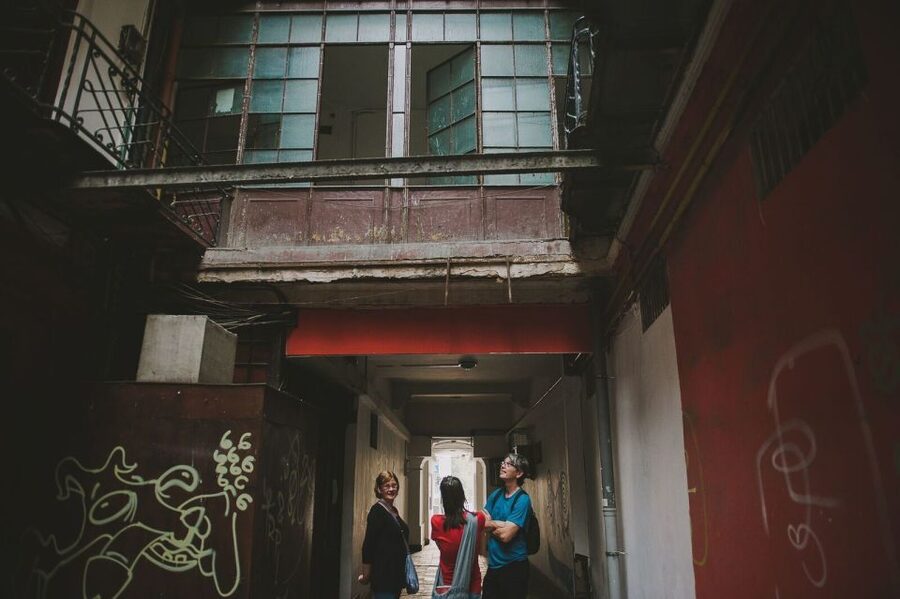
The tour lasts three hours and combines walking with metro rides. Metro tickets are included, so you do not need to work out fares during the outing. The public transport helps connect the cemetery area with the central historical sites without turning the entire route into a long march.
Still, this is a walking tour. Several people have found it more physically demanding than expected because there is a lot to see and many stops involve standing. Wear shoes with good support and bring water.
The three-hour length is about right for the material. Shorter, and the political history would feel rushed. Longer, and the concentration of graveyards, murder stories, and communist repression might become tiring.
Guides usually include pauses, and some have adjusted the pace to suit the group. If you have concerns about walking or standing, tell the guide at the beginning. Do not assume this is a bus tour with brief photo stops.
The group limit is 12 people. That is small enough for questions and conversation, while still allowing the tour to run as a shared experience. Some departures may have only a few bookings and can feel like a private walk. You cannot guarantee that situation, but the capped group size improves the odds of direct contact with the guide.
What the $55 price includes
The price is $55 per person. That is not the cheapest way to see Bucharest, but the value is reasonable if you want a local guide and a focused subject rather than a general introduction.
Your fee includes the English-speaking guide, metro tickets, and a traditional street snack. Additional food, drinks, souvenirs, and personal shopping are extra.
The metro tickets are a useful inclusion because they remove a small practical task. The snack is modest, but it is a pleasant way to sample something local. The real value comes from the guide’s time and preparation.
You are paying for connections: Bellu Cemetery linked with Romanian folklore, University Square linked with protest, Revolution Square linked with dictatorship, and the interwar brothel linked with the social history of Little Paris. If you only want to see major monuments from the outside, $55 may feel high. If you want explanations, stories, and local context, the price is easier to justify.
The tour has a very strong overall rating of 4.9 from 301 reviews, and the repeated praise centers on the guides’ storytelling, humor, care, and command of Romanian history. That consistency matters because the guide is the product here.
Who should book this experience
I would choose this tour if you have already seen some of Bucharest’s standard sights and want a different angle. It also works well as an early activity because the guides often provide wider suggestions for food, cafés, and further places to explore.
You are a good fit if you enjoy:
- Political and social history
- Cemeteries, architecture, and folklore
- Crime stories presented in a historical setting
- Learning how dictatorship affected ordinary life
- Long walks with frequent discussion
- Small groups and plenty of questions
You should think twice if you want a relaxed sightseeing loop, dislike uncomfortable subjects, or have trouble walking and standing for several hours. Children under 16 are not permitted, and the material is better suited to older teenagers and adults.
This is also not a classic vampire tour. The Vampire of Bucharest is one story within a broader account of crime, society, and political terror. Book it for historical context with a dark edge, not for costumes or jump scares.
Practical advice before you go
Wear comfortable shoes and dress for the forecast. In cold weather, you can become chilled while listening, even if the walking keeps you warm between stops.
Bring water and keep some room in your schedule afterward. You may want to discuss the tour with your guide, ask for restaurant suggestions, or continue reading about the revolution and communist Romania.
The meeting point is at the main entrance of the National Theatre, not at the cemetery. Check the starting time carefully, since several departure times may be available.
Cancellation is free up to 24 hours before the tour for a full refund. You can also reserve and pay later, which helps if your Bucharest plans are still shifting.
Should you book the Bucharest Dark History Tour?
Book it if you want Bucharest explained through its difficult stories, not just photographed through its pretty buildings. Bellu Cemetery alone makes the route unusual, while University Square and Revolution Square give serious weight to the second half.
The best reason to go is the guide. Alex, Elena, Andra, Vlad, Irina, and their colleagues have brought humor, personal insight, architecture, folklore, and political history together in a way that feels more like a thoughtful city walk than a formal lecture.
Skip it if you prefer light entertainment, dislike graveyards, or want to avoid discussions of murder, torture, and repression. For everyone else, this is a smart three-hour choice at the $55 price, especially early in a Bucharest visit when you want a local guide to help the city make sense.
FAQ
How long is the Bucharest Dark History Tour?
The tour lasts three hours.
What language is the tour offered in?
The tour is conducted in English by a live local guide.
Where does the tour meet?
The meeting point is at the main entrance of the Ion Luca Caragiale National Theatre, Bulevardul Nicolae Bălcescu 2, Bucharest.
Is Bellu Cemetery included?
Yes. Bellu Cemetery is a central stop on the tour, with stories about its monuments, architecture, people, folklore, and mysteries.
Does the tour use public transportation?
Yes. Metro rides are part of the route, and metro tickets are included in the price.
Is food included?
A traditional street snack is included. Additional food and drinks are not included.
Can children join the tour?
No. People under 16 are not permitted to join.
How large is the tour group?
The maximum group size is 12 people.
Just added around Bucharest
- 10 hours Private Apiary Tour in Romania – From Bucharest★ 5.0 · 3 reviews
- 4-Day Inside Transylvania & Transfagarasan Tour from Bucharest★ 5.0 · 3 reviews
- Bucharest: Charm of the Belle Époque Private Tour★ 5.0 · 3 reviews
- Bran & Peles Castles through the Best Road in the World: Transfagarasan road★ 4.5 · 3 reviews
- Private Wine Tasting at Bucharest’s First Wine Bar★ 5.0 · 3 reviews
- 2-Day Small-Group Tour in Transylvania from Bucharest – Maximum 5 Persons★ 5.0 · 3 reviews
- Probably the Best Restaurant and Wine Cellar near Bucharest★ 4.5 · 3 reviews
- Bucharest to Brasov – Fast Private Transfer★ 5.0 · 3 reviews
Historical Tours, compared.


Bucharest Jewish Heritage | Holocaust Memorial | Private Car Tour
Read our review →
Private Bucharest: History & Food with Traditional Meal
Read our review →Historic Gems Sighișoara, Rupea and Viscri Day Tour
Read our review →
Half-Day Jewish Heritage Walking Tour in Bucharest
Read our review →
Discover Romania’s Wine Heritage in Brasov’s Historic Center
Read our review →Browse the lists this tour appears in