
Reviewed · COMMUNIST HISTORY TOURS
Private Walking Tour of Communist Bucharest
Bucharest’s past is written in stone. This private tour links the 1989 Revolution, Nicolae Ceausescu’s grand building schemes, and the churches nearly erased by Communist redevelopment. I like the private format, which lets you ask questions and adjust the day, and I like the guide’s background in political science and tourism. The main drawback is cost: at $92.19 per person, entrance fees, lunch, and drinks are extra.
You get about seven hours, beginning at 8:30 a.m., with walking and private transport between some locations. The guides named in the feedback, Laura and Diana, earned strong praise for being friendly, well prepared, and generous with their time. If you want a quick city introduction, this is too long. If you want Bucharest’s Communist story explained in place, it makes good use of a full day.
In This Review
- Key points at a glance
- Why Communist Bucharest needs a full day
- University Square and the first look at 1989
- Revolution Square, where royal and Communist power collide
- The Romanian Atheneum and a change of mood
- Ceausescu Mansion and the private world of a dictator
- The Palace of Parliament, Bucharest’s colossal symbol
- Constitution Square and the unfinished civic dream
- Antim Monastery and the churches that survived demolition
- Mihai Voda Monastery and the cost of moving a city
- What the seven-hour schedule feels like
- Is $92.19 per person fair?
- Who should book this Bucharest tour?
- Final call: book it for context, not speed
- FAQ
- How long does the Private Walking Tour of Communist Bucharest last?
- Is the tour private?
- Is hotel pickup available?
- Is lunch included in the price?
- Are admission tickets included?
- Do I need to bring a passport?
- Can I cancel for a full refund?
Key points at a glance
- The Palace of Parliament takes 90 minutes: This is the day’s biggest sight, with more than 1,000 rooms, vast quantities of marble, and enormous crystal fittings.
- Revolution Square puts 1989 in context: You see where the dictatorship ended and how royal and Communist-era buildings share the same space.
- Ceausescu Mansion adds a personal angle: The former dictator’s residence shows the private side of a regime usually represented by giant public buildings.
- The churches reveal what was nearly lost: Antim Monastery and Mihai Voda Monastery survived Communist demolition after being moved from their original sites.
- A private guide changes the pace: Your group can ask for more political detail, more architecture, or extra attention to specific sites.
- Budget for extras: Lunch, drinks, taxes, and entry tickets for the Atheneum and Palace of Parliament are not included.
Why Communist Bucharest needs a full day
Bucharest can look confusing at first. Royal-era buildings, Orthodox churches, broad Communist boulevards, and modern traffic all occupy the same city center. A tour built around the Communist period helps you read those layers instead of seeing a collection of unrelated sights.
The political story is especially important here because Romania’s Communist era ended in open violence in December 1989. The tour connects the rise and fall of the Communist Party with the city’s buildings, memorial spaces, and forced redevelopment. You are not simply looking at grand architecture. You are asking who ordered it, who paid for it, and what disappeared to make room for it.
The guide’s academic training in political science and tourism is useful for this subject. You can expect more than dates and names. A good guide can explain how political power appeared in public space, why Ceausescu pursued such enormous projects, and how the 1989 uprising changed the meaning of familiar squares.
Because this is a private activity, only your own group takes part. That matters when the subject turns difficult or political. You can stop to ask for clarification instead of waiting for a large group to move on.
More Walking Tours in Bucharest
- Bucharest: City Highlights Guided Walking Tour
★ 4.9 · 1,482 reviews - Bucharest Highlights Walking Tour
★ 5.0 · 469 reviews - Bucharest: Ghost Stories & Romanian Mythology Walking Tour
★ 4.9 · 287 reviews
University Square and the first look at 1989
The tour begins at University Square, one of the memorial spaces connected with the violent events of December 1989. You spend about 30 minutes here, with no admission fee.
This is a useful opening because it brings the end of Communism into view before the tour moves to palaces and official buildings. The square helps establish that the regime did not simply fade away through quiet political reform. The Romanian Revolution involved confrontation, uncertainty, and loss of life.
I would use this stop to ask your guide about the sequence of events in Bucharest. The value here comes from explanation rather than entry into a museum. The square itself is open public space, so the experience depends heavily on how clearly the guide connects the location to the uprising.
The 30-minute allocation is sensible. You have time to orient yourself and discuss the events without turning the opening stop into a long lecture.
Revolution Square, where royal and Communist power collide
At Revolution Square, you spend another 30 minutes examining a place where two parts of Romania’s past meet: the royal period and the Communist dictatorship. This contrast gives the square much of its force.
The location is tied directly to the December 1989 uprising, but its buildings also show how political symbols can be reused or challenged. The square is not only a memorial to revolt. It is also a place where Romania’s earlier monarchy and later dictatorship share the same urban stage.
This is one of the strongest stops for visitors who want political context. Your guide can help you understand why a building matters beyond its facade and how public spaces gather meaning over time. The free admission also keeps this part of the day focused on conversation and observation.
If you prefer grand interiors to outdoor discussion, you may find the two squares less satisfying than the Palace of Parliament or Ceausescu Mansion. Their value is historical and interpretive, not based on a ticketed attraction.
The Romanian Atheneum and a change of mood
The Romanian Atheneum offers a break from the harsher political story. This 19th-century concert hall is one of Bucharest’s best-known historic buildings and reflects the country’s long affection for classical music.
The interior includes a 75-meter fresco in the concert hall, an unusual feature that makes the building more than a place for performances. The tour allows about 30 minutes here. Admission is not included, so ask your guide about the current entry arrangements and cost before you commit.
I like this stop because it prevents the day from becoming a single-note account of dictatorship. Bucharest was not created by Ceausescu, and the Atheneum helps you see the older cultural city that survived alongside Communist power.
Still, the details provided for this experience do not confirm whether you will have a full interior visit or mainly see the building as part of the route. Since the ticket is extra, clarify what access is planned if the concert hall is important to you.
More communist-era history walks:
- The Real tour of Communism
★ 5.0 · 666 reviews - Life under Communism
★ 5.0 · 358 reviews - 3-Hour Guided Tour of Communist Bucharest
★ 4.9 · 303 reviews - Bucharest Essential Tour: Old Town, Calea Victoriei & Communism
★ 5.0 · 142 reviews
Ceausescu Mansion and the private world of a dictator
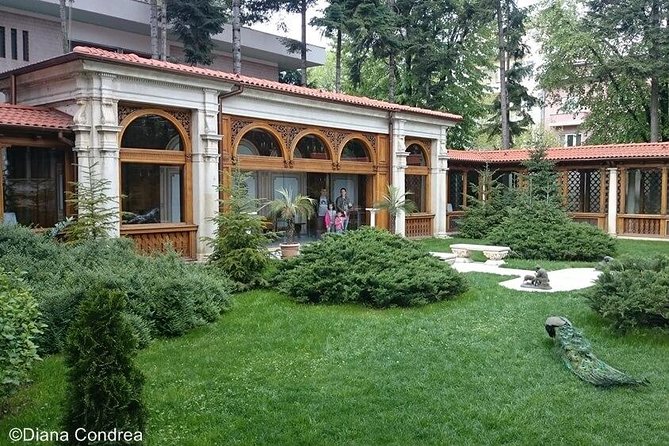
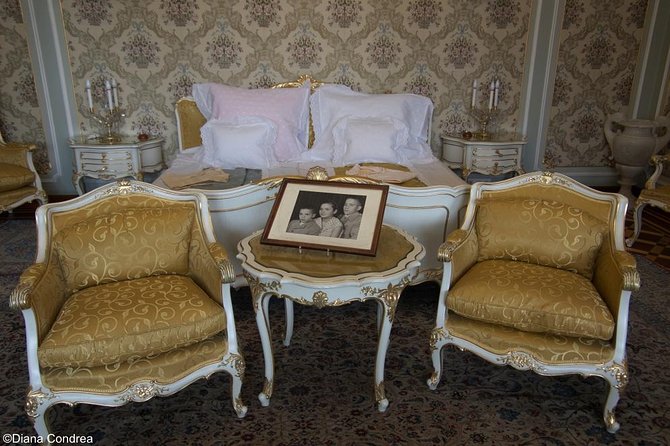
The former Ceausescu residence gives the tour a more personal focus. You spend about one hour at the mansion, with admission listed as free for this experience.
After seeing public spaces built to project state power, a residence helps you consider how the ruling family lived away from official ceremonies. It can make the period feel more immediate because a political system is represented through domestic surroundings, not only through ministries and monuments.
The mansion also works well as a counterpoint to the Palace of Parliament. One is a home associated with the dictator and his family. The other is a vast public building created through state direction and national resources. Seeing both in one day lets you compare private privilege with public ambition.
The tour description does not provide details about the rooms, displays, or whether a formal interior visit is guaranteed. If the mansion is a priority, ask for confirmation when booking. The one-hour stop suggests enough time for a meaningful visit, but the exact experience may depend on access that day.
The Palace of Parliament, Bucharest’s colossal symbol
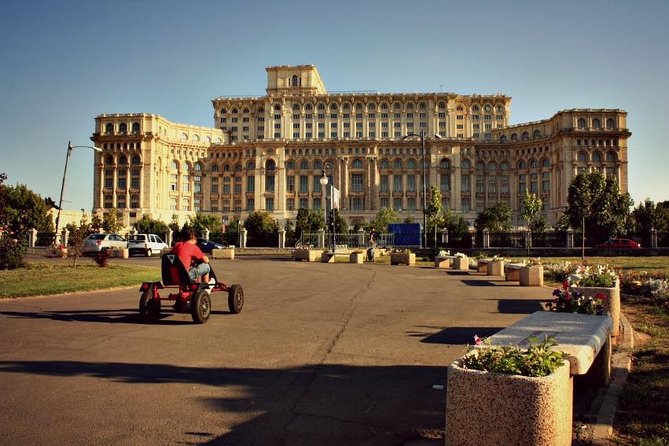
The Palace of Parliament is the centerpiece of the day. Locally called the House of the People, it is the most famous physical symbol of Romania’s Communist period and the second-largest administrative building in the world.
The numbers are hard to grasp until you are beside it. The building contains more than 1,000 rooms, with handmade decoration and costly materials. The stated figures include about one million cubic meters of marble and 3.5 tonnes of crystal. Even without an interest in architecture, you will notice the scale.
The planned visit lasts about 90 minutes. Admission is not included, and all fees and taxes are listed separately, so the advertised per-person price is not your final cost. A current valid passport is required on the day of travel, which is particularly important here. Do not leave your passport at the hotel.
The building’s size is the point, but the guide’s explanation gives that size meaning. Ceausescu’s civic projects changed the city on a huge scale. Residential areas and older urban fabric were cleared to create a monumental center designed to display state authority. The result is impressive, expensive, and unsettling at the same time.
I would not treat this as a simple photo stop. Give yourself time to consider the contrast between polished marble and the human cost behind the project. That tension is central to understanding Communist Bucharest.
A practical note: the building is an active administrative site, so access and entry rules can matter. The supplied information confirms the passport requirement and extra admission cost, but not the precise ticket procedure. Your guide can help with the visit, but you should still allow room in your budget and schedule for official entry arrangements.
Constitution Square and the unfinished civic dream
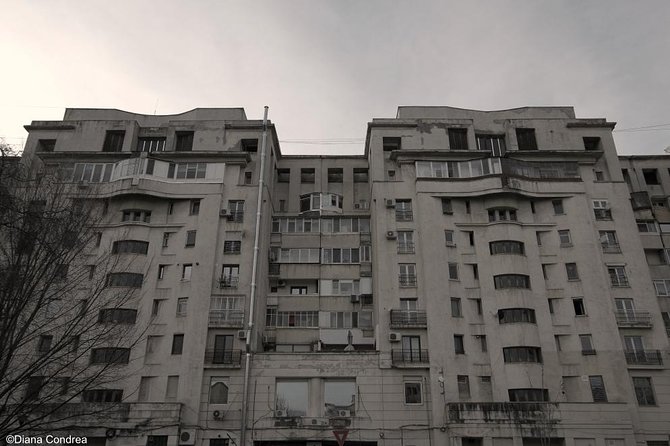
Constitution Square is the heart of the former Communist civic center. You spend about 20 minutes here, without an admission charge.
This is the place to step back and see the Palace of Parliament in its wider setting. The square and surrounding avenues were planned for ceremony, authority, and mass public display. Their size can feel out of scale with ordinary city life, which is precisely what makes the area useful for understanding the regime’s aims.
The stop is short, but it gives the Palace of Parliament a proper setting. Inside the building, you focus on rooms and materials. Outside, you see how the entire district was shaped around political theater.
Your guide can also help explain how the modern city uses this space now. The supplied details do not promise a particular event or activity, so expect a viewing and discussion stop rather than a scheduled performance or museum visit.
Antim Monastery and the churches that survived demolition
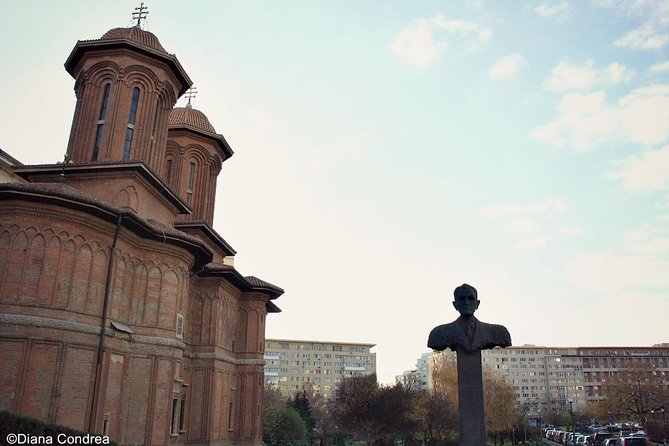
Antim Monastery is one of two churches on the route described as having been saved from Communist demolition after being moved from its original location. The visit lasts about 20 minutes and is free.
This stop changes the scale again. After monumental avenues and enormous government architecture, you encounter a religious building whose survival depended on relocation. That fact says a great deal about the pressure placed on Bucharest’s older neighborhoods and religious sites.
The short visit should be enough to see the church and hear the basic story. I would pay close attention to the explanation of what was moved and why. Without that context, the stop could seem like a quick church visit. With it, the building becomes evidence of how urban planning can erase, preserve, or rearrange a city’s past.
Mihai Voda Monastery and the cost of moving a city
Mihai Voda Monastery provides a second example of a church saved from Communist demolition by relocation. It also receives about 20 minutes, with no admission fee listed.
Having both monasteries in the same day is useful. One example could feel like an isolated survival story. Two examples show a broader pattern of forced change. The tour moves from political spaces to sacred buildings, helping you see that Communist redevelopment affected more than government offices and boulevards.
The information provided does not describe interior access or current worship arrangements. Dress and visiting rules are not specified, so follow your guide’s instructions and treat the site as a functioning religious place rather than simply an attraction.
What the seven-hour schedule feels like
Seven hours is a serious commitment, but the route covers several kinds of places: outdoor squares, a cultural monument, a former residence, a major government building, and two monasteries. That variety keeps the day from becoming a single long walk past gray concrete.
Transport by private vehicle is included on some parts of the route. Hotel pickup is offered for groups of up to three people, while the general meeting point is in Bucharest. If your group is larger than three, confirm exactly where you will meet and how the vehicle arrangements work.
The experience requires moderate physical fitness. You should expect walking between sites, time on your feet, and a full day of sightseeing. The schedule includes a midday lunch break at a city center restaurant, but food and drinks are not included. Plan to pay for your own meal and allow enough time to eat without rushing the next stop.
The private setup is most useful here. The listed timing is a framework, not necessarily a rigid script. The tour is described as customizable, so you can tell the guide if you want more time on the 1989 Revolution, more architectural detail, or a stronger focus on Ceausescu’s political system.
The summary also names the Heroes’ Mausoleum and Scanteia House among the major political points of interest, but the detailed stop list focuses on the eight locations described above. If either of those places is important to you, ask before departure if they can be added or substituted.
Is $92.19 per person fair?
At $92.19 per person, this is not a bargain-priced city walk. You are paying for a private guide, a long day, local transport for parts of the route, and the ability to shape the discussion around your own interests.
The price makes more sense for a small group. Hotel pickup is included for up to three people, and a private vehicle is used on parts of the route. If two or three people share the booking, the cost may compare reasonably with arranging several separate visits and transport, especially if you value a guide who can explain the political setting.
You must add lunch, drinks, and admission charges. The Romanian Atheneum and Palace of Parliament specifically list tickets as extra, while the tour terms also exclude all fees and taxes. Ask for a realistic total before booking. The Palace of Parliament is the major extra to budget for.
This experience is best judged as a guided history day, not as a cheap way to tick off sights. If you only want photographs of Bucharest’s biggest buildings, you can spend less. If you want the meaning behind the buildings, the private format has real value.
Who should book this Bucharest tour?
I would recommend it to you if you:
- Want a focused explanation of Romania’s Communist era and the 1989 Revolution
- Prefer a private guide to a large group
- Have one full day for Bucharest
- Enjoy political history, architecture, and difficult historical questions
- Want flexibility to adjust the route
- Are comfortable walking and paying extra for selected admissions and lunch
I would hesitate if you have only a short stop in the city or mainly want old-town streets, cafes, and general sightseeing. This tour gives limited attention to Bucharest outside its royal, Communist, revolutionary, and religious sites.
The strongest praise attached to the experience centers on the guides. Laura is described as friendly, highly informed, and skilled at finding her way around the city. Diana is also singled out for making the day informative. One particularly warm account describes a guide who offered so much help and time that the group felt treated more like friends than customers, and even declined a tip.
Those details matter because this route depends on interpretation. The Palace of Parliament is enormous on its own, but the right guide helps you understand why it exists. The squares are open spaces, but a thoughtful explanation turns them into places of memory. The monasteries are attractive historic buildings, but their relocation gives them a much heavier meaning.
Final call: book it for context, not speed
Book this tour if you want Bucharest explained through the rise and fall of Communism. The Palace of Parliament, Revolution Square, Ceausescu Mansion, and the relocated monasteries create a strong sequence, moving from public power to private life and then to the older city that survived.
The cost is the main caution, since food, drinks, taxes, and key entrance tickets are extra. Still, the private format, guide expertise, vehicle support, and freedom to shape the day make the price easier to defend for a small group.
Before booking, confirm the meeting point, hotel pickup if you have more than three people, the Palace of Parliament entry cost, and whether the Atheneum interior is included in your planned visit. If those details work for you, this is a thoughtful and unusually focused way to understand Bucharest.
FAQ
How long does the Private Walking Tour of Communist Bucharest last?
The experience lasts approximately seven hours and begins at 8:30 a.m.
Is the tour private?
Yes. Only your group participates in the activity.
Is hotel pickup available?
Hotel pickup is included for groups of up to three people. The general meeting point is in Bucharest.
Is lunch included in the price?
No. The tour includes a midday break at a city center restaurant, but food and drinks are not included.
Are admission tickets included?
No. Admission to the Romanian Atheneum and Palace of Parliament is not included. All fees and taxes are also excluded.
Do I need to bring a passport?
Yes. A current valid passport is required on the day of travel.
Can I cancel for a full refund?
Yes, if you cancel at least 24 hours before the experience start time. Cancellations made less than 24 hours before the start time are not refunded.
More Walking Tours
- Bucharest: Guided Walking Tour with Romanian Snack
★ 4.9 · 228 reviews - Best of Bucharest | Private Walking Tour
★ 5.0 · 199 reviews - Walking Tour- Delightful Bucharest (Highlights, Stories, Sights)
★ 5.0 · 145 reviews - 4h Bucharest Private Tour (2h by Car and 2h Walking in Old Town)
★ 5.0 · 90 reviews
Just added around Bucharest
- 10 hours Private Apiary Tour in Romania – From Bucharest★ 5.0 · 3 reviews
- 4-Day Inside Transylvania & Transfagarasan Tour from Bucharest★ 5.0 · 3 reviews
- Bucharest: Charm of the Belle Époque Private Tour★ 5.0 · 3 reviews
- Bran & Peles Castles through the Best Road in the World: Transfagarasan road★ 4.5 · 3 reviews
- Private Wine Tasting at Bucharest’s First Wine Bar★ 5.0 · 3 reviews
- 2-Day Small-Group Tour in Transylvania from Bucharest – Maximum 5 Persons★ 5.0 · 3 reviews
- Probably the Best Restaurant and Wine Cellar near Bucharest★ 4.5 · 3 reviews
- Bucharest to Brasov – Fast Private Transfer★ 5.0 · 3 reviews
Communist History Tours, compared.




Bucharest Essential Tour: Old Town, Calea Victoriei & Communism
Read our review →
Communism in Bucharest – Landmarks, Museum & Communist Appetizers
Read our review →


Browse the lists this tour appears in