

Reviewed · COMMUNIST HISTORY TOURS
Life in Communism
History is written into Bucharest’s streets. This three-hour walk connects about 15 communist-era sites with the forces that changed Romania, from nationalization and Secret Police control to forced demolitions and the city’s altered architecture. I like the small group of no more than 15 people, which gives you a better chance to ask questions. I also like the way the guides, including Daniela, Andreea, Augustin, and John, have brought clear explanations and personal stories to the subject.
The main consideration is physical: you will be on foot for roughly three hours, so a moderate fitness level is needed. The tour is also focused on history rather than grand interiors or entertainment. If you want a quick, honest introduction to Bucharest’s communist period, it offers good value at $31.24. If you prefer museums, shorter walks, or a lighter sightseeing theme, this may feel demanding.
In This Review
- Key Points Before You Book
- What This Bucharest Walking Tour Is Really About
- Starting at the Patriarchal Cathedral
- The Palace of Parliament: Power in Concrete and Stone
- Calea Victoriei and the Everyday City
- Piata Revolutiei and the End of the Regime
- Fifteen Stops, Not Just Three
- Guides Who Make Difficult History Understandable
- Snacks, the Midway Break, and Practical Comfort
- Is $31.24 Good Value?
- Who Should Book This Walk?
- Final Verdict: A Smart Introduction to Bucharest
- FAQ
- How long is the Life in Communism tour?
- Where does the tour begin and end?
- What landmarks are included?
- Is the tour offered in English?
- Are food and drinks included?
- What happens if I need to cancel?
Key Points Before You Book
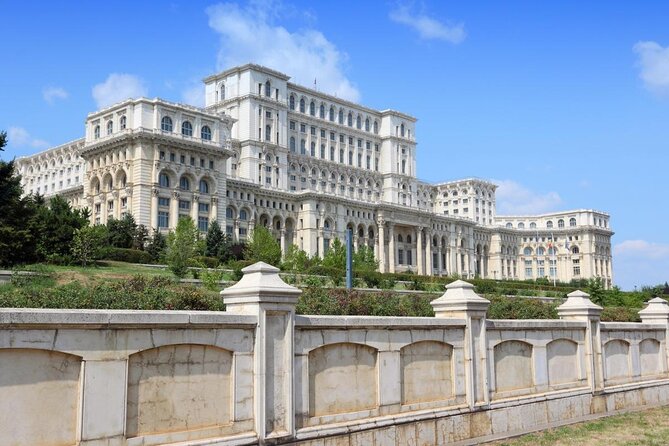
- About 15 communist-era stops: The walk links buildings, streets, and public spaces to specific moments in Romania’s communist timeline.
- A useful first-day tour: Starting at the Patriarchal Cathedral helps you get your bearings before exploring Bucharest alone.
- Strong guide-led storytelling: Daniela, Andreea, Augustin, and John have been praised for clear English, careful research, and personal accounts.
- Three hours on foot: You should be comfortable walking through central Bucharest and standing during explanations.
- Communist-style snacks included: A small food element adds a tangible reminder of everyday life during the period.
- A short paid break: Drinks are not included, and you should carry cash for the stop in the middle of the walk.
What This Bucharest Walking Tour Is Really About
This is not simply a parade of old buildings. The point is to understand how Romania’s communist government changed daily life, public space, architecture, and the way Bucharest functions today.
The tour covers major themes such as nationalization, the Secret Police, demolition projects, and the political changes that reshaped the capital. Those subjects can sound dry on paper, but they become easier to grasp when you see where decisions played out.
You will visit about 15 objectives, with each one linked to a particular change or stage in the communist period. The supplied route names three main stops: the Palace of Parliament, Calea Victoriei, and Piata Revolutiei. The remaining stops add context between those headline locations.
I see this as a strong orientation walk. You get a basic timeline, a feel for the city center, and enough background to make later visits to Bucharest’s museums and monuments more meaningful.
More communist-era history walks:
- The Real tour of Communism
★ 5.0 · 666 reviews - Life under Communism
★ 5.0 · 358 reviews - 3-Hour Guided Tour of Communist Bucharest
★ 4.9 · 303 reviews
Starting at the Patriarchal Cathedral
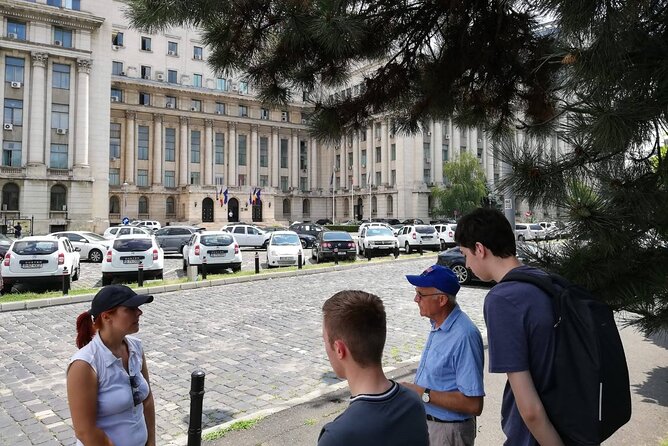
The tour begins at the Patriarchal Cathedral on Aleea Dealul Mitropoliei 25. This is a practical meeting point because it places you near central Bucharest while also introducing an important setting before the walk turns fully toward communist history.
You should arrive ready to walk and listen outdoors. The tour ends back at the same meeting point, which makes planning easier if you have dinner, public transport, or another activity afterward.
The start and finish are especially useful for a first visit. You are not dropped at an unfamiliar neighborhood at the end, and the route gives you a clear sense of how several central areas relate to each other.
The walk is offered in English. Confirmation is provided when you book, and the activity is near public transportation. Service animals are allowed. The operator sets a maximum of 15 people, a size that should help keep the guide audible and make conversation possible.
The Palace of Parliament: Power in Concrete and Stone
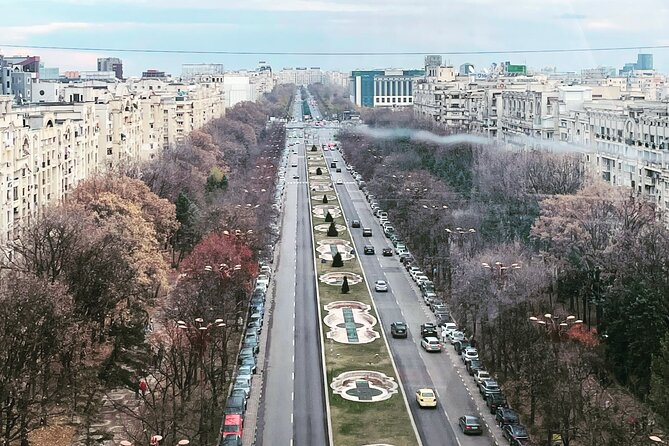
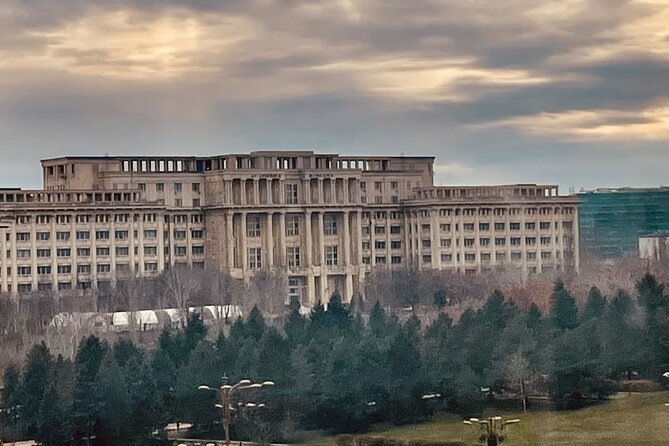
The Palace of Parliament is the tour’s most obvious symbol of communist ambition. Its scale makes the political message easy to understand: this was not just an office building, but part of a plan to reshape Bucharest around state power.
The walk uses the building as a starting point for discussing the large changes brought by the regime. Expect the guide to explain how demolition, central planning, and political authority affected the city. You will be looking at the building and its surroundings as evidence of a system, rather than simply admiring it as an architectural attraction.
This stop is valuable because it gives you a visual anchor. The subject of communist urban planning can be hard to picture when explained in a classroom. Here, the physical setting makes the scale of the decisions clearer.
There is also a limit. The experience described here is a walking visit to communist-era landmarks, not a dedicated interior tour of the Palace of Parliament. If you want to tour the building inside, you should treat that as a separate plan unless the operator confirms otherwise.
Allow the guide’s explanation to do the work. The building is impressive, but the important question is what its construction meant for the people and neighborhoods affected by the wider redevelopment.
Calea Victoriei and the Everyday City
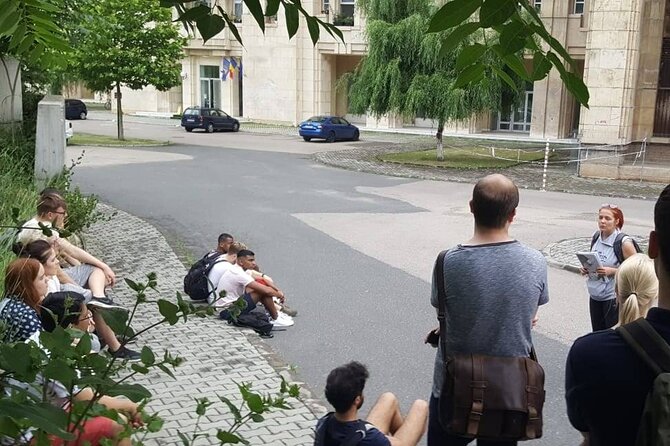
Calea Victoriei gives the walk a different tone. Rather than focusing only on one monumental structure, the route uses a major Bucharest street to show how political change affected the city people moved through every day.
This is where the tour can connect architecture with ordinary experience. The guide discusses the effects of communist rule on the population, including nationalization and state control. You will also hear how the period changed the city’s appearance and its present-day identity.
I like this part of the route because it keeps the tour from becoming a single-building history lesson. A street lets you compare different layers of Bucharest and think about how an older urban setting was adapted to communist priorities.
The guide’s role matters most here. A building alone cannot explain what nationalization meant, how surveillance shaped behavior, or why certain changes still matter. The strongest comments about the guides focus on their clear explanations, easy-to-follow English, and ability to put events into plain language.
Andreea, also listed in some feedback as Andrea, received particular praise for her clear voice, strong command of English, and thoughtful explanations. Daniela was described as friendly and well prepared. Those details matter on an outdoor walk, where a guide must hold your attention while moving from one location to the next.
A few more trips worth weighing up before you book
- Bucharest: Dracula’s Castle, Peles Castle, & Brasov Old Town
★ 4.5 · 17,858 reviews - Bucharest: Dracula Castle, Peles Castle & Brasov Old Town
★ 4.6 · 10,891 reviews - Bucharest: Dracula’s Castle, Peleș Castle & Brașov Day Trip
★ 4.5 · 5,919 reviews - Bucharest: Palace of Parliament Tickets and Guide
★ 4.3 · 3,182 reviews
Piata Revolutiei and the End of the Regime

Piata Revolutiei is the most direct place on the route for discussing the collapse of communist rule. The square is tied to the events that brought Romania’s communist period to an end, making it a natural point for connecting the past with Romania today.
This stop should help you place the larger story in sequence. Earlier parts of the walk deal with control, construction, demolitions, and the reshaping of public life. Here, the focus shifts toward political crisis and change.
I value this kind of chronological structure. You are not just collecting disconnected facts. You begin with the machinery of the regime, see its effect on the city, and then reach a public space linked to its breakdown.
The exact discussion will depend on your guide. Augustin has been praised for offering a nuanced account of Romania’s difficult past, while John has added personal stories from his own experience. Those personal touches can make a complicated period easier to understand, but they also mean the tone may vary slightly from one departure to another.
You should not expect the same guide every time. Daniela, Andreea, Augustin, and John are all mentioned in connection with the experience, and you cannot assume that a requested guide will lead your departure.
Fifteen Stops, Not Just Three
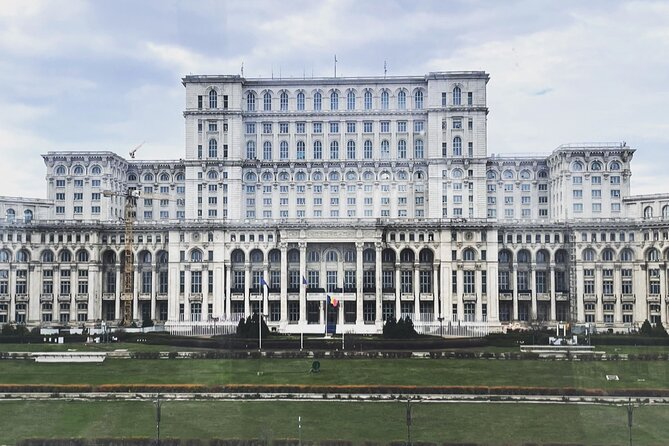
The published route identifies the Palace of Parliament, Calea Victoriei, and Piata Revolutiei, but the walk includes roughly 15 objectives in total. That distinction is important. You are signing up for a connected city walk, not a short transfer between three attractions.
The additional stops are used to mark particular moments or changes during the communist timeline. Since their individual names are not provided, I would not book this expecting a fixed checklist of famous sights. Instead, think of the tour as a guided historical route where the meaning of each location matters more than its postcard value.
That format suits you if you want context. A skilled guide can explain why a less famous building, street, or public space matters, then tie it back to larger subjects such as nationalization or Secret Police activity.
It may be less satisfying if you want every stop announced in advance or need a tightly specified sightseeing itinerary. The value comes from the guide’s interpretation, so the quality of the explanation is central to the experience.
Guides Who Make Difficult History Understandable
The most consistently praised feature is the guiding. Daniela is described as friendly and well informed, with detailed explanations at each stop. Andreea is praised for her passion, clear English, and personal perspective. Augustin is noted for careful research and a balanced treatment of a complicated subject.
John’s contribution was different but equally useful: personal stories from his own experience. That is important when discussing a period that affected food, housing, work, speech, privacy, and movement. A personal account can help you understand that communism was not only a political system in a textbook. It shaped ordinary choices.
The best guides also avoid reducing the period to a simple good-versus-bad story. Romania’s communist years included major repression and hardship, but the route aims to show how the system worked and why its effects remain visible.
You should listen for both the broad facts and the small human details. The comments about a clear voice and easy-to-follow English are particularly useful, since three hours of outdoor history can become tiring if you are straining to hear.
Snacks, the Midway Break, and Practical Comfort
Communist-type snacks are included. This is a small feature, but it fits the subject well. Food gives you a physical connection to the discussion of everyday life, rather than leaving the history entirely at the level of buildings and political events.
The tour also includes a short break in the middle. Drinks are not included, so bring cash and expect to pay for your own refreshment. One account specifically valued the chance to warm up during a cold-weather tour, which is a useful reminder that conditions can affect your comfort.
Dress for several hours outside. The supplied information does not promise indoor shelter, and the activity requires moderate physical fitness. Comfortable shoes are the sensible choice, even though that advice is rarely exciting.
The small-group limit helps here, too. A group of 15 or fewer is easier to gather during a break and easier for a guide to address at each stop. It also gives you a better chance to ask about subjects that interest you, such as surveillance, demolitions, or family life.
Is $31.24 Good Value?
At $31.24 per person, I consider this a fair price for a three-hour, English-language small-group walk with a guide, roughly 15 stops, and included snacks.
You are paying for interpretation, not entry tickets to a long list of interiors. That distinction matters. The value depends on whether you want to understand Bucharest or simply photograph its major buildings.
The tour earns its price if you would otherwise walk past the Palace of Parliament, Calea Victoriei, or Piata Revolutiei without knowing what they reveal about Romania’s past. It can also save you time at the start of a trip by giving you a working framework for the city.
Group discounts may make the cost lower for some bookings. The tour is often reserved about 22 days ahead, so planning early is sensible if your dates are fixed. Free cancellation is available when you cancel at least 24 hours before the start time. Cancellations or changes made inside that window are not refunded or accepted.
Who Should Book This Walk?
I would recommend it to you if you are interested in modern European history, political change, architecture, or the way governments shape cities. It is also a good choice for a first visit to Bucharest, since the route helps you understand where you are before setting out on your own.
Students, history-minded couples, and curious solo visitors should find the format useful. The small group encourages questions, and the English-language guiding makes the material accessible without requiring prior knowledge of Romania.
You may want to skip it if you dislike walking, standing, or listening to detailed historical explanations. It is not designed as a relaxed food tour or a quick photo stop. The communist period is difficult subject matter, and the experience asks you to give it your attention.
Families can judge it based on the age and patience of their children. The supplied information gives no age recommendation, but three hours of historical discussion may be a stretch for younger children.
Final Verdict: A Smart Introduction to Bucharest
I would book Life in Communism if I wanted to understand why Bucharest looks and feels the way it does today. The route covers major symbols, but its real strength is the link between public buildings, state policy, personal experience, and the city’s present form.
The guides receive strong praise for clarity, warmth, research, and personal storytelling. Ask questions, carry cash for the drink break, wear comfortable shoes, and do not expect an interior tour of the Palace of Parliament unless that is confirmed separately.
For $31.24, the tour gives you three hours of focused context and a useful first look at central Bucharest. It is a particularly good match for you if you want history with a human voice, not just a list of monuments.
FAQ
How long is the Life in Communism tour?
The walking tour lasts approximately three hours.
Where does the tour begin and end?
It starts at the Patriarchal Cathedral, Aleea Dealul Mitropoliei 25, Bucharest, and ends back at the same meeting point.
What landmarks are included?
The named stops are the Palace of Parliament, Calea Victoriei, and Piata Revolutiei. The full walk visits roughly 15 communist-era objectives.
Is the tour offered in English?
Yes. The experience is offered in English.
Are food and drinks included?
Communist-type snacks are included. Alcoholic drinks are not included, and drinks during the short break are self-supported. Cash is recommended.
What happens if I need to cancel?
You can receive a full refund if you cancel at least 24 hours before the experience begins. Cancellations or changes made less than 24 hours before the start time are not accepted or refunded.
Just added around Bucharest
- 10 hours Private Apiary Tour in Romania – From Bucharest★ 5.0 · 3 reviews
- 4-Day Inside Transylvania & Transfagarasan Tour from Bucharest★ 5.0 · 3 reviews
- Bucharest: Charm of the Belle Époque Private Tour★ 5.0 · 3 reviews
- Bran & Peles Castles through the Best Road in the World: Transfagarasan road★ 4.5 · 3 reviews
- Private Wine Tasting at Bucharest’s First Wine Bar★ 5.0 · 3 reviews
- 2-Day Small-Group Tour in Transylvania from Bucharest – Maximum 5 Persons★ 5.0 · 3 reviews
- Probably the Best Restaurant and Wine Cellar near Bucharest★ 4.5 · 3 reviews
- Bucharest to Brasov – Fast Private Transfer★ 5.0 · 3 reviews
Communist History Tours, compared.




Bucharest Essential Tour: Old Town, Calea Victoriei & Communism
Read our review →
Communism in Bucharest – Landmarks, Museum & Communist Appetizers
Read our review →


Browse the lists this tour appears in