
Reviewed · COMMUNIST HISTORY TOURS
Exploring a Former Communist Prison
Some places explain a country better than museums.
This six-hour Bucharest experience connects Revolution Square, communist housing districts, Carol Park, and Fort 13 Jilava, a former military fort turned prison and execution camp. I like the firsthand perspective on the 1989 Revolution, especially with guide Mircea, who was present in Revolution Square when communism fell. I also like the small-group format, limited to eight people, which gives the day a more personal feel. The main drawback is that the prison visit is emotionally heavy, and mobile phones are not allowed inside.
I also appreciate the practical touches: a covrig, local bites, coffee or tea, bottled water, and one beer or equivalent are included. The $173.47 price is not cheap for a six-hour tour, but it covers private transport, refreshments, and access to a site that is difficult to visit independently. You should book this for serious history, not light sightseeing.
In This Review
- Key points about Fort 13 Jilava
- Why this Bucharest tour is different
- Revolution Square and the memory of December 1989
- The Palace of Parliament from the outside
- Ferentari and Bucharest’s communist housing districts
- Carol Park and a meal from the communist era
- Entering Fort 13 Jilava
- What the small group and vehicle add
- Is $173.47 a fair price?
- Weather, cancellation, and planning advice
- Who should book this experience?
- Final verdict: book it for history, not comfort
- FAQ
- Where does the tour start?
- What time does the experience begin?
- Where does the tour end?
- How long does the tour last?
- How many people can join the tour?
- Is transportation included?
- Can I use my mobile phone inside Fort 13 Jilava?
- Can I take photographs at Fort 13 Jilava?
- What food and drinks are included?
Key points about Fort 13 Jilava
- Revolution Square with Mircea: Hear about December 1989 from a guide who was there when Romania’s communist regime collapsed.
- Fort 13 Jilava access: Enter a former military fort used as a communist prison inside Bucharest’s largest prison complex.
- A look at Ferentari: Drive through one of Bucharest’s less polished districts and see communist-era apartment dormitories and present-day realities.
- Small group of up to eight: The compact vehicle and limited group suit visitors who prefer conversation over a large bus tour.
- No mobile phones in the prison: You may bring a camera, but phone photography is not permitted inside Fort 13.
- Food and drinks included: Expect a street pretzel called a covrig, traditional bites, coffee or tea, water, and one beer or equivalent.
Why this Bucharest tour is different
Many city tours in Bucharest focus on grand buildings, old streets, and attractive squares. This one takes a harder route. It asks you to look at the way power shaped ordinary life, housing, prisons, public space, and memory.
The day begins with Bucharest’s older story, including the city’s development over roughly 500 years and the military fortification system that once protected it. That wider frame matters. Fort 13 Jilava was not built as a communist prison. It began as a 19th-century military fort and was later adapted for detention and executions under the communist regime.
I like that the tour does not treat communism as an isolated chapter. You move from the older city to the 1989 Revolution, then through communist neighborhoods, and finally to a prison tied to political repression. The route shows how different periods overlap in the same city.
The experience is best suited to adults and older teenagers with an interest in political history. It is less suitable if you want a relaxed sightseeing day or prefer to avoid sites connected with suffering and death.
More communist-era history walks:
- The Real tour of Communism
★ 5.0 · 666 reviews - Life under Communism
★ 5.0 · 358 reviews - 3-Hour Guided Tour of Communist Bucharest
★ 4.9 · 303 reviews
Revolution Square and the memory of December 1989
The meeting point is the Memorial of Rebirth in Piața Revoluției, with departure at 9:30 a.m. This is an important place to begin because Revolution Square is closely tied to the collapse of Nicolae Ceaușescu’s regime in December 1989.
You spend about an hour exploring this part of Bucharest and other historical areas by car. The guide explains the essentials of the regime and its aftermath, while also connecting the square to the city’s older development.
The strongest feature here is Mircea’s personal connection. He was in Revolution Square in December 1989 when communism fell. That does not replace historical evidence, but it adds a human voice to an event that can otherwise feel distant or simplified.
I would pay close attention during this opening section. It gives you the basic facts needed for the rest of the day. Without that context, the prison can feel like an isolated place. With it, Fort 13 becomes part of a larger story about opposition, fear, and the machinery of the state.
The Memorial of Rebirth itself can prompt questions about how Romania remembers the revolution. The tour promises the darker stories around the city’s political landmarks, rather than offering only a polished official version.
The Palace of Parliament from the outside
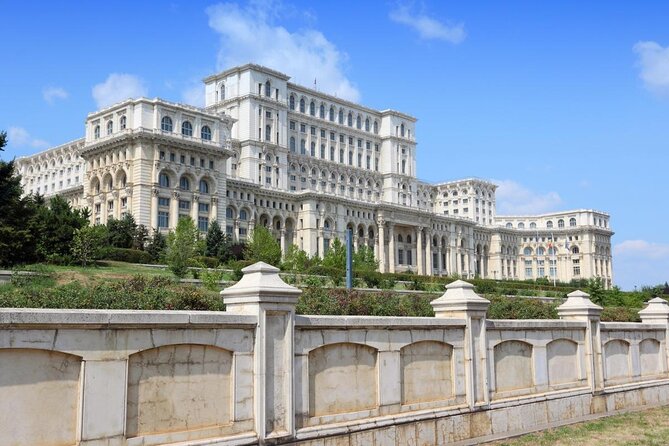
The next stop is a short visit around the Palace of Parliament. You spend about 20 minutes circling the building and stopping for photographs, but admission inside is not included.
The Palace of Parliament is one of the world’s largest administrative buildings, and its scale reflects the ambitions of Ceaușescu’s regime. The useful part of this stop is not simply getting a photograph. You hear about the building’s difficult social cost and what it means to the local community.
Because the stop is brief, do not expect a full architectural tour. You will not enter as part of this experience. Instead, the guide uses the building as a way to discuss the regime’s priorities, including the gap between monumental state projects and everyday life.
I think this short pause works well in the overall schedule. It gives you a visual symbol of communist power before the route turns toward apartment districts and a former prison.
Ferentari and Bucharest’s communist housing districts
The drive through Ferentari offers a very different view of Bucharest. The area is described as the Bronx of Bucharest, a phrase meant to signal that you are leaving the standard sightseeing path and seeing a neighborhood with a tougher reputation and a complicated present.
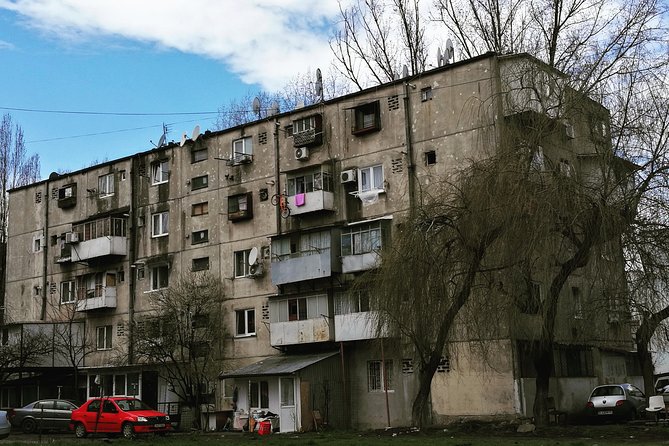
The route also includes communist bedroom dormitories. These large housing areas shaped the last 50 years of Romanian social history, giving workers and families places to live while also creating dense, repetitive urban districts.
You should treat this section as an observation of daily life, not as a photo stop. The point is to see how communist planning affected the city and how those neighborhoods continue to function after the regime ended.
Some people may find the language around Ferentari blunt. That is part of the tour’s direct style, but it also means you should approach the area with respect. You are looking at a real neighborhood, not a staged attraction.
The drive is particularly valuable because it connects political history with ordinary homes. Grand buildings tell you what leaders wanted to display. Housing blocks tell you how people actually lived.
A few more trips worth weighing up before you book
- Bucharest: Dracula’s Castle, Peles Castle, & Brasov Old Town
★ 4.5 · 17,858 reviews - Bucharest: Dracula Castle, Peles Castle & Brasov Old Town
★ 4.6 · 10,891 reviews - Bucharest: Dracula’s Castle, Peleș Castle & Brașov Day Trip
★ 4.5 · 5,919 reviews - Bucharest: Palace of Parliament Tickets and Guide
★ 4.3 · 3,182 reviews
Carol Park and a meal from the communist era
Carol Park provides a short break from the vehicle and the heavier subject matter. You spend about 30 minutes in one of Bucharest’s most emblematic parks, where you can see the mausoleum associated with communist leaders.
The stop includes a traditional communist meal. The description does not specify the exact dishes, so you should expect a food break with historical meaning rather than a full restaurant experience.
Refreshments are built into the day. You receive a covrig, a Romanian street snack similar to a pretzel, along with local traditional bites. A 500-milliliter bottle of water, one beer or equivalent, and coffee or tea are also included.
I like this practical pause. A six-hour tour needs food and drink, particularly when the route includes long drives and a serious prison visit. The meal also helps show how memory can be tied to ordinary things such as bread, snacks, and familiar local food.
Additional food and drinks are not included, so you may want to plan for that if you usually eat a large lunch. The listed refreshments sound useful for keeping you going, but they should not be treated as an unlimited meal.
Entering Fort 13 Jilava
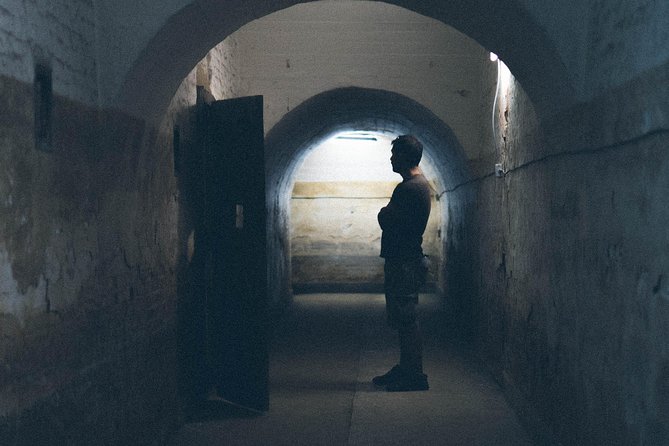
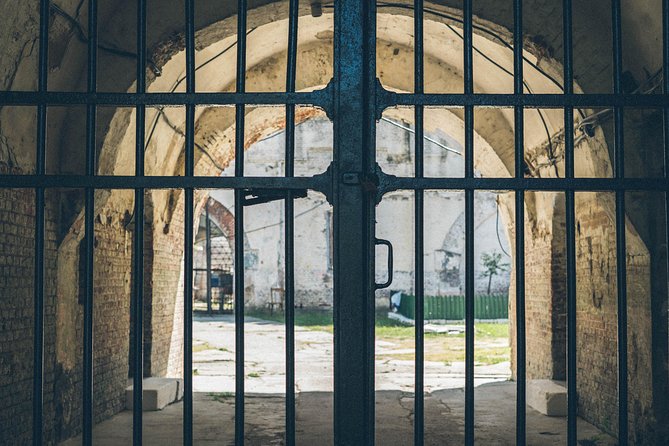
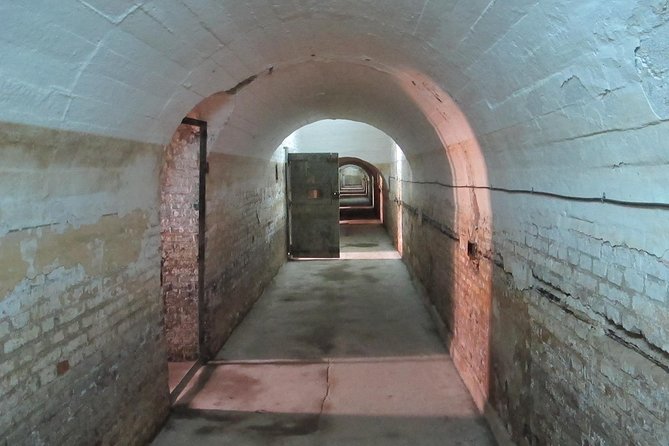
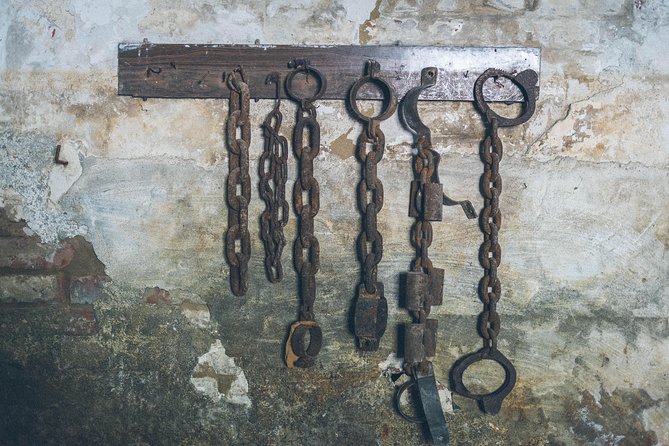
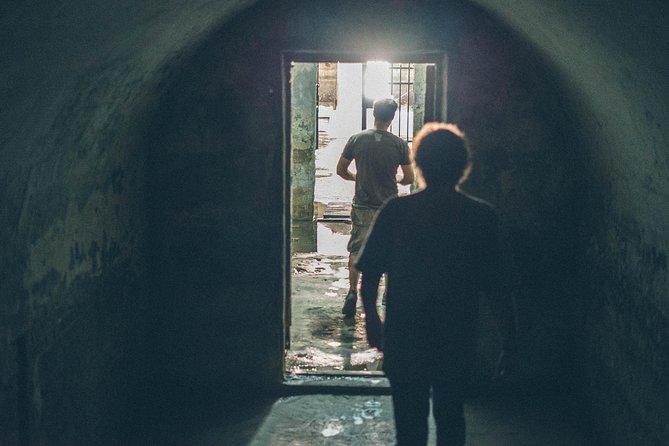
The main event is Fort 13 Jilava, located outside Bucharest within the country’s largest prison complex. The fort began as a 19th-century military installation and was later used as a communist detention and execution camp for people who opposed the regime.
You spend about two hours at the fort. That is enough time for the site to receive proper attention rather than becoming a rushed photo stop.
This is a place for quiet attention. The value comes from the physical setting: an old military fort repurposed for imprisonment. Its walls connect Romania’s military past with the repression of the communist period.
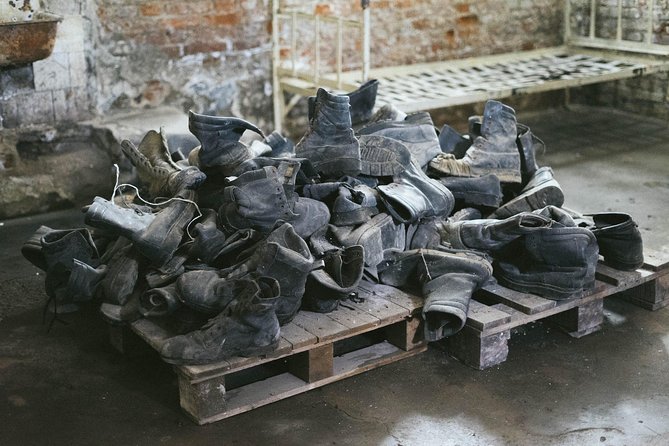
You should not expect a cheerful attraction or a polished museum visit. The experience is meant to confront you with a difficult part of Romania’s past. The prison’s importance is not only architectural. It represents the people who were detained and killed because they opposed the regime.
Access is a major reason to consider booking this experience. A former prison inside an active prison complex is not the sort of place most people can visit casually on their own. The organized transport and local host make the visit more practical.
The rules inside are strict:
- Mobile phones are not allowed inside the prison.
- Photos are permitted only with a camera.
- Personal shopping and souvenirs are not included.
If you want photographs, bring a separate camera and check that it is acceptable to use it at the site. Do not rely on your phone for pictures. The phone restriction may feel inconvenient, but it also helps keep the visit focused and respectful.
The prison section may be too intense for some people. I would avoid booking it if you are looking for a gentle introduction to Bucharest or if sites connected with executions are likely to upset you. For those who want a clearer understanding of political repression, it is the part of the day that gives the tour its purpose.
What the small group and vehicle add
The tour uses an air-conditioned vehicle and accepts a maximum of eight people. That size is a real advantage on a route with several stops and a site outside Bucharest.
A small group makes it easier to ask questions, particularly during the drive through neighborhoods where the guide’s explanation matters more than a formal display. You are also less likely to lose time gathering a large crowd at each stop.
The air conditioning is useful because the day includes time in the vehicle, and the experience requires good weather. The tour begins and ends at the Memorial of Rebirth, so you do not need to arrange separate transport back to central Bucharest.
The experience is near public transportation, and most people can participate. Still, the supplied details do not describe the prison’s physical accessibility, so anyone with mobility concerns should ask the operator before booking.
Is $173.47 a fair price?
At $173.47 per person, this is a premium half-day experience. You are paying more than you would for a simple city walk or a basic communist-themed outing.
The price makes more sense when you consider what is included. You receive transportation in an air-conditioned vehicle, a small group capped at eight people, a local guide, access to Fort 13 Jilava, and several refreshments. The route also covers multiple parts of Bucharest that are spread out, including a site outside the city.
The prison access is the key value. If you tried to see Revolution Square, the communist neighborhoods, Carol Park, and Fort 13 separately, you would need to arrange transport and research access rules. The fort is the difficult piece, particularly because it sits inside a working prison complex.
I would call the price reasonable for someone who places a high value on access and interpretation. It is less appealing if you only want a general city tour or plan to judge value by the number of famous buildings visited.
The experience is booked, on average, 24 days ahead. That suggests you should not leave it until the final morning of your Bucharest stay, especially if you have a fixed schedule.
Weather, cancellation, and planning advice
The tour requires good weather. If poor weather forces cancellation, you are offered another date or a full refund. It also requires a minimum number of people, and if that minimum is not met, you receive the choice of another date or experience, or a full refund.
You can cancel for a full refund up to 24 hours before the 9:30 a.m. start time. Changes or cancellations made less than 24 hours before departure are not accepted for a refund.
Confirmation is sent within 48 hours of booking, subject to availability. I would avoid booking this on the same day as a flight or another fixed appointment. The duration is about six hours, and the return is to the original meeting point.
Wear something practical for a day that combines vehicle time, city stops, a park, and a former fort. The supplied information does not state a dress code, so the main concern is comfort and readiness for a serious site.
Who should book this experience?
I would recommend it to you if you:
- Want political and social history rather than only landmark photographs
- Prefer a local guide with personal experience of the 1989 Revolution
- Are curious about communist-era housing and city planning
- Want access to Fort 13 Jilava without arranging the route yourself
- Prefer a group of eight or fewer
- Can handle an emotionally difficult prison site
I would suggest choosing another Bucharest activity if you want shopping, nightlife, art museums, or a broad introduction to Romanian culture without a focus on repression.
The tour can also work well near the beginning of your Bucharest visit. It gives you useful context for the city’s major buildings and neighborhoods. If you place it early in your stay, later sightseeing may carry more meaning.
Final verdict: book it for history, not comfort
I recommend Exploring Fort 13 Jilava if you want to understand Bucharest beyond its attractive center. The strongest elements are Mircea’s personal connection to Revolution Square, the small group, and access to a former communist prison that is difficult to reach independently.
The day is not light, and the $173.47 cost requires genuine interest in the subject. But the route has a clear purpose. It moves from old Bucharest to revolution, communist housing, public memory, and imprisonment.
Book it if you want a serious look at Romania’s recent past and can give Fort 13 the attention it deserves. Skip it if you want an easygoing sightseeing ride. This experience asks something from you, but it also gives you a more honest view of Bucharest.
FAQ
Where does the tour start?
It starts at the Memorial of Rebirth in Piața Revoluției, Bucharest.
What time does the experience begin?
The scheduled start time is 9:30 a.m.
Where does the tour end?
The experience ends back at the original meeting point, the Memorial of Rebirth.
How long does the tour last?
The tour lasts approximately six hours.
How many people can join the tour?
The maximum group size is eight people.
Is transportation included?
Yes. Transportation is provided in an air-conditioned vehicle.
Can I use my mobile phone inside Fort 13 Jilava?
No. Mobile phones are not allowed inside the prison.
Can I take photographs at Fort 13 Jilava?
Yes, but photographs are allowed only with a camera. Mobile phones cannot be used inside.
What food and drinks are included?
The experience includes a covrig, local traditional bites, one 500-milliliter bottle of water, one beer or equivalent, and coffee or tea. Additional food and drinks cost extra.
Just added around Bucharest
- 4-Day Inside Transylvania & Transfagarasan Tour from Bucharest★ 5.0 · 3 reviews
- 10 hours Private Apiary Tour in Romania – From Bucharest★ 5.0 · 3 reviews
- Bucharest: Charm of the Belle Époque Private Tour★ 5.0 · 3 reviews
- Bran & Peles Castles through the Best Road in the World: Transfagarasan road★ 4.5 · 3 reviews
- 2-Day Small-Group Tour in Transylvania from Bucharest – Maximum 5 Persons★ 5.0 · 3 reviews
- Private Wine Tasting at Bucharest’s First Wine Bar★ 5.0 · 3 reviews
- Bucharest to Brasov – Fast Private Transfer★ 5.0 · 3 reviews
- Probably the Best Restaurant and Wine Cellar near Bucharest★ 4.5 · 3 reviews
Communist History Tours, compared.




Bucharest Essential Tour: Old Town, Calea Victoriei & Communism
Read our review →
Communism in Bucharest – Landmarks, Museum & Communist Appetizers
Read our review →


Browse the lists this tour appears in