
Reviewed · COMMUNIST HISTORY TOURS
Communism Walking Tour from Lenin to Ceausescu in Bucharest
Communism left marks everywhere here. This 2.5-hour Bucharest walk connects grand buildings, revolution sites, and ordinary city streets to the story of Romania under communist rule. I like the way it joins sightseeing with political history, and I like that local guides such as Alex and Lucia bring personal style, humor, and clear storytelling to the route. The main drawback is that the tour is in English only, so you will need a solid grasp of English to follow the details.
I also appreciate the modest $24 price, especially since the tour covers a long stretch of central Bucharest and includes a local guide. You should know that food, drinks, and admission to paid attractions are not included, though every listed stop is visited from outside with no admission charge.
In This Review
- Key points at a glance
- Starting with Ceausescu’s enormous Palace of Parliament
- Antim Monastery and the cost of the Socialist Victory Boulevard
- Patriarchal Palace and the early communist movement
- Piata Unirii and the boulevard built for spectacle
- Old Town after the communist years
- University’s Square and Romania’s bloody revolution
- The Royal Palace and a change in political purpose
- A short stop at the Romanian Athenaeum
- Revolution Square and Ceausescu’s final speech
- What the $24 price really gives you
- Who should book this Bucharest walk?
- Booking advice and cancellation terms
- Should you book Communism Walking Tour from Lenin to Ceausescu?
- FAQ
- How much does the tour cost?
- How long does the walking tour last?
- What language is the tour offered in?
- Where does the tour begin?
- Where does the tour end?
- What time does the tour start?
- What is included in the price?
- Which major places does the tour visit?
- How many people can join the tour?
Key points at a glance

- A route from the Palace of Parliament to Revolution Square: The walk links Ceausescu’s grandest project with the place of his final public speech.
- Nine important stops in about 2.5 hours: You see churches, royal buildings, communist boulevards, Old Town, and revolution sites in one compact outing.
- The 1989 Revolution is central to the story: University’s Square and Revolution Square help explain why Romania’s communist era ended in violence.
- Strong guides are part of the appeal: Alex is praised for his storytelling, humor, and ability to connect events, while Lucia is noted as a capable English guide.
- A small to moderate group size: The tour accepts up to 25 people, which should make it easier to hear the guide than on a very large city walk.
- A useful first-day orientation: The route passes several major central sights, giving you historical context before exploring Bucharest on your own.
Starting with Ceausescu’s enormous Palace of Parliament
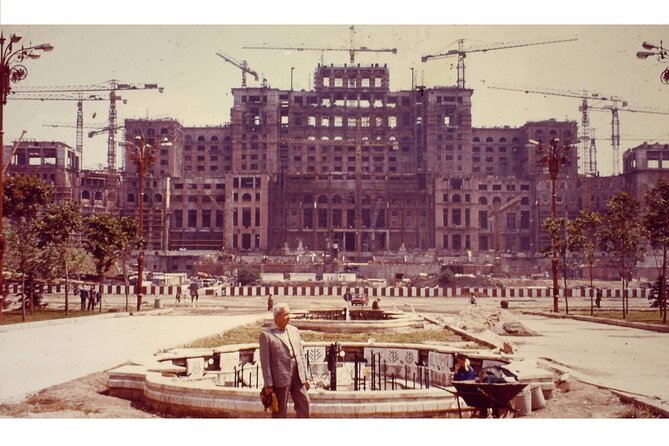
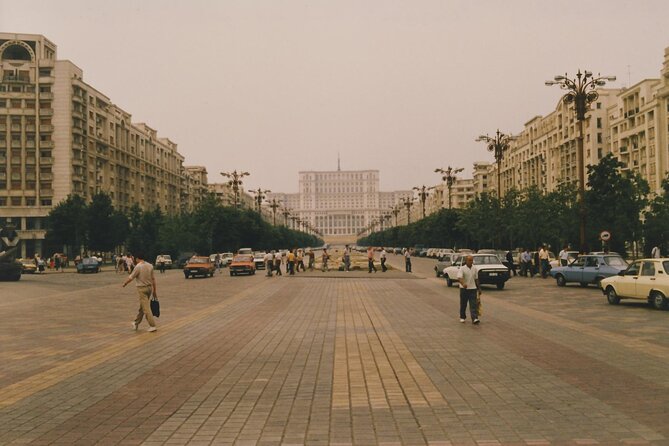
The tour begins at Bulevardul Unirii 5, in front of the Palace of Parliament, at 10:30 a.m. This is the right place to begin a tour about Romanian communism. The building is not simply large. It was the central symbol of Nicolae Ceausescu’s final, megalomaniac building program.
Your guide uses the palace as a way into the broader story. The building represents the state’s power, the money poured into official projects, and the scale of change imposed on Bucharest during the final communist years. You do not pay admission as part of this walking tour, and the stop lasts about 20 minutes.
I like this opening because it gives you a clear visual anchor. You do not need a long lecture before seeing the subject of the tour. The palace is right in front of you, and the guide can explain how its presence reshaped the city around it.
The tour does not include an interior visit, so book this walk for context rather than a palace tour. If you want to see the building inside, that would be a separate plan and expense. For many people, the exterior and the story around it are enough to set the tone.
More Walking Tours in Bucharest
- Bucharest: City Highlights Guided Walking Tour
★ 4.9 · 1,482 reviews - Bucharest Highlights Walking Tour
★ 5.0 · 469 reviews - Bucharest: Ghost Stories & Romanian Mythology Walking Tour
★ 4.9 · 287 reviews
Antim Monastery and the cost of the Socialist Victory Boulevard
From the palace, the route reaches Manastirea Antim, a stop of about 15 minutes. This church belongs to the older city that existed before Ceausescu’s massive reconstruction projects.
The important point is what nearly happened to it. Antim Monastery was close to being demolished to make room for the new Socialist Victory Boulevard. That detail helps you see communist urban planning as more than a matter of wide roads and oversized buildings. Old streets, religious sites, and established neighborhoods could all be treated as obstacles.
This is one of the tour’s better contrasts. You move from an enormous administrative building to a religious site tied to Bucharest’s earlier character. The change in scale makes the city’s political story easier to understand.
The stop is short, so do not expect an extended church visit. The value comes from the guide’s explanation and from seeing how old Bucharest survived beside the newer ceremonial avenues.
Patriarchal Palace and the early communist movement
The next stop is Palatul Patriarhiei, visited for about 20 minutes. Its design was inspired by the Garnier Opera in Paris, giving you another example of Bucharest’s mix of grand European references and Romanian political change.
This building is connected both with the beginning of democracy in Romania and with the beginning of the communist movement. That makes it an especially useful pause in the route. The tour is not presenting communism as a story that began suddenly in the 1980s. It links the movement to earlier political developments and shows how buildings can carry several layers of meaning.
I value this kind of stop because it prevents the tour from becoming a simple Ceausescu biography. You get a wider view of how Romania moved from monarchy and earlier political systems toward communist rule, then eventually toward democracy again.
As with the other stops, the visit is an exterior sightseeing stop with no admission fee included. The guide does the work here, so this is where a good storyteller matters. Alex’s ability to connect events and add humor has been especially praised, while Lucia has also received positive comments for her guiding.
Piata Unirii and the boulevard built for spectacle
Piata Unirii was built during the 1980s as part of the Socialist Victory Boulevard project. The square now has a very different public identity, thanks in part to its Dancing Fountains.
The stop lasts about 20 minutes, giving your guide time to explain how this space served the communist city and how it functions today. It is a good example of the way Bucharest reuses political symbols. The broad boulevard and monumental planning remain, but the fountains now provide a more ordinary public attraction.
This is also a practical sightseeing moment. You are seeing one of the city’s major central spaces while learning why its layout looks so different from the tighter streets of the old center. You may find the contrast more useful than a long description of urban planning in the abstract.
The route includes walking between several stops, so wear comfortable shoes. The supplied details do not promise a break for food or drinks, and neither is included in the price. Have water with you, especially if you are sensitive to a 2.5-hour city walk.
More communist-era history walks:
- The Real tour of Communism
★ 5.0 · 666 reviews - Life under Communism
★ 5.0 · 358 reviews - 3-Hour Guided Tour of Communist Bucharest
★ 4.9 · 303 reviews - Bucharest Essential Tour: Old Town, Calea Victoriei & Communism
★ 5.0 · 142 reviews
Old Town after the communist years
The tour then enters Bucharest’s Old Town, which takes about 15 minutes. Before the communist period, this area represented the old regime. During communism, it became abandoned.
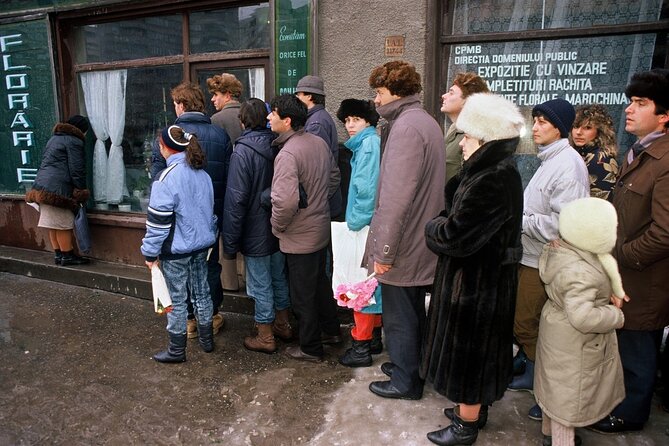
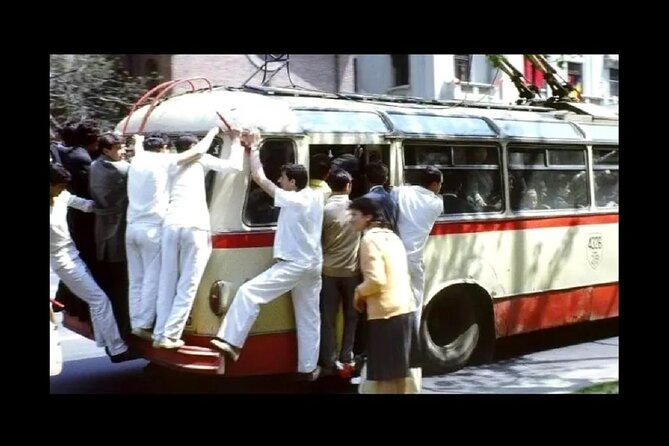
That brief description carries a lot of weight. Old Town is not presented only as a pleasant place for restaurants and evening walks. It becomes evidence of what happened when the city’s historic center lost importance under a political system focused on new boulevards, official buildings, and controlled public space.
I like this part of the tour because it helps you look at a familiar sightseeing district differently. You are not only checking off Old Town. You are hearing how its decline fit into the larger reshaping of Bucharest.
The stop is relatively short, so expect an introduction rather than a detailed architectural tour of every street. If you want to explore the lanes, buildings, and businesses at length, return later on your own. The walking tour gives you the useful background first.
University’s Square and Romania’s bloody revolution
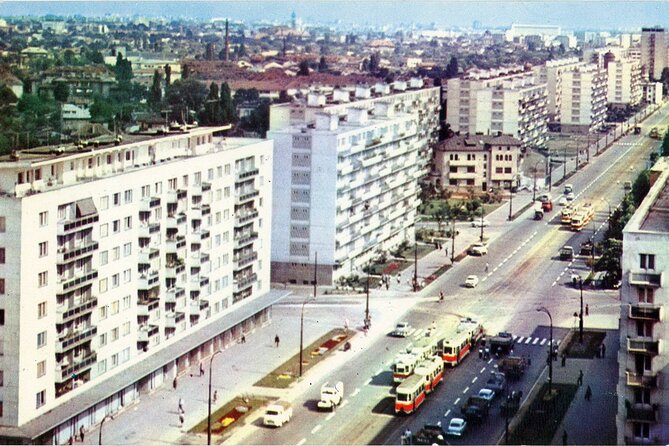
University’s Square is one of the most important stops on the route. The tour spends about 15 minutes here, focusing on Romania’s 1989 Revolution.
Romania was the only country in the communist bloc where the communist era ended in a bloody revolution. Many of the victims were shot in this square, making it a place where the political story becomes painfully concrete.
This is likely to be one of the most serious parts of the walk. The guide’s job is not merely to identify a location, but to connect the square with the people who gathered there, the violence that followed, and the collapse of the old regime.
I would pay close attention here, especially if you know little about the final days of Ceausescu’s government. The stop helps explain why Romania’s transition is remembered differently from the relatively peaceful changes in several other Eastern European countries.
The tour’s historical focus is useful for families and mixed-age groups. A three-generation group specifically enjoyed the experience equally, suggesting that the guide’s explanations can work for people with different levels of prior knowledge.
The Royal Palace and a change in political purpose
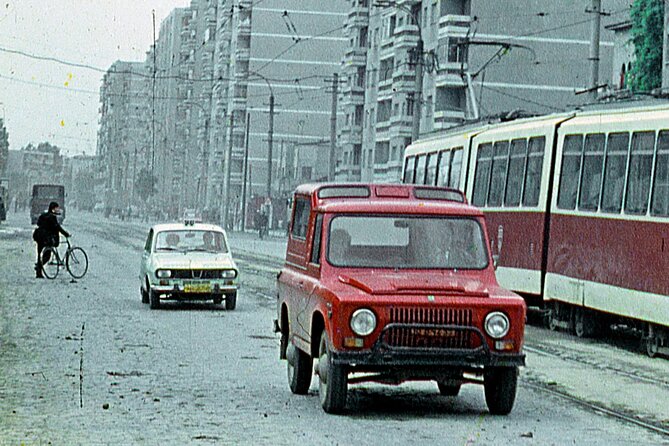
The former Royal Palace is now the National Art Museum. The building served as the winter residence of Romania’s royal family, but in the first years of communist rule it became the Palace of the Republic and a protocol building.
This stop lasts about 15 minutes and adds an important royal dimension to the story. Communism did not simply add new buildings to Bucharest. It reassigned old ones, changed their names, and altered what they represented.
The building’s changing role makes the political shift easier to picture. A royal residence became a building serving the new republic and its official functions. That change was not just architectural. It signaled a new idea of who held power and how the country should present itself.
The walking tour does not include a National Art Museum visit. If art is high on your list, you would need to return separately and pay any applicable admission. Here, the palace matters for its political use and its place along the route.
A short stop at the Romanian Athenaeum

The Ateneul Roman receives about five minutes, making it the briefest stop. It is one of Bucharest’s most representative buildings and appears on the five-lei banknote.
Do not expect a long architectural explanation here. Instead, treat it as a quick visual pause and a reminder that Bucharest’s identity includes more than communist construction. The Athenaeum provides another elegant, nationally important building in a route otherwise focused on political upheaval and monumental state projects.
The short timing is sensible for a walking tour with nine stops. Still, if this is one of the buildings you most want to study or photograph, you may want to return later. The guide has more urgent stories to tell at the next stop.
Revolution Square and Ceausescu’s final speech
The final stop is Piata Revolutiei, or Revolution Square, with about 25 minutes set aside. This is the longest stop after the opening palace visit, and it is where the tour’s themes come together.
The main building was the Central Committee of the Communist Party. From here, Nicolae Ceausescu gave his last speech in front of the Romanian people. The square is closely tied to the end of his rule, so it provides a strong finish to a route that began with his largest construction project.
The tour ends here, at Revolution Square. That endpoint is practical because it leaves you in a central part of Bucharest with more sightseeing options nearby, though the experience itself does not include food, drinks, or entry to attractions.
I like the structure of this ending. You begin with the physical symbol of communist power and finish at the place where that power publicly unraveled. The walk has a clear beginning, middle, and end rather than feeling like a list of unrelated monuments.
What the $24 price really gives you
At $24 per person, the main purchase is interpretation. You are paying for a local guide who can connect nine central locations over roughly two and a half hours. Since admission tickets are not included, the price is easy to understand: this is a guided city walk, not an attraction package.
I consider that good value if you want the political background explained as you move through Bucharest. The same route on your own would cost little, but you would need to research the sites, understand how they connect, and work out why the old monastery, royal palace, boulevard, and revolution squares belong in one story.
The value depends heavily on the guide. Alex has received particularly strong praise for his storytelling, humor, scientific background, and ability to adapt to the group. Lucia has also been described as a very good guide. Since the tour is offered in English, clear communication is essential.
A maximum of 25 people keeps the group from becoming enormous, though it is not a private tour. If you prefer one-on-one questions or a slower pace at every stop, a private guide may suit you better. For most visitors, this group size offers a reasonable balance between price and personal attention.
Who should book this Bucharest walk?
I would recommend the tour to you if you want a focused introduction to Romania’s communist period and the 1989 Revolution. It works especially well early in a Bucharest stay, before you explore the city independently, because the guide gives familiar streets and buildings a clear political frame.
It is also a good choice for mixed-age groups. The three-generation group that enjoyed Alex’s tour suggests that the storytelling does not depend on specialist knowledge. You can arrive knowing very little and still follow the main story.
The experience may suit you less if you want long interior visits, extensive architectural detail, or free time at each stop. Most locations are viewed from outside, and the schedule moves on after 5 to 25 minutes.
The tour is offered in English only. One participant who did not understand English well found the translation app insufficient for following the explanations. If your English is limited, this is a real concern, because the guide’s spoken stories are the core of the experience.
The route is near public transportation, service animals are allowed, and most people can participate. The information provided does not give a detailed route assessment for every mobility need, so contact the provider if you need specific accessibility advice.
Booking advice and cancellation terms
The experience is often booked about 50 days ahead, which suggests that early planning is sensible during busy periods. You receive confirmation when booking, and the mobile ticket makes the reservation easy to carry.
Free cancellation is available if you cancel at least 24 hours before the 10:30 a.m. start time. A cancellation made less than 24 hours before the start is not refunded, and changes inside that period are not accepted. If the minimum number of participants is not reached and the provider cancels, you are offered another date or experience, or a full refund.
Should you book Communism Walking Tour from Lenin to Ceausescu?
Book it if you want Bucharest’s recent past explained through the places where it happened. The Palace of Parliament, Old Town, University’s Square, the Royal Palace, and Revolution Square form a strong route, and the $24 cost is fair for a guided walk of this length.
I would especially choose it for a first visit, a history-minded family, or anyone who wants more than attractive buildings and fountains. Skip it if you need a non-English tour, paid interior visits, or a slow photography walk. For the right audience, this is a compact, serious, and engaging way to understand how communism changed Bucharest and how Romania finally broke away from it.
FAQ
How much does the tour cost?
The tour costs $24 per person.
How long does the walking tour last?
The experience lasts approximately 2 hours and 30 minutes.
What language is the tour offered in?
The tour is offered in English.
Where does the tour begin?
It begins at Bulevardul Unirii 5, București 040101, Romania, in front of the Palace of Parliament area.
Where does the tour end?
The tour ends at Revolution Square, Piața Revoluției, Bucharest.
What time does the tour start?
The scheduled start time is 10:30 a.m.
What is included in the price?
A local guide is included. Food, drinks, and admission tickets are not included.
Which major places does the tour visit?
The route includes the Palace of Parliament, Manastirea Antim, Palatul Patriarhiei, Piata Unirii, Old Town, University’s Square, the Royal Palace, the Romanian Athenaeum, and Revolution Square.
How many people can join the tour?
The activity accepts a maximum of 25 participants.
More Walking Tours
- Bucharest: Guided Walking Tour with Romanian Snack
★ 4.9 · 228 reviews - Best of Bucharest | Private Walking Tour
★ 5.0 · 199 reviews - Walking Tour- Delightful Bucharest (Highlights, Stories, Sights)
★ 5.0 · 145 reviews - 4h Bucharest Private Tour (2h by Car and 2h Walking in Old Town)
★ 5.0 · 90 reviews
Just added around Bucharest
- 10 hours Private Apiary Tour in Romania – From Bucharest★ 5.0 · 3 reviews
- 4-Day Inside Transylvania & Transfagarasan Tour from Bucharest★ 5.0 · 3 reviews
- Bucharest: Charm of the Belle Époque Private Tour★ 5.0 · 3 reviews
- Bran & Peles Castles through the Best Road in the World: Transfagarasan road★ 4.5 · 3 reviews
- Private Wine Tasting at Bucharest’s First Wine Bar★ 5.0 · 3 reviews
- 2-Day Small-Group Tour in Transylvania from Bucharest – Maximum 5 Persons★ 5.0 · 3 reviews
- Probably the Best Restaurant and Wine Cellar near Bucharest★ 4.5 · 3 reviews
- Bucharest to Brasov – Fast Private Transfer★ 5.0 · 3 reviews
Communist History Tours, compared.




Bucharest Essential Tour: Old Town, Calea Victoriei & Communism
Read our review →
Communism in Bucharest – Landmarks, Museum & Communist Appetizers
Read our review →


Browse the lists this tour appears in