
Reviewed · COMMUNIST HISTORY TOURS
Bucharest: Private Communist Tour in a Romanian Vintage Car
See Bucharest through a working time machine.
This private tour puts you in a fully restored Romanian Dacia 1310, a car strongly tied to everyday life in the 1970s and 1980s. I like the small private group, limited to three people per car, and I like the way the route mixes major sights with personal stories about life under Nicolae Ceaușescu. You can ride with a driver or take the wheel yourself if you bring a valid driving license.
The main drawback is comfort and access. This is a 35-year-old classic car, not a modern minivan, so the ride may feel less forgiving on Bucharest’s roads. The tour also is not suitable for children under 10, pregnant women, people with back problems, or wheelchair users.
In This Review
- The quick facts that matter most
- Why the Dacia 1310 changes the experience
- Revolution Square and the first look at communist Bucharest
- Casa Radio and the unfinished side of power
- Fântână and Academia Română
- The Palace of Parliament and Ceaușescu’s grand scale
- Victoria Socialismului Boulevard, the Champs-Élysées comparison
- The Communist Party headquarters and Casa Ceausescu
- Casa Presei and the House of the Free Press
- What the guide adds to the buildings
- Self-driving or private driver?
- Timing, comfort, and practical limits
- Is $124 per person good value?
- Should you book the Dacia tour?
- FAQ
- How long does the Bucharest vintage car tour last?
- What type of car is used?
- Can I drive the Dacia myself?
- How many people can ride in one car?
- What sights does the tour visit?
- Is hotel pickup included?
- Who should not take this tour?
The quick facts that matter most
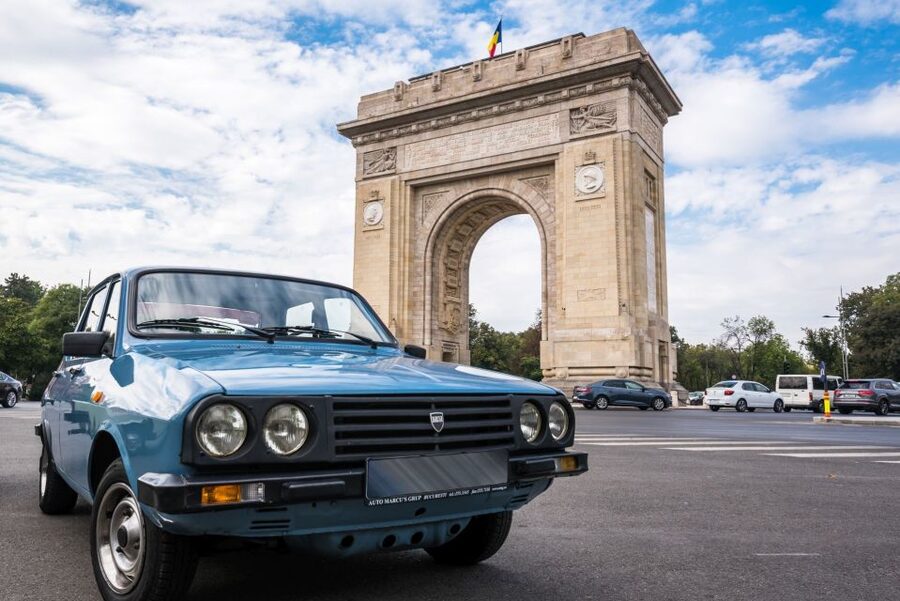
- You ride in an authentic Dacia 1310: This Romanian classic car is the heart of the experience, not just a decorative prop.
- The route covers about 30 kilometers: You see central Bucharest, broad communist-era boulevards, government buildings, monuments, and former party sites.
- You can choose self-driving: Bring your driving license if you want to drive. Otherwise, a private driver handles the car.
- Personal stories shape the tour: Guides such as Catalin, Dan, and Serban explain what daily life felt like during communism.
- Hotel pickup and drop-off are included: The tour begins and ends at your Bucharest hotel.
- Three departure times are offered: Tours run daily at 10:00 AM, 2:00 PM, and 8:00 PM, with booking at least 48 hours ahead.
Why the Dacia 1310 changes the experience
Bucharest has plenty of conventional sightseeing tours. This one begins with a car that helps explain the city before the guide says much at all.
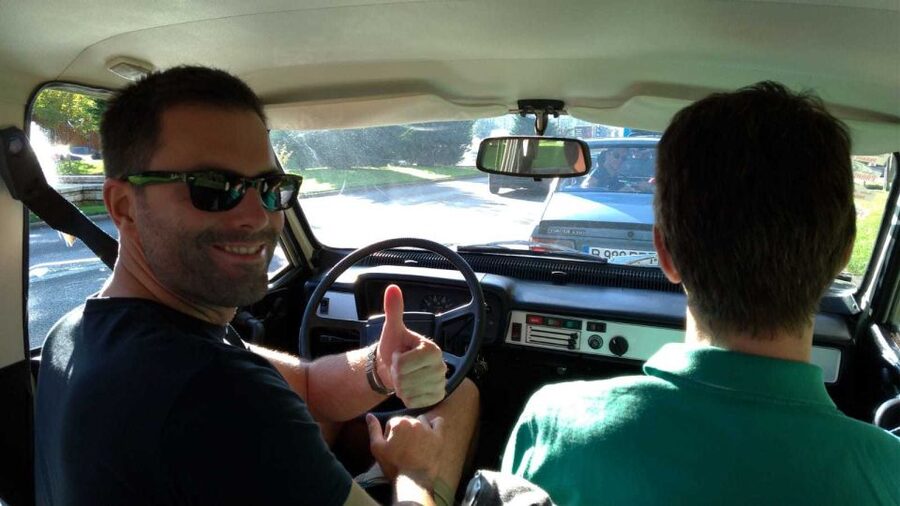
The Dacia 1310 was a familiar sight in communist Romania. Riding in a restored example gives the tour a strong physical connection to the period. You are not only looking at a former government building from a distance. You are sitting in the kind of car associated with ordinary Romanian life.
That detail matters because the tour is not limited to Ceaușescu’s grand projects. The guide also talks about how a regular person lived during the communist era. The personal angle gives the buildings more meaning. A giant boulevard can otherwise look like a wide road and a photo stop. With context, it becomes part of a political and social story.
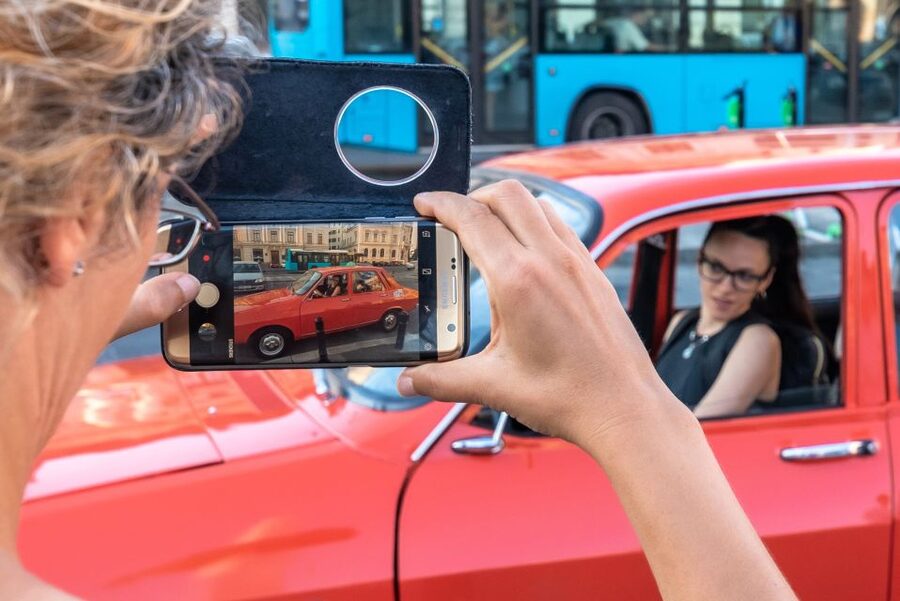
You will also attract attention as you move through the city. People wave, look over, and notice the old Romanian car. That reaction is part of the fun, though it means you should expect a public experience rather than a quiet, anonymous ride.
The car carries up to three people. That works well for a couple, a family group with older children, or a few friends who want a private outing. If you are traveling alone, you still get the benefit of a personal guide and a flexible pace at the stops.
More communist-era history walks:
- The Real tour of Communism
★ 5.0 · 666 reviews - Life under Communism
★ 5.0 · 358 reviews - 3-Hour Guided Tour of Communist Bucharest
★ 4.9 · 303 reviews
Revolution Square and the first look at communist Bucharest
The tour gives Revolution Square about 30 minutes, making it one of the most important stops. This is where the route begins to connect Bucharest’s political past with visible places in the present city.
Your guide explains the square and its role in the country’s modern story. The stop is useful even if you already know the basic outline of Romania’s 1989 revolution because the guide adds local detail and personal perspective.
You have time to get out of the car, listen, and take photographs. The square also helps you understand the contrast between official communist power and the public events that challenged it.
I would pay close attention here rather than treating it as a quick picture stop. The value is in the explanation, and the 30-minute allocation gives the guide room to build the story.
Casa Radio and the unfinished side of power
Casa Radio receives a shorter stop of about 10 minutes. The building is tied to Bucharest’s communist-era development and offers a different view from the polished or monumental locations later in the route.
A brief stop works here because the point is likely visual and historical context rather than an extended visit inside. You can photograph the building, hear why it matters, then continue through the city.
This is one reason the private format helps. If a particular site interests you, you can ask questions directly instead of waiting for a large group to gather or move on as one unit.
Fântână and Academia Română
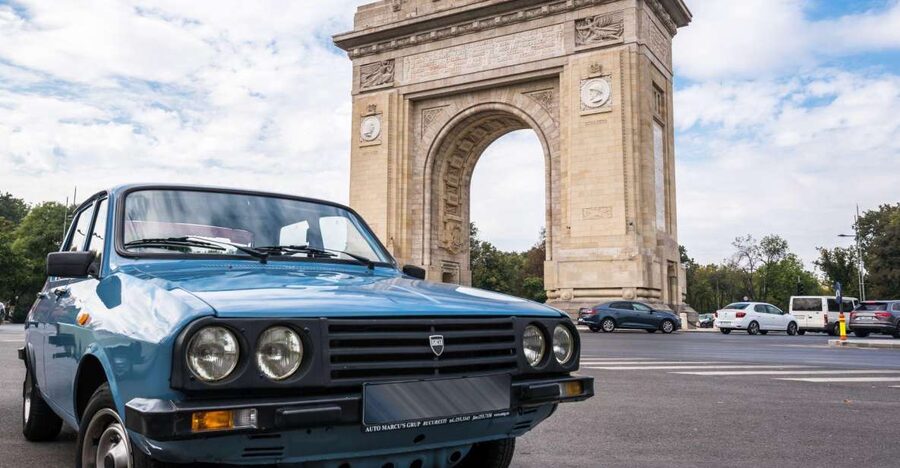
The route includes another 10-minute photo and information stop at Fântână. The supplied details do not specify a longer visit or an interior entry, so think of this as a roadside landmark stop with a guide’s explanation.
Academia Română receives around 15 minutes. This adds an institutional and cultural note to the route. The tour is not only about palaces, party buildings, and giant avenues. It also points to places connected with Romania’s intellectual and national identity.
At both stops, you should expect to get out, take pictures, and listen to a compact explanation. The pace is active, but not rushed in the way a bus tour can be.
A few more trips worth weighing up before you book
- Bucharest: Dracula’s Castle, Peles Castle, & Brasov Old Town
★ 4.5 · 17,858 reviews - Bucharest: Dracula Castle, Peles Castle & Brasov Old Town
★ 4.6 · 10,891 reviews - Bucharest: Dracula’s Castle, Peleș Castle & Brașov Day Trip
★ 4.5 · 5,919 reviews - Bucharest: Palace of Parliament Tickets and Guide
★ 4.3 · 3,182 reviews
The Palace of Parliament and Ceaușescu’s grand scale
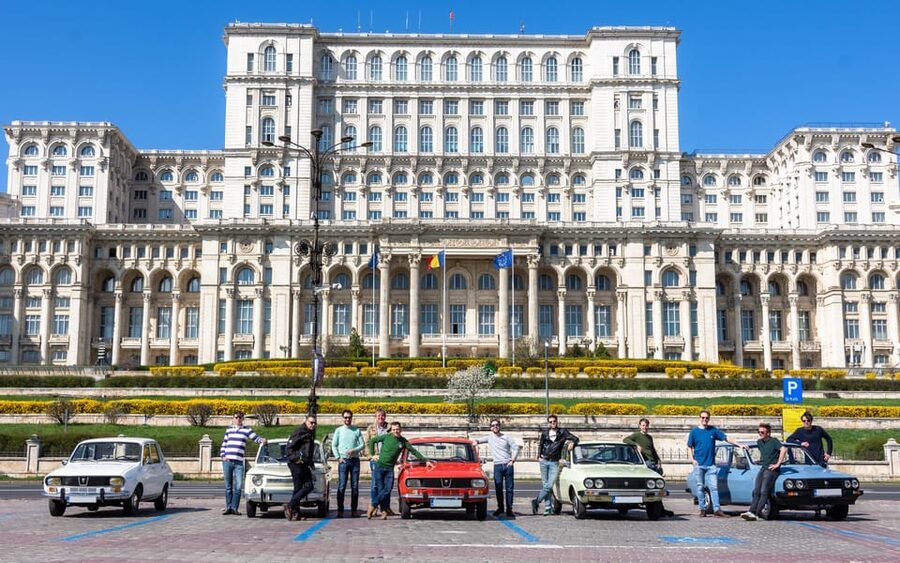
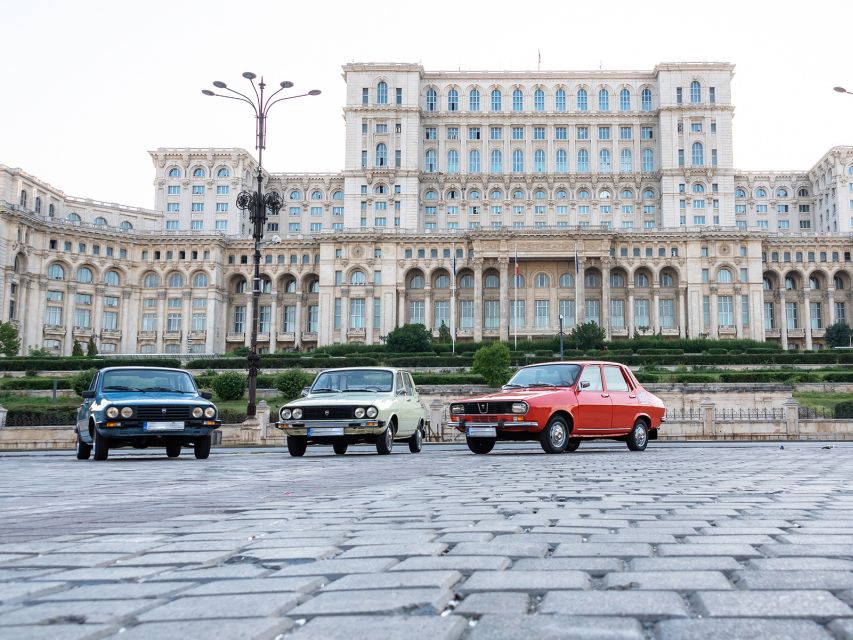
The Palace of Parliament gets roughly 20 minutes. This is the tour’s biggest architectural statement and one of Bucharest’s essential sights.
The building is commonly known by its former name, Casa Poporului, or House of the People. Its scale helps you understand the priorities of Ceaușescu’s regime: monumental construction, centralized power, and a city reshaped to serve a political image.
The tour focuses on seeing and discussing the site from the outside. It does not list an interior visit, so do not book this experience expecting a guided walk through the building.
The Dacia creates an amusing contrast here. You arrive at one of Europe’s most imposing government structures in a small, ordinary Romanian car. That contrast makes for strong photographs and keeps the stop from feeling like a standard architecture visit.
Victoria Socialismului Boulevard, the Champs-Élysées comparison
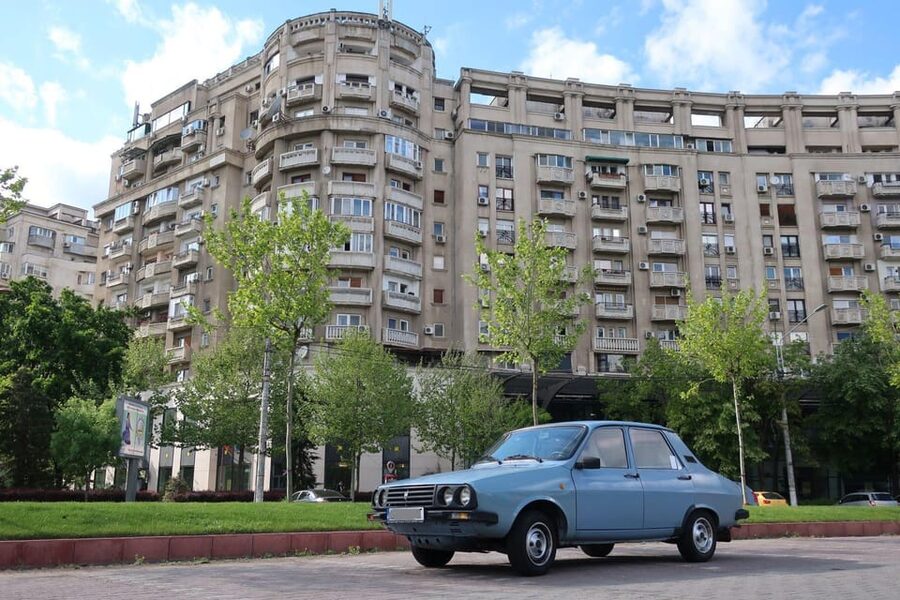
The route follows Victoria Socialismului Boulevard, presented as Ceaușescu’s version of the Champs-Élysées. The comparison tells you exactly what the boulevard was meant to convey: power, order, ceremony, and an impressive axis leading toward the Palace of Parliament.
From the car, the boulevard becomes easier to understand as an urban project rather than just another broad avenue. Your guide can explain its place in the former regime’s plans and how it affected the shape of Bucharest.
This is also where the private-car format earns its keep. You see the boulevard at street level, with time to stop for photographs at selected points. You are not simply looking out of a coach window while a guide speaks through a microphone.
The Communist Party headquarters and Casa Ceausescu
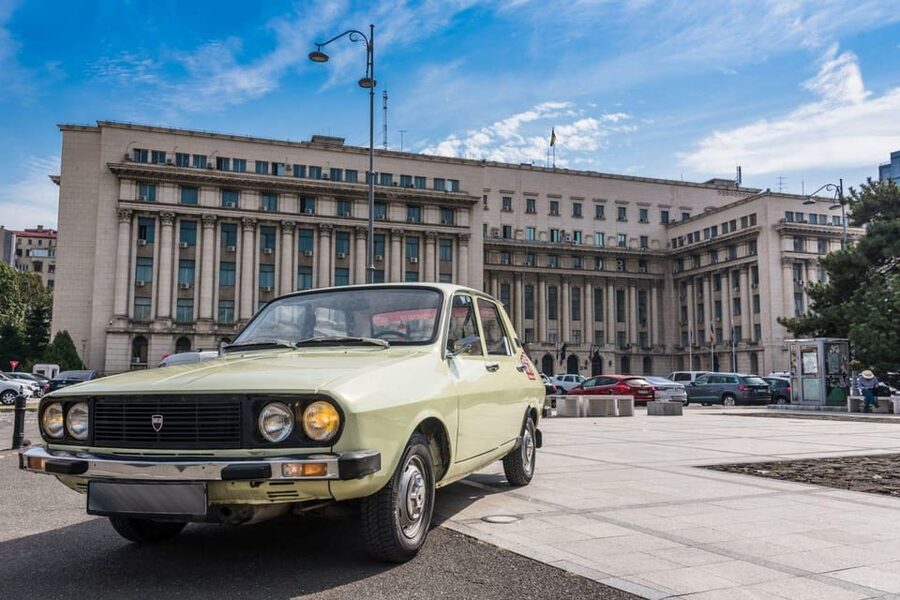
The former Romanian Communist Party headquarters adds another direct link to the political system. The stop helps connect the streets and buildings with the people and institutions that controlled the country.
The visit to Casa Ceausescu includes about 25 minutes for a break, photographs, and guided information. The name refers to the Ceaușescu family home, giving the tour a more personal angle after the monumental public buildings.
This part is especially useful if you want to understand the difference between official public life and the private world of the ruling family. The experience does not simply present one large building after another. It moves between government spaces, public boulevards, institutions, and the family residence.
A break is built into this section, which helps during a three-hour circuit. Still, the tour does not include food or drinks, so you should not count on a meal. Water is provided in the car.
Casa Presei and the House of the Free Press

The final major stop is Casa Presei, also called the House of the Free Press. You have around 20 minutes for photographs and an explanation.
The building provides another example of communist-era monumental design and state messaging. Its former connection with the press makes it a useful stop for discussing how information functioned under the regime.
The route ends by returning you to Bucharest after this circuit. Since hotel pickup and drop-off are included, you do not need to arrange a separate meeting point in the city. That is handy if you are staying outside the immediate center or prefer not to navigate Bucharest before the tour.
What the guide adds to the buildings
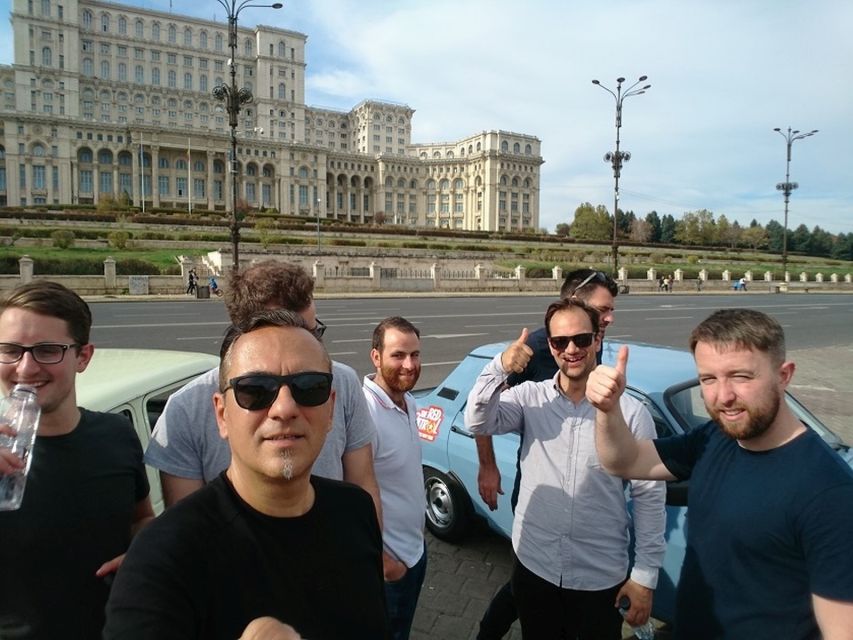
The strongest part of this experience is the human explanation. The route would still be interesting without it, but the guide turns a collection of buildings into a story about power and daily life.
Catalin is praised for giving a detailed account of Romanian history before, during, and after communism. One description also credits him with adding lesser-known places and traditional Romanian food on a particular tour. Food is not listed as part of this experience, so you should not assume that tasting food is included every time.
Dan and Serban are also named as guides connected with the tour. Dan has guided in German as well as English, according to the information provided, while the activity itself is listed as English-language. If you need another language, confirm it before booking.
Personal experience appears to be a central feature of the guiding style. One guide is described as having lived through communism, which can give the explanations a direct, lived quality. That is valuable when discussing shortages, restrictions, routines, and the gap between official slogans and ordinary life.
You also receive a tour newspaper and a personalized gift. These are small extras, but they make the outing feel more considered than a simple car rental with a driver.
Self-driving or private driver?
The self-drive option is unusual and may be the biggest reason to choose this tour over a normal city circuit. Driving a Dacia 1310 lets you experience the car as more than a photo backdrop.
You must bring a valid driving license on the tour date. The information specifically asks self-driving customers to provide a driver with a valid license, so treat this as a firm requirement.
If you would rather focus on the guide, photographs, and scenery, choose the private-driver option. That may be the better choice in unfamiliar city traffic or if you want to spend more time listening.
I would also choose the driver option if the old-car novelty matters more to you than the driving itself. You still get the attention, the photographs, and the period feel without having to concentrate on the road.
Timing, comfort, and practical limits
The advertised duration is 200 minutes, or about three hours and 20 minutes. The experience is also described as a three-and-a-half-hour tour, with the guided circuit itself listed at about two and a half to three hours. In practical terms, allow roughly three to three and a half hours from pickup to return.
Daily departure times are 10:00 AM, 2:00 PM, and 8:00 PM. The activity requires 48 hours of advance booking, so do not leave it until the last day of your Bucharest stay.
The 8:00 PM departure may suit you if you want a later outing, though the information does not promise particular lighting conditions or nighttime views. Pick the time based on your schedule rather than assuming one departure is automatically better for photographs.
The Dacia is described as comfortable to sit in by one passenger, but it remains an old car. People with back problems should not book it, and anyone sensitive to a firm or less polished ride should consider the private-driver option carefully.
The tour is not suitable for wheelchair users, pregnant women, or children under 10. Food and drinks are not included, but water is supplied in the car.
Is $124 per person good value?
At $124 per person, this is not the cheapest way to see Bucharest. The price makes more sense when you count what is included: hotel pickup and drop-off, a private English-speaking guide, a restored Romanian car, a long city circuit, landmark stops, a newspaper, a gift, and water.
The group limit of three per car is important. You are paying for privacy, not a seat on a large shared bus. For two or three people, the price can be reasonable if you want a special occasion experience with substantial historical explanation.
It offers less value if you only want quick photographs of the Palace of Parliament and a few central streets. You could see some landmarks more cheaply on a standard walking or bus tour. This tour earns its price through the car, the private format, and the stories about communist life.
The perfect audience is someone who wants Bucharest explained through its recent past, enjoys unusual transport, and values direct access to a guide. It is also a good choice for repeat visitors who have already seen the main sights and want a different way to connect them.
Should you book the Dacia tour?
I would book this tour if the communist-era story interests you and you want more than a list of landmarks. The restored Dacia, the 30-kilometer route, and the private guiding make it a memorable way to place Bucharest’s grand buildings in everyday context.
Choose it with a driver if comfort and conversation matter most. Choose self-driving if you have the required license and want the full period-car experience.
Skip it if you need step-free access, have back problems, are traveling with a child under 10, or prefer a modern vehicle. For everyone else, the combination of personal stories, major sights, and a genuine Romanian classic car offers strong value for a private Bucharest outing.
FAQ
How long does the Bucharest vintage car tour last?
The activity lasts 200 minutes, about three hours and 20 minutes. It is also described as a three-and-a-half-hour private tour, while the guided driving circuit itself takes about two and a half to three hours.
What type of car is used?
The tour uses a fully restored Dacia 1310, an authentic Romanian classic car from the communist era. The car is around 35 years old.
Can I drive the Dacia myself?
Yes. Self-driving is available, but you must bring a valid driving license on the date of the tour.
How many people can ride in one car?
The capacity is three people per car. The group remains private.
What sights does the tour visit?
The route includes Revolution Square, Casa Radio, Fântână, Academia Română, the Palace of Parliament, Casa Ceausescu, and Casa Presei, also known as the House of the Free Press. It also includes Victoria Socialismului Boulevard and the former Romanian Communist Party headquarters.
Is hotel pickup included?
Yes. Pickup and drop-off at your hotel in Bucharest are included.
Who should not take this tour?
The tour is not suitable for children under 10, pregnant women, people with back problems, or wheelchair users.
Just added around Bucharest
- 10 hours Private Apiary Tour in Romania – From Bucharest★ 5.0 · 3 reviews
- 4-Day Inside Transylvania & Transfagarasan Tour from Bucharest★ 5.0 · 3 reviews
- Bucharest: Charm of the Belle Époque Private Tour★ 5.0 · 3 reviews
- Bran & Peles Castles through the Best Road in the World: Transfagarasan road★ 4.5 · 3 reviews
- Private Wine Tasting at Bucharest’s First Wine Bar★ 5.0 · 3 reviews
- 2-Day Small-Group Tour in Transylvania from Bucharest – Maximum 5 Persons★ 5.0 · 3 reviews
- Probably the Best Restaurant and Wine Cellar near Bucharest★ 4.5 · 3 reviews
- Bucharest to Brasov – Fast Private Transfer★ 5.0 · 3 reviews
Communist History Tours, compared.




Bucharest Essential Tour: Old Town, Calea Victoriei & Communism
Read our review →
Communism in Bucharest – Landmarks, Museum & Communist Appetizers
Read our review →


Browse the lists this tour appears in