
Reviewed · COMMUNIST HISTORY TOURS
Bucharest: Communism, Revolution & City Highlights Tour
History gets personal here. Bucharest’s communist past is not locked in a museum. You see it in torn-up neighborhoods, grand civic buildings, bullet-marked streets, and the immense Palace of Parliament. I especially like the private format, which lets you ask direct questions, and the way the route links the city’s elegant prewar center with the harsh architecture of Ceaușescu’s rule. The main consideration is the subject matter: this is a serious history tour, not a light sightseeing stroll, and some stories are difficult.
The tour covers about 3 kilometers at a slow pace over roughly four hours. Your English-speaking guide picks you up anywhere in Bucharest, including a hotel, Airbnb, or rental, then leads you through the Athenaeum, Revolution Square, University Square, Old Town, and Constitution Square. Guides such as Andra, Bogdan, Michael, Mircea, Tudor, Emma, and Mihai have been praised for making complex events clear, often adding family memories or old photographs to explain what life was like under communism.
In This Review
- Key points to know before booking
- Why this Bucharest tour is different
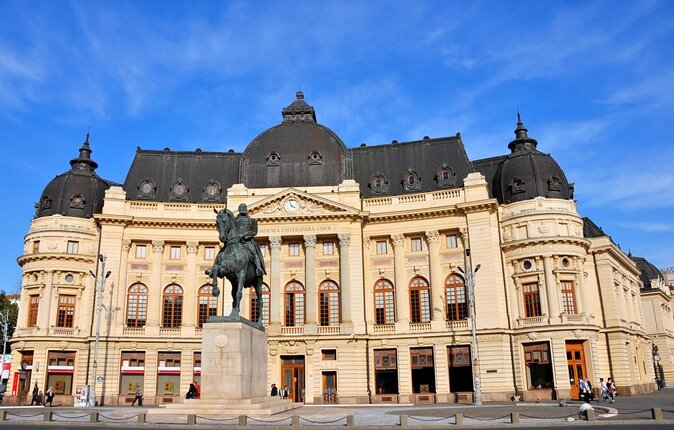
- Starting at the Romanian Athenaeum
- Revolution Square and Ceaușescu’s final speech
- University Square and the violence of 1989
- Old Town, restored beauty with missing pieces
- Constitution Square and the Palace of Parliament
- What the private format is worth
- Walking, weather, and the right pace
- Who will enjoy this tour most
- Practical booking advice
- Should you book the Bucharest communism tour?
- FAQ
- How long does the Bucharest Communism, Revolution and City Highlights Tour last?
- How far do you walk?
- Is hotel pickup included?
- Where does the tour end?
- Is this a private tour?
- Is the tour offered in English?
- Can I cancel for a full refund?
Key points to know before booking
- Personal hotel pickup: Your guide meets you in the hotel lobby or at your accommodation, so you do not need to find an unfamiliar starting point.
- A story-led route: The stops follow Romania’s path from pre-communist elegance through Soviet control, Ceaușescu’s dictatorship, the 1989 Revolution, and the city’s present-day scars.
- Private guiding: Only your group takes part, giving you room to ask about politics, family life, architecture, or the revolution.
- About 3 kilometers of walking: The pace is gentle, with stops for photographs, rest, and refreshments, but comfortable shoes still matter.
- Powerful personal detail: Guides may use family experiences, old magazines, and historic photographs to show how communist policies affected ordinary people.
- A central finish: The tour ends near Palatul CEC in the Old Town area, close to restaurants, bars, museums, and shops.
Why this Bucharest tour is different
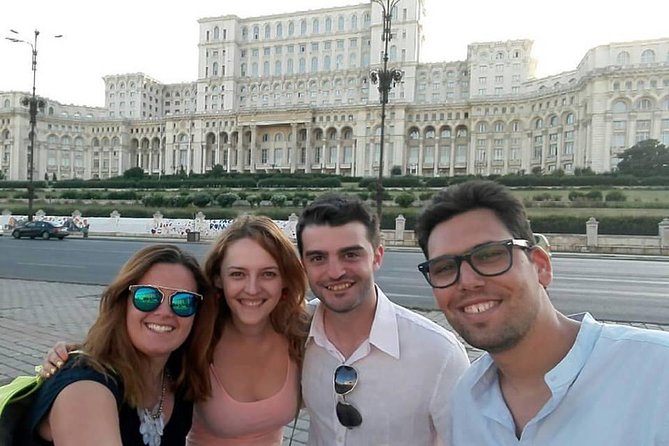
Many city tours show you Bucharest’s sights. This one explains why the city looks so uneven. One minute you are near the Romanian Athenaeum, a graceful symbol of old Bucharest. Later, you are facing the giant Palace of Parliament, built during one of Europe’s most severe dictatorships. The contrast is the point.
Bucharest was once called Little Paris because of its French-inspired architecture, grand avenues, and cultural life. The communist period changed that character through demolitions, forced relocations, censorship, and monumental construction. You do not just hear dates and names here. You watch the city’s political story unfold in stone.
The private setup matters. On a large group tour, a question about daily life under Ceaușescu might get rushed. Here, you can stop and ask what rationing meant, how people dealt with surveillance, or how families remember the 1989 uprising. The guides are also able to adjust the pace. Mihai, for example, changed the route when demonstrations closed the Palace of Parliament area and added other historical material instead.
The mood is generally thoughtful rather than theatrical. Guides have been praised for presenting difficult events in a clear, engaging way, and for making four hours pass quickly. That is a real strength, since Romanian communist history can become a blur of leaders, institutions, and political shifts without a good storyteller.
More City Tours in Bucharest
- Bucharest: City Highlights Guided Walking Tour
★ 4.9 · 1,482 reviews - Bucharest: 2-Hour City Highlights Bike Tour
★ 4.8 · 269 reviews - Bucharest Tuk Tuk city tour
★ 5.0 · 188 reviews
Starting at the Romanian Athenaeum
The tour begins at Strada Benjamin Franklin 1, in front of the Romanian Athenaeum. If you choose pickup, you may not need to go there on your own. Your guide can meet you at your Bucharest accommodation, including an Airbnb or rental, and hotel guests are met in the lobby beside reception.
The Athenaeum provides an intelligent opening. Its elegant appearance represents the Bucharest that existed before communist rule. From here, the guide sets up the central question of the tour: what happened to this sophisticated European capital after the Second World War?
You will hear how Soviet power spread across Eastern Europe and how Romania’s political system was remade after the war. The discussion includes the destruction of free press, private property, and independent cultural life, along with the work of the KGB and secret police. Deportations to Siberia and political terror are part of this section too.
This is not a stop built around entering a paid attraction. The value is in the explanation and the setting. You are looking at one of Bucharest’s symbols of culture while learning how culture itself came under state control.
I would pay close attention here because it gives the rest of the walk a clear frame. Without this background, later stops can look like unrelated monuments and squares. With it, the city becomes a record of political choices.
Revolution Square and Ceaușescu’s final speech
Revolution Square is the emotional center of the tour. This is where Nicolae Ceaușescu delivered his final public speech, an event that exposed the weakening of his authority. The square connects the polished image of official propaganda with the sudden collapse of a regime that had seemed immovable.
Your guide explains the early communist years, Romania’s Soviet occupation, and the rise of the country’s first communist leader before turning to Ceaușescu. His rule began with hopes that he might follow a more independent path, but those hopes gave way to tighter control and personal power.
The physical setting makes the story easier to grasp. You are not simply hearing about a dictator in a textbook. You are standing where state power was displayed, defended, and finally challenged.
This stop can be especially strong with a guide who has family memories of the period. Several guides have used personal stories to explain how national events affected households. That kind of detail can clarify the gap between official speeches and ordinary life.
Give yourself time for questions here. You may want to ask about propaganda, secret police surveillance, or how the atmosphere changed during the final years. Since the tour is private, the conversation can follow your interests instead of staying on a fixed script.
University Square and the violence of 1989
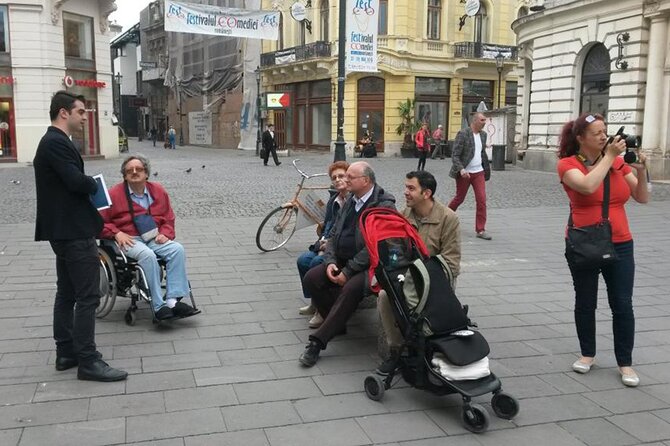
At University Square, the focus shifts from dictatorship to revolt. This was a major site of the 1989 Revolution, where protesters gathered, confronted the authorities, and faced deadly violence. The square is a reminder that the collapse of communism was not a tidy political handover. People risked their lives in the streets.
The guide covers Ceaușescu’s final years, including his growing paranoia, harsh policies, and the hardships imposed across Romania. The tour also raises questions about what happened behind the scenes during the revolution. Was the uprising only a popular revolt, or did other forces help shape the outcome?
That question gives this section an extra edge. You are not handed a simple victory story and sent on your way. Instead, the guide can explain the uncertainty and competing interpretations surrounding the final days of the regime. The aim is not to turn the stop into a political argument, but to show why 1989 remains a complicated subject.
This is one of the places where a strong guide makes a large difference. Bogdan has been praised for explaining complicated events in an engaging way, while other guides have been noted for answering questions patiently and thoroughly. You will get more from the square if you are willing to listen closely and ask about the details that puzzle you.
More communist-era history walks:
- The Real tour of Communism
★ 5.0 · 666 reviews - Life under Communism
★ 5.0 · 358 reviews - 3-Hour Guided Tour of Communist Bucharest
★ 4.9 · 303 reviews - Bucharest Essential Tour: Old Town, Calea Victoriei & Communism
★ 5.0 · 142 reviews
Old Town, restored beauty with missing pieces
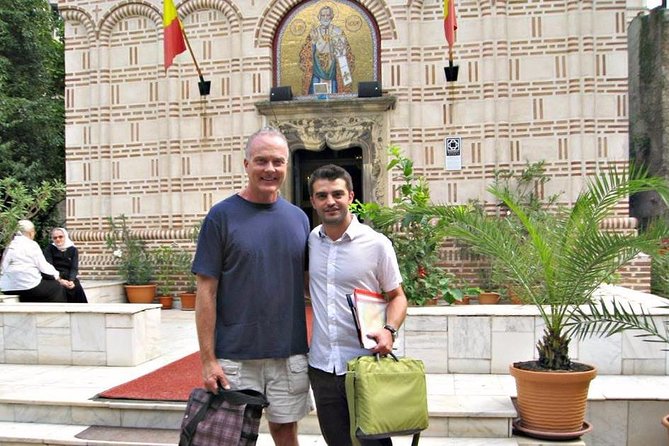
The walk then enters Bucharest’s Old Town. At first glance, this is the most inviting part of the route. You pass elegant nineteenth-century buildings, Byzantine churches, cafés, and streets filled with places to stop for a drink or meal.
But the guide asks you to look at the district differently. Today’s Old Town is only a fraction of the pre-communist center. Demolitions and redevelopment removed large sections of the old city, while surviving buildings suffered decades of neglect. Some were later restored, and others were repaired after damage connected to the 1989 fighting.
That makes the Old Town a useful counterpoint to the Palace of Parliament. Here, the story is not only about what the communist state built. It is also about what disappeared.
The one-hour Old Town section is the longest stop, and that seems right. You have time to examine façades, step into the atmosphere of the old streets, and take a coffee break if the timing allows. One account describes enjoying a coffee near a famous restaurant, while another highlights old photographs and magazines that showed how Bucharest looked before major demolitions.
I like this part because it avoids treating the Old Town as a separate entertainment district. You see the cafés and restored architecture, but you also learn how much of the historic center was lost. The result is a more honest city portrait.
The Old Town can also be the most relaxed portion of the tour. After the grim accounts of political repression and street violence, the chance to pause is welcome. Refreshments are not included, so bring money for your own coffee or snack.
Constitution Square and the Palace of Parliament
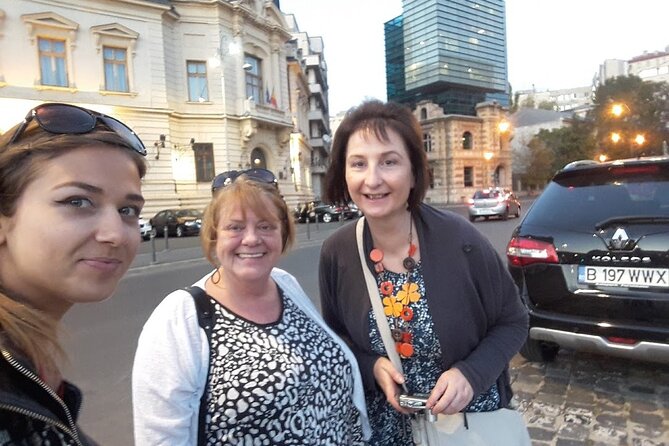
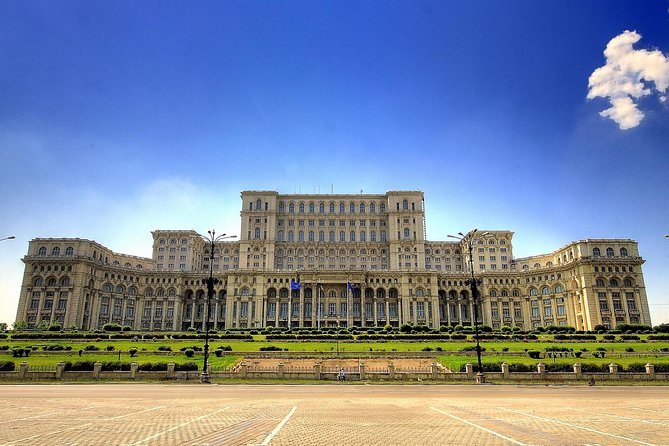
The final major stop is Constitution Square, in the former Communist Civic Center. Here you face the Palace of Parliament, an enormous building often described as the world’s second-largest building after the Pentagon.
The exterior alone gives you a sense of Ceaușescu’s priorities. The building was part of a huge redesign of central Bucharest that required the destruction of historic neighborhoods and the displacement of residents. Its scale was meant to project authority, permanence, and national power.
The guide explains the building’s darker background and points out the underground levels, reported atomic bunkers, and tunnel network beneath the complex. The tour, as described here, focuses on the exterior rather than promising entry inside. That distinction matters. If you specifically want an interior visit, confirm the arrangements before booking.
Even without an interior visit, Constitution Square is a strong finish. The Palace is so oversized that it is hard to take in as an ordinary building. It works better as evidence of a political system than as a conventional sightseeing attraction.
After the palace, your guide walks you back toward the Old Town. The official finish is near the Palace of the Deposits and Consignments, also called Palatul CEC, at 13 Calea Victoriei. Across the street, you are close to restaurants, bars, museums, and shops, which makes the ending useful for continuing your afternoon.
What the private format is worth

The price is listed at $93.46 per person, with group discounts available. That is not the cheapest way to see Bucharest, but the value depends on the size of your group. You are paying for a licensed English-speaking guide, a private experience, hotel pickup, and four hours of focused interpretation rather than a quick circuit of sights.
For two people, the per-person cost may feel high compared with a standard group walk. For a family or several friends, group pricing can make more sense, especially because everyone gets the same guide and there is no need to arrange transport to the meeting point.
The private format is most valuable if you care about history and discussion. Guides such as Andra have shared first-hand family experiences, while Mihai has used printed photographs and old magazines to make the period easier to picture. Michael has been praised for placing events in context and keeping the presentation engaging. Those details show what you are buying: not just movement between landmarks, but a conversation shaped around your questions.
You also save time at the beginning. Pickup is available anywhere in Bucharest, and the guide meets hotel guests in the lobby. The tour does not finish back at your hotel. It ends in the center, which is convenient if you want to eat or keep sightseeing, but less useful if you need to return immediately to your accommodation.
The tour is often reserved well ahead of time, with an average booking lead time of 132 days. That does not mean you must book four months ahead, but it suggests you should reserve early if your dates are fixed, particularly if you want a certain day or are visiting during a busy period.
Walking, weather, and the right pace
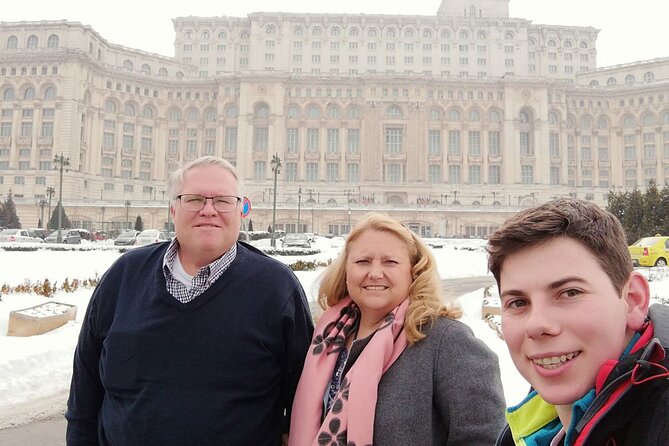
This is a slow-paced walking tour covering up to 3 kilometers, or less than 2 miles. You will stop often for photographs, rest, and possible refreshments. Most people can take part, but you should still wear comfortable shoes and prepare for outdoor conditions.
The route is manageable for many visitors because it is not a fast march. Even so, the subject matter and the number of stops make the four hours feel full. If you prefer to see many attractions quickly, this may seem too slow. If you like time to look, listen, and ask questions, the pace is a plus.
Weather can affect the experience. One guide adapted the route during difficult winter conditions and political demonstrations, replacing a closed area with other material. That is a good sign for flexibility, but it also means you should not assume every stop will operate in exactly the same way on every date.
There is no mention of refreshments being included. Plan to buy your own drink or snack during the Old Town pause, and carry water if you are walking in warm weather.
Who will enjoy this tour most
I would recommend this experience to first-time visitors who want Bucharest’s sights to make sense. It works especially well early in a city visit because it introduces the main historic center, the revolution sites, and the Palace of Parliament area in one outing.
It is also a good choice for:
- Couples or families who prefer a private guide
- Visitors interested in twentieth-century European history
- People who want personal stories rather than only dates and monuments
- Anyone who wants hotel pickup and a central finish
- Visitors who can manage a gentle 3-kilometer walk
You may want a different experience if you are looking for palace interiors, museum admission, or a casual architecture walk with little political discussion. This tour is built around communism, repression, revolution, and the physical changes made to Bucharest. The tone can be intense.
It suits curious visitors more than checklist sightseers. You will get the most from it if you ask questions and compare what you see with the guide’s account of the past.
Practical booking advice
Free cancellation is available until 24 hours before the start time. Cancellations made less than 24 hours ahead are not refunded, and late changes are not accepted, based on local time.
The tour is offered in English and includes a mobile ticket. Confirmation arrives at booking, and the route is near public transportation. Still, pickup is the easiest option if you are staying anywhere in Bucharest.
When booking, enter the exact name or address of your accommodation. At a hotel, meet the guide beside reception in the lobby. At an Airbnb or rental, provide clear location details so the pickup is not slowed by an unclear entrance.
I would also use the booking notes to ask about the day’s route if a major demonstration, public event, or winter weather is expected. The guides have shown they can adjust, but knowing the plan in advance helps you set expectations.
Should you book the Bucharest communism tour?
Book it if you want to understand how Bucharest became the city you see today. The strongest features are the private guiding, the orderly four-stop-plus-palace route, the chance to hear family memories, and the way the guide connects elegant old buildings with communist demolitions and revolutionary violence.
At $93.46 per person, it offers fair value for a private four-hour experience, especially for a small group that can use the discount. The price is harder to justify if you mainly want photographs or a quick overview.
My advice is to schedule it near the start of your Bucharest stay, wear good walking shoes, and leave room afterward for lunch or further exploring around the Old Town. If you want a thoughtful explanation of Romania’s communist era rather than a list of monuments, this is a strong choice.
FAQ
How long does the Bucharest Communism, Revolution and City Highlights Tour last?
The tour lasts approximately four hours.
How far do you walk?
The tour involves up to 3 kilometers of walking, or less than 2 miles. The pace is slow, with stops for photographs, rest, and refreshments.
Is hotel pickup included?
Yes. Free pickup is available anywhere in Bucharest, including hotels, Airbnbs, and rentals. At a hotel, the guide meets you in the lobby near reception.
Where does the tour end?
The tour ends in central Bucharest near the Palace of the Deposits and Consignments, also called Palatul CEC, at 13 Calea Victoriei. The Old Town is across the street.
Is this a private tour?
Yes. Only your group takes part in the private activity.
Is the tour offered in English?
Yes. The tour includes a licensed English-speaking guide.
Can I cancel for a full refund?
Yes, if you cancel at least 24 hours before the experience start time. Cancellations made less than 24 hours in advance are not refunded.
Just added around Bucharest
- 10 hours Private Apiary Tour in Romania – From Bucharest★ 5.0 · 3 reviews
- 4-Day Inside Transylvania & Transfagarasan Tour from Bucharest★ 5.0 · 3 reviews
- Bucharest: Charm of the Belle Époque Private Tour★ 5.0 · 3 reviews
- Bran & Peles Castles through the Best Road in the World: Transfagarasan road★ 4.5 · 3 reviews
- Private Wine Tasting at Bucharest’s First Wine Bar★ 5.0 · 3 reviews
- 2-Day Small-Group Tour in Transylvania from Bucharest – Maximum 5 Persons★ 5.0 · 3 reviews
- Probably the Best Restaurant and Wine Cellar near Bucharest★ 4.5 · 3 reviews
- Bucharest to Brasov – Fast Private Transfer★ 5.0 · 3 reviews
Communist History Tours, compared.




Bucharest Essential Tour: Old Town, Calea Victoriei & Communism
Read our review →
Communism in Bucharest – Landmarks, Museum & Communist Appetizers
Read our review →


Browse the lists this tour appears in