
Reviewed · COMMUNIST HISTORY TOURS
Bucharest: Communism, Revolution & City Highlights Tour
History still marks Bucharest. This private four-hour walk links Belle Époque palaces, Revolution Square, Old Town, and Ceaușescu’s vast Civic Center in one clear story. I like the sharp contrast between the city’s elegant prewar core and its cold communist avenues. I also like the personal format, which lets your guide slow down, answer questions, and adjust the route’s pace.
The main drawback is that the tour does not enter the Palace of Parliament or other public buildings. You see the exterior and learn the story from outside. That is still worthwhile, but anyone hoping to tour the enormous interior must make a separate phone reservation, usually one day ahead, and availability can be limited.
- Ceaușescu’s final speech site: Begin near Revolution Square, where the dictator’s last public address unraveled in December 1989.
- Two Bucharests in one walk: Compare restored Old Town and grand Belle Époque avenues with the stripped-down Communist Civic Center.
- A private guide in English or Romanian: The format gives you room for questions and lets the guide adapt the pace.
- A powerful Parliament exterior: See the world’s heaviest building and the boulevards created by demolishing whole neighborhoods.
- A manageable 3-kilometer route: The walk is slow, with stops for photographs, rests, and refreshments.
- Strong guide reputation: Mihai receives special praise for making communist-era history clear, lively, and memorable.
In This Review
- Why this four-hour route works
- Revolution Square puts the story on a human scale
- Victory Avenue shows Bucharest before and after communism
- Old Town offers charm, but not a simple escape
- University Square adds the voice of protest
- The Civic Center explains the cost of grand plans
- The Palace of Parliament is impressive from outside
- What the private format adds
- Who will get the most from this tour
- Practical value at $90 per person
- Should you book it?
- FAQ
- How long is the Bucharest communism tour?
- How much walking is involved?
- Is hotel pickup included?
- Is this a private tour?
- Which languages are available?
- Does the tour go inside the Palace of Parliament?
- Can I visit the Palace of Parliament separately?
- What sights are included near Revolution Square?
- Where does the tour finish?
- Are meals and refreshments included?
Why this four-hour route works
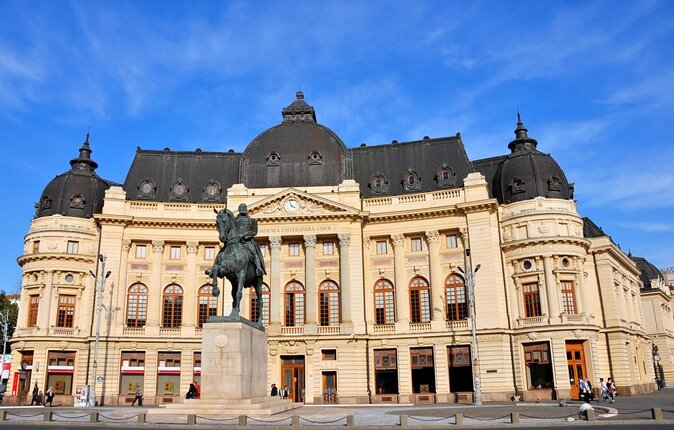
Bucharest can be hard to read at street level. One block offers ornate facades, old churches, and aristocratic residences. A few minutes later, you face giant government buildings and broad avenues that feel designed for parades rather than daily life.
This tour gives those contrasts a reason. You are not simply ticking off Bucharest sights. You are following the city’s political transformation, from royal capital and so-called Little Paris, through 42 years of communist rule, to the revolution that ended Nicolae Ceaușescu’s government.
At $90 per person, the price makes the most sense for a private group that wants context rather than a basic orientation walk. You are paying for a licensed guide, hotel pickup, a flexible pace, and a focused subject. If you are alone, the cost is less of a bargain. For two or more people, it becomes easier to justify, especially if modern Romanian history is high on your list.
The route covers less than 2 miles, or about 3 kilometers, but four hours is still a serious block of sightseeing time. The slow pace helps. You stop often, and the route includes time for photographs and a short break. Wear comfortable shoes, but you will not need the stamina required for a full-day city march.
Revolution Square puts the story on a human scale
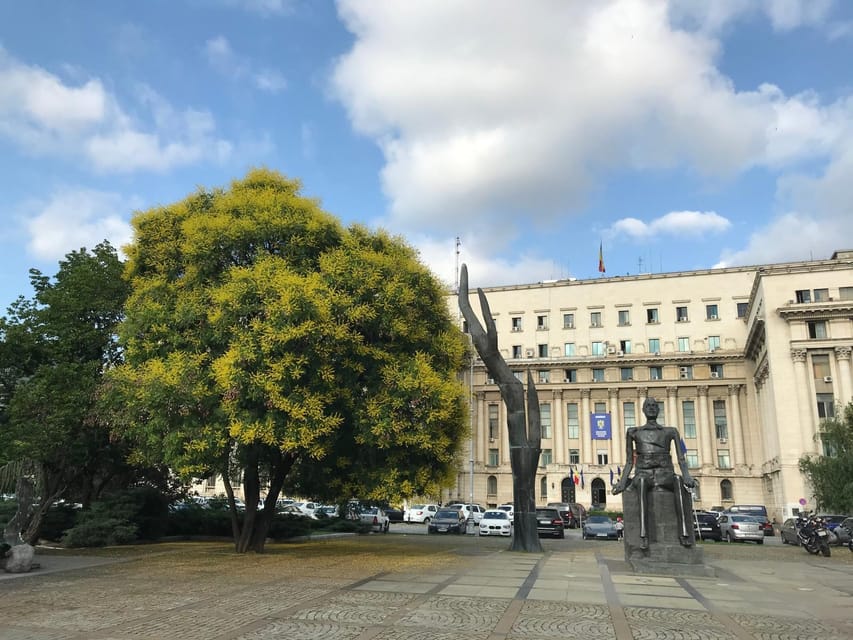
The tour begins around Revolution Square, one of the most important places in modern Romanian history. Here, Ceaușescu delivered his final speech in December 1989. What began as a public display of authority turned into a visible collapse of control when the crowd reacted against him.
Your guide uses the square to explain the revolution, the years of surveillance and shortages that led to it, and the violence surrounding the regime’s final days. This is a useful starting point because the buildings nearby show several eras at once.
The Romanian Athenaeum recalls Bucharest’s cultural and architectural confidence before communism. The former Royal Palace points to the city’s royal past. The Memorial of Rebirth addresses the revolution, though its unusual form can be puzzling without explanation. A guide gives these sights a connection that you would probably miss by walking past with only a map.
Fifteen-minute stops are listed for the Athenaeum, Royal Palace, Memorial of Rebirth, and Revolution Square. That sounds brief, but each stop is mainly for viewing, explanation, and photographs rather than an interior visit. If you want extended time inside the Athenaeum or a museum, plan that separately.
More City Tours in Bucharest
- Bucharest: City Highlights Guided Walking Tour
★ 4.9 · 1,482 reviews - Bucharest: 2-Hour City Highlights Bike Tour
★ 4.8 · 269 reviews - Bucharest Tuk Tuk city tour
★ 5.0 · 188 reviews
Victory Avenue shows Bucharest before and after communism
Victory Avenue was once the core of aristocratic Bucharest. Today it still carries elegant palaces, embassies, and important institutions, but communist-era structures interrupt the older style.
That visual interruption is the point. You can look at the avenue as an architectural timeline. Ornamental facades suggest wealth, European influence, and royal ambition. Plainer structures reflect a government that favored function, scale, and political messaging over decoration.
The National Military Circle is another photo stop along the route. University Square then widens the story. This area is tied to student protests, Cold War pressure, and the experience of living under close state surveillance. The stop lasts about 30 minutes, giving your guide more room to explain how opposition formed and how ordinary life was shaped by the government.
The strongest part of this section is likely the connection between public space and private fear. A square may look open, but under an authoritarian system, public gatherings, student groups, and casual criticism could carry real risk. That context makes the buildings and streets feel less like scenery and more like evidence.
Old Town offers charm, but not a simple escape
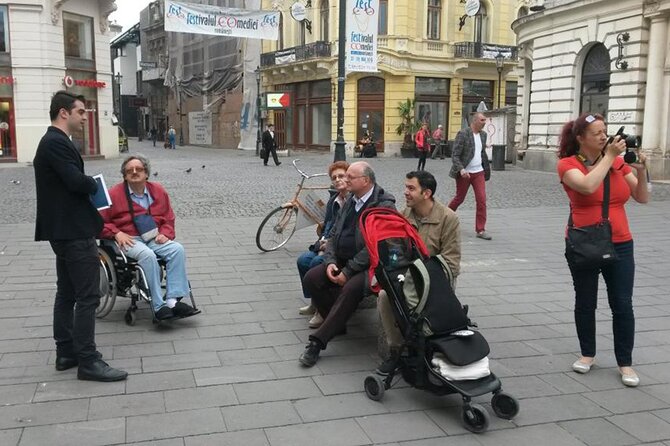
Old Town is the most relaxed part of the route. Its cobbled streets, restored mansions, and compact lanes offer a welcome change after the formal avenues around Revolution Square.
You get a short break here, followed by about 75 minutes of guided sightseeing. That longer section gives the guide time to explain Ceaușescu’s rise, his early policies, his decision to resist certain Soviet demands, and the later turn toward severe austerity and tighter control.
Old Town also provides a useful warning against treating Bucharest as a pretty European capital with a communist chapter added afterward. The old center survived, but the city around it was reshaped through demolition, state planning, and neglect. The restored facades you see today sit beside a political past that was often harsh and tightly managed.
Expect discussion of food rationing, propaganda, human rights abuses, and the daily pressure of the regime. These subjects can be heavy, but they are central to understanding why the 1989 revolution gained such force. The tour is not just about Ceaușescu’s personality. It is about the systems that controlled food, information, housing, work, and public speech.
Old Town is also where the tour concludes after the final walk back from the Parliament area. That is practical. You finish near hotels, restaurants, museums, and shops instead of being left on the edge of the enormous Civic Center.
University Square adds the voice of protest
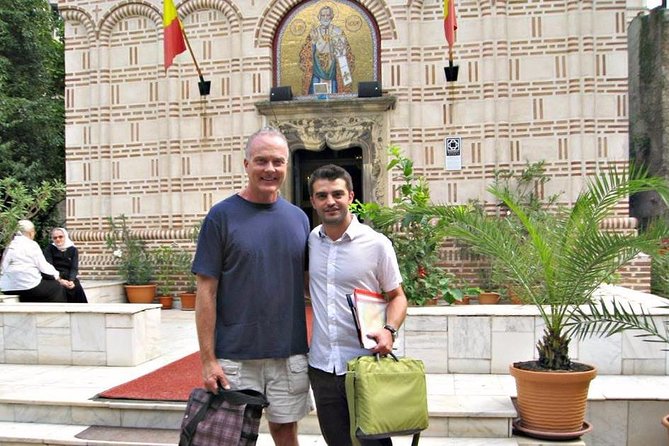
University Square receives its own half-hour stop, and that extra time is well used. The area is linked to student uprisings and opposition movements, making it a good place to discuss how young Romanians challenged authority.
The guide can also explain the Cold War atmosphere, when official slogans filled public space and surveillance shaped private conversation. You will hear about the gap between government propaganda and life under shortages. That gap is essential to the story because the regime’s grand public claims became harder to believe as living conditions worsened.
This is one place where the private format matters. You can ask how Romania differed from other Eastern Bloc countries, how the government handled dissent, or how the revolution spread. The tour is offered in English or Romanian, and the guide is licensed, so the discussion can move beyond memorized dates.
Past bookings strongly praise Mihai for his ability to keep the subject clear and engaging for more than four hours. One couple described the company owner as passionate enough to make the communist era come alive. That kind of guide is especially valuable here. The topic can become a list of leaders and policies unless someone connects it to streets, buildings, and daily choices.
More communist-era history walks:
- The Real tour of Communism
★ 5.0 · 666 reviews - Life under Communism
★ 5.0 · 358 reviews - 3-Hour Guided Tour of Communist Bucharest
★ 4.9 · 303 reviews - Bucharest Essential Tour: Old Town, Calea Victoriei & Communism
★ 5.0 · 142 reviews
The Civic Center explains the cost of grand plans
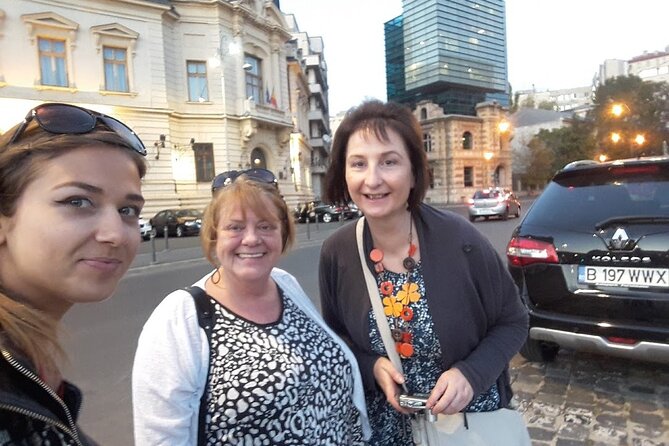
The walk toward the former Communist Civic Center changes Bucharest’s scale. Small streets and older buildings give way to broad boulevards and monumental structures built to express socialist power.
This was Ceaușescu’s grand redesign of the capital. It required the demolition of neighborhoods and the displacement of about 40,000 residents. Churches, homes, and older urban fabric were removed to create a planned center aimed at displaying the state’s strength.
The result is visually impressive and socially painful. That tension is what makes this portion more valuable than a simple photo stop. You see the physical ambition of the project while learning what it cost the people who lived there.
The boulevards were designed for ceremonies and mass displays. Their width and emptiness can feel strange beside the more intimate streets of Old Town. The guide helps explain that this was not accidental. The space was meant to organize public life around the state and its leader.
The Palace of Parliament is impressive from outside

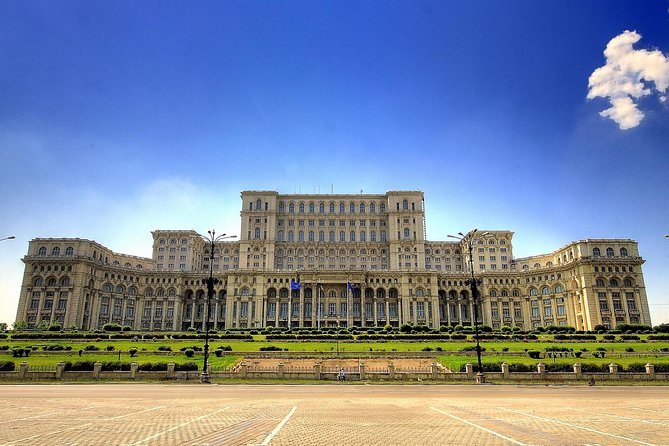
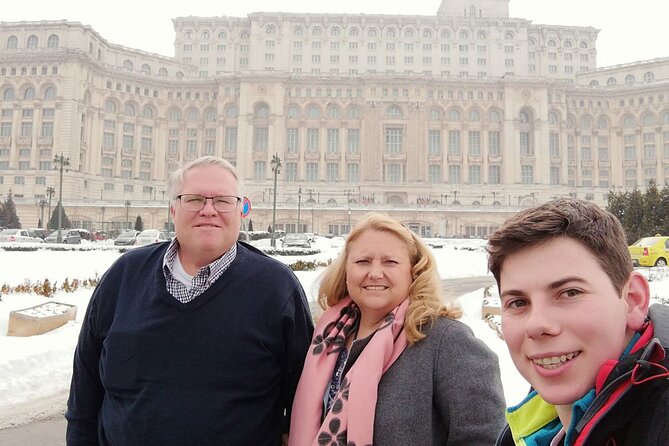
The Palace of Parliament is the tour’s largest sight, and its sheer size is difficult to grasp in photographs. It is commonly described as the world’s heaviest building, and its bulk dominates the surrounding Civic Center.
You will have about 15 minutes for exterior sightseeing and photographs. That is enough to take in the scale and hear the building’s place in Ceaușescu’s plans, but not enough for a detailed architectural study.
The important practical point is that the tour does not include interior access. The building can be visited only with a phone reservation made one day ahead, and spaces are limited. It may also close to the public for conferences. If seeing the inside matters to you, ask for help with the reservation before your sightseeing day rather than assuming you can add it at the last minute.
One past winter booking included a guide named Mihai driving the group to the Parliament before walking through Old Town during heavy snowfall. The standard experience is described as a walking tour with hotel pickup, so you should confirm the exact transport arrangement for your date, particularly in difficult weather. Either way, the core value is the explanation of the building and the demolished city around it, not just the photograph.
The route then continues on foot for about 10 minutes and finishes at the Palace of the Deposits and Consignments, near the Old Town area.
What the private format adds
A private group changes the feel of a history tour. You can ask for more detail about the revolution, spend longer at a favorite building, or request a slower pace. The guide can also suggest other Bucharest activities based on your interests.
That flexibility is useful for first-time visitors who want a strong introduction without spending a full day in museums. It is also helpful if members of your group have different levels of interest. One person can ask about architecture while another asks about food rationing or post-1989 change.
Hotel pickup is included. The guide waits in the hotel lobby beside reception. If your accommodation has no lobby, the meeting point is downstairs in front of the building. The tour is wheelchair accessible, though you should still discuss your needs in advance because this is an outdoor walking route with cobbled streets and repeated stops.
You need to bring your own meals, snacks, and drinks. The route allows time for refreshments, but none are included.
Who will get the most from this tour
I would choose this tour if you want Bucharest’s communist period explained through places you can see. It suits first-time visitors, history enthusiasts, architecture fans, and anyone who wants more than a quick Old Town stroll.
It is a particularly good fit if you:
- Want a private guide rather than a large group
- Prefer a slow walk with frequent stops
- Need hotel pickup
- Want to compare royal, Belle Époque, and communist Bucharest
- Are curious about the 1989 revolution
- Plan to visit the Palace of Parliament separately
I would hesitate if your priority is going inside major buildings. The tour stays outside government and public buildings, including Parliament, museums, and universities. I would also choose another format if you want a general food, nightlife, or shopping tour. This experience has one clear subject, and it treats that subject seriously.
Practical value at $90 per person
The $90 price is fair when shared by a private group and when you value a guide who can answer questions. You receive four hours, hotel pickup, a licensed English or Romanian-speaking guide, and a route that links the city’s main historical contrasts.
You are not paying for admissions, meals, or transportation throughout the entire tour. The major sightseeing is outdoors, and Parliament entry is extra and must be arranged separately. That keeps the price easier to understand, but it also means you should not compare it directly with a ticketed museum tour.
The strongest value is the narrative. Without a guide, you can photograph the Athenaeum, Royal Palace, Revolution Square, Old Town, and Parliament, but the connection between them is easy to miss. With a private guide, each stop becomes part of one story about power, memory, and urban change.
The experience has a perfect 5 rating from nine published bookings, with repeated praise for the guides’ preparation, patience, and ability to explain Romanian communism. Mihai is singled out several times, including for keeping one group engaged beyond four hours. That is encouraging, though a perfect score from a small number of bookings is not the same as a guarantee for every departure.
Should you book it?
Book this tour if you want Bucharest to make sense quickly. The best reason is the route’s sharp contrast: royal buildings and restored Old Town on one side, the Revolution and Ceaușescu’s monumental Civic Center on the other.
The private format, modest walking distance, and strong praise for guides such as Mihai make it a good first-day choice. Just remember that Parliament is an exterior visit unless you arrange a separate reservation. If that limitation suits you, $90 buys a useful and unusually focused introduction to Romania’s capital.
FAQ
How long is the Bucharest communism tour?
The tour lasts four hours.
How much walking is involved?
The route involves less than 2 miles, or about 3 kilometers, of walking. It is described as slow-paced, with stops for photographs, rest, and refreshments.
Is hotel pickup included?
Yes. The guide waits in your hotel lobby beside reception. If your accommodation has no lobby, the guide waits downstairs in front of the building.
Is this a private tour?
Yes. It is offered as a private group experience.
Which languages are available?
The live guide is available in English or Romanian.
Does the tour go inside the Palace of Parliament?
No. The tour includes exterior sightseeing and an explanation of the building’s history, but not interior access.
Can I visit the Palace of Parliament separately?
Yes. The building requires a phone reservation one day before the visit, availability is limited, and it can sometimes close for conferences.
What sights are included near Revolution Square?
The route includes the Romanian Athenaeum, the former Royal Palace, the Memorial of Rebirth, and Revolution Square.
Where does the tour finish?
The tour finishes at the Palace of the Deposits and Consignments, near Bucharest’s Old Town area.
Are meals and refreshments included?
No. Meals, snacks, and refreshments are not included, although the slow route includes time to stop for refreshments.
Just added around Bucharest
- 4-Day Inside Transylvania & Transfagarasan Tour from Bucharest★ 5.0 · 3 reviews
- 10 hours Private Apiary Tour in Romania – From Bucharest★ 5.0 · 3 reviews
- Bucharest: Charm of the Belle Époque Private Tour★ 5.0 · 3 reviews
- Bran & Peles Castles through the Best Road in the World: Transfagarasan road★ 4.5 · 3 reviews
- 2-Day Small-Group Tour in Transylvania from Bucharest – Maximum 5 Persons★ 5.0 · 3 reviews
- Private Wine Tasting at Bucharest’s First Wine Bar★ 5.0 · 3 reviews
- Bucharest to Brasov – Fast Private Transfer★ 5.0 · 3 reviews
- Probably the Best Restaurant and Wine Cellar near Bucharest★ 4.5 · 3 reviews
Communist History Tours, compared.




Bucharest Essential Tour: Old Town, Calea Victoriei & Communism
Read our review →
Communism in Bucharest – Landmarks, Museum & Communist Appetizers
Read our review →


Browse the lists this tour appears in