
Reviewed · COMMUNIST HISTORY TOURS
Bucharest Communism: From Lenin to Ceausescu
Communism left a huge mark on Bucharest. This 2.5-hour walking tour connects grand boulevards, demolished neighborhoods, rationing, secret police control, and Ceausescu’s final days. I like its clear route from the Palace of the Parliament to Revolution Square, and I like that guides such as Alex and Horia bring political history down to a human scale. The main drawback is that entrance tickets are not included, so you should see this as a street-level history walk rather than a full palace visit.
The tour costs $23 per person, which is fair for a live guide, a long city walk, and a focused explanation of Romania’s communist period. Arrive 10 minutes early, wear comfortable shoes, and expect serious material mixed with humor. The subject is grim, and parts of the walk can feel more like a history lesson than a sightseeing outing.
In This Review
- Key points to know before you go
- Starting beside Constitution Square
- Palace of the Parliament: power in stone
- Antim Monastery and the older city beneath the ideology
- Patriarchal Cathedral and the state’s uneasy relationship with faith
- Bucharest Fountains and Piața Unirii
- Old Town: a contrast in scale and memory
- University Square and the cost of daily life
- Royal Palace and Romanian Athenaeum
- Revolution Square: the final days of Ceausescu
- Guides who make difficult history readable
- Is $23 good value?
- Timing, languages, and what to bring
- Should you book Bucharest Communism: From Lenin to Ceausescu?
- FAQ
- How long does the Bucharest Communism tour last?
- How much does the tour cost?
- Where does the tour begin?
- Where does the tour end?
- Are entrance tickets included?
- What languages are available?
Key points to know before you go
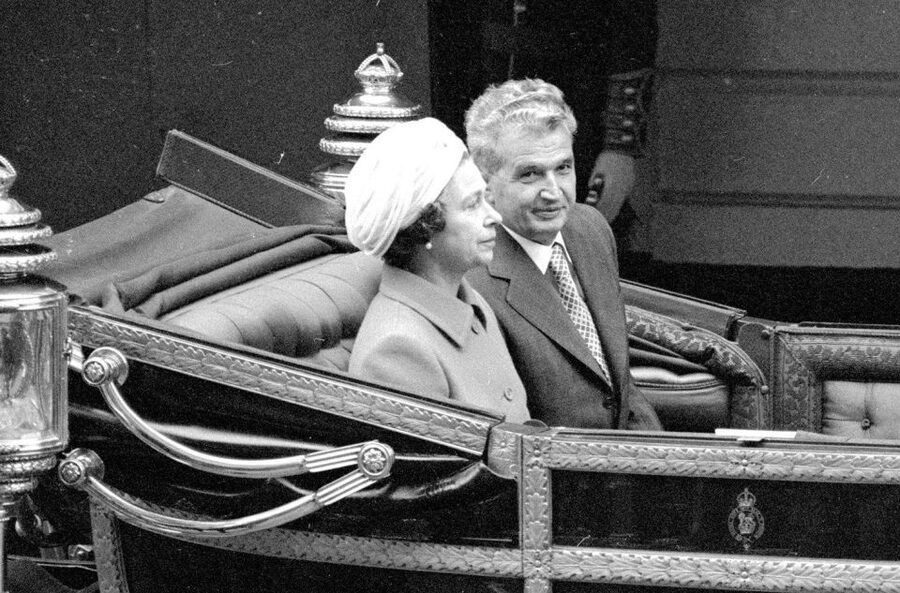
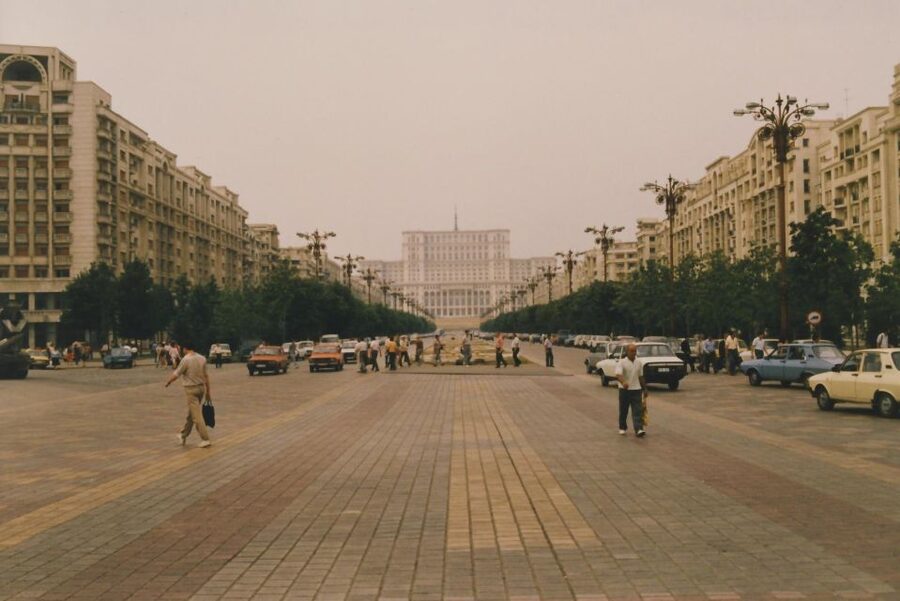
- The route follows Ceausescu’s grandest project: Begin on Socialist Victory Boulevard, now Bulevardul Unirii, with the Palace of the Parliament as the visual centerpiece.
- The human cost gets real attention: Learn how three neighborhoods and about 40,000 households were demolished for the new civic center.
- Daily life is part of the story: Food limits are explained through figures such as 2,000 calories a day, 500 grams of cheese, 10 eggs, and 1.5 kilograms of meat per month.
- The guides earn strong praise: Alex and Horia are noted for clear explanations, humor, patience, and thoughtful answers to questions.
- The final stop carries the emotional weight: Revolution Square is where the story turns from dictatorship to revolt, trial, and execution.
- No attraction tickets are included: The tour offers guided visits from outside and along the route, but admission costs are separate.
Starting beside Constitution Square
Meet next to The Coffee Shop Constitutiei at Bulevardul Unirii 5. This puts you near the broad avenue created for Ceausescu’s last grand urban scheme, a fitting place to begin because the street itself is part of the lesson.
The opening section helps you understand that communist Bucharest was not simply a city with a few Soviet-style buildings. The regime reshaped whole districts to create a monumental center of power. Streets, homes, churches, and daily routines gave way to a controlled visual message: the state was enormous, permanent, and watching.
I appreciate this starting point because it gives the tour a strong visual anchor. You do not begin with abstract theory in a classroom. You begin beside the physical result of political ambition.
More communist-era history walks:
- The Real tour of Communism
★ 5.0 · 666 reviews - Life under Communism
★ 5.0 · 358 reviews - 3-Hour Guided Tour of Communist Bucharest
★ 4.9 · 303 reviews
Palace of the Parliament: power in stone
The Palace of the Parliament receives about 20 minutes of guided sightseeing. It is the tour’s biggest object and the clearest symbol of Ceausescu’s rule. It is also described as the second largest administrative building in the world, a fact that helps explain its scale without softening its human cost.
Your guide explains how three neighborhoods and around 40,000 households were cleared for the project. The numbers can feel distant until you connect them with the vanished streets, homes, churches, and communities that once occupied the area.
Do not expect this short stop to function as an interior palace tour. Entrance tickets are not included, and the experience is built around the building, its setting, and the story attached to it. If you want to enter the Palace of the Parliament, you will need to arrange that separately.
The building works well as an opening because it raises the central question of the tour: how could one leader command such a project, and what happened to ordinary people who stood in its path?
Antim Monastery and the older city beneath the ideology
The next stop is Antim Monastery, with around 10 minutes for a visit and explanation. This change of scale matters. After the huge civic center, you reach a religious site that helps show Bucharest before the communist state tried to remake its center.
The guide uses locations such as this to explain how society was shaped before communist rule. That background is useful because the story is not only about Ceausescu. It also covers the political ideas that came earlier, including Hegel, Marx, Engels, and the Bolshevik Revolution.
One particularly strong feature of the tour is the effort to provide context before discussing Romania’s dictatorship. You are not simply handed a list of buildings and dates. The guide explains how ideas about class, revolution, and state power developed, then shows how those ideas changed when put into practice.
The visit is brief, so you should not expect a long architectural presentation. Its value is as a historical contrast between older Bucharest and the later communist city.
Patriarchal Cathedral and the state’s uneasy relationship with faith
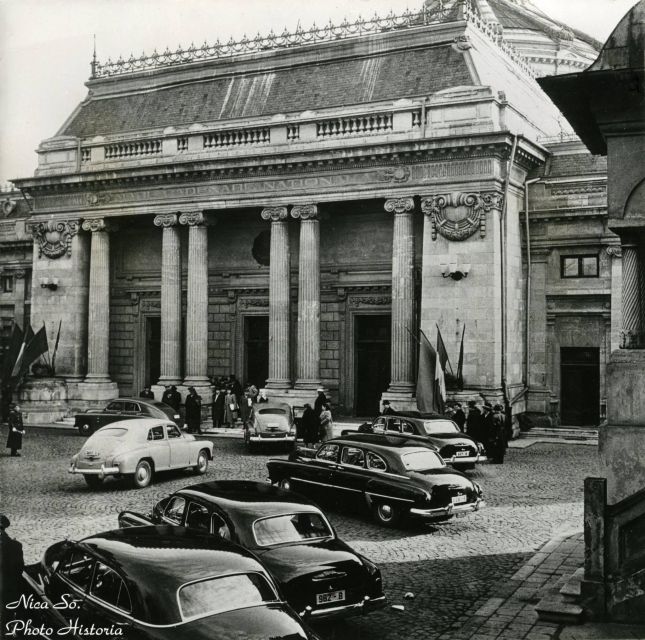
The Patriarchal Cathedral receives roughly 20 minutes, including a walk and guided sightseeing. It adds another layer to the question of how communist rule dealt with institutions that existed before the party took control.
The cathedral and Antim Monastery help you see that Bucharest was not created by communism. The regime inherited a city with religious, royal, political, and neighborhood identities. It then tried to place those older identities under tighter state control.
I find this part useful for anyone who knows little about Romania before 1989. Without it, the Palace of the Parliament can seem like an isolated oddity. With it, you begin to see the collision between old institutions and a government determined to direct public life.
The cathedral stop is also a reminder that the tour is not limited to communist architecture. It uses older landmarks to explain what the regime changed, challenged, or absorbed.
A few more trips worth weighing up before you book
- Bucharest: Dracula’s Castle, Peles Castle, & Brasov Old Town
★ 4.5 · 17,858 reviews - Bucharest: Dracula Castle, Peles Castle & Brasov Old Town
★ 4.6 · 10,891 reviews - Bucharest: Dracula’s Castle, Peleș Castle & Brașov Day Trip
★ 4.5 · 5,919 reviews - Bucharest: Palace of Parliament Tickets and Guide
★ 4.3 · 3,182 reviews
Bucharest Fountains and Piața Unirii
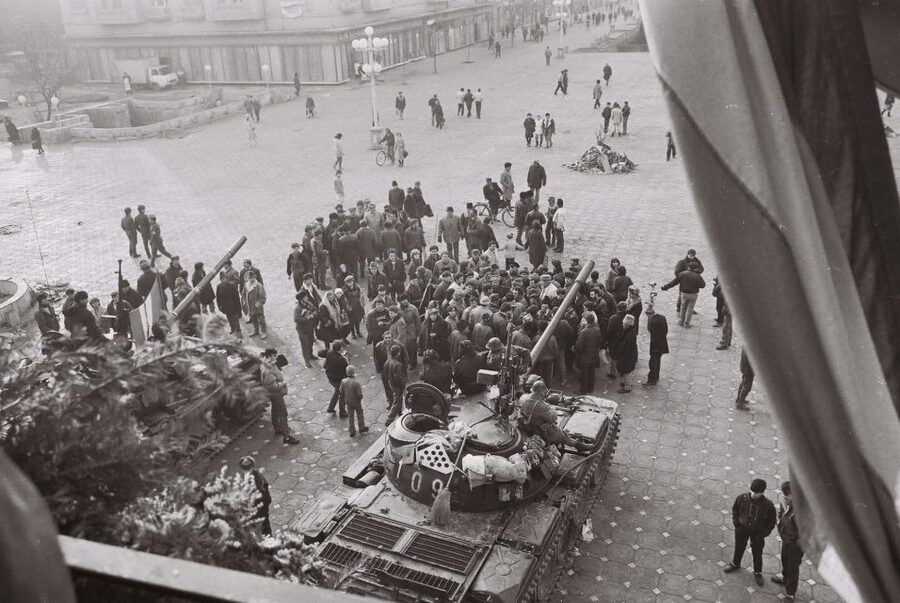
The Bucharest Fountains receive about five minutes, followed by another short stop at Piața Unirii. These are quick visits, but they fit the story of the new civic axis.
The fountains and the wide spaces around Piața Unirii make more sense once you understand the scale of Ceausescu’s planning. This was not urban design aimed mainly at intimate public life. It was a grand setting for state ceremonies, official movement, and visual control.
You may find these stops less satisfying if you want long periods at each landmark. The guide is moving you through a connected argument, not offering a series of independent attractions. The payoff comes from seeing how the squares and avenues work together.
This is also where the practical side of the walk becomes clear. The route covers many locations in 2.5 hours, so the pace is purposeful. Comfortable footwear will help.
Old Town: a contrast in scale and memory
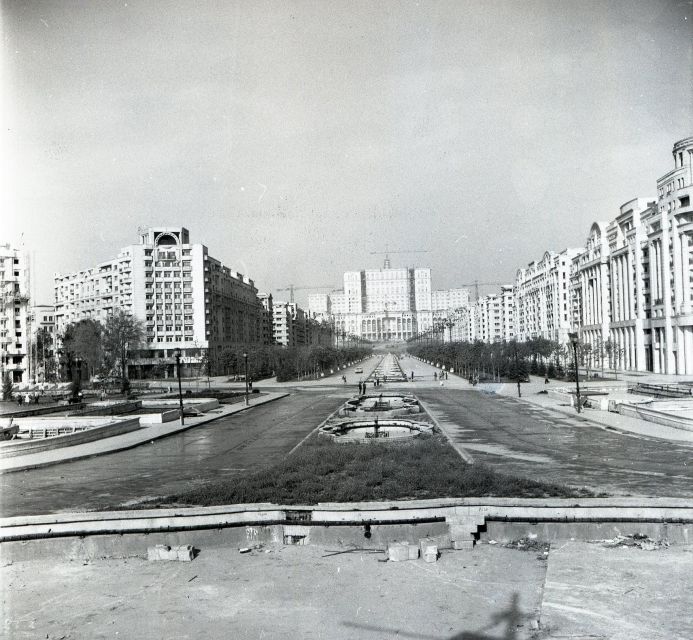
The walk continues into Bucharest Old Town for around 15 minutes. Here, the contrast with the giant boulevard is sharp. Older streets and smaller buildings give you a sense of the city as a place of daily life rather than only official spectacle.
The guide uses the Old Town stop to keep the political story connected to ordinary Bucharest. Communism affected housing, work, food, movement, family life, and access to information. It was not only a system of statues and government offices.
This is a good point to ask questions. Past participants especially valued guides who could explain Bucharest beyond the planned route, and Alex is repeatedly praised for answering questions about both the communist period and the city itself.
The visit is short, so treat it as a scene-setting stop. You will not get a full Old Town tour. Instead, you will see how this older part of Bucharest differs from the monumental center created under Ceausescu.
University Square and the cost of daily life
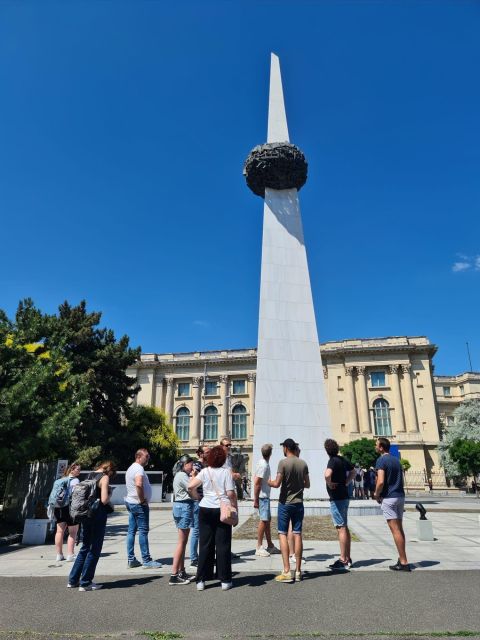
University Square takes about five minutes, but the subject matter here is much larger than the stop itself. This part of the walk turns toward life under dictatorship, including food rationing and the role of the secret police.
The tour uses stark monthly figures to describe the restricted diet: 500 grams of cheese, 10 eggs, and 1.5 kilograms of meat, within a stated limit of about 2,000 calories per day. These figures are more useful than vague claims about shortages because they let you picture the practical problem of feeding yourself and your family.
The guide also explains how the secret police shaped public behavior. You learn about a society in which people had to think carefully about what they said, whom they trusted, and how openly they criticized the state.
This is one of the most valuable parts for visitors who know the grand political story but not the household experience. Palace walls explain power. Ration figures explain how power reached the kitchen table.
Royal Palace and Romanian Athenaeum
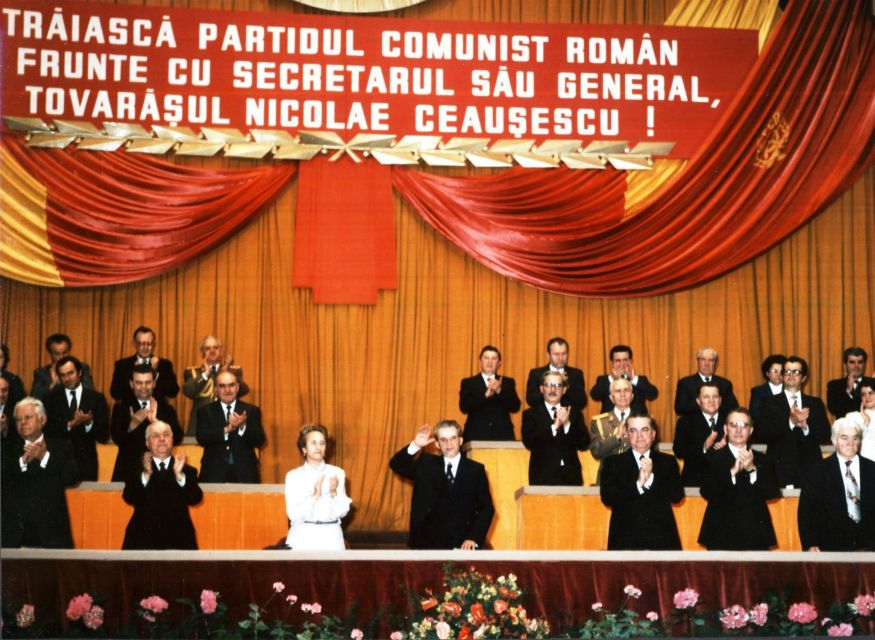
The Royal Palace receives around 10 minutes, and the Romanian Athenaeum follows with roughly another 10 minutes. These landmarks broaden the story again, showing Bucharest’s royal and cultural life before the final revolutionary stop.
The Royal Palace helps explain the political order that existed before communist rule. The Athenaeum adds a cultural counterpoint to the party’s official ideology. Together, they show that Bucharest had older ideas of monarchy, art, public culture, and national identity.
The guide’s job here is to connect buildings rather than give a full tour of each interior. No entrance tickets are included, so you should not plan on extended visits inside. If your main interest is art or architecture, you may want to return to these places separately.
For me, the value is the sequence. You move from the communist civic center to religious sites, older urban quarters, royal space, and cultural institutions. The city becomes a map of competing systems, not just a collection of attractions.
Revolution Square: the final days of Ceausescu
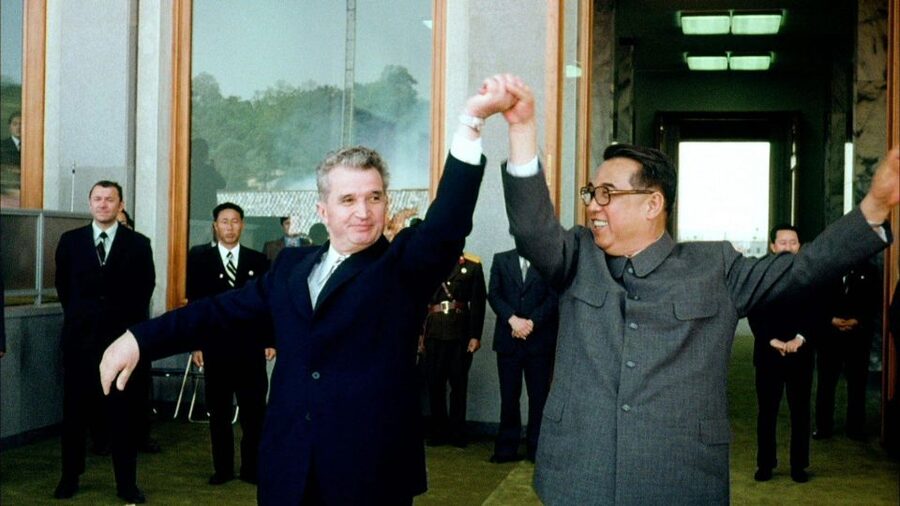
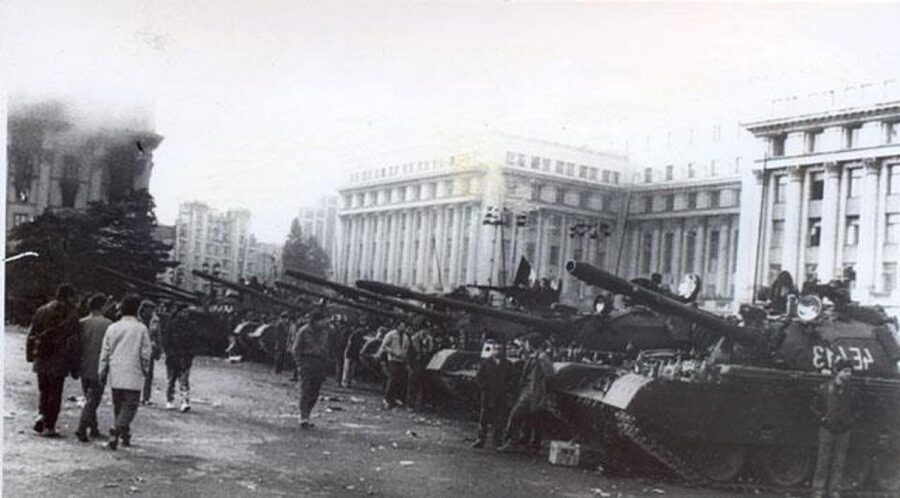
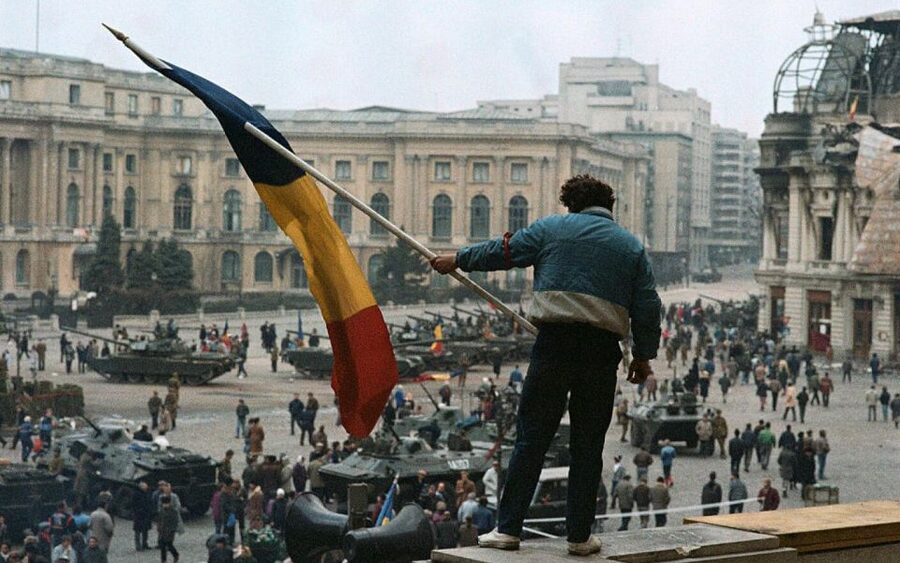
The walk ends at Revolution Square, with around 20 minutes for the final explanation. This is where the tour’s separate threads come together: the rise of Ceausescu, the tightening dictatorship, public anger, the revolution, the trial, and the execution.
The guide explains how a group of agitators helped plot the end of the regime. The final section focuses on Ceausescu’s last days and the collapse of a government that had seemed almost impossible to challenge.
This is the emotional high point of the route. Earlier stops explain how power was built and maintained. Revolution Square shows what happened when fear broke down and people moved against the state.
You may want to leave some quiet time after the tour. The ending deals with political violence and execution, not a cheerful sightseeing finale. Still, it gives the walk a clear shape and prevents the history from ending with Ceausescu’s buildings alone.
Guides who make difficult history readable
The strongest part of this experience is the guiding. Alex is repeatedly praised for being friendly, funny, patient, and able to explain the revolution in a way that feels clear rather than confusing. Horia is also praised for turning the walk into something like time spent with a friend who happens to know a great deal about political history.
I would especially value the way the guides handle questions. The best comments describe answers that go beyond memorized facts, including book recommendations and added detail about Bucharest. That matters on a subject where visitors often want to ask about family life, censorship, ideology, or the difference between official claims and lived reality.
Humor is used carefully to keep the group engaged. That does not make the subject light. It gives you a way to stay focused through difficult material.
The experience suits you if you want political history explained in plain language. It may be less suitable if you prefer a silent walk, a purely architectural tour, or a quick introduction with only a few dates.
Is $23 good value?
At $23 per person, I consider this strong value if you want a focused guide rather than a series of photo stops. You receive 2.5 hours of live commentary in English or Romanian, a route through major political landmarks, and a connected explanation of Romania’s communist period.
The price does not include food, drinks, or entrance tickets. That keeps the basic cost reasonable, but you should budget separately if you want to enter the Palace of the Parliament or another attraction along the route.
The tour’s value also depends on your interests. If you already have a strong grasp of Ceausescu’s regime, some introductory sections may feel familiar. If you are new to the subject, the structure is especially helpful because it moves from ideology and earlier society to dictatorship, daily shortages, and revolution.
The high rating of 4.9 from 41 reviews supports the view that guiding is the main strength. I would book it for the explanation and route, not for admission to a building.
Timing, languages, and what to bring
The walk lasts 2.5 hours, with starting times available according to the date you choose. It begins beside The Coffee Shop Constitutiei and ends at Revolution Square, so you do not return to the starting point.
English and Romanian are offered. Arrive 10 minutes before the scheduled start. Because the route includes many walking sections and several short stops, comfortable shoes are more important than dressing for a formal attraction.
There is no food or drink included. Bring what you need for the length of the walk, especially in warm or cold weather. The supplied information does not state group size, accessibility details, or transport arrangements, so ask the provider directly if any of those points affect your plans.
Free cancellation is available up to 24 hours before the activity for a full refund. You can also reserve now and pay later, which is useful if your Bucharest schedule is still changing.
Should you book Bucharest Communism: From Lenin to Ceausescu?
I would book this tour if you want to understand how Ceausescu’s dictatorship changed Bucharest and daily life. The route gives you more than a view of the Palace of the Parliament. It links demolished homes, broad avenues, rationing, surveillance, royal and religious institutions, and the 1989 revolution.
The strongest reason to go is the guide. Alex and Horia receive particular praise for making complex political history clear, personal, and sometimes funny without losing sight of the suffering involved.
Skip it if you want a relaxed architecture walk or a tour with included interior admissions. Choose it if you want the city to explain the politics, and if you are ready for a serious final stop at Revolution Square.
FAQ
How long does the Bucharest Communism tour last?
The tour lasts 2.5 hours.
How much does the tour cost?
The price is $23 per person.
Where does the tour begin?
It begins at Bulevardul Unirii 5, next to The Coffee Shop Constitutiei.
Where does the tour end?
The tour ends at Revolution Square in Bucharest.
Are entrance tickets included?
No. Entrance tickets, food, and drinks are not included.
What languages are available?
The live tour guide is available in English and Romanian.
Just added around Bucharest
- 10 hours Private Apiary Tour in Romania – From Bucharest★ 5.0 · 3 reviews
- 4-Day Inside Transylvania & Transfagarasan Tour from Bucharest★ 5.0 · 3 reviews
- Bucharest: Charm of the Belle Époque Private Tour★ 5.0 · 3 reviews
- Bran & Peles Castles through the Best Road in the World: Transfagarasan road★ 4.5 · 3 reviews
- Private Wine Tasting at Bucharest’s First Wine Bar★ 5.0 · 3 reviews
- 2-Day Small-Group Tour in Transylvania from Bucharest – Maximum 5 Persons★ 5.0 · 3 reviews
- Probably the Best Restaurant and Wine Cellar near Bucharest★ 4.5 · 3 reviews
- Bucharest to Brasov – Fast Private Transfer★ 5.0 · 3 reviews
Communist History Tours, compared.




Bucharest Essential Tour: Old Town, Calea Victoriei & Communism
Read our review →
Communism in Bucharest – Landmarks, Museum & Communist Appetizers
Read our review →


Browse the lists this tour appears in