
Reviewed · COMMUNIST HISTORY TOURS
6h Bucharest Communism Private Tour – Ceausescu Mainson
Communism left its mark on every corner. This six to seven hour private Bucharest tour connects Ceaușescu’s grand projects with the ordinary village life his regime claimed to represent. I like the private car and flexible route, and I like the chance to spend serious time at both the Palace of Parliament and Ceaușescu’s former home. The main drawback is cost: at $197.81 per person, it makes the most sense for a small group that values a dedicated guide.
You’ll travel with a licensed English-speaking guide and driver, with Nicolas named in the tour feedback as friendly, polite, professional, and natural in his manner. I also like that gasoline, parking, road tolls, and taxes are covered. You should budget extra for attraction tickets, listed at about 20 euros per person, along with food and drinks.
In This Review
- Five details that shape the experience
- Why this Bucharest tour is different
- Palace of Parliament: the full scale of communist ambition
- The National Village Museum: a needed change of pace
- Calea Victoriei: French influence beside communist buildings
- Revolution Square and the events of December 1989
- Ceaușescu Mansion: private rooms behind the public image
- Patriarchal Cathedral: religion and civic life
- What the private format adds
- Is $197.81 per person a fair price?
- Who should book this experience?
- Booking, cancellation, and practical facts
- Should you book the Bucharest Communism Private Tour?
- FAQ
- How long does the Bucharest Communism Private Tour last?
- Is the tour private?
- Is hotel pickup available?
- Is an English-speaking guide included?
- Are entrance fees included?
- What is not included besides entrance fees?
- Can I cancel for a full refund?
Five details that shape the experience
- Ceaușescu’s private residence gives you a more personal look at the dictator, his wife Elena, and their children than a grand public building can provide.
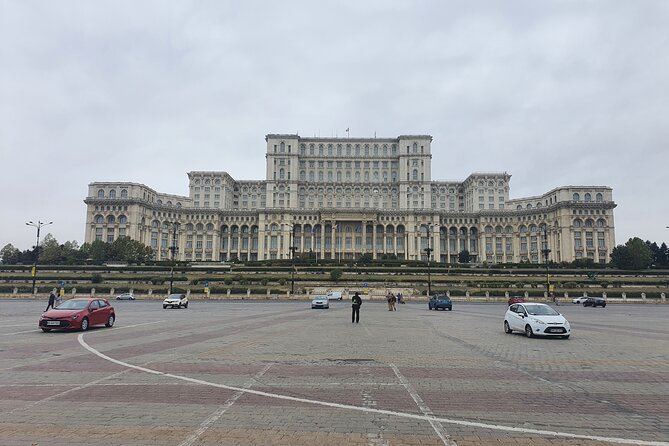
- The Palace of Parliament shows the vast scale and waste of Romania’s communist dictatorship, but its admission fee is not included.
- A private vehicle means your group can adjust the day’s schedule, even after the tour begins.
- Revolution Square connects the sightseeing to December 1989, when Romania’s communist regime collapsed.
- The National Village Museum adds a useful counterpoint, showing traditional rural life, local building methods, and modest household spaces.
- Nicolas Experience Tours offers a private booking rather than a shared coach excursion, so the guide’s attention stays with your family or friends.
Why this Bucharest tour is different
Many city tours give you a quick look at Bucharest’s grand buildings, but this one has a clear theme. It asks you to look at power from two angles: the public image created by a totalitarian government and the private world occupied by its ruling family.
That makes the day more than a collection of monuments. You see the enormous Palace of Parliament, then visit a former private residence. You walk through places tied to the 1989 Revolution, then move toward older religious and rural traditions that existed before and beyond communism.
I like this structure because Romanian communism can be difficult to understand from dates alone. The buildings, boulevards, and rooms make the subject visible. You can compare the regime’s public display of strength with the much more ordinary details of domestic life.
The tour lasts about six to seven hours. The listed stop times add up to roughly six hours and 45 minutes, not counting driving between locations or time spent buying tickets. That is a full day by Bucharest sightseeing standards, so you should not plan another major activity immediately afterward.
The booking is private for your group only. A tourism car or minibus is provided, and the guide remains available throughout the tour. This setup suits families, couples, and friends who want to ask direct questions or change the pace without waiting for strangers.
More communist-era history walks:
- The Real tour of Communism
★ 5.0 · 666 reviews - Life under Communism
★ 5.0 · 358 reviews - 3-Hour Guided Tour of Communist Bucharest
★ 4.9 · 303 reviews
Palace of Parliament: the full scale of communist ambition
The Palace of Parliament is the tour’s biggest visual statement. It was known as the People’s House during the communist period and remains one of the largest administrative buildings on Earth, ranked behind the Pentagon by size.
The building is useful for understanding how a dictatorship turns architecture into propaganda. Its vast scale was meant to project control, certainty, and national power. The problem is that this display came at a huge human and urban cost, with the building representing the destructive side of Nicolae Ceaușescu’s rule as much as its ambition.
You will have about two hours here, the longest scheduled stop. That gives your guide time to explain why the building mattered, not simply point out its marble halls and oversized rooms.
I would treat this as the place where the political story becomes physical. You may feel small inside it, and that is part of the point. The sheer scale can seem impressive at first, but the excess also reveals how detached the leadership had become from ordinary Romanian life.
Admission is not included. The tour information lists entrance fees for the attractions at about 20 euros per person in total, but you should confirm the current amount when booking because individual ticket prices can change. The Palace of Parliament is specifically listed as an extra cost.
Because the building is a functioning administrative site, access arrangements can matter. The supplied information does not give a detailed entry procedure, so ask Nicolas or the operator about ticket timing before the day begins. That is especially useful if you have a tight schedule.
The National Village Museum: a needed change of pace
After the political weight of the Palace of Parliament, the Dimitrie Gusti National Village Museum offers a very different view of Romania. Here, you see traditional houses and rural settings gathered in one open-air museum.
The point is not simply to admire old buildings. The visit helps you understand how Romanian villagers built practical, sustainable surroundings with local materials and limited resources. The homes and community spaces reflect a modest way of life, with daily work, social customs, and religious practice closely tied to the environment.
You have about one hour here. That is enough for an introduction, though not enough to inspect every building in detail. If rural architecture interests you, you may wish to ask whether the schedule can be adjusted, since the private format allows some flexibility.
I like this stop because it prevents the communist story from becoming only a story about dictators and government offices. Romania’s identity did not begin in 1947, and it did not disappear in 1989. The museum gives you a look at older traditions and the quiet ingenuity of village life.
Admission is extra. Food and drinks are also not included, so plan accordingly if you need a break during the day.
Calea Victoriei: French influence beside communist buildings

Calea Victoriei brings the tour into central Bucharest, where the city’s architectural layers sit close together. The avenue includes communist-era buildings, but it also offers French-influenced architecture that reflects an earlier chapter in Bucharest’s development.
You will spend about 45 minutes here. That is a short stop, but it works well as a guided orientation rather than a full architectural walk. Your guide can help you notice the contrast between monumental state design and the more decorative urban style associated with the city’s French influence.
I would use this part of the tour to ask questions about how Bucharest changed under communism. The avenue is valuable because the city did not receive a clean replacement of old buildings with new ones. Older architecture, later additions, and state projects occupy the same urban space.
There is no admission fee for this stop. Since the visit is part of a private vehicle tour, the exact amount of walking may depend on the day’s traffic and the agreed schedule. Wear shoes you can use comfortably for short city walks.
A few more trips worth weighing up before you book
- Bucharest: Dracula’s Castle, Peles Castle, & Brasov Old Town
★ 4.5 · 17,858 reviews - Bucharest: Dracula Castle, Peles Castle & Brasov Old Town
★ 4.6 · 10,891 reviews - Bucharest: Dracula’s Castle, Peleș Castle & Brașov Day Trip
★ 4.5 · 5,919 reviews - Bucharest: Palace of Parliament Tickets and Guide
★ 4.3 · 3,182 reviews
Revolution Square and the events of December 1989
Revolution Square is one of the most important places on the route for understanding the end of Ceaușescu’s rule. The tour allows about 45 minutes here, focusing on the Romanian Revolution of December 1989.
This stop changes the story from authoritarian rule to public resistance and political collapse. The square is not just another central plaza. It is tied to the final days of the Ceaușescu regime and helps explain why the dictatorship ended so suddenly and dramatically.
I find this part especially useful when paired with the Palace of Parliament. At the palace, you see the regime’s confidence and excess. At Revolution Square, you consider the moment when that control failed.
The supplied details do not promise a specific museum entry or memorial ticket here, so think of this as an outdoor historical stop. The time is long enough for explanation and questions, but the quality of the visit will depend heavily on how your guide presents the events.
Nicolas is described as having a friendly and natural manner, which matters at a site like this. A rigid lecture would make the place feel remote. A conversational guide can help you connect the location to the political changes that followed.
Ceaușescu Mansion: private rooms behind the public image
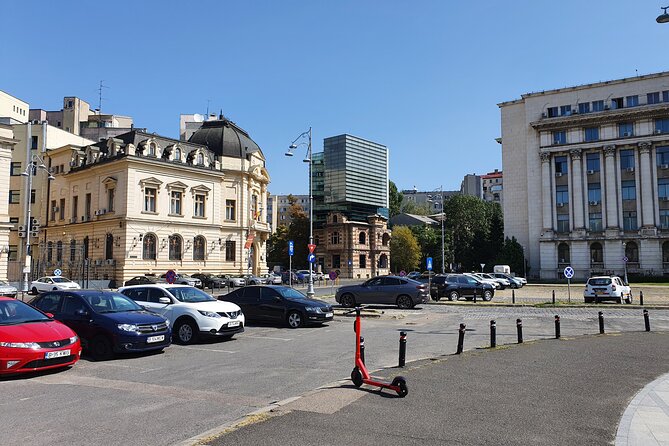
The Ceaușescu Mansion is likely to be the most personal stop of the day. It was the private residence of Nicolae and Elena Ceaușescu and their children, Nicu, Zoia, and Valentin, from 1965 until 1989.
You have about an hour and a half here. That is enough time to look beyond official portraits and public ceremonies and consider how Romania’s ruling family lived behind closed doors.
The value of the mansion comes from the contrast. The Palace of Parliament represents state power on an enormous scale. The mansion brings that power down to household rooms, furnishings, and family space. You may find the domestic setting more revealing than another grand government hall.
The stop also helps separate the image of the country from the experience of its leaders. A private home can show habits, tastes, and family relationships in a way that a speech or monument cannot. It does not replace the political story, but it gives that story a more human scale.
Admission is not included. Allow extra money for this ticket along with the other attractions. The tour information identifies the residence as the Ceaușescus’ home for a quarter-century, but it does not provide a detailed list of rooms or exhibits, so avoid expecting a specific display unless the operator confirms it.
For many people, this will be the emotional center of the excursion. You can see the gap between the family’s protected lifestyle and the modest conditions described at the Village Museum. That comparison is one of the strongest reasons to choose this particular route.
Patriarchal Cathedral: religion and civic life
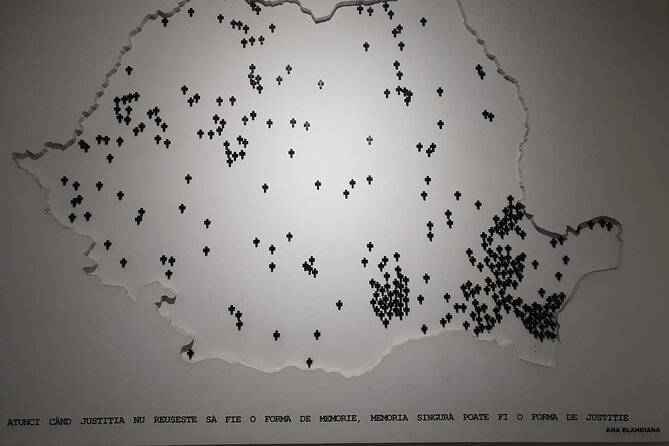
The Romanian Orthodox Patriarchal Cathedral sits on Dealul Mitropoliei and remains a functioning religious and civic landmark. It is also known as the Metropolitan Church.
The scheduled visit lasts about 45 minutes. Unlike a museum, this is a working cathedral, so the experience may include religious observances rather than a standard sightseeing presentation. The site hosts Orthodox holidays and ceremonies, including a Palm Sunday pilgrimage.
The cathedral adds another layer to the day. Communism promoted an official atheistic ideology, while Orthodox religious life continued to matter to many Romanians. Visiting a functioning cathedral gives you a chance to consider that tension without reducing the country’s past to government buildings alone.
The cathedral is close to the Palace of the Chamber of Deputies of the Patriarchate of the Romanian Orthodox Church. Its Orthodox Divine Liturgy is known for an a cappella choir, a practice shared across Orthodox churches in worship.
Admission is listed as extra, although the information does not specify the current fee or exact entry rules. Since this is an active place of worship, dress and visitor conduct may matter. Ask your guide what is appropriate on the day, especially if a service or holiday observance is taking place.
What the private format adds
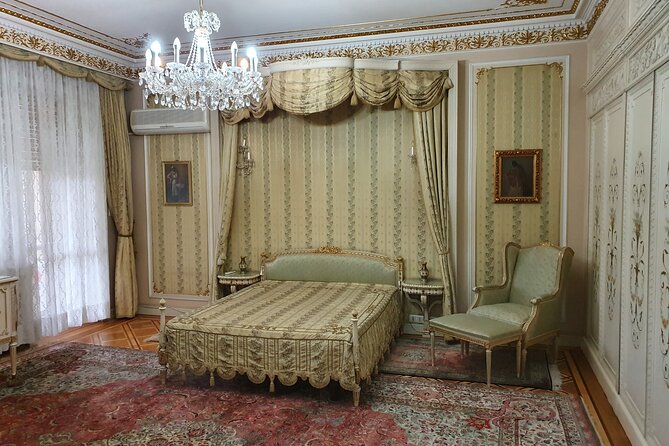
The private arrangement is the main practical advantage. You get a car or minibus for only your own friends or family, plus a licensed English-speaking guide and driver. You are not paying for a fixed seat on a large group coach with a rigid timetable.
The itinerary can also be changed with considerable flexibility, including after the tour has started. That could help if one attraction takes longer than planned, if your group wants more time at the mansion, or if you prefer to shorten a stop that interests you less.
This flexibility does not mean every change will be possible. The tour still depends on opening hours, traffic, ticket availability, and the total length of the day. Still, having a direct conversation with one guide is far easier than adjusting a large organized group.
Nicolas Experience Tours receives particularly strong praise for Nicolas’s manner. He is described as polite, professional, friendly, and natural, with one family noting that he personalized the experience and built a loyal relationship with returning customers. Another booking described the tour as intense and authentic, which fits the subject matter well.
Those comments point to the guide as a major part of the value. Bucharest’s communist sites need explanation. Without context, the Palace of Parliament is simply huge, and Revolution Square is simply a city square. A guide who can connect the sites gives the route its purpose.
Is $197.81 per person a fair price?
At $197.81 per person, this is not a budget city tour. The price is easier to justify when you are traveling as a small private group and want a full day with your own vehicle, guide, fuel, parking, road tolls, and taxes included.
You also need to add attraction fees. The tour information gives an estimate of 20 euros per person for the tourist attractions, with the Palace of Parliament listed separately as an entrance cost. Food and drinks are not covered.
I would compare the price with what you value most. If you want the lowest-cost way to see Bucharest, this is probably not the right choice. If you want a focused explanation of communism, a private car, flexible timing, and access to several major sites in one day, the cost becomes more reasonable.
It is particularly good value for families or friends who can share the private arrangement. Group discounts are offered, but the supplied details do not state the discount amount, so ask for the exact total before confirming.
Who should book this experience?
I would recommend it to anyone with a serious interest in Romania’s twentieth-century history. It is also a good choice if you prefer discussion and context rather than simply collecting photographs of landmarks.
Families may appreciate the private format, since the guide can adjust the pace and answer questions directly. A small group of friends can also make better use of the vehicle and split the cost.
The tour may be less suitable if you want a relaxed day with long café breaks or extensive free time. Six to seven hours is a substantial commitment, and the schedule moves through six major stops. It also may not suit someone who wants only medieval, royal, or art-focused Bucharest.
You should also be comfortable paying several entrance fees beyond the advertised tour price. The private transport and guide are included, but the main indoor attractions are not.
Booking, cancellation, and practical facts
Confirmation is provided when you book. Pickup is offered, and the tour is near public transportation. Most people can participate, and service animals are allowed.
Free cancellation is available if you cancel at least 24 hours before the experience begins. Cancellations within 24 hours are not refunded, and changes made inside that period are not accepted. The cut-off follows Bucharest local time.
Before you go, I would confirm three things: the exact pickup point, the current attraction fees, and the planned order of stops. Since the day is private, you can also discuss how much time you want at the Village Museum, the mansion, and the Palace of Parliament.
Should you book the Bucharest Communism Private Tour?
Book it if you want Bucharest’s communist past explained through places you can actually see. The combination of the Palace of Parliament, Revolution Square, and Ceaușescu Mansion gives you the strongest political story, while the Village Museum and Patriarchal Cathedral widen the picture beyond the dictatorship.
I would skip it if your main goal is a cheap overview or a slow day of cafés and independent wandering. The price is high, admission fees are extra, and the schedule is full.
For a small group that wants a dedicated English-speaking guide, private transport, and room to adjust the plan, this is a focused and worthwhile way to understand a difficult chapter of Romanian history. Nicolas’s friendly, professional style is an important part of the appeal, but confirm all entrance costs before booking.
FAQ
How long does the Bucharest Communism Private Tour last?
The experience lasts approximately six to seven hours. The scheduled visits total about six hours and 45 minutes, before allowing for travel between stops.
Is the tour private?
Yes. The tour is for your group only, using a private car or minibus for you, your friends, or your family.
Is hotel pickup available?
Pickup is offered. The exact pickup arrangements should be confirmed at booking.
Is an English-speaking guide included?
Yes. A private, licensed English-speaking guide and driver are included throughout the tour.
Are entrance fees included?
No. Entrance fees are not included. The tour information lists approximately 20 euros per person for the tourist attractions, and the Palace of Parliament also has a separate entrance fee.
What is not included besides entrance fees?
Food and drinks are not included. The tour does include gasoline, parking, road tolls, and taxes.
Can I cancel for a full refund?
Yes, if you cancel at least 24 hours before the experience begins. Cancellations within 24 hours are not refunded, and changes during that period are not accepted.
Just added around Bucharest
- 10 hours Private Apiary Tour in Romania – From Bucharest★ 5.0 · 3 reviews
- 4-Day Inside Transylvania & Transfagarasan Tour from Bucharest★ 5.0 · 3 reviews
- Bucharest: Charm of the Belle Époque Private Tour★ 5.0 · 3 reviews
- Bran & Peles Castles through the Best Road in the World: Transfagarasan road★ 4.5 · 3 reviews
- Private Wine Tasting at Bucharest’s First Wine Bar★ 5.0 · 3 reviews
- 2-Day Small-Group Tour in Transylvania from Bucharest – Maximum 5 Persons★ 5.0 · 3 reviews
- Probably the Best Restaurant and Wine Cellar near Bucharest★ 4.5 · 3 reviews
- Bucharest to Brasov – Fast Private Transfer★ 5.0 · 3 reviews
Communist History Tours, compared.




Bucharest Essential Tour: Old Town, Calea Victoriei & Communism
Read our review →
Communism in Bucharest – Landmarks, Museum & Communist Appetizers
Read our review →


Browse the lists this tour appears in