
Reviewed · HISTORICAL TOURS
Saxon Heritage in Transylvania: Day Trip from Cluj-Napoca
Transylvania’s German past comes alive here. This long day from Cluj-Napoca combines Sibiu’s handsome medieval center with fortified churches, village traditions, glass icons, and a taste of țuică. I especially like the strong cultural focus and the chance to see both a major city and smaller Saxon communities. The main drawback is the distance: at 11 to 12 hours, this is a full day with plenty of time in the vehicle.
I also like that the tour includes a guide, entrance fees, hotel pickup and drop-off, and round-trip transport. Guides George and Andrei received especially warm praise for clear explanations, patience, humor, and a strong command of the region’s past. Still, the experience can depend on who leads the day, since George Turism sometimes uses independent guides when needed.
In This Review
- Key points to know before booking
- Why Saxon Transylvania is worth a full day
- Sibiu’s Big Square and medieval center
- Cristian and the fortified church
- Sibiel, Fântânele, and the taste of țuică
- Transport, group size, and the real rhythm of the day
- Is $129.86 a fair price?
- What the guide can add to the experience
- Who should book this Transylvania day trip?
- Should you book it?
- FAQ
- How long does the tour last?
- What places are visited?
- Is transportation included?
- Is food included?
- Is the tour offered in English?
- What is the cancellation policy?
Key points to know before booking
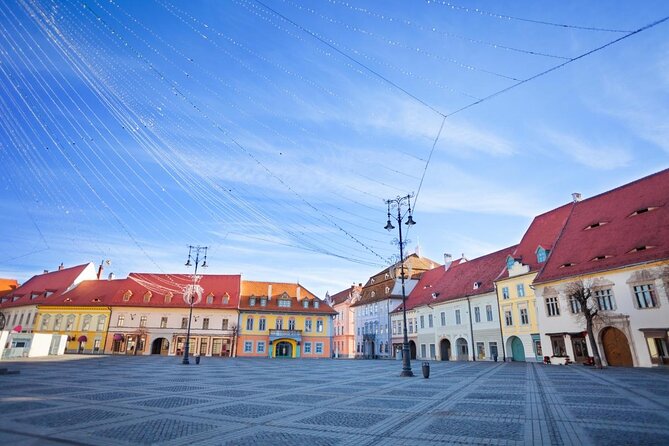
- Sibiu’s three central squares and Council Tower provide the grandest part of the day, with time to see the old walls and two important churches.
- Cristian’s fortified church offers a close look at Saxon village life, not just another quick photo stop.
- Sibiel’s glass icon museum presents a distinctive local art tradition in a small rural setting.
- Țuică tasting adds a genuine taste of Romanian hospitality, but alcoholic drinks are included only where specified.
- The day lasts about 11 to 12 hours, making this best for visitors who want a broad regional overview rather than a relaxed village outing.
- The price of $129.86 per person is easier to justify if you value private transport, several admissions, a guide, and hotel pickup in one long excursion.
Why Saxon Transylvania is worth a full day
The Saxons of Transylvania were German-speaking settlers who shaped towns, villages, churches, trade, and defensive architecture across the region. You get more from this tour if you see the day as a story about how a community organized daily life, protected itself, worshipped, and preserved local customs.
The trip does not focus only on grand monuments. It moves from Sibiu’s urban center to Cristian, then out toward Sibiel and Fântânele, where village life and local production take a larger role. That change of scale is the point. You see how Saxon influence worked in both a city and the countryside.
The English-speaking guide is important here. Architecture alone cannot explain why a church was fortified, how village communities functioned, or how Saxon customs fit into Romanian culture. Andrei was praised for patience, detailed explanations, humor, and an ability to discuss many subjects, even when English was not easy for every person in the group. George was also singled out for giving a very good account of the sights and history.
Because guides may sometimes be assigned from outside the main company, the quality can vary. That is not a reason to reject the tour, but it is a fair consideration when you are paying for a guide-led cultural experience.
More Transylvania trips:
- Transylvania Gems: Sighisoara, Medias, Biertan & Gypsy life
★ 4.9 · 29 reviews - Transylvania: Dracula’s Castle and Birthplace Tour
★ 4.5 · 28 reviews - Sighisoara and Biertan: UNESCO in Transylvania
★ 5.0 · 27 reviews
Sibiu’s Big Square and medieval center
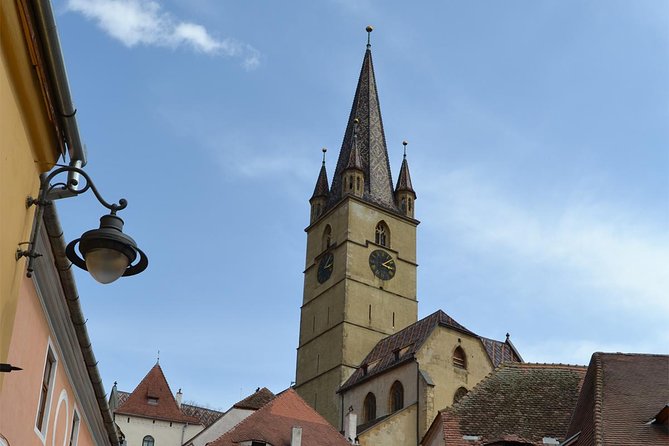
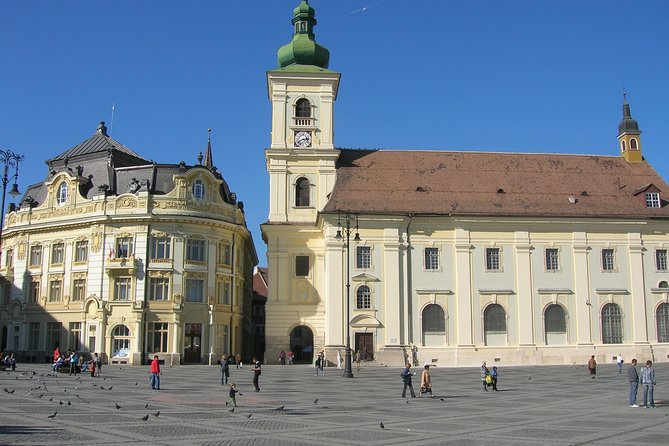
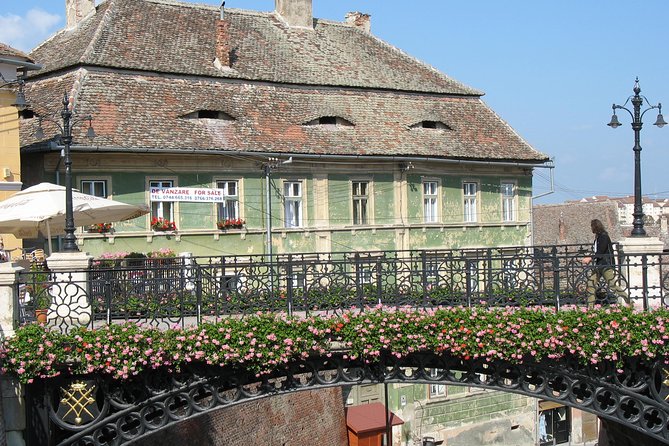
The day’s main stop is Sibiu, the former capital of the historical region of Transylvania. Its Big Square, or Piața Mare, gives you the clearest sense of the city’s public life and medieval design.
The itinerary allows about four hours in Sibiu, which is generous compared with a quick stop. You begin with the city walls and the three main squares, then visit two important churches. The exact churches are not identified in the available details, so you should ask your guide at the start which ones are included and how much time you will have inside each.
The old center is compact enough to explore on foot, but the route is not simply a free hour to wander. The guide’s explanations are a key part of the stop. You can expect attention to the city’s Saxon foundations, its religious buildings, and the way the squares connect.
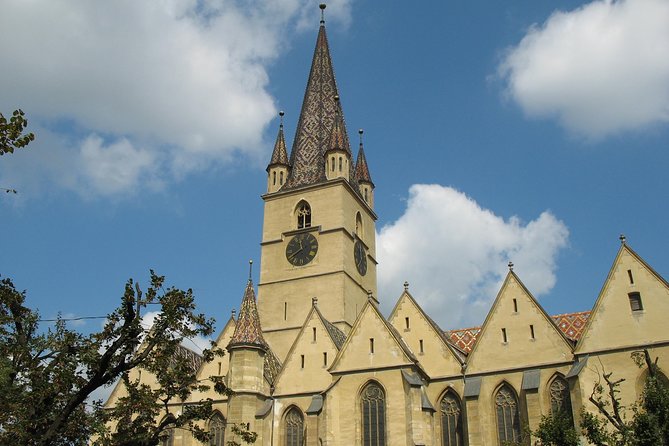
The Council Tower is one of the most useful stops because climbing to the top gives you a broad view over the old city. From above, the urban plan makes more sense than it does at street level. You can see the relationship between the squares, rooftops, walls, and church towers in one glance.
The climb is also something to consider. If stairs are difficult for you, ask about the access before setting out. The tour information says most people can participate, but it does not give specific accessibility details for the tower or churches.
Sibiu was named a European Capital of Culture, and that title helps explain the attention given to its historic center. Still, the value of the stop is not simply the label. You are getting a guided introduction to one of Romania’s best-preserved medieval urban settings, with enough time to see more than a single central square.
Cristian and the fortified church
After Sibiu, the visit to Cristian lasts about 45 minutes. That may sound brief, but it serves a different purpose from the city tour.
The fortified church shows how religious buildings in Saxon communities could also serve defensive needs. You get a closer look at local traditions and the practical side of village life. The setting is described as feeling almost frozen in the 19th century, which gives this stop a quieter mood after Sibiu’s formal squares and busy sightseeing route.
I would treat Cristian as a context stop rather than a place for a long independent visit. Forty-five minutes should be enough for a guided explanation and a look around, but not for a slow, unhurried exploration of every corner.
The church is also connected to the tour’s UNESCO theme. The experience includes a visit to a UNESCO World Heritage Site in Romania, but the supplied information does not clearly identify which exact site carries that designation. If that recognition matters to you, ask the guide or provider to clarify whether it refers to a particular church or part of the route.
What makes Cristian valuable is the connection between architecture and community. You are not just looking at old walls. You are learning how a Saxon village worked, what it protected, and how religious and social life were tied together.
Sibiel, Fântânele, and the taste of țuică
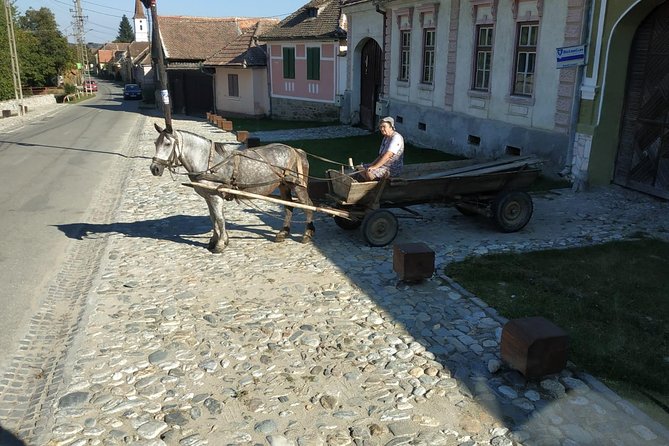
The afternoon takes you away from Sibiu toward Sibiel and Fântânele, two villages presented as places where local life remains closely connected to what residents produce themselves. Horse-drawn carriages are described as a normal part of daily life there.
That detail gives the final section a more rural character. You might find the pace less polished and more immediate than in Sibiu. The value is in seeing a different side of Transylvania, one based on village routines, local production, and older customs.
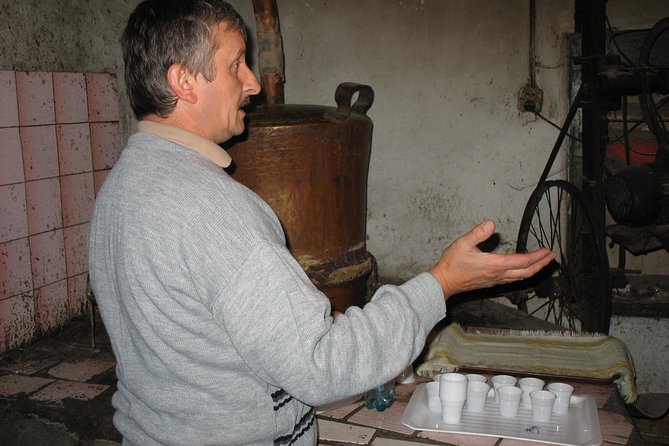
You will also taste țuică, a traditional Romanian fruit schnapps. Alcoholic beverages are included, and this tasting is one of the more personal touches in the day. It is not a meal, so you should budget separately for food and other drinks. Since the excursion lasts all day, carrying water and arranging your own lunch is sensible.
The museum visit takes place in Sibiel at the Zosim Oancea Museum of Icons on Glass. This is a particularly distinctive stop because glass painting is a local religious art tradition, not simply a collection of generic church objects.
The museum adds another layer to the Saxon heritage story. Churches and fortifications show public architecture, while the icons reveal domestic faith and artistic practice. You get to see how religious images were made and preserved within village culture.
The museum visit is scheduled for about an hour. That is enough time for a proper introduction, though anyone who likes to read every label slowly may want more. The route then returns to Cluj-Napoca in the afternoon, so the final drive can feel long after a full day of sightseeing.
More history-led tours:
- Bucharest: 3-Hour Dark History Tour with a Local
★ 4.9 · 301 reviews - Bucharest: Small Group History, Art & Secrets Tour
★ 4.7 · 152 reviews - Guided Walking Tour of Historical Bucharest
★ 5.0 · 84 reviews - Bucharest Jewish Heritage | Holocaust Memorial | Private Car Tour
★ 5.0 · 38 reviews
Transport, group size, and the real rhythm of the day
Round-trip transport by private vehicle is included, along with hotel pickup and drop-off. That is a major advantage from Cluj-Napoca because the route covers several places that would be awkward to connect by public transport in one day.
The tour starts at 8:30 am and ends back at the meeting point. Expect a long day rather than a late morning outing. The stated duration is approximately 11 to 12 hours, and the comments about big distances are worth taking seriously.
The maximum group size is 40 people. At the same time, the experience is described as using private vehicle transport. Since those details can mean different vehicle arrangements depending on the departure, confirm the expected group and vehicle before booking if personal space matters to you.
A large group can make church visits and village stops less flexible. A smaller group may feel more conversational, especially when asking about religion, ethnic identity, or the complicated history of Transylvania. The guide’s skill matters more when the group is large, because clear organization keeps the day moving.
Hotel pickup and drop-off add real value. You do not need to arrange separate transport before dawn or find your way back after a late return. This is especially useful if you are staying in Cluj-Napoca and want to cover a wide area without renting a car.
Is $129.86 a fair price?
At $129.86 per person, this is not a cheap day trip. The price becomes more reasonable when you add up what is included: transport, hotel pickup and drop-off, a driver-guide, taxes and handling charges, admission fees, and the țuică tasting.
You are paying for access to several different kinds of places in one day. A self-guided visit would require planning transport between Cluj-Napoca, Sibiu, Cristian, Sibiel, and Fântânele, then fitting the church and museum hours together. The guide also provides the historical thread that links these stops.
The weak point is the amount of time spent traveling. If you prefer to spend a whole day in Sibiu, the price may feel high because the city portion lasts about four hours before the route continues. If your priority is seeing a wide range of Saxon sites in one outing, the cost is easier to defend.
Group discounts may be available, which could improve the value for families or small parties. Children must be accompanied by an adult, and most people can take part. Food is not included, so remember that the final cost will be higher if you buy lunch and drinks during the day.
What the guide can add to the experience
This tour depends heavily on explanation. A fortified church, a city wall, or a glass icon can be interesting on its own, but the guide helps you connect each object to daily life and regional change.
George received praise for a very good tour, while Andrei was described as friendly, patient, funny, and willing to discuss a wide range of subjects. One especially positive account described the German heritage excursion as both informative and fun. That balance matters on a long day in a vehicle.
You should also keep expectations realistic. One person had a less satisfying experience and felt that the result depended more on the individual guide than on the company. George Turism acknowledged that external guides are sometimes used depending on availability. If you have a strong preference for a particular guide, ask when booking, but do not assume a named guide is guaranteed.
The best guides on this route do more than recite dates. They explain the Saxons’ arrival in Transylvania, their cultural effect, religious diversity, village customs, and the relationship between Romanian and German heritage. That background turns a series of stops into a connected story.
Who should book this Transylvania day trip?
I would recommend it to you if you want a broad introduction to Saxon Transylvania and have only one free day from Cluj-Napoca. It suits people who enjoy churches, local museums, cultural history, and guided interpretation more than long stretches of free time.
It is also a good fit if you do not want to drive. The route covers a lot of ground, and the included pickup and return remove much of the practical work.
You may want another option if you dislike long vehicle journeys, need a slow pace, or want several hours for independent shopping and café stops in Sibiu. The day is packed, and the rural visits come at the cost of extra road time.
Families can participate, provided children are accompanied by an adult. Still, the subject matter and long schedule may suit older children better than very young ones. Anyone who has difficulty with stairs should ask about the Council Tower and church access before booking.
Should you book it?
Book this tour if you want the most cultural content possible in one day from Cluj-Napoca. Sibiu gives you the grand city setting, Cristian explains the fortified village church, and Sibiel adds a memorable art tradition and a taste of țuică. The route is broad, useful, and full of places that are difficult to combine without a vehicle.
Skip it if you want a relaxed day or if long distances wear you down. The strongest reason to book is the guide-led context, particularly if you are matched with someone as patient and engaging as George or Andrei. Free cancellation is available up to 24 hours before departure, giving you some flexibility if your plans change.
FAQ
How long does the tour last?
The experience lasts approximately 11 to 12 hours. It begins at 8:30 am and returns to the meeting point in Cluj-Napoca.
What places are visited?
The route includes Sibiu’s Big Square, city walls, three main squares, two important churches, and the Council Tower. It also visits the fortified church in Cristian, the villages of Sibiel and Fântânele, and the Zosim Oancea Museum of Icons on Glass in Sibiel.
Is transportation included?
Yes. Round-trip transport by private vehicle is included, along with hotel pickup and drop-off.
Is food included?
No. Food and drinks are not included unless specifically stated. Alcoholic beverages are included, referring to the local țuică tasting.
Is the tour offered in English?
Yes. The tour is offered in English.
What is the cancellation policy?
You can cancel up to 24 hours before the experience starts for a full refund. Cancellations or changes made less than 24 hours before the start time are not accepted for a refund.
Just added around Cluj Napoca
- Two days tour to Bucovina & UNESCO Painted Monasteries★ 5.0 · 3 reviews
- Cluj – walking city tour★ 5.0 · 3 reviews
- Transylvania’s Trail: Sibiu, Bran Castle, Brasov, Sighisoara★ 4.6 · 3 reviews
- CJ05 – Mysteries of Transylvania: Bran Castle & Sighisoara★ 4.8 · 3 reviews
- Sighisoara, UNESCO & wine tasting (1 day, from Cluj)★ 5.0 · 4 reviews
- CJ01 – Explore Cluj-Napoca: A Vibrant City Tour in English★ 5.0 · 4 reviews
- 3 Day Tour of Maramures★ 5.0 · 4 reviews
- Sighisoara & wine tasting (from Cluj)★ 5.0 · 4 reviews
Historical Tours, compared.


Bucharest Jewish Heritage | Holocaust Memorial | Private Car Tour
Read our review →
Private Bucharest: History & Food with Traditional Meal
Read our review →Historic Gems Sighișoara, Rupea and Viscri Day Tour
Read our review →
Half-Day Jewish Heritage Walking Tour in Bucharest
Read our review →Browse the lists this tour appears in