
Reviewed · CITY TOURS
Cluj – walking city tour
Start with Cluj’s oldest square. This two-hour private walking tour gives you a clear introduction to Cluj-Napoca, linking medieval churches, city walls, university buildings, and modern Romanian identity. I like the private, customizable format, which lets you ask questions and adjust the route. I also like the compact Old Town itinerary, with St Michael’s Church, Matia Corvin House, the Reformed Church, and the Tailors’ Tower all included.
The main trade-off is that two hours goes quickly. You will see many important places, but several stops are short, and the tour does not include paid interior visits. The route also finishes outdoors at the Orthodox Cathedral, and the experience requires good weather.
A local guide gives this walk its real value. Past feedback praises Joseph for his detailed knowledge of Cluj and his ability to explain dates, famous people, buildings, and local culture in an easy-to-follow way. One particularly good feature is the guide’s ability to reshape the route around your interests, including a reroute for a guest who wanted to explore Cluj’s Jewish connections.
In This Review
- Key points at a glance
- Why this two-hour walk works well in Cluj
- Museum Square and the first view of old Cluj
- Matia Corvin House and a famous royal connection
- St Michael’s Church, the route’s main landmark
- The Piarist Church and Cluj’s Baroque turn
- City Walls and the surviving medieval defenses
- Babeș-Bolyai University and the living city
- The Reformed Church and its remarkable organ tradition
- The Tailors’ Tower and the role of guilds
- Avram Iancu Square and the city’s later identity
- The Orthodox Cathedral and a flexible finish
- Private guiding, group size, and price
- Who should book this Cluj walking tour?
- Should you book it?
- FAQ
- How long does the Cluj walking tour last?
- What time does the tour start?
- Where does the tour begin?
- Where does the tour finish?
- Is the tour private?
- Which languages does the guide speak?
- Are entrance tickets included?
- What happens if the weather is poor?
Key points at a glance
- Museum Square begins the tour in Cluj’s oldest square, with the Franciscan church and Carolina Obelisk close at hand.
- St Michael’s Catholic Church is the visual centerpiece, a large medieval church in the heart of the city.
- The private format keeps your questions at the center, with a maximum group size of 15 and flexibility over the endpoint.
- Medieval Cluj appears in small pieces, from the surviving City Walls to the Tailors’ Tower and narrow side streets.
- The itinerary covers several traditions, including Catholic, Baroque, Reformed, and Orthodox religious buildings.
- The price is reasonable for a private introduction, especially if two or more people share the cost, though admissions and personal expenses are extra.
Why this two-hour walk works well in Cluj
Cluj-Napoca can feel spread across several eras at once. A grand church may face a university building, while a quiet lane reveals a surviving fragment of the medieval fortifications. This tour gives you a basic map of those layers without asking you to spend half a day following guidebook directions.
The route stays in and around the city center, so you spend your time seeing places rather than traveling between them. The starting point is Carolina Obelisk in Piața Muzeului, also called Museum Square. The tour normally ends at the Dormition of the Mother of God Metropolitan Cathedral in Avram Iancu Square.
I like the route because it moves from older Cluj toward later parts of the city. You begin with the oldest square, examine medieval and Baroque churches, pass the university, see defensive remains, and finish with the Orthodox cathedral and the late 19th-century buildings around Avram Iancu Square.
This is a walking tour, not a museum program. No paid interior visits are planned, so you should think of it as an orientation walk with access to local stories, not a ticketed church-and-museum tour. The guide can explain what you are seeing, point out details you could easily miss, and answer questions as you go.
More Walking Tours in Cluj Napoca
- Cluj-Napoca: 2.5-Hour Guided Walking Tour
★ 4.8 · 104 reviews - Cluj-Napoca: 2.5-Hour Guided Walking Tour
★ 4.5 · 29 reviews - Cluj-Napoca Walking City Tour
★ 4.5 · 16 reviews
Museum Square and the first view of old Cluj
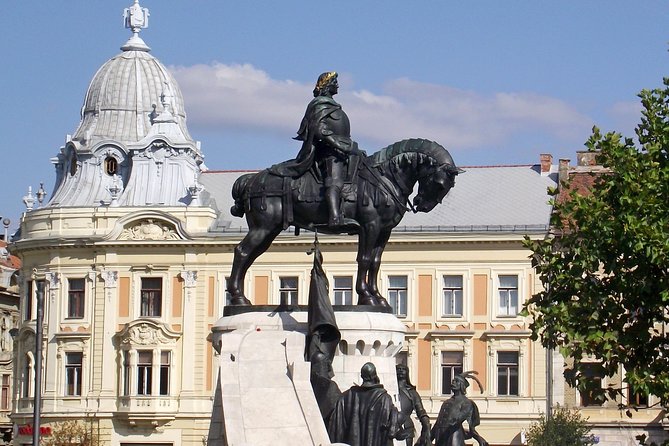
Museum Square is a smart place to begin. It is described as the oldest square in the city, and the opening stop gives you two immediate points of interest: the Franciscan church and the Carolina Obelisk.
You have about 20 minutes here. That is enough time for the guide to establish Cluj’s age and explain why this square matters, while you get your first look at the historic center. Because admission is free, there is no extra cost at this stop.
I would pay close attention to the guide’s opening explanation. A good introduction here should help you understand the rest of the walk, especially the relationship between Cluj’s religious buildings, civic spaces, and medieval defenses. The square also offers a useful pause before the route becomes a sequence of shorter stops.
Matia Corvin House and a famous royal connection
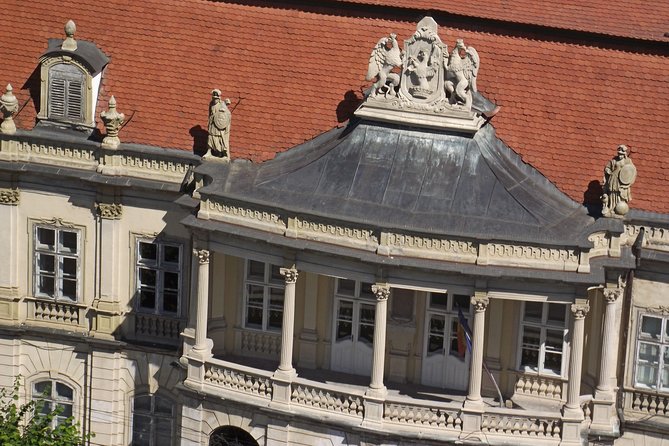
The next stop is the Memorial Matia Corvin House, presented as the oldest civilian building in Cluj. The site connects the city with Matia Corvin, one of Hungary’s most important kings.
You have around 15 minutes here. That is enough for a focused explanation, but not a long interior visit. Admission is not included, and the tour information does not promise an interior entry, so you should plan to see this primarily as a historical landmark from the route.
This stop adds a personal connection to the city’s political past. Instead of hearing only about churches and walls, you get a direct link to a major historical figure. If royal history interests you, this may be one of the places where a private guide earns the tour fee, since you can ask for more context rather than simply take a photograph and move on.
St Michael’s Church, the route’s main landmark
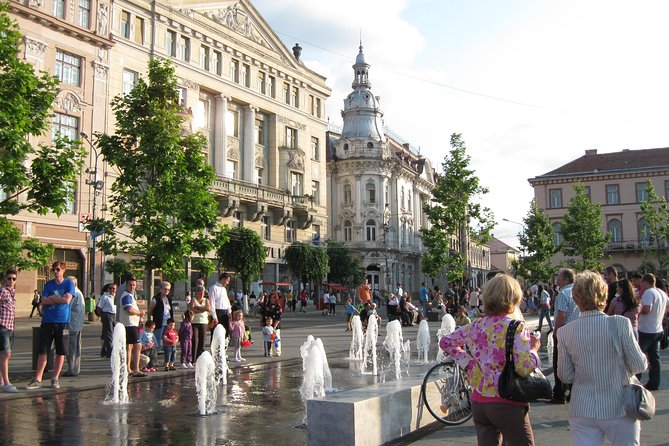
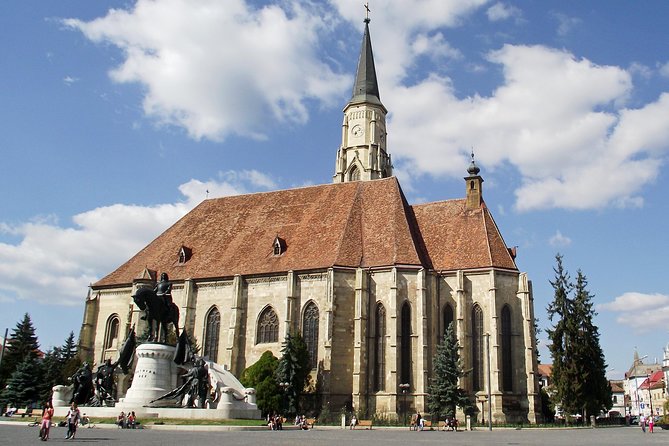
St Michael’s Catholic Church receives about 20 minutes, making it the longest single stop on the route. That choice makes sense. It is one of the largest medieval churches in Transylvania and one of the clearest symbols of central Cluj.
Admission is free. Still, the tour does not promise a full interior visit, and the included services specifically exclude entry tickets. If you want to spend more time inside, ask the guide at the start whether the timing or route can be adjusted.
Even from outside, this is an important architectural stop. The church gives the tour a strong center, both visually and historically. I would use this moment to ask about the church’s place in Transylvania and about the different communities that shaped Cluj.
The 20-minute allocation is useful but limited. You will get an explanation and a chance to look around, but this is not designed for slow architectural study. If church interiors are your priority, tell the guide early.
More walking tours:
- Cluj : Must-See Attractions Walking Tour
★ 4.8 · 8 reviews - Cluj : Private Walking Tour with A Guide ( Private Tour )
★ 5.0 · 7 reviews - Cluj-Napoca Walking City Tour
★ 5.0 · 5 reviews - From Cluj: Winter Walking Trip on the Great Mountain
★ 5.0 · 5 reviews
The Piarist Church and Cluj’s Baroque turn
The Biserica Romano-Catolică Sfânta Treime, commonly known as the Piarist Church, gets about 10 minutes. It is identified as the first Baroque church built in what is now Romania.
This brief stop shows that Cluj is not only a medieval city. The route moves from older Gothic forms toward the Baroque period, giving you a quick way to compare different architectural styles.
Admission is free, and there is no planned paid entry. Ten minutes will probably suit you if you want the main facts and a look at the exterior. If your interests lean toward art and architecture, you may want to request a little more time here and shorten a less important stop.
The value is in the sequence. Seen after St Michael’s, the Piarist Church helps you notice how the city changed over time. The guide can make that shift easier to understand than a string of isolated dates.
City Walls and the surviving medieval defenses
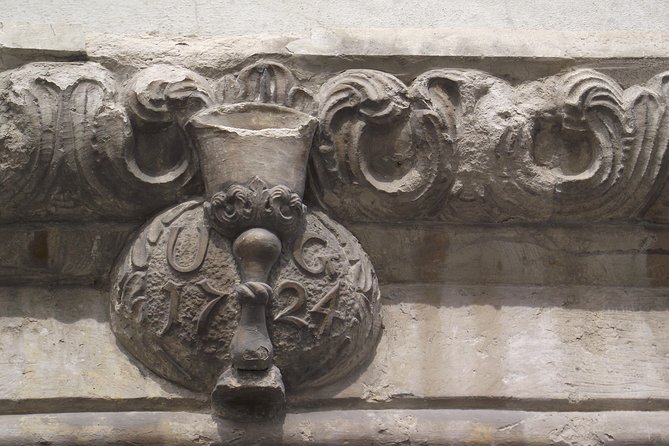
The City Walls stop lasts about 15 minutes and takes you through narrow streets to parts of the 15th-century fortifications. This is one of the most appealing sections for anyone who enjoys seeing how a city worked, not just admiring its grand buildings.
Cluj’s medieval defenses survive in fragments rather than as one complete circuit. That means you should not expect a large fortress walk. Instead, the guide helps you spot pieces of the old system in places you might otherwise pass without a second look.
This is also where the private format helps. You can ask how the walls shaped the growth of the city, why only certain sections remain, and how guilds fit into Cluj’s development. The walk is free, but sturdy, comfortable shoes make sense for narrow streets and several stops on foot.
Babeș-Bolyai University and the living city
The route pauses for five minutes beside Babeș-Bolyai University, described as one of Romania’s most important universities and more than 100 years old.
Five minutes is short, so this is mainly a context stop rather than a full campus visit. The university helps connect historic Cluj with the city you see today. It also reminds you that this is not a preserved old town separated from modern life.
If academic institutions interest you, ask the guide for more details. If you would rather spend time on churches or fortifications, this is one of the easiest stops to keep brief. The customizable itinerary gives you room to make that choice.
The Reformed Church and its remarkable organ tradition
The 15th-century Reformed Church receives about 10 minutes. It is known for organ concerts and for one of the largest collections of coats of arms in this part of Europe.
That combination makes the church especially worthwhile. You are not only looking at an old religious building. You are also hearing about music and heraldry, two subjects that reveal how institutions and powerful families expressed their identity.
The stop is free, and the tour does not include a concert. Still, the guide can point out why the church matters and explain the importance of the coat of arms collection. If you enjoy music, ask about the organ concerts. If you enjoy symbols and civic history, ask about the coats of arms.
As with several stops, 10 minutes gives you an introduction rather than a full study. The tour is best for learning what deserves a return visit.
The Tailors’ Tower and the role of guilds
Turnul Croitorilor, or the Tailors’ Tower, is one of the few defense towers preserved from Cluj’s medieval fortifications. The stop lasts only five minutes, but the subject is bigger than the clock suggests.
The tower offers a direct link between defense and trade. Its name points to the old guild system and the part guilds played in the city’s growth. This is a useful correction to the usual focus on kings, bishops, and wealthy families. Ordinary tradespeople also helped shape medieval urban life.
There is no admission charge listed. You will probably see the tower as part of the walk rather than spend time inside. Ask the guide to explain how the guilds were organized if that side of Cluj interests you.
Avram Iancu Square and the city’s later identity
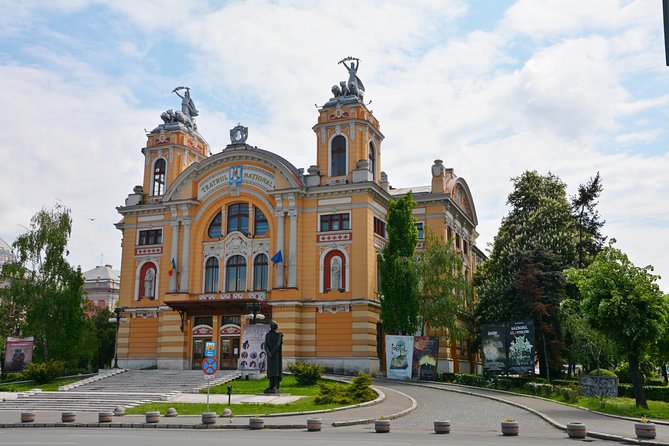
The route then reaches Avram Iancu Square, where many buildings, including the National Theatre, date from the late 19th century onward. This is a clear change from the medieval lanes and churches earlier in the walk.
The square helps you see Cluj as a growing modern city. Its buildings reflect a later period of civic ambition, when theatres, public institutions, and formal squares became important parts of urban life.
The itinerary gives no separate time estimate for this stop, so the guide may treat it as part of the approach to the cathedral. If you want more time for the National Theatre or the architecture around the square, mention that when you meet the guide.
The Orthodox Cathedral and a flexible finish
The final scheduled stop is the Dormition of the Mother of God Metropolitan Cathedral. You have about 15 minutes to discover the interior decoration of this Orthodox church.
The cathedral provides a fitting final note because it adds another religious tradition to the route. By this point, you have seen Catholic, Baroque, and Reformed sites, along with medieval defenses and later civic buildings. The Orthodox cathedral broadens the picture of Cluj’s religious and cultural identity.
The normal ending point is Piața Avram Iancu, but the endpoint is flexible. You and the guide can decide together where to finish. That matters if you want to continue exploring nearby, return to your accommodation, or spend longer at another stop.
Private guiding, group size, and price
The price is $28.94 per person. For a private two-hour tour, that can be good value, especially if you are traveling with family or friends and can use the group discount. The maximum group size is 15, so the word private should not automatically make you picture a one-to-one tour. Confirm how your booking is arranged if you want the guide entirely for your own party.
The guide speaks English or French. That is a practical advantage if you want more than a memorized script. Feedback about Joseph is especially strong, describing him as passionate and deeply familiar with Cluj’s past. Another account praised the way he combined dates, famous people, landmarks, and local culture in a form that was easy to follow.
The private format also has a human advantage. One booking was arranged with only 12 hours’ notice, and the route was adjusted after the guide learned more about the guest’s Jewish background. You should not assume every request can be handled at the last minute, but this shows why it is worth explaining your interests before the walk begins.
Meals, drinks, personal expenses, and paid admissions are not included. The tour uses a mobile ticket, and confirmation is provided at booking. It begins at 10:00 a.m. near public transportation.
Who should book this Cluj walking tour?
I would choose this tour if you are visiting Cluj for the first time and want a useful orientation before exploring alone. It also suits anyone who prefers asking questions to reading plaques and guidebook captions.
The route works well for architecture fans, church enthusiasts, history-minded visitors, and anyone who wants to understand how several eras fit together. It is also a good choice if you have only a short stay and want to cover the main center in two hours.
You may want another option if you need long interior visits, museum admission, or a slow photography walk. The short timings keep the route moving, but they do not allow much lingering. If you have mobility concerns, ask the provider directly before booking, since the experience involves walking through the city and narrow streets.
Free cancellation is available up to 24 hours before the 10:00 a.m. start time. Changes made inside that window are not accepted, and poor weather can lead to a new date or a full refund.
Should you book it?
Book this Cluj walking tour if you want a well-shaped first look at the city, a guide who can respond to your questions, and the freedom to adjust the route. The strongest reasons are the private format, the range of religious and civic sites, and the chance to hear local stories from a guide such as Joseph.
Skip it if your goal is a detailed interior tour or a full day of museums. At $28.94 per person, it offers solid value for a private introduction, but its success depends on how actively you use the guide. Arrive with two or three subjects you care about, and the two hours should give you both a sense of Cluj and a short list of places worth revisiting.
FAQ
How long does the Cluj walking tour last?
The tour lasts approximately two hours.
What time does the tour start?
The scheduled start time is 10:00 a.m.
Where does the tour begin?
The tour begins at the Carolina Obelisk, Piața Muzeului 2, Cluj-Napoca.
Where does the tour finish?
It normally finishes at the Dormition of the Mother of God Metropolitan Cathedral in Piața Avram Iancu. You can decide on a different endpoint with the guide.
Is the tour private?
Yes. The route is private and customizable, although the stated maximum group size is 15 people.
Which languages does the guide speak?
Professional guiding is available in English or French.
Are entrance tickets included?
No. The tour does not include entry tickets, and no paid interior visits are planned. Meals, drinks, and personal expenses are also excluded.
What happens if the weather is poor?
The experience requires good weather. If it is canceled because of poor weather, you will be offered another date or a full refund. You can also cancel for a full refund up to 24 hours before the start time.
Just added around Cluj Napoca
- Two days tour to Bucovina & UNESCO Painted Monasteries★ 5.0 · 3 reviews
- Transylvania’s Trail: Sibiu, Bran Castle, Brasov, Sighisoara★ 4.6 · 3 reviews
- CJ05 – Mysteries of Transylvania: Bran Castle & Sighisoara★ 4.8 · 3 reviews
- Sighisoara, UNESCO & wine tasting (1 day, from Cluj)★ 5.0 · 4 reviews
- CJ01 – Explore Cluj-Napoca: A Vibrant City Tour in English★ 5.0 · 4 reviews
- 3 Day Tour of Maramures★ 5.0 · 4 reviews
- Sighisoara & wine tasting (from Cluj)★ 5.0 · 4 reviews
- Cluj: Private City Walking Tour★ 4.4 · 4 reviews
City Tours, compared.


Bucharest Panoramic Sightseeing – Private City Tour
Read our review →
SB01 – City Tour Sibiu: Exploring the Heart of Transylvania
Read our review →
City Tour Sighisoara Legends & Landmarks A Walk Through Time
Read our review →Browse the lists this tour appears in