
Reviewed · HISTORICAL TOURS
The Jewish heritage of Bucharest – half day walking tour
Jewish Bucharest is easy to miss. This three-hour walk brings its surviving synagogues, museum, theater, and memorial into one clear story, moving from a once-thriving community to the scars left by war and Communism. I like the strong historical context and the way the tour connects buildings with everyday Jewish life. I also like the small-group format and guide Razvan Trancu’s warm, flexible approach. The main catch is practical: key synagogues close on weekends, holidays, and sometimes at short notice, so you need to check opening times before booking.
The route is compact but not lightweight. You’ll begin near Bucharest’s Old Town, walk through streets now hemmed in by Communist apartment blocks, and finish at the Holocaust Memorial. Bring cash for admission and snacks, and plan around the limited weekday visiting hours. Religious holidays and safety changes can affect access to the Coral Temple and Great Synagogue.
In This Review
- Key points at a glance
- Why this Jewish Bucharest walk matters
- Starting in Old Town, then looking beyond it
- The Jewish Museum in a former temple
- The Great Synagogue and the Romanian Holocaust
- The Jewish State Theater and Laude-Reut
- A kosher snack stop at Avraham Kosher
- The Coral Temple’s Neo-Mudejar detail
- Ending at the Bucharest Holocaust Memorial
- What makes Razvan Trancu a strong guide
- Timing, access, and the real cost
- Who should book this walking tour?
- Should you book it?
- FAQ
- How long does the Jewish heritage tour of Bucharest last?
- Where does the tour begin?
- Where does the tour finish?
- Which languages are available?
- Are entrance fees included?
- Are snacks included?
- When are the synagogues generally open?
- Is the Jewish Community Museum open on Fridays?
- Can the tour be canceled for a full refund?
Key points at a glance
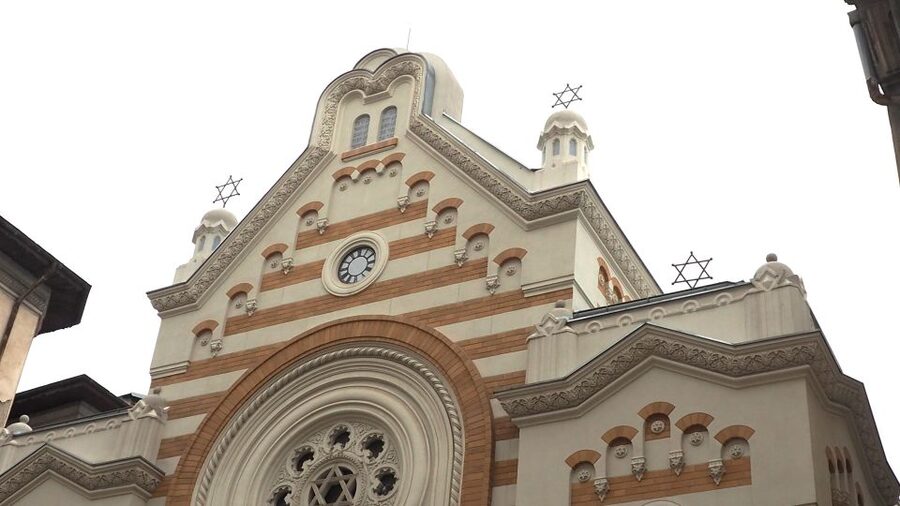
- The Coral Temple is the architectural prize: Its Neo-Moorish, or Neo-Mudejar, design and more than 150 years of history make it the visual highlight.
- The Great Synagogue adds difficult history: The visit explains the Romanian Holocaust rather than treating the building as a pretty stop.
- The Jewish Museum occupies a former temple: This gives the collection a direct link to the community it presents.
- Communist Bucharest is part of the story: Narrow old streets meet rows of later apartment blocks, showing how the district changed.
- Razvan Trancu earns unusually strong praise: His English, use of photos, humor, and ability to adjust the discussion are major strengths.
- The timing needs care: Synagogues are generally open Monday to Thursday from 9 a.m. to 2 p.m. and Friday from 9 a.m. to noon, while the Jewish Community Museum is closed Fridays.
Why this Jewish Bucharest walk matters
Bucharest’s Jewish quarter is not a preserved old neighborhood with every facade intact. That is precisely why this tour is useful. You see fragments: religious buildings, a former temple now used as a museum, the Jewish State Theater, an educational complex, a kosher food stop, and a memorial. The surrounding city often looks newer and heavier, with Communist apartment blocks pressing against older streets.
I like this honest approach. You are not being sold a perfect historic district. You are shown what survived, what disappeared, and how Jewish life still leaves marks on Bucharest’s streets and culture.
The experience also avoids reducing the community’s story to the Holocaust alone. It covers the period before the Second World War, the Romanian Holocaust, and the later Communist regime. That wider frame matters. You get a sense of achievement, persecution, adaptation, and loss rather than one isolated chapter.
The route is led in English or Italian, and the group is described as small, limited to seven participants. The price is $318 per group, listed for up to 12 people, so it can be fair value for a family or private party if the actual group arrangement allows that full capacity. For one or two people, it is a substantial cost. Confirm the group limit and final price when booking, since the description gives both up to 12 and limited to 7.
More Historical Tours in Bucharest
- Bucharest: 3-Hour Dark History Tour with a Local
★ 4.9 · 301 reviews - Bucharest: Small Group History, Art & Secrets Tour
★ 4.7 · 152 reviews - Guided Walking Tour of Historical Bucharest
★ 5.0 · 84 reviews
Starting in Old Town, then looking beyond it
The meeting point is at the entrance of a Starbucks, a simple place to find in central Bucharest. From there, the walk includes about 20 minutes in Old Town before turning toward the Jewish quarter.
That opening helps you get your bearings. Old Town is familiar territory for many Bucharest visitors, but this tour uses it as a starting point rather than the main event. The important change comes when the route moves into narrower streets where the older Jewish district is no longer easy to read at first glance.
You should expect urban walking, not a tidy open-air museum. The contrast between old street lines and Communist apartment blocks is part of the lesson. Keep your attention on the spaces between the major buildings, since the district’s story is told through surviving traces as much as through grand monuments.
The Jewish Museum in a former temple
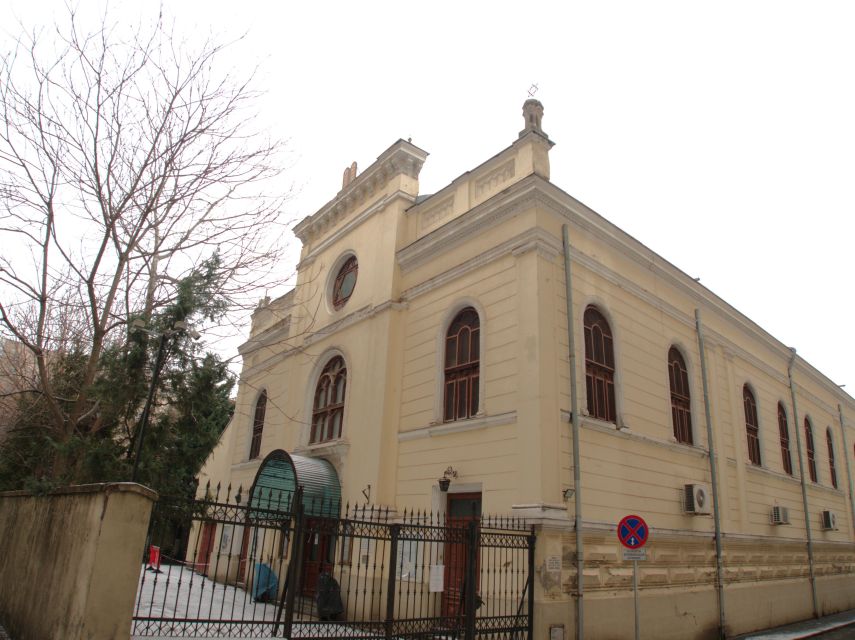
The Jewish Museum receives about 30 minutes and is hosted in an ex-temple. That setting gives the visit a special weight. You are not looking at Jewish objects in a completely neutral gallery space. The building itself is part of the community’s story.
The museum stop helps explain the cultural life behind the architecture. The tour description points to the lasting imprint of Jewish culture on Bucharest’s local urban and popular life. A good guide can connect those broad ideas to the objects, places, and customs presented here.
You should not expect a long museum visit. Thirty minutes is enough for an introduction, not a slow examination of every display. That is a fair trade on a three-hour walking route, especially if your main goal is to understand the neighborhood as a whole.
The museum is closed on Fridays. It may also be affected by religious holidays or changing local schedules, so Friday bookings deserve special care.
The Great Synagogue and the Romanian Holocaust
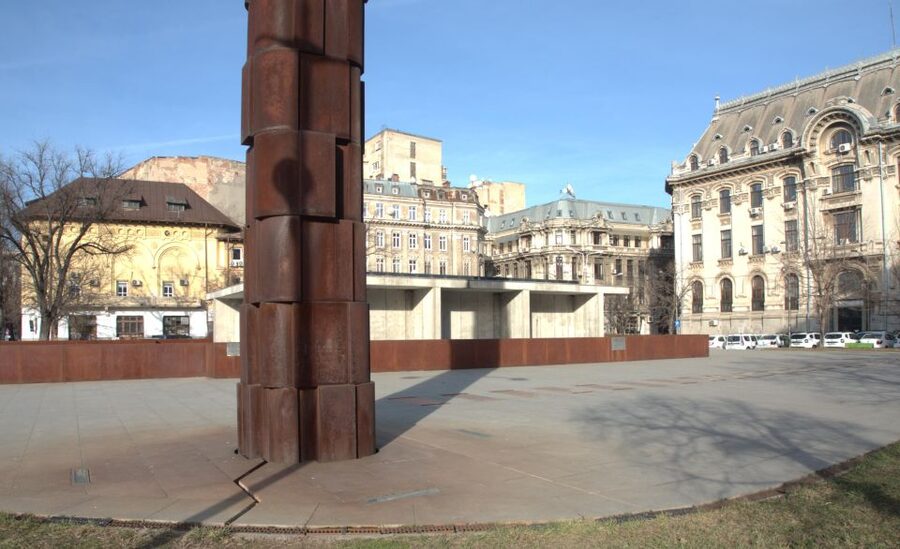
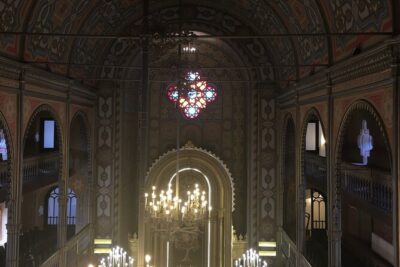
The Great Synagogue is given around 30 minutes. It is one of the tour’s key stops because the building carries both religious and national history.
Here, the guide addresses the Romanian Holocaust. That subject can be difficult, but it is essential to understanding the Jewish community’s destruction and displacement. The value of the visit lies not only in seeing the interior, when open, but in placing it within the Romanian setting.
This is also where the quality of the guide matters most. Past participants singled out Razvan Trancu for explaining history alongside politics, geography, and current events. His use of photographs on an iPad helped make the commentary easier to follow, especially when a building or earlier period was hard to picture from the street.
Admission is not included. When open, the fee is 30 lei per person, about $6, and the Great Synagogue closes during Rosh Hashana, Pesach, Shavuot, Yom Kippur, and Sukkot. Visiting hours are generally Monday through Thursday from 9 a.m. to 2 p.m. and Friday from 9 a.m. to noon.
More Walking Tours in Bucharest
- Bucharest: City Highlights Guided Walking Tour
★ 4.9 · 1,482 reviews - Bucharest Highlights Walking Tour
★ 5.0 · 469 reviews - Bucharest: Ghost Stories & Romanian Mythology Walking Tour
★ 4.9 · 287 reviews - Bucharest: Guided Walking Tour with Romanian Snack
★ 4.9 · 228 reviews
The Jewish State Theater and Laude-Reut
The Jewish State Theater receives another 30-minute visit. This is a useful reminder that Jewish life in Bucharest was not limited to worship. Theater, language, education, and public culture also mattered.
The stop helps broaden the tour beyond memorials and religious buildings. You see how Jewish identity continued through performance and cultural institutions, even as the community faced major political change.
The walk then passes the Laude-Reut Educational Complex. You do not spend a full visit here, but the 10-minute passage adds a modern link to the route. It shows that Jewish education remains part of Bucharest’s present, not simply a subject locked in the past.
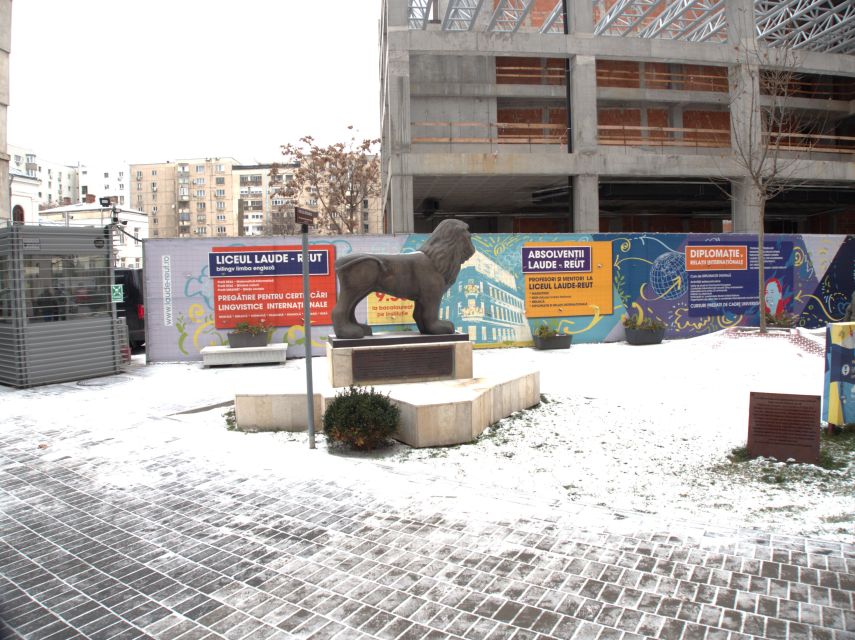
Next comes Jerusalem Lion Square, seen in about five minutes. This is a brief stop, so do not expect a major sightseeing pause. Its value is as a marker along the route and another point where the city’s Jewish connections appear in public space.
A kosher snack stop at Avraham Kosher
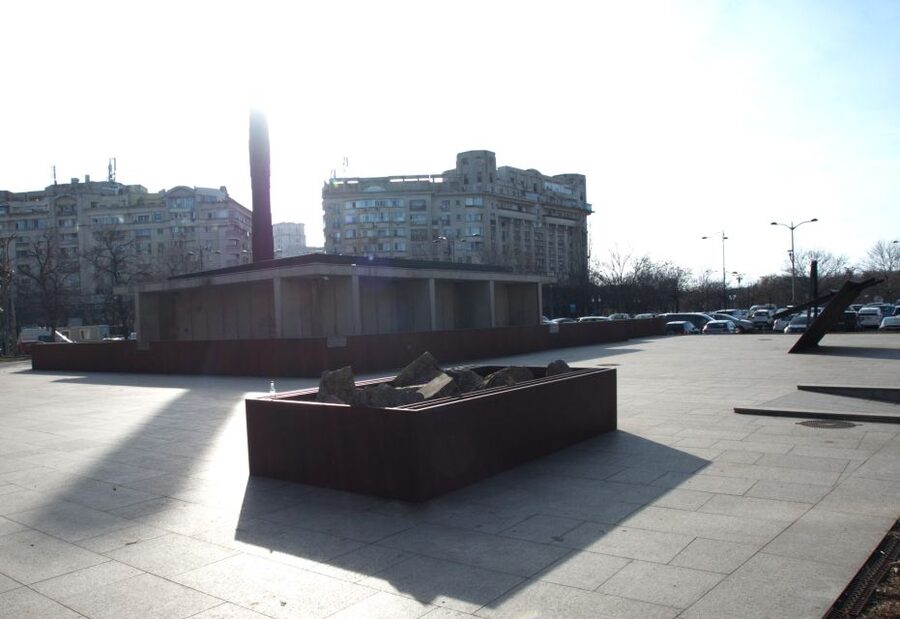
The 30-minute break at Avraham Kosher is not included in the tour price, but it gives the walk a welcome human pause. You can buy local snacks and use the stop to ask questions that may have come up earlier.
This is a good place to remember that the experience is not only about monuments. Food is one of the clearest ways a community’s traditions remain visible in daily life. The tour does not include snacks, so carry cash and budget separately for anything you want to purchase.
The break also helps with the pace. Six or seven stops involving serious historical material can feel dense if every minute is spent moving or listening. A pause makes the second half more manageable.
The Coral Temple’s Neo-Mudejar detail
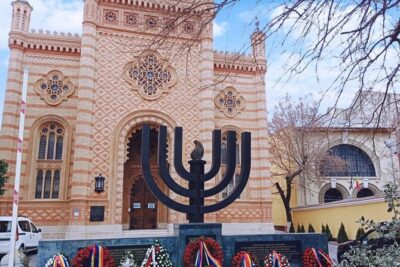
The Coral Temple gets about 20 minutes and is likely to be the route’s most eye-catching building. Its Neo-Mudejar style gives it a decorative character that differs from the heavier Communist surroundings. The temple has more than 150 years of history and has recently been restored.
I like that this stop combines beauty with context. You can admire the design, but the building is not treated as decoration without a story. Its age points to the former scale and confidence of Jewish life in Bucharest.
Admission costs 30 lei per person when the temple is open. It is closed during Rosh Hashana, Pesach, Shavuot, Yom Kippur, and Sukkot, and visiting hours are generally Monday through Thursday from 9 a.m. to 2 p.m. and Friday from 9 a.m. to noon.
The schedule is the biggest issue here. If the Coral Temple is closed, you may still walk past it and hear about it, but the experience is less satisfying than seeing the restored interior. Check before you commit to a date, especially if your visit falls near a Jewish holiday, a weekend, or a period of very hot weather.
Ending at the Bucharest Holocaust Memorial
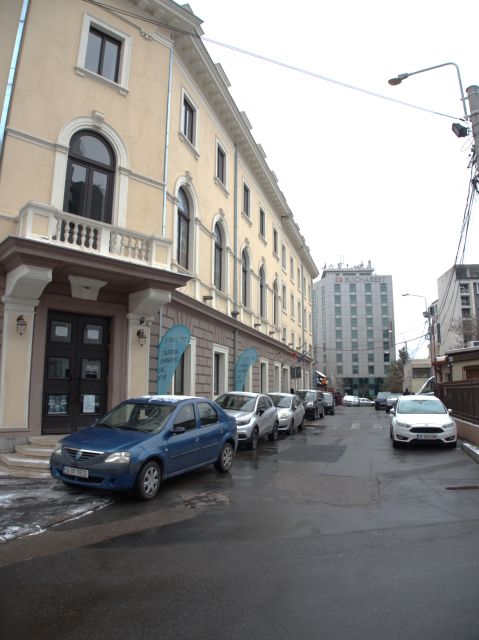
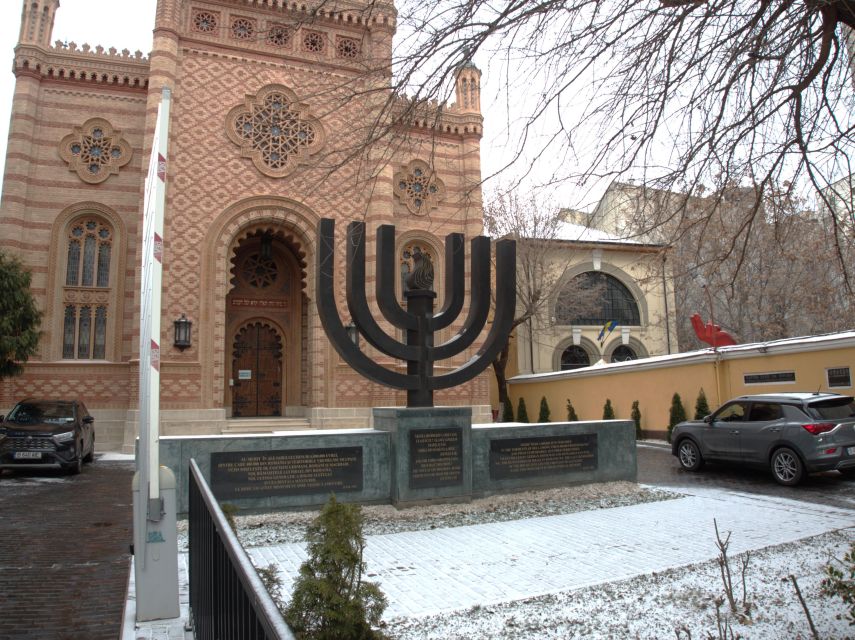
The tour finishes at the Holocaust Memorial, after about 20 minutes at the site. Ending here gives the route a serious final point rather than sending you back to a cafe or hotel with the story unfinished.
The memorial works best after the earlier stops. You have already seen religious buildings, cultural institutions, and reminders of community life. By the time you arrive, the memorial represents a loss that has been explained through places and people rather than presented as an abstract number.
You should allow yourself a quiet moment here. The tour ends at the memorial, so any further discussion or transport afterward is your own responsibility. Its central location may make it easy to continue sightseeing, but no onward arrangements are included.
What makes Razvan Trancu a strong guide
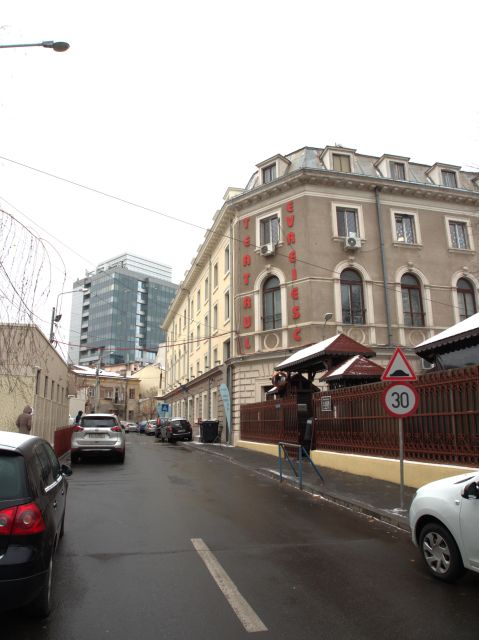
The guide is the experience’s most praised feature. Razvan Trancu is repeatedly described as clear, engaging, and exceptionally well prepared. His English is reported as excellent, and he also guides in Italian.
What I find most useful in the feedback is not simply praise for his knowledge. It is the description of his style. He explains Romanian and Jewish history while also bringing in geography, politics, and current events. He uses humor, answers questions, and adjusts the pace to match the group’s interests rather than delivering a fixed speech.
One group said he contacted them before the tour and met them at their hotel, but you should not assume that this is standard for every booking. Treat it as a possible courtesy, not a promised service.
The comments also point to practical care. During a very hot day, Razvan paid attention to the group’s wellbeing and adjusted his approach. Bucharest can be uncomfortable in high temperatures, and a walking tour with several serious indoor and outdoor stops benefits from a guide who pays attention to conditions.
Timing, access, and the real cost
Three hours is enough for a useful introduction, but it is not enough for long visits at every stop. The schedule gives roughly 20 to 30 minutes to most major locations, with shorter passages at Laude-Reut and Jerusalem Lion Square. You get breadth and connection rather than a slow museum study.
The two synagogue admission fees add about 60 lei per person, or around $12, when both are open. Snacks and personal expenses are extra. The guide service is included, but entry costs are not, so bring cash.
At $318 per group, the value depends heavily on your party size. For a larger family or group of friends, the cost spreads well and a private-style discussion can make sense. For a solo visitor, couple, or small party, it is harder to justify unless Jewish Bucharest is a central reason for your visit.
The description gives two different group figures: a price for up to 12 people and a small-group limit of seven. Ask for clarification before paying. That one detail affects both comfort and value.
Free cancellation up to 24 hours before the start and the option to reserve now and pay later reduce the risk of booking early. Still, flexibility does not solve the opening-hours problem. Confirm access to the Great Synagogue, Coral Temple, and museum before the day arrives.
Who should book this walking tour?
I would choose this tour if you want Jewish Bucharest explained as a living part of the city, not just a list of buildings. It suits visitors with a serious interest in Romanian Jewish life, Holocaust history, religious architecture, or the way Communism changed Bucharest.
It is also a good fit if you prefer a guide who can handle questions and connect local history with wider events. Razvan’s style sounds especially useful for curious visitors who do not want a memorized speech.
You may want another option if you dislike walking, have only a weekend available, or need guaranteed access to every interior. The route is wheelchair accessible, but several buildings may still be closed, and the description does not promise substitute visits. Hot weather can also affect opening schedules and comfort.
This is not a light sightseeing stroll. The Holocaust portion is central, and the mood becomes sober as the tour progresses. You should come ready for difficult material, balanced by the earlier focus on culture, education, faith, and daily life.
Should you book it?
Book it if the Jewish story of Bucharest is important to you and you can visit on a weekday morning. The combination of the former temple museum, Great Synagogue, Jewish State Theater, Coral Temple, and Holocaust Memorial gives you a useful three-hour framework, while Razvan Trancu’s clear and personal guiding style appears to add real value.
Before booking, confirm three things: the opening of both synagogues, the museum schedule, and whether your party falls under the seven-person limit or the stated capacity of 12. If all the main sites are open, the price can work well for a group. If you are visiting alone or on a weekend, the cost is harder to defend.
FAQ
How long does the Jewish heritage tour of Bucharest last?
The walking tour lasts three hours.
Where does the tour begin?
It begins at the entrance door of the Starbucks listed as the starting point.
Where does the tour finish?
The tour ends at the Bucharest Holocaust Memorial.
Which languages are available?
The live tour guide is available in English and Italian.
Are entrance fees included?
No. Admission is not included. When open, the Great Synagogue and Coral Temple each charge 30 lei per person, around $6.
Are snacks included?
No. The stop at Avraham Kosher is a break where you can buy local snacks, but food and drinks are personal expenses.
When are the synagogues generally open?
The stated visiting hours are Monday through Thursday from 9 a.m. to 2 p.m. and Friday from 9 a.m. to noon.
Is the Jewish Community Museum open on Fridays?
No. The museum is closed on Fridays.
Can the tour be canceled for a full refund?
Yes. You can cancel up to 24 hours in advance for a full refund. You can also reserve now and pay later.
More Walking Tours
- Best of Bucharest | Private Walking Tour
★ 5.0 · 199 reviews - Walking Tour- Delightful Bucharest (Highlights, Stories, Sights)
★ 5.0 · 145 reviews - 4h Bucharest Private Tour (2h by Car and 2h Walking in Old Town)
★ 5.0 · 90 reviews - Bucharest 3-hours Walking Tour (Small Groups)
★ 5.0 · 85 reviews
More Historical Tours
- Bucharest Jewish Heritage | Holocaust Memorial | Private Car Tour
★ 5.0 · 38 reviews - Private Bucharest: History & Food with Traditional Meal
★ 5.0 · 34 reviews - Bucharest Historical Food Tour in Old Center
★ 5.0 · 21 reviews - Half-Day Jewish Heritage Walking Tour in Bucharest
★ 5.0 · 20 reviews
Just added around Bucharest
- 4-Day Inside Transylvania & Transfagarasan Tour from Bucharest★ 5.0 · 3 reviews
- 10 hours Private Apiary Tour in Romania – From Bucharest★ 5.0 · 3 reviews
- Bucharest: Charm of the Belle Époque Private Tour★ 5.0 · 3 reviews
- Bran & Peles Castles through the Best Road in the World: Transfagarasan road★ 4.5 · 3 reviews
- 2-Day Small-Group Tour in Transylvania from Bucharest – Maximum 5 Persons★ 5.0 · 3 reviews
- Private Wine Tasting at Bucharest’s First Wine Bar★ 5.0 · 3 reviews
- Bucharest to Brasov – Fast Private Transfer★ 5.0 · 3 reviews
- Probably the Best Restaurant and Wine Cellar near Bucharest★ 4.5 · 3 reviews
Historical Tours, compared.


Bucharest Jewish Heritage | Holocaust Memorial | Private Car Tour
Read our review →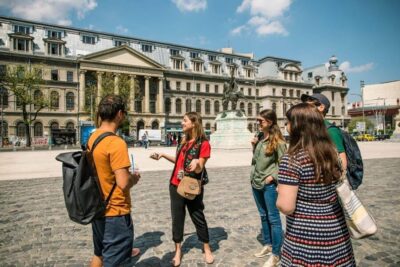
Private Bucharest: History & Food with Traditional Meal
Read our review →Historic Gems Sighișoara, Rupea and Viscri Day Tour
Read our review →
Half-Day Jewish Heritage Walking Tour in Bucharest
Read our review →Browse the lists this tour appears in