
Reviewed · WALKING TOURS
Bucharest 3-hours Walking Tour (Small Groups)
Bucharest’s story changes every few blocks. This small-group walk links medieval ruins, Orthodox churches, French-style boulevards, and the dramatic site of Romania’s 1989 revolution in about three hours. I especially like the small maximum of 10 people, which should make it easier to hear the guide and ask questions, and the tour’s clear historical thread, from Vlad the Impaler to Nicolae Ceausescu. The main drawback is that most stops are viewed from outside, and admission to the Romanian Athenaeum costs an extra 15 lei in cash.
I also like the route’s practical shape. It begins near Unirii Square and ends at the Romanian Athenaeum, giving you a useful first look at central Bucharest without spending time on transport between sights. Guides Mara and Elena receive particularly warm praise for their humor, personal stories, and easy-to-follow English. If you want a quick orientation, this is a strong choice, though you should expect steady walking and a history-heavy afternoon.
In This Review
- What makes this Bucharest walk useful
- Why this route works for a short stay
- Unirii Square and the Palace of Parliament
- Manuc’s Inn and medieval Old Town
- St. Anthony’s Church and Curtea Veche
- Stavropoleos Monastery and Orthodox art
- Lipscani, Calea Victoriei, and Little Paris
- Revolution Square and the fall of Ceausescu
- The Romanian Athenaeum and the tour’s final view
- Guides, pace, and group size
- Price, snack, and practical value
- Who should book this Bucharest walk?
- Should you book it?
- FAQ
- How long is the Bucharest walking tour?
- What language is the tour offered in?
- Where does the tour start?
- Where does the tour end?
- Is the Romanian Athenaeum entrance included?
- Is the Palace of Parliament entrance included?
- What is included in the tour price?
- What happens if the tour is canceled?
What makes this Bucharest walk useful
- A compact route through several eras: See medieval Bucharest, the monarchy, French-influenced architecture, communism, and post-1989 Romania in one continuous walk.
- A maximum of 10 people: The small format is well suited to questions, personal attention, and a comfortable pace.
- A meaningful Revolution Square stop: This is not just a photo stop. You have time to discuss how Ceausescu’s regime fell and how Romania changed afterward.
- Two highly praised guides: Mara and Elena are often singled out for clear English, humor, local pride, and personal family connections to Romania.
- A traditional Romanian snack included: It adds a small taste of local life without turning the tour into a food walk.
- A useful ending at the Athenaeum: You can finish with one of Bucharest’s grandest buildings, with optional interior entry for 15 lei cash.
Why this route works for a short stay
Bucharest can feel spread out when you first arrive. Its center brings together medieval remains, grand nineteenth-century buildings, Communist-era scars, and modern cafés, but the connections are not always obvious when you walk alone.
This tour gives you a basic map of the city in both a physical and historical sense. You start at Unirii Square, move through the Old Town, continue along Lipscani and toward Calea Victoriei, then finish at Revolution Square and the Romanian Athenaeum. The route does not try to cover every major sight in Bucharest. Instead, it focuses on central landmarks that help explain how the city developed.
At $54.31 per person, this is not the cheapest way to wander Bucharest. The value comes from the guide’s interpretation rather than from paid admissions. You are paying for a small group, an English-speaking guide, historical context, a traditional snack, and a route that would be harder to connect on your own during a first visit.
I would consider it especially useful on your first day in Bucharest. You can learn the city’s layout, hear which places deserve a longer return visit, and pick up suggestions for the rest of your stay. Several people found that the tour gave them their bearings quickly, which is one of the most practical benefits of a walking tour.
More Walking Tours in Bucharest
- Bucharest: City Highlights Guided Walking Tour
★ 4.9 · 1,482 reviews - Bucharest Highlights Walking Tour
★ 5.0 · 469 reviews - Bucharest: Ghost Stories & Romanian Mythology Walking Tour
★ 4.9 · 287 reviews
Unirii Square and the Palace of Parliament
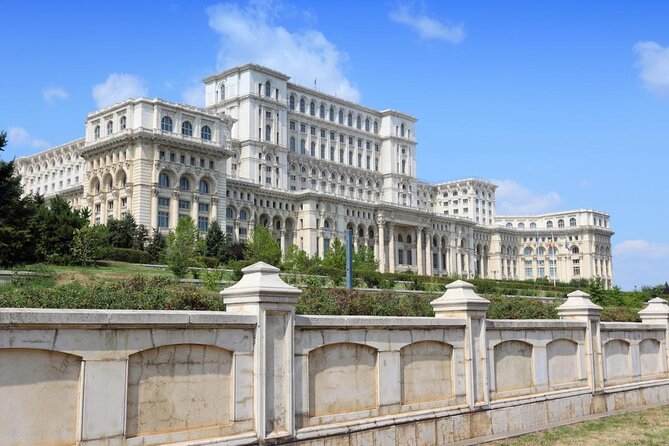
The tour begins at Unirii Square, where you get a broad view along Unirii Boulevard toward the Palace of Parliament. The boulevard is often compared with the Champs-Elysees, an idea that gives you a sense of its scale and ambition.
The Palace of Parliament is one of Bucharest’s defining sights. It is described as the second-largest administrative building in the world, and the opening view helps you understand the size of the Communist building project. The tour does not include admission, so this stop is mainly about seeing the building from outside and hearing how it fits into the city’s modern history.
This is a good opening because the building immediately raises questions. Why was something so enormous built here? What did the project mean for ordinary Romanians? How did Ceausescu’s government reshape Bucharest to serve its political image? Your guide can provide the background before you reach the more intimate streets of the Old Town.
Allow about 15 minutes here. The word panoramic matters. You are looking at the boulevard and the Parliament from a broad urban viewpoint, not touring the interior. If the building is high on your list, plan a separate visit and check its own entry arrangements.
Manuc’s Inn and medieval Old Town
From Unirii Square, the route moves toward the medieval Old Town. Today the area is central Bucharest’s busy core, but the tour uses it to show an older layer of the city.
Manuc’s Inn, or Hanul lui Manuc, is one of the key stops. Built as a caravanserai, it was the city’s largest inn and offered a place for merchants and other visitors to stay. Its courtyard form gives you a more human sense of old Bucharest than the huge boulevards around the Palace of Parliament.
The stop lasts about 15 minutes and admission is free. You will pass through an area with plenty of activity, but the guide’s job is to help you see beyond the present-day shops and restaurants. Look at the building as a piece of commercial history. An inn was not simply a hotel. It was a meeting place where trade, news, politics, and travel crossed paths.
This part of the tour is also a useful change of scale. The Palace of Parliament represents central power and monumental planning. Manuc’s Inn represents movement, trade, and everyday urban life. That contrast is one of the route’s strengths.
St. Anthony’s Church and Curtea Veche
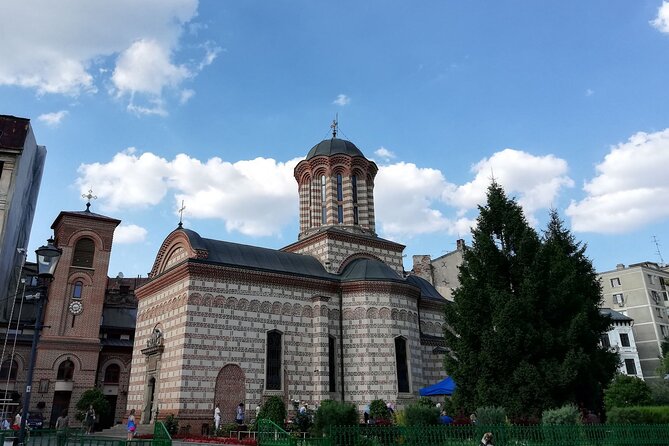
Next comes St. Anthony’s Church, or Biserica Sfantul Anton, beside the ruins of Curtea Veche, the former Royal Court. The church is presented as the oldest in Bucharest, making it one of the most important stops for understanding the city before the modern capital took shape.
The nearby royal court also brings in the connection with Vlad the Impaler, the historical figure linked with the Dracula story. This is a chance to separate the medieval ruler from later fiction. You can hear how the Bucharest area connects to Vlad’s rule without turning the whole stop into a Dracula-themed performance.
The church and court receive about 15 minutes, with free admission listed for both. That time is enough for an introduction, but not a full archaeological or religious study. If you have a strong interest in medieval Romania, you may want to return later and give the area more time.
I like this stop because it keeps the tour from becoming only a parade of grand nineteenth-century buildings. Bucharest’s oldest layers are easy to miss beneath its newer façades. Here, the guide helps you picture the city as a royal and trading center long before the French architectural influence became fashionable.
More walking tours:
- Bucharest: Guided Walking Tour with Romanian Snack
★ 4.9 · 228 reviews - Best of Bucharest | Private Walking Tour
★ 5.0 · 199 reviews - Walking Tour- Delightful Bucharest (Highlights, Stories, Sights)
★ 5.0 · 145 reviews - 4h Bucharest Private Tour (2h by Car and 2h Walking in Old Town)
★ 5.0 · 90 reviews
Stavropoleos Monastery and Orthodox art
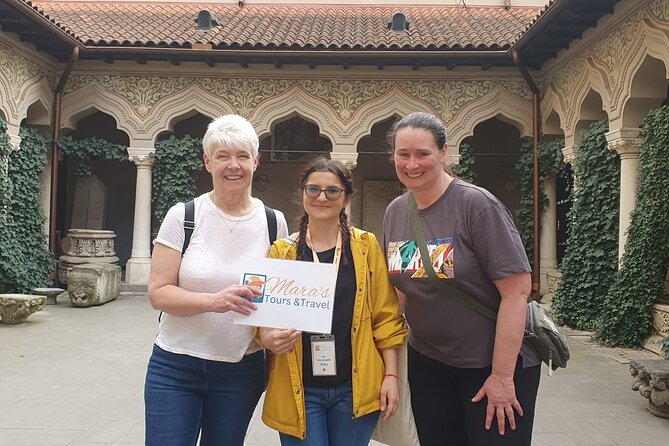
Stavropoleos Monastery is one of the most attractive buildings on the walk. The tour presents it as the finest example of Christian Orthodox art in the Old Town, and the short visit lets you focus on its decoration, courtyard, and quiet atmosphere.
This is a 15-minute stop with free admission. Since it is a functioning religious site, keep your behavior respectful and follow any instructions about entering. The contrast with Lipscani’s commercial streets is part of its appeal. One moment you are in the middle of central Bucharest, and the next you are looking at a compact religious complex with a very different mood.
The guide’s explanation matters here. Ornamental details can blur together when you are moving quickly through a city. A good explanation gives the building a place in Bucharest’s religious and artistic story. Christian Orthodox traditions are not treated as a decorative footnote, but as part of how the city understands itself.
This is also one of the stops that gives the tour visual variety. You have seen a giant administrative building, an old inn, royal ruins, and now a small monastery. The route keeps changing scale, which helps three hours pass quickly.
Lipscani, Calea Victoriei, and Little Paris
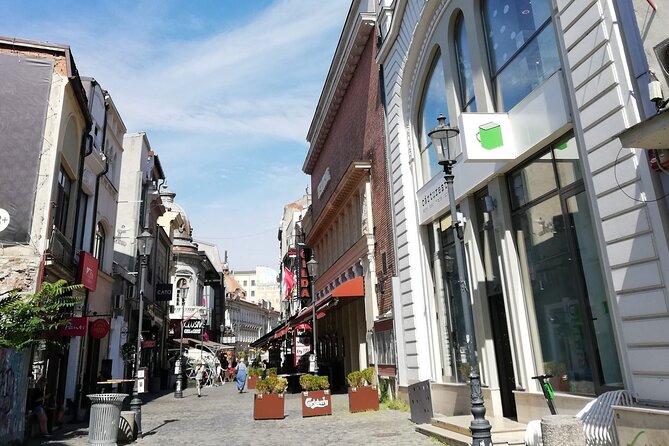
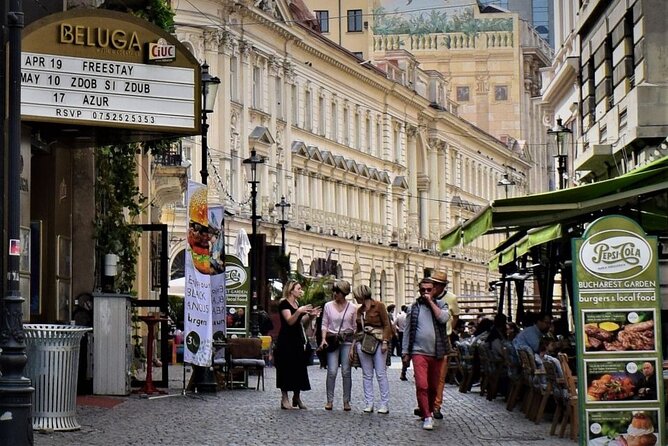
The route then moves into the eighteenth- and nineteenth-century city, especially around Lipscani and Calea Victoriei. Here you look for French-style buildings, narrow passageways, and the architectural details that earned Bucharest its old nickname, Little Paris.
The French influence goes beyond façades. One of the tour’s main themes is how French culture affected Romanian architecture, food, and even language. That wider explanation is more useful than simply pointing out a building and calling it French-inspired. It shows how cultural influence can reach the way a city eats, speaks, and presents itself.
Allow about 30 minutes for this section, the longest single stop on the route. The extra time makes sense because Lipscani is not one isolated monument. It is a collection of streets, buildings, and passageways that you need to read as a district.
The architecture is not uniformly polished. That is part of the experience. Bucharest has a mix of restored façades, worn surfaces, old structures, and newer businesses. I would not come expecting one perfectly preserved historic quarter. Come ready for layers and contrasts.
This is also where a guide can make the biggest difference. Walking alone, you may notice attractive details but miss why French culture became so important to Bucharest’s elite and urban identity. Mara and Elena are praised for making this material lively, adding humor and local perspective without losing the historical thread.
Revolution Square and the fall of Ceausescu
The stop at Revolution Square gives the tour its strongest political focus. You spend about 30 minutes discussing Communist rule, the collapse of Nicolae Ceausescu’s regime, and Romania’s changes after the 1989 revolution.
This is more than a general overview of communism. The location connects the political story to the streets around you. Your guide can explain what the regime meant in daily life and how the final crisis unfolded. The personal element is important here. Elena, in particular, is praised for sharing family experiences and explaining the past with warmth, humor, and pride in Romania’s future.
I would set aside time to listen rather than treat this as a quick photo stop. Romania’s Communist period is central to understanding the Palace of Parliament, the city’s altered boulevards, and the mood of modern Bucharest. Without that context, some of the city’s grandest buildings can look like isolated curiosities.
This stop also gives the tour emotional weight. Medieval churches and French-style architecture are visually appealing, but the recent past still shapes how Bucharest sees itself. The guide’s personal connection can help turn a broad political history into something more understandable.
The Romanian Athenaeum and the tour’s final view
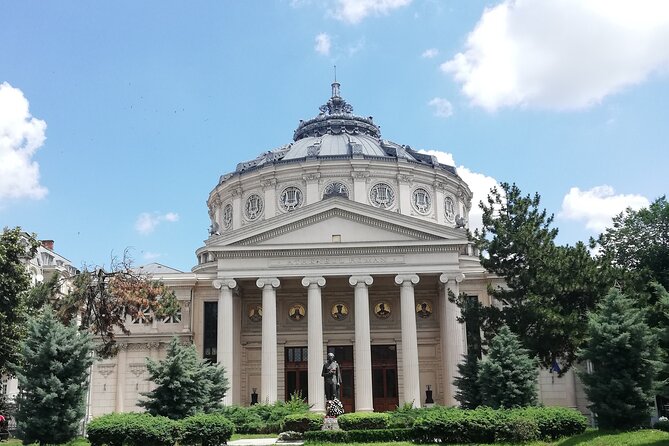
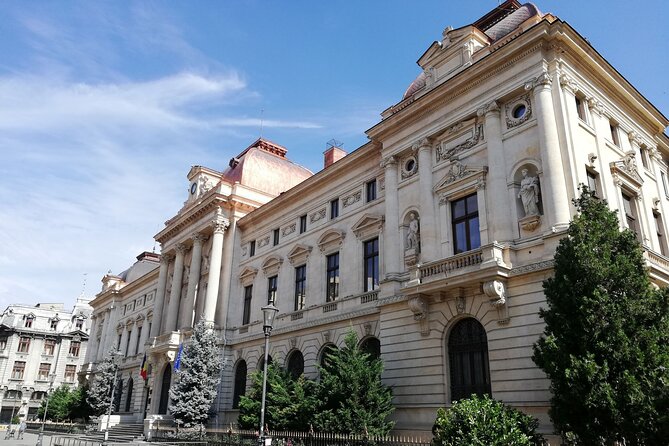
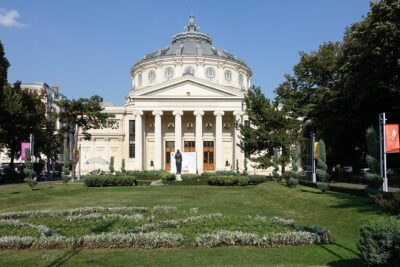
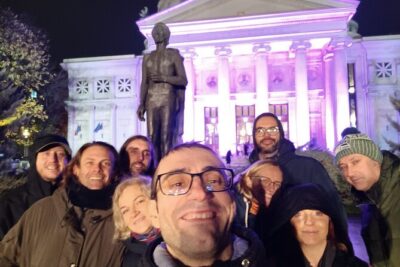
The walk ends in front of the Romanian Athenaeum on Strada Benjamin Franklin. This concert hall is one of Bucharest’s most recognizable buildings and represents the country’s development during the monarchy.
The tour allows about 15 minutes here. Exterior viewing is included, but entry is not. If you want to go inside, admission costs 15 lei, about 3 euros, and the supplied details specify cash only. Bring a small amount of Romanian currency if you want to keep that option open.
Ending here gives the route a satisfying final contrast. You begin with Communist-era monumental planning and finish with a building associated with the monarchy and cultural ambition. Along the way, you have passed through medieval, religious, commercial, and revolutionary chapters.
Some people wished the tour lasted longer, while another group’s three-hour walk extended to about three and a half hours because the guide covered so much of the Old Town. That tells you something useful about the format. The advertised duration is approximately three hours, but the pace may vary with group size, questions, and the guide.
Guides, pace, and group size
The strongest part of this experience is the human interpretation. Mara is repeatedly praised for her passion, clear English, friendliness, and ability to connect Romanian history with local culture. Elena receives similar praise for her wit, warmth, timing, and personal stories.
The walking pace is described as comfortable, with useful breaks along the way. Elena was also praised for being attentive to practical needs such as restroom stops. That matters on a three-hour city walk, especially when the group is moving through busy central streets.
The maximum group size is 10 people. You might find the group is smaller, and some departures have been private-feeling when only two people booked. A smaller group gives you a better chance to ask about food, architecture, communism, Transylvania, or the rest of your Bucharest plans.
The tour is offered in English. Confirmation comes at booking, the meeting point is near public transportation, and service animals are allowed. Most people can participate, but you should be comfortable walking for roughly three hours with repeated stops.
Price, snack, and practical value
At $54.31, the price is fair if you want guided context and a small group, but it is not a bargain sightseeing loop. You are not paying for a long list of paid admissions. Most of the places are viewed freely, and the Palace of Parliament and Athenaeum entry fees are separate.
The included traditional Romanian snack is a pleasant extra. It is not a food tour, and you should not book this experience expecting a full meal or several tastings. Instead, the snack adds a brief local touch during a history-focused walk.
I see the best value in the route and the guide. You cover major central sights without arranging separate transport, and you get explanations that connect architecture with politics, religion, food, and language. If you prefer to explore silently at your own pace, $54.31 may feel high. If you have limited time or want a clear introduction, it is easier to justify.
Free cancellation is available until 24 hours before the start time. The experience depends on suitable weather and a minimum number of participants. If poor weather or low enrollment cancels it, you are offered another date or experience, or a full refund.
Who should book this Bucharest walk?
I would choose this tour for a first visit, a short stay, or an arrival day when you want to understand central Bucharest quickly. It suits people who enjoy history, architecture, and candid discussion about the Communist period.
It is also a good match if you prefer a small group and want to ask questions. The guides’ personal stories make the experience more than a list of dates and building names.
I would be more cautious if you want extensive interior visits, a food-centered outing, or a completely relaxed stroll. The tour covers a lot of ground and many stops are brief. You will see the outside of several major sights, then decide which ones deserve a separate visit.
Should you book it?
Yes, if you want an informed first look at Bucharest in a compact format. The combination of Old Town landmarks, French-style architecture, Orthodox art, the 1989 Revolution, and the Romanian Athenaeum gives you a useful picture of the city’s changing identity.
Before booking, remember three things: the walking time is about three hours, the Palace of Parliament is not included inside, and the Athenaeum costs 15 lei cash if you choose to enter. Bring comfortable shoes and a little local currency. If Mara or Elena is leading your departure, you can expect a warm, personal, history-focused introduction to Bucharest.
FAQ
How long is the Bucharest walking tour?
The tour lasts approximately three hours, though the exact length can vary. One departure lasted about three and a half hours because the guide covered much of the Old Town.
What language is the tour offered in?
The tour is offered in English.
Where does the tour start?
It starts at One Sip, located at C4G3+HQ in Bucharest, near Unirii Square.
Where does the tour end?
The tour ends in front of the Romanian Athenaeum at Strada Benjamin Franklin 1-3, București 010287.
Is the Romanian Athenaeum entrance included?
No. Entry costs 15 lei, about 3 euros, and cash is required.
Is the Palace of Parliament entrance included?
No. The Palace of Parliament stop provides a panoramic exterior view, but admission is not included.
What is included in the tour price?
One traditional Romanian snack is included. Guide gratuities and the Romanian Athenaeum entrance are not included.
What happens if the tour is canceled?
If you cancel at least 24 hours before the start time, you can receive a full refund. If the tour is canceled because of poor weather or because the minimum number of participants is not reached, you are offered a different date or experience, or a full refund.
Just added around Bucharest
- 10 hours Private Apiary Tour in Romania – From Bucharest★ 5.0 · 3 reviews
- 4-Day Inside Transylvania & Transfagarasan Tour from Bucharest★ 5.0 · 3 reviews
- Bucharest: Charm of the Belle Époque Private Tour★ 5.0 · 3 reviews
- Bran & Peles Castles through the Best Road in the World: Transfagarasan road★ 4.5 · 3 reviews
- 2-Day Small-Group Tour in Transylvania from Bucharest – Maximum 5 Persons★ 5.0 · 3 reviews
- Private Wine Tasting at Bucharest’s First Wine Bar★ 5.0 · 3 reviews
- Bucharest to Brasov – Fast Private Transfer★ 5.0 · 3 reviews
- Probably the Best Restaurant and Wine Cellar near Bucharest★ 4.5 · 3 reviews
Walking Tours, compared.

Ghost Stories & Romanian Mythology Walking Tour
Read our review →
Walking Tour- Delightful Bucharest (Highlights, Stories, Sights)
Read our review →
Browse the lists this tour appears in