
Reviewed · MARAMURES TOURS
CJ04 -Maramureș Adventure:Tradition, Folk Art &Scenic Beauty
Maramureș keeps its old ways in plain sight. This long day from Cluj takes you to wooden churches, mountain roads, old mining country, and the unforgettable Merry Cemetery of Săpânța. I like the strong mix of folk art and serious history, especially the 18th-century church at Șurdești and the prison memorial in Sighetu Marmației.
I also like the small group format, with no more than nine people, and the chance to travel with guides such as Andrei or Attila, who have been praised for their driving, regional knowledge, and easy conversation. The main drawback is the road time. You cover a large part of northern Romania in one day, so the balance leans toward seeing many places rather than spending long, slow hours at each one.
- Șurdești’s 54-meter wooden tower is one of the highest wooden church structures in Europe.
- Săpânța’s painted crosses use humor, color, and folk art to remember the dead.
- Gutin Pass adds a scenic mountain crossing between Baia Mare and Sighetu Marmației.
- Sighet Prison Memorial gives the day a sober political and human dimension.
- Baia Mare offers a quick look at Maramureș’s regional capital and mining past.
- Transport and guiding are covered in a small group of up to nine people.
In This Review
- Why This Maramureș Day Trip Matters
- Baia Mare: A First Look at Maramureș’s Regional Capital
- Șurdești and the Tall Wooden Church
- Crossing Gutin Pass by Road
- Sighetu Marmației and the Former Prison
- Săpânța’s Merry Cemetery and Its Painted Crosses
- The Return to Cluj and the Optional Church Stop
- Small Group Transport and Guide Quality
- Who Will Get the Most From This Day
- Should You Book the Maramureș Adventure?
- FAQ
- Where does the tour start?
- How long does the experience last?
- What places are included on the route?
- Is the Wooden Church of Șurdești included?
- Is the Merry Cemetery of Săpânța included?
- What is included in the price?
- How many people are in the group?
- What should I bring?
Why This Maramureș Day Trip Matters
Maramureș is one of the best parts of Romania for seeing living traditions rather than only museum displays. Woodworking, church building, painted crosses, and village customs remain central to the region’s identity. This trip gives you several ways to understand that culture in a single day.
The route begins and ends in Cluj-Napoca, with pickup at 8:00 in the morning from KFC at Piața Unirii. From there, you travel north toward Baia Mare, then continue through Șurdești, over Gutin Pass, and onward to Sighetu Marmației and Săpânța before returning to Cluj.
The price is $182 per person. That is not a cheap day out, but it covers a modern air-conditioned car or van, an English-speaking guide, parking charges, road taxes, and a small group. For you, the value depends on how much you would otherwise spend arranging transport into a remote northern region. A rental car would give you more control, but this route involves a great deal of driving and several separate stops. The guide also adds useful context at places where the visual details alone may not explain the full story.
Baia Mare: A First Look at Maramureș’s Regional Capital
Baia Mare is the first major stop. It is the capital of Maramureș County and has a strong connection to mining, which gives the city a different character from the timber villages later in the day.
The Old Town, or Centru Vechi, is the natural place to get your bearings. You may also see the Baia Mare Art Museum and the Maramureș Village Museum, depending on the time allowed by the day’s schedule. These attractions point to two sides of the region: formal art and the practical rural culture that shapes Maramureș.
Do not expect a long, relaxed city visit. The day has a wide route to cover, so Baia Mare functions more as an introduction than a full city tour. I would treat this stop as a useful preview of the area, not the main reason to book.
That arrangement works well if you want to reach the villages and Săpânța. If you are mainly interested in Baia Mare’s museums, you would need a separate visit with more time.
More Maramures trips:
- Maramures best, full day tour from Cluj
★ 5.0 · 33 reviews - From Cluj-Napoca: Maramures Day Tour
★ 5.0 · 19 reviews - Two days tour to Maramures: local experiences and culture
★ 5.0 · 9 reviews
Șurdești and the Tall Wooden Church
The Wooden Church of Șurdești is the day’s clearest example of Maramureș craftsmanship. Built in 1766, it is part of the UNESCO World Heritage group of wooden churches in the region.
The first detail you notice is the tower. At 54 meters, its spire is one of the highest wooden structures in Europe. The height is not just for show. It reflects the skill of local builders, who created tall, stable structures from timber without the methods used in modern construction.
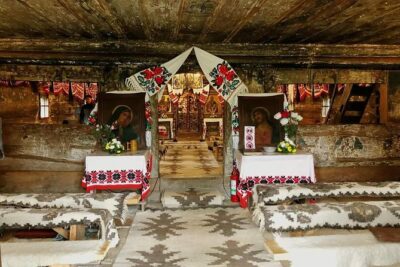
Look closely at the joinery and hand-carved decorations. The church shows how practical woodworking became religious art. The structure is simple in material but highly detailed in execution, with a strong vertical shape that draws your eye upward.
Inside, the 18th-century frescoes depict biblical scenes in bright colors. The church remains active for local worship, which gives the visit more meaning than a stop at an empty historic building. You are seeing a place that still belongs to its community.
Your guide can help explain the church’s religious role and the design features that might otherwise pass quickly. Andrei and Attila have been praised for clear explanations and a friendly manner, useful qualities on a day when the region’s customs and religious traditions may be unfamiliar.
This is a stop for people who enjoy buildings, handwork, and quiet detail. It is less about a large collection of objects and more about understanding how one wooden structure carries local faith, art, and construction skill.
Crossing Gutin Pass by Road
After Șurdești, the route crosses Gutin Pass toward Sighetu Marmației. This is one of the parts of the day when the transport itself becomes part of the experience.
You get changing views of the Carpathians from the road, with the small vehicle making the mountain crossing more personal than a large coach. The pass also helps you understand the region’s geography. Maramureș is not a compact sightseeing zone where every stop is a few minutes apart. Mountains shape the roads, the settlements, and the time needed to connect them.
The long drive is also the chief tradeoff. One Italian participant described the ratio of driving hours to visiting hours as the only real weakness, while also finding the crossing worthwhile. That is a fair way to see it. You should book this as a full regional survey, not a slow village walk with lots of free time.
Bring water, wear comfortable shoes, and dress for the weather. A sun hat and sunscreen are useful in warmer months, while weather-appropriate layers help when conditions change in the mountains. Keep some cash with you, along with a credit card.
Sighetu Marmației and the Former Prison
Sighetu Marmației brings a darker chapter into the day. The town is home to the Memorial to the Victims of Communism and to the Resistance, located in the former Sighet Prison.
The prison was used to hold political prisoners during Romania’s communist period. Today, the memorial presents the story of resistance and repression inside the old prison setting. The subject is difficult, but it gives necessary context to Romania’s 20th-century past.
This visit changes the mood of the day. Șurdești celebrates traditional faith and woodworking. Săpânța turns memory into colorful folk art. Sighet asks you to confront the cost of political control and the people who resisted it.
You may find this stop more demanding than the cheerful painted crosses later in the route. That contrast is one of the trip’s strengths. Maramureș is not presented as a postcard region with only pleasant customs. You see celebration, belief, death, and political suffering within the same cultural journey.
If you prefer a light sightseeing day with no serious museum content, take note of this stop. If you want a fuller understanding of Romania, it is one of the most valuable parts of the route.
A few more trips worth weighing up before you book
- Curly Tour – Day trip from Cluj 🙂
★ 5.0 · 330 reviews - Cluj: Turda Salt Mine, Corvin Castle, Alba Carolina Tour
★ 4.8 · 184 reviews - Cluj-Napoca: 2.5-Hour Guided Walking Tour
★ 4.8 · 104 reviews - From Cluj: Turda Salt Mine, Gorge, and Remetea Full-Day Trip
★ 5.0 · 84 reviews
Săpânța’s Merry Cemetery and Its Painted Crosses
The Merry Cemetery of Săpânța is unlike almost any cemetery you have seen. Instead of using only solemn stone markers, the cemetery is filled with brightly painted wooden crosses, often in blue, red, green, and yellow.
The crosses show scenes from the lives of the people buried there. Their epitaphs can be humorous, poetic, or sharply observant. Death is remembered through personal stories and folk art rather than silence alone.
The humor does not make the place careless. It offers another way to face mortality, one that keeps personality and ordinary life in view. The painted scenes may show work, family, habits, or defining moments. Each cross becomes a small biography in wood and color.
Look for the grave of Stan Ioan Pătraș, the local woodcarver who began the tradition. His work shaped the style that made Săpânța famous, and his own grave helps you understand the source of the cemetery’s visual language.
I like this stop because it rewards curiosity. You do not need to know every Romanian word to appreciate the colors and carved scenes, but the guide can help explain the meaning and local customs. The visit also connects directly with the woodworking tradition seen at Șurdești.
Give yourself time to look closely, even if the schedule is tight. The cemetery is not a place to rush through while taking one photograph. The details are the point.
The Return to Cluj and the Optional Church Stop
After Săpânța, you return to Cluj-Napoca by road. If time permits, the route may include the Wooden Church of Bogdan Vodă.
Because this extra stop depends on available time, you should not treat it as guaranteed. The day already includes a substantial distance, so traffic, road conditions, and the pace at earlier sites can affect the return journey.
That uncertainty is understandable, but it also shows why the trip works best for flexible people. You get a broad look at the region rather than a minute-by-minute promise of equal time at every location.
Small Group Transport and Guide Quality
The group is limited to nine participants. That matters on a road-heavy tour. A small car or van can use roads and stopping points more easily than a large bus, and you can usually hear the guide without fighting the noise of a crowd.
Transport is provided in a modern air-conditioned car or van. Parking charges and road taxes are included, which keeps the listed price closer to the real cost of the day. You also receive a map of Romania, a small but useful addition if you want to place the region in the wider country.
The guides are an important part of the experience. Andrei has been praised for being kind, a good driver, and well informed about the places visited. Attila has been praised for his knowledge of regional history, ethnography, and religion. Those subjects matter here because the best parts of Maramureș are not always obvious from the road.
The guide’s role is especially useful at the church and cemetery. You can see the timber, frescoes, crosses, and mountain roads on your own. The explanations help connect those sights to local belief, craft, and memory.
Who Will Get the Most From This Day
I would choose this trip if you want to see a distinctive part of Romania without arranging several separate journeys. It suits you if you enjoy folk art, historic buildings, religious sites, political history, and scenic road travel.
It also works well for first-time visitors based in Cluj who want one major excursion beyond Transylvania’s better-known routes. The mix of stops keeps the day varied, though the schedule may feel full.
You should think twice if you dislike long drives or need generous free time at every stop. The route covers Baia Mare, Șurdești, Gutin Pass, Sighetu Marmației, Săpânța, and possibly Bogdan Vodă before returning to Cluj. That is a lot for one day.
The experience is not suitable for wheelchair users, and it is not designed for people over 95. Alcohol and drugs are not allowed. Comfortable shoes are important, since the day includes visits to outdoor and historic sites.
Free cancellation is available up to 24 hours before departure, and you can reserve now while paying later. Those terms help if your Cluj plans are still moving, but the main decision is still the pace of the route.
Should You Book the Maramureș Adventure?
Book it if you want maximum regional variety in one day and accept that some of your time will be spent on the road. The Wooden Church of Șurdești and the Merry Cemetery of Săpânța are the strongest reasons to go, while Sighet Prison adds serious historical weight.
At $182, the trip offers reasonable value for a small group when you include transport, an English-speaking guide, parking, road taxes, and the difficulty of reaching these places independently. I would not choose it for a restful day, a deep visit to Baia Mare, or a slow village stay.
I would choose it for the chance to see how Maramureș remembers its people, builds its churches, and preserves its customs. If Andrei or Attila is guiding your departure, you can also expect the kind of regional explanation that turns a long drive into part of the learning.
FAQ
Where does the tour start?
The tour starts in Cluj-Napoca at KFC in Piața Unirii, with departure at 8:00.
How long does the experience last?
It lasts one day, beginning and ending in Cluj-Napoca.
What places are included on the route?
The route goes from Cluj to Baia Mare, Șurdești, Gutin Pass, Sighetu Marmației, and Săpânța before returning to Cluj.
Is the Wooden Church of Șurdești included?
Yes. The tour visits the UNESCO World Heritage wooden church at Șurdești.
Is the Merry Cemetery of Săpânța included?
Yes. Săpânța’s colorful wooden crosses and folk-style epitaphs are part of the day.
What is included in the price?
Transport in a modern air-conditioned car or van, an English-speaking specialized guide, parking taxes, road taxes, and a map of Romania are included.
How many people are in the group?
The group is limited to nine participants.
What should I bring?
Bring comfortable shoes, a sun hat, sunscreen, water, cash, a credit card, and clothing suited to the weather.
Just added around Cluj Napoca
- Two days tour to Bucovina & UNESCO Painted Monasteries★ 5.0 · 3 reviews
- Cluj – walking city tour★ 5.0 · 3 reviews
- Transylvania’s Trail: Sibiu, Bran Castle, Brasov, Sighisoara★ 4.6 · 3 reviews
- CJ05 – Mysteries of Transylvania: Bran Castle & Sighisoara★ 4.8 · 3 reviews
- Sighisoara, UNESCO & wine tasting (1 day, from Cluj)★ 5.0 · 4 reviews
- CJ01 – Explore Cluj-Napoca: A Vibrant City Tour in English★ 5.0 · 4 reviews
- 3 Day Tour of Maramures★ 5.0 · 4 reviews
- Sighisoara & wine tasting (from Cluj)★ 5.0 · 4 reviews
Maramures Tours, compared.

Classic Romania Tour – small group in 8 days: Transylvania and Maramures
Read our review →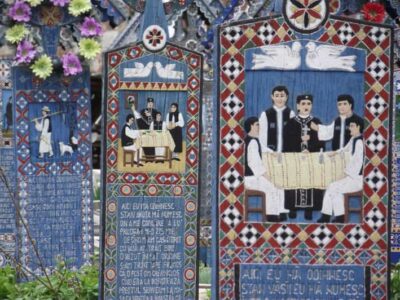
Two days tour to Maramures: local experiences and culture
Read our review →
A Journey Back in Time: Countryside from Transylvania and Maramures – 15 Days
Read our review →
Your rendez-vous with Europe’s past: time-travel to Maramures, Transylvania
Read our review →Browse the lists this tour appears in