
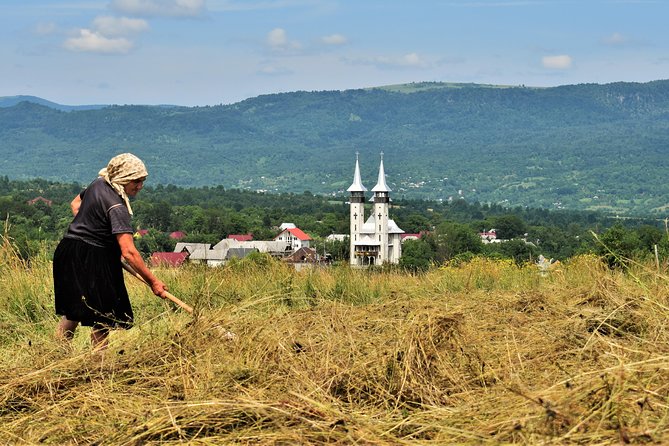
Reviewed · MARAMURES TOURS
A Journey Back in Time: Countryside from Transylvania and Maramures – 15 Days
Romania rewards the curious. This private journey moves beyond Bucharest and Dracula headlines into Saxon villages, wooden churches, old fortresses, mountain roads, and family-run village stays. I especially like the personal format and the chance to sleep in traditional homes in Fundățica, Viscri, Malancrav, Breb, and Rimetea. The main drawback is the pace: fourteen listed touring days, marketed as fifteen, with long drives and many stops. You need stamina, flexible expectations, and a taste for rural Romania.
I also like that George handles the driving, guiding, and day-to-day adjustments. The supplied feedback repeatedly praises his care, driving skills, Romanian history knowledge, and willingness to tailor the trip. This is not a quick highlights tour. It is a broad, slow-moving look at a country where old customs still shape daily life.
In This Review
- Key things to know before booking
- Why this route feels different from a standard Romania tour
- Bucharest to Peles Castle and Fundățica
- Bran, Râșnov, and the bears of Zărnești
- Viscri and the Saxon villages of southern Transylvania
- Biertan, Valea Viilor, and Alma Vii
- Cluj-Napoca and the first taste of Maramureș
- Merry Cemetery, Desesti, and Barsana
- The steam train and a quiet day in Breb
- Rimetea, Alba Iulia, Corvin Castle, and Sibiu
- The Transfăgărășan and Curtea de Argeș
- Price, meals, transport, and practical value
- Who should book this Romanian journey?
- Should you book it?
- FAQ
- How long is the tour?
- Where does the tour start?
- Is this a private tour?
- What meals are included?
- When can the Transfăgărășan Highway be traveled by car?
- Are entrance fees included?
Key things to know before booking
- Traditional village stays are the heart of the trip: You spend nights in rural Saxon and Maramures communities rather than using cities as your only base.
- The tour covers a huge part of Romania: Bucharest, southern Transylvania, Sighișoara, Cluj-Napoca, Maramureș, Rimetea, Alba Iulia, Sibiu, and the Transfăgărășan all appear.
- George is guide, driver, and trip fixer: His ability to adjust plans is a major benefit on a long private journey.
- The Transfăgărășan depends on the season: From July 1 through October 31, the road is scheduled by car. At other times, the plan uses a cable car for mountain views.
- Most meals and transport are covered: Breakfast is included throughout, along with twelve dinners, private transfers, and air-conditioned transport.
- The price buys convenience and access: At $4,585.57 per person, this is costly, but it bundles guiding, transport, accommodation, entrance fees, and hard-to-arrange rural connections.
Why this route feels different from a standard Romania tour
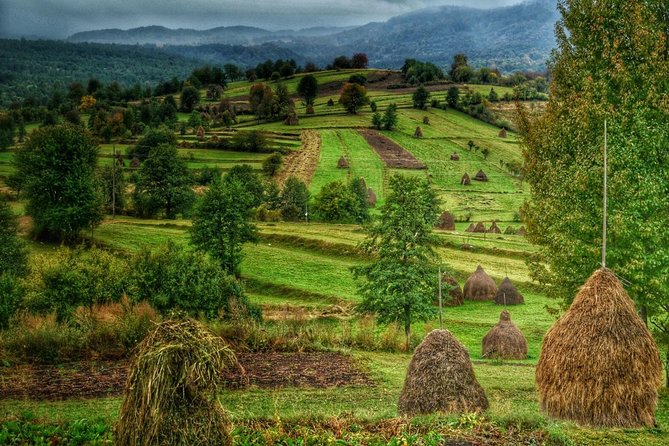
A typical first visit to Romania may focus on Bucharest, Bran Castle, Sighișoara, and a few major churches. This trip includes those familiar names, but it spends more time in places where the main attraction is the village itself.
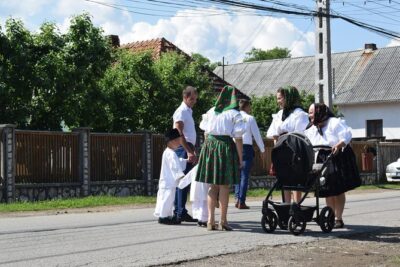
That matters. In Viscri, you walk a Saxon settlement and eat traditional food. In Malancrav, you stay in an old Saxon house. In Breb, you have four nights to walk, meet local people, and slow down. The schedule gives rural Romania room to breathe, even though some individual days involve long road journeys.
The private format makes a big difference. You are not waiting for a large group at every church gate or forcing every meal into a fixed timetable. George can adjust the experience to your interests, a point that comes through strongly in the feedback. One parent and daughter used the trip to follow their Romanian roots, while another private group added winery visits to its own version of the route.
The tradeoff is that private touring puts you in the vehicle for many hours. You cover a lot of ground, and the route is ambitious. If you want a gentle holiday with long afternoons beside a hotel pool, this is the wrong tool. If you want to connect many scattered parts of Romania without handling the roads yourself, the arrangement makes sense.
More Maramures trips:
Bucharest to Peles Castle and Fundățica
The opening walking tour gives you three hours to see Bucharest’s main sights. It is a useful start, but not the main focus of the holiday. You will get your first orientation to Romania’s capital before the route heads toward the Carpathians.
Peles Palace in Sinaia is a strong early stop. The former summer residence of Romania’s royal family has the kind of ornate interiors and mountain setting that make a guided visit worthwhile. Two hours gives you enough time to appreciate the palace without allowing one building to swallow the day.
Then the mood changes in Fundățica. You spend two nights in one of Romania’s most scenic mountain villages, surrounded by highland views and a quieter rural rhythm. The eight-hour allocation on the itinerary includes the journey and village time, so do not read it as eight hours of formal sightseeing.
This is one of the first points where the tour’s priorities become clear. You are not simply collecting monuments. You are sleeping in places where the setting, local food, and old houses are part of the experience.
Bran, Râșnov, and the bears of Zărnești
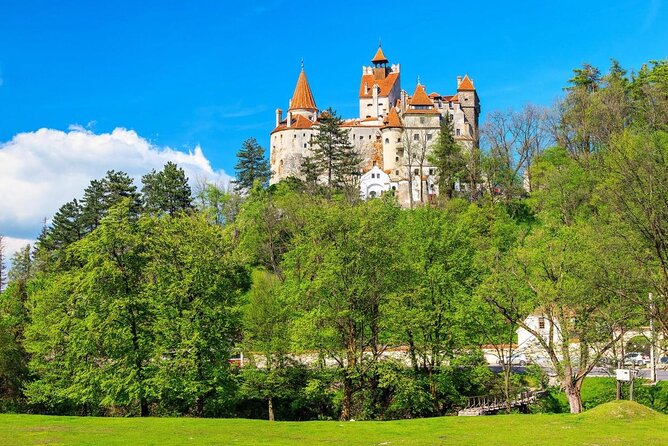
Bran Castle gets one hour, enough for a focused visit but not an unhurried examination of every room. The guide’s role is especially useful here because the castle’s connection with Dracula is a mixture of fiction, tourism, and real Romanian history. The tour promises to separate legend from fact and explain the actual story behind the castle.
Râșnov Citadel follows with another one-hour stop. This roughly 800-year-old fortress offers a different lesson from Bran. Instead of royal interiors and literary fame, you get a defensive stronghold and broad views from an old hilltop site.
The Libearty Bear Sanctuary in Zărnești adds a change of subject. Around eighty bears live in a forested sanctuary, and the visit lasts about two hours. It is a worthwhile inclusion for anyone interested in animal welfare and nature. It also keeps this day from becoming a parade of stone walls.
The schedule is full, though. Bran, Râșnov, and the sanctuary each deserve attention, and the three together create a busy day. You will get more from it if you accept that each stop is an introduction rather than an exhaustive visit.
Viscri and the Saxon villages of southern Transylvania
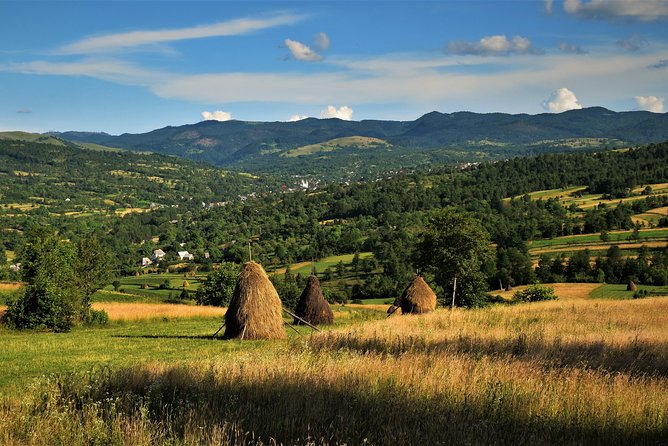
Viscri is one of the trip’s strongest rural stops. You spend one night in the Saxon village, walk its streets, visit the fortified church, and eat traditional food. The village is associated with Charles, Prince of Wales, which has helped put it on the map, but its value does not depend on royal interest.
The fortified church is the key sight. These churches were not only places of worship. They also served as defensive centers for Saxon communities. In Viscri, the village setting helps you understand that the church was part of a working settlement, not an isolated museum piece.
Sighișoara brings you back to a more famous historic center. Its inhabited medieval citadel is a UNESCO World Heritage site, and three hours gives you time to walk its lanes and absorb the old-town atmosphere. This is one of the easiest places on the route to feel transported into another era, though its fame means it will feel less remote than Viscri or Alma Vii.
You then spend two nights in Malancrav, using a traditional old Saxon house as accommodation. That choice is more meaningful than a quick photo stop. You have time to notice the village at different hours, eat local food, and visit the 700-year-old fortified church without rushing through it.
More Transylvania trips:
- Transylvania and Dracula Castle Full Day Tour from Bucharest
★ 4.5 · 1,589 reviews - Castles of Transylvania: Private Day Trip from Bucharest
★ 4.5 · 248 reviews - 2-Day Medieval Transylvania with Brasov,Sibiu and Sighisoara Tour from Bucharest
★ 4.5 · 145 reviews - 2-Day Transylvania from Bucharest: Brasov, Bran, Sighisoara
★ 5.0 · 60 reviews
Biertan, Valea Viilor, and Alma Vii
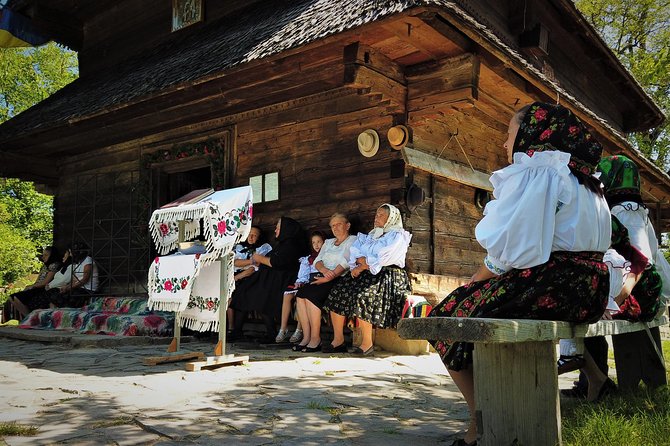
Day six is a concentrated look at Saxon church architecture. Biertan’s fortified church is a UNESCO World Heritage site, and the visit lasts about an hour. Valea Viilor, another UNESCO-listed fortified church, follows for forty-five minutes.
These stops are close enough in theme to make the route educational, but you may find the repeated church visits tiring if religious architecture is not your interest. The advantage of a private tour is that you can discuss the details with George and ask for more context rather than simply moving along with a crowd.
Alma Vii is the quieter finish. You spend two hours in this remote Saxon village and have a traditional lunch. This is exactly the sort of stop that independent visitors can miss, not because it is impossible to reach, but because it takes planning and local connections.
The meal and village walk give the day a human scale. After several major fortified sites, Alma Vii reminds you that the real subject is community life, not just buildings.
Cluj-Napoca and the first taste of Maramureș
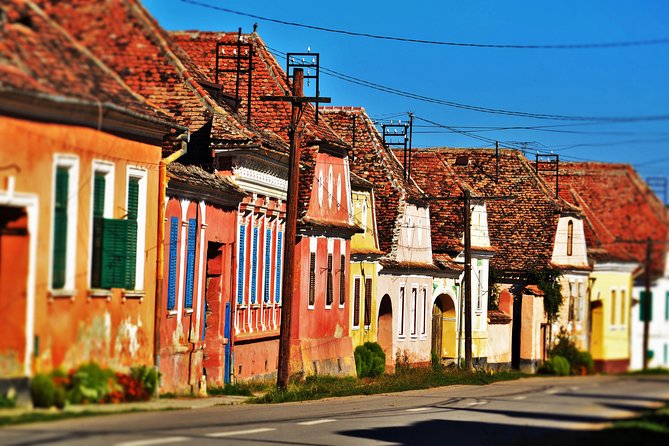
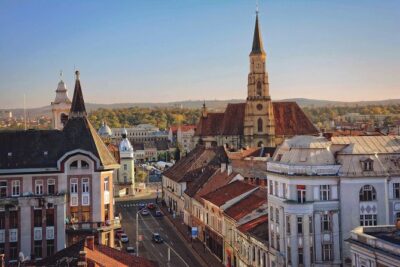
The route pauses in Cluj-Napoca, the largest city in Transylvania, for a two-hour walking tour. Cluj offers a useful urban contrast after several days of villages and fortified churches. You will see the region’s modern city life before heading into Maramureș.
The Surdești wooden church is a brief but memorable stop. It is described as one of the tallest wooden churches in the world and one of the first Maramureș wooden churches on the route. The visit lasts forty-five minutes, so the emphasis is on seeing the structure and learning its place in local tradition.
Breb becomes your base for the next four nights. That is one of the wisest choices in the program. Four nights reduce the strain of constant packing and give you time to walk the village, meet local people, and eat regional food.
Breb is not presented as a single monument. Its appeal lies in the old village setting and the chance to observe daily life. You might find the slower pace refreshing after the driving days. You might also find it too quiet if you need a packed schedule every hour.
Merry Cemetery, Desesti, and Barsana
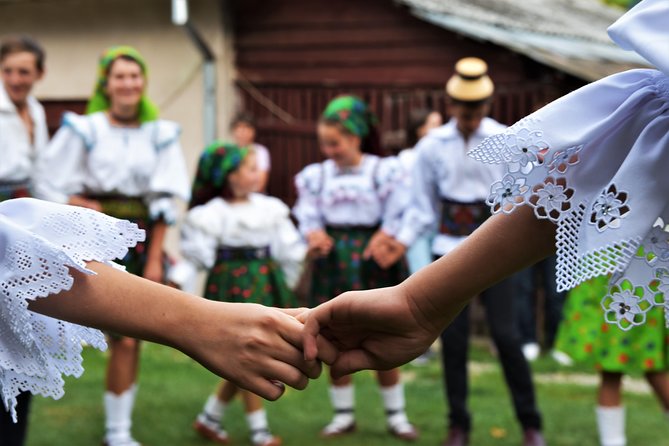
The Merry Cemetery in Săpânța offers a distinctive view of death through brightly painted grave markers and carved scenes. The visit lasts about thirty minutes, so it is a compact stop, but the subject gives the day a memorable point of difference.
Desesti’s wooden church is described as the best-preserved wooden church in Maramureș. The building is about 250 years old and sits in a beautiful cemetery. You get forty-five minutes here, enough for a close look and a short explanation.
Barsana Monastery adds an Orthodox dimension to the route. It is one of Romania’s best-known monasteries, and the visit lasts around forty-five minutes. Together, these three stops show how Maramureș expresses belief through wood, color, carving, and cemetery art.
The day is not physically demanding in the same way as a castle climb, but it is visually dense. Take time to notice the workmanship. The short visits can feel too brief if you want to study every detail.
The steam train and a quiet day in Breb
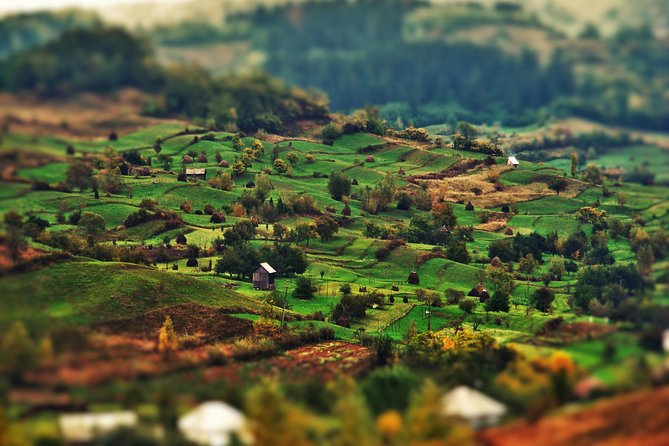
The Mocănița Maramureș is the trip’s most playful outing. You ride an old train pulled by steam locomotives for about six hours. It is a full excursion, not a quick heritage display, and the slower pace lets you see a different side of the region.
Steam rail travel can become a tourist attraction without much connection to local life. Here, it fits the wider route because Maramureș is already being presented through older ways of building, farming, worship, and travel.
The following day is intentionally open. You can walk Breb, explore at an easy pace, and enjoy the village without a checklist. This is important on a fifteen-day journey. A rest day does not mean there is nothing to see. It gives you time to process the churches, meals, roads, and conversations that come before it.
Rimetea, Alba Iulia, Corvin Castle, and Sibiu
Rimetea is reached after another long driving day. The village is known as one of Romania’s most beautiful, and you spend one night there. The ethnographic museum adds context to the houses, customs, and objects of the area, with about forty-five minutes set aside for the visit.
The next day packs in three major destinations. Alba Iulia Citadel is described as Romania’s most important historical site, and the two-hour visit gives you room for a proper introduction. Its significance is national as well as architectural, so this is a good place to ask George to connect the site to Romania’s wider past.
Corvin Castle is the most dramatic castle of the trip. Built in the 1400s, it is presented as Romania’s largest Gothic castle. You have one hour inside, which should be enough for a strong first impression but may leave you wishing for longer.
Sibiu finishes the day with a one-hour walking tour of its medieval center. That is a short city visit after Alba Iulia and Corvin Castle, but Sibiu works well as a final urban counterpoint to the village sections.
The Transfăgărășan and Curtea de Argeș
The Transfăgărășan gets six hours, making it one of the route’s major scenic days. The road is scheduled for car travel from July 1 through October 31. Outside that period, the plan uses a cable car for mountain views instead.
You should verify the road and cable car arrangement before booking, since mountain access is seasonal and conditions can change. The route description also gives a slightly different end date in one place, so exact timing deserves confirmation.
This day is about mountain views and the road itself rather than a series of formal attractions. George’s driving ability matters here. One person specifically praised his driving, and on a long mountain route that is more than a polite compliment.
The final stop is Curtea de Argeș Monastery, about 500 years old and described as one of Romania’s most beautiful Orthodox churches. The forty-five-minute visit offers a fitting close before the return to Bucharest.
Price, meals, transport, and practical value
At $4,585.57 per person, this is not a budget tour. The value comes from what is bundled: a private vehicle, driver and guide, hotel pickup and drop-off, entrance fees at many major sights, breakfast each day, and twelve dinners.
Traditional village accommodation is another part of the price. You are paying for access and planning in places where arranging rooms, meals, and transport independently could take real effort. A private tour also avoids the cost of hiring separate transfers between scattered regions.
The package does not include photo fees. Some sights are closed on Mondays and public holidays, so your dates may affect the order or availability of certain visits. Confirmation is subject to availability, and at least two people are required per booking.
The cancellation terms are strict: the experience is non-refundable and cannot be changed for any reason. That makes travel insurance and careful date planning sensible, though the supplied information does not specify insurance terms.
Who should book this Romanian journey?
I would recommend it to couples, families, and small groups who want one guide to manage a complicated route. It suits you especially well if you value village life, regional food, churches, castles, and historical explanation more than nightlife or luxury resorts.
It is also a strong fit for anyone exploring family roots. The private structure allows the trip to be adjusted, and George has already handled root-focused travel and special additions such as winery visits.
I would hesitate if you dislike long drives, rustic accommodation, repeated church visits, or a fixed fourteen to fifteen-day commitment. The itinerary is packed, and the rural stays may feel simple compared with city hotels. The trip is also expensive for solo visitors, since a minimum of two people is required.
Should you book it?
Book this tour if you want Romania in full color: royal palaces, medieval citadels, Saxon villages, Orthodox monasteries, wooden churches, steam trains, and mountain roads. Its strongest feature is not one famous castle. It is the way George connects many hard-to-reach places into one private journey and adjusts the experience around your interests.
Before paying, confirm the exact duration, accommodation details, Transfăgărășan dates, and Monday closures. If those points suit you, the price can be fair for the amount of transport, guiding, food, and planning included. You will return with a much broader sense of Romania than a short Dracula-themed break can provide.
FAQ
How long is the tour?
It is marketed as a 15-day tour, while the listed schedule runs from Day 1 through Day 14. Confirm the exact number of nights and touring days before booking.
Where does the tour start?
The tour starts in Bucharest, with pickup offered. The listed start time is 9:00 am.
Is this a private tour?
Yes. Only your own group participates, and a minimum of two people is required per booking.
What meals are included?
Breakfast is included throughout the tour, listed as fifteen breakfasts. Twelve dinners are also included.
When can the Transfăgărășan Highway be traveled by car?
The provided information says the road is open for car travel from July 1 through October 31. Outside that period, the tour uses a cable car for mountain views.
Are entrance fees included?
Admission is included for many listed sights, including Peles Castle, Bran Castle, Râșnov Citadel, the bear sanctuary, several fortified churches, the Merry Cemetery, Barsana Monastery, the Mocănița train, Corvin Castle, Alba Iulia Citadel, the Transfăgărășan experience, and Curtea de Argeș Monastery. Photo fees are not included.
Just added around Bucharest
- 10 hours Private Apiary Tour in Romania – From Bucharest★ 5.0 · 3 reviews
- 4-Day Inside Transylvania & Transfagarasan Tour from Bucharest★ 5.0 · 3 reviews
- Bucharest: Charm of the Belle Époque Private Tour★ 5.0 · 3 reviews
- Bran & Peles Castles through the Best Road in the World: Transfagarasan road★ 4.5 · 3 reviews
- Private Wine Tasting at Bucharest’s First Wine Bar★ 5.0 · 3 reviews
- 2-Day Small-Group Tour in Transylvania from Bucharest – Maximum 5 Persons★ 5.0 · 3 reviews
- Probably the Best Restaurant and Wine Cellar near Bucharest★ 4.5 · 3 reviews
- Bucharest to Brasov – Fast Private Transfer★ 5.0 · 3 reviews
Maramures Tours, compared.
Classic Romania Tour – small group in 8 days: Transylvania and Maramures
Read our review →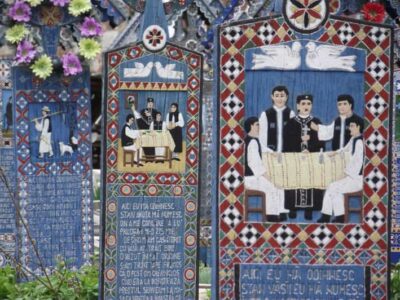
Two days tour to Maramures: local experiences and culture
Read our review →
Your rendez-vous with Europe’s past: time-travel to Maramures, Transylvania
Read our review →
Browse the lists this tour appears in