
Reviewed · 7-DAY EXPERIENCES
Transylvanian week
Romania rewards curiosity. This six-day private tour from Bucharest takes you through Transylvania’s castles, fortified churches, medieval towns, and mountain roads without asking you to plan each hotel, transfer, or admission. I especially like the mix of famous sights and quieter villages, plus the chance to follow Vlad the Impaler’s story beyond the usual Dracula marketing.
I also like the private air-conditioned vehicle, which matters when the route runs from Bucharest through Sibiu, Sighisoara, Brasov, and back again. Guide Gelu Trandafir is praised for adapting the itinerary and taking care of practical details, while his brother George also helps run the company. The main consideration is the price, $2,166.68 per person, and the pace: six days covers a lot of ground, with several long touring days and only limited free time.
In This Review
- Key points to know before booking
- What the six-day route really gives you
- Day 1: Cozia Monastery and Sibiu’s grand squares
- Day 2: Corvin Castle and Alba Iulia’s Roman and royal past
- Day 3: Biertan, Malâncrav, and Sighisoara after the day crowds
- Day 4: Viscri, Prejmer, and Brasov’s medieval center
- Day 5: Poiana Brasov, Bran Castle, and the Dracula question
- Day 6: Peles Castle and a final Bucharest walk
- Private transport, hotels, and the value of the price
- Who should choose this Transylvanian route?
- Should you book the Transylvanian Week?
- FAQ
- How long is the Transylvanian Week tour?
- Where does the tour begin?
- Is this a private tour?
- What accommodation is included?
- Are entrance fees included?
- What is not included in the price?
Key points to know before booking
- Cozia Monastery begins the journey with medieval Wallachian history, linking the first day to Mircea the Elder and Vlad the Impaler’s family story.
- Sibiu, Sighisoara, and Brasov give you three very different city experiences, from grand squares to fortified walls and Gothic churches.
- The UNESCO fortified churches are a major strength, especially Biertan, Viscri, and Prejmer, where Saxon settlement history becomes easy to see.
- Corvin Castle and Bran Castle serve different purposes: one is tied to John Hunyadi and military history, the other to Dracula legends and a strategic mountain route.
- Six nights of three-star superior accommodation and breakfast are included, reducing the work and uncertainty of a multi-city trip.
- This is a private tour for your group, with hotel or airport pickup in Bucharest and private transportation throughout.
What the six-day route really gives you
This is not a quick Dracula outing. It is a broad circuit through central Romania, with religious buildings, medieval fortresses, royal residences, and old Saxon villages all sharing the same route.
The schedule is designed for people who want the main sights handled by a guide. You do not need to arrange separate trains, compare guesthouses in five cities, or work out how to reach rural fortified churches. That convenience is the heart of the package.
The tradeoff is that the tour keeps moving. You spend the first two nights in Sibiu, then move to Sighisoara, Brasov, and Bucharest. The private format should make it easier to adjust the day, but the listed stops still create a full program.
Accommodation is in three-star superior hotels or guesthouses, in double rooms, with breakfast included. Lunch is included as well, while other meals, photo fees, and flights are not. At $2,166.68 per person, the value depends on how much you would pay for six nights, a private vehicle, guide services, admissions, and the time saved organizing the route yourself.
More Transylvania trips:
- Transylvania and Dracula Castle Full Day Tour from Bucharest
★ 4.5 · 1,589 reviews - Castles of Transylvania: Private Day Trip from Bucharest
★ 4.5 · 248 reviews - 2-Day Medieval Transylvania with Brasov,Sibiu and Sighisoara Tour from Bucharest
★ 4.5 · 145 reviews
Day 1: Cozia Monastery and Sibiu’s grand squares
Pickup begins at your Bucharest hotel or the airport. The road follows the Olt River Valley, giving you a scenic start rather than sending you straight onto a city highway.
Cozia Monastery is a short but worthwhile first stop. Mircea the Elder founded it in 1388, and the visit introduces the medieval Wallachian world that later produced the far more famous Vlad the Impaler. Admission is free, and about 30 minutes is planned here, so expect an orientation to the site rather than a long guided study.
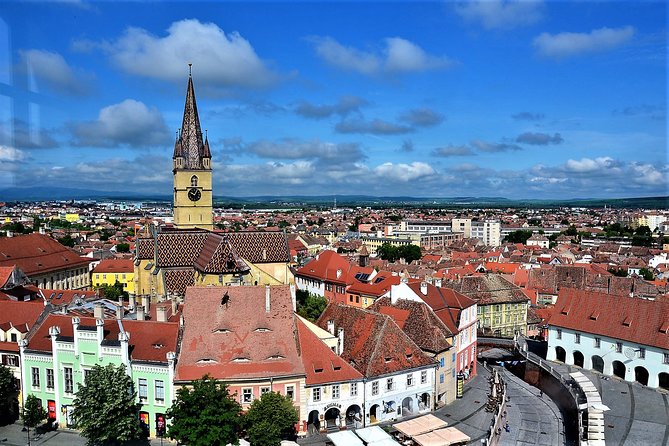
After lunch and a short rest, you reach Sibiu. The guided old-city walk takes about two hours and focuses on the city’s main squares: the Grand Square, Small Square, and Albert Huet Square. Albert Huet Square is especially important because it dates to the 12th century.
You also visit the Orthodox Cathedral, with its visual links to Constantinople’s Hagia Sophia, and the Evangelical Church. The Council Tower provides a high view over Sibiu after a climb up medieval stairs. That climb is part of the appeal, but it is worth keeping your footwear sensible and your expectations realistic. The sightseeing here is on foot, and old European centers rarely offer perfectly level routes.
Sibiu is a strong first city because it helps explain the area’s mixed Romanian, German, and Hungarian past. You get architecture, religion, and urban history in a compact center before the tour turns toward castles and rural villages.
Day 2: Corvin Castle and Alba Iulia’s Roman and royal past
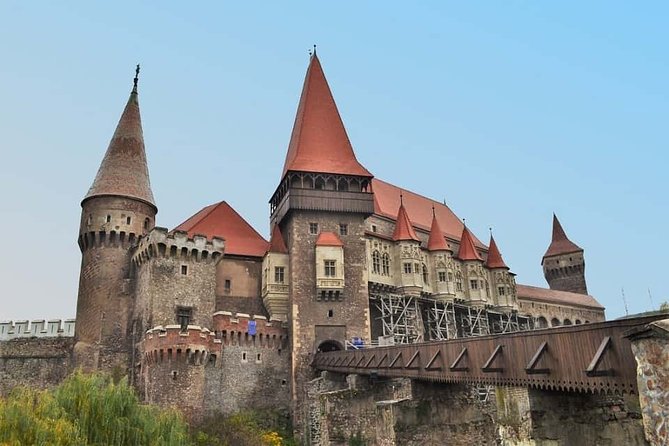
Day two shifts from city streets to major historical monuments. Corvin Castle, also called Hunyadi Castle or Castelul Corvinilor, is the dramatic centerpiece.
The castle is linked to John Hunyadi, one of the leading military figures and statesmen of the Middle Ages. His father, Voicu, received the Hunedoara castle from King Sigismund of Luxembourg in 1409. John Hunyadi later became regent of Hungary and defeated the Ottoman Sultan Mehmed II at Belgrade.
That context gives Corvin Castle more substance than a simple photo stop. Its towers and defensive character make sense when you connect the building to the pressure of Ottoman expansion. You have about an hour here, with admission included.
The second major stop is Alba Iulia’s Alba Carolina fortress. The site brings several periods together. John Hunyadi was buried in Saint Michael Cathedral, whose construction began in 1004. Nearby, you visit the Orthodox Coronation Cathedral and remains of the Roman castrum used by the elite 13th Gemina Legion.
This is a good day for anyone who enjoys layered history. Roman military power, medieval Hungary, Orthodox Christianity, and later Romanian state-building all appear in one place.
You return to Sibiu for a second night. That is practical. A second night in one hotel means less packing and gives you a stable base before the rural church route on day three. Still, Corvin Castle and Alba Iulia make this one of the longer road days, so do not expect a slow morning and a leisurely afternoon.
Day 3: Biertan, Malâncrav, and Sighisoara after the day crowds
From Sibiu, the route crosses the Hartibaciu Valley toward Sighisoara. Old Saxon villages and forested roads provide the setting, but the real purpose of this day is the fortified church tradition.
Biertan Fortified Church is the first stop, with about an hour and admission included. These churches were not built only for worship. Their defensive walls reflect the danger faced by communities in southeastern and central Transylvania, where fortified religious centers offered protection during attacks.
Malâncrav brings a quieter experience. This village is about 25 kilometers from Sighisoara and has a Gothic church built around 1305. Its medieval frescoes survived because they were covered with chalk after the Lutheran Reformation. They were found during restoration work in 1914.
You have about an hour here. The appeal is not size or spectacle. It is the chance to see preserved medieval art in a rural setting, where the church remains part of a village rather than a famous city monument.
The day ends in Sighisoara, a UNESCO-listed medieval citadel. Two hours are planned for the Clock Tower and the old fortress, with time into the late afternoon and evening. This timing is useful because Sighisoara becomes more atmospheric as the day cools and the stone streets take on softer light.
Sighisoara is also presented as the birthplace of Vlad the Impaler. That makes it a natural place to sort fact from legend. Vlad was a Wallachian ruler, while the Dracula character belongs to later fiction. A good guide can explain where those threads meet and where they separate.
A few more trips worth weighing up before you book
- 7-Day Private Tour of Transylvania from Bucharest
★ 5.0 · 13 reviews - 4×4 Driving Experience at Flying Altitudes – 7 Days
★ 5.0 · 13 reviews - 7-Day Romania Tour -Transylvania and Painted Churches
★ 5.0 · 7 reviews - Amazing Romania – Seven day private tour from Bucharest
★ 5.0 · 7 reviews
Day 4: Viscri, Prejmer, and Brasov’s medieval center
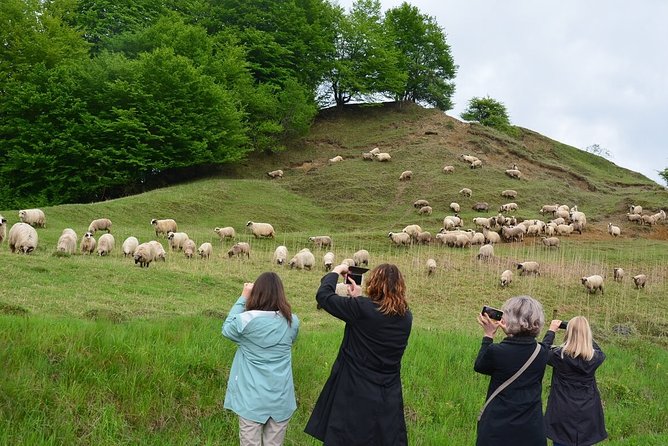
The road from Sighisoara to Brasov includes several fortified villages and country roads. You first see Saschiz Fortified Church, a UNESCO World Heritage monument from the end of the 15th century. Its tower recalls Sighisoara’s Clock Tower, making the connection between these Saxon communities easy to spot.
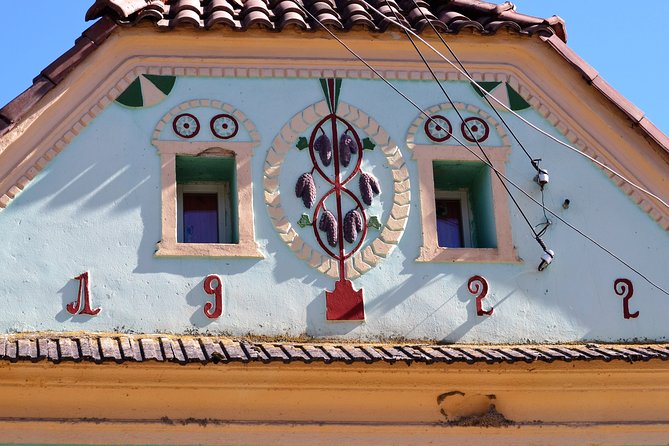
Viscri is one of the most distinctive stops. Prince Charles helped bring wider attention to the village after buying an old Saxon house, number 163, a blue home built in 1753. The route includes time for lunch and a visit to the fortified church, with about two hours scheduled.
The important point is that Viscri is not simply a Dracula stop or a postcard village. It represents the Saxon settlement pattern that shaped this part of Transylvania. The remote setting is part of the experience, though it also means the road portion can feel slow if you prefer a city-focused holiday.
On the way toward Brasov, you catch sight of Rupea Fortress, one of Romania’s oldest fortifications. The site was built over earlier Roman and Dacian fortifications, but the plan lists it as a view from the route rather than a full visit. That distinction matters. You should not expect to explore every castle you pass.
Prejmer Fortified Church receives about an hour. Teutonic Knights began the defensive project around 1200, and Saxon settlers completed it after the order fell out with the Hungarian king. It is one of seven Saxon fortified sites in Transylvania included on UNESCO’s World Heritage List.
Brasov then supplies the urban finish. After check-in, you tour the medieval fortifications, bastions, and towers, along with Rope Street, one of Europe’s narrowest streets. The historical center is compact enough for a focused walking visit, but the two-hour schedule will not cover every museum or side street.
Day 5: Poiana Brasov, Bran Castle, and the Dracula question
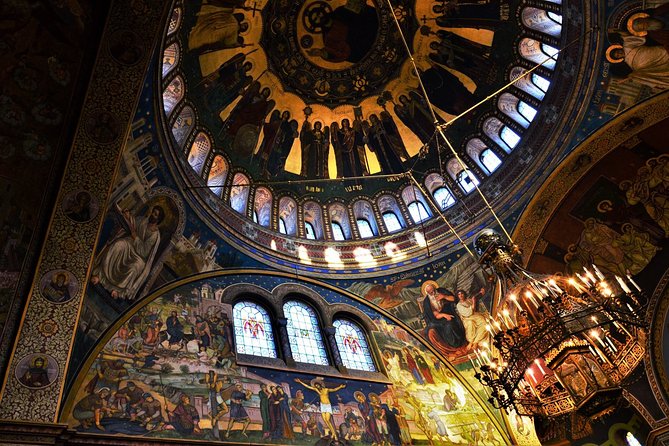
Day five offers the tour’s most recognizable combination of mountain views and Dracula imagery.
You first head uphill to Poiana Brasov, a mountain resort. A cable-car ride is planned to a point near Postavaru Peak at about 1,722 meters, or 5,666 feet. The view depends on weather, but on a clear day you can look over the Carpathians and the Transylvanian plateau.
This is one of the schedule’s weather-sensitive moments. Fog or poor visibility can reduce the payoff, and the cable-car visit is not listed as included admission. Check the day’s conditions and confirm the current cable-car arrangements with the operator.
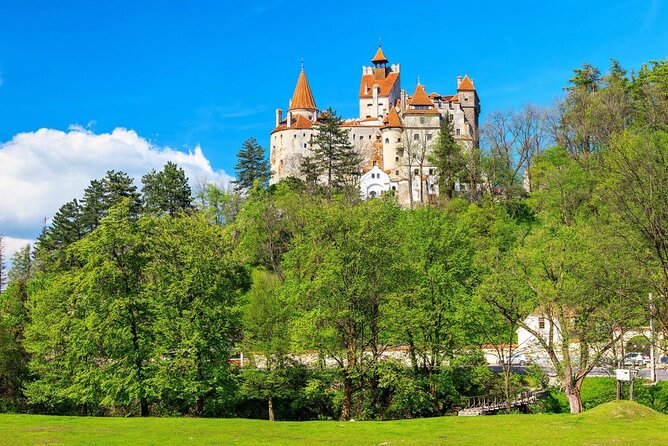
Bran Castle follows. Built in the 14th century, it guarded a commercial route between Wallachia and Transylvania. Its position on a steep rock helped create the sinister image later attached to Count Dracula.
The castle is often marketed as Dracula’s castle, but the historical link to Vlad the Impaler is limited. That is exactly why a licensed guide adds value here. You can enjoy the legends while also learning about the fortification’s actual military and trade role.
On the return to Brasov, you see Rasnov Fortress from a distance. It dates to the 13th century and may be connected to the short period when Teutonic Knights controlled the area around Brasov. Again, this is a viewing stop, not a full fortress visit.
Back in Brasov, you visit the Black Church, one of the city’s most imposing Gothic buildings. About an hour is planned inside. After the castle legends, the church offers a useful change of mood and a reminder that Brasov’s story is much older and broader than Dracula tourism.
Day 6: Peles Castle and a final Bucharest walk
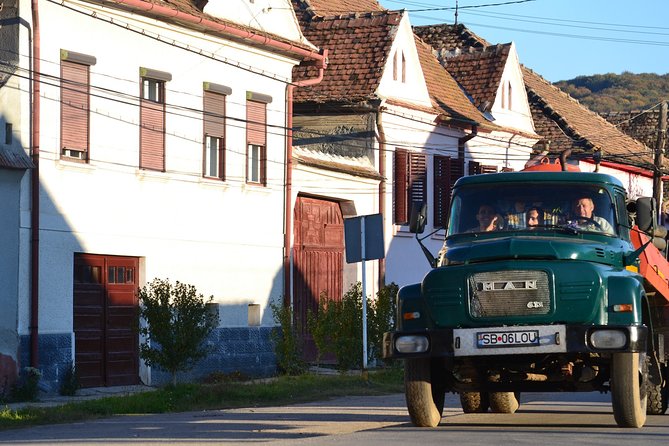
The tour leaves Transylvania through the Prahova Valley and stops at Sinaia’s Peles Castle. Built at the end of the 19th century, Peles looks very different from Corvin and Bran.
The castle was commissioned by Carol I, Romania’s first king, who had German origins and ruled for 48 years. His character was described as sober and disciplined, while Peles is flamboyant and decorative. That contrast gives the visit a human angle: the building reflects a modernizing monarchy trying to present Romania as a European state.
Two hours are planned, with admission included. Peles is a substantial final monument, not a quick roadside photo stop, and it helps broaden the tour beyond medieval fortresses.
You arrive in Bucharest in the afternoon, check in, and then take a guided city tour. Stavropoleos Church, built in 1724, is a key stop. This small monastery in the city center provides a graceful ending after six days of large castles and defensive walls.
The Bucharest portion is brief. If you want museums, markets, or a longer look at the capital, add extra time before or after the tour. The package gives you an introduction, not a full Bucharest holiday.
Private transport, hotels, and the value of the price
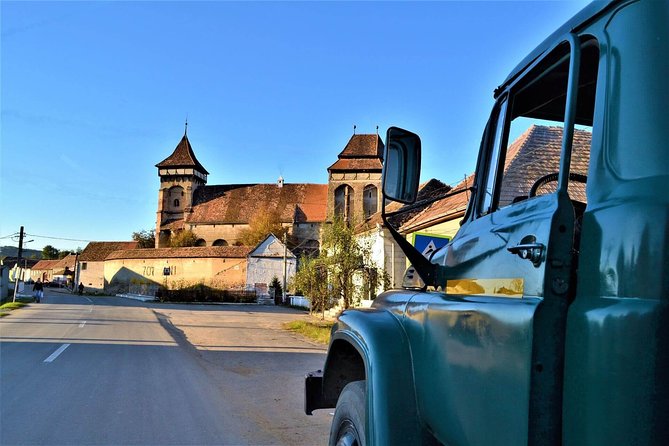
The private, air-conditioned vehicle is one of the tour’s strongest practical features. Rural churches such as Malâncrav and Viscri are not the sort of places you can easily string together with public transport, and the route crosses several regions in a short time.
A private group also gives you more control than a large coach. Gelu is praised for adapting plans, handling unexpected needs, and helping with practical errands such as finding a shopping mall. That suggests a guide who pays attention to the people in front of him, not only to the printed schedule.
The included six nights in three-star superior hotels or guesthouses, breakfast, lunch, private transportation, guide service, admissions, and taxes explain much of the $2,166.68 price. You are paying for coordination as much as for sightseeing.
I would compare the total against booking six nights, a rental car with fuel and insurance, parking, entrance tickets, and a private guide. The tour is likely to appeal most if you value ease and historical explanation. It is less attractive if you already enjoy planning complex road trips or want to choose your own restaurants and hotels each night.
The price is per person, and double-room occupancy is specified. Solo pricing is not provided, so you should ask before booking if you are traveling alone.
Who should choose this Transylvanian route?
I would recommend it to you if you want a structured introduction to Romania, especially if castles and medieval religious buildings are your main interests. It also suits families or small groups who prefer a private vehicle and want the guide’s attention.
The route works well for people who want both headline sights and less famous places. Corvin Castle, Bran Castle, Peles Castle, Sibiu, Sighisoara, and Brasov provide the big names. Malâncrav, Viscri, Saschiz, and Prejmer add the rural texture.
You should think twice if you want long, unplanned stays in each town. The program has several two-hour city visits and many one-hour monument visits. It is focused and efficient, but not slow.
The provider offers pickup from a Bucharest hotel or the airport, and the tour is listed as suitable for most people. Service animals are allowed, and the route is near public transportation in some areas, though private transport is the main way you move between stops.
The experience has a perfect five-star rating from seven submitted reviews, with especially strong praise for Gelu’s care, adaptability, good humor, and ability to create personal connections with Romanian people. That is worth emphasizing because the route itself is excellent, but a multi-day trip depends heavily on the guide.
Should you book the Transylvanian Week?
Book this tour if you want Romania’s major Transylvanian sights arranged into one private six-day journey, with hotels, transport, breakfast, lunch, admissions, and a guide included. The best parts are the range of the route, the Saxon fortified churches, and the historical context linking Cozia, Corvin Castle, Sighisoara, Bran, and Peles.
Skip it if the $2,166.68 price feels high for a fast-moving itinerary, or if you prefer independent travel with longer stays. Before paying, confirm the exact hotel names, the six-night room plan, cable-car arrangements at Poiana Brasov, photo fees, and the amount of free time in each city.
For a first visit to Romania, I like the balance of famous castles and ordinary villages. You get Dracula, but you also get John Hunyadi, Saxon churches, Roman ruins, royal Romania, and the lived-in streets of Sibiu and Brasov. That wider view is what makes the week worthwhile.
FAQ
How long is the Transylvanian Week tour?
The tour lasts approximately six days and includes six nights of accommodation.
Where does the tour begin?
Pickup is offered from your hotel in Bucharest or from Bucharest airport.
Is this a private tour?
Yes. Only your group participates in the private tour or activity.
What accommodation is included?
Six nights in a double room are included, in three-star superior hotels or guesthouses, with breakfast.
Are entrance fees included?
Admission fees and taxes are included for the listed visits such as Corvin Castle, Alba Iulia, Biertan, Malâncrav, Sighisoara, Viscri, Prejmer, the Black Church, and Peles Castle. Photo fees are not included.
What is not included in the price?
Flights, meals other than the included lunch and breakfasts, and photo fees are not included. The tour price is $2,166.68 per person.
Just added around Bucharest
- 10 hours Private Apiary Tour in Romania – From Bucharest★ 5.0 · 3 reviews
- 4-Day Inside Transylvania & Transfagarasan Tour from Bucharest★ 5.0 · 3 reviews
- Bucharest: Charm of the Belle Époque Private Tour★ 5.0 · 3 reviews
- Bran & Peles Castles through the Best Road in the World: Transfagarasan road★ 4.5 · 3 reviews
- Private Wine Tasting at Bucharest’s First Wine Bar★ 5.0 · 3 reviews
- 2-Day Small-Group Tour in Transylvania from Bucharest – Maximum 5 Persons★ 5.0 · 3 reviews
- Probably the Best Restaurant and Wine Cellar near Bucharest★ 4.5 · 3 reviews
- Bucharest to Brasov – Fast Private Transfer★ 5.0 · 3 reviews
7-Day Experiences, compared.
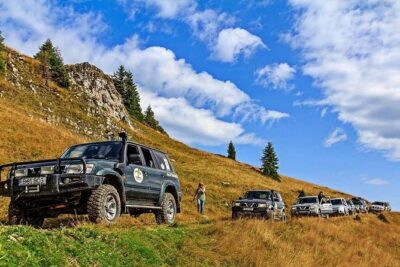
4×4 Driving Experience at Flying Altitudes – 7 Days
Read our review →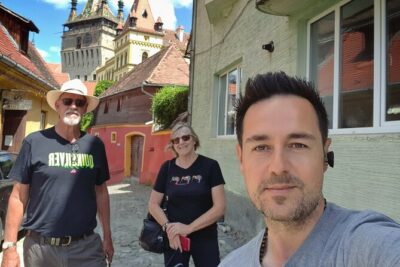
7-Day Private Tour of Transylvania from Bucharest
Read our review →
Amazing Romania – Seven day private tour from Bucharest
Read our review →7-Day Romania Tour -Transylvania and Painted Churches
Read our review →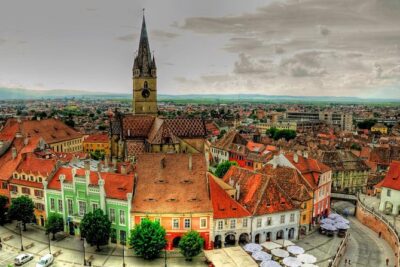
7 days Private Romania Grand Tour from Bucharest
Read our review →
7 Days Private Guided Tour in Romania from Bucharest
Read our review →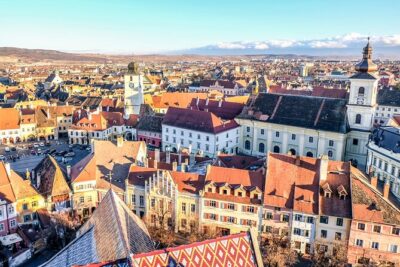
Discover Medieval Transylvania Small Group Tour – 7 days
Read our review →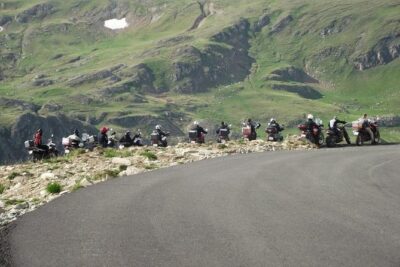
7 Day Best of Transylvania Motorcycle Tour from Cluj
Read our review →Browse the lists this tour appears in