
Reviewed · 7-DAY EXPERIENCES
7 days Private Romania Grand Tour from Bucharest
Romania rewards the curious. This private circuit links medieval towns, painted monasteries, mountain roads, and Dracula country into one demanding but memorable week. I like the private format, which lets your group travel with its own driver-guide rather than follow a large coach. I also like the range: Cozia Monastery, Salina Turda, the Merry Cemetery, Bran Castle, and Peles Castle all feel different.
The main drawback is the pace. You cover a huge stretch of Romania in seven days, and some days include several hours on the road. Entrance fees are not included, and the supplied details describe seven days but only six nights of accommodation, so you should confirm the exact hotel plan before paying.
In This Review
- Key points to know before booking
- What this Romanian circuit does well
- Day 1: Cozia Monastery and the squares of Sibiu
- Day 2: Alba Iulia, a salt mine, and Cluj-Napoca
- Day 3: Wooden churches and village traditions in Maramures
- Day 4: The Merry Cemetery and Bucovina’s painted monasteries
- Day 5: Bicaz Gorges, Red Lake, and late arrival in Sighisoara
- Day 6: Sighisoara, Bran Castle, and Brasov
- Day 7: Peles Castle and a short Bucharest finale
- What the $1,719.59 price really covers
- Who should book this trip
- Should you book the Romania Grand Tour?
- FAQ
- How long is the private Romania Grand Tour?
- How many nights of accommodation are included?
- Is hotel pickup and drop-off provided?
- Are entrance fees included in the tour price?
- Is the tour private?
- What time does the tour start?
- Is there an extra cost for a single room?
Key points to know before booking
- Six nights of accommodation are included, along with six breakfasts, private transport, hotel pickup and drop-off, and a driver-guide.
- The route covers four major Romanian regions, including Transylvania, Maramures, Bucovina, and Wallachia.
- The painted monasteries of Moldavia are a major prize, especially Moldovita, Sucevita, and Voronet.
- The private minivan matters, since the route includes narrow mountain roads, long transfers, and several remote sights.
- Most entrance fees cost extra, including Salina Turda, Bran Castle, Peles Castle, the Sighisoara historic center, and several monasteries.
- Guides George and Liviu receive especially warm praise, with George helping visitors manage changing travel rules and Liviu earning praise for his care on mountain and monastery routes.
What this Romanian circuit does well
At $1,719.59 per person, this is not a cheap sightseeing week. But the price covers a private vehicle, a driver-guide, hotel pickup and drop-off, six nights, and six breakfasts. For a private trip across such a large part of Romania, that can be fair value, especially if you are splitting the cost with a companion or small group.
I like that the route does not reduce Romania to Bucharest and Dracula. You see Saxon cities, Orthodox and Greek Catholic churches, Hungarian cultural traces, rural workshops, royal architecture, and mountain scenery. The tour gives you a useful picture of how varied Romania is within a short period.
The private setup also helps on a route where timing can be awkward. You can stop at roadside viewpoints, spend more time in a place that interests you, and ask your guide to explain local customs as you go. The experience is still structured, but it should feel less rigid than a large group tour.
The tradeoff is that you cannot see this much territory without long driving days. Day four, in particular, packs in the Merry Cemetery, two monasteries, Marginea ceramics, and Voronet. You will see a lot, but you should not expect leisurely museum visits or long free periods in each town.
A few more trips worth weighing up before you book
- 7-Day Private Tour of Transylvania from Bucharest
★ 5.0 · 13 reviews - 4×4 Driving Experience at Flying Altitudes – 7 Days
★ 5.0 · 13 reviews - Transylvanian week
★ 5.0 · 7 reviews
Day 1: Cozia Monastery and the squares of Sibiu
The tour begins at 9:00 a.m. with a drive toward the Olt Valley and Cozia Monastery. Founded in the fourteenth century by Mircea the Old, the monastery is an excellent first stop because it introduces you to Wallachian religious architecture before the route reaches Transylvania.
You get about 30 minutes here. That is enough for a quick look at the facade and interior, including the Armenian decorative details and painted frescoes. The stop is brief, so I would treat it as an introduction rather than a full study of the monastery.
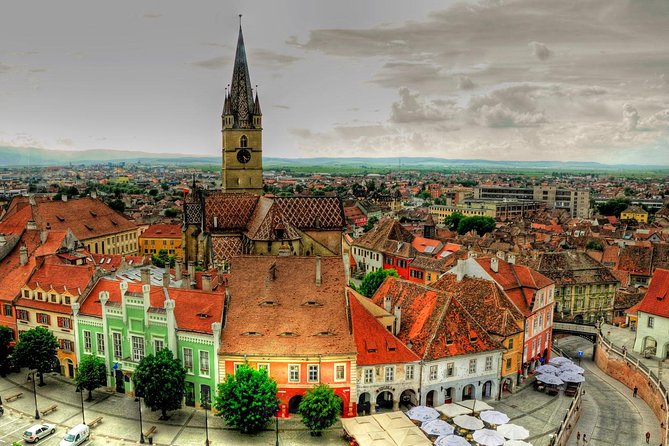
Sibiu receives about three hours, which is more useful. Its central squares create the feeling of a compact medieval town, and you can move between Big Square, Small Square, and Huet Square without needing transport. Look up at the houses with their roof windows, often called the eyes of Sibiu, and notice how the city’s Catholic, Orthodox, and Protestant buildings reflect its mixed past.
Sibiu was European Capital of Culture in 2007 and hosts a major theater festival. The city also has towers, sections of fifteenth-century fortification, museums, and a large Gothic Evangelical church. Your guide can help you use the time well, since three hours passes quickly once you add a meal or coffee.
Day 2: Alba Iulia, a salt mine, and Cluj-Napoca
Alba Iulia is a short but meaningful stop. Romania’s union was proclaimed here on December 1, 1918, making the city important to the country’s modern national story. You have about an hour to see the historic setting and hear the background from your guide.
The main event is Salina Turda, where you descend roughly 400 feet into a former salt mine. The underground space includes an amphitheater, bowling alley, Ferris wheel, and lake with paddle and row boats. It is an unusual attraction, part industrial site and part underground recreation center.
You receive about three hours at the mine, giving you enough time to appreciate its scale rather than rush through. Admission is extra, so ask your guide about the current cost before arrival. The temperature underground can feel different from the weather outside, so a light layer is a sensible choice.
Cluj-Napoca follows with about an hour. St. Michael’s Church and the statue group honoring King Matthias Corvinus anchor the central area. Cluj is also a university city and an important center for Hungarian culture, so it adds an urban and multicultural note after the solemnity of Alba Iulia and the strange spectacle of Turda.
This is another full day. The combination works well, but you should expect more time in the vehicle than the stop durations alone suggest.
Day 3: Wooden churches and village traditions in Maramures
Day three takes you into Maramures, one of the strongest parts of the trip for visitors who want local architecture and rural traditions. At Surdesti, you see a UNESCO-listed wooden church built in 1721 from oak logs. Its tower reaches 54 meters, and the full structure reaches 72 meters.
The church is notable for its double-eaved roof and the two rows of arches above the porch. You receive about an hour here. Admission is extra, and the visit has more value when your guide explains how the building was made and why wooden churches became so important in this region.
Barsana Monastery offers a different look. It is a recently built Orthodox convent complex with sixteen nuns, designed in the tall-spired wooden style associated with Maramures. Do not expect the same age as the historic churches, but the complex gives you a chance to see how regional forms continue in present-day religious life.
In Vadu Izei, the focus shifts to a valtoare, a wooden whirlpool mechanism powered by a fast stream. Water is directed through a wooden channel into a wooden bowl, creating enough movement to wash clothing. It is a small, practical piece of rural engineering with medieval roots.
The stop lasts about an hour and is worth keeping in the program because it connects the region’s traditions to everyday work. It is not a grand monument, but it may be one of the more memorable details of the route.
A completely different kind of day out around Bucharest:
- Bucharest: Dracula’s Castle, Peles Castle, & Brasov Old Town
★ 4.5 · 17,858 reviews - Bucharest: Dracula Castle, Peles Castle & Brasov Old Town
★ 4.6 · 10,891 reviews - Bucharest: Dracula’s Castle, Peleș Castle & Brașov Day Trip
★ 4.5 · 5,919 reviews - Bucharest: Palace of Parliament Tickets and Guide
★ 4.3 · 3,182 reviews
Day 4: The Merry Cemetery and Bucovina’s painted monasteries
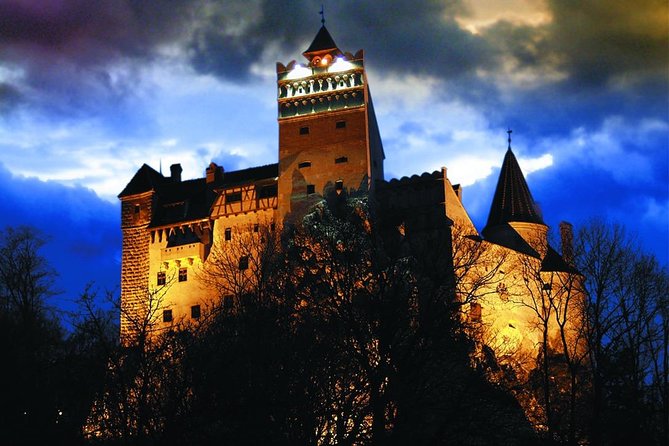
The Merry Cemetery at Sapanta is one of Romania’s most distinctive stops. More than 800 bright wooden crosses show scenes and verses about the people buried there. The tone is direct, humorous, and sometimes blunt, which makes the cemetery feel personal rather than solemn in the usual way.
You have about an hour. Admission is extra. I would listen closely to the explanations because the images and verses carry local stories that are easy to miss if you only walk around taking photographs.
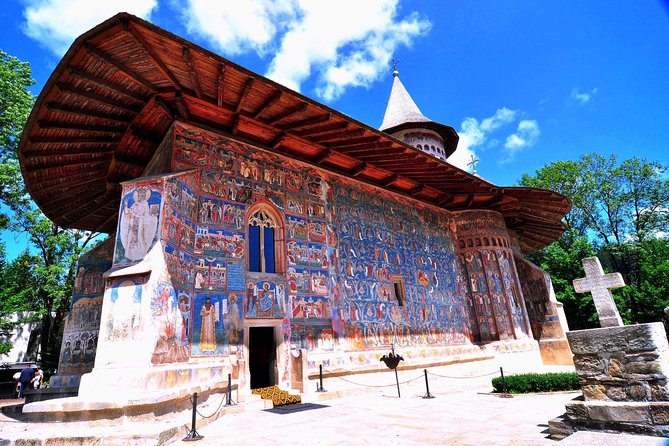
The route then reaches Moldovita Monastery, founded in the sixteenth century by Petru Rares. Its painted exterior and interior make it one of the key religious sights in Bucovina. Sucevita Monastery follows, with Gothic and Byzantine elements blended into the Moldavian style.
Sucevita’s northern frescoes remain visible because the protective walls around that side were never removed. That detail helps explain why the paintings survived when so much outdoor art is exposed to weather. Both monastery visits are listed at about an hour, with entrance fees extra.
Marginea adds a hands-on craft stop. Local artisans make the area’s famous black ceramics, and you can watch the stages of production in a workshop. Painted eggs and other Bucovina crafts are also available for purchase. The visit is only about 20 minutes, so it is best viewed as a short introduction, not a full workshop session.
The final stop is Voronet Monastery. The supplied program gives an hour here, but its description repeats the information about the Vadu Izei whirlpool rather than explaining Voronet. That is a detail worth clarifying with the operator before departure. Voronet is one of the best-known painted monasteries in Romania, but you should confirm exactly what will be included and how much time you will have.
Day 5: Bicaz Gorges, Red Lake, and late arrival in Sighisoara
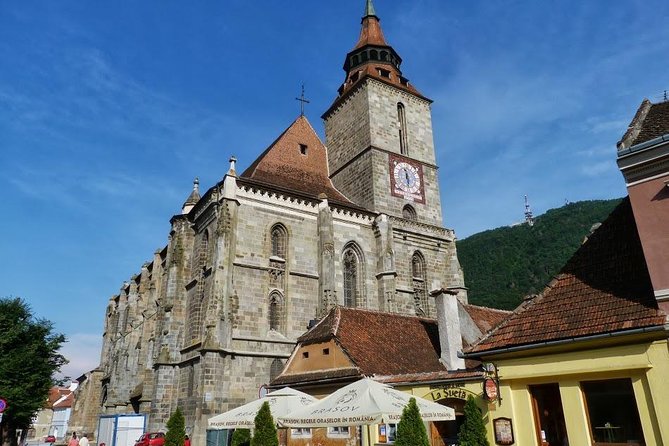
Piatra Neamt receives a quick 30-minute stop. The city sits among wooded mountains and preserves a citadel linked to the time of Stephen the Great, along with an eighteenth-century synagogue. This is a pause for orientation and scenery rather than a full city visit.
The road through Bicaz Gorges is one of the trip’s strongest scenic sections. Cliffs rise close to the road, with a stream running alongside it. There is also a small market selling handicrafts and souvenirs. The gorge stop lasts about 30 minutes, so your guide will likely choose a practical place for photographs and a short walk.
Red Lake was formed when a landslide blocked part of a mountain valley. The trunks of drowned trees remain in the water, giving the lake its unusual appearance. You have about an hour here, along with local legends connected to the name.
Sighisoara is reached late in the evening, according to the schedule. The arrival timing matters because the next morning includes a proper two-hour visit to the old town. If you are tired after the mountain roads, do not expect much sightseeing on arrival day.
Day 6: Sighisoara, Bran Castle, and Brasov
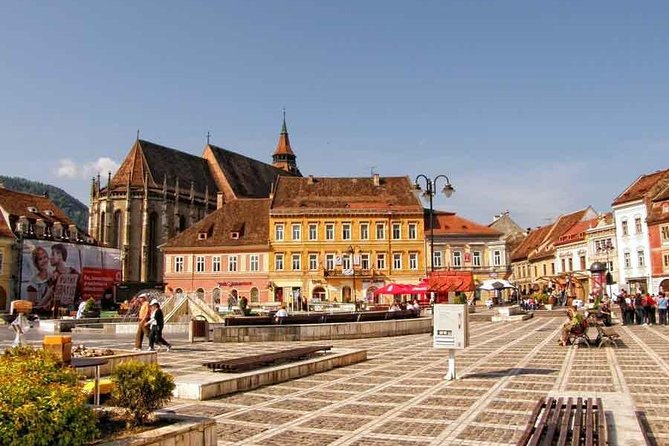
Sighisoara’s historic center is UNESCO listed and deserves the full two hours provided. The Clock Tower is the obvious landmark, but the real pleasure comes from walking the colorful streets and seeing how the fortified town has kept its medieval shape.
Sighisoara is also connected with Vlad Dracula, who was born here in 1431. That connection gives the town a place in the Dracula story, but the town itself is more than a fictional backdrop. Its churches, towers, and mixed religious traditions offer a clearer view of medieval Transylvania.
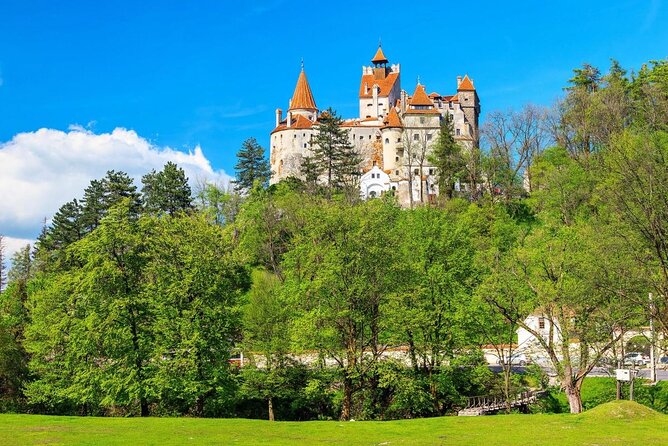
Bran Castle is next, with about two hours. The castle once guarded the route between Wallachia and Transylvania and served as a defensive stronghold for Brasov. Its Dracula image now draws much of the attention, but the building’s border and military role are the more useful historical themes.
Admission is extra at both Sighisoara’s historic attractions and Bran Castle. If Dracula is your main reason for booking, you will enjoy the atmosphere and legends. If you prefer architecture, look past the popular label and focus on the castle’s position and design.
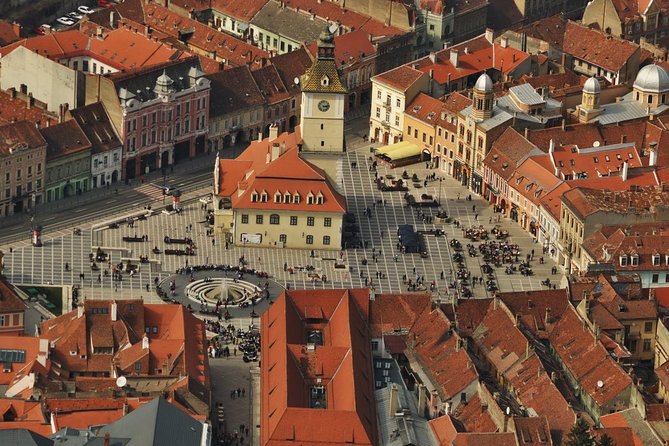
Brasov receives about three hours. Its German-influenced center combines Gothic, Baroque, and Renaissance details. The Black Church is a major sight, and the old Schei district adds a specifically Romanian story to the city.
The program also includes the First Romanian School, plus historic gates connected with the old fortified city. This is one of the busiest days, but Brasov is a good place to have a longer walking visit because several sights sit within the central area.
Day 7: Peles Castle and a short Bucharest finale
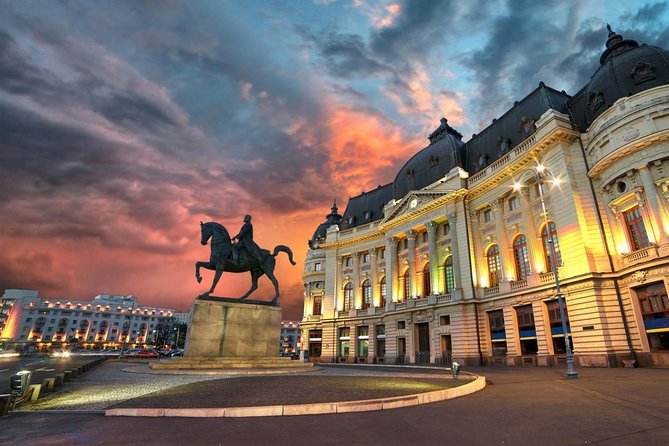
Peles Castle is the final major sight. Built as the summer residence of King Carol I, the castle was designed by a Czech architect and constructed between the nineteenth and twentieth centuries. Its rooms use different styles, including a Florentine room with Renaissance influence.
Two hours gives you a reasonable visit, though admission is extra. Peles is more polished and lavish than Bran Castle, so seeing both helps you compare Romania’s royal architecture with its medieval fortress tradition.
The return to Bucharest includes a 30-minute panoramic tour. You see the Triumph Arch, Romanian Athenaeum, Revolution Square, and Parliament Palace from the outside or during a drive-by orientation. This is not a full Bucharest sightseeing day, so plan extra time in the capital if you want museums or longer interior visits.
What the $1,719.59 price really covers
The cost makes the most sense for couples, families, or small private groups who value their own vehicle and guide. Included are six nights of accommodation, six breakfasts, private transport, hotel pickup and drop-off, and a driver-guide.
You still pay entrance fees separately. The listed exclusions include tips and a €150 single-room supplement, payable locally by cash or card. Because several major stops charge admission, you should budget beyond the advertised price.
The private vehicle is a real benefit on this route. Public transport would make the monasteries, Maramures villages, mountain roads, and castles much harder to combine in one week. The value is less about luxury and more about covering difficult distances without changing buses.
Who should book this trip
I would choose this tour if you want to see many parts of Romania but do not want to plan every hotel, transfer, and entrance stop yourself. It suits first-time visitors who want context from a local guide, as well as families or older couples who prefer door-to-door transport.
The positive feedback connected with George and Liviu suggests that guide quality can shape the experience. George is praised for helping with changing travel guidance, while Liviu is praised for careful touring through the mountains, valleys, monasteries, and castles. Ask who will guide your departure if that matters to you.
This is less suitable if you want slow travel. You will not have long, unplanned afternoons in every town, and the route contains several short visits. It is also not ideal if your budget must include every expense from the start, since entrance fees and the single-room charge are separate.
Confirmation is provided at booking, pickup is offered, and most people can participate. The experience requires suitable weather and a minimum number of participants, even though it is private for your own group. The cancellation terms are strict: the booking is non-refundable and cannot be changed, except when the operator cancels for poor weather or because the minimum is not met.
Should you book the Romania Grand Tour?
Book it if your priority is range, private transport, and local explanation. In one week, you reach places that are difficult to connect on your own, from Cozia and Sibiu to Maramures, Bucovina, Bran, Brasov, and Peles.
Before booking, confirm three things: the exact number of hotel nights, the full list of entrance costs, and the guide assigned to your group. If you accept the long drives and brisk schedule, this is a strong introduction to Romania, with far more substance than a simple Dracula-themed circuit.
FAQ
How long is the private Romania Grand Tour?
The tour lasts approximately seven days, beginning and ending in Bucharest.
How many nights of accommodation are included?
Six nights of accommodation are included, along with six breakfasts.
Is hotel pickup and drop-off provided?
Yes. Hotel pickup and drop-off in Bucharest are included.
Are entrance fees included in the tour price?
No. Entrance fees are not included. Additional admission may apply at places such as Salina Turda, the monasteries, Sighisoara, Bran Castle, and Peles Castle.
Is the tour private?
Yes. It is a private activity, and only your group participates.
What time does the tour start?
The listed start time is 9:00 a.m.
Is there an extra cost for a single room?
Yes. The single-room supplement is €150, payable locally by cash or card.
Just added around Bucharest
- 4-Day Inside Transylvania & Transfagarasan Tour from Bucharest★ 5.0 · 3 reviews
- 10 hours Private Apiary Tour in Romania – From Bucharest★ 5.0 · 3 reviews
- Bucharest: Charm of the Belle Époque Private Tour★ 5.0 · 3 reviews
- Bran & Peles Castles through the Best Road in the World: Transfagarasan road★ 4.5 · 3 reviews
- 2-Day Small-Group Tour in Transylvania from Bucharest – Maximum 5 Persons★ 5.0 · 3 reviews
- Private Wine Tasting at Bucharest’s First Wine Bar★ 5.0 · 3 reviews
- Bucharest to Brasov – Fast Private Transfer★ 5.0 · 3 reviews
- Probably the Best Restaurant and Wine Cellar near Bucharest★ 4.5 · 3 reviews
7-Day Experiences, compared.
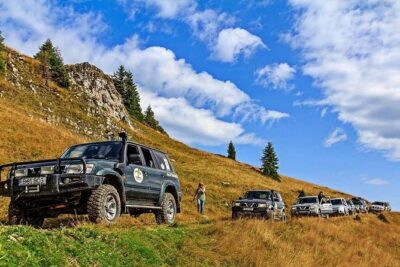
4×4 Driving Experience at Flying Altitudes – 7 Days
Read our review →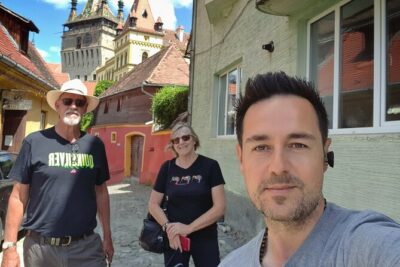
7-Day Private Tour of Transylvania from Bucharest
Read our review →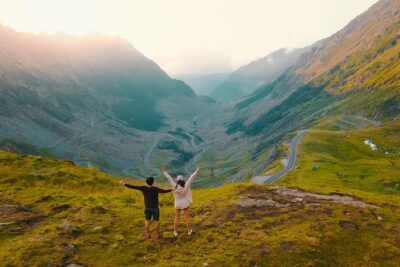
Amazing Romania – Seven day private tour from Bucharest
Read our review →7-Day Romania Tour -Transylvania and Painted Churches
Read our review →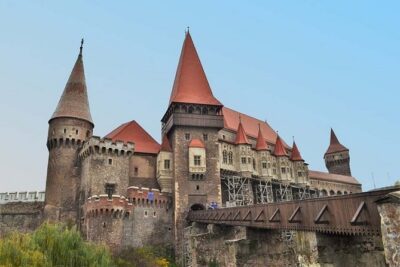

7 Days Private Guided Tour in Romania from Bucharest
Read our review →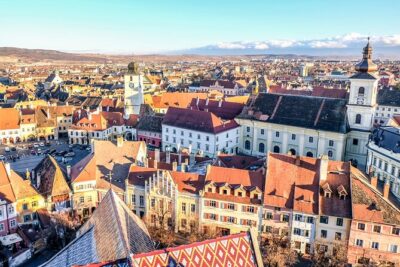
Discover Medieval Transylvania Small Group Tour – 7 days
Read our review →
7 Day Best of Transylvania Motorcycle Tour from Cluj
Read our review →Browse the lists this tour appears in