
Reviewed · 7-DAY EXPERIENCES
Discover Medieval Transylvania Small Group Tour – 7 days
Dracula is only the beginning. This seven-day journey from Bucharest airport takes you through fortified Saxon villages, grand royal castles, medieval citadels, and the mountain scenery of central Romania. I like the small maximum group of six, which should make long drives and walking tours more manageable, and I like that the route includes both famous sights and quieter places such as Viscri, Biertan, Pestera, and Magura.
The strongest practical advantage is the prearranged entry to Bran Castle, where a skip-the-line ticket can save a serious wait. One Italian-language review praised the castle setting and said the ticket saved at least an hour. The main caution is pace: you cover a lot of ground, and several days combine long drives with multiple historic sites.
In This Review
- Key things to know before booking
- What this seven-day route does well
- Day 1: From Otopeni airport to Sibiu
- Day 2: Corvin Castle and Sibiu after dark
- Day 3: Astra Museum, Biertan, and Sighisoara
- Day 4: Viscri, Rupea, and Brasov
- Day 5: Peles Castle, Bran Castle, and Rasnov
- Day 6: Pestera, Magura, and Bat Cave
- Day 7: Returning to Otopeni airport
- Accommodation, meals, and extra costs
- Who should book this Transylvania tour?
- Should you book it?
- FAQ
- Where does the tour begin?
- Where does the tour end?
- How long does the tour last?
- How large is the group?
- Which castles have included admission?
- Is skip-the-line admission available at Bran Castle?
- Where are the overnight stays?
- Are meals included?
- How difficult is the walking day near Magura?
- Can the accommodation be upgraded?
Key things to know before booking
- Seven days from Otopeni to Transylvania and back: The tour begins and ends at Bucharest Henri Coandă International Airport.
- A maximum of six people: This is a much smaller group than a standard coach tour.
- Two nights in Sibiu, one night in Sighisoara, and three nights in Brasov: The bases give you time in three of Transylvania’s best-known towns.
- Bran Castle and Peles Castle admissions included: The basic tour at each castle is covered, while several other entrance fees are extra.
- A full rural walking day near Magura: Expect three to four hours of walking, up to 12 kilometers, with easy to medium difficulty.
- Three hours of driving back to Bucharest airport: Plan your departure day carefully, especially if you have a fixed flight.
What this seven-day route does well
This is not simply a Dracula tour. Bran Castle gets the most attention, but the route gives you a broader look at Transylvania: German Saxon town planning, fortified churches, medieval defensive works, Romanian village life, royal architecture, and Carpathian scenery.
I especially like the contrast between the stops. Sibiu offers polished squares and museums. Corvin Castle feels like a dramatic Gothic stronghold. Biertan and Viscri show how rural communities defended themselves. Peles Castle brings you into the world of Romania’s nineteenth-century royal family, while Magura gives the trip a more physical and local flavor.
The private vehicle and English-speaking guide-driver are important here. Public transport would make this exact sequence difficult, particularly with Corvin Castle, Biertan, Viscri, Rupea, Bran, Rasnov, and Peles all included. You pay for that convenience through the tour price, but you also avoid arranging several separate transfers.
The listed price is $1,618.39 per person. That is a substantial amount, but it covers private transportation, six nights of accommodation, six breakfasts, lunch, and entry to Bran Castle and Peles Castle. It does not cover airfare, tips, drinks, most other meals, insurance, or entrance fees not specifically listed.
For seven days of private touring in a group capped at six, the price can make sense if you value efficiency and a guide-driver. It is less attractive if you prefer slow mornings, independent meals, or long stays in one place. You should also budget for extra admissions and dinners.
More Transylvania trips:
- Transylvania and Dracula Castle Full Day Tour from Bucharest
★ 4.5 · 1,589 reviews - Castles of Transylvania: Private Day Trip from Bucharest
★ 4.5 · 248 reviews - 2-Day Medieval Transylvania with Brasov,Sibiu and Sighisoara Tour from Bucharest
★ 4.5 · 145 reviews
Day 1: From Otopeni airport to Sibiu
The tour begins at Bucharest Henri Coandă International Airport in Otopeni. From there, it is about 280 kilometers to Sibiu, with roughly four hours in the vehicle.
That first transfer is long, so this day works best for you if you arrive ready to leave the airport and begin the journey. Accommodation is planned at a three-star guesthouse or hotel in Sibiu.
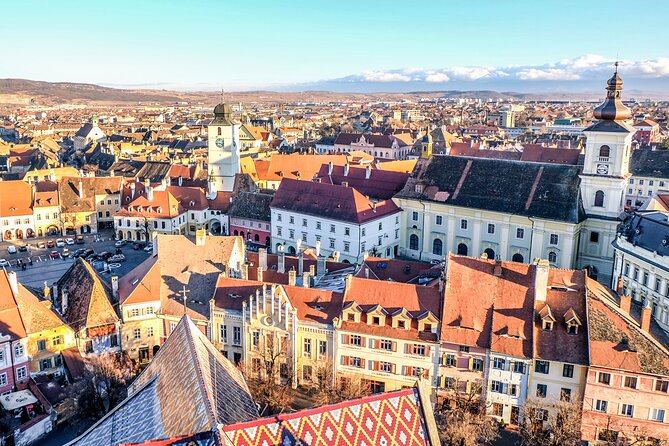
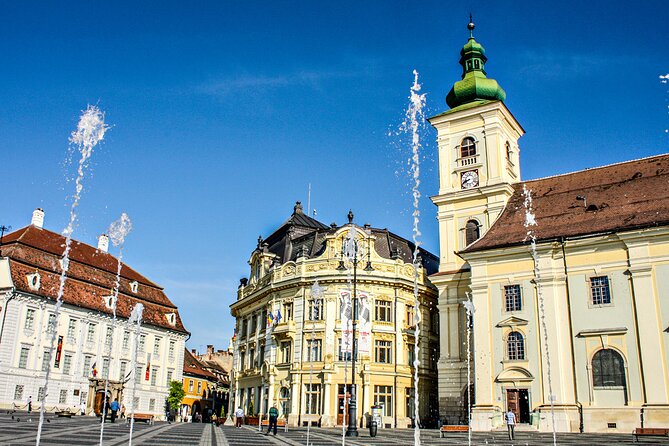
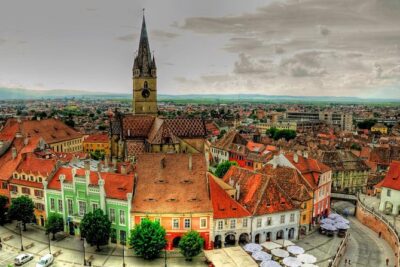
Sibiu was once the leading town of the Transylvanian Saxons and later served as a European Capital of Culture. Its importance is easy to understand once you see its historic center, with handsome squares, old merchant buildings, and the distinctive Saxon character that shapes much of the region.
The city also has several useful historical claims. Romania’s first hospital opened here in 1292, its first pharmacy appeared in 1494, and the Brukenthal Museum, opened in 1817, is the country’s oldest museum.
The schedule gives Sibiu two days, which is welcome. You will not be rushed through the city in a single short stop, although the exact amount of free time depends on arrival and driving conditions.
Day 2: Corvin Castle and Sibiu after dark
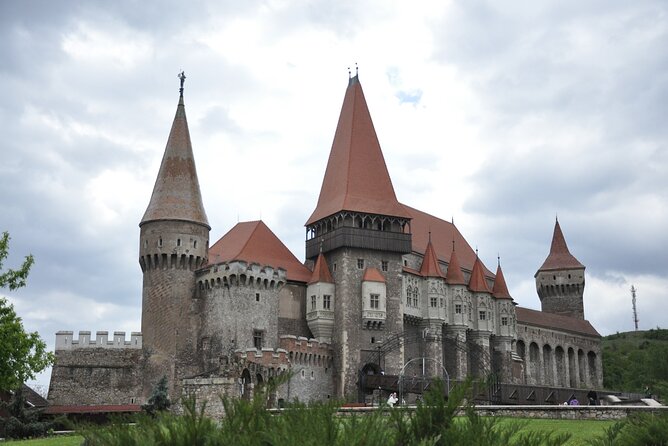
The second day takes you west to Hunedoara, about 130 kilometers from Sibiu and roughly two hours by road. The destination is Corvin Castle, also called Hunyadi Castle or Hunedoara Castle.
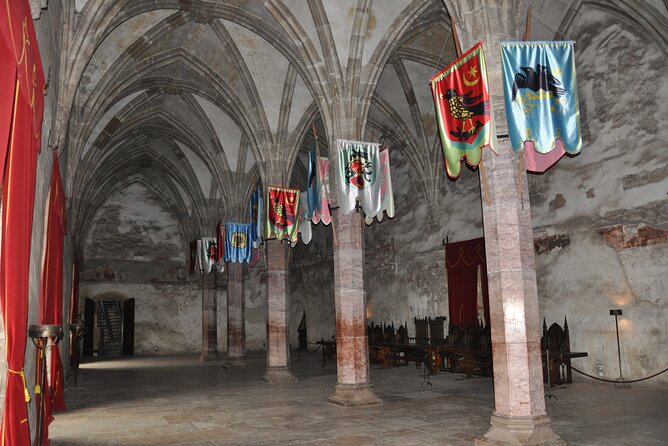
This Gothic-Renaissance fortress is one of Romania’s most dramatic medieval sights. It rises above the surrounding area with towers, courtyards, stone walls, and a strong fairytale appearance. The castle is often included among Romania’s seven wonders, and you can see why once its silhouette comes into view.
Allow about three hours for the visit. The castle is not just a quick photo stop. You will want time to walk through the rooms, cross its bridges, and take in the defensive design. The atmosphere is especially different from the later royal interiors at Peles Castle.
Admission is not included on this day, so set aside money for Corvin Castle. Lunch is also part of the day, but other meals and drinks are not covered.
After returning to Sibiu, the group takes an evening walk through the city. A night visit gives you a different view of the squares and buildings, and it breaks up the day’s long road journey. Still, this is a demanding day, with four hours of driving in addition to the castle visit.
Day 3: Astra Museum, Biertan, and Sighisoara
The day begins at the Astra Museum near Sibiu. Spread across 250 acres of forest beside a lake, this open-air museum contains more than 300 buildings from different parts of Romania.
You can expect traditional houses, watermills, windmills, and other rural structures arranged across a large outdoor setting. Two hours is enough to get a solid introduction, but not enough to inspect every building closely. Wear comfortable shoes, since the museum covers considerable ground.
Admission is not included. Ask the guide about the best way to use your time, particularly if you want to focus on a specific type of building or regional style.
Next comes Biertan, about 70 kilometers away, or roughly one hour by road. Its fortified church has UNESCO World Heritage status and is one of the most important Saxon village churches in Transylvania.
The church’s late-Gothic design is paired with heavy doors and double exterior walls. Inside, look for the large multi-paneled wooden altar, described as the biggest of its kind in Transylvania, and the finely made wooden door that once protected the sacristy treasury.
The visit lasts about an hour. Entrance is extra, so keep small funds available for sites like this throughout the trip.
From Biertan, it is about 30 kilometers and half an hour to Sighisoara. The old center is a UNESCO site and one of the best-preserved medieval urban areas in Romania. The two-hour visit should give you time to walk the historic streets and hear about the town’s connection with Vlad the Impaler.
Vlad was a fifteenth-century Wallachian prince and military leader who helped inspire Bram Stoker’s fictional Dracula. The connection is part history and part legend, so you will get more from Sighisoara if you treat the Dracula theme as an introduction rather than the whole story.
The town is described as retaining the appearance of a sixteenth-century city. Its compact old center makes it one of the easier places on this route to explore on foot, though stone streets and slopes can make comfortable footwear useful.
The accommodation plan provides one night in Sighisoara. That overnight stop is valuable because it prevents the day from becoming a long return drive to Sibiu.
A few more trips worth weighing up before you book
- 7-Day Private Tour of Transylvania from Bucharest
★ 5.0 · 13 reviews - 4×4 Driving Experience at Flying Altitudes – 7 Days
★ 5.0 · 13 reviews - Transylvanian week
★ 5.0 · 7 reviews - 7-Day Romania Tour -Transylvania and Painted Churches
★ 5.0 · 7 reviews
Day 4: Viscri, Rupea, and Brasov
The route continues to Viscri, about one hour from Sighisoara. The village is known for its whitewashed fortified church, red-roofed towers, and rustic streets.
The church was built to protect the local population from attacks, including raids connected with the Ottoman frontier. The fortifications help you understand how defensive churches functioned as places of worship and emergency refuge at the same time.
Viscri also has a connection with King Charles III, who owns a house in the village. That association has brought wider attention to the area, but the main reason to visit is the village itself and the way its Saxon buildings and church remain tied to local life.
The stop lasts around two hours, with admission not included.
Rupea Fortress follows, about an hour from Viscri. Built on a basalt rock, the fortress has three defensive rings and dates back to the fourteenth century. One of its most unusual features is a 60-meter-deep well, whose water is still drinkable according to the tour information.
Give yourself time to look across the surrounding countryside from the high position. Rupea is a shorter one-hour visit, and admission is extra, but it adds an important defensive site to a route already full of fortified churches and castles.
The day ends in Brasov, about 90 kilometers away, with approximately 90 minutes of driving. Brasov is one of Romania’s most visited cities, framed by the Southern Carpathian Mountains and filled with Gothic, Baroque, and Renaissance architecture.
The tour includes a nighttime walking tour. That is a good way to get your bearings in the historic center before the following three nights. Brasov has a strong medieval identity, but it is also a lived-in city rather than an isolated museum piece.
Accommodation is at a three-star hotel for three nights. An upgrade to a four- or five-star property in the old center may be available for an extra cost, subject to availability. Named examples include Bella Muzica, Safrano Palace, Casa Chitic, Schuster Boarding House, Radisson Blu Aurum, and others.
Day 5: Peles Castle, Bran Castle, and Rasnov
This is the tour’s most famous castle day, and it is also one of the busiest.
The first stop is Peles Castle in Sinaia, reached after about 45 minutes of driving from Brasov. Built among forested mountain scenery in the nineteenth century, Peles was a royal residence designed in an expansive Bavarian style.
The basic guided tour is included. Inside, you can expect ornate rooms, detailed furnishings, and decorative interiors that feel very different from the rough stone defenses of Corvin Castle. The visit lasts about two hours.
You may also have the chance to see Pelisor Castle, the smaller Art Nouveau royal residence next door. The information provided does not make clear whether every part of that visit is included, so check with the guide before planning your time around it.
From Sinaia, the group drives about an hour to Bran Castle. This is the stop most closely tied to Dracula, although its connection to Bram Stoker’s character is stronger in popular culture than in documented local history.
Bran is a fifteenth-century hilltop castle with Gothic rooms, narrow passages, and a dramatic setting. The stories connect it with Vlad the Impaler, who became the model for Stoker’s Count Dracula, but Vlad’s relationship with the castle is often presented more strongly in tourism than historical evidence supports.
The included basic admission is a real benefit here. The castle can draw long lines, especially during busy periods, and advance entry is the most praised part of this experience. One review in Italian said the skip-the-line ticket saved at least an hour.
Do not assume that every special exhibition or upgraded castle experience is included. The included benefit is specifically the basic Bran Castle entry, so confirm the exact ticket type if you want more than the standard visit.
The final stop is Rasnov Citadel, around 30 minutes from Bran. Built by the Teutons in the thirteenth century, the stone fortress served as a refuge for villagers during attacks, including raids by the Tartars.
You will see courtyards, ramparts, and the old well, with views toward the Bucegi Mountains. The visit is scheduled for about an hour, but entrance is not included. This is another day when the combination of three sites, driving, lunch, and dinner leaves little room for wandering.
Day 6: Pestera, Magura, and Bat Cave
Day six changes the rhythm. Instead of moving between major monuments, you spend three to four hours walking around the rural villages of Pestera and Magura near Brasov.
The walk is rated easy to medium and can reach 12 kilometers. That distance matters. Even though the route is not described as difficult, you should bring sturdy shoes and be ready for several hours outdoors.
The walk includes village life, mountain scenery, and interaction with local people. It is the part of the tour most likely to give you a feel for traditional Transylvanian life beyond the castles and city centers.
The Bat Cave is within Piatra Craiului National Park and is protected as a national natural monument. Its entrance passes through a narrow corridor before opening into a grotto and gallery. Inside are Jurassic limestone formations, including formations known as the tears of the earth.
The cave is not electrified because artificial lighting could alter the bats’ natural habitat. That means you should expect a more basic cave visit than a fully developed tourist cave, and you should follow the guide’s instructions closely.
Admission is listed as free. The day does not include the grand interiors or fortress walls found earlier in the tour, but it adds welcome variety. If you prefer gentle sightseeing with little walking, this is the day to consider carefully.
Day 7: Returning to Otopeni airport
The final transfer to Bucharest airport takes about three hours. The tour ends back at the original meeting point, Bucharest Henri Coandă International Airport.
Do not schedule a tight flight connection without checking the departure plan with Active Travel Day Tours. The transfer itself is estimated at three hours, and road conditions can affect the timing. You also need to account for airport procedures after arrival.
Accommodation, meals, and extra costs
Six nights are included, with two nights in Sibiu, one night in Sighisoara, and three nights in Brasov. The standard accommodation level is three-star guesthouse or hotel lodging.
Six breakfasts are included. Lunch is included, but the provided details do not indicate that all lunches are covered across the full week, and dinners are not included as a general tour feature. The day five description mentions lunch and dinner, so ask exactly which meals are provided and on which days.
You pay separately for drinks, tips, travel insurance, airfare, and entrance fees not named in the inclusions. Corvin Castle, Astra Museum, Biertan, Sighisoara, Viscri, Rupea, and Rasnov are specifically marked as having admission not included.
The small group is a major part of the value. With no more than six people, you should have a more personal setting than on a large bus tour, and the private transportation makes this wide-ranging route practical.
Who should book this Transylvania tour?
I would recommend it to you if you want a guided first visit to Transylvania and prefer having transport, hotels, and major route planning handled for you. It suits history fans, castle enthusiasts, photographers, and anyone who wants more than a quick Bran Castle excursion.
It is also a good fit if Dracula interests you but does not define your whole trip. You get the famous castle, but you also see Saxon churches, royal interiors, a traditional open-air museum, medieval city centers, and a rural walking area.
I would hesitate if you dislike long drives or prefer an unhurried schedule. Days two through five are packed, and day six requires a substantial walk. The basic three-star hotels may also feel too simple if you normally choose luxury lodging, although paid upgrades may be available.
Should you book it?
Book this tour if you want to cover a large part of medieval Transylvania in one organized week, especially with a group of no more than six. The strongest reasons are the efficient private transport, the mix of famous and lesser-known sites, and the useful skip-the-line access at Bran Castle.
Before paying, confirm the exact hotel locations, which meals are included on each day, the admission arrangements for Bran and Peles, and the available date. The stated operating period is April 22 through November 4, 2025, with opening information showing Tuesday departures from 8:00 a.m. to 1:30 p.m. Cancellation terms allow a full refund when you cancel at least six full days before the start time.
FAQ
Where does the tour begin?
It begins at Bucharest Henri Coandă International Airport, also called Otopeni Airport, at Calea Bucureștilor 224 E, Otopeni.
Where does the tour end?
The experience ends back at the original meeting point at Bucharest Henri Coandă International Airport.
How long does the tour last?
The tour lasts approximately seven days and includes six nights of accommodation.
How large is the group?
The tour has a maximum of six travelers.
Which castles have included admission?
Basic admission to Bran Castle and Peles Castle is included.
Is skip-the-line admission available at Bran Castle?
Advance skip-the-line entry is included in the experience description for Bran Castle. The basic Bran Castle admission is also listed among the included entrance fees.
Where are the overnight stays?
The accommodation plan includes two nights in Sibiu, one night in Sighisoara, and three nights in Brasov.
Are meals included?
Six breakfasts are included, and lunch is listed among the inclusions. Airfare, drinks, tips, and meals not specifically included are extra.
How difficult is the walking day near Magura?
The walk lasts about three to four hours, covers up to 12 kilometers, and is rated easy to medium.
Can the accommodation be upgraded?
An upgrade from three-star to four- or five-star hotels may be available in Brasov, Sibiu, and Sighisoara, subject to availability and an additional cost.
Just added around Bucharest
- 10 hours Private Apiary Tour in Romania – From Bucharest★ 5.0 · 3 reviews
- 4-Day Inside Transylvania & Transfagarasan Tour from Bucharest★ 5.0 · 3 reviews
- Bucharest: Charm of the Belle Époque Private Tour★ 5.0 · 3 reviews
- Bran & Peles Castles through the Best Road in the World: Transfagarasan road★ 4.5 · 3 reviews
- 2-Day Small-Group Tour in Transylvania from Bucharest – Maximum 5 Persons★ 5.0 · 3 reviews
- Private Wine Tasting at Bucharest’s First Wine Bar★ 5.0 · 3 reviews
- Bucharest to Brasov – Fast Private Transfer★ 5.0 · 3 reviews
- Probably the Best Restaurant and Wine Cellar near Bucharest★ 4.5 · 3 reviews
7-Day Experiences, compared.
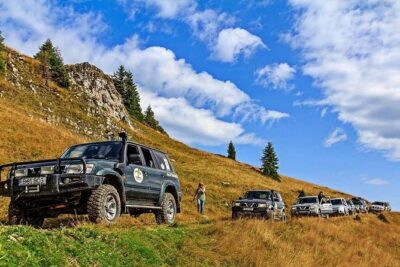
4×4 Driving Experience at Flying Altitudes – 7 Days
Read our review →
7-Day Private Tour of Transylvania from Bucharest
Read our review →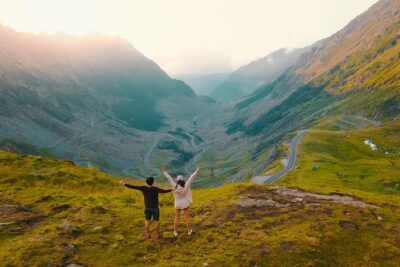
Amazing Romania – Seven day private tour from Bucharest
Read our review →7-Day Romania Tour -Transylvania and Painted Churches
Read our review →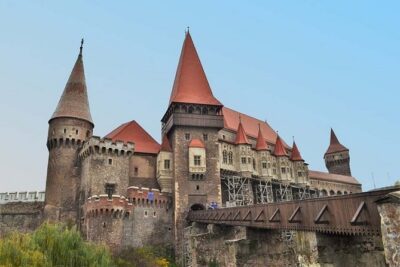
7 days Private Romania Grand Tour from Bucharest
Read our review →
7 Days Private Guided Tour in Romania from Bucharest
Read our review →
7 Day Best of Transylvania Motorcycle Tour from Cluj
Read our review →Browse the lists this tour appears in