
Reviewed · FOOD & DRINK
Private Tour – Food, Culture, History & Traditions
Bucharest reveals itself one street at a time. This private walking tour pairs major sights with local food, architectural detail, and stories about the people and events that shaped Romania. Guide Bianca, a former journalist, brings particular strength to the history and architecture, while the private format lets you slow down, ask questions, and change the pace when something catches your eye. I especially like the authentic Romanian meal and the way the route moves beyond the usual Old Town circuit. The main drawback is physical: you cover about 6 kilometers on foot, so this is not a gentle, sit-down city tour.
The tour runs roughly four to five hours and costs $114.14 per person. That price is easier to justify for a private group than for a solo visitor, since it includes a full two-course meal, all fees, and personalized guiding. Drinks are extra, and the route is mostly outdoors, so weather can affect the experience. Start early in your Bucharest stay if you want help getting your bearings before exploring on your own.
In This Review
- What makes this Bucharest walk worth your time
- Starting in Old Town, where trade and mici meet
- Stavropoleos, CEC Palace and Macca Villacrosse
- Banks, Calea Victoriei and the city’s main avenue
- Pasajul Victoriei and the less polished side of history
- Revolution Square and the end of Ceaușescu’s rule
- The Romanian Athenaeum and Royal Palace
- Dacia Boulevard and the villas of old Bucharest
- Central School and Armenian Bucharest
- Icoanei Garden and the final stretch to University Square
- The two-course meal and what is included
- Bianca’s guiding style and the private-tour advantage
- Who should book this Bucharest experience?
- Should you book this private Bucharest food and history tour?
- FAQ
- How long does the Bucharest private tour last?
- How much does the tour cost?
- Is the tour private?
- What food is included?
- Are drinks included?
- Where does the tour begin?
- Where does the tour end?
- How much walking is involved?
What makes this Bucharest walk worth your time
- Mici began in the Old Town area: The route connects everyday Romanian food with the trading history of central Bucharest.
- Bianca links buildings to national history: Her background as a journalist helps turn architecture and political events into one clear story.
- The private format changes the pace: You can stop for photos, ask questions, and spend more time in places that interest you.
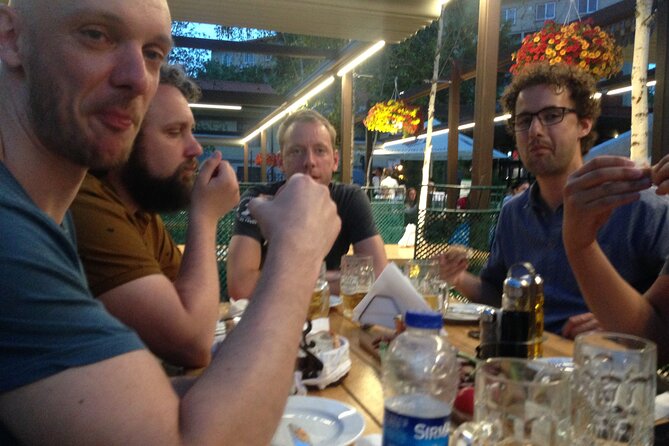
- Lunch is a real part of the experience: You receive a two-course meal with Romanian starters such as cheeses and charcuterie, followed by a main course.
- The route goes beyond the postcard center: Armenian Bucharest, Dacia Boulevard, and Icoanei Garden show a quieter side of the city.
- The final walk reaches Km 0: The tour ends at University Square, a useful central point for continuing your day.
Starting in Old Town, where trade and mici meet
The meeting point is at Bulevardul Ion C. Brătianu 36, near the Old Town. This is a practical starting place because the first section quickly puts you in the middle of Bucharest’s historic core.
Your guide begins with the area’s trading past, when goods moved through the center and business shaped the streets. You also hear the local story connecting Old Town with the invention of mici, Romania’s familiar grilled meat rolls. Food is not treated as a separate stop tacked onto a sightseeing walk. Instead, it helps explain how commerce and daily life formed the city.
The Old Town segment lasts about 30 minutes. You have time to look around and take pictures, but do not expect a museum visit or a long indoor stop. The value here comes from having the streets interpreted for you, especially if this is your first morning in Bucharest.
More Historical Tours in Bucharest
- Bucharest: 3-Hour Dark History Tour with a Local
★ 4.9 · 301 reviews - Bucharest: Small Group History, Art & Secrets Tour
★ 4.7 · 152 reviews - Guided Walking Tour of Historical Bucharest
★ 5.0 · 84 reviews
Stavropoleos, CEC Palace and Macca Villacrosse
The next three stops are close together, so the tour shifts from broad city history to architectural details.
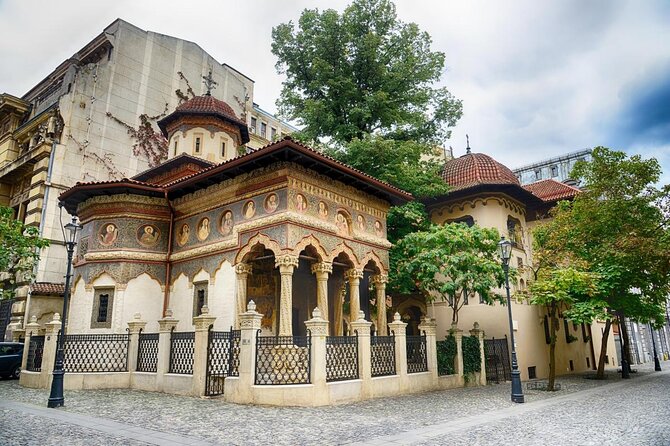
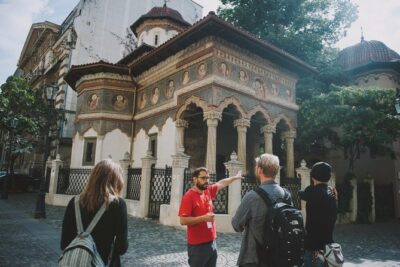
Stavropoleos Monastery is an 18th-century Romanian Renaissance building. The visit is short, listed at about three minutes, but the monastery gives the route a quiet pause after the commercial energy of Old Town. You can admire the style and hear why this small religious site matters within the city.
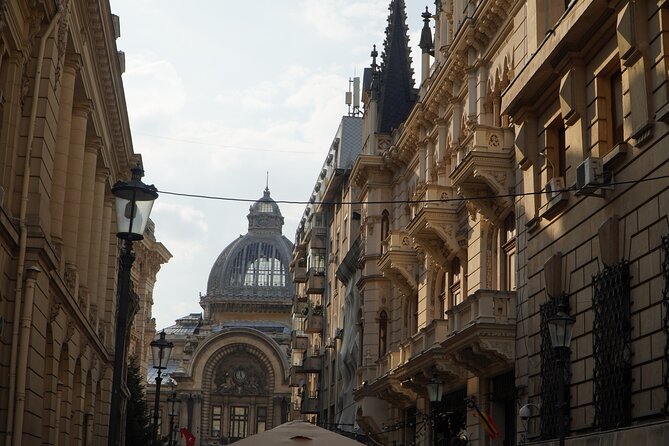
Palatul CEC follows with another quick stop. The former CEC Bank palace was built at the end of the 19th century in an eclectic style. Its appearance reflects Bucharest’s habit of borrowing and reshaping outside architectural ideas. You are not simply ticking off a grand façade. Bianca uses it to explain how the capital changed as it grew more modern and financially important.
Then comes Macca Villacrosse Passage, often described as Bucharest’s most beautiful passage. Allow about five minutes here. The covered passage offers a change of scale from the broad streets and formal buildings, and it is the sort of place that is easy to miss if you are walking without a guide.
These stops are brief by design. If you want long interior visits, this tour may feel too quick. If you prefer a moving city walk with many visual stops, the pace works well.
Banks, Calea Victoriei and the city’s main avenue
The route continues to the BNR Palace, home of Romania’s National Bank, along with the former Marmorsch Blank Bank building, now a hotel. This section gives you a look at the financial side of Bucharest and the grand institutions that helped define the city’s central avenue.
From there, the walk reaches Calea Victoriei. This has been the heart of Bucharest since the 19th century, and the tour gives it about 30 minutes. That longer period matters. Instead of racing past a line of façades, you have time to take in the avenue’s role in the capital and listen to the connections between architecture, money, politics, and social life.
You should expect an outdoor overview rather than entry into every building. Admission tickets are free for the listed stops, but the itinerary does not promise extensive interior access. The strength of this portion is the guide’s explanation and the chance to see several important buildings in sequence.
Pasajul Victoriei and the less polished side of history
Pasajul Victoriei brings a more unusual story. Together with Pasajul Englez, it recalls a former brothel located on the main avenue, with a discreet rear entrance used by the king and upper-class patrons.
This is not a polished palace tale, and that is exactly why it belongs on the route. Bucharest’s past includes private pleasures, social divisions, and behavior that official histories often leave out. The stop lasts about five minutes, enough for the story and a look at the setting.
The subject may not suit every family, but it is handled as part of the city’s social history. If you like travel that includes the awkward and human parts of a place, this is one of the more memorable stops.
More food tours:
- Taste Bucharest: A Food Lover’s Tour of Markets & Neighbourhoods
★ 5.0 · 689 reviews - Street Food’n’Culture Tour
★ 5.0 · 209 reviews - Wine Tasting in Bucharest
★ 5.0 · 183 reviews - Discover Bucharest: Private Highlights and Traditional Food Tour
★ 5.0 · 86 reviews
Revolution Square and the end of Ceaușescu’s rule
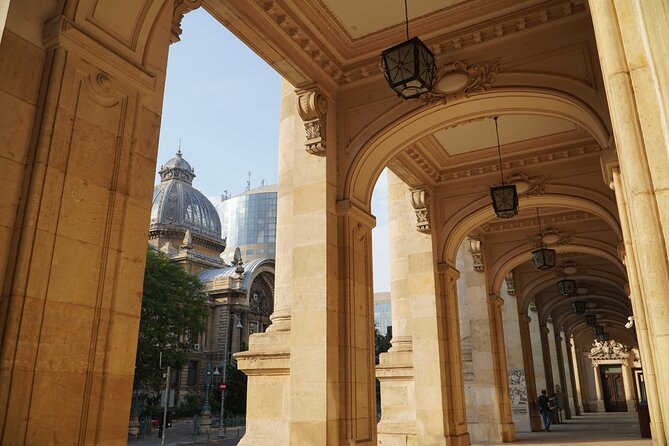
At Piața Revoluției, the tour turns to Romania’s communist period and the 1989 revolution. This is where Nicolae Ceaușescu gave his final speech as the political order around him began to break down.
You spend about ten minutes here. The stop gives the earlier architecture a sharper meaning because you can connect government buildings and public spaces with the events that changed modern Romania. Bianca’s background in journalism is especially useful for this kind of material. She has been praised for presenting the key points of Romanian history while pointing to the actual buildings and streets involved.
This is also where a private tour helps. You can ask for clarification about the revolution, communism, or Ceaușescu without worrying about holding up a large group. The subject is serious, but the walk does not become a lecture. It remains tied to the place beneath your feet.
The Romanian Athenaeum and Royal Palace

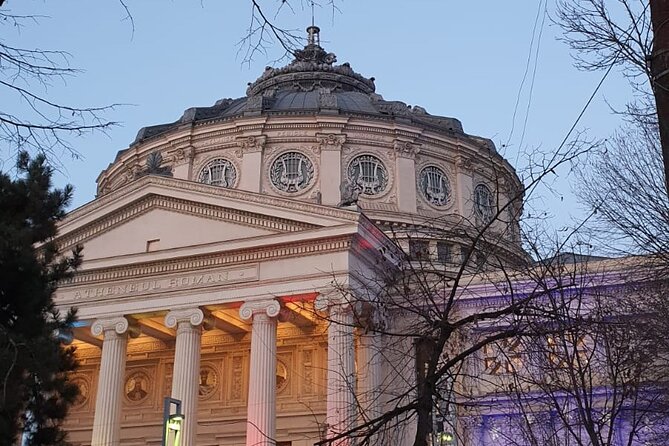
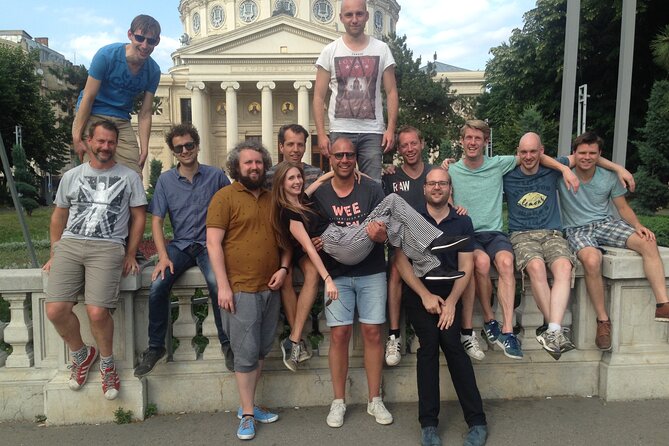
A short stop at the Romanian Athenaeum lets you admire one of Bucharest’s most striking buildings. The itinerary allows about five minutes, so plan on an exterior view rather than a concert or full interior tour.
Next comes the Royal Palace, which now houses the National Art Museum. The stop is listed at about three minutes. The building offers another link between monarchy, modern statehood, and the city’s cultural institutions.
If you want to visit the National Art Museum, set aside separate time. This walking experience gives you an introduction from outside, not a museum admission or guided gallery tour. That distinction helps you plan your day and avoid expecting a full art visit within the four to five hours.
Dacia Boulevard and the villas of old Bucharest
The route then leaves the main avenue for Bulevardul Dacia, where magnificent villas show the neo-Romanian architectural style. This is one of the best reasons to choose this experience over a standard central sightseeing loop.
The walk here lasts around 20 minutes. You see residential architecture rather than only banks, palaces, and official buildings. Neo-Romanian design gives you a clearer sense of how the country looked for its own visual language, blending local references with broader European influences.
The neighborhood portion also makes the 6-kilometer route worthwhile. You are not simply moving between famous landmarks. You get a feel for how Bucharest changes from formal central avenues to quieter streets lined with houses and older institutions.
Central School and Armenian Bucharest

Colegiul Național Școala Centrală is a 19th-century boarding school for girls surrounded by eerie stories. The stop is brief, about five minutes, but the atmosphere and local tales add another layer to the city. The route does not present Bucharest as only a collection of beautiful buildings. It also leaves room for mystery and unsettling folklore.
After that, you explore Cartierul Armenesc, the Armenian neighborhood. Allow about 30 minutes here. This is one of the longer stops because the area has its own history, streets, buildings, and small details to notice.
The Armenian quarter is particularly useful for understanding Bucharest as a city shaped by communities beyond its majority population. The route focuses on history, lesser-known places, and mystery without requiring you to search out the neighborhood alone. I would pay close attention here, since this is the kind of area that can disappear from a first-time itinerary dominated by Calea Victoriei and Old Town.
Icoanei Garden and the final stretch to University Square
The last sightseeing stop is Gradina Icoanei, or Icoanei Garden. Here you hear about a period when witches were believed to cast spells nearby. The visit lasts about ten minutes and provides a lighter, more folkloric finish after the political material at Revolution Square.
The tour ends at University Square on Bulevardul Regina Elisabeta, known as Km 0 of Bucharest. This is a useful finish because you are still in the center, with a clear sense of where you are rather than being left at an out-of-the-way restaurant or neighborhood.
The stated route is approximately 6 kilometers. Wear comfortable shoes and be ready for city pavement, standing, and regular walking. Most people can take part, but the minimum physical fitness requirement should be taken seriously.
The two-course meal and what is included
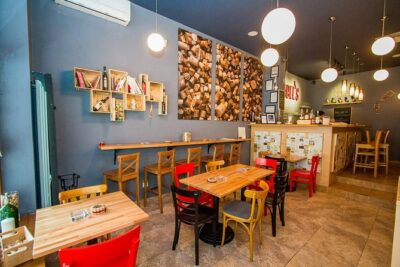
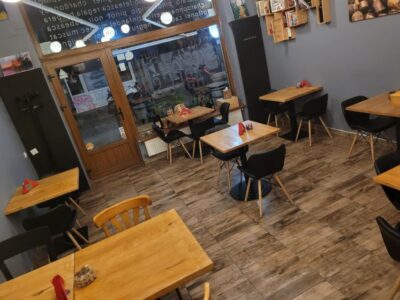
Lunch or dinner is included and consists of two courses. The first is a platter with cheeses, charcuterie, and/or other Romanian starters. The second is a main course.
This is a meaningful part of the price. You are not paying only for a guide and a walk, then searching for food afterward. The meal gives the tour a clear cultural finish, and the food has been praised as authentic Romanian cuisine. Coffee and pastries have also been part of the day for some participants, but the included meal is the part you can count on from the stated details.
Alcohol, soda, and other drinks are not included. Keep that in mind when comparing the $114.14 price with a basic walking tour. The cost includes the private guide, lunch or dinner, taxes, and fees, but not beverages.
For a private group, the value is solid if you care about a tailored pace and a meal. Group discounts may make the price more attractive when several people book together. For one person, the cost is harder to compare with a standard group walk, but the private format gives you more control and direct time with Bianca.
Bianca’s guiding style and the private-tour advantage
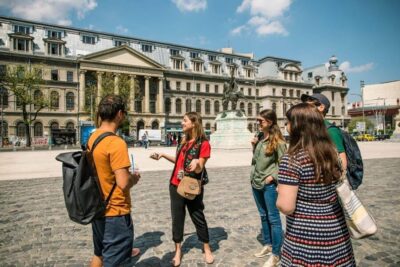
Bianca is the central reason this experience works. Her former journalism career comes through in the way she connects historical events to visible places. She has also been praised for a calm, soft-spoken style, thoughtful route planning, and a willingness to adjust the pace.
That quiet voice can be a drawback in noisy streets. One useful feature helps with this: if the group exceeds four people, audio devices are provided so everyone can hear the live guide while keeping a comfortable distance. For smaller private groups, you may need to stay fairly close, especially beside traffic or crowded streets.
The private setup also works well for families. Bianca has handled a group with a four-year-old and adjusted the experience to the group’s needs. You can stop for photographs, ask for more explanation, or move on when your attention fades.
The route is offered in English. Confirmation arrives at booking, and mobile tickets are supported. The meeting point is near public transportation, though the experience itself is a walking tour rather than a vehicle-based outing.
Who should book this Bucharest experience?
I would choose this tour if you want a first look at Bucharest that combines architecture, politics, food, and neighborhood life. It suits couples, families, and small groups who prefer a private conversation to a fixed large-group schedule.
It is also a good fit if you have only a few days in the city. The route covers Old Town, Calea Victoriei, Revolution Square, the Athenaeum, the Royal Palace, Dacia Boulevard, Armenian Bucharest, and Icoanei Garden in one morning or afternoon. You get a broad introduction without spending the entire day inside museums.
You may want a different plan if your priority is long museum time, extensive church interiors, or a slow restaurant meal with several courses. The many short stops keep the story moving, but they do not allow deep visits inside every landmark.
The tour requires good weather. If poor weather forces cancellation, you can receive a different date or a full refund. You can also cancel free up to 24 hours before the start time, which gives you useful flexibility while planning a Bucharest stay.
Should you book this private Bucharest food and history tour?
Book it if you want a smart first-day orientation, a personal guide, and a proper Romanian meal built into a half-day walk. Bianca’s ability to connect architecture with Romania’s political and social past is the strongest feature, and the private format makes the experience easy to adapt.
Think twice if six kilometers sounds tiring or if you want long indoor visits. For most visitors who enjoy walking, local food, and stories that include both grand palaces and former brothels, this is a well-balanced introduction to Bucharest. At $114.14 per person, it is best value for a small group that will use the guide’s flexibility and share the experience over a meal.
FAQ
How long does the Bucharest private tour last?
The experience lasts approximately four to five hours.
How much does the tour cost?
The listed price is $114.14 per person. Group discounts are available.
Is the tour private?
Yes. Only your group participates in the activity.
What food is included?
The meal includes two courses: a platter with cheeses, charcuterie, and/or other Romanian starters, followed by a main course.
Are drinks included?
No. Alcoholic beverages and soda or pop are not included.
Where does the tour begin?
It begins at Bulevardul Ion C. Brătianu 36, 030167 București, Romania.
Where does the tour end?
The tour ends at University Square on Bulevardul Regina Elisabeta, Bucharest, identified as Km 0 of the city.
How much walking is involved?
The route is approximately 6 kilometers and requires a minimum level of physical fitness.
More Historical Tours
- Bucharest Jewish Heritage | Holocaust Memorial | Private Car Tour
★ 5.0 · 38 reviews - Private Bucharest: History & Food with Traditional Meal
★ 5.0 · 34 reviews - Bucharest Historical Food Tour in Old Center
★ 5.0 · 21 reviews - Half-Day Jewish Heritage Walking Tour in Bucharest
★ 5.0 · 20 reviews
Just added around Bucharest
- 10 hours Private Apiary Tour in Romania – From Bucharest★ 5.0 · 3 reviews
- 4-Day Inside Transylvania & Transfagarasan Tour from Bucharest★ 5.0 · 3 reviews
- Bucharest: Charm of the Belle Époque Private Tour★ 5.0 · 3 reviews
- Bran & Peles Castles through the Best Road in the World: Transfagarasan road★ 4.5 · 3 reviews
- 2-Day Small-Group Tour in Transylvania from Bucharest – Maximum 5 Persons★ 5.0 · 3 reviews
- Private Wine Tasting at Bucharest’s First Wine Bar★ 5.0 · 3 reviews
- Bucharest to Brasov – Fast Private Transfer★ 5.0 · 3 reviews
- Probably the Best Restaurant and Wine Cellar near Bucharest★ 4.5 · 3 reviews
Food & Drink, compared.

Taste Bucharest: A Food Lover’s Tour of Markets & Neighbourhoods
Read our review →
Discover Bucharest: Private Highlights and Traditional Food Tour
Read our review →
Half-Day Private Food and Wine Walking Tour Oradea Romania
Read our review →
Private Bucharest: History & Food with Traditional Meal
Read our review →Browse the lists this tour appears in