
Reviewed · CITY TOURS
Cluj-Napoca Walking City Tour
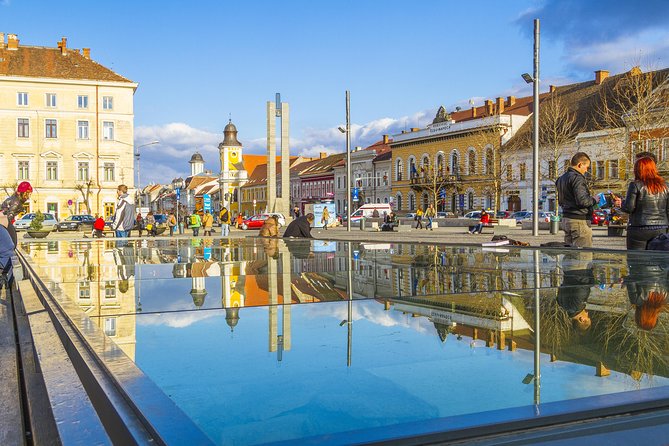
Cluj rewards curious walkers. This two-hour Cluj-Napoca tour gives you a compact introduction to the city through Gothic, Baroque, Romanian, Hungarian, and Saxon influences, with a professional English-speaking guide adding stories and visual material along the way. I like the small group of no more than 10 people, and I like that the route finishes at a viewpoint rather than simply ending on another city street. The main consideration is that the $62 price is not cheap for a two-hour walk, especially since meals and photography fees are not included.
The meeting point in front of the Obelisk is central and easy to identify, and the route covers many of Cluj’s key sights without requiring transport. Guide quality appears to be the strongest part of the experience, with Adrian and Catalin receiving especially warm praise for clear explanations, humor, local pride, and thoughtful answers. You should bring comfortable shoes, and wheelchair users will need to choose another way to explore the center.
In This Review
- Key points at a glance
- Why this Cluj walking tour works as a first introduction
- Museum Square and the Franciscan Church
- Banffy Palace and the National Art Museum
- Union Square and St. Michael’s Gothic tower
- The Baroque Cluj National Theatre
- Old-town streets and Cluj’s mixed identity
- The Fireman Tower and the final city view
- Guide quality and group size
- Is $62 fair for two hours?
- Who should book this walking tour?
- Final verdict: a strong introduction with a premium price
- FAQ
- How long is the Cluj-Napoca Walking City Tour?
- What language is the tour conducted in?
- Where is the meeting point?
- What sights are included on the route?
- Is the tour limited to a small group?
- Is food included in the price?
- Can wheelchair users join the tour?
- What should I bring?
Key points at a glance
- Museum Square sets the scene: Begin among the Franciscan Church, the Art Museum, and the older layers of Cluj’s city center.
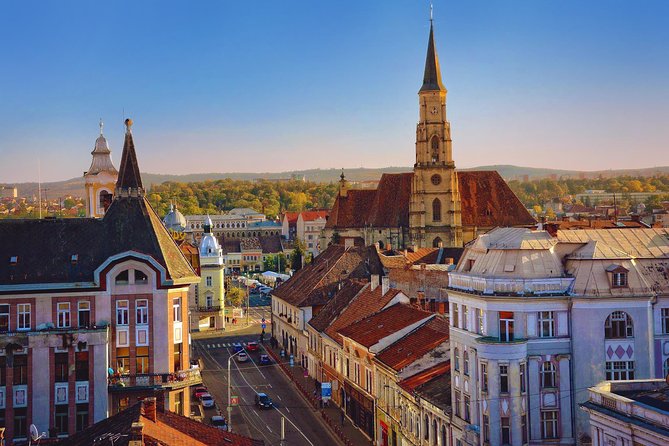
- St. Michael’s Church is the Gothic centerpiece: Union Square gives you a close look at one of the city’s most important landmarks.
- Banffy Palace adds Baroque grandeur: The palace now houses the National Art Museum, linking architecture with Cluj’s art scene.
- The route follows Cluj through time: Your guide explains how Romanian, Hungarian, and Saxon influences shaped the streets and buildings.
- A small group makes questions easier: With a maximum of 10 participants, the walk should feel more personal than a large city tour.
- The ending includes a city view: The route finishes at a location with a notable outlook, with the Fireman Tower highlighted in one particularly positive account.
Why this Cluj walking tour works as a first introduction
Cluj-Napoca can feel like several cities at once. Its center combines medieval church architecture, Austro-Hungarian grandeur, Romanian cultural institutions, student energy, and ordinary local streets where old details are easy to miss. A guide helps you connect those pieces instead of treating each monument as a separate photo stop.
The tour begins from Museum Square and moves through the historical center on foot. That matters because the city’s character is in the spaces between the headline sights: narrow streets, changing façades, old civic buildings, and the way one architectural period sits beside another.
I like this approach more than a fast checklist of monuments. You are not simply told that a church is Gothic or a palace is Baroque. The guide is expected to explain how the city changed over time and how new cultural layers were added to older ones. Visual material is also used during the walk, which can make architectural details easier to understand.
The two-hour length is another practical advantage. It is long enough to give you useful context but short enough to fit around a museum visit, a meal, or an onward train or flight. You should still expect a steady amount of walking. Comfortable shoes are specifically recommended, and that advice is worth taking seriously on an old-town route.
More Walking Tours in Cluj Napoca
- Cluj-Napoca: 2.5-Hour Guided Walking Tour
★ 4.8 · 104 reviews - Cluj-Napoca: 2.5-Hour Guided Walking Tour
★ 4.5 · 29 reviews - Cluj-Napoca Walking City Tour
★ 4.5 · 16 reviews
Museum Square and the Franciscan Church
Museum Square is a sensible starting point because it brings several parts of Cluj together in one place. The Franciscan Church gives the square a strong historical presence, while the nearby Art Museum points to the city’s continuing cultural life.
Your guide uses this opening section to explain Cluj in broad terms before moving into individual buildings. That helps you understand the city as a meeting point of Romanian, Hungarian, and Saxon traditions. Those influences appear not only in architecture but also in the city’s wider cultural identity.
The square is also a good place to settle into the pace of the walk. You meet the English-speaking guide here, after first gathering in front of the Obelisk. Since the tour is limited to 10 people, it should be easier to hear explanations and ask questions than on a large coach-based outing.
The Art Museum is housed in Banffy Palace, so the building itself deserves attention even if you do not enter for a separate museum visit. The tour’s focus is the city rather than an extended art collection visit, but the palace gives you a clear example of Cluj’s formal Baroque side.
Banffy Palace and the National Art Museum
Banffy Palace is one of the route’s most useful stops because it combines architecture and culture in a single address. Its Baroque style offers a sharp contrast with the Gothic forms you see later at St. Michael’s Church.
The palace houses the National Art Museum, a detail that gives the building an active cultural role rather than leaving it as a preserved shell. I like stops like this because they help you see Cluj as a living city. Its historic buildings are not only monuments from the past; some still serve as places for art and public life.
You should not expect this walking tour to replace a dedicated museum visit. The supplied details describe the palace and museum as part of the city route, not a scheduled art-focused tour. If the museum is a priority, ask the guide about it and plan a separate visit if time allows.
The guide’s role is especially valuable here. A quick look at a grand façade tells you very little. A good explanation of who used the building, how its style fits the city, and what changed around it gives the stop much more weight.
Union Square and St. Michael’s Gothic tower
Union Square brings the tour to one of Cluj’s clearest architectural highlights: St. Michael’s Church. The Gothic church supplies the visual drama of the route, and the square lets you take in its scale properly.
The tour presents St. Michael’s within the broader story of Cluj rather than as an isolated church. That chronological approach is useful. You begin with older parts of the city, then see how later styles and institutions were added. The result is a clearer sense of change, not just a collection of attractive façades.
This is also the kind of stop where a guide can point out details you might otherwise pass without noticing. The tour promises interpretation of architectural styles, supported by visual material. That should be helpful if you are interested in buildings but do not normally know the difference between Gothic and Baroque features.
I would allow yourself a little time to look up and around in Union Square. The church is the main attraction here, but the surrounding civic setting is part of the experience. The route is designed to show how important buildings relate to one another within the old town.
More walking tours:
- Cluj : Must-See Attractions Walking Tour
★ 4.8 · 8 reviews - Cluj : Private Walking Tour with A Guide ( Private Tour )
★ 5.0 · 7 reviews - From Cluj: Winter Walking Trip on the Great Mountain
★ 5.0 · 5 reviews - Cluj: Private City Walking Tour
★ 4.4 · 4 reviews
The Baroque Cluj National Theatre
The Cluj National Theatre adds another cultural layer to the walk. Its Baroque-style architecture gives you a different view of the city from the medieval church and older streets.
This stop helps explain why Cluj is more than a preserved historic center. The city’s identity includes performance, art, and public institutions, and the theatre represents that continuing cultural role. Your guide connects these later additions to the earlier parts of the city, moving through Cluj chronologically.
I appreciate that the tour does not limit itself to the most famous church and palace. A city makes more sense when you see its cultural buildings alongside its religious and civic architecture. The theatre also helps break up the route, giving you a change of style and subject.
The exact amount of time spent at each stop is not specified, so do not expect a long interior visit at every landmark. This is a walking overview, built around explanation and connections. If you prefer extended time inside museums or churches, you may need to return independently.
Old-town streets and Cluj’s mixed identity
The most rewarding part of the route may be the walking itself. As you move through the old town, the guide points out the blend of Romanian, Hungarian, and Saxon influences visible in buildings and local culture.
That combination gives Cluj its particular character. You are not looking at a single architectural tradition repeated street after street. Instead, the city shows how different communities and historical periods left their mark.
The guide also brings in stories of people from the past and present. This is important because dates and styles can make a city feel distant. Personal stories and local details give the streets a human scale.
One particularly strong account describes a guide who used humor and charm while explaining Cluj and Romania’s complicated past. Another praises Adrian for placing the city in its cultural and historical setting while also noticing small local features. Those details point to the kind of guiding that can make this tour more than a standard monument walk.
The political and cultural history may sometimes feel complicated, especially if you are new to Romania and Central Europe. That is not a flaw, but it does mean you should expect more than a string of easy facts. The reward is a better understanding of why the city looks and feels the way it does.
The Fireman Tower and the final city view
The tour ends at a location with a notable view across Cluj. The Fireman Tower is specifically praised as a highlight, offering a bird’s-eye view of the city.
A viewpoint is a smart ending for a walking tour. After seeing streets and buildings at ground level, you get a chance to place them together. It can help you understand the shape of the center and remember the route more clearly.
The available details do not guarantee that every departure finishes inside the Fireman Tower, so treat it as the named example of the viewpoint rather than a promise of a specific tower visit. Still, the inclusion of a city view adds value. Many city walks end at the last monument and leave you to find your own sense of place. This one aims to finish with a broader look.
If you enjoy photography, this may be your best opportunity during the tour. Photography fees are not included, so check any applicable charge before taking pictures at a paid site. Your guide can also help you understand what you are looking at, rather than leaving you with a view that is attractive but vague.
Guide quality and group size
The experience depends heavily on the person leading it. The strongest praise goes to Adrian and Catalin, who are described as clear, engaging, helpful, and good at adding amusing stories to serious history.
Catalin is also praised for responding to individual questions and requests. That is a real benefit in a group capped at 10 people. You can ask about a building, a historical period, or a local detail without having to compete with dozens of people.
The tour is offered in English, with a live English-speaking guide. If you need another language, this experience is not presented as a multilingual option. The guide’s use of visual materials is a helpful feature, particularly when discussing architecture or historical changes that are difficult to picture from a short verbal explanation.
I would book this tour for the guide rather than for a simple list of sights. You can see many of the buildings on your own. What you are paying for is the explanation, the route between them, and the chance to ask questions in a small setting.
Is $62 fair for two hours?
At $62 per person, this is a premium-priced short walking tour. The price makes the most sense if you value a small group and a guide who can provide cultural context, local stories, and a well-organized route.
The group limit of 10 is important here. A private tour would normally cost more, while a large group tour may be cheaper but less personal. This sits between the two. You receive a live guide and a focused introduction, but the price does not include meals or photography fees.
You should also consider what you want from Cluj. If you only need directions to the main square and church, you can explore independently at much lower cost. If you want the city’s Romanian, Hungarian, and Saxon influences explained in plain English, the fee becomes easier to justify.
The tour is most valuable early in your stay. A two-hour introduction can help you decide which buildings, museums, or streets deserve a second look. It can also prevent you from missing small details while exploring alone later.
Who should book this walking tour?
I would recommend it to first-time visitors who want a structured introduction without spending half a day on a formal excursion. It also suits people who enjoy architecture, urban history, and stories about how cities change.
The small group should appeal to solo visitors and couples who prefer questions and conversation over a large crowd. English-speaking families with older children may also find the two-hour format manageable, provided everyone is comfortable walking.
It is less suitable for anyone who needs wheelchair access, since the experience is specifically listed as unsuitable for wheelchair users. It may also disappoint you if you want a long museum visit, a food tour, or a broad trip outside the city center. This is a city history walk, not a meal-based experience or a full-day regional outing.
Bring comfortable shoes and arrive at the meeting point in front of the Obelisk with enough time to find the guide. Pets are not allowed. Meals are your responsibility, so plan lunch or coffee before or after the walk.
Free cancellation is available up to 24 hours before the start for a full refund, and you can reserve now and pay later. Those terms are useful if your Romanian itinerary is still changing.
Final verdict: a strong introduction with a premium price
You should book the Cluj-Napoca Walking City Tour if you want the old town explained rather than simply photographed. The route covers Museum Square, the Franciscan Church, Banffy Palace, St. Michael’s Church, Union Square, the National Theatre, and a final viewpoint, all within two hours.
The best reason to choose it is the guide-led context. Adrian and Catalin are praised for clarity, humor, local pride, and attention to questions, which are exactly the qualities that can turn a short city walk into a useful first chapter of your visit.
At $62, I would compare it with your budget and interests. It is not the bargain option, and it does not include food or photography fees. But for a small group, an English-speaking guide, and a well-planned route through Cluj’s layered center, it offers a focused and worthwhile start.
FAQ
How long is the Cluj-Napoca Walking City Tour?
The tour lasts two hours.
What language is the tour conducted in?
The live tour is conducted in English by a professional English-speaking guide.
Where is the meeting point?
You meet the guide in front of the Obelisk.
What sights are included on the route?
The route includes Museum Square, the Franciscan Church, Banffy Palace and the National Art Museum, St. Michael’s Church in Union Square, the Cluj National Theatre, old-town streets, and a final location with a city view.
Is the tour limited to a small group?
Yes. The group is limited to 10 participants.
Is food included in the price?
No. Meals are not included.
Can wheelchair users join the tour?
No. The experience is listed as unsuitable for wheelchair users.
What should I bring?
Bring comfortable shoes. Pets are not allowed, and photography fees are not included.
Just added around Cluj Napoca
- Two days tour to Bucovina & UNESCO Painted Monasteries★ 5.0 · 3 reviews
- Cluj – walking city tour★ 5.0 · 3 reviews
- Transylvania’s Trail: Sibiu, Bran Castle, Brasov, Sighisoara★ 4.6 · 3 reviews
- CJ05 – Mysteries of Transylvania: Bran Castle & Sighisoara★ 4.8 · 3 reviews
- Sighisoara, UNESCO & wine tasting (1 day, from Cluj)★ 5.0 · 4 reviews
- CJ01 – Explore Cluj-Napoca: A Vibrant City Tour in English★ 5.0 · 4 reviews
- 3 Day Tour of Maramures★ 5.0 · 4 reviews
- Sighisoara & wine tasting (from Cluj)★ 5.0 · 4 reviews
City Tours, compared.


Bucharest Panoramic Sightseeing – Private City Tour
Read our review →
SB01 – City Tour Sibiu: Exploring the Heart of Transylvania
Read our review →
City Tour Sighisoara Legends & Landmarks A Walk Through Time
Read our review →Browse the lists this tour appears in