
Reviewed · DRACULA & BRAN CASTLE TOURS
Bucharest Private Tour with Dracula’s Grave and Ceaușescu Mansion
Bucharest keeps its surprises close. This six-hour private tour links the city’s grand avenue, communist-era landmarks, traditional villages, and the legend of Dracula in one manageable day. I like the mix of famous sights and unusual stops, especially Snagov Monastery and the Ceaușescu family home. I also like that your guide can adjust the route after the tour begins.
The main drawback is cost. At $174.53 per person, this is not a budget outing, especially since entrance fees and food are extra. The value improves with a larger private group, since you get a dedicated vehicle, driver-guide, fuel, parking, and road tolls rather than joining a crowded coach.
In This Review
- Key points to know before booking
- Why this six-hour route works
- Traditional Romania at the National Village Museum
- Snagov Monastery and the Dracula connection
- Inside the Ceaușescu Mansion
- Calea Victoriei: royal grandeur beside revolution
- Revolution Square and December 1989
- What the private format is worth
- Who should book this Bucharest tour?
- Final verdict: a strong choice for a focused first visit
- FAQ
- How long is the Bucharest private tour?
- Is hotel pickup available?
- Is this a private tour?
- Is an English-speaking guide included?
- Are fuel, parking, and road tolls included?
- Are entrance fees included?
- Is food included?
- Can the itinerary be changed during the tour?
Key points to know before booking
- Dracula’s grave sits at Snagov Monastery, on an island about 40 minutes outside Bucharest.
- The Ceaușescu Mansion adds a rare personal view of Romania’s communist rulers, with rooms, furnishings, gardens, and family history.
- A private English-speaking guide and vehicle give you more control than a fixed group excursion.
- The National Village Museum brings traditional Romania into one city park, with houses, mills, churches, and farm buildings from across the country.
- Revolution Square and Calea Victoriei connect royal Bucharest with the 1989 uprising, giving the city tour a strong historical thread.
- Six hours suits visitors who cannot manage a 12-hour excursion, a point praised by Kimberly, who booked this shorter option at short notice and was pleased with the result.
Why this six-hour route works
Bucharest is spread out, and its most interesting sights do not sit in one compact old town. A private car solves that problem. You can move from an open-air museum to an island monastery, then return to the city for communist history and grand architecture without spending your day working out buses or taxis.
The timing is fairly ambitious. The stated schedule gives about one hour at the National Village Museum, two hours at Snagov Monastery, one hour and 30 minutes at the Ceaușescu Mansion, 45 minutes on Calea Victoriei, and 30 minutes at Revolution Square. Driving time is part of the six-hour day, so you should expect an active route rather than long, unhurried visits.
I like the private format here because the subjects are quite different. One stop explains rural customs and building styles. Another deals in medieval religious history and a famous vampire legend. The final city stops turn to dictatorship, revolution, and royal Bucharest. A guide who can explain those changes is far more useful than a driver who simply points out buildings.
The guide and driver are the same private contact throughout the outing. English-language guiding is included, and all car expenses are covered. Dan is praised for being congenial and well informed, while Nicu is noted as an on-time guide who made a shorter six-hour format work well. If you are assigned one of them, you can expect a personable style rather than a large-group presentation.
More Dracula and Bran Castle days we have written up:
- Bucharest: Dracula’s Castle, Peles Castle, & Brasov Old Town
★ 4.5 · 17,858 reviews - Bucharest: Dracula Castle, Peles Castle & Brasov Old Town
★ 4.6 · 10,891 reviews - Bucharest: Dracula’s Castle, Peleș Castle & Brașov Day Trip
★ 4.5 · 5,919 reviews
Traditional Romania at the National Village Museum
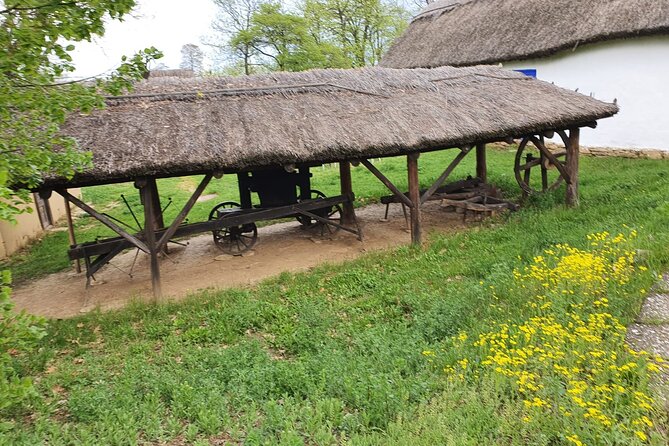
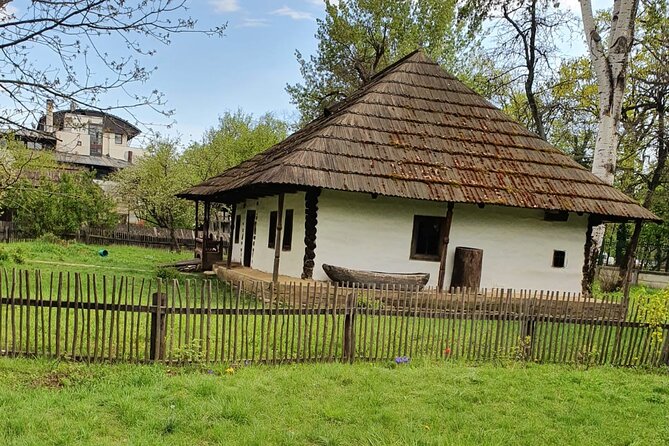
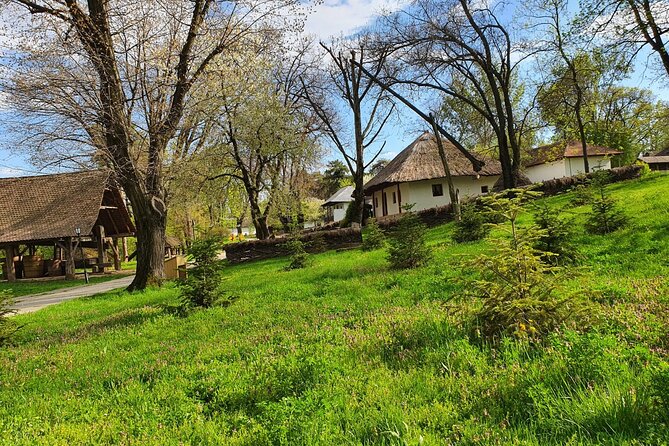
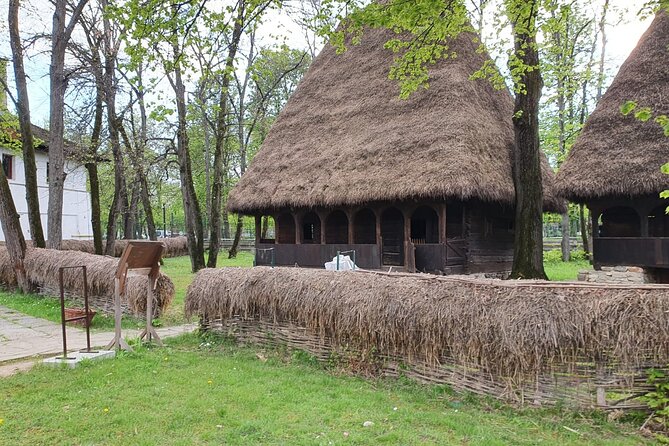
The Dimitrie Gusti National Village Museum is a good opening stop because it gives you a quick grounding in the country beyond Bucharest. Instead of visiting distant rural regions one by one, you see traditional houses and structures gathered in one place.
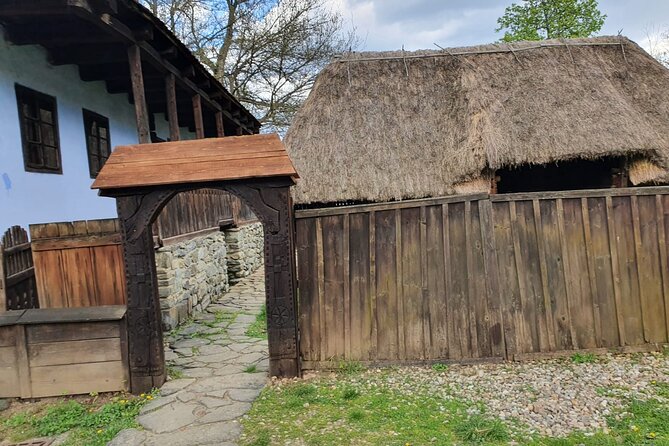
The museum presents wooden and adobe homes, stone buildings, mills, and wooden churches from different parts of Romania. The point is not only architectural variety. You also get a picture of how village families organized daily life, work, faith, and the use of local materials.
I like this stop because it makes Romanian culture concrete. You can look at the size and construction of a house, then consider how a village household lived with the surrounding land. The tour description places emphasis on ecological and sustainable practices, social ties, and spiritual life, so the visit is meant to explain a way of living rather than simply display old buildings.
You have about an hour here. That is enough for an introduction, but not enough for every corner of a large open-air museum. Your guide’s help matters. Without context, an old mill or wooden church can blur into the next building. With a clear explanation, the collection becomes a useful introduction to regional Romania.
Admission is not included, so budget for the entrance fee separately. Wear practical shoes and be ready for outdoor walking. The provided information does not promise a particular amount of free time, museum access, or special demonstrations, so you should treat this as a guided overview rather than a full museum day.
Snagov Monastery and the Dracula connection
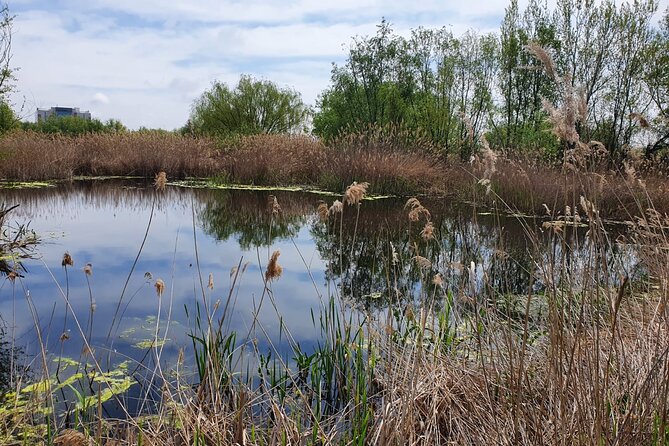
Snagov Monastery is the tour’s most unusual outing. It is located on an island about 40 minutes outside Bucharest, and the site is associated with the tomb of Dracula.
The name attracts attention, but the visit is not simply a vampire-themed attraction. The monastery gives the legend a physical setting: an island, a church, and a grave linked to Vlad the Impaler, the historical figure connected with the Dracula story. Your guide can help separate the medieval ruler from the later fictional character, which is exactly the sort of distinction that makes the stop worthwhile.
The schedule allows two hours here, the longest single visit on the route. That extra time matters because reaching an island takes more effort than stopping beside a city monument. It also gives you room to take in the monastery setting instead of racing in, checking the tomb, and leaving.
There is one practical point to confirm before departure. The information describes Snagov as an island site, but it does not specify the exact transfer arrangements, opening times, or admission price. Entrance is not included. Ask the guide or operator about current access conditions before you go, especially if the monastery is the main reason you booked.
I would keep expectations sensible. This is not presented as a theatrical Dracula show, and there is no promise of actors, special effects, or a themed meal. Its appeal comes from the contrast between a quiet religious site and one of Romania’s best-known legends.
The drive also changes the pace of the day. After the urban museum, you leave Bucharest for a short excursion beyond the city. That makes Snagov feel like a real side trip rather than another downtown photo stop.
Inside the Ceaușescu Mansion
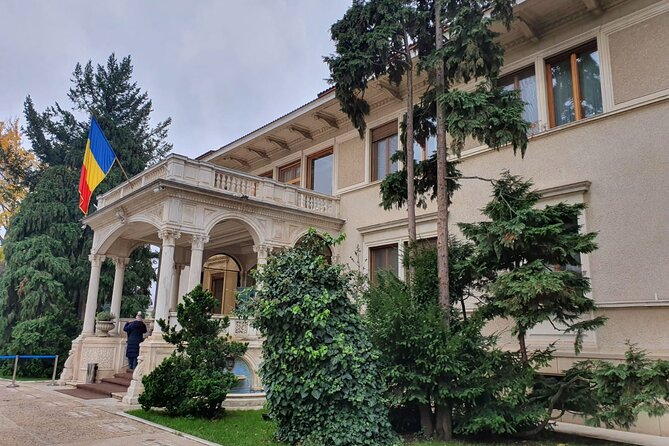
The Ceaușescu Mansion, also known as the Spring Palace, is the strongest stop for understanding the private world of Nicolae and Elena Ceaușescu. The family lived there from 1965 until 1989, along with their children Nicu, Zoia, and Valentin.
You are not seeing a generic communist-era building. This was the family residence for nearly a quarter of a century. The contrast is important: outside the mansion was a country shaped by shortages, surveillance, and political control, while inside the ruling family had a carefully designed private home.
The house was built in the mid-1960s and enlarged between 1970 and 1972. Architect Aron Grimberg-Solari designed the residence, while architect Robert Woll worked on the gardens and also designed much of the furniture. Those details help you read the building as a complete private compound rather than a simple official office.
The visit lasts about 90 minutes, making it one of the tour’s central stops. You can expect the guide to place the rooms, furnishings, gardens, and family story within the Ceaușescu period. The supplied details do not specify which rooms are open on a given day, so do not assume that every private space is accessible.
I like this stop because it avoids reducing the communist period to a few dates at Revolution Square. You see how power was lived at home. The mansion can also prompt uncomfortable questions about privilege, state wealth, and the distance between official ideology and private comfort.
Admission is separate. If political history interests you, this is likely the stop you will value most. If you mainly want medieval sights and old churches, the mansion may feel less appealing, but it gives the entire day a stronger modern Romanian context.
More communist-era history walks:
- The Real tour of Communism
★ 5.0 · 666 reviews - Life under Communism
★ 5.0 · 358 reviews - 3-Hour Guided Tour of Communist Bucharest
★ 4.9 · 303 reviews - Bucharest Essential Tour: Old Town, Calea Victoriei & Communism
★ 5.0 · 142 reviews
Calea Victoriei: royal grandeur beside revolution
Calea Victoriei is Bucharest’s showcase street, but the tour presents it through contradiction rather than simple glamour. Your guide points out the Royal Palace on one side and the former Central Committee of the Romanian Communist Party on the other, near Revolution Square.
That pairing tells you a great deal about Bucharest. Royal power, communist power, religion, commerce, culture, and protest all appear along the same route. You may see old Orthodox churches, museums, theatres, restaurants, tea shops, music retailers, casinos, and souvenir stores.
The 45-minute visit is a moving city orientation rather than a series of interior tours. Admission is free for this part, but the time is too short to properly visit every building named along the avenue. I would think of it as a guided walk or drive with selected stops and explanations.
The Romanian Athenaeum, the CEC Palace, and the National History Museum add architectural and cultural depth. The exact balance depends on traffic, access, and your guide’s choices. The private format helps here because you can express an interest in architecture, royal history, music, or communist-era events.
This is also a good place to watch for the city’s contrasts. Bucharest does not offer one tidy visual style. Elegant facades can sit beside worn buildings, old churches can appear amid commercial streets, and grand public institutions share space with ordinary shops. The tour uses that mixture as part of the story.
Revolution Square and December 1989
The final stop focuses on the event that ended Nicolae Ceaușescu’s rule. Revolution Square is where the former Central Committee building, now associated with the Senate, marks the start of the December 1989 uprising.
You will hear about the moment Ceaușescu was removed from power, including his flight from the building by helicopter. The visit also touches on the questions left behind, including the dictator’s fortune, state security, and disputed accounts involving offshore money.
The scheduled 30 minutes is short, but the location carries serious weight. This is not just another square to photograph. It is a place where public protest, state violence, and political collapse came together. A guide can help you understand how the physical buildings relate to the events.
Because the tour also visits the Ceaușescu home, the sequence works well. At the mansion, you see the private residence of the ruling family. At Revolution Square, you see the public end of that rule. The two stops are more meaningful together than either would be alone.
Do not expect a long museum visit here. There is no admission charge for the square, and the time is designed for explanation and orientation. If you want extensive political discussion, tell your guide early so the flexible schedule can give this subject more attention when possible.
What the private format is worth
The price of $174.53 per person needs to be judged against the group size. The tour is private, so only your party participates. That means the per-person cost may feel high for one or two people, but it can become more reasonable when several people share the vehicle.
Included costs are practical but significant: the private car or minibus, fuel, parking, road tolls, and a licensed English-speaking guide-driver. You also get pickup and flexibility to change the daily route after the tour has started.
That flexibility is the main benefit. The schedule covers a lot, and you may decide that the Village Museum deserves less time while the Ceaușescu Mansion deserves more. You might also need to adjust because of traffic or access at Snagov. A fixed coach tour usually gives you less room to make those choices.
Food, drinks, and all entrance fees are extra. I would plan for those costs before comparing this tour with a cheaper city sightseeing option. The tour is not an all-inclusive package, but it does cover the major transport expenses that can add up on a route extending beyond central Bucharest.
The timing suits people who cannot commit to a 12-hour tour. Kimberly’s experience is useful here: she needed a shorter option, booked this six-hour tour at the last minute, and was happy with the decision. The tour is also booked, on average, 98 days ahead, so advance planning is sensible if your dates are fixed.
Who should book this Bucharest tour?
I would recommend it to you if you want several sides of Romania in one day and prefer a private guide to a large group. It is particularly suitable for couples, families, cruise passengers, and small groups who want a compact introduction without spending 12 hours on the road.
It works well for first-time visitors who want help with context. Bucharest’s sights are spread out, and the city’s royal, rural, communist, and revolutionary stories can be hard to connect on your own.
You should think twice if you want long visits inside museums, a slow food-focused day, or a tour devoted only to Dracula. Snagov is linked to Dracula, but the program also gives substantial time to Romanian village life and the Ceaușescu period.
The private vehicle also makes this a practical choice for anyone who values door-to-door transport. The details provided say most people can participate and that public transportation is nearby, but the tour itself is built around private car travel rather than a self-guided transit route.
Final verdict: a strong choice for a focused first visit
I would book this tour if I had six hours and wanted more than a basic Bucharest city loop. The combination of the National Village Museum, Snagov Monastery, Ceaușescu Mansion, Calea Victoriei, and Revolution Square gives you a clear sense of Romania’s rural traditions, political past, royal architecture, and modern identity.
The price is the sticking point, and admission fees are not included. Still, the private vehicle, English-speaking guide, covered road costs, and ability to change the route make the fee easier to justify for a small group.
Choose it for range, flexibility, and strong historical contrast. Skip it if you want a leisurely day at one museum or a pure Dracula attraction. For a compact introduction led by a dedicated guide such as Dan or Nicu, it offers a useful amount of Bucharest in half a day.
FAQ
How long is the Bucharest private tour?
The tour lasts approximately six hours.
Is hotel pickup available?
Pickup is offered as part of the experience.
Is this a private tour?
Yes. Only your group participates, and the tour uses a private car or minibus.
Is an English-speaking guide included?
Yes. A licensed English-speaking guide and driver are available throughout the tour.
Are fuel, parking, and road tolls included?
Yes. The private vehicle, gasoline, parking, and road tolls are included.
Are entrance fees included?
No. Admission fees for the National Village Museum, Snagov Monastery, and Ceaușescu Mansion are not included.
Is food included?
No. Food and drinks are not included.
Can the itinerary be changed during the tour?
Yes. The experience allows flexibility for changes to the daily route, including changes made after the tour has started.
Just added around Bucharest
- 4-Day Inside Transylvania & Transfagarasan Tour from Bucharest★ 5.0 · 3 reviews
- 10 hours Private Apiary Tour in Romania – From Bucharest★ 5.0 · 3 reviews
- Bucharest: Charm of the Belle Époque Private Tour★ 5.0 · 3 reviews
- Bran & Peles Castles through the Best Road in the World: Transfagarasan road★ 4.5 · 3 reviews
- 2-Day Small-Group Tour in Transylvania from Bucharest – Maximum 5 Persons★ 5.0 · 3 reviews
- Private Wine Tasting at Bucharest’s First Wine Bar★ 5.0 · 3 reviews
- Bucharest to Brasov – Fast Private Transfer★ 5.0 · 3 reviews
- Probably the Best Restaurant and Wine Cellar near Bucharest★ 4.5 · 3 reviews
Dracula & Bran Castle Tours, compared.
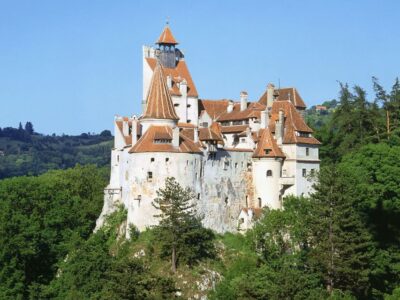
Dracula’s Castle, Peles Castle, & Brasov Old Town
Read our review →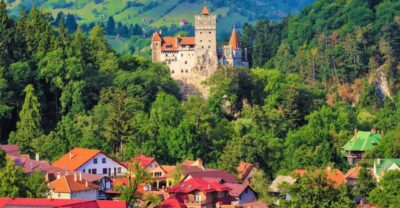
Dracula Castle, Peles Castle & Brasov Old Town
Read our review →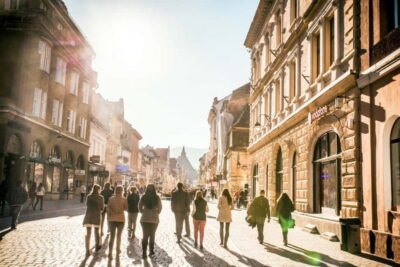
Dracula’s Castle, Peleș Castle & Brașov Day Trip
Read our review →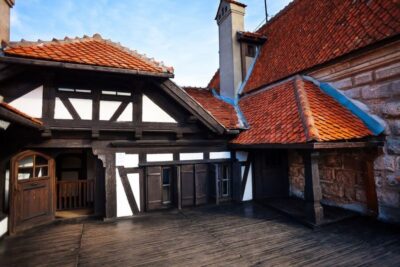
Day Trip to Dracula Castle, Peles Castle & Brașov
Read our review →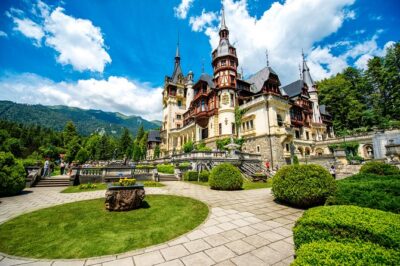
Bucharest to Dracula Castle, Peles Castle and Brasov Guided Tour
Read our review →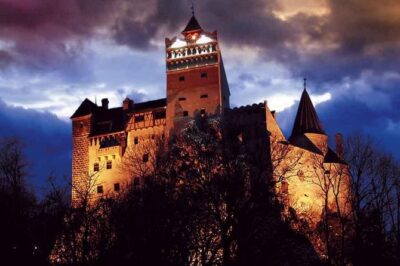
Dracula’s Castle, Peles Castle and Brasov Day Trip from Bucharest
Read our review →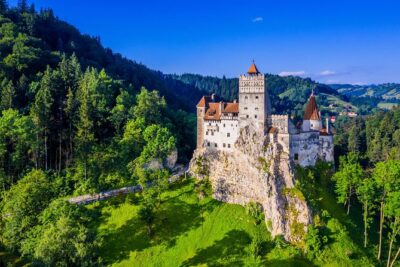
Transylvania and Dracula Castle Full Day Tour from Bucharest
Read our review →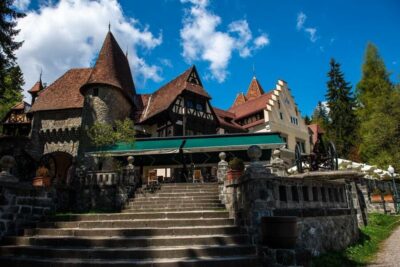
Browse the lists this tour appears in