
Reviewed · CLUJ NAPOCA TOURS
Clasic Tour of Cluj Napoca
Cluj’s grandest stories fit neatly around one square. This private walking tour makes a strong first introduction to the city, with ten central sights packed into about two and a half hours. I like the mix of major churches and smaller details, especially the medieval Tailors’ Tower and mirror-like Iuliu Maniu Street. I also like that a nationally licensed guide leads only your group, so the pace can feel more personal than a large coach tour.
The main drawback is that the schedule is tight. You will see many places, but some stops last only 10 or 15 minutes, and church access can depend on opening hours. The Reformed Church on Wolf Street has a specific afternoon restriction from November through March, so timing matters.
In This Review
- Key details before you book
- Why this Cluj-Napoca walk works well for a first visit
- Piața Unirii and St. Michael’s Church
- The Piarist Church and the university quarter
- The Reformed Church on Wolf Street
- Tailors’ Tower and the city’s medieval edge
- The unusual Trovanți geological display
- The National Theatre and Romanian Orthodox cathedral
- Iuliu Maniu Street, Cluj’s mirror street
- Bánffy Palace and the final return to the square
- What $48.16 buys you
- Timing, comfort, and who should book
- Should you book the Cluj-Napoca Classic Tour?
- FAQ
- Where does the tour begin?
- Where does the tour end?
- How long does the tour last?
- Is this a private tour?
- Is the tour offered in English?
- Is access to St. Michael’s Church Tower included?
- What happens if bad weather cancels the tour?
Key details before you book
- Ten central stops in roughly 150 minutes: The route covers churches, university buildings, a medieval tower, an opera house, a palace, and unusual geological formations.
- A genuinely private format: Only your own group takes part, which is useful if you want to ask questions or keep the walk at a comfortable pace.
- Church interiors are part of the plan: St. Michael’s Church and the Reformed Church on Wolf Street receive more attention than a quick outside photo stop.
- A local guide adds personality: Manuela is specifically praised for her knowledge of Cluj and for speaking French very well, while the tour itself is offered in English.
- The price includes more than sightseeing: At $48.16 per person, you receive a licensed guide and bottled water, with no separate admission charge listed for the stops.
- One timing trap to remember: From November 1, the Reformed Church closes its visits at 2 PM on weekdays, so a tour booked after 1 PM may skip the interior.
Why this Cluj-Napoca walk works well for a first visit
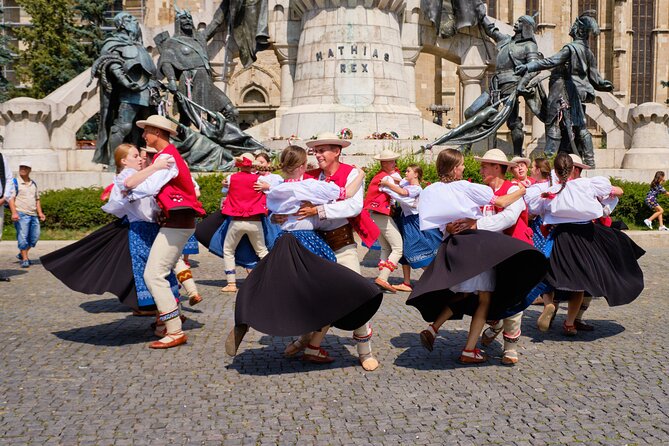
Cluj-Napoca can seem like several cities in one. It has a medieval core, grand Austro-Hungarian architecture, important Romanian Orthodox churches, a major university, and a strong cultural identity. This walk gives you a useful framework for understanding those layers without sending you far from the center.
The meeting point is Piața Unirii, the city’s main square. That is a sensible place to begin because several key sights are close together, and you can return there at the end. You do not spend the tour waiting for a bus or riding between distant neighborhoods. The city reveals itself on foot, one building and one story at a time.
I would think of the tour as an orientation walk rather than a series of long museum visits. You will enter several religious buildings, but the schedule does not leave room for extended private contemplation or a slow look at every architectural detail. The reward is range. In one outing, you see how Cluj’s public life was shaped by religious, academic, military, royal, and theatrical institutions.
The private format helps here. Only your group participates, and that gives you a better chance to ask about a building that catches your eye. It also avoids the stop-and-start feel that can come with a large group. If Manuela leads your walk, you can expect a guide with a clear local connection. One especially favorable assessment describes her as a true local guide with a strong command of the city’s past and very good French. The official tour language is English.
A few more trips worth weighing up before you book
- Curly Tour – Day trip from Cluj 🙂
★ 5.0 · 330 reviews - Cluj: Turda Salt Mine, Corvin Castle, Alba Carolina Tour
★ 4.8 · 184 reviews - Cluj-Napoca: 2.5-Hour Guided Walking Tour
★ 4.8 · 104 reviews
Piața Unirii and St. Michael’s Church
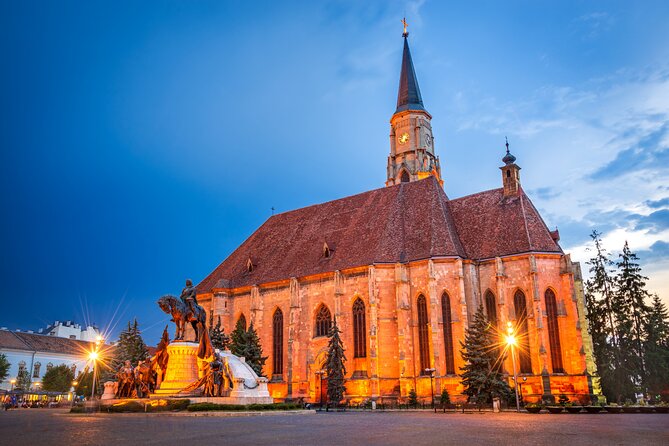
The first major stop is St. Michael’s Church, the Gothic centerpiece of Piața Unirii. You will hear how the building developed from a small chapel outside the old city walls into the imposing church seen today. It is the second-largest church in the geographical region of Transylvania, a useful fact that gives its scale some context.
The interior visit is included, and 25 minutes is a reasonable amount of time for a guided look. Gothic architecture is easier to appreciate when someone points out how the building’s role changed as Cluj expanded around it. I like this opening because it puts the city’s growth into physical form. The church was not always at the heart of Cluj. The city grew toward it.
The optional church tower is not included in the tour price. That is not a serious flaw, since the main church visit remains part of the walk, but you should know that the tower requires separate access if you want it. The tour does not appear to leave much spare time, so do not assume you can add the tower without affecting the rest of your schedule.
The Piarist Church and the university quarter
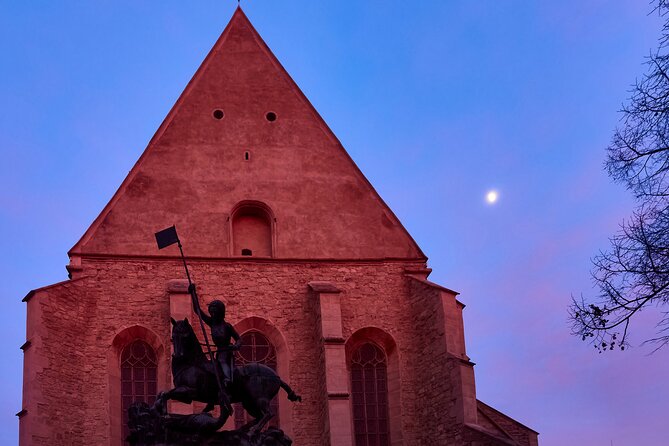
The Piarist Church offers a sharp change in style. It is one of Transylvania’s major Baroque monuments, dedicated to the Holy Trinity. Inside, the key religious object is an icon of the Virgin Mary with the Infant.
The planned stop lasts 15 minutes, and interior access depends on whether the church is open. That uncertainty is typical of working religious buildings, so treat the inside visit as a welcome possibility rather than an absolute promise. Even if access is not available, the exterior still adds an important Baroque note to a route otherwise weighted toward Gothic and Byzantine forms.
Next comes Babeș-Bolyai University, the academic center of Cluj-Napoca. The tour gives you about 15 minutes to learn about the university’s place in the city and see its campus setting. This is not a full campus tour, but it helps explain why Cluj feels like an academic city as well as a historic one.
I find this pairing useful. The Piarist Church points to religious education and Baroque design, while Babeș-Bolyai represents the city’s continuing academic life. You are not just looking at pretty façades. You are seeing institutions that helped shape Cluj’s identity.
The Reformed Church on Wolf Street
The Reformed Church on Wolf Street is one of the most rewarding stops for architecture lovers. Built in the late 15th century, it is a medieval church with a striking collection of coats of arms, described as the largest collection in this part of Europe. The planned visit lasts 20 minutes, and the group enters the church rather than viewing it only from outside.
This is also the stop that requires the most careful planning. From November 1 onward, visiting hours end at 2 PM from Monday through Friday. If your tour begins after 1 PM, the church entrance must be skipped. That restriction is stated clearly, but it is easy to miss when choosing a start time.
If this church matters to you, book a morning tour or an early afternoon departure. The route still includes plenty if the interior cannot be visited, but missing a medieval building with this collection would change the balance of the walk. Ask about the seasonal schedule when you book, particularly if you are visiting in late autumn or winter.
A completely different kind of day out around Cluj Napoca:
- From Cluj: Turda Salt Mine, Gorge, and Remetea Full-Day Trip
★ 5.0 · 84 reviews - Turda salt mine 4h tour from Cluj
★ 5.0 · 73 reviews - Turda Salt Mine, Corvin Castle and Alba Fortress from Cluj
★ 5.0 · 65 reviews - Turda Salt Mine 4h guided tour from Cluj
★ 4.9 · 45 reviews
Tailors’ Tower and the city’s medieval edge
Turnul Croitorilor, or the Tailors’ Tower, is the best-preserved corner tower of Cluj’s medieval city. The stop lasts only about 10 minutes, but that is enough for a concise explanation and photographs.
This is the kind of sight that can be easy to miss if you explore alone. A church or palace announces itself. A surviving defensive tower needs context. The guide’s story helps you understand why the tower stood at a corner of the old city and how it fit into the wider defensive system.
Do not expect a long fortification visit. The value is in seeing a real piece of the medieval boundary still in place, then connecting it with the earlier story of St. Michael’s Church and the city’s growth beyond its walls.
The unusual Trovanți geological display
Muzeul Trovanților brings an unexpected subject into the middle of an architectural walk. Trovanți are geological formations with hard stone cores and sandy exteriors. They can seem to grow when exposed to water, which explains the unusual description of them as living and moving geological formations.
The stop lasts 10 minutes. That makes it a brief curiosity rather than a full geology museum visit, but the change of subject is welcome. After several churches and historic buildings, the trovanți give you a reminder that Cluj’s story is not only about people and architecture.
Because the information provided about this stop is limited, I would keep your expectations modest. Think of it as a quick look at a peculiar natural phenomenon, not a large indoor collection. Its appeal lies in the surprise factor and in the chance to ask the guide how these formations fit into the city’s cultural presentation.
The National Theatre and Romanian Orthodox cathedral
The Lucian Blaga National Theatre and opera house was built between 1904 and 1906 by the Austrian architects Ferdinand Fellner and his design partner. The same building houses both the opera and the National Theatre in Cluj-Napoca. The stop lasts around 10 minutes, so you will mainly take in the exterior and hear its role in the city’s performing arts.
This building broadens the tour beyond medieval and religious architecture. Its date places it in a period when major Central European cities commissioned grand cultural buildings. You get a quick sense of Cluj’s connection to the wider architectural world of the former Austro-Hungarian sphere.
The nearby Metropolitan Cathedral of the Dormition of the Mother of God provides another strong change in style. It is described as a fine example of Byzantine architecture and comes with a humorous story from its construction. The planned visit lasts 15 minutes.
The contrast between the opera house and the cathedral is one of the route’s strengths. Within a short walk, you move from theatrical architecture shaped by Austrian designers to a major Orthodox building with Byzantine influence. A good guide can make that contrast easier to see, especially if you are not familiar with Romania’s different religious traditions.
Iuliu Maniu Street, Cluj’s mirror street
Iuliu Maniu Street is one of the walk’s most photogenic urban stops. Built in the 19th century in a symmetrical arrangement, it follows an eclectic style associated with the Haussmann urban trend. Locals commonly call it strada oglindă, or mirror street, because the buildings on either side reflect one another so closely.
You receive about 20 minutes here, which is generous compared with several other stops. That gives you time to look along the street rather than simply pause for a quick photograph. Symmetry works best when you step back and take in both sides at once.
I like this stop because it explains how a city can be planned for visual effect. The street is not a single monument. Its impact comes from the relationship between the buildings, the alignment, and the repeated architectural language. It is also a good point in the walk to slow down and notice details that a fast schedule might otherwise hide.
Bánffy Palace and the final return to the square
The final listed sight is Bánffy Palace, a splendid 18th-century Baroque building. Once the residence of the noble Bánffy family, it now houses the National Museum of Art. The stop lasts about 10 minutes.
The palace makes a fitting close because it brings together architecture, aristocratic power, and the city’s present-day cultural life. You should not expect a full museum visit during this tour. The short stop is designed to introduce the building and its former role, not to cover the art collection inside.
Since the activity ends back at the meeting point in Piața Unirii, you finish where you began. That is convenient if you want to continue exploring on your own, find lunch nearby, or return to St. Michael’s Church for a second look. The circular arrangement also makes the tour easy to fit into a day of sightseeing.
What $48.16 buys you
At $48.16 per person, this is not the cheapest way to walk around Cluj, especially because the listed sights do not carry a separate admission charge during the tour. The price pays for the private format, a nationally licensed guide, local interpretation, route planning, and bottled water.
That value depends on how you like to sightsee. If you are happy to read plaques and walk from building to building alone, you may prefer a free self-guided route. If you want the city’s churches, towers, and street plan explained in a connected way, the fee is easier to justify.
The private setup is the strongest part of the value. You are not paying for a seat on a large group excursion. Only your own party participates, and the guide can respond to your questions. Group discounts are available, although the exact discount is not specified, so larger parties should check the final price before booking.
The tour is also booked, on average, 57 days ahead. That does not guarantee that every date sells out, but it is a useful planning signal. If your Cluj schedule is fixed, reserving early makes sense, especially if you want a morning departure to protect the Reformed Church visit.
Timing, comfort, and who should book
The full walk lasts about two hours and 30 minutes. Adding the listed stop times produces a similarly tight schedule, so wear comfortable shoes and expect steady movement between sights. Bottled water is included, but you should not treat the tour as a food break.
Most people can participate, and the meeting point is near public transportation. Service animals are allowed. The activity requires good weather, and a cancellation caused by poor weather comes with the choice of another date or a full refund.
I would recommend this tour to first-time visitors, couples, families, and small groups who want a private introduction without committing to a full-day program. It is also a good fit if churches and architecture interest you but you want a guide to explain the connections between them.
I would be more cautious if you prefer long museum visits, extensive free time, or a slow photographic walk. Ten stops in 150 minutes means you will often get an introduction rather than a detailed examination. Church access can also change, with the Piarist Church depending on opening conditions and the Reformed Church restricted by the season and start time.
Should you book the Cluj-Napoca Classic Tour?
Book it if you want a well-packed private orientation to central Cluj-Napoca, especially on a morning when the Reformed Church can be visited. The route has a good balance of Gothic, Baroque, Byzantine, medieval, academic, and theatrical sights, and the return to Piața Unirii keeps the day simple.
Skip it if you want to spend an hour inside each church or museum. For most first visits, though, the combination of a licensed local guide, only-your-group format, and ten varied stops makes the $48.16 price reasonable. If Manuela is your guide, her local knowledge and strong French skills add another useful personal touch, while the tour remains offered in English.
FAQ
Where does the tour begin?
The tour begins at Piața Unirii in Cluj-Napoca, Romania.
Where does the tour end?
The activity ends back at the meeting point in Piața Unirii.
How long does the tour last?
The tour lasts approximately two hours and 30 minutes.
Is this a private tour?
Yes. Only your group participates in the activity.
Is the tour offered in English?
Yes. English is the listed tour language.
Is access to St. Michael’s Church Tower included?
No. Access to the tower is not mandatory and is not included in the tour price.
What happens if bad weather cancels the tour?
You will be offered a different date or a full refund if the activity is canceled because of poor weather.
Just added around Cluj Napoca
- Two days tour to Bucovina & UNESCO Painted Monasteries★ 5.0 · 3 reviews
- Cluj – walking city tour★ 5.0 · 3 reviews
- Transylvania’s Trail: Sibiu, Bran Castle, Brasov, Sighisoara★ 4.6 · 3 reviews
- CJ05 – Mysteries of Transylvania: Bran Castle & Sighisoara★ 4.8 · 3 reviews
- Sighisoara, UNESCO & wine tasting (1 day, from Cluj)★ 5.0 · 4 reviews
- CJ01 – Explore Cluj-Napoca: A Vibrant City Tour in English★ 5.0 · 4 reviews
- 3 Day Tour of Maramures★ 5.0 · 4 reviews
- Sighisoara & wine tasting (from Cluj)★ 5.0 · 4 reviews
Cluj Napoca Tours, compared.
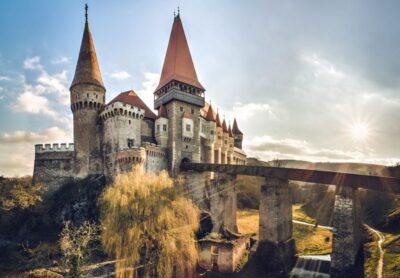
Turda Salt Mine, Corvin Castle, Alba Carolina Tour
Read our review →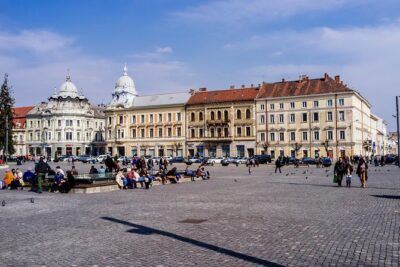
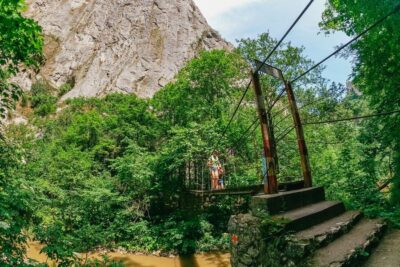
Turda Salt Mine, Gorge, and Remetea Full-Day Trip
Read our review →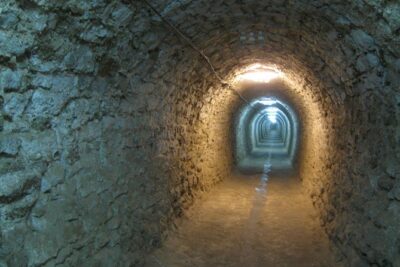
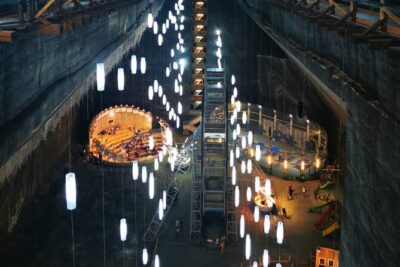
Turda Salt Mine, Corvin Castle and Alba Fortress from Cluj
Read our review →
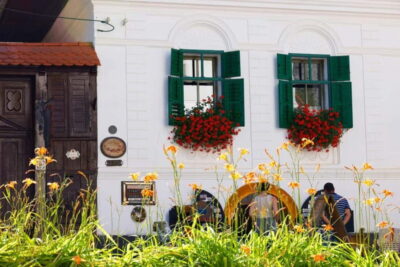
Turda Salt Mines, Rimetea, and Coltesti Fortress Tour
Read our review →Browse the lists this tour appears in