
Reviewed · SALT MINE TOURS
CJ02 – Turda Salt Odyssey: Exploring Romania’s Hidden Gem
Salt turns a mine into a strange adventure. From Cluj-Napoca, this half-day trip takes you to Turda Salt Mine, where vast chambers, old mining tunnels, and an underground amusement area create an experience unlike a normal museum visit. I like the easy private transport and the chance to see one of Transylvania’s most unusual sights without arranging the journey yourself.
I also like the mix of history and playful surprises. You can walk through salt-lined galleries, visit the museum and chapel, then find a Ferris wheel, mini-golf area, and small boating lake far below ground. The main drawback is important: entrance fees are not included, and the driver may provide useful background rather than a formal guided tour inside the mine.
In This Review
- Key points to know before you go
- Leaving Cluj from Piata Unirii
- Turda, an old salt town with more than one attraction
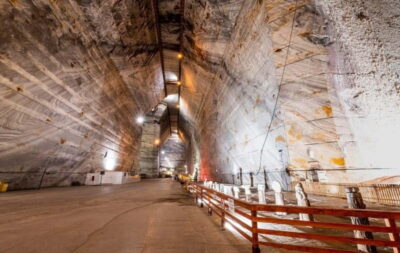
- Entering the enormous salt chambers
- The tunnels and galleries reveal the working mine
- The underground amusement park is wonderfully odd
- The panoramic elevator and the problem of queues
- A small chapel adds a quiet pause
- What the $82 price really covers
- A realistic five-hour schedule
- Who should book this excursion?
- Should you book Turda Salt Odyssey?
- FAQ
- Where does the tour start in Cluj?
- How far is Turda Salt Mine from Cluj?
- How long does the full experience last?
- What departure times are available?
- Is the mine entrance fee included?
- What is included in the tour price?
- Is a formal guide included inside the mine?
- Is the tour suitable for everyone?
Key points to know before you go
- The mine is much larger than photographs suggest, with huge chambers and long passages beneath Turda.
- The underground amusement area is real, including a Ferris wheel, mini-golf, table tennis, and rowing boats, although attractions can be closed.
- Private transport saves time, with a modern air-conditioned car or van and an English-speaking driver.
- The elevator can be crowded, so be ready for stairs if you want to reach the lower areas sooner.
- The price is for transport and tour support, not admission, so add the mine entrance fee to your budget.
- Two daily departure times are available, at 10:00 and 14:00, with a total duration of about five hours.
Leaving Cluj from Piata Unirii
The meeting point is the KFC at Piata Unirii in central Cluj-Napoca. That makes the start fairly simple if you are already sightseeing around the main square, but it is worth checking the exact pickup details before setting off.
The drive to Turda covers about 30 kilometres, or 18 miles. It usually takes 40 to 45 minutes by car or bus, depending on traffic. A private vehicle is useful here because the journey is short, the departure times are fixed, and you return to the same central point in Cluj.
You can choose a 10:00 departure or a 14:00 departure. The morning option gives you more breathing room for the mine, especially if the elevator is crowded or you want to inspect the museum and tunnels at a relaxed pace. The afternoon departure works well if you prefer a slower morning in Cluj, though any delay can make the five-hour schedule feel tighter.
Your transport is a modern air-conditioned car or van. Parking and road taxes are covered, and the English-speaking driver can share information about Cluj, Transylvania, and the mine along the way. Several drivers have been praised for being friendly and helpful, including Adrian, Lucian, and Andrea. Andrea was especially appreciated for her historical knowledge and warm approach, while Lucian offered local suggestions for later in the trip.
Still, keep your expectations clear. This is not automatically a fully guided museum tour. The driver may explain the area during the drive, but once you enter the mine, you may explore independently. If detailed interpretation matters to you, ask before booking exactly what level of guiding is included.
More Salt Mine Tours in Cluj Napoca
- Cluj: Turda Salt Mine, Corvin Castle, Alba Carolina Tour
★ 4.8 · 184 reviews - From Cluj: Turda Salt Mine, Gorge, and Remetea Full-Day Trip
★ 5.0 · 84 reviews - Turda salt mine 4h tour from Cluj
★ 5.0 · 73 reviews
Turda, an old salt town with more than one attraction
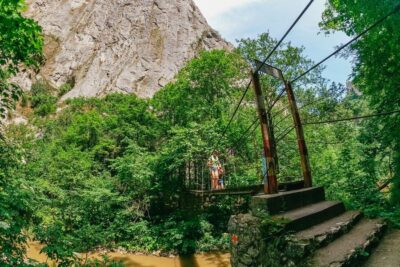
Turda is a historic town in Cluj County, in the Transylvania region of Romania. Its best-known sight is the salt mine, but the surrounding area also connects with Turda Gorge and the Cheile Turzii Natural Park.
The route is promoted as including views toward the Western Carpathians and Cheile Turzii. The stated stop, however, is Turda Salt Mine, so you should not assume you will have time for a separate hike or extended visit to the gorge. Think of the outdoor scenery as part of the drive rather than a second full attraction.
Turda’s importance comes from salt extraction. Salt was valuable for food preservation, trade, and daily life, and the mine preserves the spaces created by that work. The setting helps you understand how much labor went into cutting and moving salt long before modern visitor facilities appeared.
Entering the enormous salt chambers
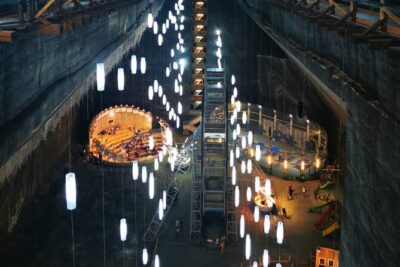
The first strong impression comes from the scale. The mine contains large chambers with very high ceilings and salt-covered walls. Spaces such as Crama Mare, Sala de Ecouri, and Sala Unirii show different parts of the underground complex.
Sala de Ecouri, or the Echo Chamber, has a name that tells you what to notice. Sound behaves differently in a large enclosed room, and the chamber gives you a sense of the mine’s size. Sala Unirii, or the Unity Chamber, is another major space, with towering walls and a broad open interior.
The salt creates a dry, unusual atmosphere. The mine is also known for a therapeutic microclimate, and the air is often presented as helpful for people with respiratory conditions. That may be part of the appeal for some visitors, but this excursion is still primarily a sightseeing experience, not a medical treatment.
You will likely spend much of your visit walking, standing, and looking upward. The mine is not a quick photo stop. Its scale takes time to absorb, and the best experience comes when you allow yourself to pause in the large rooms rather than rushing straight toward the amusement area.
The tunnels and galleries reveal the working mine
The connecting tunnels and galleries make the visit feel more like an underground journey than a single museum room. You can walk through the network, see salt formations, and notice how the mine changes from narrow passageways to giant chambers.
Some sections feature salt stalactites and other geological shapes. These are not polished decorations added for tourists. They form part of the mine’s natural character, and they give the tunnels a rougher, more physical feel than the large restored chambers.
This is also where the mining story matters most. The galleries show the practical side of salt production, while the huge chambers show the result of that work. You may find the historical information too brief if you want a detailed account of tools, labor, and extraction methods. That was a repeated weakness in the experience, especially for people who expected a formal explanation inside the mine.
The Salt Museum helps fill that gap. Its displays cover mining tools, the development of salt extraction, and traditional methods used in the region. I would give the museum proper attention instead of treating it as a quick stop on the way to the boats.
More salt mine trips underground:
- Turda Salt Mine, Corvin Castle and Alba Fortress from Cluj
★ 5.0 · 65 reviews - Turda Salt Mine 4h guided tour from Cluj
★ 4.9 · 45 reviews - Cluj: Turda Salt Mines, Rimetea, and Coltesti Fortress Tour
★ 4.9 · 42 reviews - Day Trip To Turda Salt Mine, Rimetea Village & Coltesti Fortress
★ 5.0 · 25 reviews
The underground amusement park is wonderfully odd
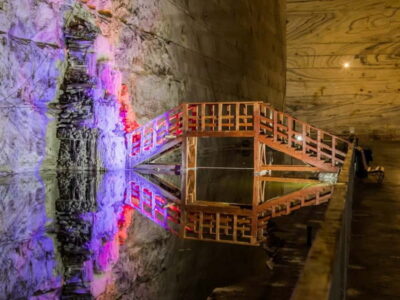
Then the mine changes character. Far below ground, you find an amusement area with a Ferris wheel, mini-golf, table tennis, and a boating lake. It is an odd combination, but that is part of the charm. Few sightseeing stops let you move from industrial archaeology to an underground fairground in the same visit.
The boating lake offers rowing boats, and mini-golf gives families or groups something active to do. Table tennis adds another casual option. These activities make the mine less formal and can keep younger visitors interested after the long walk through the chambers.
The Ferris wheel is the most memorable feature, but it is not guaranteed to operate. It was out of service during some visits, and other attractions may also have limits depending on the day. You should treat it as a bonus rather than the main reason to pay for the excursion.
There is also a practical point here. Some people feel the amusement facilities distract from the mining story. I understand that criticism. If you want a quiet, serious industrial museum, the boats and games may seem out of place. If you enjoy unusual settings and a little harmless fun, the contrast makes Turda more memorable.
The panoramic elevator and the problem of queues
The modern panoramic elevator gives you a striking way to descend into the mine. As you move downward, you can look into the underground chambers and grasp the depth of the site.
The elevator is also one of the tour’s logistical trouble spots. It can become very crowded, creating long waits. Stairs are available, but reaching the lower sections involves many steps. You need a reasonable level of mobility if you want to avoid waiting for the lift.
This matters because the mine is much more enjoyable when you are not worried about keeping up or choosing between a long queue and a tiring climb. Wear comfortable shoes, take your time, and be realistic about your energy. The excursion is not suitable for people over 95, according to the activity information, and anyone with difficulty managing steps should consider the elevator wait before booking.
The panoramic descent is worth experiencing if the line is manageable. It gives you a better visual sense of the mine than simply arriving at the bottom through a closed lift shaft. But on a busy day, patience may be part of the ticket.
A small chapel adds a quiet pause
Among the large chambers and playful facilities, the underground chapel feels unexpectedly calm. It adds a spiritual note to the mine and reminds you that these spaces have served more than an industrial purpose.
The chapel is small, so do not expect a major religious monument. Its value comes from the setting. After the noise of the amusement area and the echoing chambers, this simple room offers a short pause.
That contrast is one of the strongest things about Turda. The mine is not just an old workplace, not just a museum, and not just an entertainment centre. It combines all three, sometimes elegantly and sometimes awkwardly.
What the $82 price really covers
The listed price is $82 per person. That is not a cheap transfer, particularly because mine entrance fees are extra. You should calculate the total cost before deciding if the convenience is worth it.
What you receive is private half-day transport from Cluj, an English-speaking specialized driver, parking and road taxes, and a map of Romania. The vehicle removes the need to work out the trip yourself, and the driver can add useful local context on the road.
The value is strongest for two or more people who want a straightforward outing with a set return to Cluj. It is also helpful if you prefer not to deal with public transport, parking, or an unfamiliar regional route.
The value is weaker if you only want a ride to the mine. A complaint about the price focused on paying for transport while still buying admission separately. That concern is fair. If your priority is the lowest possible cost, compare the tour with a bus, taxi, or ride-hailing service before you reserve.
The experience has a 4.5 rating from 16 ratings, with especially warm praise for friendly drivers and the sheer scale of the mine. The strongest positive point is not a polished tour script. It is the combination of easy transport and a genuinely strange, impressive destination.
A realistic five-hour schedule
A typical day follows this pattern:
- Meet at the KFC near Piata Unirii in Cluj.
- Drive roughly 40 to 45 minutes to Turda.
- Visit the salt mine, including the chambers, tunnels, museum, chapel, and underground recreation area.
- Return to Cluj and finish at the original meeting point.
Five hours is enough for the mine and transport, but it does not leave much room for a separate Turda Gorge visit. If the mine is busy, the elevator queue can take time from the visit. A morning departure is the safer choice if you want to inspect the historical displays and still enjoy the lower chambers without rushing.
Bring a camera. The high ceilings, salt walls, elevator descent, and underground Ferris wheel provide unusual photographs. Alcohol and drugs are not allowed, and normal sensible behaviour is expected inside the site.
Who should book this excursion?
I would recommend it to first-time visitors to Cluj who want one unusual regional outing without handling transport themselves. Families may enjoy the mix of educational spaces and underground activities, while photographers will appreciate the scale and odd lighting of the mine.
It also suits anyone curious about industrial heritage but not interested in a dry museum-only visit. The Ferris wheel, boats, and mini-golf make the stop more varied, even if some activities are closed.
I would be more cautious if you want a detailed guided explanation of salt mining. You may receive good information from the driver, but the mine visit itself may be self-guided. I would also think twice if you dislike stairs, crowded elevators, or extra admission charges.
The tour runs daily and requires at least two people. Free cancellation is available up to 24 hours before departure, and you can reserve while paying later, which helps if your Cluj schedule is still changing.
Should you book Turda Salt Odyssey?
Book this trip if you want easy transport to a truly unusual place and you are happy to explore much of the mine on your own. Turda Salt Mine is the main reward: the giant chambers, old galleries, chapel, and underground amusement park create a memorable half-day away from Cluj.
Skip it if your only goal is the cheapest possible transport, or if you expect a fully guided historical tour with admission included. Before paying, confirm the current entrance fee, ask whether a formal guide will accompany you inside, and check whether the Ferris wheel is operating.
For most people, the mine is worth seeing. Just budget honestly, allow for queues, and treat the underground amusement park as a curious extra rather than the whole point of the day.
FAQ
Where does the tour start in Cluj?
The meeting point is the Kentucky Fried Chicken restaurant at Piata Unirii in Cluj-Napoca.
How far is Turda Salt Mine from Cluj?
Turda is about 30 kilometres, or 18 miles, from Cluj-Napoca. The drive usually takes 40 to 45 minutes by car or bus, depending on traffic.
How long does the full experience last?
The tour duration is about five hours, including transport between Cluj and Turda.
What departure times are available?
The stated departure times are 10:00 and 14:00. The tour operates daily.
Is the mine entrance fee included?
No. Entrance fees are not included in the $82 per-person price, so you need to budget for admission separately.
What is included in the tour price?
The price includes transport in a modern air-conditioned car or van, an English-speaking specialized driver, parking taxes, road taxes, and a map of Romania.
Is a formal guide included inside the mine?
The activity includes an English-speaking driver, but it does not clearly promise a formal guided tour inside the mine. Confirm this before booking if detailed commentary is important to you.
Is the tour suitable for everyone?
The activity is not suitable for people over 95. The mine also includes many steps, and elevator queues can be long, so consider your comfort with walking and waiting before reserving.
Just added around Cluj Napoca
- Two days tour to Bucovina & UNESCO Painted Monasteries★ 5.0 · 3 reviews
- Cluj – walking city tour★ 5.0 · 3 reviews
- Transylvania’s Trail: Sibiu, Bran Castle, Brasov, Sighisoara★ 4.6 · 3 reviews
- CJ05 – Mysteries of Transylvania: Bran Castle & Sighisoara★ 4.8 · 3 reviews
- Sighisoara, UNESCO & wine tasting (1 day, from Cluj)★ 5.0 · 4 reviews
- CJ01 – Explore Cluj-Napoca: A Vibrant City Tour in English★ 5.0 · 4 reviews
- 3 Day Tour of Maramures★ 5.0 · 4 reviews
- Sighisoara & wine tasting (from Cluj)★ 5.0 · 4 reviews
Salt Mine Tours, compared.
Turda Salt Mine, Corvin Castle, Alba Carolina Tour
Read our review →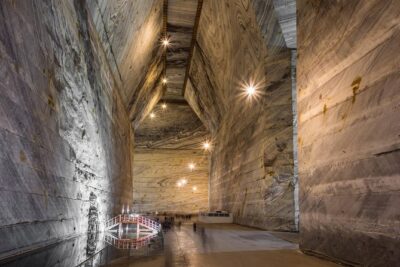
Turda Salt Mine, Gorge, and Remetea Full-Day Trip
Read our review →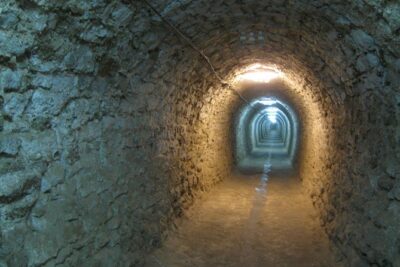
Turda Salt Mine, Corvin Castle and Alba Fortress from Cluj
Read our review →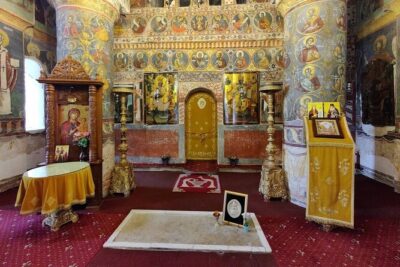
Private Tour to Salt Mine, Lunch at Winery and Dracula Grave
Read our review →Browse the lists this tour appears in