
Reviewed · WALKING TOURS
Timisoara: Classic Walking Tour
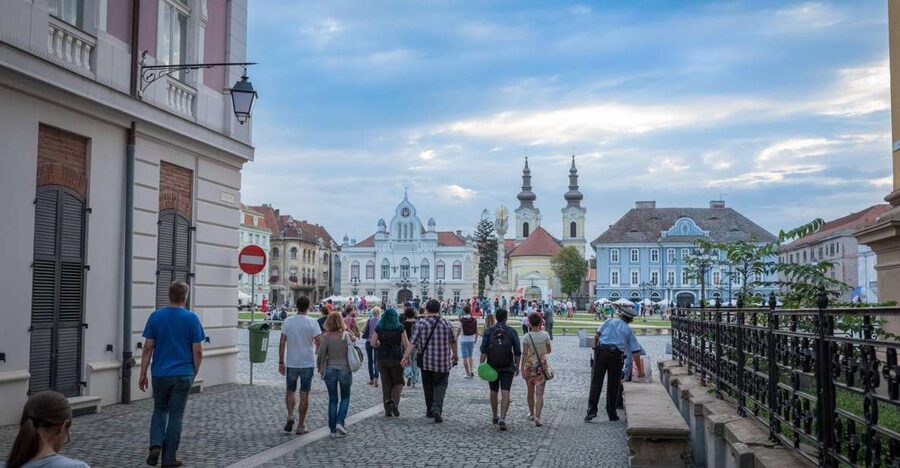
Timișoara tells its story on foot. This two-hour private tour gives you a useful first look at the city, from Mongol attacks and Ottoman rule to Austrian rebuilding and the 1989 revolution. I like the way it joins major events to everyday life in Romania, rather than treating the city as a row of old buildings. I also like the small private-group format, which leaves room for questions and personal stories.
The strongest part is the human touch. Guides such as Armand and Alex Muntean are praised for making the walk lively, personal, and suitable for families. One point to consider is the fixed two-hour length: you will get a broad introduction, but not an exhaustive visit to every landmark. The tour also may not include the Metropolitan Cathedral, a detail one guest specifically suggested adding.
In This Review
- Key points at a glance
- Starting in central Timișoara
- From medieval attacks to Ottoman Timișoara
- Austrian rebuilding and the city you see today
- Trams, electric lights, and modern city life
- Romania after communism and the 1989 revolution
- The guides and the private format
- What the two hours can and cannot cover
- Who should book this Timișoara walk?
- Booking details worth knowing
- Should you book the Classic Walking Tour?
- FAQ
- How long is the Timișoara Classic Walking Tour?
- How much does the tour cost?
- Where does the tour meet?
- Is the tour private?
- Which languages are available?
- Is a tour guide included?
- What historical periods does the tour cover?
- Does the tour discuss modern Romanian society?
- Does the tour include the Cathedral of the Three Hierarchs?
- Can I cancel for a full refund?
Key points at a glance
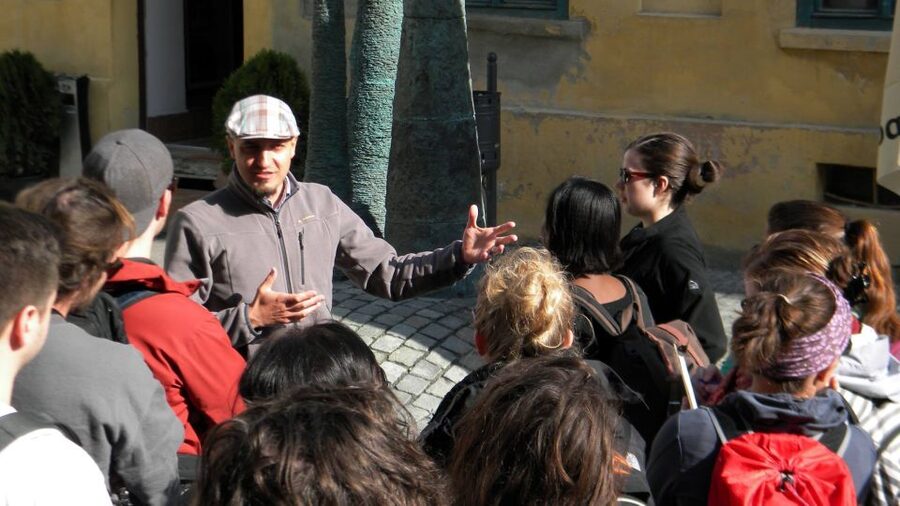
- A private two-hour walk: You get a focused introduction without being folded into a large group.
- Three major eras in one route: The story moves from medieval attacks to Ottoman Timișoara, Austrian rule, and modern Romania.
- Local life is part of the subject: The guide explains what it feels like to live in Romania and how society has changed.
- Technology shaped the city: You learn about Timișoara’s early trams and its place in the history of electric street lighting.
- English and Romanian guiding: You can choose between these two languages when booking.
- A strong record for storytelling: Armand and Alex Muntean are singled out for warmth, personal anecdotes, and the ability to connect with children.
Starting in central Timișoara
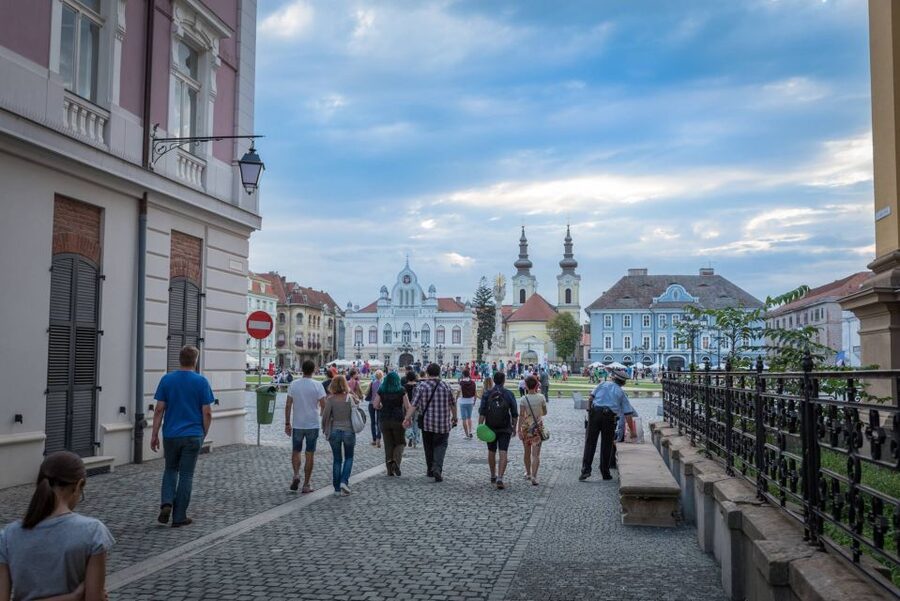
The meeting point is in front of the tourist information center. That is a sensible place to begin because you can find the guide in a central, visitor-friendly setting and start the walk with basic orientation.
The opening is not just a list of dates. You first hear about Romania’s present situation, which helps put Timișoara in context. That matters here. The city’s story is tied to several empires, ethnic communities, political changes, and shifts in daily life. A short explanation at the beginning can make the later stops easier to understand.
I appreciate this kind of introduction because Timișoara can seem visually calm at first glance. Its squares and streets are attractive, but the reasons they look this way are not always obvious. The guide helps you see that the city was repeatedly reshaped by conflict, occupation, technology, and political change.
Since the tour is private, you should be able to ask for clarification as the story unfolds. The available information does not promise a specific group size beyond the private format, but private guiding usually makes it easier to set the pace around your interests. If you are visiting Timișoara for only a short time, this opening gives you useful bearings without taking up half the day.
More walking tours:
- Timisoara All in One – Walking and Tram Tour
★ 5.0 · 72 reviews - Timisoara: Guided Walking Tour
★ 4.9 · 38 reviews - Timișoara Highlights – Walking Tour
★ 5.0 · 28 reviews
From medieval attacks to Ottoman Timișoara
The historical story begins centuries ago with the Mongol invasion. This early chapter helps explain that Timișoara was not an isolated provincial town. Its position in the Banat made it part of a wider zone of movement, conflict, trade, and competing powers.
The route then reaches the years of Turkish occupation. Here, the guide points out where important Ottoman-era features once stood, including a public bath, a bazaar, and the Central Mosque. These places are especially valuable to discuss because they may no longer be visible as complete buildings. A walking tour can connect the modern street plan with what has disappeared.
That is one of the best reasons to choose a guide in Timișoara. Without explanation, you may pass through an ordinary-looking part of the city and never know that it once held a bathhouse or market. The guide turns absence into part of the story. You learn not only what remains, but what was removed, replaced, or forgotten.
This section should appeal to anyone who enjoys urban history but does not want a lecture detached from the streets. You hear how people used the city, not only which ruler controlled it. The bazaar suggests commerce and social contact. The bath suggests daily routines. The mosque points to the religious and political life of Ottoman Timișoara.
The tour does not appear to promise entry into preserved interiors at these stops. I would treat this part as an outdoor history lesson, supported by stories and locations rather than a sequence of museum visits. That keeps the pace moving, but it also means you should not book this walk expecting long indoor sightseeing.
Austrian rebuilding and the city you see today
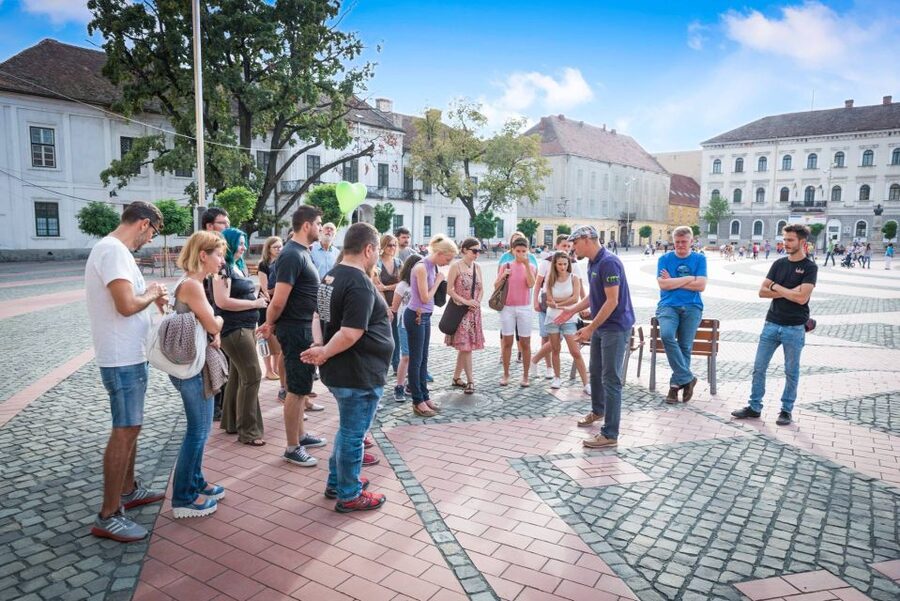
A major change came when Austrian imperial troops conquered Timișoara at the beginning of the 18th century. The city was then rebuilt on a large scale. Wooden medieval buildings disappeared, new streets and houses were laid out, and a fortification system was established.
This is the point where the walk explains the physical character of central Timișoara. Streets, buildings, and defensive works are not random leftovers. They reflect a deliberate rebuilding program after Ottoman rule. Once you know that, the city becomes easier to read.
I like tours that explain why a place looks the way it does. You can take photographs of attractive façades anywhere, but the better question is why those façades and streets exist. Here, the answer involves imperial planning and a complete change in construction. The guide links the visible city to the political decision to rebuild it.
The shift from wooden medieval structures to new streets and houses also gives the tour a clear before-and-after shape. First, you hear about layers that have vanished. Then you learn how a later power created a new urban setting. The result is a more useful understanding of Timișoara than a simple parade of monuments.
The fortifications add another practical layer. They show that the city was built not only for homes and commerce, but also for defense. The available details do not identify each surviving section or promise a stop at a particular gate, so you should think of the fortification story as part of the wider route rather than a full military tour.
Trams, electric lights, and modern city life
Timișoara’s story is not limited to invasions and empires. The guide also covers the city’s early tram system, built to connect people from the suburbs with the center. That detail brings the tour into ordinary life: how people got to work, shopped, met one another, and became linked to the central city.
The tour also presents Timișoara as the first place in continental Europe to use electric street lighting. This is the kind of fact that gives the city an unexpected place in European technological history. It also helps explain how urban life changed as public space became usable after dark.
I find these details particularly useful because they stop the tour from becoming too focused on rulers and battles. A city is also defined by transport and light. The tram connected neighborhoods, while electric lighting changed how streets could be used. These are practical improvements, but they also affected social life.
The guide promises additional facts, anecdotes, and stories beyond these headline points. Since the experience lasts two hours, the exact balance may vary by guide and by the questions you ask. A private group gives you a good chance to spend more time on technology, politics, architecture, or daily life if one subject catches your attention.
If you prefer a tour built around famous buildings only, this may feel different from what you expect. Its appeal lies in the links between events and modern life. I would choose it as a first walk, then visit specific interiors or museums separately if you want more detail.
A few more trips worth weighing up before you book
- The Classic Tour of Timisoara
★ 5.0 · 154 reviews - Weekly Guided Tour in English – Tuesday, Thursday, Saturday
★ 5.0 · 84 reviews - Day trip to Corvin Castle and Sibiu (and back) from Timisoara
★ 5.0 · 30 reviews - Danube Gorge & Banat Waterfalls
★ 5.0 · 27 reviews
Romania after communism and the 1989 revolution
The final major chapter reaches contemporary Romania and the revolution against the communist regime. Timișoara has a central place in that story, and the tour uses the city to explain how political change affected local people.
The available information does not list every revolution site or promise entry to a museum, so I would not expect a detailed specialist route devoted only to 1989. Instead, you get the revolution as part of a wider account of Timișoara’s development. That broader approach has value because it places modern events alongside the city’s earlier occupations and rebuilding.
The guide also discusses what it feels like to live in Romania and how society has changed over recent decades. This is one of the most useful parts for someone who wants more than old architecture. You can ask about the difference between the country’s recent past and its present, using the city around you as a starting point.
I especially like that the tour connects national change to local experience. Political history can seem distant when told only through dates. A guide who adds personal observations and anecdotes can make it more understandable. Armand is praised for turning the walk into a memorable experience through stories, while Alex Muntean is praised for clear storytelling and for responding well to children.
The guide’s personal style seems to be a real strength here. You should still remember that a private tour depends on the individual guide assigned to your booking. English and Romanian are available, and the strong overall rating of 5 from 26 ratings suggests a consistent level of satisfaction, but no tour is identical from one departure to the next.
The guides and the private format
A private group changes the feel of a city walk. Instead of listening from the edge of a large crowd, you have a more direct line to the guide. That is useful in Timișoara, where the most interesting parts may be a story about a vanished building, a local custom, or a question about Romania today.
The guide names connected with especially strong feedback are Armand and Alex Muntean. Armand is described as warm and full of city stories and personal anecdotes. Alex Muntean is praised for knowing the Banat region extremely well, telling stories clearly, and adapting to children.
Those details give you a good idea of the expected tone. This is not presented as a stiff academic lecture. It is a conversational walk with historical explanation, local context, and room for personality. I would recommend it to families and to first-time visitors who want help understanding the city without being overwhelmed by dates.
The language options are English and Romanian. If you have a particular preference, confirm it when selecting your time. The tour is listed at $42 per person. For a private two-hour experience, I consider that reasonable if you value direct conversation and a guide who can tailor the discussion. It is less attractive if you only want a quick list of sights or prefer to explore entirely on your own.
What the two hours can and cannot cover
Two hours is long enough for a meaningful introduction. You can follow the city’s main historical turns, hear about Ottoman sites that no longer survive, understand the Austrian rebuilding, and connect trams and electric lights to modern urban life.
Two hours is not long enough for every church, square, museum, and political site in Timișoara. One guest specifically suggested including the Cathedral of the Three Hierarchs, so do not assume it will be part of the route. If that cathedral is important to you, ask about it at the start or plan a separate visit.
The length is useful for your arrival day. You can take the walk early in your stay, then use the guide’s explanations to choose what deserves a longer visit. It also suits people who want history but have limited energy for a full-day program.
The tour is described as a walking tour, and no transport is included. Wear comfortable shoes and be ready to spend the full two hours on foot. The details provided do not specify the exact route, terrain, or indoor stops, so you should ask the provider if you need that information before booking.
Who should book this Timișoara walk?
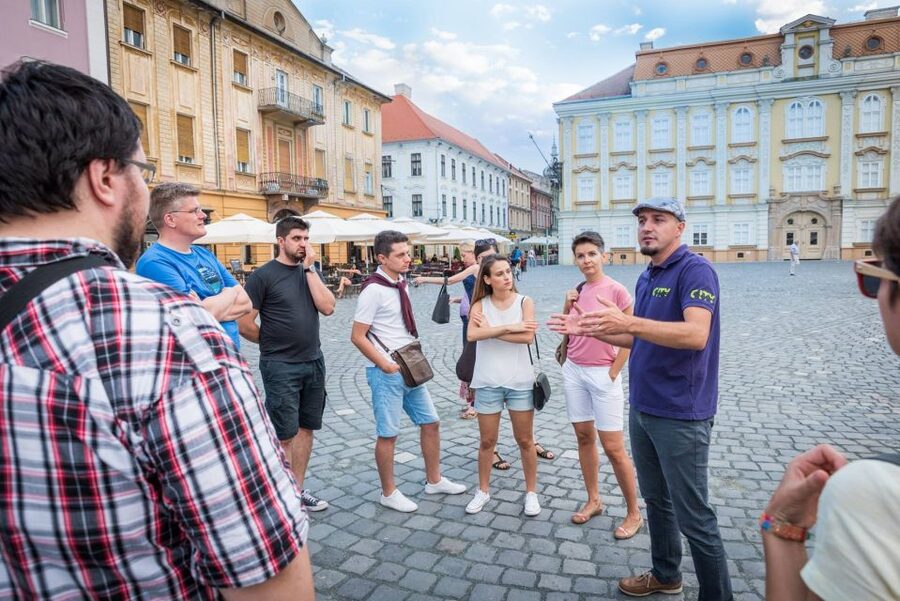
I would choose this tour if you want a first orientation to Timișoara that combines architecture, politics, technology, and ordinary life. It is a good match for curious first-time visitors, families, and anyone who prefers a personal guide to a large scheduled group.
It also suits you if you enjoy seeing how a city changed under different powers. The sequence from Mongol invasion to Ottoman rule, Austrian reconstruction, and communist-era revolution gives the walk a clear shape.
You may want something else if your main goal is interior access, detailed religious art, or a specialist study of the 1989 revolution. The route appears designed as a broad city introduction, not a museum visit or a single-subject tour.
I would also think about the price in relation to your group. At $42 per person, the value improves when several people share the private experience and make use of the guide’s time. A solo visitor pays more per person but receives a highly personal introduction.
Booking details worth knowing
The tour lasts two hours, and starting times depend on availability. The guide speaks English or Romanian. You meet in front of the tourist information center, and the activity includes the guide and the walking tour itself.
You can reserve now and pay later, which helps if your schedule is still changing. Cancellation is free up to 24 hours before the tour for a full refund. Those terms are useful for a city break where weather, trains, or other plans may shift.
Should you book the Classic Walking Tour?
Book it if you want Timișoara explained by someone who can connect Ottoman traces, Austrian city planning, early public transport, electric lighting, and the communist-era revolution in one compact walk. The warm guide style, private format, and local stories are the main reasons to choose it.
Skip it if you want a long museum visit, a guaranteed stop at every major church, or a full treatment of one narrow subject. For most first visits, though, the two-hour format and $42 price offer a sensible introduction, especially when you can ask questions and shape the conversation around your interests.
FAQ
How long is the Timișoara Classic Walking Tour?
The walking tour lasts two hours.
How much does the tour cost?
The listed price is $42 per person.
Where does the tour meet?
You meet in front of the tourist information center.
Is the tour private?
Yes. It is offered for a private group.
Which languages are available?
The live guide is available in English and Romanian.
Is a tour guide included?
Yes. The experience includes a tour guide and the walking tour.
What historical periods does the tour cover?
The tour covers the Mongol invasion, the years of Turkish occupation, Austrian imperial rule and rebuilding, technological developments, communism, and the revolution against Romania’s communist regime.
Does the tour discuss modern Romanian society?
Yes. The guide gives an introduction to Romania’s situation today and discusses life in Romania and social change over recent decades.
Does the tour include the Cathedral of the Three Hierarchs?
The available tour details do not confirm that the cathedral is included. One guest suggested adding it, so ask the guide about it if you want to see it.
Can I cancel for a full refund?
Yes. You can cancel up to 24 hours in advance for a full refund.
Just added around Timisoara
- Timisoara Dream Tour in Elisabetin Neighborhood★ 5.0 · 3 reviews
- Timisoara: Jewish Heritage Walking Tour★ 5.0 · 4 reviews
- Nera Gorge National Park – Private Day Tour from Timisoara★ 4.5 · 4 reviews
- Timisoara Dream Tours: Trip to Hunedoara Castle and to Sibiu★ 4.7 · 4 reviews
- Timisoara: Private Walking Tour with a Local Guide★ 4.5 · 5 reviews
- Timisoara Downtown Dream Tour★ 5.0 · 5 reviews
- The Jewish Heritage Tour of Timisoara★ 5.0 · 9 reviews
- Day Trip to Turda Salt Mine and Corvin Castle from Timisoara★ 5.0 · 10 reviews
Walking Tours, compared.


Ghost Stories & Romanian Mythology Walking Tour
Read our review →
Walking Tour- Delightful Bucharest (Highlights, Stories, Sights)
Read our review →
Browse the lists this tour appears in