
Reviewed · DRACULA & BRAN CASTLE TOURS
Sighisoara: Candlelight Tour of Dracula’s Home Town
Sighisoara glows after the day trippers leave. This two-hour evening walk pairs the lit Clock Tower with the birthplace of Vlad Tepes, the ruler later linked to Dracula. I like the way it treats Dracula as one chapter in Romania’s past, not the whole story. I also like the route through the Covered Stairs, Church on the Hill, narrow lanes, towers, and bastions. The main catch is that the name candlelight tour may set the wrong expectation: one visitor noted that no actual candlelight was used.
You meet in front of the Clock Tower museum for an English-language walk costing $44 per person. The guide’s personality matters here, and Cosmina receives especially warm praise for her clear explanations, humor, local recommendations, and personal connection to the citadel. If you have already walked most of Sighisoara during the day, the route may feel familiar, but the evening light and historical storytelling can give it a fresh shape.
In This Review
- Key points at a glance
- Starting beneath Sighisoara’s Clock Tower
- Climbing the Covered Stairs to the Church on the Hill
- Walking the lanes and old defensive walls
- Dracula’s birthplace, with the legend kept in proportion
- The Clock Tower at night and the final recommendations
- Is $44 good value for two hours?
- Timing, comfort, and what to bring
- Who will enjoy this evening walk?
- Should you book the Sighisoara Candlelight Tour?
- FAQ
- How long is the Sighisoara Candlelight Tour?
- How much does the tour cost?
- Where does the tour meet?
- What language is the tour conducted in?
- Is hotel pickup included?
- Does the tour visit Dracula’s birthplace?
- Does the tour include food or drinks?
- Is the tour suitable for wheelchair users?
- What should I bring?
Key points at a glance
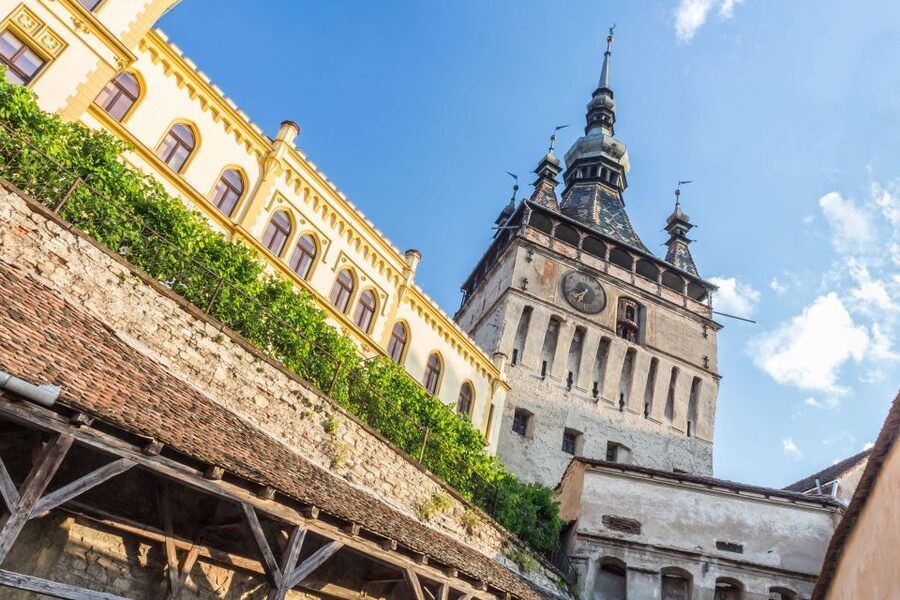
- The Clock Tower begins and ends the walk: You meet beside Sighisoara’s best-known landmark and finish with its history and evening recommendations.
- Dracula is only part of the story: You visit the house where Vlad Tepes was born in 1431, while also learning about Sighisoara, Transylvania, Romania, and the Saxons.
- The Covered Stairs add real atmosphere: The climb toward the Church on the Hill uses the historic Stairs of the Scholars, a memorable passage through the upper citadel.
- Sunset can be part of the experience: Depending on the season and start time, you may see daylight fade over the town rather than walk in full darkness.
- The route includes major medieval defenses: Old walls, towers, and bastions give you a clearer idea of how the citadel worked as a fortified town.
- The final food advice is useful: The guide recommends local restaurants and bars where you can try Romanian food and continue the evening.
Starting beneath Sighisoara’s Clock Tower
The tour begins in front of the Clock Tower museum, where your guide holds a Walking Tour sign. This is a sensible meeting point because the tower is easy to identify, sits beside two of the town’s best-known attractions, and puts you right at the entrance to the historic citadel.
Your guide starts with an overview of Sighisoara’s past before leading you uphill. That opening matters. Without it, the town can look like a pretty collection of colorful facades and stone lanes. With some context, you begin to see the citadel as a place shaped by Saxon settlement, Transylvanian politics, religious change, fortification, and Romanian history.
The tour is led in English. Cosmina is the guide most often named in the feedback, and she is praised for making complicated subjects easy to follow without turning the walk into a lecture. She also adds personal touches, including stories connected with growing up in the citadel and living in Transylvania. That local link gives the walk a warmer feel than a simple list of dates.
The pace is generally comfortable, but this is a walking tour with an uphill section. You should wear shoes that handle uneven streets and steps. The activity is not suitable for wheelchair users, and the climb through the historic stairs is important to the route.
More Dracula and Bran Castle days we have written up:
- 2-Day Transylvania from Bucharest: Brasov, Bran, Sighisoara
★ 5.0 · 60 reviews - 2-Day Small-Group Tour to Dracula’s Castle, Rasnov Fortress, Peles Castle, Sighisoara and Libearty Brown Bear Sanctuary with Overnight in Brasov
★ 4.5 · 9 reviews - Discover Transylvania: Peles, Bran, Sighisoara in a 2-Day Journey
★ 5.0 · 5 reviews
Climbing the Covered Stairs to the Church on the Hill
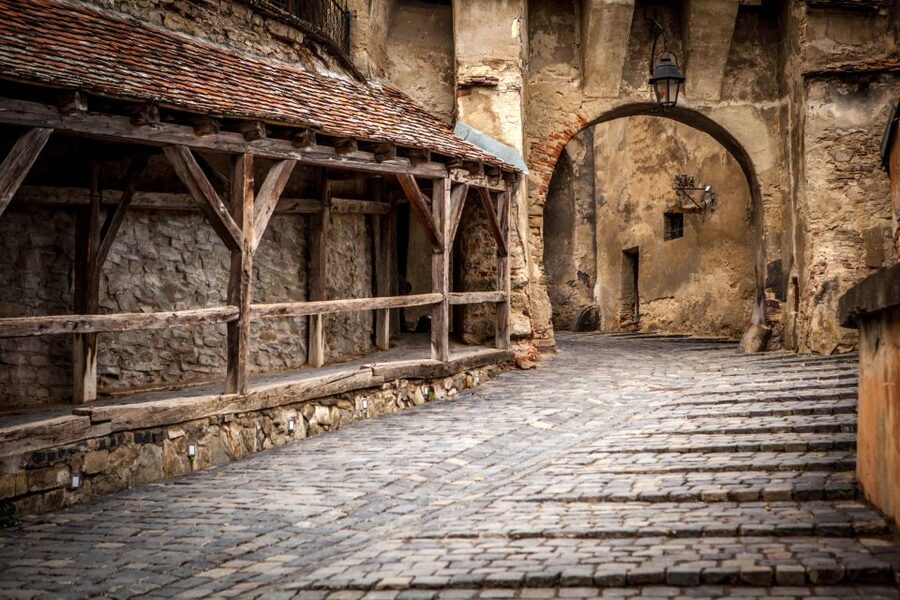
From the lower citadel, you head toward the Church on the Hill through the Covered Stairs, also called the Stairs of the Scholars. This enclosed wooden passage protects the climb from bad weather and gives the route one of its most distinctive moments.
The stairs are more than a photogenic shortcut. They show how daily life in the old town once worked. Schoolchildren used the passage on their way uphill, and the name Stairs of the Scholars preserves that connection. Your guide explains the setting as you climb, helping you understand why the upper part of the citadel mattered.
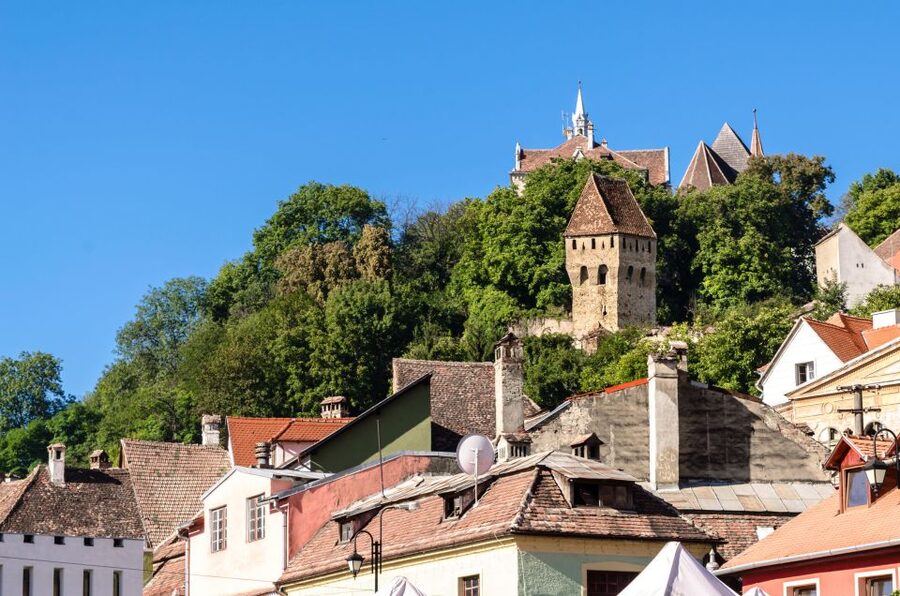
The ascent also changes your view of Sighisoara. At street level, the town feels close and compact. Higher up, you get a better sense of its layered arrangement, with the lower streets, fortified upper area, and church occupying different levels.
The Church on the Hill is one of the central stops. The tour description refers to it as the evangelistic church, located close to the Clock Tower and Dracula’s house. The visit is mainly about its place in the town’s story and its position within the citadel, rather than a separate long church tour.
If you take the walk in summer, do not assume the town will be dark. A July tour finished with a striking sunset view, and an evening walk can move from daylight into twilight depending on the starting time. That is not a flaw, but it is worth knowing if you are booking specifically for a candlelit atmosphere.
Walking the lanes and old defensive walls
After the church, the route winds through Sighisoara’s narrow medieval streets. This is where a guide earns the fee. You can walk these lanes alone, but it is easy to miss why the buildings, slopes, walls, and towers were arranged as they were.
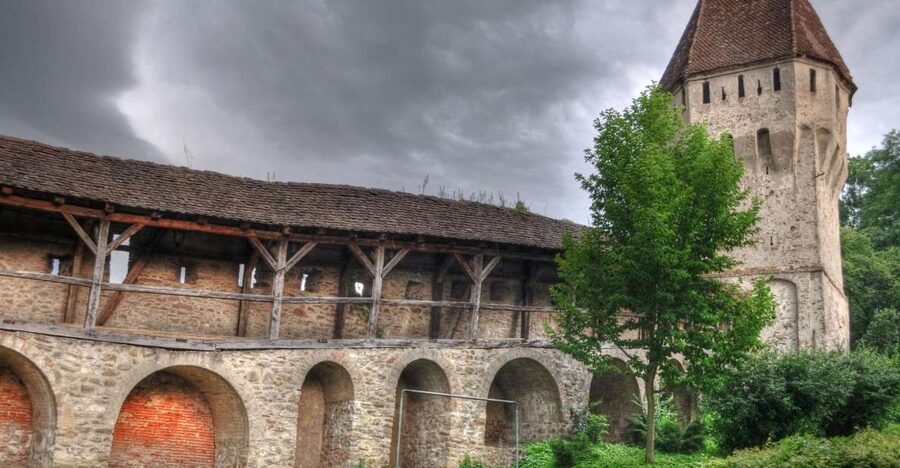
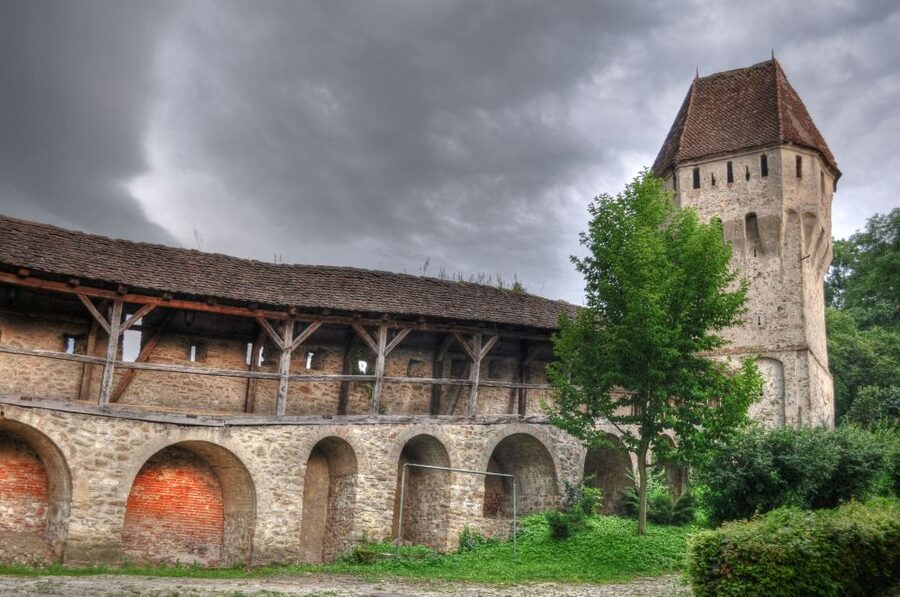
The route reaches the old city walls, where you can look closely at the surviving towers and bastions. Their preservation helps you picture the citadel as a defended settlement rather than simply a historic quarter. The guide connects the stonework to Sighisoara’s wider past and explains how the town developed within Transylvania.
The walk covers much of the citadel. That makes it useful as an orientation tour early in your stay, especially if you want to understand the town before exploring on your own. It also works as a second look for anyone who spent the afternoon wandering without much context.
The tradeoff is simple: if you have already visited every major corner of the citadel, some of the route will repeat ground you know. The value then comes from the explanations, questions, and evening setting. One visitor who had already seen most of the town felt the tour offered less for a short visit, while others enjoyed the slower pace and fuller story.
Dracula’s birthplace, with the legend kept in proportion
Dracula’s house is one of the most recognizable addresses in Sighisoara. The tour stops at the house where Vlad Tepes, the Wallachian ruler known as Vlad the Impaler, was born in 1431.
This is the point that attracts many people to the experience, but you should set your expectations correctly. The walk is not a theatrical vampire hunt, and it does not focus only on the Dracula legend. The guide explains the tales surrounding the world’s most famous vampire while placing Vlad Tepes within Romanian and Transylvanian history.
That balance is one of the tour’s strengths. You get the memorable Dracula connection, but you also learn about the real medieval ruler behind the later fiction. The distinction helps you enjoy the folklore without treating every part of the legend as historical fact.
The house sits only a short distance from the Clock Tower and the church, so the stop fits naturally into the route. You should not expect a separate extended interior experience based on the information provided. The value is the location, the story, and the guide’s explanation of how Vlad’s real life became tied to the vampire character.
If your main goal is an elaborate Dracula-themed attraction, this may feel restrained. If you want a grounded introduction to Vlad Tepes and the place associated with his birth, it is a better match.
More Sighisoara days out:
- Small Group Tour to Viscri Church Sighisoara Town Rupea Fortress
★ 5.0 · 225 reviews - 2-Day Medieval Transylvania with Brasov,Sibiu and Sighisoara Tour from Bucharest
★ 4.5 · 145 reviews - From Brasov: Sighisoara and Viscri UNESCO Day Tour
★ 4.8 · 86 reviews - City Tour Sighisoara Legends & Landmarks A Walk Through Time
★ 4.9 · 83 reviews
The Clock Tower at night and the final recommendations
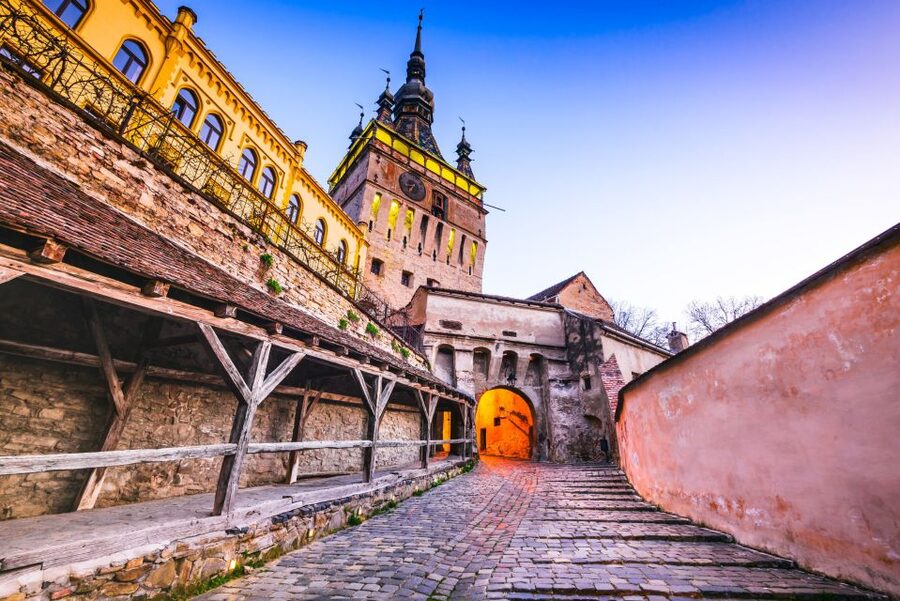
The tour ends with the Clock Tower and its history. Seeing the tower lit after dark gives you a strong closing image, especially after walking the upper citadel and defensive walls.
The tower is not just a meeting point. It anchors the lower citadel and helps tie the whole route together. You begin beside it, climb toward the church, pass through the old streets and walls, visit Dracula’s birthplace, then return to the tower with a clearer sense of how the town fits together.
Your guide also suggests local restaurants and bars for the rest of the evening. This is a practical touch, not filler. A good walking tour should help you decide what to do next, and food advice can save you from choosing a random place near the most crowded square.
The recommendations may include traditional foods and drinks, giving you a chance to turn the historical walk into a wider evening in Sighisoara. Cosmina is particularly praised for pointing people toward local dishes and beverages. The cost of food and drinks is not included, so plan on paying separately.
Is $44 good value for two hours?
At $44 per person, this is not the cheapest way to stroll through Sighisoara. You can walk the main streets and see the Clock Tower, Dracula’s house, and the church area without paying for a guide.
The price makes more sense if you value interpretation. In two hours, you receive a guided route, historical background on Sighisoara and Transylvania, discussion of the Saxons and Vlad Tepes, help finding the major sites, and restaurant suggestions for later. You are paying for structure and local explanation rather than admission to a large number of attractions.
The strongest value comes when Cosmina leads the group. Her ability to answer questions, add humor, and connect the town’s past with her own experience gives the walk substance. Several comments describe her as warm, engaging, and easy to talk with, which is important on a small historic-town tour.
The price is harder to justify if you have little time and only want a quick Dracula photo. It is also less compelling if you have already studied Sighisoara and walked the entire citadel. For most first-time visitors who want context, the fee is reasonable, especially if the tour helps you find a worthwhile dinner afterward.
Timing, comfort, and what to bring
The stated duration is two hours, though the walk may run about one and a half to two hours depending on pace and discussion. This leaves enough room for questions without turning the evening into an exhausting march.
The exact starting time changes with availability and season. In summer, you may get sunset and late daylight. In winter, the same concept is more likely to feel genuinely nocturnal. Check the start time before booking if the lighting is important to you.
Bring comfortable shoes and a camera. The route includes narrow streets, an uphill walk, and the Stairs of the Scholars. You should also dress for the evening conditions, though no special equipment is listed.
There is no hotel pickup. You make your own way to the Clock Tower museum meeting point. Food, drinks, entrance fees not specifically included, and other personal costs are separate. The experience includes a live English-speaking guide.
The booking terms are flexible: you can cancel up to 24 hours before the tour for a full refund, and you can reserve now while paying later. Those policies are useful when your Romanian itinerary is still shifting.
Who will enjoy this evening walk?
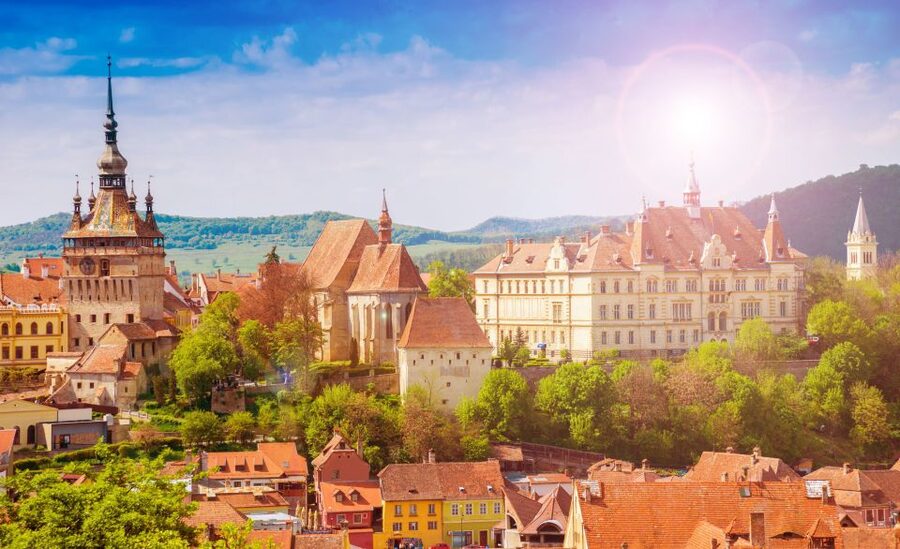
I would choose this tour if you want a clear introduction to Sighisoara rather than a narrow Dracula product. It suits first-time visitors, history fans, people interested in Saxon and Transylvanian culture, and anyone who prefers a guided walk to reading plaques alone.
It is also a good fit for families who can manage the steps. A previous family walk was made child-friendly, and the evening timing can make the citadel feel calmer. Still, children need to be comfortable walking uphill and through historic streets.
You should skip it if you need step-free access, dislike walking, or want a dramatic vampire show. You may also find it repetitive if you have already completed a detailed citadel tour earlier that day.
The guide’s recommendations make the experience useful beyond the formal route. You finish with ideas for Romanian food, drinks, and further reading, so the tour can serve as both a history lesson and a launch point for the rest of your evening.
Should you book the Sighisoara Candlelight Tour?
Book it if your priority is history with atmosphere, not a staged Dracula performance. The walk covers the major sights, explains the town’s Saxon and Romanian past, and gives Vlad Tepes a proper place within the story.
I would be comfortable recommending it to a first-time visitor who has two hours and wants an informed introduction. Book with a flexible attitude toward the word candlelight, since the actual experience may involve sunset or lit monuments rather than candles. If you have already seen Sighisoara’s main sights, book only if you want deeper context, local conversation, and evening food advice.
FAQ
How long is the Sighisoara Candlelight Tour?
The tour lasts two hours. The walking time may be about one and a half to two hours depending on the pace and amount of discussion.
How much does the tour cost?
The price is $44 per person.
Where does the tour meet?
You meet in front of the Clock Tower museum. The guide will be holding a Walking Tour sign.
What language is the tour conducted in?
The tour is conducted in English with a live guide.
Is hotel pickup included?
No. Hotel pickup is not included, so you need to reach the Clock Tower museum meeting point yourself.
Does the tour visit Dracula’s birthplace?
Yes. The route stops at the house where Vlad Tepes was born in 1431, and the guide explains the stories connected with Dracula and the real historical figure.
Does the tour include food or drinks?
No. Food and drinks are not included. The guide does recommend local restaurants and bars where you can continue your evening.
Is the tour suitable for wheelchair users?
No. The tour is not suitable for wheelchair users because the route includes an uphill walk and the Covered Stairs, also called the Stairs of the Scholars.
What should I bring?
Bring comfortable shoes and a camera. Comfortable footwear is especially important for the steps and narrow historic streets.
Just added around Sighisoara
- Transylvania’s Trail: Sibiu, Bran Castle, Brasov, Sighisoara★ 4.6 · 3 reviews
- Sighisoara Heritage Tour-The place of birth of Vlad Dracula★ 5.0 · 3 reviews
- Székely Land countryside and Sighisoara one day trip★ 5.0 · 3 reviews
- 4 Days Private Tour in Transylvania Brasov Sighisoara Sibiu★ 5.0 · 3 reviews
- Private Day Tour Sighisoara and Viscri from Brasov with Hotel Pick Up/ Drop Off★ 5.0 · 3 reviews
- CJ05 – Mysteries of Transylvania: Bran Castle & Sighisoara★ 4.8 · 3 reviews
- From Brasov: Corvin Castle and Sibiu (Optional Sighisoara)★ 4.6 · 3 reviews
- Day Trip to Sighisoara Rupea Fortress Viscri from Brasov★ 4.8 · 3 reviews
Dracula & Bran Castle Tours, compared.
Dracula’s Castle, Peles Castle, & Brasov Old Town
Read our review →
Dracula Castle, Peles Castle & Brasov Old Town
Read our review →
Dracula’s Castle, Peleș Castle & Brașov Day Trip
Read our review →
Day Trip to Dracula Castle, Peles Castle & Brașov
Read our review →
Bucharest to Dracula Castle, Peles Castle and Brasov Guided Tour
Read our review →
Dracula’s Castle, Peles Castle and Brasov Day Trip from Bucharest
Read our review →
Transylvania and Dracula Castle Full Day Tour from Bucharest
Read our review →
Browse the lists this tour appears in