
Reviewed · DRACULA & BRAN CASTLE TOURS
Real Dracula Princely Court and Real Dracula’s Fortress
Dracula’s story has a real address. This private 11-hour trip from Bucharest links Vlad the Impaler with the Royal Court of Târgoviște and Poienari Castle, while adding Curtea de Argeș Monastery and Vidraru Dam. I like the way it mixes medieval history with grand Romanian scenery, and I especially like having a private car and guide for a route that would be awkward to manage by public transport.
I also like the flexible pace. Guide Nicolas has been praised for giving people time to take photos, walk around, eat lunch, and ask questions without rushing them from stop to stop. The main drawback is the price, $323 per person, plus entrance fees and food, and the day is long. The 1,480-step climb to Poienari Castle can also be a serious test of your legs.
In This Review
- Key points to know before booking
- Why this tour works as a Dracula day trip
- Târgoviște, where the princely court tells the first chapter
- Climbing Chindiei Tower for the court view
- Curtea de Argeș and the old royal center
- Poienari Castle and the 1,480-step challenge
- Vidraru Dam, a sharp change from medieval ruins
- What the private car and guide add
- Pace, meals, and practical planning
- Who should book this experience?
- Should you book the Dracula court and fortress tour?
- FAQ
- How long does the tour last?
- Is hotel pickup and drop-off included?
- Is this a private tour?
- Which languages are available?
- Are entrance fees included?
- Is food included?
- How difficult is the visit to Poenari Castle?
Key points to know before booking
- Târgoviște connects directly to Vlad the Impaler: Explore the former Wallachian princely court, Chindiei Tower, palace ruins, and historic churches.
- Poienari Castle means 1,480 stairs: This is the most demanding part of the day, but also the stop most closely tied to Vlad’s fortress legend.
- Curtea de Argeș adds royal history: See the old princely court, the 13th-century Royal Church, and the monastery containing the graves of Romanian kings.
- Vidraru Dam brings a change of mood: After medieval ruins and churches, you stop at Romania’s largest dam for photos and a look at its construction history.
- A private guide makes the route practical: Hotel pickup, parking, fuel, tolls, and a private English-speaking driver-guide are included.
- The day can adapt when plans change: When Poienari Castle was closed during one visit, Nicolas used the time for other nearby sights and traditional food.
Why this tour works as a Dracula day trip
Many Dracula tours from Bucharest focus on fiction, castles, and spooky branding. This one takes a more useful route. You visit places tied to Wallachian rulers, including Vlad Dracul and his son Vlad Țepeș, the historical figure later transformed into Count Dracula.
That distinction matters. You will not be visiting a fantasy castle created for a novel. You will be looking at a former princely court, an old royal church, and a mountain fortress associated with Vlad’s rule. The stories can still be dramatic, but the setting is grounded in Romanian history.
I like the private format because this is not a simple point-to-point outing. The route covers Târgoviște, Curtea de Argeș, Poienari, Vidraru Dam, and parts of Wallachia before returning to Bucharest. With your own vehicle, you avoid the problem of trying to connect scattered sites by regional buses and taxis.
The tour lasts 11 hours, so you should treat it as a full day rather than a quick castle visit. The car expenses, including gasoline, parking, and road tolls, are covered. Your guide can speak English, Italian, Romanian, French, or Spanish, depending on availability.
More Dracula and Bran Castle days we have written up:
- Bucharest: Dracula’s Castle, Peles Castle, & Brasov Old Town
★ 4.5 · 17,858 reviews - Bucharest: Dracula Castle, Peles Castle & Brasov Old Town
★ 4.6 · 10,891 reviews - Bucharest: Dracula’s Castle, Peleș Castle & Brașov Day Trip
★ 4.5 · 5,919 reviews
Târgoviște, where the princely court tells the first chapter
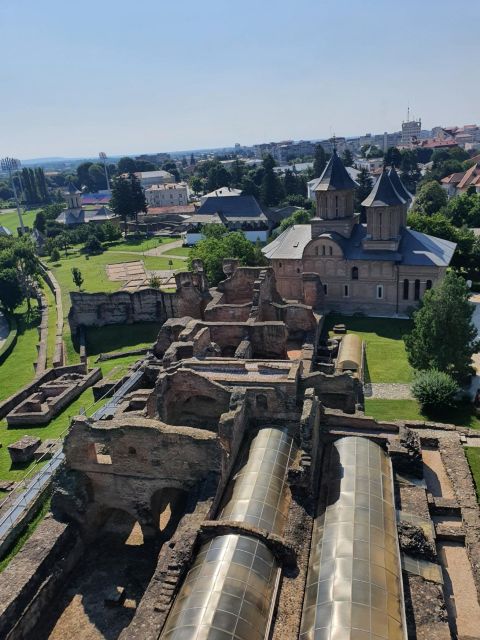
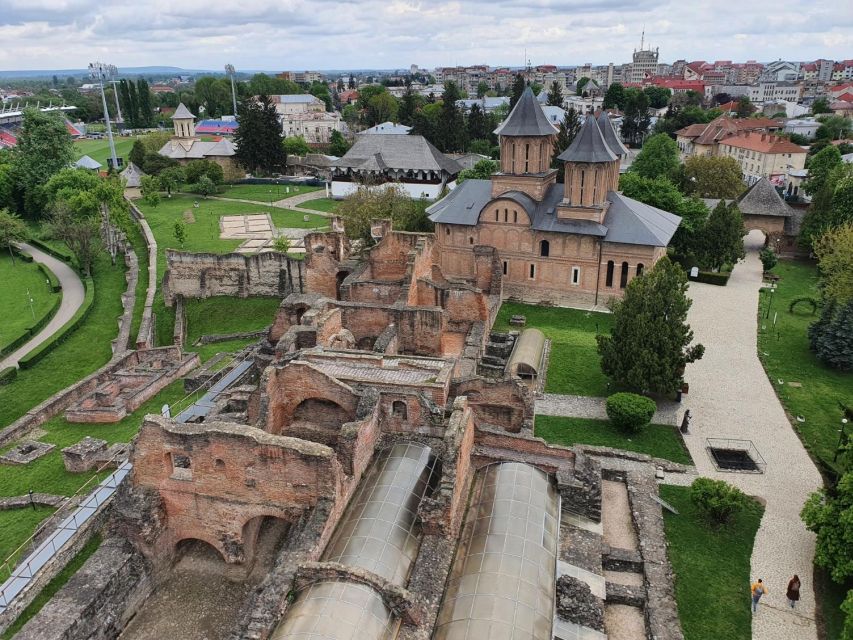
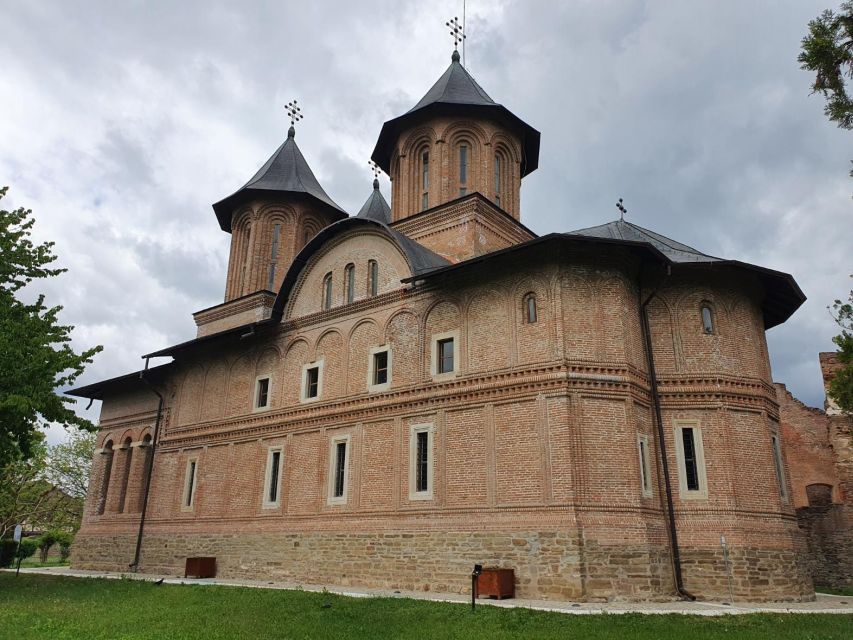
The Royal Court of Târgoviște is the strongest historical opening. Its written record reaches back to 1417 or 1418, and the site later grew from a fortress into a princely residence used by rulers of Southern Romania.
Vlad Dracul helped develop Târgoviște, and Vlad the Impaler is linked to the court’s most famous monument, Chindiei Tower. Other princes, including Constantin Brâncoveanu, also used the complex. That gives the site a broader story than a single Dracula connection.
Your guided visit lasts about an hour and a half. Expect a mixture of ruins, walls, religious buildings, and open areas where the shape of the old court becomes easier to understand with explanation. Without a guide, you could easily see a few old stones and miss the political importance of the place.
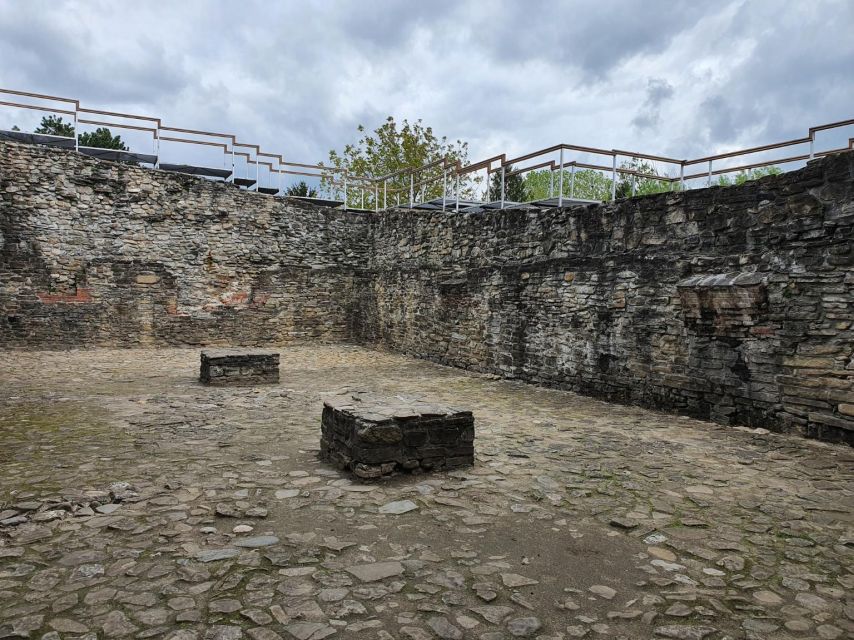
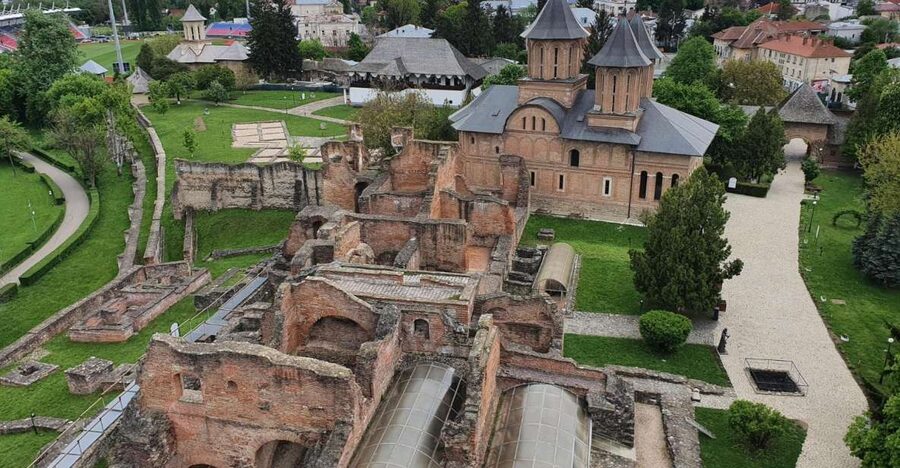
The court’s two former princely palaces are now ruins, but they help you picture the scale of the residence. The complex also includes the small Holy Friday Church and the Great Princely Church. The latter is especially important because it is described as the only monument built in the 15th century in Southern Romania that remains preserved in its original form.
Climbing Chindiei Tower for the court view

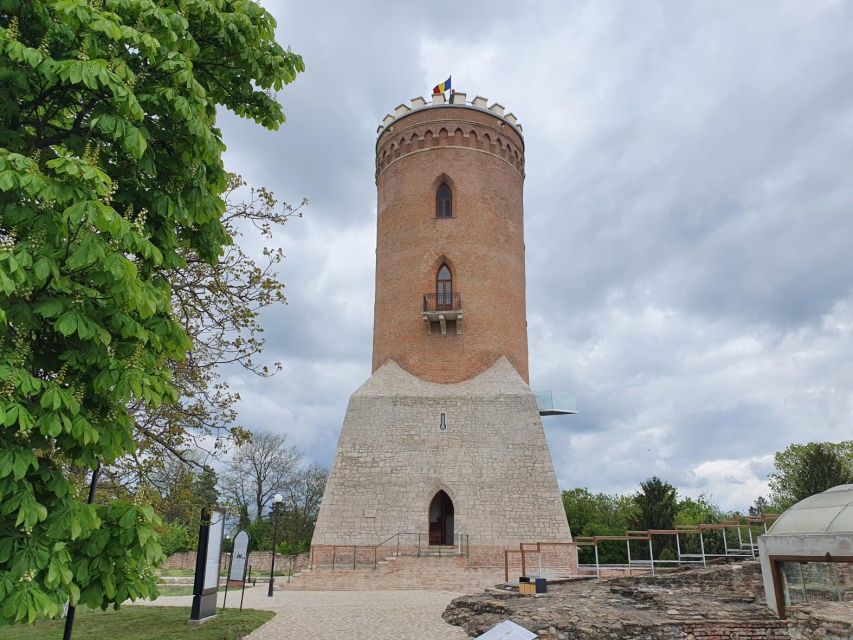
Chindiei Tower is the visual centerpiece of Târgoviște. Vlad the Impaler built the emblematic tower, and it now serves as the best place to understand the court from above.
You climb to the balcony, where you can look across the former palaces and observe the silhouette of a church dating to 1415. I would allow time here rather than treating the tower as a quick photo stop. The view helps connect the separate pieces of the site: the defensive structure, the princely buildings, and the religious monuments.
The tower is also where the history becomes personal. Vlad was not simply a distant figure from a museum label. He ruled from places like this, and the tower reflects the defensive concerns of a medieval prince whose reputation was built on harsh methods and constant political pressure.
The Târgoviște portion includes time for walking, photos, and a short break in town. That pause matters on a day with a lot of road time. It also gives you a chance to absorb the site before moving onward.
Curtea de Argeș and the old royal center
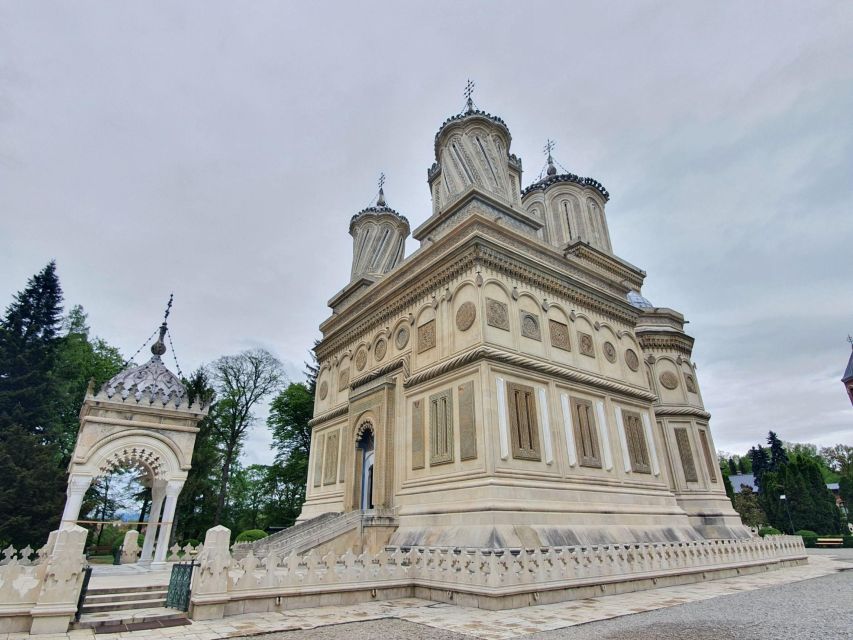
The next major stop is Curtea de Argeș, a former capital of Wallachia and one of the oldest important royal centers in the region. The visit lasts about 45 minutes, so you will get an introduction rather than an exhaustive study.
You see the ruins of the Wallachian princely court and the 13th-century Royal Church. These remains add an earlier layer to the day, before the later princely court at Târgoviște became the main focus.
The famous Curtea de Argeș Monastery is the emotional highlight for many people. It is closely linked with Romania’s royal family, and the graves of Romanian kings are located there. Your guide explains the sad and often complicated stories attached to these sites, which makes the stop more meaningful than a quick architectural photo.
I would not expect a long, quiet monastery visit here because the schedule is full. Still, the stop earns its place. It shifts the day from medieval military power to royal ceremony, faith, and national memory.
A completely different kind of day out around Romania:
- Bucharest: Palace of Parliament Tickets and Guide
★ 4.3 · 3,182 reviews - Bucharest: Day Trip to Dracula Castle, Peles Castle & Brașov
★ 4.4 · 3,049 reviews - Bucharest to Dracula Castle, Peles Castle and Brasov Guided Tour
★ 4.5 · 2,933 reviews - Bucharest: Palace of Parliament Tickets and Guided Tour
★ 4.4 · 1,877 reviews
Poienari Castle and the 1,480-step challenge
Poienari Castle is the stop for serious Vlad fans. The fortress sits in Poienari village and is associated with Vlad the Impaler, who used the remote stronghold as a place of refuge. It is also linked with the story that Vlad hid the country’s gold there.
Getting to the castle is not easy. You climb 1,480 stairs, so sturdy shoes and a realistic view of your fitness are important. This is not a gentle stroll through a restored palace. The climb is the activity, and you should be prepared for a demanding walk before you even reach the ruins.
The reward is the connection between the fortress and the surrounding mountain country. The castle’s position explains why a ruler would use it as a refuge. You can also appreciate why this stop feels different from Târgoviște. The princely court was a seat of government, while Poienari was a remote defensive position.
The supplied schedule allows about an hour and a half for the stop, including photos and walking. That gives you useful time, but it does not turn the stairway into an easy climb. If you have limited mobility, heart or breathing concerns, or simply dislike steep stairways, ask about the current conditions before booking.
Poienari’s opening status can affect the day. During one visit, the castle was closed, and Nicolas adjusted the plan with other nearby places and a chance to try traditional food. That flexibility is a real benefit of a private tour. Still, you should not assume that a closure will always be handled in exactly the same way, or that food is included.
Vidraru Dam, a sharp change from medieval ruins
Vidraru Dam gives the day a modern engineering stop. It is described as the biggest dam in Romania, and the visit includes time for photos, a break, sightseeing, and shopping.
After churches, palace walls, and a mountain fortress, the dam provides a welcome change. You can look at a major piece of Romanian infrastructure and hear about its history from the guide. The stop lasts about an hour, which is long enough for a proper break rather than a hurried roadside pause.
I like this addition because it prevents the trip from becoming a narrow Dracula pilgrimage. You see how Romania’s past extends beyond princes and fortresses. The route gives you medieval Wallachia, royal religion, mountain defense, and modern public works in one long day.
The dam is also a practical rest point before the return journey. If you have been climbing at Poienari, this is a good place to slow down, take photos, and reset.
What the private car and guide add
The private vehicle is the main reason to consider this experience instead of piecing the route together yourself. Târgoviște and Curtea de Argeș are separate destinations, Poienari requires a long mountain approach, and Vidraru Dam adds another stop beyond the usual city excursions.
Hotel pickup and drop-off in Bucharest are included. You wait in your hotel lobby five minutes before the scheduled pickup, with the driver holding a sign showing your last name. The driver is also your licensed guide, so the day does not depend on finding a separate interpreter at each location.
The format is a private group, which means the experience can be adjusted around your pace. You can spend more time taking pictures or talking through a site rather than following a large bus group. Nicolas is particularly praised for keeping conversation friendly and professional while allowing enough time at each stop.
That personal approach is useful at Târgoviște, where the ruins need context, and at Curtea de Argeș, where the guide can explain the royal graves and religious buildings. It is equally useful if Poienari is closed or weather affects the mountain stop.
There is one tradeoff: private touring costs more. At $323 per person, the value depends heavily on your group size and priorities. The price includes transport, fuel, parking, tolls, pickup, drop-off, and a private guide, but entrance tickets, meals, and drinks are extra.
For a solo visitor or couple, that is a substantial spend. For a small group that wants a full day without arranging transport, the cost becomes easier to justify. You are paying for convenience, time, and a route that would otherwise require careful planning.
Pace, meals, and practical planning
The schedule gives you roughly 11 hours from Bucharest and includes several guided visits, walks, photo stops, and breaks. You should expect a long day in the car, not constant sightseeing from morning to evening.
Food is not included. One account of the trip describes having enough time for lunch, so you should have an opportunity to eat, but you pay for it yourself. Bring water and a snack, especially if you intend to climb all 1,480 stairs at Poienari.
Wear shoes suitable for walking. The tour includes the Târgoviște court, the climb to Chindiei Tower, the old town and monastery area at Curtea de Argeș, and the stairway to Poienari. Even if the driving is comfortable, the day is physically active in sections.
Entrance fees are also not included. Since the exact charges can change, check the current cost when you book or ask the operator before departure. The skip-the-ticket-line benefit may save time at applicable locations, but it does not mean admission is free.
The tour offers flexible start times, subject to availability, and free cancellation up to 24 hours before departure. You can also reserve now and pay later, which helps if your Bucharest schedule is still moving around.
Who should book this experience?
I would recommend it most strongly to you if Vlad the Impaler is only part of your interest, not the whole reason for going. The day works best for people who enjoy royal history, old churches, ruins, engineering, mountain roads, and long private excursions.
It also suits visitors who want a guide to explain the difference between the historical Vlad and the Dracula of popular culture. Târgoviște and Poienari give you the strongest links to Vlad, while Curtea de Argeș adds a broader view of Romanian power and religion.
Families with older children may enjoy the variety, but the Poienari stairs need careful thought. The day is not ideal if you want a slow monastery visit, dislike long drives, or only want one castle with plenty of free time.
The five-star feedback attached to this experience repeatedly highlights the guide’s knowledge, friendliness, flexibility, and lack of pressure. Nicolas is the name most often praised. If he is assigned to your tour, you can reasonably expect a guide who focuses on conversation and gives you time to explore rather than racing through a checklist.
Should you book the Dracula court and fortress tour?
Book it if you want the fullest historical route from Bucharest and value private transport. The combination of Târgoviște, Chindiei Tower, Curtea de Argeș, Poienari Castle, and Vidraru Dam gives you much more than a standard Dracula day trip.
Think carefully about the price and the length. The $323 cost is not all-inclusive, and the day can be tiring. But if you are willing to pay for a private car, a multilingual guide, flexible timing, and access to scattered sites, this is a strong use of one full day in Romania.
My practical advice is simple: confirm the entrance fees, ask about Poienari Castle’s current opening status, and be honest with yourself about the 1,480 stairs. If those points work for you, this tour offers a grounded look at Vlad’s world, with enough variety to keep the long day interesting.
FAQ
How long does the tour last?
The experience lasts 11 hours, including pickup from Bucharest, visits to the historical sites, stops at Vidraru Dam and Wallachia, and the return to Bucharest.
Is hotel pickup and drop-off included?
Yes. Pickup and drop-off at your Bucharest hotel are included. You should wait in the hotel lobby five minutes before the scheduled pickup time.
Is this a private tour?
Yes. You travel in a private group by car with a private licensed driver-guide.
Which languages are available?
The guide service is available in English, Italian, Romanian, French, and Spanish.
Are entrance fees included?
No. Entrance fees for the sites on the route are not included in the listed price.
Is food included?
No. Food and drinks are not included. The schedule can allow time for lunch, but you pay for meals yourself.
How difficult is the visit to Poenari Castle?
You climb 1,480 stairs to reach Poenari Castle. The climb is the most physically demanding part of the tour, so suitable footwear and reasonable fitness are important.
Just added around Romania
- Brașov Top Craft Beer & Secret Bars Tour with Local Guide★ 5.0 · 3 reviews
- Two days tour to Bucovina & UNESCO Painted Monasteries★ 5.0 · 3 reviews
- 10 hours Private Apiary Tour in Romania – From Bucharest★ 5.0 · 3 reviews
- 4-Day Inside Transylvania & Transfagarasan Tour from Bucharest★ 5.0 · 3 reviews
- Cluj – walking city tour★ 5.0 · 3 reviews
- Bucharest: Charm of the Belle Époque Private Tour★ 5.0 · 3 reviews
- Bran & Peles Castles through the Best Road in the World: Transfagarasan road★ 4.5 · 3 reviews
- 2-Day Small-Group Tour in Transylvania from Bucharest – Maximum 5 Persons★ 5.0 · 3 reviews
Dracula & Bran Castle Tours, compared.
Dracula’s Castle, Peles Castle, & Brasov Old Town
Read our review →
Dracula Castle, Peles Castle & Brasov Old Town
Read our review →
Dracula’s Castle, Peleș Castle & Brașov Day Trip
Read our review →
Day Trip to Dracula Castle, Peles Castle & Brașov
Read our review →
Bucharest to Dracula Castle, Peles Castle and Brasov Guided Tour
Read our review →
Dracula’s Castle, Peles Castle and Brasov Day Trip from Bucharest
Read our review →
Transylvania and Dracula Castle Full Day Tour from Bucharest
Read our review →
Browse the lists this tour appears in