
Reviewed · CITY TOURS
City Tour Sighisoara Legends & Landmarks A Walk Through Time
Medieval Sighișoara rewards slow footsteps. This two-hour walking tour takes you through the UNESCO-listed citadel, linking its towers, churches, legends, and everyday stories with an English-speaking guide. I like the access to the Church on the Hill and St Joseph Church, and I like the small-group format, which gives you more room to ask questions than a large coach tour.
The price is $46.96 per person, a fair sum for a guide who can explain the town rather than simply point at it. The main caution is that entrance fees and personal costs are extra, and the tour involves steep streets, stairs, and cobbles. The advertised duration is about two hours, though guides may extend the walk when the group is engaged.
In This Review
- Key points to know before you book
- Why Sighișoara works so well on foot
- Starting in the Citadel’s Market Place
- Dracula’s Birth House and the real story behind the legend
- The Clock Tower and the town’s defensive ring
- Climbing the Covered Staircase to School Hill
- Church on the Hill and the German Cemetery
- St Joseph Church and the architectural details
- How the guides shape the experience
- Price, timing, and what the fee really covers
- Who should book this Sighișoara walk
- Final verdict: Is it worth booking?
- FAQ
- Where does the Sighișoara walking tour begin?
- What time does the tour start?
- Where does the tour end?
- How long does the tour last?
- Is the tour offered in English?
- What is the maximum group size?
- Does the tour enter the churches?
- How much does admission to the Church on the Hill cost?
- Is the tour suitable for children?
- Can I cancel for a full refund?
Key points to know before you book
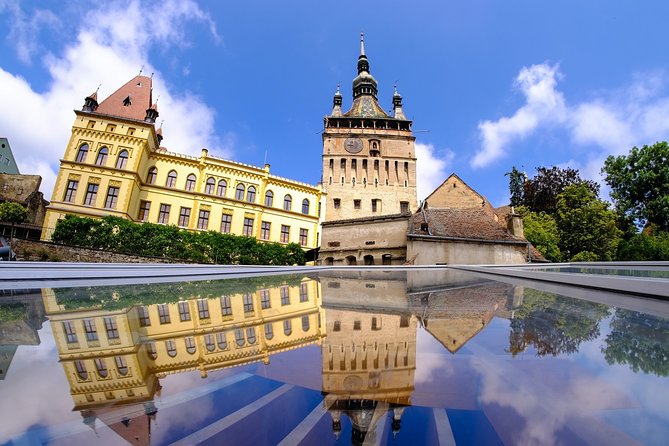
- The tour reaches Sighișoara’s essential landmarks: You see the Clock Tower, Dracula’s Birth House, the Covered Staircase, guild towers, fortified bastions, churches, and distinctive old houses.
- Guide quality is central to the experience: Peter, also referred to as Petre, and Charles are praised for explaining architecture, religion, politics, education, craftsmanship, and local history.
- The Church on the Hill requires effort: Reaching it means climbing the covered steps and walking uphill, but the church and German Cemetery add depth beyond the main square.
- It is not just a Dracula walk: Vlad the Impaler’s birthplace is included, but the tour places greater weight on Sighișoara’s real medieval and Transylvanian story.
- The advertised group limit is 30 people: That is smaller than a coach excursion, though a group of 30 will not feel intimate in every narrow lane.
- You meet and finish at Piața Muzeului 6: The listed start time is 11:00 a.m., while the experience information also describes morning or afternoon departures.
Why Sighișoara works so well on foot
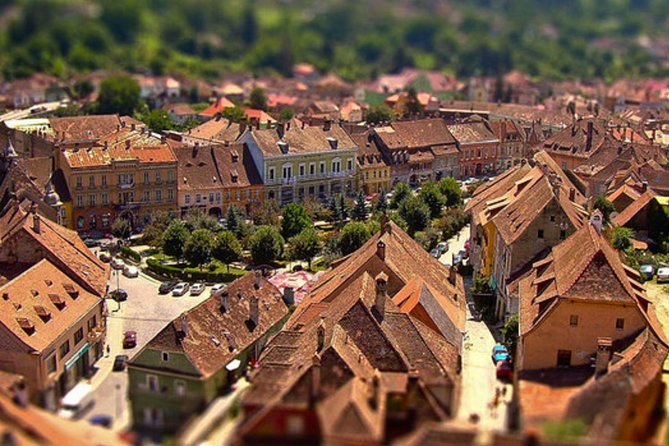
Sighișoara is the sort of town where the main sights are close together but their meaning is easy to miss. A quick wander gives you colored façades, stone lanes, towers, and excellent photo spots. A guide helps connect those pieces into a story about medieval guilds, Saxon settlement, religion, education, warfare, and later political change.
The citadel is compact enough for a walking tour, but it is not flat. You will cross cobbled streets and climb toward the School Hill and Church on the Hill. If you have moderate physical fitness, the route should be manageable, but comfortable shoes matter more here than fancy footwear.
I especially like that the walk does not rely only on the Dracula connection. Sighișoara is often sold as a vampire stop because Vlad the Impaler was born here. The Birth House is part of the route, but the better experience is seeing how that small fact fits into the larger story of the town.
The tour is offered in English and includes a specialized English-speaking guide. That matters in Sighișoara because the visual details are everywhere: old signs, unusual rooflines, tower defenses, religious carvings, guild symbols, and houses with names that sound like characters from a fairy tale.
More Sighisoara days out:
- Small Group Tour to Viscri Church Sighisoara Town Rupea Fortress
★ 5.0 · 225 reviews - 2-Day Medieval Transylvania with Brasov,Sibiu and Sighisoara Tour from Bucharest
★ 4.5 · 145 reviews - From Brasov: Sighisoara and Viscri UNESCO Day Tour
★ 4.8 · 86 reviews
Starting in the Citadel’s Market Place
The walk begins at Piața Muzeului 6, in the historic center. Starting here gives you a useful orientation before the route moves into the narrower streets and uphill sections.
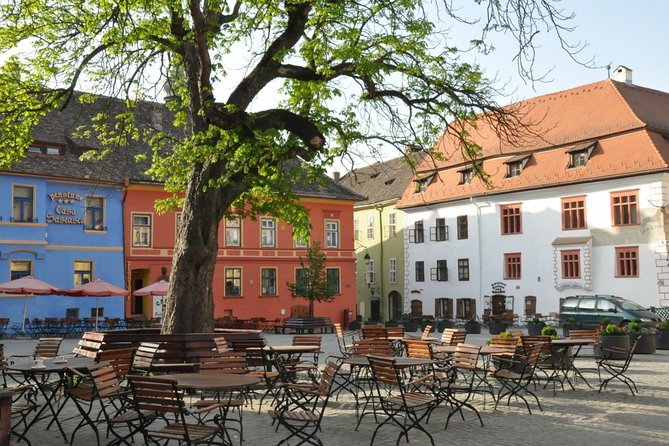
The Citadel’s Market Place is a natural place to begin because it introduces the town’s medieval character without requiring an immediate climb. Your guide can point out the way the old center functioned and explain why Sighișoara became such an important fortified settlement.
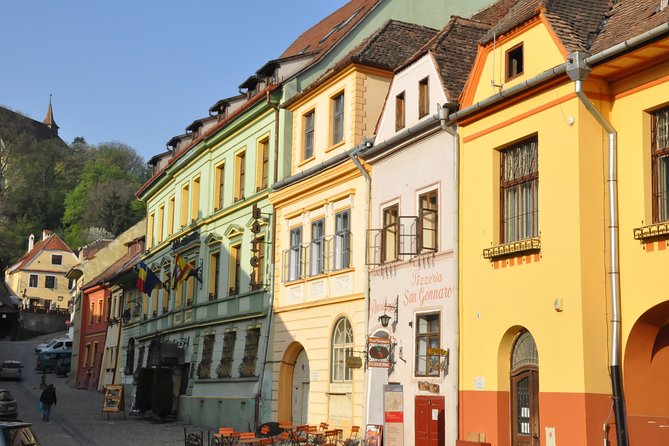
This opening section is also useful for photography. The colorful houses and close-set buildings give the square a storybook appearance, but a good guide should help you look past the pretty façades. Ask about how the buildings were used, who lived and worked there, and how the town’s defenses shaped daily life.
The tour is designed for a maximum of 30 people. That limit keeps it from becoming a large-scale street lecture, but the experience will feel most personal when the group is well below that number. If your guide is Peter, Petre, or Charles, expect the quality of the walk to depend heavily on how many questions the group asks and how much time is spent at each stop.
Dracula’s Birth House and the real story behind the legend
Sighișoara’s Dracula connection begins at the house associated with Vlad the Impaler’s birth. It is an important stop, especially if this is your first visit, but it should be treated as a historical marker rather than the whole reason to come.
The strongest part of the experience is the chance to place Vlad in the setting of medieval Sighișoara. The town’s towers, walls, religious buildings, and narrow lanes offer far more context than a stand-alone Dracula attraction.
If you are hoping for a theatrical vampire tour, this may not be your ideal choice. The information emphasizes local history, architecture, and culture instead of myths and spooky entertainment. That is a benefit if you want facts and context, but a drawback if you expect costumed storytelling or a heavily gothic presentation.
The Clock Tower and the town’s defensive ring
The Clock Tower is one of Sighișoara’s defining sights and one of the easiest places to understand the town’s fortified design. Along with the towers and bastions, it shows how the citadel was protected and how different craft guilds were tied to the city’s defenses.
The route includes the Butchers’ Bastion and Tower, the Tailors’ Tower, the Furriers’ Tower, and the Tin Moulders’ Tower. These are not just attractive stone structures. Their names preserve the old guild system, when tradesmen had civic duties as well as economic roles.
I would pay close attention here to the explanations rather than rushing from tower to tower. The value of a guide is clearest when the buildings are treated as evidence of how the city worked. Charles is described as giving clear, detailed explanations of the architecture and history, while Peter and Petre are praised for connecting local events to wider Transylvanian and European developments.
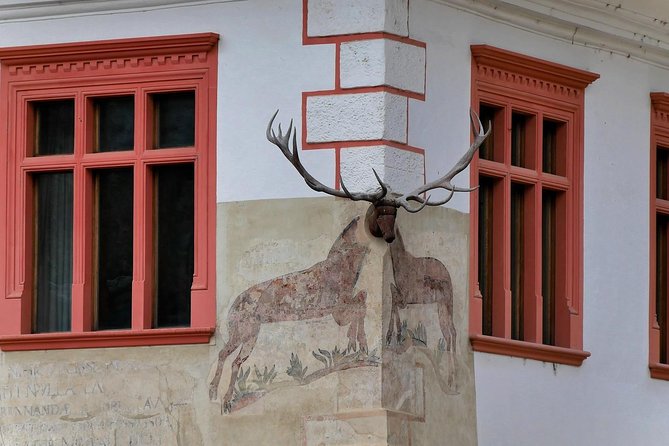
You may also see the Venetian House and the House with the Deer Antler. These distinctive buildings add variety to the route and help show that Sighișoara’s character is not limited to its largest monuments. The old town is full of small features that are easy to walk past without a local eye.
More walking tours:
- City Tour Sighisoara Legends & Landmarks A Walk Through Time
★ 4.9 · 83 reviews - Bucharest: City Highlights Guided Walking Tour
★ 4.9 · 1,482 reviews - Bucharest Highlights Walking Tour
★ 5.0 · 469 reviews - Free walking tour of Brasov in English
★ 4.9 · 302 reviews
Climbing the Covered Staircase to School Hill
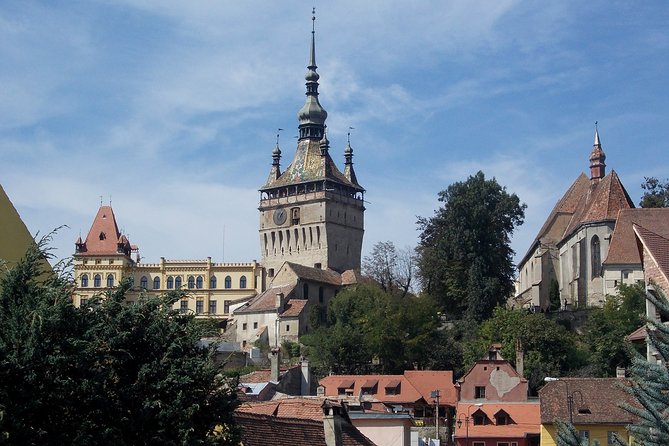
The Covered Staircase is one of the most memorable parts of the walk. Built to make the climb to the school and church easier in poor weather, it turns a practical route into one of Sighișoara’s most atmospheric passages.
The stairs are also the tour’s clearest physical challenge. You should expect an uphill walk and a substantial number of steps. The experience information asks for a moderate level of physical fitness, and that warning is worth taking seriously if stairs are difficult for you.
At the top, the School Hill area gives the tour a quieter tone. The route connects education, religion, and community life, rather than treating the church as an isolated photo stop. One guide is praised for discussing education, farming practices, literature, and craftsmanship, which suggests that this section can reach well beyond standard sightseeing facts.
The tour information includes access to the interior of the Church on the Hill and St Joseph Church. However, entrance fees are not included. One detailed account gives the Church on the Hill admission as 8 lei, including photography, but fees can change, so you should carry some Romanian currency and confirm the current charge.
Church on the Hill and the German Cemetery
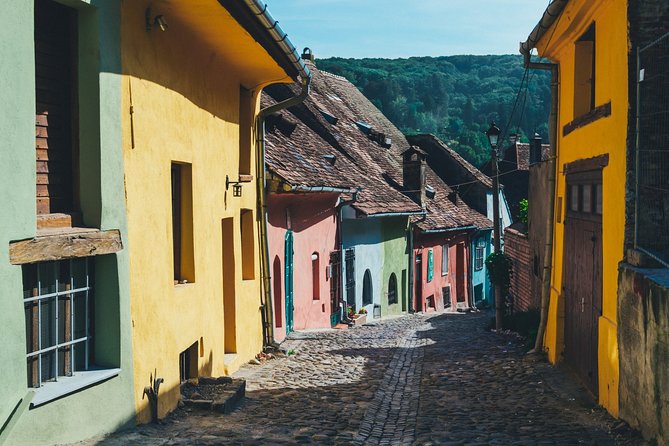
The Church on the Hill is a major reason to choose this walking tour instead of exploring only the lower citadel. Its position above the old town gives the route a sense of place, while the interior adds religious and architectural detail that exterior photographs cannot provide.
The German Cemetery is another worthwhile inclusion. Walking through it brings out the German-speaking Saxon side of Sighișoara’s past and offers a different kind of historic setting from the crowded central streets.
This portion may not suit everyone. The cemetery is approached as part of the historical route, and one guide checks whether the group is comfortable walking through it. If you prefer a quick monument tour with no quieter or more reflective stops, this section may feel slower.
For me, that slower pace is useful. The old town’s legends are more meaningful when you also see its churches, schools, burial grounds, and working defenses. Sighișoara becomes a lived-in place, not a backdrop for Dracula photographs.
St Joseph Church and the architectural details
St Joseph Church is listed among the interiors accessible during the tour. The information does not provide as much detail about this stop as it does about the Church on the Hill, so you should think of it as an added architectural and religious visit rather than expect a long separate program.
That uncertainty is one reason to ask your guide at the beginning how much time will be spent inside each church. The tour lasts approximately two hours, and there are many stops. If your group wants detailed explanations at every tower and church, the guide may need to adjust the pace.
Peter is described as covering art, religion, history, politics, and more, while another account says the tour extended beyond the planned time because the group was so interested. That kind of flexibility can make the walk much better, but it is not something you should count on if you have a train, reservation, or other fixed appointment immediately afterward.
How the guides shape the experience
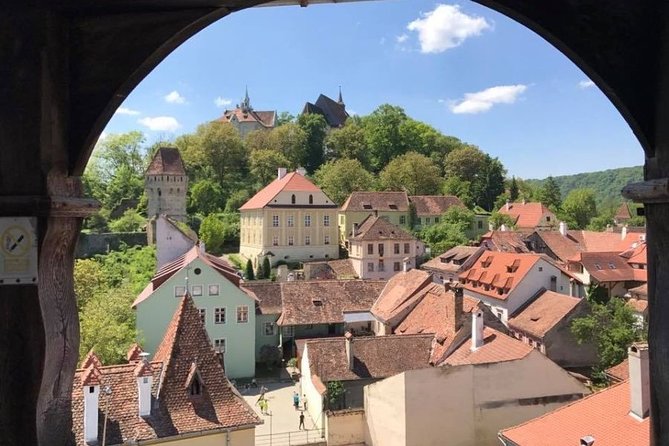
This tour depends more on the guide than on equipment or special activities. There is no bus, audio device, meal, or performance. You are paying for interpretation while walking through a remarkable old town.
Peter, also called Petre in one account, receives especially strong praise for using historical images and pointing out physical features that match his explanations. That is valuable in Sighișoara because photographs and details on buildings can turn an ordinary-looking wall into a clue about the city’s past.
Charles is also praised for being patient, clear, and willing to explain the citadel in detail. He is described as interacting well with children and asking permission before taking the group through the cemetery. Those small signs of care matter on a walking tour.
You should expect an academic style rather than a theatrical one. Topics may include craftsmanship, architecture, communism, farming, literature, relics, and education. Families can benefit from the broad subject range, especially when children are included in the storytelling, but younger children still need to stay with an adult.
Price, timing, and what the fee really covers
At $46.96 per person, this is not the cheapest way to see Sighișoara’s citadel. You can walk through the streets on your own for free, and several sights can be viewed from outside without paying admission.
The fee makes more sense if you value interpretation. A self-guided visit may show you the Clock Tower and Covered Staircase, but it will not necessarily explain the guild towers, religious buildings, political changes, or the connections among the town’s landmarks.
The price includes an English-speaking specialized guide. It does not include entrance fees, photo fees, alcohol, souvenirs, or other personal expenses. A private tour carries a stated supplement of €20 per person, which may be worthwhile if you want to control the pace or ask many questions without holding up a group.
The listed starting time is 11:00 a.m. The experience details also describe morning or afternoon departure choices, so confirm the exact slot at booking. The walk returns to the original meeting point, making it easy to continue sightseeing afterward.
Sighișoara’s tour season can include cool weather. One February visit still worked well because the group moved slowly and stayed engaged with the subject. Even so, bring layers and shoes with good grip. Weather, stairs, and stone streets are part of the practical calculation.
Who should book this Sighișoara walk
I would choose this tour if you want to understand the town rather than simply photograph it. It suits first-time visitors, history fans, architecture enthusiasts, families with older children, and anyone who likes asking questions.
It is also a good match if you want a balanced look at Sighișoara. The route includes Dracula’s Birth House, but it gives equal or greater attention to churches, guild towers, education, defenses, and local culture.
You may want to skip it if you dislike uphill walking, cannot manage stairs, or have only a short window in town and need a very predictable finish. The route may run longer when discussion becomes lively, so leave some space in your schedule.
The maximum of 30 people provides a reasonable limit, but it is not the same as a private walk. If personal attention is important, consider the private supplement and confirm what it covers before booking.
Final verdict: Is it worth booking?
Yes, I would book City Tour Sighișoara Legends & Landmarks if the price fits your budget and you want more than a quick circuit of the main square. Its best feature is the guide’s ability to connect ordinary-looking details with the city’s larger story.
The strongest guide names attached to the experience are Peter, Petre, and Charles. Their approach appears to favor careful explanation, historical images, architecture, religion, and local life over exaggerated Dracula folklore.
Go for the tour if you can handle stairs, budget separately for church entry, and leave your schedule flexible. Skip it only if you prefer to explore entirely alone or need a strictly timed route. For most first visits, the added context is worth paying for.
FAQ
Where does the Sighișoara walking tour begin?
The tour begins at Piața Muzeului 6, Sighișoara 545400, Romania.
What time does the tour start?
The listed start time is 11:00 a.m. The experience details also indicate that morning or afternoon departures may be available, so confirm your selected time when booking.
Where does the tour end?
The activity ends back at the meeting point.
How long does the tour last?
The planned duration is approximately two hours. A guide may extend the walk if the group is especially interested, but you should not assume an extension is guaranteed.
Is the tour offered in English?
Yes. It includes an English-speaking specialized guide.
What is the maximum group size?
The maximum is 30 travelers.
Does the tour enter the churches?
The experience includes access to the interior of the Church on the Hill and St Joseph Church. Entrance fees are not included.
How much does admission to the Church on the Hill cost?
One account gives the charge as 8 lei, including permission to take photographs inside. Fees can change, so confirm the current amount locally.
Is the tour suitable for children?
Children must be accompanied by an adult. The route requires a moderate level of physical fitness and includes stairs and uphill walking.
Can I cancel for a full refund?
Yes. You can cancel at least 24 hours before the experience start time for a full refund. Cancellations or changes made less than 24 hours before the start time are not accepted for a refund.
Just added around Sighisoara
- Transylvania’s Trail: Sibiu, Bran Castle, Brasov, Sighisoara★ 4.6 · 3 reviews
- Sighisoara Heritage Tour-The place of birth of Vlad Dracula★ 5.0 · 3 reviews
- Székely Land countryside and Sighisoara one day trip★ 5.0 · 3 reviews
- 4 Days Private Tour in Transylvania Brasov Sighisoara Sibiu★ 5.0 · 3 reviews
- Private Day Tour Sighisoara and Viscri from Brasov with Hotel Pick Up/ Drop Off★ 5.0 · 3 reviews
- CJ05 – Mysteries of Transylvania: Bran Castle & Sighisoara★ 4.8 · 3 reviews
- From Brasov: Corvin Castle and Sibiu (Optional Sighisoara)★ 4.6 · 3 reviews
- Day Trip to Sighisoara Rupea Fortress Viscri from Brasov★ 4.8 · 3 reviews
City Tours, compared.


Bucharest Panoramic Sightseeing – Private City Tour
Read our review →
SB01 – City Tour Sibiu: Exploring the Heart of Transylvania
Read our review →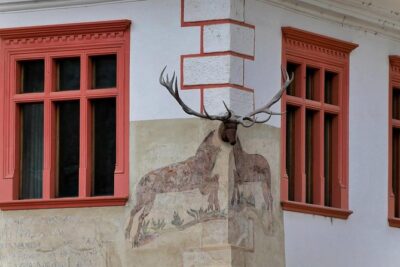
City Tour Sighisoara Legends & Landmarks A Walk Through Time
Read our review →Browse the lists this tour appears in