
Reviewed · CITY TOURS
4h Bucharest City Tour – Group Trip Maximum 5 Persons – The Taste of Bucharest
Communism and village life share one tour. This small-group Bucharest outing gives you two strong advantages: a maximum of five people and a guide-led route that links Romania’s recent past with its older traditions. You move from the oversized Palace of Parliament to modest wooden homes at the National Village Museum, then continue through Calea Victoriei, Revolution Square, and the Old Town.
I especially like the broad reach of the route and the personal feel created by the tiny group. Guides such as Nicolas, Alex, and Alexandru Stroe are praised for clear English, humor, punctuality, and strong command of Bucharest’s story. The main consideration is price: at $162.56 per person, this is not a bargain city bus tour, and entrance tickets plus food and drinks cost extra.
In This Review
- Key points to know before booking
- A four-hour introduction with real range
- The Palace of Parliament: power in concrete and marble
- National Village Museum: Romania in miniature
- Calea Victoriei: Bucharest’s contradictions on one avenue
- Revolution Square and the end of Ceausescu’s rule
- Old Town and Hanul Lui Manuc
- Guide quality is a major part of the value
- Is $162.56 per person fair?
- Who should book this Bucharest tour?
- Practical details before you go
- Should you book it?
- FAQ
- How long does the Bucharest city tour last?
- What is the maximum group size?
- Is hotel pickup available?
- Is the tour offered in English?
- Are entrance tickets included?
- Are food and drinks included?
- What is the cancellation policy?
Key points to know before booking
- The group is capped at five people, so you can ask questions without shouting across a crowded vehicle.
- The Palace of Parliament gives the tour its sharpest historical lesson, showing how political power became physical excess under Nicolae Ceausescu.
- The National Village Museum adds a welcome change of pace, with traditional houses, mills, churches, and rural customs from across Romania.
- The route covers four very different parts of Bucharest, from royal buildings and revolution sites to restaurants, churches, shops, and the old merchant quarter.
- A last-minute booking may turn into a private tour, as happened for several people who booked when no other guests joined.
- Admission tickets are not included, so you should budget separately if you want to enter paid attractions.
A four-hour introduction with real range
This tour works best as a first orientation to Bucharest. In roughly 3 hours 50 minutes to 4 hours 30 minutes, you get a guided look at monumental government buildings, village architecture, royal Bucharest, the 1989 Revolution, and the historic center.
That range matters. Bucharest can feel hard to read at first. It has grand French-influenced avenues, Orthodox churches tucked between newer buildings, Communist blocks, polished cafés, and worn facades all close together. A guide helps you connect those pieces instead of seeing them as unrelated sights through a car window.
The vehicle is air-conditioned and includes WiFi. Fuel, parking, and taxes are covered, which removes a few minor costs that can otherwise appear during a half-day outing. Pickup is offered, with instructions to wait in a hotel lobby or on the sidewalk if your pickup address is a private location.
The small group is one of the strongest practical features. With no more than five people, the experience should feel closer to a conversation than a formal procession. Several bookings also ended up as one-person tours, effectively becoming private outings. That is not guaranteed, but it shows how the operator handles small demand.
More City Tours in Bucharest
- Bucharest: City Highlights Guided Walking Tour
★ 4.9 · 1,482 reviews - Bucharest: 2-Hour City Highlights Bike Tour
★ 4.8 · 269 reviews - Bucharest Tuk Tuk city tour
★ 5.0 · 188 reviews
The Palace of Parliament: power in concrete and marble
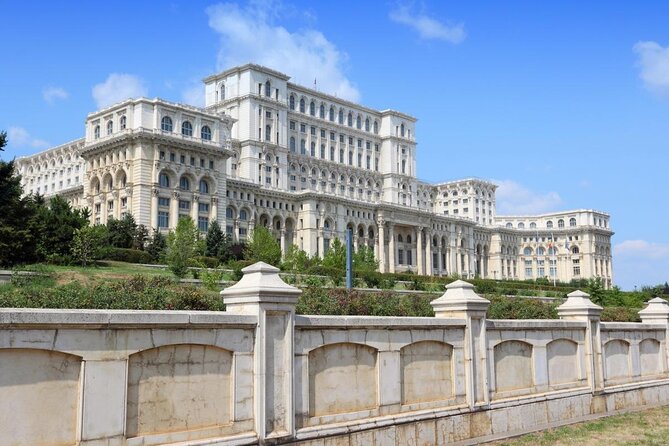
The Palace of Parliament is the tour’s most dramatic stop. It is the second-largest administrative building in the world after the Pentagon, and its scale is difficult to understand from photographs alone.
The useful part of seeing it with a guide is not simply learning its size. The building becomes a lesson in how a totalitarian government used architecture to project control. Ceausescu’s regime reshaped a large part of Bucharest to create this symbol of authority, spending heavily while ordinary people faced severe shortages and restrictions.
The building’s opulence can feel almost absurd. Huge halls, grand materials, and immense proportions make the visitor feel physically small. That reaction is part of the point. The structure shows how political ambition can become an urban burden, not just a building.
Your guide can also place the palace within the wider story of Romanian communism. The tour description presents it as a way to understand how damaging a totalitarian system can be for a nation. That gives the stop more weight than a quick photo opportunity.
One practical warning is important: entrance tickets are not included. The information provided does not specify the admission price, entry schedule, or the exact time spent inside, so you should confirm those details before booking if interior access is essential to you. If you only want an exterior look and historical explanation, clarify that as well.
National Village Museum: Romania in miniature
The National Village Museum, also called Muzeul National al Satului Dimitrie Gusti, provides the tour’s best change of mood. After the political force and monumental scale of the Palace of Parliament, you move into a setting focused on ordinary homes, work, worship, and village life.
The museum brings traditional Romanian buildings together in one place. You can see houses made from wood, adobe, stone, and other local materials, representing areas from across the country. Mills and wooden churches add larger symbols of village life, while the homes show how people adapted their buildings to local resources and conditions.
The value here is human scale. Instead of hearing only about kings, dictators, and state institutions, you see how families lived and organized their surroundings. The tour emphasizes the practical, sustainable side of rural life, including a modest way of living that stayed closely tied to the environment.
A guide adds useful context because traditional buildings can otherwise look like attractive old structures without much meaning. You can learn why different materials were used, how religious buildings fit into village life, and how customs helped hold communities together over time.
The planned visit is about one hour. Admission is not included, so factor that into the cost. Wear comfortable shoes and allow yourself time to look closely at the buildings. The museum is not just a single exhibit you walk through in a few minutes. It is a broad outdoor visit, and the weather may affect how pleasant it feels.
Calea Victoriei: Bucharest’s contradictions on one avenue
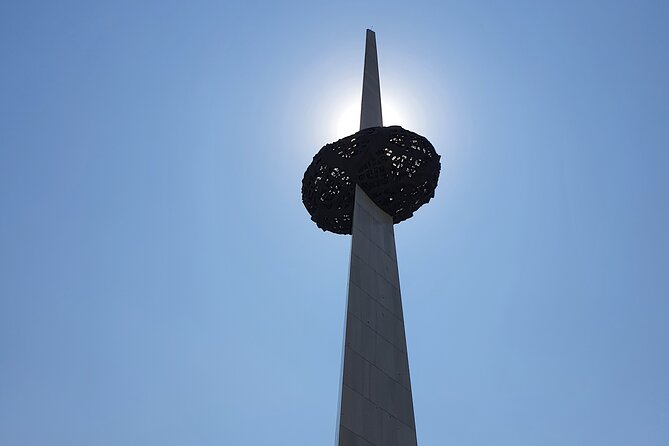
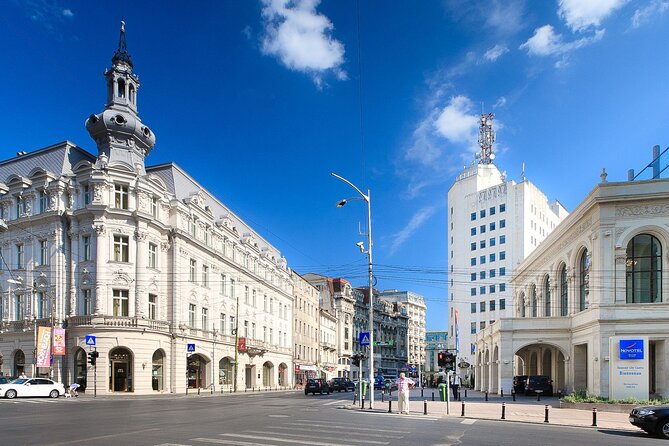
Calea Victoriei is where Bucharest’s mixed identity comes into view. This historic avenue brings together royal power, Communist history, churches, museums, theaters, shops, restaurants, and everyday city life.
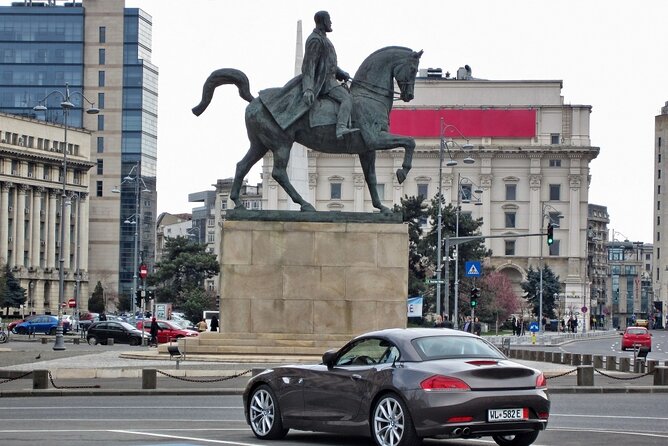
The tour points out the contrast between the Royal Palace and the former Central Committee of the Romanian Communist Party. That pairing tells you a great deal about the city’s political changes. One building represents monarchy and royal ceremony. The other is linked to Communist rule and the events that brought Ceausescu’s government down.
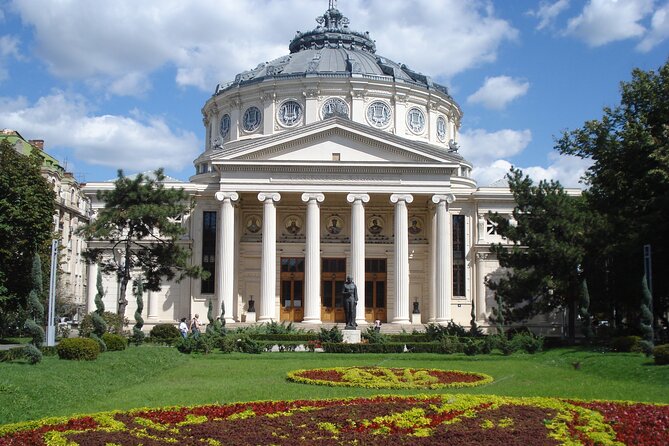
You can also expect to see the Romanian Athenaeum, the CEC Palace, old Orthodox churches, the National History Museum, and a wide range of commercial places. The route includes music shops, casinos, cafés, tea shops, retail stores, restaurants, and gift shops.
The scheduled visit is about 45 minutes, so this is mainly a guided overview rather than a museum-by-museum stop. You will not have time to explore every interior. That is fine if you want an introduction, but you should plan a separate visit if one of the museums or the Athenaeum is high on your list.
I like this part of the tour because it shows Bucharest as a lived-in city rather than a collection of monuments. You see old churches beside modern businesses and historic facades mixed with later construction. The result is not tidy, but it is revealing.
A few more trips worth weighing up before you book
- Bucharest: Dracula’s Castle, Peles Castle, & Brasov Old Town
★ 4.5 · 17,858 reviews - Bucharest: Dracula Castle, Peles Castle & Brasov Old Town
★ 4.6 · 10,891 reviews - Bucharest: Dracula’s Castle, Peleș Castle & Brașov Day Trip
★ 4.5 · 5,919 reviews - Bucharest: Palace of Parliament Tickets and Guide
★ 4.3 · 3,182 reviews
Revolution Square and the end of Ceausescu’s rule
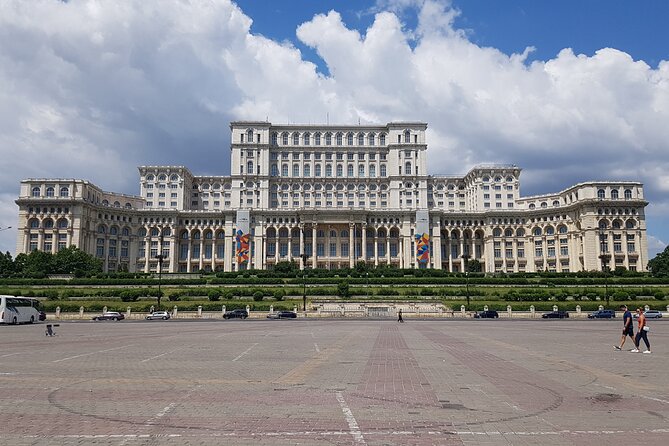
Revolution Square gives the Communist story a specific place. This is where the tour explains the December 1989 uprising and the collapse of Ceausescu’s rule.
The former Central Committee building, now associated with the Senate, is central to the story. From here, the revolution began, and Ceausescu eventually fled by helicopter. The stop helps you understand that the end of communism was not an abstract political shift. It involved public pressure, danger, and sacrifice.
The guide also touches on the controversies surrounding Ceausescu’s fortune, state security, and offshore accounts. Those subjects add a darker layer to the tour. They remind you that the revolution did not instantly answer every question about power, money, or responsibility.
The planned time is about 30 minutes, enough for an explanation and a look around the square. Do not expect a long museum visit here. The strength is the setting and the narrative, especially if you have little background on Romanian history.
This is also a good moment to ask questions. A small group makes it easier to pause over details you find confusing, such as the difference between the Communist Party leadership, the state security service, and the wider government. The guides are repeatedly praised for being easy to talk with and for explaining the city clearly in English.
Old Town and Hanul Lui Manuc
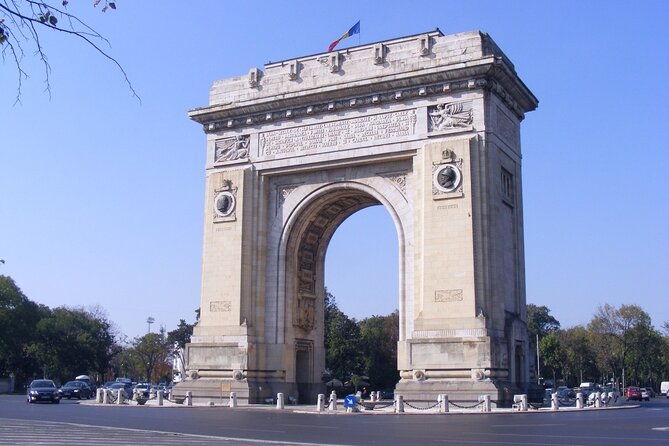
The final major area is Bucharest’s Historical City Centre, usually called the Old Town. Here the mood shifts again, from political upheaval to commerce, food, religion, and urban folklore.
Hanul Lui Manuc is the key historic stop. Built around 1806 by Manuc Bei, one of the wealthiest landowners in the Balkans, this fortified inn served as a meeting point for merchants passing through Bucharest. Its role was economic and social, making it a useful window into the city before modern hotels and transport changed how people moved through the region.
The inn also helps explain why the Old Town feels different from the grand avenues. This was a place of trade and exchange, with people arriving from different parts of the Balkans and beyond. The architecture and streets suggest a city shaped by movement, business, and cultural contact.
You can also expect old churches, museums, restaurants, and shops. The area includes a library where you can buy books, music, and souvenirs. The tour allows about 45 minutes, which is enough for a guided walk and a first look at the quarter, but not enough to sample its full food and nightlife scene.
Food and drinks are not included. That is sensible for a short city tour because it keeps the route moving, but you may want to return to the Old Town later for a meal. The guide can point out places, though the supplied information does not promise a tasting or restaurant reservation.
Guide quality is a major part of the value
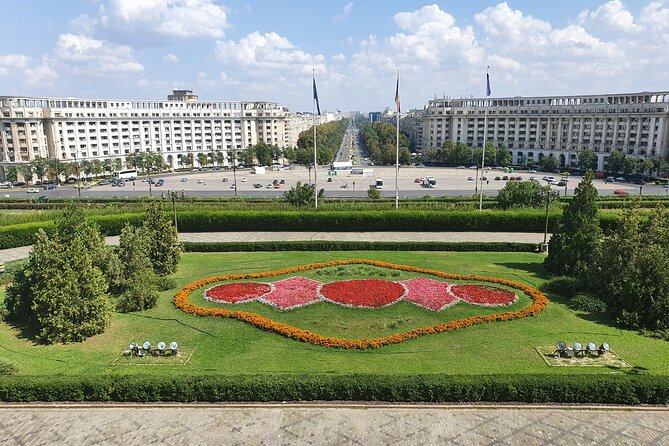
A city tour like this succeeds or fails on the guide. The strongest praise is directed at the people leading it, not only at the sights.
Nicolas is described as charming, funny, punctual, fluent in English, and well prepared. Alex is praised for making a real effort to show as much of Bucharest as possible, while Alexandru Stroe is noted for professionalism and a friendly manner. One guide is also described as speaking French very well, and the experience has been delivered for people with different language backgrounds.
That range suggests a relaxed guiding style. You are likely to get explanations, conversation, and chances to ask about what you are seeing rather than a memorized list of dates. Several bookings were made at the last minute, yet the tour still went ahead when only one person had reserved. That flexibility can be useful if your Bucharest plans are changing.
The comments also point to a clean, well-maintained vehicle and good communication with guests. Those details may sound basic, but they matter when you are crossing the city in a few hours.
Is $162.56 per person fair?
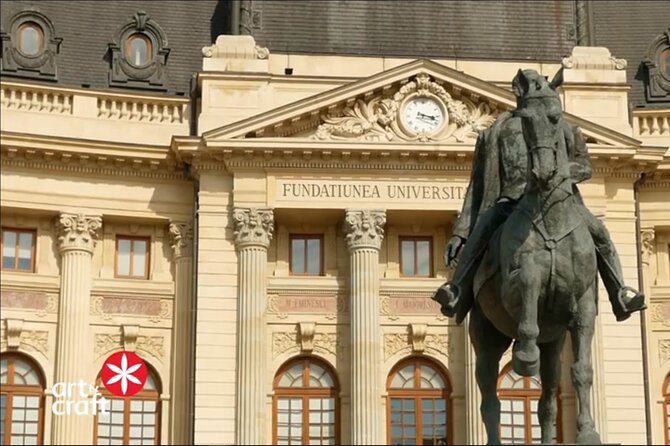
At $162.56 per person, this tour sits in the expensive range for a four-hour city introduction. The price makes more sense if you value door-to-door pickup, a very small group, air conditioning, parking, WiFi, and a guide who can adapt the conversation to your interests.
It is also worth noting what the price does not cover. Entrance tickets, food, and drinks are extra. The tour is therefore most valuable as a guided overview with transportation, not as an all-inclusive sightseeing package.
The group cap changes the calculation. A five-person maximum offers a much more personal format than a large coach tour, and a one-person booking may become private in practice. If you are traveling with a small family or group of friends, the price may feel easier to justify because you are buying a focused outing rather than a generic city circuit.
If your main goal is simply to see Bucharest from the outside at the lowest cost, you can likely find cheaper ways to move around. If your time is short and you want a guide to explain why the city looks the way it does, the price buys convenience and context.
Who should book this Bucharest tour?
I would recommend it to a first-time visitor with limited time, especially someone interested in the relationship between Romania’s traditional culture and its Communist past.
It suits you particularly well if:
- You want a small group rather than a large bus.
- You prefer history explained in plain language.
- You want hotel or address pickup.
- You like seeing both major sights and everyday city districts.
- You are comfortable paying extra for entrance tickets and meals.
- You may book at the last minute and appreciate the chance of a very small group.
It may be less suitable if you want long interior visits at the Palace of Parliament, museums, or the Romanian Athenaeum. The route covers a lot, so the time at each location is limited. It is also not the best choice if your priority is a food tour, nightlife, or a relaxed afternoon spent in just one neighborhood.
Practical details before you go
The experience is offered in English and accepts mobile tickets. Pickup is available, and you should wait in the lobby or on the sidewalk, depending on the address. Confirmation is received at booking, and the tour is near public transportation.
Most people can participate, and the maximum group size is five. Since the tour involves outdoor sightseeing at the Village Museum and walking through central areas, comfortable shoes are a sensible choice, though the supplied details do not give specific accessibility information.
Free cancellation is available up to 24 hours before the start time for a full refund. Changes or cancellations made less than 24 hours ahead are not accepted for a refund, and cut-off times follow local Bucharest time.
Should you book it?
Book this tour if you want a compact, well-explained introduction to Bucharest and care more about personal guiding than the lowest possible price. The route is unusually broad for four hours, moving from Ceausescu’s monumental palace to rural homes, royal buildings, revolution sites, and the old merchant quarter.
I would confirm the Palace of Parliament entry arrangements before paying, since admission is separate and the exact interior schedule is not provided. If the cost fits your budget, the tiny group, flexible guiding, and strong record of polished English-speaking guides make this a useful first day in Bucharest.
FAQ
How long does the Bucharest city tour last?
The tour lasts approximately 3 hours 50 minutes to 4 hours 30 minutes.
What is the maximum group size?
The tour has a maximum of five travelers.
Is hotel pickup available?
Yes. Pickup is offered. You should wait in the lobby or on the sidewalk if the pickup address is a private location.
Is the tour offered in English?
Yes. The experience is offered in English.
Are entrance tickets included?
No. Entrance tickets are not included in the price.
Are food and drinks included?
No. Food and drinks are not included.
What is the cancellation policy?
You can cancel up to 24 hours before the experience starts for a full refund. Cancellations or changes made less than 24 hours before the start time are not accepted for a refund.
Just added around Bucharest
- 10 hours Private Apiary Tour in Romania – From Bucharest★ 5.0 · 3 reviews
- 4-Day Inside Transylvania & Transfagarasan Tour from Bucharest★ 5.0 · 3 reviews
- Bucharest: Charm of the Belle Époque Private Tour★ 5.0 · 3 reviews
- Bran & Peles Castles through the Best Road in the World: Transfagarasan road★ 4.5 · 3 reviews
- Private Wine Tasting at Bucharest’s First Wine Bar★ 5.0 · 3 reviews
- 2-Day Small-Group Tour in Transylvania from Bucharest – Maximum 5 Persons★ 5.0 · 3 reviews
- Bucharest to Brasov – Fast Private Transfer★ 5.0 · 3 reviews
- Probably the Best Restaurant and Wine Cellar near Bucharest★ 4.5 · 3 reviews
City Tours, compared.


Bucharest Panoramic Sightseeing – Private City Tour
Read our review →
SB01 – City Tour Sibiu: Exploring the Heart of Transylvania
Read our review →
City Tour Sighisoara Legends & Landmarks A Walk Through Time
Read our review →Browse the lists this tour appears in