
Reviewed · 4-DAY EXPERIENCES
4 Days Private Transylvania Tour from Bucharest
Transylvania rewards travelers who like their scenery with a side of history. This four-day private tour links monasteries, fortified towns, royal castles, and Dracula lore while giving you a guide and vehicle for the long stretches between them. I especially like the private format, which lets the guide adjust the pace, and the inclusion of three nights’ lodging and breakfast.
The strongest human touch comes from guides such as Narcis Arion, Mattia, and Paul, who have been praised for clear explanations, safe driving, and practical restaurant advice. You should know, though, that the schedule is ambitious. You will cover a lot of ground, and some appealing villages or viewpoints may pass by the window before you can stop.
In This Review
- Five details that shape the experience
- A four-day route through Romania’s best-known sights
- Day one: Cozia Monastery and the medieval squares of Sibiu
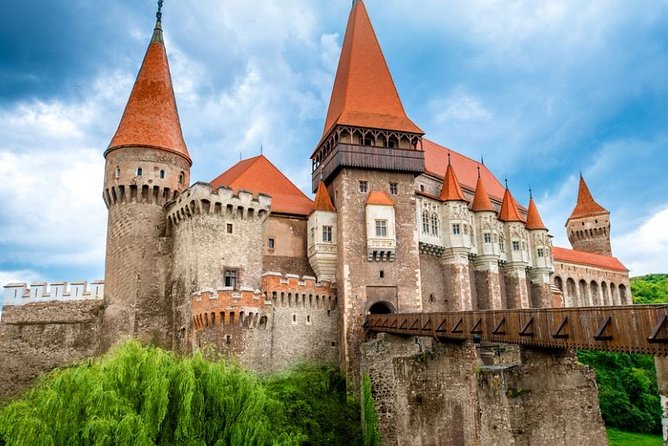
- Day two: Alba Iulia and Corvin Castle
- Day three: Sighisoara’s clock tower and Brasov’s old center
- Day four: Bran’s legend and Peles’s royal rooms
- What the private format adds
- Hotels, meals, and the real tour price
- Who will enjoy this route most
- Should you book the four-day Transylvania tour?
- FAQ
- Where does the tour begin and end?
- What time is pickup?
- Is hotel pickup included?
- Is this a private tour?
- What language is the tour offered in?
- How many nights of accommodation are included?
- Are breakfasts included?
- Are entrance fees included?
- Is a single room available?
- What happens if bad weather cancels the tour?
Five details that shape the experience
- Cozia Monastery begins the journey with medieval Wallachian art, including Armenian decoration and painted interiors.
- Sibiu serves as the main base, giving you time to explore one of Romania’s most appealing old cities.
- Corvin Castle and Peles Castle require separate admission fees, so budget beyond the tour price.
- A private vehicle and guide make the route flexible, especially for families or groups with different interests.
- The tour combines UNESCO Sighisoara, fortified Brasov, Bran Castle, and Alba Iulia, offering a broad look at Romanian history.
- The $1,419.51 price includes three nights, transport, guiding, and three breakfasts, but not meals, tips, or attraction tickets.
A four-day route through Romania’s best-known sights
This is not a slow village holiday. It is a concentrated circuit from Bucharest through Transylvania and back, with several substantial driving days and guided visits along the way.
That pace is the tradeoff for seeing so much in only four days. You will visit major landmarks that are difficult to combine by public transport, and you will not need to arrange several hotels or worry about Romanian roads. The private setup also means your group is not joined by strangers.
The tour is offered in English, although it may be operated by a multilingual guide. Pickup and drop-off in Bucharest are included, and the listed start time is around 8:30 a.m., with pickup details also stating 9:00 a.m. I would confirm the exact time with Trip2Ro before the first morning.
More Transylvania trips:
- Transylvania and Dracula Castle Full Day Tour from Bucharest
★ 4.5 · 1,589 reviews - Castles of Transylvania: Private Day Trip from Bucharest
★ 4.5 · 248 reviews - 2-Day Medieval Transylvania with Brasov,Sibiu and Sighisoara Tour from Bucharest
★ 4.5 · 145 reviews
Day one: Cozia Monastery and the medieval squares of Sibiu
The first morning heads west from Bucharest toward the Olt Valley. Cozia Monastery is a smart opening stop because it introduces Wallachian history before the route reaches Transylvania.
Founded in the fourteenth century by Prince Mircea the Elder, the monastery was later restored under the Cantacuzino family. You will have about 30 minutes here, enough for a focused look at the exterior and interior rather than a long visit.
Pay attention to the façade decoration, particularly the Armenian influence noted in the tour description. Inside, the frescoes give the place a quiet, solemn character. The short stop works well for a first taste of Romania’s religious and political past, though anyone wanting a detailed art-history visit may find the time tight.
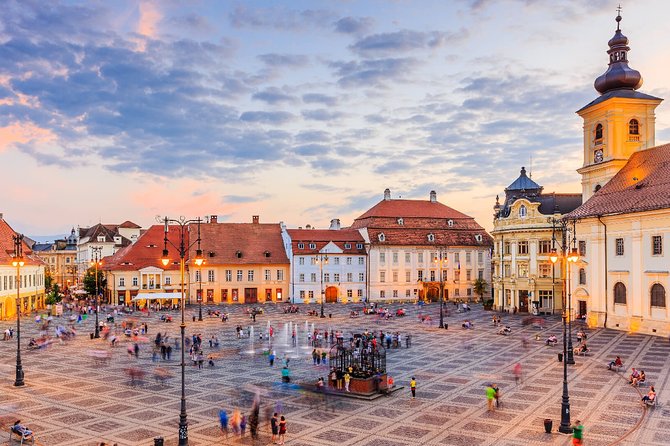
From Cozia, the route continues to Sibiu, where you spend about three hours. This is one of the tour’s most rewarding city visits. Romanians and Saxons lived here for centuries, and the city’s Catholic, Orthodox, and Protestant buildings reflect that mixed past.
Sibiu’s three central squares are the natural focus:
- Big Square, the broad civic heart
- Small Square, lined with historic buildings
- Huet Square, associated with the great evangelical church
The old center is compact enough to explore on foot during the allotted time. Look upward for the famous houses with the eyes, roof windows that give Sibiu’s historic buildings a slightly watchful expression. Towers, bastions, museums, and the large Gothic evangelical church add substance beyond the pretty streets.
Sibiu was European Capital of Culture in 2007 and hosts a major theater festival each year. You may not have time to see a performance on this tour, but that detail helps explain why the city feels more than a preserved monument. It is a functioning cultural center.
The overnight stay is in Sibiu. Having a centrally located hotel is particularly useful here. You can spend the evening near the old squares instead of being dropped at a distant roadside property, a detail that has made this tour more comfortable for past passengers.
Day two: Alba Iulia and Corvin Castle
Day two shifts west toward Alba Iulia, a city with major importance in modern Romanian history. The Great Union of Romania was proclaimed here on December 1, 1918.
You have about two hours to see the citadel, walls, and museums. This stop adds political context to the medieval architecture. It is easy to look at Romania only through castles and legends, but Alba Iulia helps you understand the country’s twentieth-century formation.
The citadel gives the visit a clear physical focus. Your guide can help connect the buildings and fortifications with the national events associated with the city. If you prefer military architecture, this may be one of the most satisfying stops on the route.
Next comes Corvin Castle, with about two hours for the visit. The castle is known for its Gothic appearance and has been used as a setting for historical films. Its connection with the Corvin family gives the guide plenty to explain, especially if you enjoy political alliances, noble families, and medieval power struggles.
Admission is not included. That matters because the advertised tour price can look more all-inclusive than it is. You will also need to cover meals, tips, and any photo or video charges required at particular sites.
Corvin Castle is one of the more visually dramatic stops, but the route makes for a long day. After the castle, you return to Sibiu in the late evening. I would treat this as a sightseeing day rather than a relaxed touring day. Comfortable shoes and patience with time in the vehicle will help.
Day three: Sighisoara’s clock tower and Brasov’s old center
Sighisoara is the tour’s most storybook-like town. Its historic center has been a UNESCO World Heritage Site since 1999, and the medieval citadel is still inhabited. That last detail changes the feel of the visit. You are not walking through an empty museum, but through an old town where daily life continues among fortified walls.
The Clock Tower is the obvious landmark and a useful orientation point. You will have roughly two hours to explore the center, including the hill church, the wooden Scholars’ Staircase, the Shoemakers’ Tower, and the Catholic church associated with the former Hungarian community.
The statue of Hungarian poet Petofi Sandor adds another layer to Sighisoara’s cultural story. The town’s architecture is attractive, but the real value lies in seeing how Romanian, Saxon, Hungarian, Catholic, Protestant, and Orthodox influences meet in one compact place.
Lunch at the house where Vlad the Impaler was born is possible at your own expense. This is an optional themed stop, not an included meal. It may appeal to anyone interested in the Dracula connection, but I would not treat it as the main reason to visit Sighisoara. The citadel itself is the stronger experience.
In the evening, you reach Brasov. The city was once fully fortified and became an important commercial and cultural center. Its architecture reflects German influence, with Gothic, Baroque, and Renaissance elements close together.
The visit includes the First Romanian School in the Schei district, the historic Romanian quarter outside the old Saxon center. You will also see Catherine’s Gate and Schei Gate, reminders of how people entered the medieval city.
The Black Church is another major stop. It is the largest evangelical Gothic church in Eastern Europe, with a 65-meter bell tower and a length of 90 meters. The church, Council Square, historic palaces, old houses, and Republic Avenue give you a strong introduction to Brasov in about three hours.
Brasov is a place where I would happily spend more time, so the schedule can feel brief. Still, the tour gives you a useful first look at the city and puts you in a good position for the final day’s castle visits.
A few more trips worth weighing up before you book
- 4-Day Private Tour in Transylvania from Bucharest
★ 5.0 · 48 reviews - Transylvania Castles 4-day tour from Bucharest
★ 5.0 · 31 reviews - 4 Days Private Tour in Transylvania: Sibiu, Sighisoara and Brasov
★ 5.0 · 18 reviews - 4-Day Private Tour of Transylvania from Bucharest
★ 5.0 · 16 reviews
Day four: Bran’s legend and Peles’s royal rooms
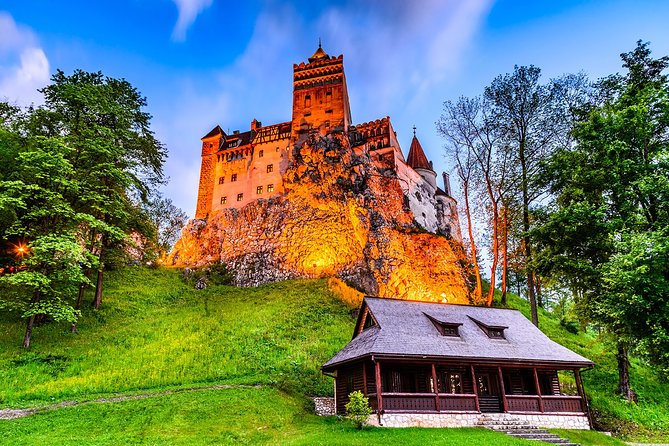
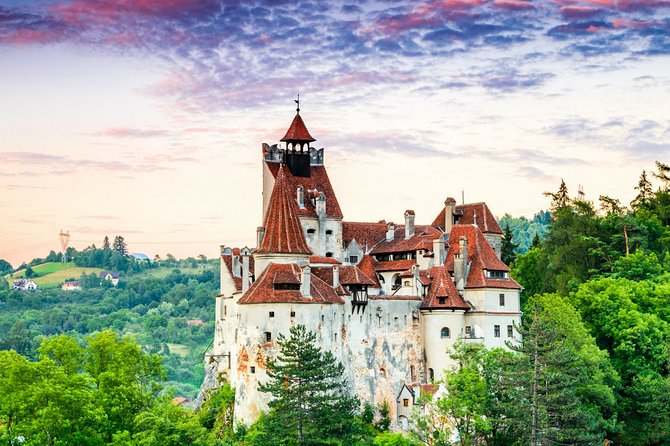
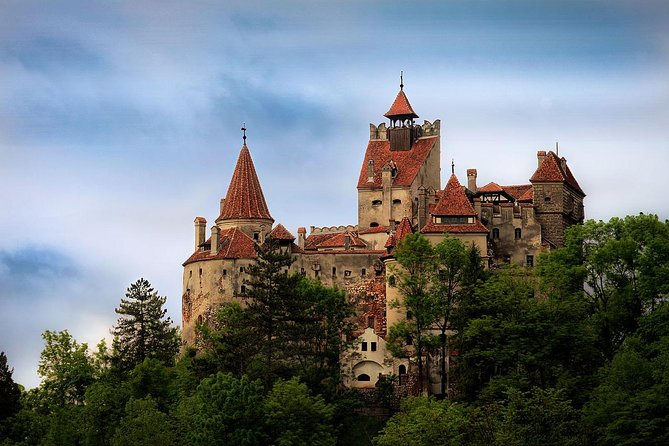
The morning begins at Bran Castle, commonly called Dracula’s Castle. The real story is more grounded than the popular name suggests. Bran occupied an important position between Wallachia and Transylvania, so it served as a defensive stronghold and border point.
The castle later became a residence associated with Queen Maria of Romania. That shift from fortress to royal home is worth keeping in mind as you walk through it. The Dracula label draws the crowds, but the building’s military role and royal connection make the visit more interesting than a simple vampire attraction.
You have about two hours at Bran, and admission is extra. The castle can be busy, so use the guided explanation to separate medieval fact from later popular fiction. If your main interest is architecture or Romanian monarchy, listen for the Queen Maria connection rather than focusing only on Vlad the Impaler.
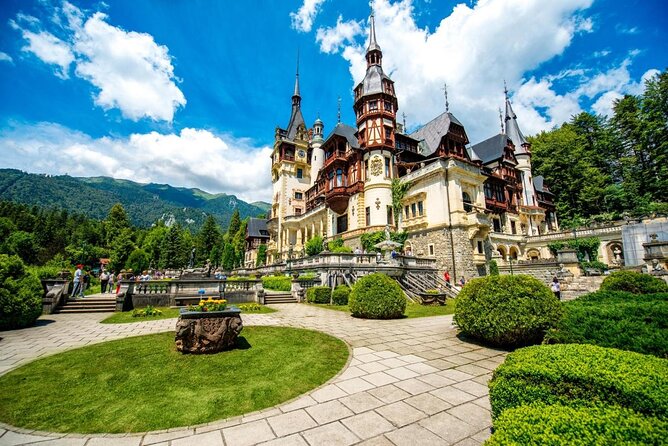
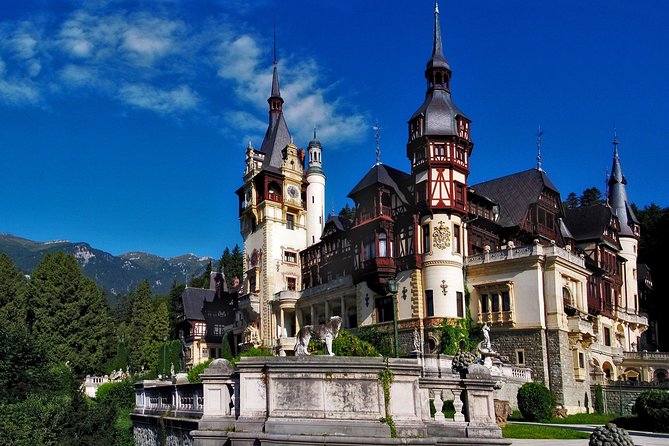
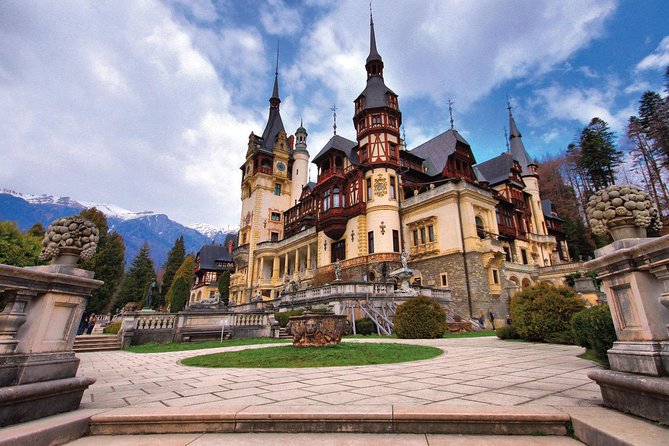
The final major stop is Peles Castle, the summer residence of Romania’s first king, Carol I of Hohenzollern. Built between the nineteenth and twentieth centuries, Peles was designed by a Czech architect and was considered highly modern for its era.
The castle is known for its changing interior styles. Each room has its own character, and the Florentine room brings a strong Italian Renaissance influence. This variety makes Peles different from Bran. Bran is associated with defense, borders, and legend. Peles is about royal taste, design, and technology.
Admission is not included here either. Set aside money for both castle visits, and check current entrance prices before departure because the tour information does not list them.
After Peles, the trip returns to Bucharest. The itinerary does not state a precise arrival time, so do not schedule a flight or fixed evening activity too close to the expected return.
What the private format adds
The private arrangement is the tour’s clearest advantage. Only your group participates, and the itinerary can be adjusted to suit your interests. One guide, Narcis Arion, has been praised for adapting the route as he learned what a family enjoyed. Mattia has also been praised for answering questions honestly, guiding the visits, and handling Bucharest traffic with confidence.
That flexibility has real value. You might want more time in Sibiu, more historical explanation in Alba Iulia, or a quicker stop at a site that matters less to your group. A private guide can respond to those preferences more easily than a large scheduled coach.
Families may find this especially useful. One family with children aged 10 and 6 described the guide as professional and informative, with helpful suggestions for places to eat. Children still need to be accompanied by an adult, and the route remains full, but a private vehicle allows your own group to manage breaks more naturally.
The vehicle is air-conditioned and may be a coach or private vehicle. A newer minibus has been described as roomy, with good visibility, though the back seats were reported as bumpy on some roads. If you are sensitive to motion, ask where your seats will be and consider sitting nearer the front.
Hotels, meals, and the real tour price
The listed price is $1,419.51 per person. That is a serious cost, but it covers three nights’ accommodation, transport, a professional guide, private touring, and three breakfasts.
The hotels have been praised for both quality and central locations. That location matters more than it may first appear. Staying near the center of Sibiu or another town means you can step outside for an evening walk instead of spending your free time getting back from a suburban hotel.
Lunches and dinners are not included. This gives you freedom to choose, but you need to budget for four days of meals. Tips for the guide are also separate, as are entrance fees and possible photo or video charges.
A single-room supplement of 100 euro is payable locally by cash or credit card. If you are traveling alone and want a private room, include that amount in your planning.
The strongest value comes when you place a high price on convenience. You are paying for a private car, a guide who can explain the sites, three hotel nights, and a route that would be difficult to organize efficiently on your own. If you prefer slow travel, public trains, or choosing every hotel yourself, the price may feel less attractive.
Who will enjoy this route most
I would recommend this tour to first-time visitors who want a broad introduction to Transylvania without handling the logistics themselves. It suits people who care about castles, medieval towns, religious buildings, and Romanian political history in equal measure.
It is also a good fit for families and small groups. The private vehicle, flexible itinerary, and guide-led visits make the experience less rigid than a standard group circuit.
You should think twice if your priority is long, unhurried time in each town. Sibiu, Sighisoara, and Brasov all deserve more than a quick introduction, and the route includes long transfers. Four days gives you range, not depth.
Weather is another practical concern. The operator may cancel if poor weather makes the experience unsafe or unsuitable, offering another date or a full refund. The tour also requires a minimum number of participants, despite being private for your own group once confirmed.
Should you book the four-day Transylvania tour?
Book it if you want Romania’s major Transylvanian sights arranged into one efficient private journey. The guides, central hotels, comfortable transport, and ability to tailor parts of the schedule add genuine value, especially for families and first-time visitors.
Skip it if you want to linger in one town, travel independently, or avoid extra costs at castles and museums. Before paying, confirm the pickup time, ask which vehicle will be used, check the current entrance fees, and decide how much free time you want in Sibiu and Brasov.
For most people, this is a strong introduction rather than a final word on Transylvania. It shows you the essential places, then leaves you with a sensible reason to return for a slower visit.
FAQ
Where does the tour begin and end?
The tour begins with pickup from your hotel in Bucharest and ends with drop-off at your hotel in Bucharest.
What time is pickup?
The listed start time is 8:30 a.m., while the pickup details state 9:00 a.m. You should confirm the exact time and location with the local operator after booking.
Is hotel pickup included?
Yes. Hotel pickup and drop-off in Bucharest are included.
Is this a private tour?
Yes. Only your group participates in the private activity.
What language is the tour offered in?
The tour is offered in English. It may be operated by a multilingual guide.
How many nights of accommodation are included?
Three nights of accommodation are included.
Are breakfasts included?
Yes. Three breakfasts are included.
Are entrance fees included?
No. Entrance fees are not included. Tickets are specifically listed as extra for Corvin Castle, Bran Castle, and Peles Castle.
Is a single room available?
Yes. A single-room supplement of 100 euro is payable locally by cash or credit card.
What happens if bad weather cancels the tour?
If poor weather causes cancellation, you will be offered a different date or a full refund.
Just added around Bucharest
- 4-Day Inside Transylvania & Transfagarasan Tour from Bucharest★ 5.0 · 3 reviews
- 10 hours Private Apiary Tour in Romania – From Bucharest★ 5.0 · 3 reviews
- Bucharest: Charm of the Belle Époque Private Tour★ 5.0 · 3 reviews
- Bran & Peles Castles through the Best Road in the World: Transfagarasan road★ 4.5 · 3 reviews
- 2-Day Small-Group Tour in Transylvania from Bucharest – Maximum 5 Persons★ 5.0 · 3 reviews
- Private Wine Tasting at Bucharest’s First Wine Bar★ 5.0 · 3 reviews
- Bucharest to Brasov – Fast Private Transfer★ 5.0 · 3 reviews
- Probably the Best Restaurant and Wine Cellar near Bucharest★ 4.5 · 3 reviews
4-Day Experiences, compared.
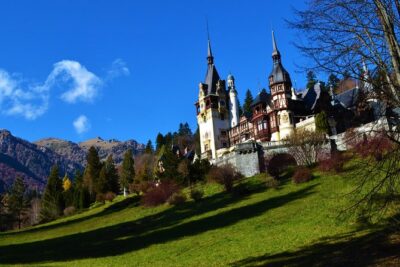
4-Day Private Tour in Transylvania from Bucharest
Read our review →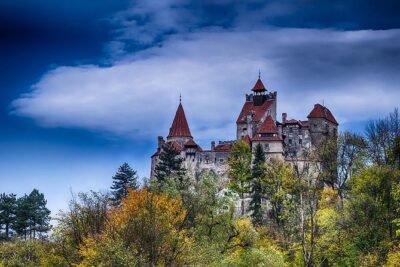
Transylvania Castles 4-day tour from Bucharest
Read our review →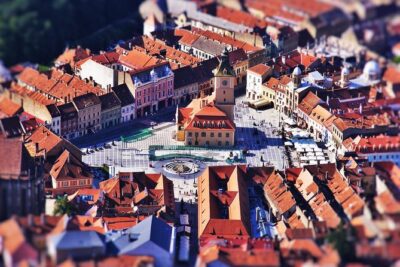
4 Days Private Tour in Transylvania: Sibiu, Sighisoara and Brasov
Read our review →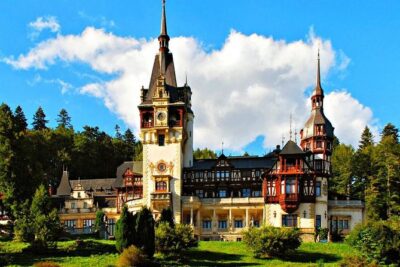
4-Day Private Tour of Transylvania from Bucharest
Read our review →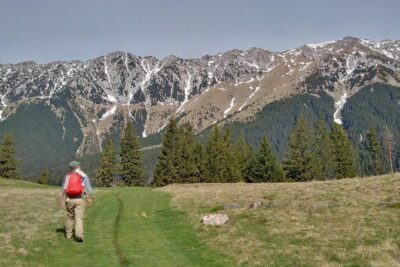
4-Day Carpathian Trek: Bucegi Mountains and Piatra Craiului National Park
Read our review →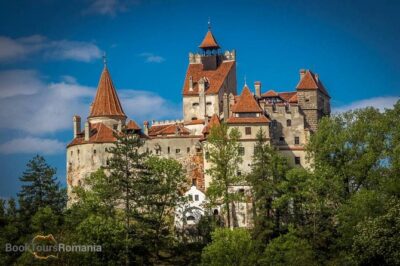
Private Tour: 4-day Transylvania Famous Landmarks
Read our review →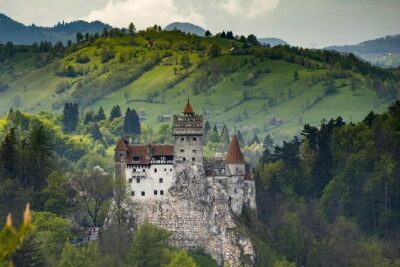
Private 4-Day Tour in Transylvania including Transfagarasan Road from Bucharest
Read our review →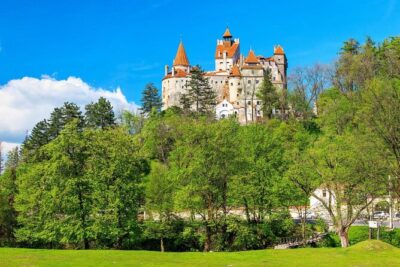
4-Day Transylvania and Dracula Tour from Bucharest
Read our review →Browse the lists this tour appears in