
Reviewed · 3-DAY EXPERIENCES
3-Day Tour of Transylvania’s Landmarks from Bucharest
Romania rewards curious detours. This three-day private tour links Peleș Castle, Bran Castle, Brașov, Sighișoara, Biertan, and Sibiu without making you sort out mountain roads or hotel changes yourself. I especially like the mix of grand royal architecture and small Saxon villages, and I like that one guide can stay with your group throughout the journey. The main drawback is the pace: you cover a lot of ground in three days, and admission fees are extra.
The price is $1,089.92 per person, so this is not a budget bus trip. It makes more sense for a small private group that values a dedicated vehicle, arranged accommodation, parking, and flexible pacing. The Transfăgărășan Highway is also seasonal, so your exact return route depends on when you visit and on road conditions.
In This Review
- Key points to know before booking
- Why this three-day route works
- Day one: royal Sinaia, Dracula folklore, and Brașov
- Peleș Castle and the mountain road from Bucharest
- Bran Castle, with the Dracula story properly labeled
- Brașov, the first evening in Transylvania
- Day two: Saxon walls, towers, and fortified faith
- Sighișoara and the 180-step Covered Staircase
- Biertan and the fortified church tradition
- Sibiu and the old German center
- Day three: mountain road or Olt Valley, then Curtea de Argeș
- The Transfăgărășan Highway from July through September
- The Olt Valley alternative
- Curtea de Argeș Monastery
- Transport, accommodation, and the real value of the price
- The guide makes the difference
- Who should book this tour?
- My verdict: a strong private introduction to Transylvania
- FAQ
- What is included in the tour price?
- Is this a private tour?
- What time does the tour start?
- Is the Transfăgărășan Highway guaranteed?
- How physically demanding is the tour?
- Are entrance fees included?
Key points to know before booking
- Peleș Castle opens the journey with royal splendor: Allow about 90 minutes, and remember that admission is not included.
- Bran Castle is historic, but not truly Dracula’s castle: Its literary connection is weak, while its medieval and royal stories are solid.
- Sighișoara gives you the finest medieval-town experience: The Clock Tower, fortified walls, Covered Staircase, Church on the Hill, and Vlad Țepeș’s birthplace are all packed into one walkable stop.
- Biertan and Sibiu reveal Transylvania’s Saxon character: You get a fortified church, old merchant houses, towers, squares, and German-influenced architecture.
- The final day depends on the calendar: From July through September, the route may use the Transfăgărășan Highway. If it is closed, you travel through the Olt Valley instead.
- The private format is the tour’s strongest practical feature: Only your group participates, with an air-conditioned private vehicle and a guide assigned to your journey.
Why this three-day route works
Transylvania is not a single attraction. It is a long sweep of mountain roads, royal residences, fortified churches, old trading towns, and villages shaped by Romanian, Saxon, Hungarian, and other communities.
That variety is what makes this route appealing. In three days, you move from the resort town of Sinaia to the medieval streets of Sighișoara, then return toward Bucharest through high mountain scenery or the Olt Valley. You get a useful first look at the region rather than spending all your time in one city.
I also like the private setup. You are not tied to a large coach schedule, and only your own group takes part. The company promises Euro 6 vehicles, air conditioning, private transport, and parking fees. Past arrangements included comfortable accommodation in two hotels or bed-and-breakfasts, and the guide handled the road planning while guests concentrated on the sights.
The route is full, but the guide can make or break it. Ovidiu Botoni receives especially strong praise for being organized, patient, cheerful, and flexible. Other guides named in the feedback include Vio, Octavian, and Julian. The most useful pattern is clear: the guide is expected to explain Romania’s history, geography, and present-day life while keeping the days moving without turning every stop into a rushed photo break.
More Transylvania trips:
- Transylvania and Dracula Castle Full Day Tour from Bucharest
★ 4.5 · 1,589 reviews - Castles of Transylvania: Private Day Trip from Bucharest
★ 4.5 · 248 reviews - 2-Day Medieval Transylvania with Brasov,Sibiu and Sighisoara Tour from Bucharest
★ 4.5 · 145 reviews
Day one: royal Sinaia, Dracula folklore, and Brașov
Peleș Castle and the mountain road from Bucharest
The first morning begins at 10:00 a.m., with departure from Bucharest toward Sinaia. The drive takes you into the Carpathians, often called the Transylvanian Alps, and to a mountain resort named after Sinaia Monastery.
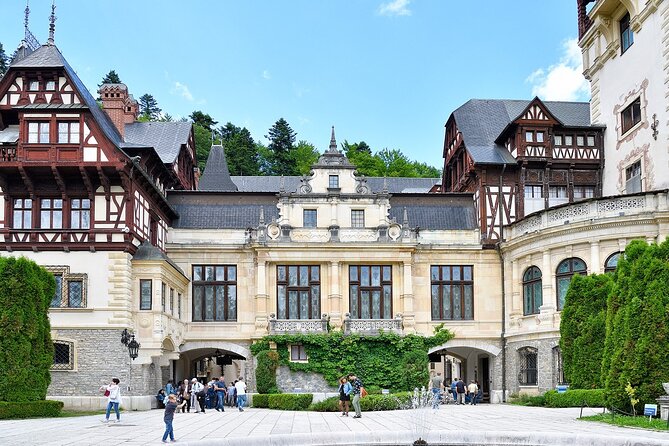
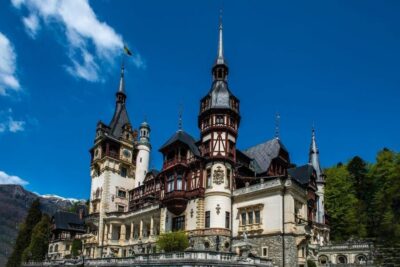
Peleș Castle is the day’s grand opening. King Carol I began the landmark in 1873, and its design combines Neo-Renaissance and Gothic Revival elements. Inside, the mood shifts toward Baroque luxury, with carved woodwork, fine textiles, and richly decorated rooms.
I would give this stop its full 90 minutes. The outside is photogenic, but the interior explains why Peleș is more than a pretty mountain castle. It reflects the ambitions of Romania’s royal family and the European tastes of the period.
Admission is not included, so budget for that separately. The supplied details do not give the current entrance price, and castle access may depend on operating conditions. Ask the tour company before departure if you want the exact fee and any interior photography rules.
Bran Castle, with the Dracula story properly labeled
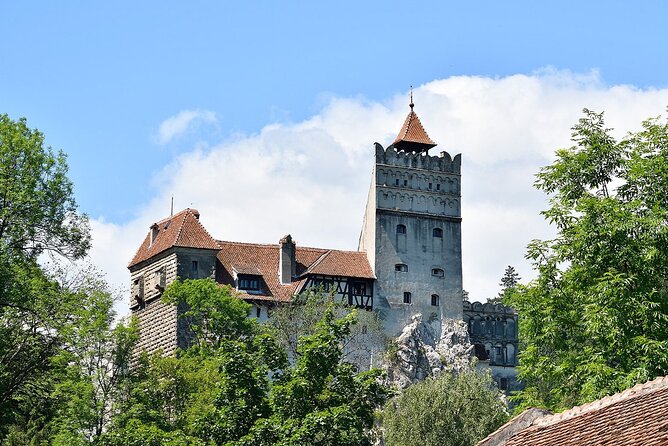
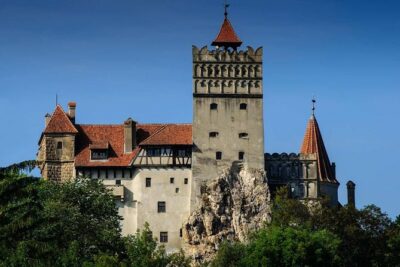
Bran Castle is one of Romania’s most famous stops, but you should arrive with the facts straight. Its popular link to Count Dracula is largely a modern association. There is no evidence that Bram Stoker based the fictional castle on Bran, and the fortress has no proven connection to Vlad Țepeș.
That does not make Bran a waste of time. The site has a long military and political story. An earlier wooden fortress was destroyed by the Mongols in 1242. In 1377, the King of Hungary granted local Saxons permission to build a stone castle at their own cost and labor.
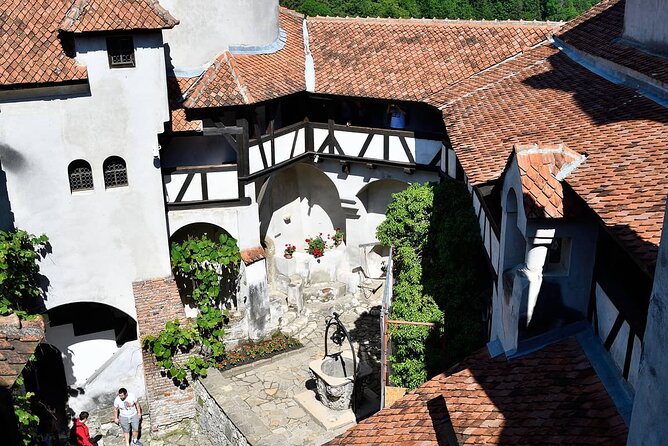
The castle later became associated with Queen Marie of Romania, and the museum includes her furniture and art. That gives the visit a more grounded focus than the Dracula merchandise outside. You have about 90 minutes here, enough for a meaningful look but not an exhaustive study.
Again, admission is extra. Bran is also a popular stop, so the private vehicle is useful for keeping the day orderly, though the tour cannot control crowd levels inside the castle.
A few more trips worth weighing up before you book
- 3-Day Medieval Transylvania Package Tour
★ 4.7 · 31 reviews - 3-Day Explore Transylvania from Bucharest
★ 5.0 · 17 reviews - 3-Day Private Tour of Medieval Transylvania from Bucharest
★ 5.0 · 15 reviews - 3 Days Private Tour in Romania from Bucharest with Tour Guide
★ 5.0 · 12 reviews
Brașov, the first evening in Transylvania
Brașov brings a different mood. Framed by the Carpathians, its old center mixes Gothic, Baroque, and Renaissance buildings. The city was founded in 1211 on an older Dacian site and was later settled by Transylvanian Saxons.
The tour allows roughly 90 minutes, which is enough for an introduction to the central area. You can expect an old walled-city setting and a strong German architectural character. The stop is free according to the tour details, though personal purchases and meals are not covered.
This is one place where I would welcome a little flexibility from the guide. Brașov deserves more than a hurried glance, but the schedule must also get you to the overnight accommodation. If your group has a special interest in churches, architecture, or medieval fortifications, ask whether time can be shifted toward the sights you care about most.
Day two: Saxon walls, towers, and fortified faith
Sighișoara and the 180-step Covered Staircase
Day two goes to Sighișoara, one of the most rewarding stops on the route. Its medieval citadel sits on a hill behind a ring of walls about 930 meters long, with 14 defense towers and five artillery bastions.
The old center is filled with pastel merchant houses and German medieval design. The Clock Tower, which rises above the town, is about 700 years old and gives you an easy point of orientation.
The walking tour includes the Covered Staircase, also called the Scholars’ Stairs. You climb 180 steps to reach the Gothic Church on the Hill and the Saxon Cemetery. This is the tour’s clearest physical challenge, so a moderate fitness level matters. You do not need an athlete’s training, but uneven streets, stairs, and hill walking are part of the experience.
Sighișoara also brings the Vlad Țepeș connection into better focus. You can see the house identified as his 1431 birthplace. Unlike Bran’s loose Dracula association, Vlad did live in the historical world connected with this town. Still, his life and Bram Stoker’s fictional count are not the same story.
Two hours is a sensible introduction. I would use the time for the citadel, Clock Tower area, Covered Staircase, and Church on the Hill rather than trying to see every corner.
Biertan and the fortified church tradition
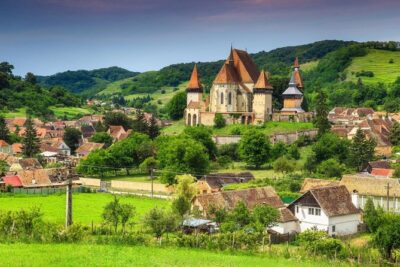
Biertan is a smaller stop with a different kind of drama. Its fortified church served as the seat of the Transylvanian Lutheran Evangelical Bishop from 1572 to 1867.
Transylvanian Saxons founded the settlement sometime between 1224 and 1283. For years, Biertan benefited from trade, but nearby cities such as Mediaș, Sighișoara, and Sibiu later took on greater economic importance.
The church helps explain why so many communities in this part of Romania built strong religious defenses. It is not simply another old building. It reflects the needs of a community that worshiped, stored supplies, and sought protection within the same fortified complex.
You get about an hour here. Admission is not included, and the stop is short, so I would confirm the opening schedule and entrance cost before leaving Bucharest. Biertan is particularly worthwhile for anyone interested in Saxon settlement patterns, church architecture, and the way religion shaped village life.
Sibiu and the old German center
Sibiu gives you the largest urban stop of the second day. Its old town still has a distinctly German appearance, with sections of the medieval wall and three surviving towers from an original group of 39.
The Great Square is the natural starting point. From there, the route can take in Brukenthal Palace, a late-Baroque residence that now houses one of Romania’s important museums, as well as the Bridge of Lies, the Haller House, and several notable churches.
Sibiu’s famous roof windows are another small but memorable detail. They give the old buildings an almost watchful expression, which is one reason the city feels different from Brașov or Sighișoara.
The tour allows two hours. That is enough for the central sights and a short walk, but not enough for a long museum visit plus every church. If Brukenthal Palace is a priority, tell your guide early so you do not spend the whole stop outdoors and then discover the museum needs more time than remains.
Day three: mountain road or Olt Valley, then Curtea de Argeș
The Transfăgărășan Highway from July through September
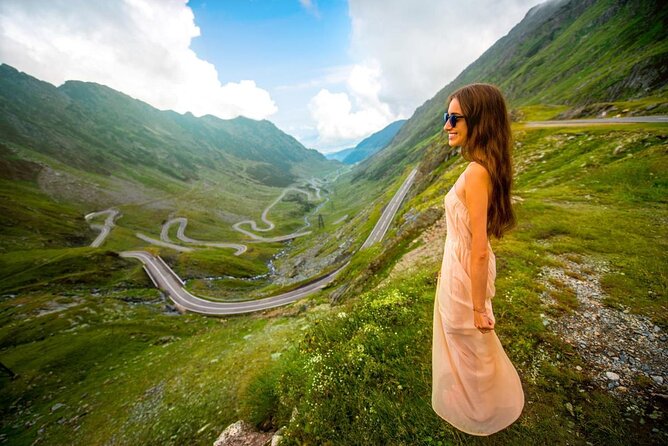
The final day begins with a major scenic choice controlled by the season. If you visit from July through September and the road is open, the route uses the Transfăgărășan Highway.
This famous road crosses the southern Carpathians and links Transylvania with Wallachia. It cuts through the country’s highest mountain area, near Moldoveanu and Negoiu peaks. The tour allows about two hours for this portion.
The highway is the right reason to consider a summer departure, but do not treat the seasonal note as a guarantee. Weather and road access still matter. If the route is closed, the guide uses the Olt Valley instead.
The Olt Valley alternative
The Olt Valley is not a consolation prize. It lies between the Căpățânii, Lotru, and Făgăraș mountains and follows an ancient route first used by Romans. Medieval merchants later traveled along the same corridor into Transylvania.
You lose the specific high-road experience, but you still get a historic mountain passage with a clear connection between regions. I appreciate that the tour has a defined alternative rather than leaving the final day uncertain.
Curtea de Argeș Monastery
Curtea de Argeș Monastery adds an Orthodox Christian chapter to a trip otherwise shaped by castles, fortified churches, and Saxon towns.
Romania has roughly 600 Orthodox Christian monasteries, but Curtea de Argeș is unusual for the way it combines Georgian and Armenian influences with Islamic geometric patterns. It was built between 1515 and 1517 under Prince Negru Vodă, also known as Radu Negru.
The monastery is also tied to the story of Meșterul Manole, the master builder. More than 100 versions of the legend are said to exist, so the stop offers both architecture and folklore.
You have about 45 minutes here, and admission is not included. That makes this a focused visit rather than a long religious-art study. Modest dress and respectful behavior are sensible at an Orthodox monastery, though the supplied tour details do not give a formal dress code.
After Curtea de Argeș, the guide returns you to Bucharest. This is a long final day in practical terms, so I would avoid scheduling a tight flight immediately after the tour ends.
Transport, accommodation, and the real value of the price
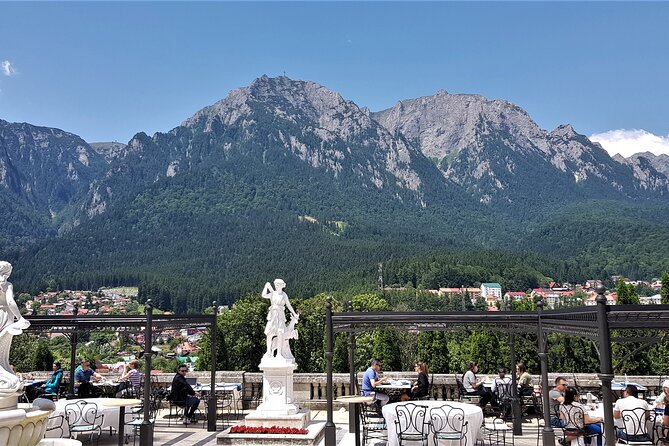
At $1,089.92 per person, the tour charges for convenience and privacy rather than bare sightseeing. Your transport, parking, private vehicle, and guide are built into the experience, while accommodation is arranged for the journey. Entrance fees are not included, and a single-room supplement of €60 per person applies if you want your own room.
The value improves when several people share the private tour. Group discounts are offered, and a private vehicle can be far more comfortable than trying to connect these places by public transport in only three days. It also lets the guide adjust the rhythm when a stop deserves a little more time.
The value is less clear if you are a solo visitor focused on keeping costs low. In that case, the price is substantial once you add castle and church admissions. You are paying for a managed route, not an inexpensive transfer service.
The accommodation record is encouraging. Arrangements described in the available feedback included comfortable, high-quality B&Bs and hotels. Still, the exact properties are not supplied here, so ask for their names, room setup, and location before paying if lodging standards matter strongly to you.
The guide makes the difference
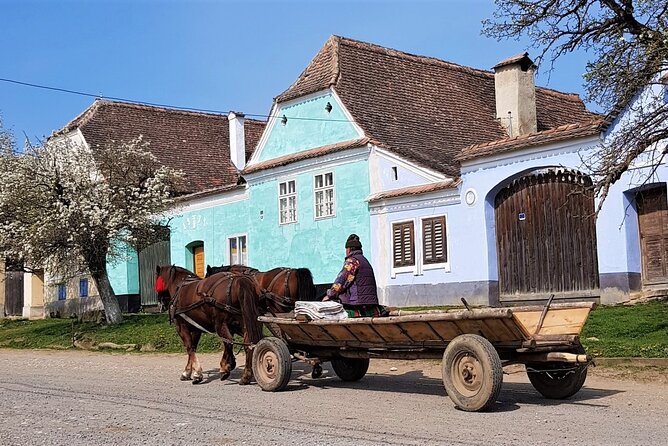
This tour depends heavily on the person behind the wheel and beside you at the sights. Ovidiu Botoni is repeatedly praised for careful organization, warm manners, historical explanations, and the ability to fill the days without making the group sprint.
That balance matters. A three-day route can easily become a checklist with one hurried photograph at each castle. The strongest guide feedback points to a better rhythm: enough structure to keep the route on time, plus patience when the group needs a pause or a change.
Other named guides include Vio, Octavian, and Julian. Julian is described as especially good with a mixed group of adults and children, while Octavian is praised for being helpful and flexible. Guide assignments can vary, so treat those names as examples rather than a promise that one specific person will lead your trip.
Who should book this tour?
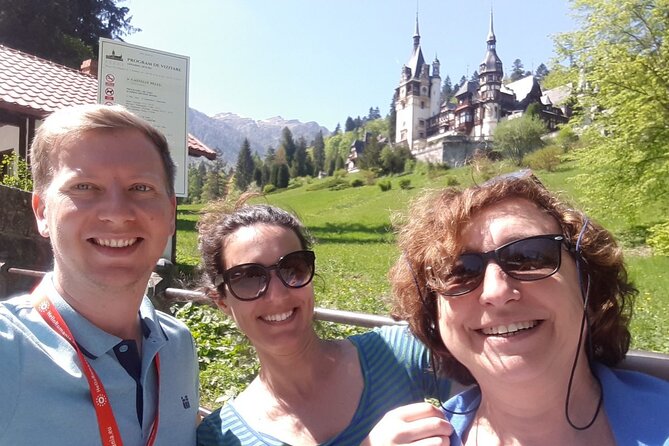
I would recommend it to a first-time visitor who wants to see the major Transylvanian sights without renting a car. It suits couples, families, and small groups that prefer a private schedule and want history explained along the way.
It is also a good fit if you want more than Dracula folklore. The route gives equal weight to royal architecture, Saxon towns, Lutheran fortified churches, Orthodox traditions, and mountain routes.
I would hesitate if you dislike long drives, hill walking, or changing accommodation. Sighișoara includes 180 steps, the route covers a broad area, and the final day can involve a substantial return to Bucharest.
You should also avoid assuming every stop is fully included in the price. Entrance fees are extra, the single-room supplement is separate, and the tour details do not state that meals are included.
Cancellation is free up to 24 hours before the 10:00 a.m. start time. Inside that window, the amount is not refunded. Poor weather or failure to meet the minimum number of participants can lead to a new date, an alternative experience, or a full refund.
My verdict: a strong private introduction to Transylvania
I would book this tour if I had three days, a Bucharest base, and a preference for private transport over independent logistics. The route is ambitious but well chosen, and its best moments are not limited to famous castles: Sighișoara’s hilltop citadel, Biertan’s fortified church, Sibiu’s old squares, and Curtea de Argeș give the trip real variety.
The price is high, but the dedicated guide, private vehicle, parking, arranged lodging, and broad coverage can justify it for a small group. Just confirm the accommodation, current entrance costs, guide assignment, and the likely third-day road before booking.
If you want a relaxed stay in one Transylvanian town, choose something slower. If you want a well-organized first sweep through Romania’s castles, medieval towns, churches, and mountain routes, this is a sensible and rewarding choice.
FAQ
What is included in the tour price?
The tour includes an air-conditioned vehicle, private transportation, and parking fees. Accommodation is arranged as part of the journey, but entrance fees are not included.
Is this a private tour?
Yes. Only your group participates in the activity, and the tour uses private transportation.
What time does the tour start?
The stated start time is 10:00 a.m.
Is the Transfăgărășan Highway guaranteed?
No. The route uses the highway from July through September if it is open. If it is closed, the guide uses the scenic Olt Valley instead.
How physically demanding is the tour?
A moderate level of physical fitness is recommended. The Sighișoara walking tour includes the 180-step Covered Staircase, along with hill streets and historic areas.
Are entrance fees included?
No. Entrance fees for places such as Peleș Castle, Bran Castle, Biertan Fortified Church, and Curtea de Argeș Monastery are paid separately.
Just added around Bucharest
- 10 hours Private Apiary Tour in Romania – From Bucharest★ 5.0 · 3 reviews
- 4-Day Inside Transylvania & Transfagarasan Tour from Bucharest★ 5.0 · 3 reviews
- Bucharest: Charm of the Belle Époque Private Tour★ 5.0 · 3 reviews
- Bran & Peles Castles through the Best Road in the World: Transfagarasan road★ 4.5 · 3 reviews
- 2-Day Small-Group Tour in Transylvania from Bucharest – Maximum 5 Persons★ 5.0 · 3 reviews
- Private Wine Tasting at Bucharest’s First Wine Bar★ 5.0 · 3 reviews
- Bucharest to Brasov – Fast Private Transfer★ 5.0 · 3 reviews
- Probably the Best Restaurant and Wine Cellar near Bucharest★ 4.5 · 3 reviews
3-Day Experiences, compared.
3-Day Private Tour of Medieval Transylvania from Bucharest
Read our review →
3 Days Private Tour in Romania from Bucharest with Tour Guide
Read our review →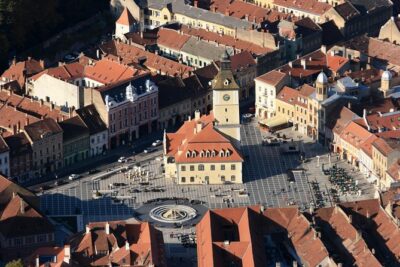
Medieval Transylvania: Shared 3-Day Tour from Bucharest
Read our review →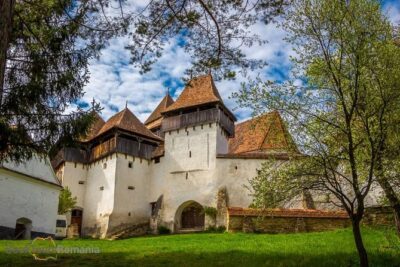
3-Day Tour from Bucharest: Transylvania Villages and Medieval Towns
Read our review →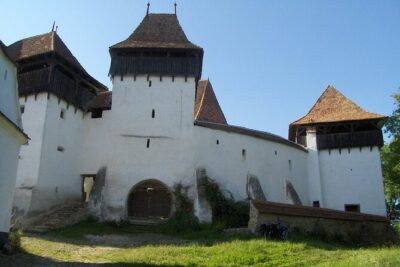
3 Days UNESCO Tour of Transylvania. Private tour from Bucharest
Read our review →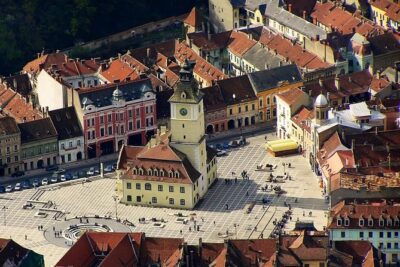
Browse the lists this tour appears in