
Reviewed · 3-DAY EXPERIENCES
3-Day Medieval Transylvania Package Tour
Medieval Romania rewards curious eyes. This three-day trip links monasteries, Saxon towns, castles, and mountain roads into a busy but memorable circuit from Bucharest. I especially like the small-group format, limited to 16 people, and the chance to sleep in central Sibiu and Brașov rather than rush back to Bucharest each night. The included transport, fuel, parking, guide, and breakfasts also make the $588 price easier to understand.
I also like the variety. You move from Wallachian religious art at Curtea de Argeș and Cozia to German-built citadels, then on to Bran Castle and Peleș Castle. The main drawback is the pace: you spend long stretches in the vehicle, and entrance fees, lunches, and dinners are extra. This is a sightseeing circuit, not a slow village holiday.
In This Review
- Key points to know before booking
- From Bucharest to Curtea de Argeș and Cozia
- Sibiu, a German medieval town with a full evening
- Biertan and the Saxon fortified churches
- Sighișoara and its famous Clock Tower
- Brașov after the road from Sighișoara
- Bran Castle, Dracula, and the difference between legend and place
- Sinaia, Peleș Castle, and a royal finale
- The guide and the small-group setup
- Is $588 good value?
- Who should book this three-day route?
- FAQ
- How long is the Medieval Transylvania Package Tour?
- Where does the tour begin and end?
- What accommodation is included?
- Are entrance fees included?
- Are meals included?
- Is the tour conducted in English?
- How large is the group?
- Does the itinerary change on weekends?
- Is there an extra fee for solo travelers?
- Should you book it?
Key points to know before booking
- Two nights in historic city centers: Sleep in Sibiu and Brașov, with breakfast included at 3-star hotels.
- A wide-ranging route: The trip covers Curtea de Argeș, Cozia, Sibiu, Biertan, Sighișoara, Brașov, Bran, Sinaia, and Bucharest.
- Small groups matter: The vehicle carries no more than 16 participants, and some departures may be much smaller.
- Long touring days: Expect plenty of road time, walking tours, queues, and time on your feet.
- Weekend departures change the order: Saturday and Sunday departures run in reverse, and Peleș Castle is closed Monday and Tuesday.
- The Dracula connection is limited: Bran Castle is linked to Bram Stoker’s fictional count, but the tour also gives proper attention to Romanian history, art, and architecture.
From Bucharest to Curtea de Argeș and Cozia
Your first day begins with hotel pickup in Bucharest. The route heads toward Curtea de Argeș, home to a striking monastery built in 1514 by Prince Neagoe Basarab, ruler of Wallachia. Its Moorish-influenced design makes it different from the fortified churches and Gothic buildings later in the trip.
The monastery is a good opening stop because it introduces you to the old Wallachian side of Romanian history. You are not simply collecting castles. You are seeing how rulers used religious buildings to display wealth, faith, and political power.
The next stop is Cozia Monastery, a smaller complex and one of Romania’s important medieval art monuments. Its value is more than size. Cozia helps show the religious tradition behind the grander buildings you will see later, and it breaks up the drive before the route reaches Transylvania.
Lunch takes place at a traditional Romanian restaurant. Lunch is not included, so allow room in your budget for meals throughout the trip. The same applies to dinner, including the traditional Romanian dinner planned in Sibiu on the first evening.
One practical warning comes from the trip’s scheduling. On weekend departures, the route runs backward. One Sunday departure resulted in Curtea de Argeș being missed, with no clear explanation given at the time. That may have been an operational problem rather than a normal part of the itinerary, but I would confirm the planned stops before setting out.
More Transylvania trips:
- Transylvania and Dracula Castle Full Day Tour from Bucharest
★ 4.5 · 1,589 reviews - Castles of Transylvania: Private Day Trip from Bucharest
★ 4.5 · 248 reviews - 2-Day Medieval Transylvania with Brasov,Sibiu and Sighisoara Tour from Bucharest
★ 4.5 · 145 reviews
Sibiu, a German medieval town with a full evening
The road to Sibiu passes through the Carpathian region, and this is one of the days when you will appreciate having someone else drive. The journey is scenic, but it is also a substantial amount of time in a car or minibus.
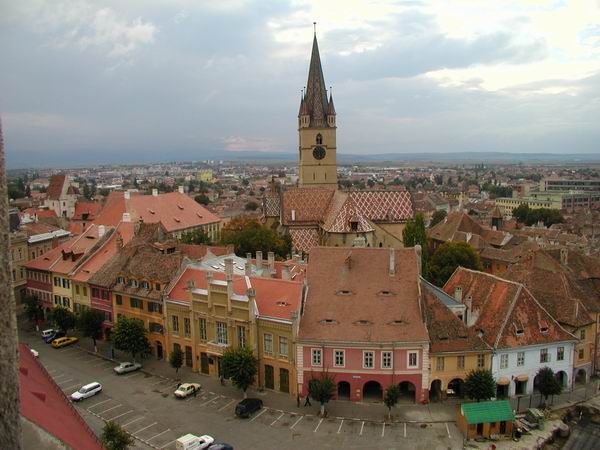
Sibiu was the historic capital of the Principality of Transylvania and has documentation going back to 1191. Its old center reflects the city’s German Saxon past, with historic buildings gathered around walkable squares and streets.
The walking tour gives you a useful first look rather than leaving you to find the main sights alone. I like the overnight arrangement here: staying in Sibiu’s town center means you are positioned close to the old town instead of being placed in a distant roadside hotel.
The 3-star accommodation is described as basic but comfortable, and the breakfasts have been praised as very good. That is the right expectation. You are paying for a clean, practical base and a central location, not a luxury hotel experience.
A traditional dinner rounds out the first day. Since dinner is not included, you can treat this as part of the trip’s extra cost. The arrangement also lets you experience Romanian food without having to search for a restaurant after a long day on the road.
Biertan and the Saxon fortified churches
Day two begins with Biertan, one of the best stops for understanding Transylvania’s Saxon communities. The village is known for its fortified church, built between 1490 and 1524 and described as the largest fortified church in Transylvania.
The fortifications are the point. These churches were designed not only for worship but also for protection, giving you a clear picture of how vulnerable medieval communities prepared for attack. Biertan feels different from the urban centers of Sibiu and Brașov, so it adds a rural note to the itinerary.
You should keep your shoes comfortable here. The tour involves walking at several historic sites, and the overall three days include repeated time standing in courtyards, on old streets, and in museum areas.
Biertan is also a useful reminder that Transylvania is not only about Dracula. The Saxon heritage, fortified churches, and town planning are among the most distinctive parts of the region, and this stop gives them proper space.
Sighișoara and its famous Clock Tower
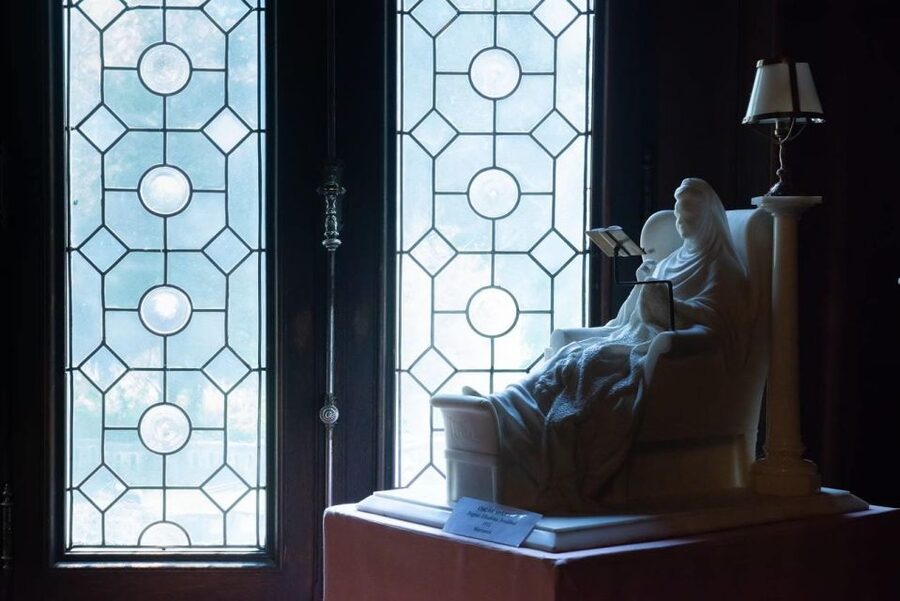
From Biertan, you continue to Sighișoara, a medieval citadel dating to 1280. It is described as the only medieval citadel in Europe that is still populated, which helps explain its appeal. This is not a preserved stage set with no ordinary life. It remains a town with homes, streets, and daily activity inside the old walls.
The walking tour includes the Clock Tower, the city’s landmark and a fine viewpoint over the old houses. The tower helps you see the citadel as a whole, with its compact streets and historic roofs spreading below.
The Clock Tower is closed on Mondays. If your schedule places Sighișoara on that day, you should expect the outside and street experience rather than the full tower visit. This is one reason the reverse weekend schedule matters.
Lunch follows the Sighișoara visit and is also at your own expense. The day has a clear rhythm: fortified village, medieval citadel, meal, then another major city. It is rewarding, but you should not expect long unstructured periods to wander alone.
A few more trips worth weighing up before you book
- 3-Day Explore Transylvania from Bucharest
★ 5.0 · 17 reviews - 3-Day Tour of Transylvania’s Landmarks from Bucharest
★ 5.0 · 16 reviews - 3-Day Private Tour of Medieval Transylvania from Bucharest
★ 5.0 · 15 reviews - 3 Days Private Tour in Romania from Bucharest with Tour Guide
★ 5.0 · 12 reviews
Brașov after the road from Sighișoara
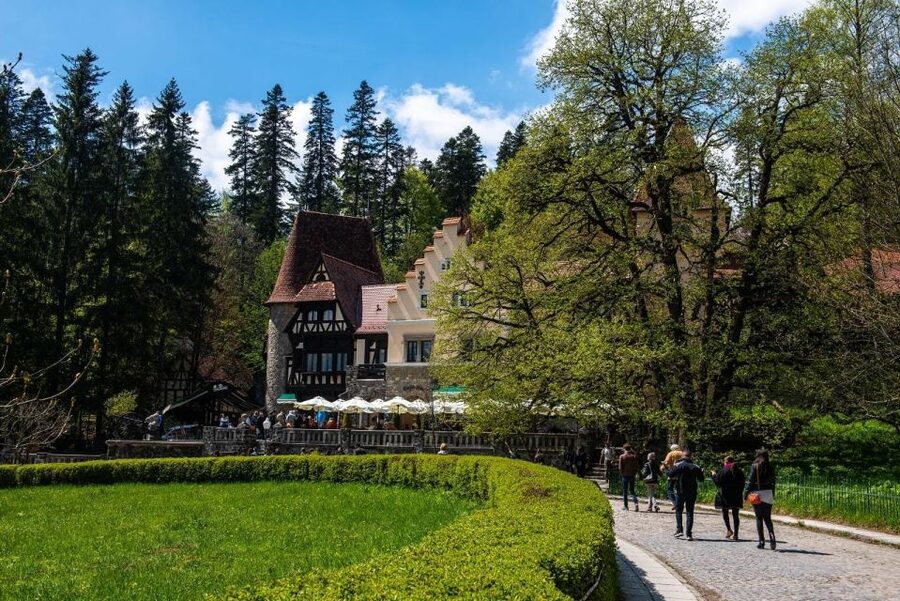
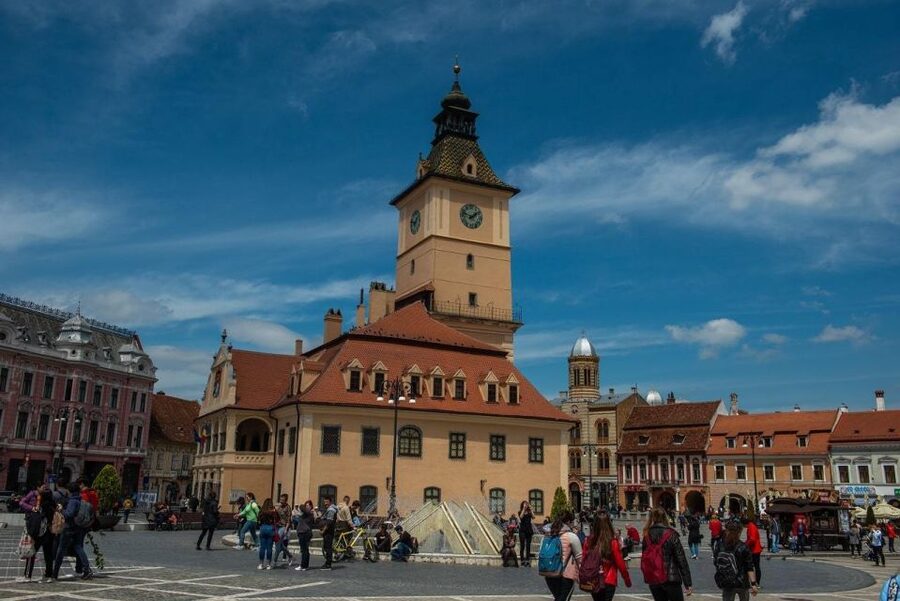
Brașov sits among the Southern Carpathians and has medieval documentation dating to 1235. The city’s story also includes its Communist-era name, Stalin City, and its place in Romanian national culture as the birthplace of the national anthem.
The guided walking tour focuses on the old center, including Gothic churches, medieval buildings, and the narrowest street in Romania. That last stop is a small curiosity, but it gives the walk a playful moment after a day of serious monuments.
Brașov has enough character to deserve more than a quick photo stop, and the overnight stay helps. You sleep in town rather than leaving immediately, then begin the next morning at the Black Church.
The Black Church was built in 1383 and is presented as Brașov’s most important tourist site. It gives the third day a strong start, especially for visitors interested in Gothic architecture and the city’s Saxon past.
Some people may find the schedule here too compressed. You see the key center, but this is not an extended Brașov stay with time for every museum or side street. If Brașov is your main reason for visiting Romania, a separate night or two would make sense.
Bran Castle, Dracula, and the difference between legend and place
Bran Castle is the trip’s most famous name. It sits near the border between Transylvania and Wallachia and is marketed around its connection with Bram Stoker’s Count Dracula.
The useful way to approach Bran is as a castle with a later literary reputation, not as proof that Dracula lived there. The fictional count has made the building internationally famous, but the visit also includes the castle grounds and museum, giving you something more solid than a horror story.
Queues can be an issue, particularly at Bran and Peleș. One account specifically noted long waits for restrooms and entry at both castles. Build patience into your expectations, especially during busy periods.
A traditional lunch follows the castle visit. Again, it is not included in the tour price. The stop works well as a meal break because Bran can be a crowded, high-energy visit, and you will likely appreciate sitting down before the drive to Sinaia.
Sinaia, Peleș Castle, and a royal finale
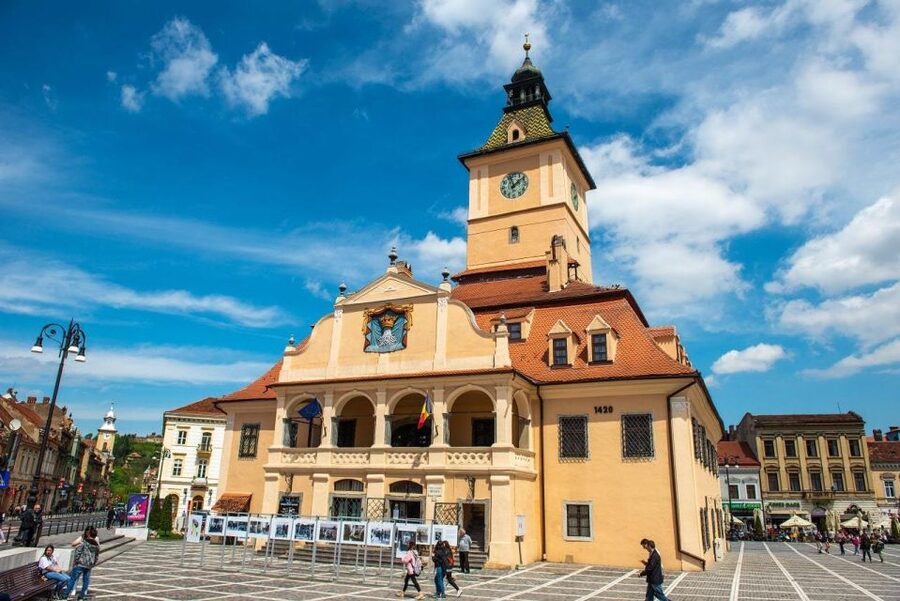
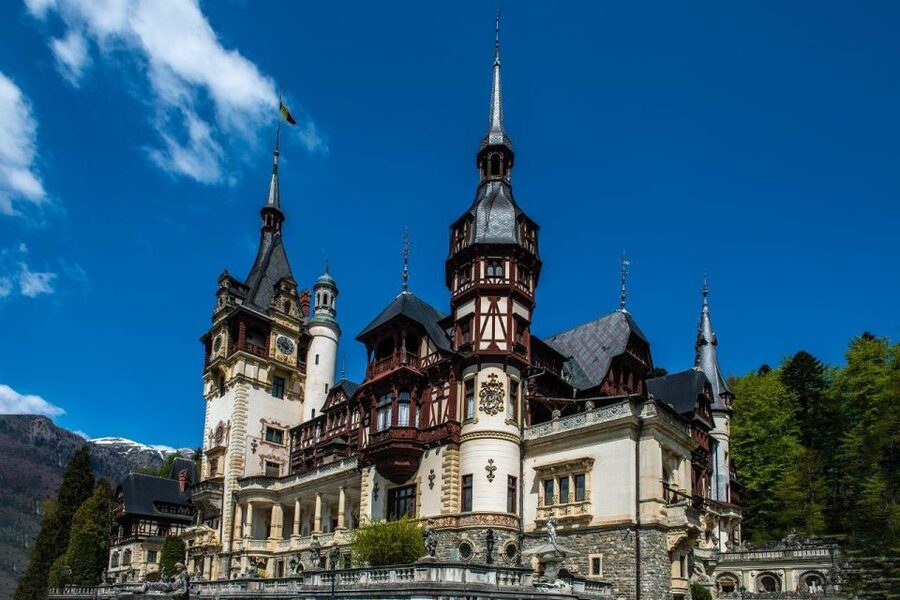
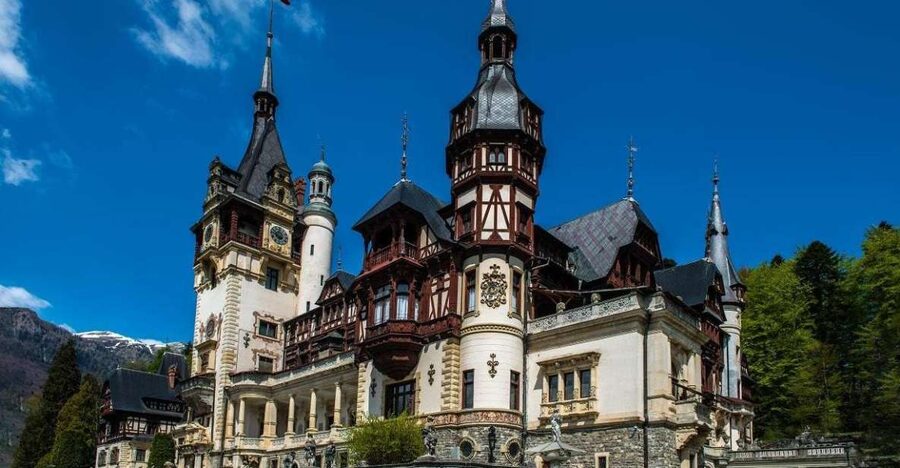
Sinaia is a mountain resort in the Prahova River valley. Its main attraction on this tour is Peleș Castle, built for Romania’s first king, Carol I, between 1875 and 1914.
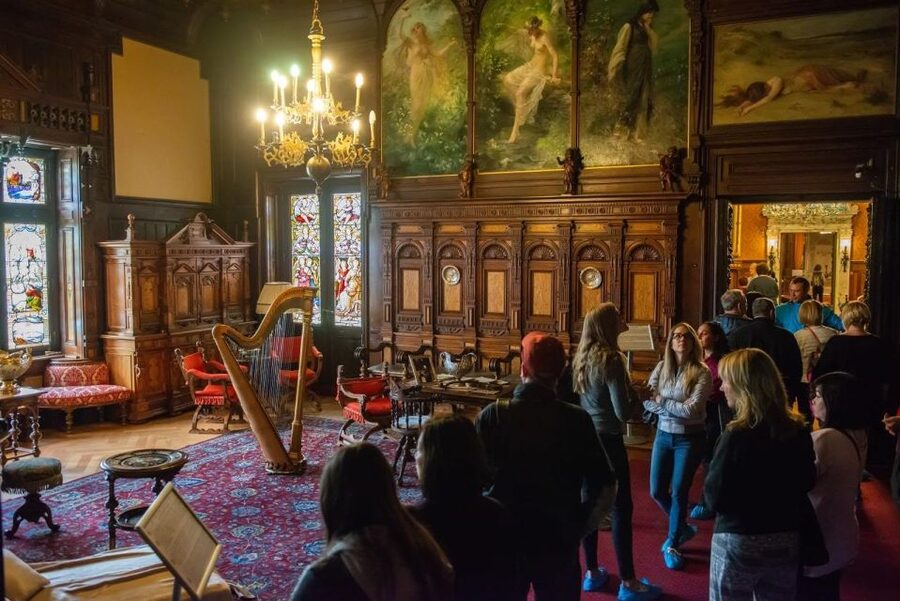
Peleș is a very different experience from Bran. Bran leans into medieval walls and Dracula folklore, while Peleș presents a refined Neo-Renaissance royal residence. The contrast is one of the tour’s strengths. In a single day, you move from a castle shaped by modern legend to a palace built to express the ambitions of Romania’s monarchy.
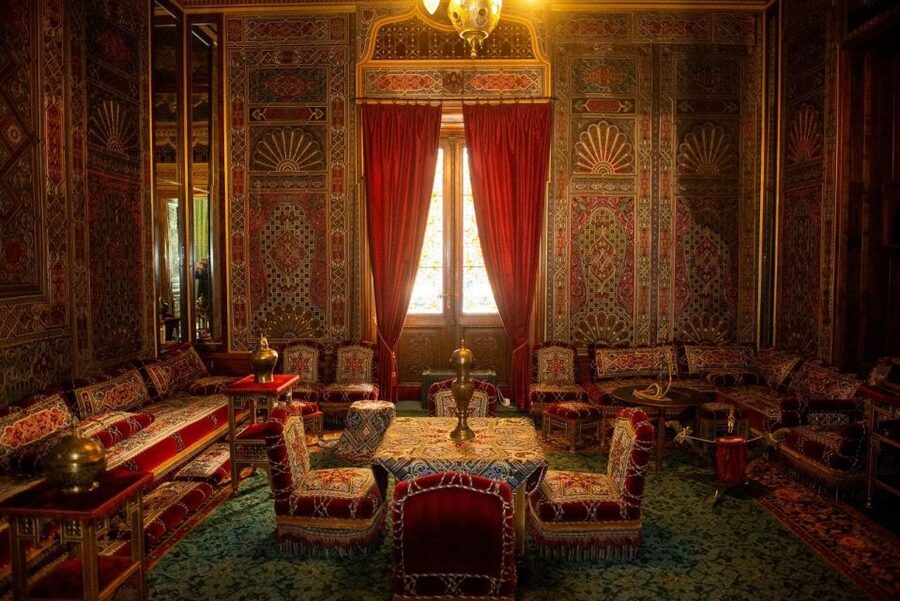
The interior visit is a major part of the appeal. You tour the ornate building rather than simply viewing it from outside. Since entrance fees are not included, check the current cost before you leave Bucharest and keep Romanian currency or a suitable payment method available if needed.
Peleș Castle is closed Mondays and Tuesdays. This is particularly important because the tour’s reverse order on weekend departures can shift your castle visit to a different day. Confirm the schedule before booking if Peleș is a priority.
The final stop is Sinaia Monastery, founded in the 17th century by Prince Mihail Cantacuzino after a pilgrimage to Mount Sinai. You visit the Old Church and the 19th-century Great Church, ending the trip with another religious site rather than one more castle.
That ending is well chosen. The monastery brings the focus back to Romanian faith and architecture after the royal rooms and Gothic towns. From Sinaia, the vehicle returns to Bucharest.
The guide and the small-group setup
Transportation is by car or minibus, with fuel and parking covered. The group limit is 16, but some departures may be much smaller. A small group makes hotel pickup, walking tours, and meal stops easier to manage, and it gives you a better chance to ask questions.
Matthew, also written Mathew in one account, received strong praise for his driving, humor, historical explanations, and care with the group. One particularly small departure had only two people and another couple, creating a more personal experience.
The guide’s performance can shape the trip. Positive feedback describes a safe, funny, well-informed escort. A less favorable account described the guide as more of a driver than a full guide, with limited information about sights passed from the vehicle.
That difference matters. If you want commentary throughout every road section, say so early and ask questions. Do not assume that every church, village, or mountain view will receive a full explanation. One account also criticized fast driving and felt that the vehicle did not slow enough for unexpected roadside bear sightings.
The vehicle itself was described as being in very good condition. That is important on a route with long drives. Still, this is not a gentle touring pace. Bring water, wear comfortable shoes, and expect some early starts and extended road sections.
Is $588 good value?
At $588 per person, the package is not a budget day trip. It includes three days of transport, two nights in 3-star hotels, breakfast, parking, fuel, and an English-speaking driver-guide. It also removes the need to plan a complicated route through several parts of Romania.
The value is strongest if you want to see many headline sites in a short time. Booking separate transport, hotels, and intercity connections would take work, and a private rental car would add driving responsibilities and parking concerns.
The price feels less generous if you want slow visits or included meals and tickets. Lunch and dinner are extra, as are entrance fees. A single traveler must also pay an additional €60 in cash to the guide at the start, so solo visitors should factor that into the true cost.
The hotels receive good marks for comfort and breakfast, though one description calls the accommodation basic. That sounds fair for a 3-star package. You are buying convenience and location, not polished luxury.
Free cancellation up to 24 hours before departure and reserve-now-pay-later booking make the commitment less rigid. The tour includes hotel pickup in Bucharest, which is another useful saving of time.
Who should book this three-day route?
I would choose this trip if you have only a few days in Romania and want a broad first look at Transylvania. It suits adults who enjoy medieval towns, churches, castles, local food, and guided sightseeing more than long café afternoons.
It is also a good match if you do not want to drive mountain roads yourself. The route is complicated enough that having transport, parking, and accommodation arranged has real value.
I would hesitate if you have mobility problems, since the tour is not suitable for people with mobility impairments. It is also not suitable for children under seven, and the repeated walking and long drives may test younger children even above that age.
You should also think twice if you dislike queues or packed schedules. Bran and Peleș can involve waiting, and you will cover a lot of ground in three days. The route gives you an excellent sampler, but it cannot give every town the time it deserves.
FAQ
How long is the Medieval Transylvania Package Tour?
The tour lasts three days and includes two nights of accommodation.
Where does the tour begin and end?
The tour includes pickup from hotels in Bucharest and returns to Bucharest after the visit to Sinaia.
What accommodation is included?
Two nights in 3-star hotels are included, with one night in Sibiu town center and one overnight stay in Brașov. Breakfast is included.
Are entrance fees included?
No. Entrance fees for sites such as Bran Castle, Peleș Castle, the Clock Tower, and other attractions are not included.
Are meals included?
No. Lunch and dinner are not included. Traditional Romanian meals are planned during the itinerary, but you pay for them separately.
Is the tour conducted in English?
Yes. An English-speaking live guide is included. Other languages may be available on request.
How large is the group?
The tour is limited to 16 participants and uses a car or minibus.
Does the itinerary change on weekends?
Yes. Saturday and Sunday departures run in reverse order. Peleș Castle is closed Mondays and Tuesdays, and the Clock Tower in Sighișoara is closed Mondays.
Is there an extra fee for solo travelers?
Yes. Solo travelers must pay an additional €60 in cash to the guide at the beginning of the tour.
Should you book it?
Book this tour if you want maximum coverage in minimum time. Sibiu, Biertan, Sighișoara, Brașov, Bran, Peleș, Curtea de Argeș, Cozia, and Sinaia would be difficult to connect independently in three days.
Go in with the right expectations: long drives, extra costs, queues, and a guide whose style may vary. If you are comfortable with that pace, the package offers a strong introduction to Romania’s medieval towns, royal architecture, religious art, and Dracula folklore, with comfortable bases in two of the country’s most appealing cities.
Just added around Bucharest
- 4-Day Inside Transylvania & Transfagarasan Tour from Bucharest★ 5.0 · 3 reviews
- 10 hours Private Apiary Tour in Romania – From Bucharest★ 5.0 · 3 reviews
- Bucharest: Charm of the Belle Époque Private Tour★ 5.0 · 3 reviews
- Bran & Peles Castles through the Best Road in the World: Transfagarasan road★ 4.5 · 3 reviews
- 2-Day Small-Group Tour in Transylvania from Bucharest – Maximum 5 Persons★ 5.0 · 3 reviews
- Private Wine Tasting at Bucharest’s First Wine Bar★ 5.0 · 3 reviews
- Bucharest to Brasov – Fast Private Transfer★ 5.0 · 3 reviews
- Probably the Best Restaurant and Wine Cellar near Bucharest★ 4.5 · 3 reviews
3-Day Experiences, compared.
3-Day Tour of Transylvania’s Landmarks from Bucharest
Read our review →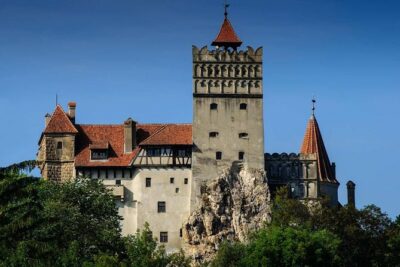
3-Day Private Tour of Medieval Transylvania from Bucharest
Read our review →
3 Days Private Tour in Romania from Bucharest with Tour Guide
Read our review →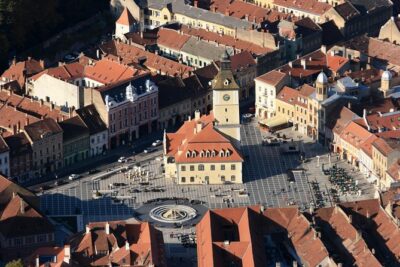
Medieval Transylvania: Shared 3-Day Tour from Bucharest
Read our review →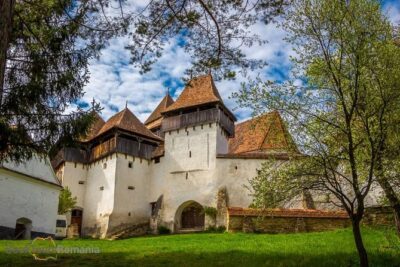
3-Day Tour from Bucharest: Transylvania Villages and Medieval Towns
Read our review →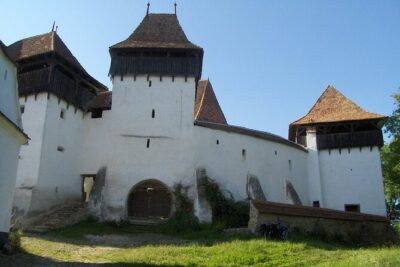
3 Days UNESCO Tour of Transylvania. Private tour from Bucharest
Read our review →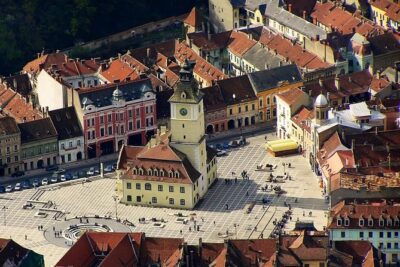
Browse the lists this tour appears in