Reviewed · TOURS
Unique Tour of Hidden Bucharest
Bucharest keeps its best stories behind ordinary doors. This walking tour leads you away from the grand avenues and communist-era landmarks into quiet mahallas, old ethnic quarters, Belle Epoque streets, and courtyards that are easy to miss without a local guide. I like the way it explains how Bucharest changed over time, and I like the small group size, capped at 12 people. The main drawback is that the route can feel loosely shaped, especially if your guide adapts it to your interests.
I also like the personal touch. Guides such as Andreea, Ioana, Lala, Mircea, Roxana, and Tudor have tailored walks around photography, architecture, food, mobility, and local questions. You may even end up with a private tour if few people book that morning, though you should not count on it.
One practical caution: this is a walking tour through central neighborhoods, not a polished sightseeing circuit. Bring good shoes, expect uneven or imperfect streets, and arrive ready to look up at façades, notice doorways, and listen to stories about buildings that may be beautiful, abandoned, disputed, or partly restored.
In This Review
- Key points at a glance
- Why Bucharest’s side streets tell the better story
- Starting at the National Theatre Ion Luca Caragiale
- Walking through Batiștei and the old mahallas
- Belle Epoque Bucharest around Parcul Ion Voicu
- Coffee, snacks, and useful local advice
- What the guides add to the experience
- How hard is the walk?
- Is $46.86 a fair price?
- Who should book this Bucharest walk?
- Should you book Unique Tour of Hidden Bucharest?
- FAQ
- Where does the tour start?
- What time does the tour begin?
- Where does the tour end?
- How long does the experience last?
- What language is offered?
- How many people can join?
- What is included in the price?
- Are meals and drinks included?
- Can I cancel for a refund?
Key points at a glance
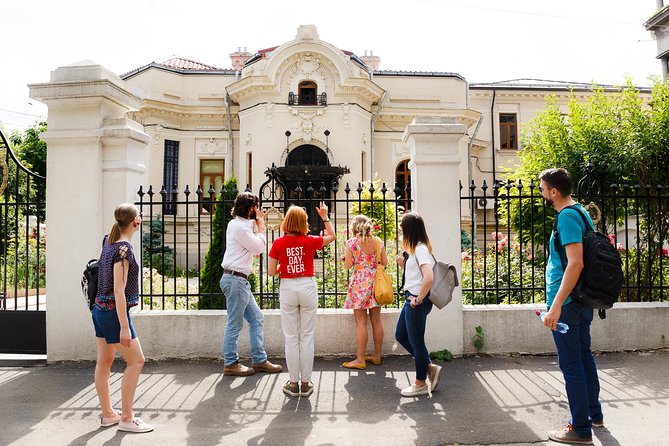
- Quiet neighborhoods beside busy avenues: See Batiștei, the Armenian Quarter, Mantuleasa, Olari, Ioanid-Gradina, and Icoanei, areas that many visitors would miss alone.
- Architecture is the main subject: Learn to spot Ottoman-era influence, French and German touches, Armenian and Jewish connections, Belle Epoque mansions, Orthodox buildings, and communist interventions.
- A small group with room for questions: The maximum is 12 people, and the guide can sometimes adjust the walk to suit photography or personal interests.
- Refreshments add a local pause: Snacks are included, while alcoholic drinks and other food or drinks are available to buy.
- A useful first-day introduction: The tour gives you a working sense of Bucharest before you tackle its larger museums, boulevards, and formal sights.
- Good value for an expert-led walk: At $46.86 per person, the price makes most sense if you want context and local recommendations, not just a stroll past façades.
Why Bucharest’s side streets tell the better story
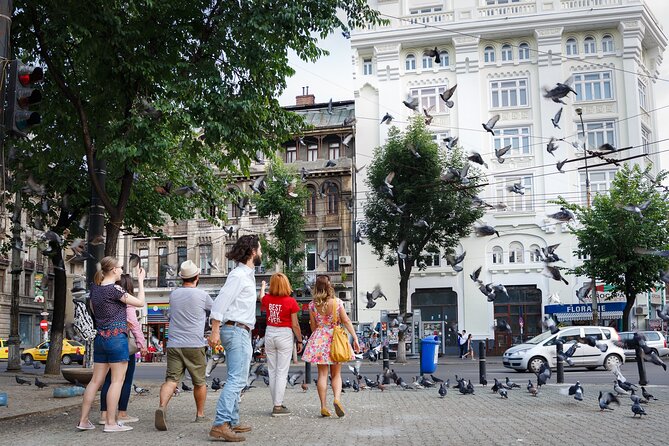
Bucharest can seem confusing at first. Wide boulevards, grand public buildings, worn façades, ornate mansions, concrete apartment blocks, and lively cafés often sit close together without an obvious pattern.
This tour gives that mixture some order. Its central idea is the mahalla, a small quarter that often formed around a religious building and served a shared ethnic, social, or religious community. As Bucharest grew, these small districts merged into larger neighborhoods. Their buildings then passed through modernization, earthquakes, wars, communist demolition, and the difficult property disputes that followed the fall of communism.
That background matters because the city’s rough edges are part of the story. You may see a finely decorated house beside a neglected one, or a restored building beside another still waiting for work. The tour does not present Bucharest as a perfect old town. It helps you understand why so much of the city feels both elegant and frayed.
I find that approach more useful than a simple list of dates. You learn to read the city as you walk, which can improve the rest of your stay.
A few more trips worth weighing up before you book
- Bucharest: Dracula’s Castle, Peles Castle, & Brasov Old Town
★ 4.5 · 17,858 reviews - Bucharest: Dracula Castle, Peles Castle & Brasov Old Town
★ 4.6 · 10,891 reviews - Bucharest: Dracula’s Castle, Peleș Castle & Brașov Day Trip
★ 4.5 · 5,919 reviews
Starting at the National Theatre Ion Luca Caragiale
The walk begins at the Ion Luca Caragiale National Theatre on Bulevardul Nicolae Bălcescu 2. The meeting time is 10:00 a.m., and the location is near public transportation, making it fairly easy to reach from elsewhere in central Bucharest.
The opening section lasts about 30 minutes. It introduces Bucharest’s architectural character and its complicated relationship with the Ottoman Empire. Bucharest was not an Ottoman town, but it shared features with towns in the Ottoman sphere of influence. That distinction helps explain why the capital does not fit neatly into a single European style.
You should expect the guide to use the theatre area as a starting point for a wider discussion of the city’s growth. The focus is not on entering the theatre or spending the morning inside a major attraction. Instead, you begin with the urban setting and the clues hidden in the surrounding streets.
This is a good opening for first-time visitors because it gives you a framework. You will hear why Bucharest contains such a mix of influences before walking into the smaller quarters where those layers become easier to spot.
Walking through Batiștei and the old mahallas
The second part, around Strada Batiștei, lasts about 35 minutes in the stated plan. In practice, the walk can connect several nearby areas, including the Armenian Quarter, Mantuleasa, the old Jewish Quarter, Olari, Ioanid-Gradina, and Icoanei.
These neighborhoods are the heart of the experience. You are not simply checking off landmarks. You are following the way communities formed, mixed, and changed as the city expanded.
Batiștei gives the guide a clear place to explain mahallas. From there, the architecture becomes a record of Bucharest’s social past. You might see signs of different communities in the street plan, religious buildings, house styles, restaurants, and the changing use of old residences.
The Armenian Quarter is especially useful for understanding how an ethnic community shaped a part of the city. The old Jewish Quarter and Mantuleasa add other layers, while Olari and the districts around Ioanid Garden and Icoanei show how residential Bucharest developed around elegant homes and quieter lanes.
Several guides have been praised for pointing out details that are easy to miss. These can include unusual architectural features, the history of individual buildings, and the reasons some grand houses remain empty or in poor repair. Ownership disputes after communism help explain why certain properties have not been restored. You do not need to know the legal background in advance, since the guide supplies the context as you go.
The route may not feel perfectly linear. That is partly a weakness and partly a benefit. A tightly scripted route would be easier to follow, but a flexible guide can stop for a photograph, answer a question, or show a building that fits your interests. If you want a strict sequence with fixed viewing points, this may feel informal. If you enjoy following a local’s eye, the freedom works well.
Belle Epoque Bucharest around Parcul Ion Voicu
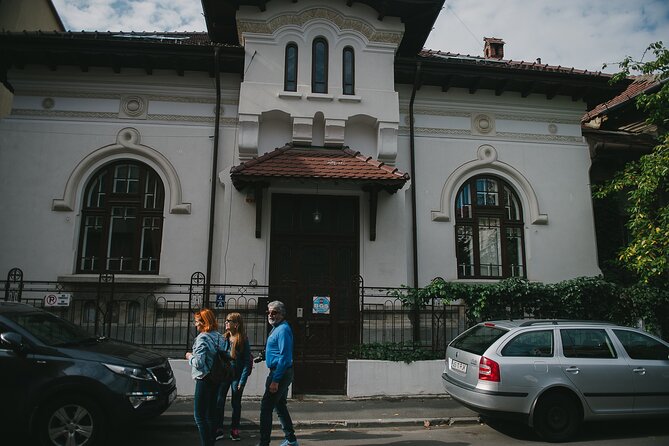
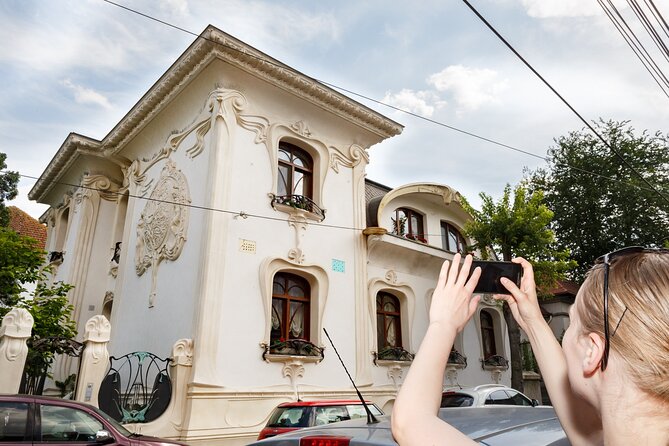
The walk continues toward Parcul Ion Voicu, where about 40 minutes are planned. This is the clearest look at Bucharest’s Belle Epoque side, with mansions dating from the late 19th century.
The area gives you a strong visual contrast with the capital’s large avenues. Instead of monumental communist planning, you get a more intimate neighborhood of villas, gardens, walls, and decorative façades. Some buildings are restored. Others are worn, empty, or being brought back into use.
That contrast is one of the tour’s strongest features. You are able to see the ambition of pre-World War I Bucharest without being asked to ignore the damage caused by two world wars, decades of communist rule, earthquakes, economic change, and hurried redevelopment.
Architecture fans will get the most from this section. Guides identify French, German, Armenian, Jewish, Ottoman, and communist influences, showing how they can appear side by side. You may also hear how a former private home has become a restaurant or another public space, a small example of the city’s ongoing recovery.
The route has included a visit to an Orthodox church for some groups, though this should not be treated as a guaranteed stop. Timing, local conditions, and the guide’s route can change the walk. The same applies to cafés and restaurants.
A completely different kind of day out around Bucharest:
- Bucharest: Palace of Parliament Tickets and Guide
★ 4.3 · 3,182 reviews - Bucharest: Day Trip to Dracula Castle, Peles Castle & Brașov
★ 4.4 · 3,049 reviews - Bucharest to Dracula Castle, Peles Castle and Brasov Guided Tour
★ 4.5 · 2,933 reviews - Bucharest: Palace of Parliament Tickets and Guided Tour
★ 4.4 · 1,877 reviews
Coffee, snacks, and useful local advice
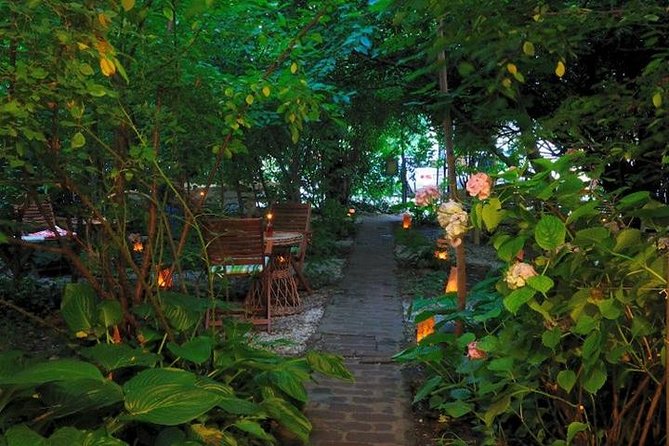
Snacks are included, which gives the experience a little warmth beyond the historical talk. Past walks have also included traditional Romanian cake, coffee, lemonade, smoothies, and a stop at a café garden or historic tea house.
Other food and drinks are not included unless specifically stated. Alcoholic drinks are available to purchase, but you should budget separately if you want lunch, coffee, or a drink during the walk.
These stops matter because they break up a long period on foot. They also give you a chance to ask practical questions about Bucharest. Guides have suggested restaurants, helped with reservations, recommended local dishes, and directed people toward cafés such as Simbio and Share Café. One guide helped arrange a gluten-free lunch, while another ended the walk at a restaurant where the group could continue eating.
Do not expect a full food tour. The main subject is Bucharest’s neighborhoods and architecture. Still, the food suggestions can be one of the most useful parts of the morning, especially if you have just arrived and have not yet worked out where to eat.
What the guides add to the experience
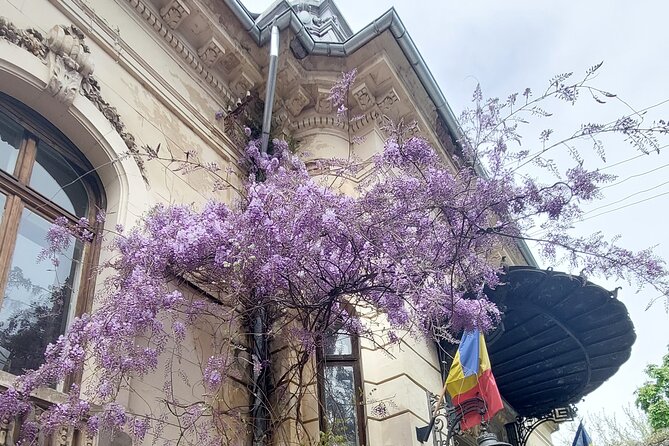
The guide can make or break this type of walk. Here, the strongest personal quality is clear affection for Bucharest combined with an ability to explain its difficult past without turning the tour into a lecture.
Andreea has been especially good at making the walk feel like an introduction from a local friend. Ioana brings strong cultural and architectural knowledge, and one Easter visit included a traditional Romanian cake. Lala, born and raised in Bucharest, has been praised for her warmth, city pride, and practical restaurant advice.
Mircea has handled demanding conditions with care, including a very hot day when temperatures reached 45 degrees Celsius. When one person could not walk the last hour, he arranged a car from the office so the tour could continue by vehicle. That kind of flexibility is valuable, though you should still assume the standard experience requires moderate fitness.
Roxana has been praised for explaining mahallas, architectural details, and the history of individual homes. Anita has adapted the walk for photography, while Tudor has adjusted the conversation to suit the group’s interests.
Guide assignments can change. The important point is that the experience depends heavily on the person leading it. You may get a formal history lesson, or you may get a conversational walk shaped around your questions. Both can work, but the second style seems to be where this tour is strongest.
How hard is the walk?
The tour lasts about two hours and 30 minutes, with the advertised highlights sometimes describing it as a three-hour walk. Allow roughly three hours in your schedule, especially if the guide stops for questions, photographs, refreshments, or an extra building.
You need a moderate level of physical fitness. Good footwear is a smart choice, since the walk includes side streets and older neighborhoods rather than only smooth main avenues. The route is not presented as an accessible sightseeing vehicle tour, although a car has been arranged in an individual case when someone could no longer walk.
Summer heat deserves attention. One guide took special care of hydration during a 45-degree day, but you should still bring water, wear a hat, and choose sensible clothing when temperatures are high.
The 10:00 a.m. start is useful in warm weather and gives you the afternoon free. It also works well on your first full day, when you want a calm orientation before visiting larger attractions.
Is $46.86 a fair price?
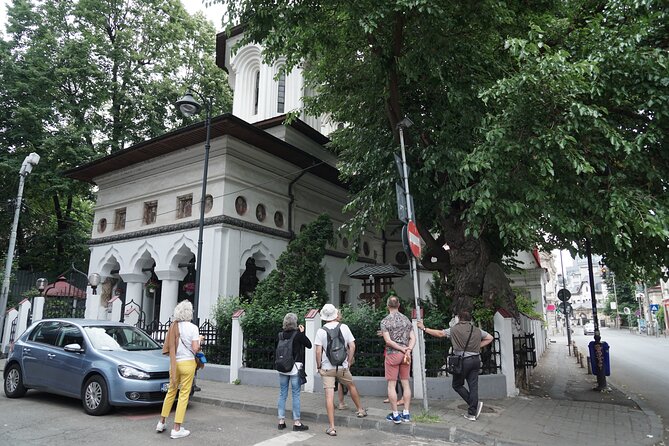
At $46.86 per person, this is not the cheapest way to spend a morning in Bucharest. You can walk through central streets for free. The price is easier to justify if you value interpretation, local recommendations, and access to places you would probably pass without noticing.
A maximum of 12 people keeps the format more personal than a large bus tour. If only one or two people book, the walk may feel almost private. That has happened, but it is not guaranteed. In one case, a solo booking still required payment for two people, so check the booking conditions carefully if you are alone.
The tour offers its best value to people who want to understand why Bucharest looks the way it does. If you only want famous buildings and quick photographs, another sightseeing tour may suit you better. If you want to connect architecture with migration, politics, religion, ownership, and urban change, the fee is reasonable.
Free cancellation is available up to 24 hours before the start time. Changes or cancellations inside that window are not accepted for a refund.
Who should book this Bucharest walk?
I would choose this tour early in a Bucharest visit, especially if you enjoy architecture, local history, photography, or cities that reward patient looking. It is also a good choice if you have already seen the standard sights and want a quieter side of the capital.
The tour suits solo visitors, couples, and small groups. Solo participants may enjoy the chance to ask many questions, but they should confirm how the price works for one person. Families with older children may also appreciate the stories, provided everyone is comfortable walking for several hours.
This is less suitable if you need a fixed, highly predictable route, dislike uneven streets, or want a food-focused outing. It is also not the right choice if you expect admission to several major attractions, since the listed stops are viewed from the walking route and admission is free.
Should you book Unique Tour of Hidden Bucharest?
Book it if you want Bucharest explained through its side streets rather than reduced to a few grand landmarks. The strongest parts are the mahalla story, the Belle Epoque mansions, the mixture of architectural influences, and the chance to ask a local guide about places you would not find on your own.
I would book it near the start of your stay and use the guide’s restaurant and café suggestions afterward. Bring comfortable shoes, water, and a flexible attitude. If you prefer a polished route with no surprises, choose a more conventional city tour. If you want the capital’s quieter, stranger, more human side, this is a very good value.
FAQ
Where does the tour start?
The tour starts at the Ion Luca Caragiale National Theatre, Bulevardul Nicolae Bălcescu 2, Bucharest, Romania.
What time does the tour begin?
The stated start time is 10:00 a.m.
Where does the tour end?
The tour ends at KFC, Bulevardul General Gheorghe Magheru 28-30, Bucharest, Romania.
How long does the experience last?
The duration is approximately two hours and 30 minutes. The tour description also refers to it as a three-hour walk, so allow about three hours overall.
What language is offered?
The tour is offered in English.
How many people can join?
The group has a maximum of 12 participants.
What is included in the price?
The price includes a local guide and snacks.
Are meals and drinks included?
Food and drinks are not included unless specified. Alcoholic drinks are available to purchase.
Can I cancel for a refund?
Yes. You can cancel at least 24 hours before the local start time for a full refund. Cancellations or changes made less than 24 hours before the start are not accepted for a refund.
Just added around Bucharest
- 10 hours Private Apiary Tour in Romania – From Bucharest★ 5.0 · 3 reviews
- 4-Day Inside Transylvania & Transfagarasan Tour from Bucharest★ 5.0 · 3 reviews
- Bucharest: Charm of the Belle Époque Private Tour★ 5.0 · 3 reviews
- Bran & Peles Castles through the Best Road in the World: Transfagarasan road★ 4.5 · 3 reviews
- Private Wine Tasting at Bucharest’s First Wine Bar★ 5.0 · 3 reviews
- 2-Day Small-Group Tour in Transylvania from Bucharest – Maximum 5 Persons★ 5.0 · 3 reviews
- Probably the Best Restaurant and Wine Cellar near Bucharest★ 4.5 · 3 reviews
- Bucharest to Brasov – Fast Private Transfer★ 5.0 · 3 reviews
Tours, compared.
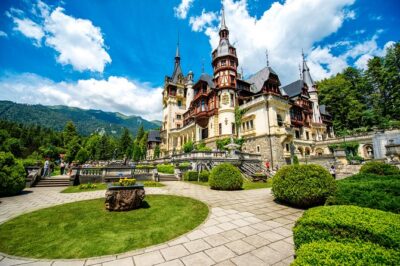
Bucharest to Dracula Castle, Peles Castle and Brasov Guided Tour
Read our review →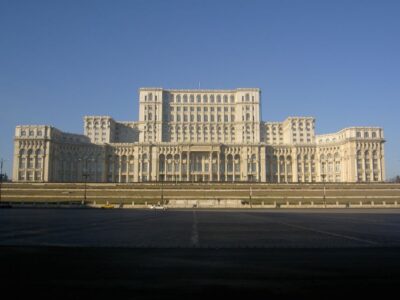
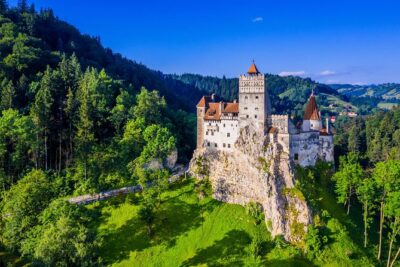
Transylvania and Dracula Castle Full Day Tour from Bucharest
Read our review →
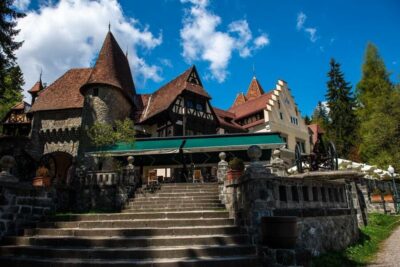
Peles Castle, Bran Castle, & Brasov Old Town Tour
Read our review →
Small-group tour Bran, Rasnov, and Peles Castles
Read our review →