Reviewed · BUCHAREST TOURS
Troubled – Notorious Neighborhood – area known for social issues
Reality sits beyond Bucharest’s postcard center. This private 3.5-hour tour takes you through Ferentari, Rahova, and Sintesti, places most visitors would never find alone. I like the candid look at daily life and the chance to visit local markets, while the guides, including Sebastian, Catalin, Valerica, and others, are praised for explaining difficult subjects with humor and care. The main drawback is clear: this is not a light sightseeing trip, and you must dress plainly, leave jewelry behind, and respect strict rules about photos and behavior.
I also like the way much of the tour happens by vehicle, with short walks through markets and residential areas. That makes the experience practical and gives you a broad view in limited time. At $130.83 per person, the cost is high for three and a half hours, but it may be fair if you value a private guide, local access, and frank discussion more than famous sights.
In This Review
- Key points to know before you book
- Why this Bucharest tour is different
- Ferentari: seeing Bucharest’s hardest edge
- Rahova: markets, homes, and prison history
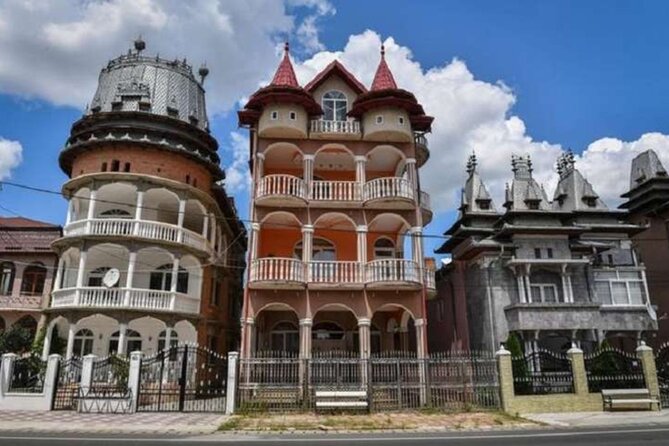
- Sintesti and the famous Roma palaces
- What the private format changes
- Is $130.83 a fair price?
- Safety, clothing, and respectful behavior
- Who should book this experience?
- Should you book the Troubled neighborhood tour?
- FAQ
- Where does the tour take place?
- How long does the experience last?
- How much does the tour cost?
- Is pickup available?
- Is the tour private?
- What language is the tour offered in?
- Can most people participate?
- Should I bring expensive jewelry or valuables?
- Can I take photographs and videos?
- What is the cancellation policy?
Key points to know before you book
- Ferentari offers a close look at one of Bucharest’s poorest districts, with about 1 hour and 10 minutes devoted to the area.
- Rahova adds markets, residential streets, and the former feared penitentiary area, giving the tour more social and historical context.
- Sintesti shows a different side of Roma life, including large Roma houses often called gypsy palaces.
- The tour is private, so only your group takes part, and pickup is available.
- Dress simply and avoid jewelry or expensive items, since the tour enters sensitive communities.
- Respect local privacy, especially around photography and video. The guide explains what is and is not acceptable.
Why this Bucharest tour is different
Most first visits to Bucharest stay near the Old Town, grand boulevards, museums, and former royal buildings. Those places matter, but they do not tell the whole story. This tour moves away from the polished center and focuses on poverty, marginalization, Roma communities, and the sharp differences between poor neighborhoods and wealthy Roma homes.
I see the value in that approach. You are not simply looking at old buildings from a coach window. You are hearing how these areas developed, seeing where people shop, and learning about the daily pressures faced by communities that are often reduced to stereotypes.
That said, the subject needs care. A poor neighborhood is not a theme park, and local residents are not scenery. The best way to take this tour is with patience, modesty, and a willingness to listen. The guide’s role matters greatly here. Feedback about Sebastian, Bogdan, Catalin, Valerica, and Matthew points to guides who explain local customs, history, and boundaries rather than treating the visit as a cheap thrill.
The experience is recommended by 95 percent of its participants and carries a 4.8 rating from 21 reviews. Those numbers suggest a strong experience for the right audience, but they do not remove the need for good judgment. If you want only cheerful sightseeing, choose another Bucharest tour.
A few more trips worth weighing up before you book
- Bucharest: Dracula’s Castle, Peles Castle, & Brasov Old Town
★ 4.5 · 17,858 reviews - Bucharest: Dracula Castle, Peles Castle & Brasov Old Town
★ 4.6 · 10,891 reviews - Bucharest: Dracula’s Castle, Peleș Castle & Brașov Day Trip
★ 4.5 · 5,919 reviews
Ferentari: seeing Bucharest’s hardest edge
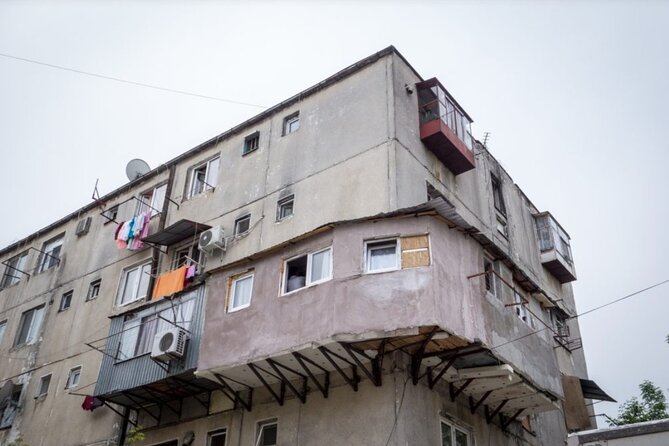
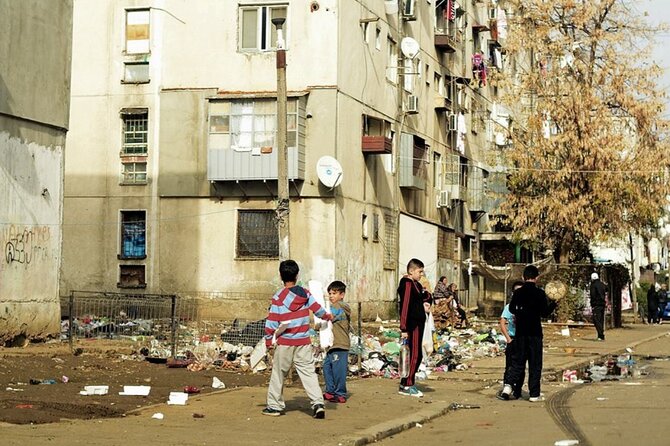
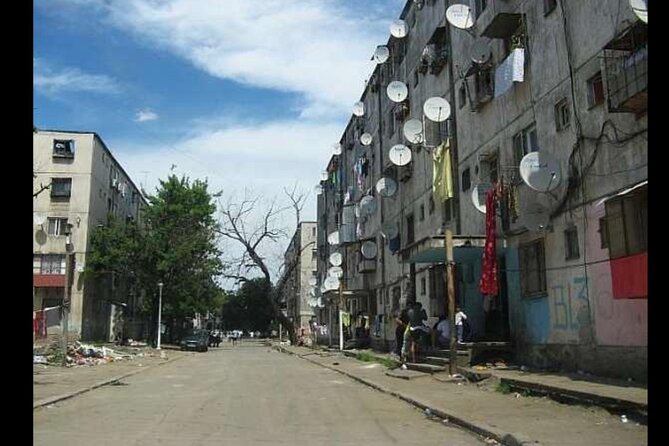
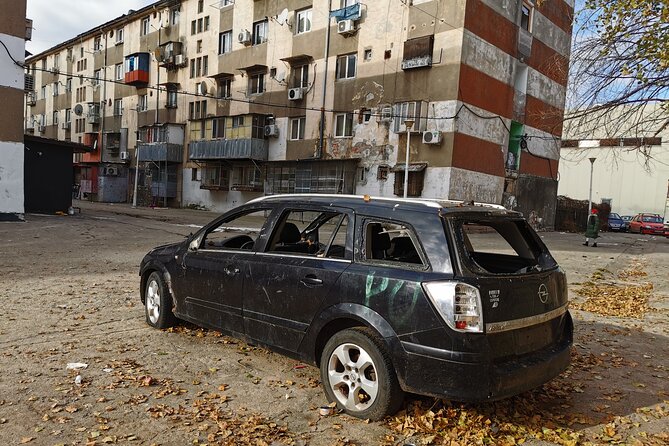
The first stop is Ferentari, with about 1 hour and 10 minutes spent in the area. It is described as one of the capital’s most troubled neighborhoods and as a district with the lowest standard of living in Bucharest.
That description gives you a rough idea of the subject, but it does not explain what makes the stop useful. Ferentari helps you see the gap between the Bucharest presented to tourists and the city experienced by residents dealing with limited resources. The guide provides the setting and explains what you are seeing, which is important because a short walk through an unfamiliar district can otherwise leave you with only vague impressions.
The listed places include Strada Zăbrăuţului 5, Aleea Iacob Andrei 11, Aleea Livezilor, Strada Pucheni 1, and Strada Amurgului 4. You should not expect a standard monument-by-monument visit. The interest lies in the streets, homes, local activity, and conversation.
One of the strongest parts of the experience is the chance to pass through local markets. You might see residents shopping for ordinary household needs, and you may have the chance to buy something yourself. That simple activity can make the visit feel less like observation from a distance, though you still need to follow the guide’s advice about when interaction is appropriate.
The main concern here is photography. Do not assume that a dramatic building, crowded market, or passing resident is automatically yours to record. Catalin is praised for clearly explaining what can and cannot be done, and that is exactly the kind of guidance you need in Ferentari.
You spend a substantial part of the tour here, so this is not a quick drive past a rough district. That gives the stop weight, but it also means the tour may feel intense. Keep an open mind and avoid arriving with a fixed idea about what poverty should look like.
Rahova: markets, homes, and prison history
The second stop is Rahova, also scheduled for about 1 hour and 10 minutes. The neighborhood is associated with a large Roma population and with a once-feared penitentiary.
The Rahova section adds variety to the visit. You may spend part of the time in the vehicle, then walk through a flower market, local market, and residential areas. That mix keeps the stop from becoming a single, static look at hardship. It shows commerce, routine, and community life alongside the area’s more difficult history.
The penitentiary location is given as Rahova Penitentiary, Strada Adrian 4. The tour does not present this as a normal prison visit, so you should think of it as a place connected with the neighborhood’s reputation and past. Your guide supplies the explanation, helping you understand why Rahova has been feared and how that image fits into the wider story of Bucharest.
I find the market walks especially valuable because they provide ordinary context. You are not only hearing about Roma communities in abstract terms. You can see where people buy groceries and how local trade works. One participant even bought groceries at the market after being guided through the area.
Still, the market is not a stage set for visitors. Keep your voice down, avoid staring, and let the guide decide when a conversation is suitable. The strongest guides on this tour appear to be alert to that distinction. Valerica, for example, is praised for explaining Roma life, community rules, and everyday struggles while reminding the group to stay sensitive and aware.
The word gypsy appears in the tour description, but Roma is the respectful term to use when discussing the people and communities you encounter. A good guide can explain the language, history, and social issues without turning a complex population into one simple category.
Sintesti and the famous Roma palaces
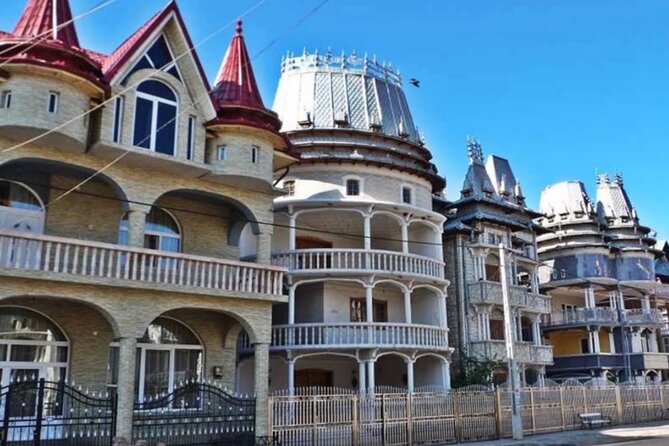
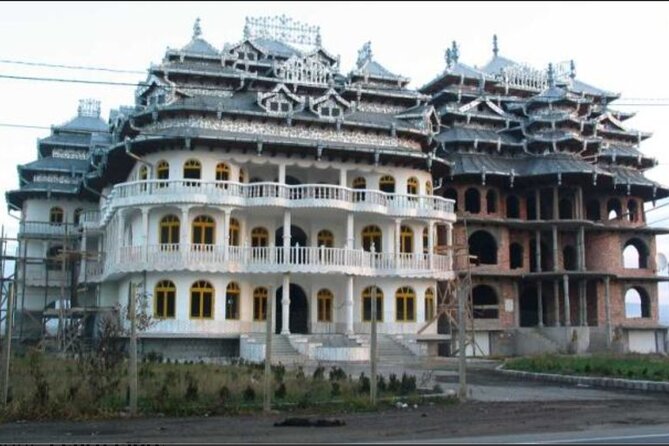
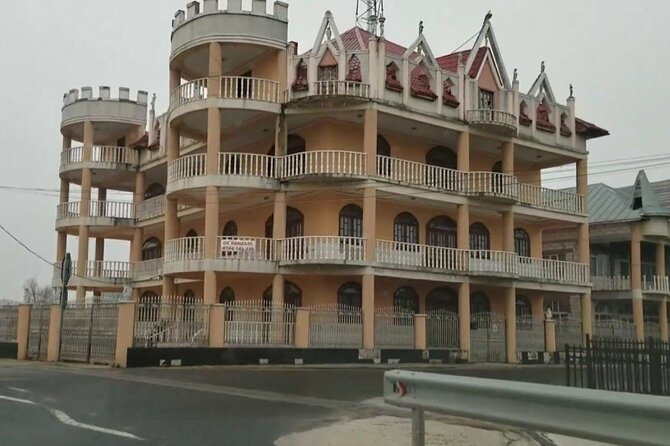
The final stop takes you outside Bucharest to Sintesti, a village known for large Roma houses often called gypsy palaces. The address provided is Strada Principală Nr. 353A, Sintesti.
This stop is important because it complicates the simple image created by the earlier neighborhoods. Ferentari and parts of Rahova focus on poverty and social difficulty. Sintesti shows that Roma communities are not economically uniform. Some families live in grand, highly decorated houses that reflect wealth, pride, and family status.
You will likely spend roughly 1 hour and 10 minutes here, making it equal in length to the two Bucharest stops. That gives the guide time to explain the buildings rather than simply point them out. The homes are the visual focus, but the useful part is the conversation about how wealth is displayed and what these houses mean within the community.
The tour description refers to wealthy Roma families and raises questions about business and legality. Treat that subject carefully. You are being offered context, not a license to make accusations about individual households. The best use of this stop is to understand the contrast between different levels of Roma life and the social signals expressed through architecture.
For me, Sintesti makes the whole route more worthwhile. Without it, you might leave with the mistaken idea that Roma identity is tied only to poverty. This village adds another layer and makes the tour less predictable.
It also reminds you why a local guide is needed. From a passing car, elaborate houses can look merely strange or extravagant. With explanation, you can think about family, status, migration, money, and public image. The stop is visual, but the meaning comes from the guide’s interpretation.
A completely different kind of day out around Bucharest:
- Bucharest: Palace of Parliament Tickets and Guide
★ 4.3 · 3,182 reviews - Bucharest: Day Trip to Dracula Castle, Peles Castle & Brașov
★ 4.4 · 3,049 reviews - Bucharest to Dracula Castle, Peles Castle and Brasov Guided Tour
★ 4.5 · 2,933 reviews - Bucharest: Palace of Parliament Tickets and Guided Tour
★ 4.4 · 1,877 reviews
What the private format changes
This is a private activity, so only your group participates. That is a real advantage for a sensitive subject. You can ask direct questions without a large busload of strangers listening, and the guide can adjust the pace to your interests.
A private tour also gives you more control over conversation. If you want to understand Roma traditions, social problems, or Bucharest’s neighborhood divisions, you can ask. If a particular moment feels uncomfortable, you can raise that with the guide rather than simply waiting for a scheduled group to move on.
Pickup is offered, and the tour is near public transportation. Much of the route is done by vehicle, with walking sections at markets and selected areas. That matters because the three stops are spread across different parts of the city and beyond it, including Sintesti.
The experience is offered in English. Most people can participate, according to the available information, but the tour involves walking in markets and residential areas. Anyone who has concerns about mobility should ask the supplier before booking, since no detailed accessibility information is provided.
The tour is generally booked about 48 days ahead. That does not guarantee every date will sell out, but it suggests that you should not leave it until the last morning of your Bucharest stay, especially if you need pickup or have limited time.
Is $130.83 a fair price?
At $130.83 per person, this is not a budget sightseeing trip. For a solo visitor or a couple, the price may feel steep beside a normal walking tour. The value depends on what you want from Bucharest.
You are paying for a private experience, transportation between several districts, an English-speaking guide, and access to places you would be unlikely to visit comfortably on your own. You are also paying for explanation. Without the guide, Ferentari, Rahova, and Sintesti could easily become a confusing series of impressions.
The price makes more sense for a small private group, particularly because group discounts are offered. If several people share the cost, the personal format becomes easier to justify. You should ask about the exact discount before booking, since the amount is not specified.
I would not choose this tour for a first introduction to Bucharest. Start with the center and major sights, then book this if you want to understand the city’s less polished side. For someone who values social context and direct conversation, it may offer more lasting value than another standard city loop.
Free cancellation is available if you cancel at least 24 hours before the start time. Cancellations or changes made inside that window are not accepted for a refund, and the cut-off follows Bucharest local time.
Safety, clothing, and respectful behavior
The instruction to dress simply is not decorative advice. Leave jewelry, expensive watches, and costly accessories at your accommodation. Avoid displaying expensive items, and keep your clothing plain.
The guide’s safety advice should shape your behavior throughout the tour. Stay with your group, remain alert, and do not wander away to take a closer look. You are entering places where visitors may not be welcome without local support.
Photography and video require special care. Ask before photographing people, homes, or sensitive locations. If the guide says no, accept that answer immediately. A good picture is not worth creating fear or offense.
You should also avoid treating the tour as a hunt for shocking images. The useful questions are about housing, work, markets, family life, poverty, discrimination, and the city’s response to social problems. The less useful approach is to search for the most dramatic scene.
The guide may use humor, and several guides are praised for being warm and easy to talk with. Humor can make a difficult subject easier to discuss, but you should still keep your own comments measured. Roma communities have long faced prejudice, so casual jokes can quickly cross a line.
Who should book this experience?
I recommend it for an independent-minded visitor who has already seen central Bucharest and wants a frank look at social issues. It suits people who enjoy asking questions, listening to local explanations, and seeing ordinary places rather than collecting famous buildings.
It may also suit students, photographers who understand ethical limits, and anyone interested in Roma life. If you are curious about how a city contains very different levels of wealth, the contrast between Ferentari, Rahova, and Sintesti is especially useful.
I would not recommend it to families seeking a carefree outing, to anyone uncomfortable around poverty, or to people who want guaranteed photo opportunities. It is also a poor choice if your main goal is architecture in the usual tourist sense. The Roma palaces are visually striking, but the tour is really about people and social conditions.
The guide can make or break the experience. Sebastian is praised for safety, knowledge, and humor. Bogdan is described as friendly and able to explain Bucharest’s story. Catalin receives praise for setting clear boundaries, while Valerica is singled out for discipline, patience, and careful explanations of Roma life. Matthew is also mentioned as part of a well-informed guiding team. Your assigned guide may differ, but these comments show the qualities to value: calm judgment, local understanding, and respect.
Should you book the Troubled neighborhood tour?
Book it if you want the real-life side of Bucharest, not another pass through the historic center. The private format, local markets, English guidance, and three contrasting areas give you a strong framework for understanding subjects that standard tours often skip.
Think twice if you dislike difficult social topics or expect a relaxed sightseeing trip. At $130.83 per person, the tour asks you to pay for access and interpretation, not famous attractions. Dress plainly, follow the guide’s rules, and treat residents as people rather than photographic subjects. With that mindset, this can be an eye-opening and unusually honest addition to a Bucharest visit.
FAQ
Where does the tour take place?
The tour visits Ferentari and Rahova in Bucharest, followed by Sintesti village, which is known for Roma palaces.
How long does the experience last?
The tour lasts approximately 3 hours and 30 minutes.
How much does the tour cost?
The listed price is $130.83 per person. Group discounts are offered.
Is pickup available?
Yes, pickup is offered.
Is the tour private?
Yes. Only your group participates in this private activity.
What language is the tour offered in?
The tour is offered in English.
Can most people participate?
Yes, the available information states that most people can participate.
Should I bring expensive jewelry or valuables?
No. You are advised to dress as simply as possible and avoid jewelry or expensive items.
Can I take photographs and videos?
You should follow the guide’s instructions and respect local privacy. The guide explains what is and is not allowed, so do not photograph or film whenever you want.
What is the cancellation policy?
You can cancel at least 24 hours before the start time for a full refund. Cancellations or changes made less than 24 hours before the experience are not accepted for a refund.
Just added around Bucharest
- 10 hours Private Apiary Tour in Romania – From Bucharest★ 5.0 · 3 reviews
- 4-Day Inside Transylvania & Transfagarasan Tour from Bucharest★ 5.0 · 3 reviews
- Bucharest: Charm of the Belle Époque Private Tour★ 5.0 · 3 reviews
- Bran & Peles Castles through the Best Road in the World: Transfagarasan road★ 4.5 · 3 reviews
- Private Wine Tasting at Bucharest’s First Wine Bar★ 5.0 · 3 reviews
- 2-Day Small-Group Tour in Transylvania from Bucharest – Maximum 5 Persons★ 5.0 · 3 reviews
- Bucharest to Brasov – Fast Private Transfer★ 5.0 · 3 reviews
- Probably the Best Restaurant and Wine Cellar near Bucharest★ 4.5 · 3 reviews
Bucharest Tours, compared.
Dracula’s Castle, Peles Castle, & Brasov Old Town
Read our review →
Dracula Castle, Peles Castle & Brasov Old Town
Read our review →
Dracula’s Castle, Peleș Castle & Brașov Day Trip
Read our review →
Day Trip to Dracula Castle, Peles Castle & Brașov
Read our review →
Bucharest to Dracula Castle, Peles Castle and Brasov Guided Tour
Read our review →