Reviewed · BUCHAREST TOURS
The Real Story of Gypsies – Slavery in Romania
Roma history is hiding in plain sight. This three-hour Bucharest walk links an old slave market, royal architecture, Holocaust memory, and working Roma craft traditions in a way that gives the city a more honest human story. I especially like the focus on Roma history beyond stereotypes and the small group limit of 15 people, which should leave room for questions. The main drawback is that much of the tour deals with slavery, persecution, and genocide, so this is not a light sightseeing stroll.
I also like the low price of $30.04 per person and the clear route through central Bucharest. You will walk for about 1 hour and 20 minutes between seven stops, with around 15 minutes at most sites. The tour is in English and starts at 10:00 a.m., but you should be ready for serious subject matter and a fair amount of standing outdoors.
In This Review
- Key points at a glance
- Why this Bucharest walk matters
- Meeting at Piața Amzei and Romana Square
- Știrbei Palace and the power behind the story
- The Romanian Athenaeum and cultural images
- Cișmigiu Park and the line between myth and fact
- The Holocaust Memorial and Romania’s Roma victims
- Iuliu Maniu and changing names for the Roma
- Mesteshukar ButiQ and Roma craft today
- What $30.04 buys you
- Who should book this experience
- Booking, cancellation, and practical timing
- Should you book The Real Story of Gypsies?
- FAQ
- Where does the tour start?
- What time does the tour begin?
- Where does the tour end?
- How long does the walking tour last?
- Is the tour offered in English?
- How much does the tour cost?
- Can I cancel for a full refund?
Key points at a glance
- Old slave-market site: Begin at Piața Amzei, where the tour examines the sale of Roma people under slavery in Romania.
- Seven central Bucharest stops: The route connects Romana Square, Știrbei Palace, the Romanian Athenaeum, Cișmigiu Park, the Holocaust Memorial, the Iuliu Maniu statue, and Mesteshukar ButiQ.
- History tied to familiar sights: Grand buildings and public spaces become part of a story about power, prejudice, memory, and identity.
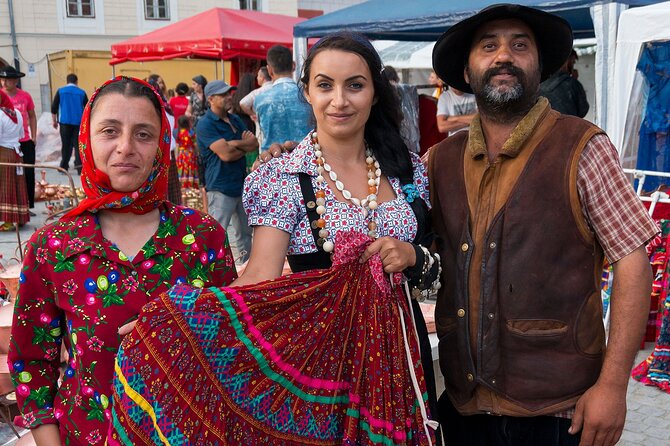
- Roma craftsmanship today: Finish at Mesteshukar ButiQ, a small shop selling products made only by Roma craftsmen.
- Small English-language group: The maximum is 15 people, and past feedback gives guide Mihai special praise for clear English and patient answers.
- Flexible booking: You receive confirmation at booking and can cancel without charge up to 24 hours before the 10:00 a.m. start.
Why this Bucharest walk matters
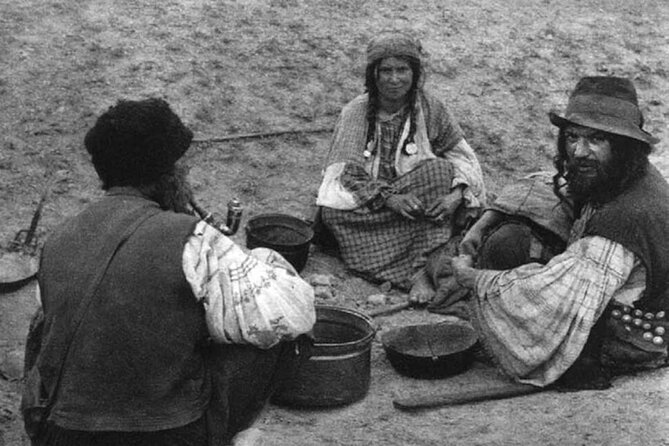
Many city tours give you Bucharest’s grand buildings, royal streets, and Communist-era stories. This one asks you to look again at the people whose lives were shaped by those institutions. Its subject is the history of the Roma community, including slavery in Romania, later discrimination, wartime genocide, and the survival of traditional crafts.
I like that the route does not keep this story in a museum room. You begin at an urban site linked to the old slave trade, pass monuments and cultural landmarks, pause at a Holocaust memorial, and finish in a working craft shop. That progression connects past events with the city you see today.
The word Gypsy appears in the tour title and in the historical framing of some stops. Roma is the respectful modern term for the ethnic group, while Gypsy is an older label that has often been used from outside the community. The tour’s purpose is to explain how language, law, and public attitudes affected Roma identity over time.
This is not a tour designed to make difficult history comfortable. It asks you to pay attention. The walking pace and short stops should help break up the heavier material, but you should still expect a serious morning rather than a casual architecture walk.
A few more trips worth weighing up before you book
- Bucharest: Dracula’s Castle, Peles Castle, & Brasov Old Town
★ 4.5 · 17,858 reviews - Bucharest: Dracula Castle, Peles Castle & Brasov Old Town
★ 4.6 · 10,891 reviews - Bucharest: Dracula’s Castle, Peleș Castle & Brașov Day Trip
★ 4.5 · 5,919 reviews
Meeting at Piața Amzei and Romana Square
The tour starts at Teatrul Ion Creangă, Sala Mare, at Strada Piața Amzei 13. The wider area is near Romana Square, a useful central reference point and a practical place to reach by public transport.
Arrive before the 10:00 a.m. start. The tour is delivered in English, and confirmation arrives when you book. Since the group can include up to 15 people, arriving early also makes it easier to find the guide before the walk begins.
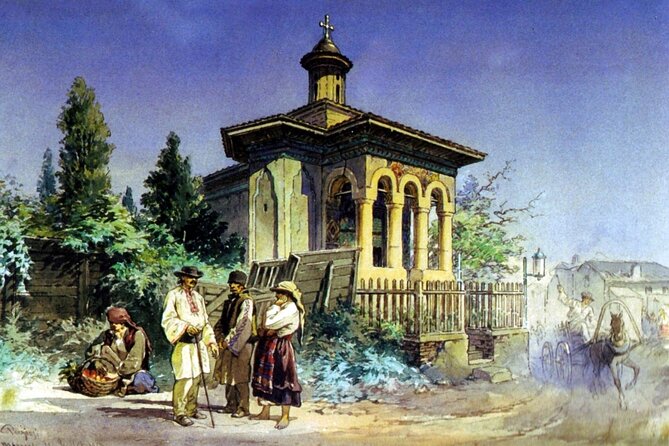
The first stop is Platoul Piața Amzei, the site of an old slave market. Admission is free, and the planned stop lasts about 15 minutes. Do not expect a preserved market building or a display of objects. The value is in the explanation of what happened at this place and how the sale of human beings affected Roma families and the wider society.
This opening gives the tour its moral and historical center. It also makes clear that Roma slavery was not a distant tale from somewhere else. It was connected to the institutions and streets of Romania. I find that a strong way to begin, though some people may prefer an easier introduction before confronting such painful material.
Știrbei Palace and the power behind the story
The next stop is Știrbei Palace, a Bucharest palace built in 1835. You spend about 10 minutes here, with no admission charge.
The palace matters because its owner was involved in an important moment in Roma history in Romania. The stop appears designed to connect elegant architecture with the political and social power held by elites. That contrast is central to the tour: grand urban spaces can look beautiful while also being tied to systems that caused real suffering.
You will not spend long at the palace, so this is mainly a context stop rather than a full palace visit. If you hope to go inside or receive a detailed architectural tour, adjust your expectations. The point is the person linked to the building and the role of power in Roma history.
This is also where a good guide can make a major difference. Guide Mihai is described as clear in English, well informed about Bucharest, and willing to take time with questions. Those qualities matter here because the connection between one building, its owner, and Roma history may not be obvious from the street.
The Romanian Athenaeum and cultural images
The walk continues to the Romanian Athenaeum, one of Bucharest’s best-known cultural buildings. The planned stop lasts 15 minutes, again with free admission.
The Athenaeum gives the guide a chance to discuss how art and national culture have shaped ideas about the Roma community. That is a useful change of angle. The tour is not only about laws, forced labor, and violence. It also considers who gets represented in national culture, who is left out, and how public images can harden into stereotypes.
You will see the building as part of a larger city walk rather than enter for a concert or interior visit. That keeps the tour moving, but it means the stop is more about interpretation than sightseeing detail. I like the choice because it shows that Roma history belongs in discussions of Romanian culture, not only in sections labeled poverty or persecution.
The short visit should suit you if you want historical explanation tied to visible places. If your main interest is the Athenaeum’s architecture, you will need a separate visit to give it proper time.
A completely different kind of day out around Bucharest:
- Bucharest: Palace of Parliament Tickets and Guide
★ 4.3 · 3,182 reviews - Bucharest: Day Trip to Dracula Castle, Peles Castle & Brașov
★ 4.4 · 3,049 reviews - Bucharest to Dracula Castle, Peles Castle and Brasov Guided Tour
★ 4.5 · 2,933 reviews - Bucharest: Palace of Parliament Tickets and Guided Tour
★ 4.4 · 1,877 reviews
Cișmigiu Park and the line between myth and fact
After the formal buildings, the group reaches Cișmigiu Park, described as Bucharest’s oldest and largest garden. The stop lasts about 15 minutes, followed by part of the walking time through the city.
A park may seem like an odd place for a serious history lesson, but it gives the tour breathing room. You can walk among greenery while the guide sorts fact from popular myth about the Roma. That distinction is important because false stories about Roma communities have often been repeated as if they were simple truths.
I like this part of the route for its change of mood. The park offers a quieter setting after the city streets and grand buildings, and the guide can explain ideas without placing every point beside a monument of suffering. Still, the subject remains difficult. Do not treat the park as a purely restful break.
The full walk includes about 1 hour and 20 minutes of movement, spread across the route. Comfortable shoes are a sensible choice. The supplied details do not specify terrain, weather arrangements, or refreshment stops, so bring what you normally need for a three-hour outdoor city walk.
The Holocaust Memorial and Romania’s Roma victims
The Holocaust Memorial is the tour’s most solemn stop. The planned visit lasts 15 minutes, and admission is free.
Here, the focus turns to the Holocaust in Romania and the thousands of Roma people who died through persecution and genocide. The memorial gives the guide a fixed place to discuss wartime crimes, but the visit is also a moment for silence and respect. You should expect the pace to slow and the tone to become more reflective.
This stop adds an essential part of the story. A tour about Roma history that ended with slavery or nineteenth-century reform would leave out the violence of the twentieth century. By placing the memorial before the final craft stop, the route shows both the scale of what was lost and the fact that Roma culture continues.
The stop may be emotionally heavy, especially if you have already visited other Holocaust sites in Europe. Even so, I consider it one of the strongest reasons to choose this walk. It puts Romania’s Roma victims into the public memory of the city rather than leaving them as a footnote.
Iuliu Maniu and changing names for the Roma
The sixth stop is the statue of Iuliu Maniu, with about 15 minutes allocated here. The description presents this as another important moment in Roma history, from a period when the group was still commonly called Gypsies.
This part of the route appears to focus on political language and the way Roma people were described in public life. The older term in the stop description reflects historical usage, not a recommendation for everyday speech. Your guide can help place that language in its time and explain what changed, and what did not.
The statue also gives the group another chance to connect national political memory with Roma experiences. A famous Romanian figure may be remembered through a public monument, while the Roma people affected by the same political era remain less visible. That contrast helps explain why this subject is worth a dedicated tour.
As with the palace and Athenaeum, the stop is outside and relatively short. You will get context rather than a long statue lecture. The benefit is the link between a familiar Bucharest landmark and a less familiar part of the city’s political story.
Mesteshukar ButiQ and Roma craft today
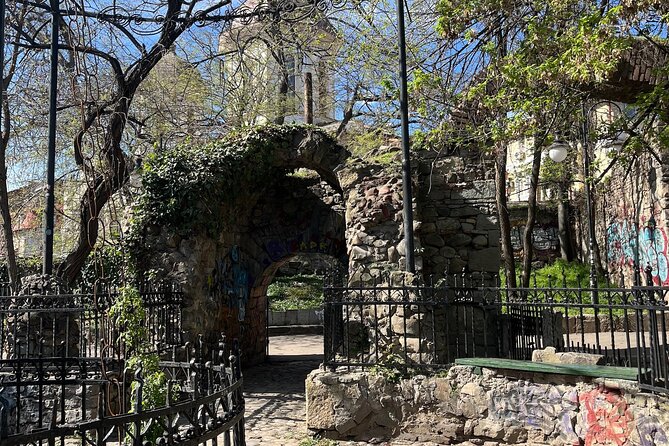
The tour ends at Mesteshukar ButiQ, at Bulevardul Mihail Kogălniceanu 12. This is a small shop whose products are made only by Roma craftsmen. The final stop lasts about 15 minutes.
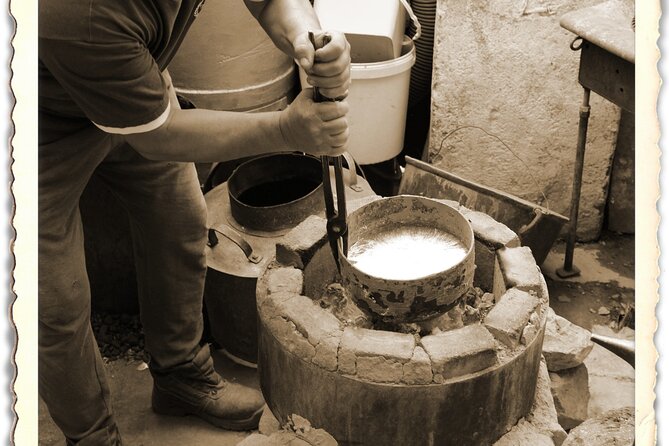
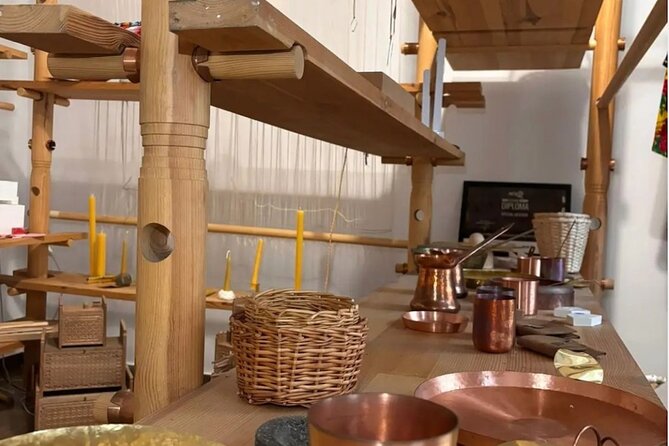
This ending is carefully chosen. After hearing about enslavement, prejudice, and genocide, you see a living form of Roma work and creativity. Copper craftsmanship is the focus, and you have the chance to see how traditional skills continue in the present.
Do not confuse this with a long shopping session or a full craft workshop. The information provided describes a chance to witness the work and visit the shop, not a hands-on class. Still, it gives the tour a useful final note. Roma culture is not presented only as something harmed by history. It is also carried forward through skill, work, and objects made for everyday life.
The end point is near the center and gives you a clear place to continue your day. You can browse the products, but the tour price does not state that purchases are included. Plan to pay separately if you decide to buy something.
What $30.04 buys you
At $30.04 per person, I see this as a good-value specialist tour rather than a bargain sightseeing circuit. You are paying for about three hours, an English-speaking guide, a carefully linked route, and discussion of a subject that is rarely covered in standard Bucharest tours.
All seven stops have free admission, so the price is mainly for the guide’s time and interpretation. That is fair here. The locations alone will not explain the connections between slavery, elite power, national culture, wartime persecution, public memory, and Roma craftsmanship.
The group limit of 15 helps the value. A smaller group should make it easier to hear the guide and ask questions, though the actual group size on your date can be smaller or close to the maximum. Past feedback gives Mihai particular credit for clear English, answers to questions, and friendly conversation about Bucharest.
The tour is booked an average of 10 days ahead. That does not guarantee that every date fills early, but it is a useful sign that you should avoid leaving it until the last morning if your schedule is tight.
Who should book this experience
I would choose this tour if you want to understand Bucharest through social history, not just its churches, palaces, and boulevards. It suits you especially well if you value direct conversation with a guide and want a small-group setting for questions.
It is also a good fit for repeat visitors who have already seen the main sights. The route passes famous places, but the explanations give them a different meaning. You will recognize parts of central Bucharest while learning about a community that standard sightseeing often overlooks.
You should think twice if you want a relaxed, cheerful walk with little discussion of suffering. Slavery and Holocaust genocide are central subjects, not brief side notes. The tour is also not built around interior admissions, food, transport, or entertainment.
Most people can participate, and the tour is near public transportation. The supplied details do not give a specific accessibility assessment, so contact the provider before booking if you need exact information about walking surfaces, rest points, or mobility support.
Booking, cancellation, and practical timing
The start time is 10:00 a.m., and the tour ends at Mesteshukar ButiQ after roughly three hours. The listed route includes about 1 hour and 20 minutes of walking, with the balance divided among the seven stops.
Mobile tickets make arrival simple. Confirmation is provided at booking, and the activity is offered in English. Free cancellation is available if you cancel at least 24 hours before the local start time. Changes or cancellations made within 24 hours are not accepted for a refund.
I would wear comfortable shoes and allow extra time to reach Piața Amzei. Since the tour is outside for much of its length and no refreshments are listed, plan your morning accordingly.
Should you book The Real Story of Gypsies?
Book it if you want a thoughtful, central Bucharest walk that connects visible landmarks with Roma history and present-day craft. The low price, 15-person maximum, English service, and patient question-and-answer style make it a strong choice for curious visitors.
Skip it if you want a conventional highlights tour or would rather avoid painful historical subjects. For everyone else, this is a useful way to see Bucharest with more honesty. Its final stop at Mesteshukar ButiQ is especially worthwhile because the story ends not only with remembrance, but with Roma skill still practiced today.
FAQ
Where does the tour start?
It starts at Teatrul Ion Creangă, Sala Mare, at Strada Piața Amzei 13 in Bucharest.
What time does the tour begin?
The tour starts at 10:00 a.m.
Where does the tour end?
It ends at Mesteshukar ButiQ, Bulevardul Mihail Kogălniceanu 12, Bucharest.
How long does the walking tour last?
The experience lasts approximately three hours. About 1 hour and 20 minutes is allocated to walking between the stops.
Is the tour offered in English?
Yes. English is the listed language for the tour.
How much does the tour cost?
The listed price is $30.04 per person.
Can I cancel for a full refund?
Yes, if you cancel at least 24 hours before the experience start time. Cancellations made less than 24 hours before the start are not refunded.
Just added around Bucharest
- 4-Day Inside Transylvania & Transfagarasan Tour from Bucharest★ 5.0 · 3 reviews
- 10 hours Private Apiary Tour in Romania – From Bucharest★ 5.0 · 3 reviews
- Bucharest: Charm of the Belle Époque Private Tour★ 5.0 · 3 reviews
- Bran & Peles Castles through the Best Road in the World: Transfagarasan road★ 4.5 · 3 reviews
- 2-Day Small-Group Tour in Transylvania from Bucharest – Maximum 5 Persons★ 5.0 · 3 reviews
- Private Wine Tasting at Bucharest’s First Wine Bar★ 5.0 · 3 reviews
- Bucharest to Brasov – Fast Private Transfer★ 5.0 · 3 reviews
- Probably the Best Restaurant and Wine Cellar near Bucharest★ 4.5 · 3 reviews
Bucharest Tours, compared.
Dracula’s Castle, Peles Castle, & Brasov Old Town
Read our review →
Dracula Castle, Peles Castle & Brasov Old Town
Read our review →
Dracula’s Castle, Peleș Castle & Brașov Day Trip
Read our review →
Day Trip to Dracula Castle, Peles Castle & Brașov
Read our review →
Bucharest to Dracula Castle, Peles Castle and Brasov Guided Tour
Read our review →