Reviewed · BUCHAREST TOURS
Slavery in Romania Myths and Truths About Gypsies
History changes when you put it on city streets. This three-hour Bucharest walk connects Roma history with landmarks you might otherwise pass without much thought. I like the small group limit of 15 people, which should make a serious subject easier to discuss, and I like the finish at Mesteshukar ButiQ, where Roma-made crafts give the story a present-day human face. The main drawback is the price: at $127.37 per person, this is a costly walking tour, especially since every stop has free admission.
The route is thoughtful rather than flashy. You move through central Bucharest, stopping at monuments, political landmarks, a park, a school, a Holocaust memorial, and a craft shop. You should expect a lesson in slavery, education, politics, wartime persecution, and Roma culture, with walking between each stop taking up much of the three-hour session.
In This Review
- Key points to know before you book
- Why this Bucharest walk matters
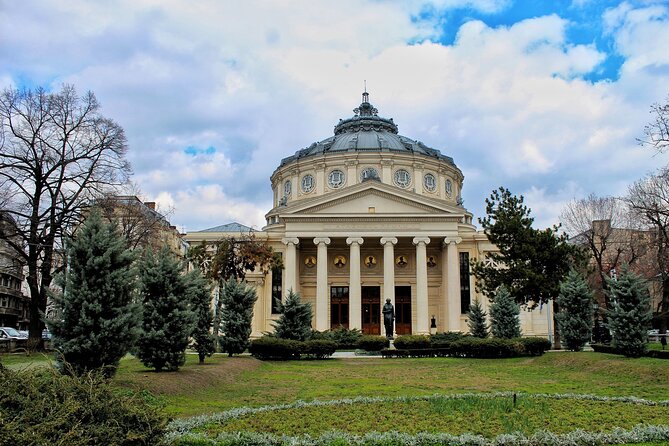
- Starting near the Romanian Athenaeum
- Iuliu Maniu and the politics of modern Romania
- Palatul Stirbei and the world of Valachia
- Cismigiu Park, school, and monastery remains
- The Holocaust Memorial and the Forgotten Holocaust
- Mihail Kogălniceanu and the written record
- Finishing with Roma craft at Mesteshukar ButiQ
- What the $127.37 price buys you
- Who will get the most from this experience
- Practical timing and cancellation advice
- Should you book the Roma history walk?
- FAQ
- Where does the tour begin?
- What time does the tour start?
- How long does the experience last?
- Where does the tour end?
- What language is the tour offered in?
- How much does the tour cost?
- Are admission tickets included?
- Is coffee or tea included?
- How many people can join the tour?
Key points to know before you book
- A difficult subject handled across eight central Bucharest stops: The walk links Roma slavery, political change, education, the Holocaust, and modern craft traditions.
- The Holocaust Memorial is the emotional center: You learn about the persecution of Roma during World War II and the often overlooked Holocaust in Romania.
- Guide Mihai receives especially strong praise: One five-star account credits him with making the Roman Gypsy story clear and bringing the city’s sites together.
- The final craft shop adds a present-day connection: Mesteshukar ButiQ sells handmade pieces created by Roma artisans, including jewelry.
- Every listed stop is free to enter: Your payment mainly covers the guide, the small group format, and the focused subject matter.
- Plan for a walking pace, not a seated lecture: You need moderate physical fitness, and coffee or tea during the short break costs extra.
Why this Bucharest walk matters
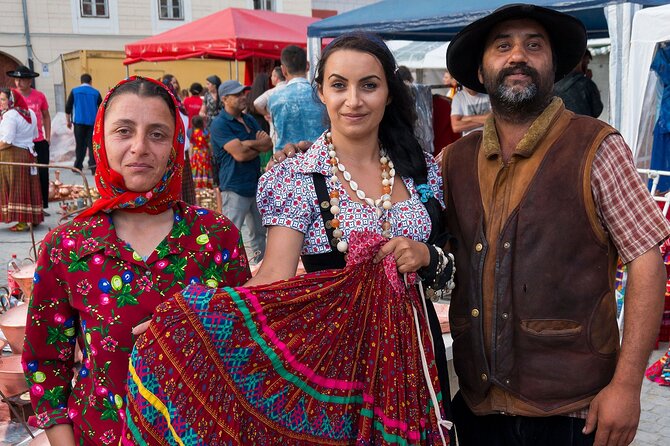
Bucharest can be easy to read as a city of grand buildings, broad avenues, and leafy parks. This experience asks you to read it differently. It uses familiar places to explain how Roma people were enslaved in the Romanian principalities, how public figures shaped attitudes and laws, and how persecution continued into the 20th century.
That approach gives the tour more purpose than a simple list of monuments. The Romanian Athenaeum is not included just for its elegant architecture. The statue of Iuliu Maniu is not only a political photo stop. Each place becomes part of a larger account of power, citizenship, education, memory, and survival.
I also appreciate that the walk does not end with wartime suffering. The final stop at Mesteshukar ButiQ turns attention toward skill, work, and cultural expression. That does not erase the difficult parts of the story, but it keeps Roma life from being presented only through oppression.
The subject is serious, so this is not the right choice if you want a light sightseeing stroll. You will spend time thinking about slavery and the destruction of Roma communities during World War II. For me, that seriousness is the reason to book it, but it is worth knowing before you arrive.
A few more trips worth weighing up before you book
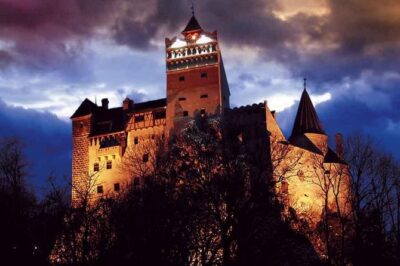
- Bucharest: Dracula’s Castle, Peles Castle, & Brasov Old Town
★ 4.5 · 17,858 reviews - Bucharest: Dracula Castle, Peles Castle & Brasov Old Town
★ 4.6 · 10,891 reviews - Bucharest: Dracula’s Castle, Peleș Castle & Brașov Day Trip
★ 4.5 · 5,919 reviews
Starting near the Romanian Athenaeum
The meeting point is Teatrul Ion Creangă, Sala Mare, at Strada Piața Amzei 13. The tour begins at 10:00 a.m., and the first stop is the Romanian Athenaeum, one of Bucharest’s major cultural landmarks.
The Athenaeum houses the National Romanian Philharmonic and is often called Romania’s House of Art. You get about 20 minutes here, with no admission fee. The value of this opening stop is the contrast between the building’s polished cultural image and the social history discussed around it.
You should not expect a concert or an interior visit as part of the experience. The information provided describes the Athenaeum as a location for learning about the story, not as a ticketed performance stop. Still, it gives the guide a strong place to set the scene and connect national identity with the treatment of Roma people.
The central location also makes the starting point practical. The tour is near public transportation, although you should leave enough time to find the theater entrance and arrive before the 10:00 start.
Iuliu Maniu and the politics of modern Romania
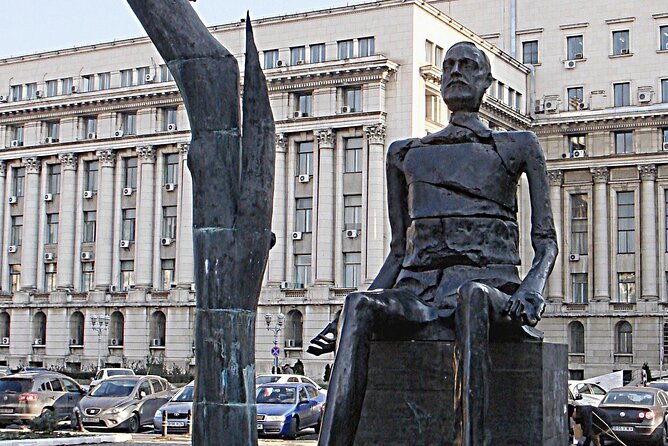
The next stop is the Iuliu Maniu statue, with roughly 20 minutes devoted to it. Maniu was an important figure in Romanian political life, and the tour places him within both the story of Roma people and the development of modern Romania.
This is where the experience moves beyond a narrow account of slavery. Political decisions and public attitudes do not happen in isolation. By using a major political figure as a reference point, the guide can explain how Roma history fits into the larger story of Romanian statehood.
A statue can be a quick photo stop on an ordinary city walk. Here, you are encouraged to pay attention to the person represented and the ideas attached to him. That makes the stop more useful than simply ticking off another monument.
Palatul Stirbei and the world of Valachia
At Palatul Stirbei, the tour turns to the 19th century. The building was the home of Barbu Stirbey, one of the rulers of Valachia, and the visit lasts about 20 minutes.
This stop gives the subject a direct connection to the people who held political and social power. It helps you place Roma slavery within the institutions and ruling structures of the period, instead of treating it as a disconnected footnote.
The information provided does not include an interior admission or a guided visit inside the palace. You should think of this as an exterior historical stop, with the guide explaining why the building and its former owner matter. That is still useful, but anyone hoping for palace rooms or a formal museum visit should adjust expectations.
A completely different kind of day out around Bucharest:
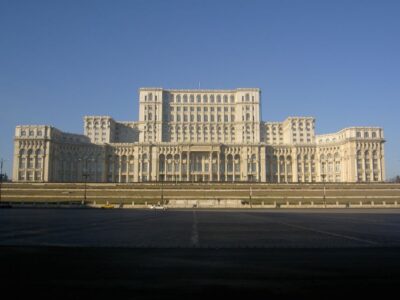
- Bucharest: Palace of Parliament Tickets and Guide
★ 4.3 · 3,182 reviews - Bucharest: Day Trip to Dracula Castle, Peles Castle & Brașov
★ 4.4 · 3,049 reviews - Bucharest to Dracula Castle, Peles Castle and Brasov Guided Tour
★ 4.5 · 2,933 reviews - Bucharest: Palace of Parliament Tickets and Guided Tour
★ 4.4 · 1,877 reviews
Cismigiu Park, school, and monastery remains
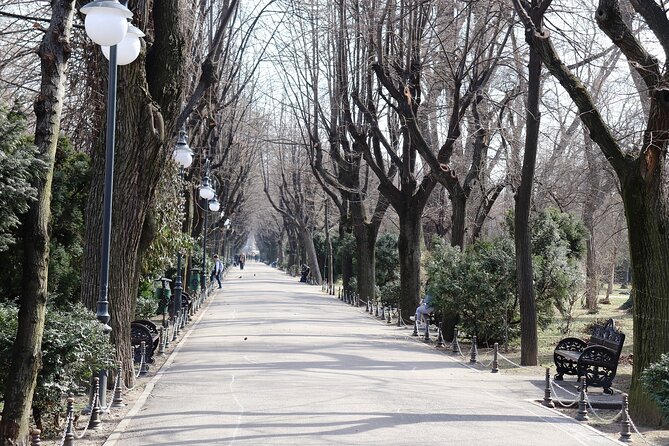
The walk continues into Cismigiu Park, described as Bucharest’s largest and most beautiful garden. You spend about 30 minutes here, with several stops along the route.
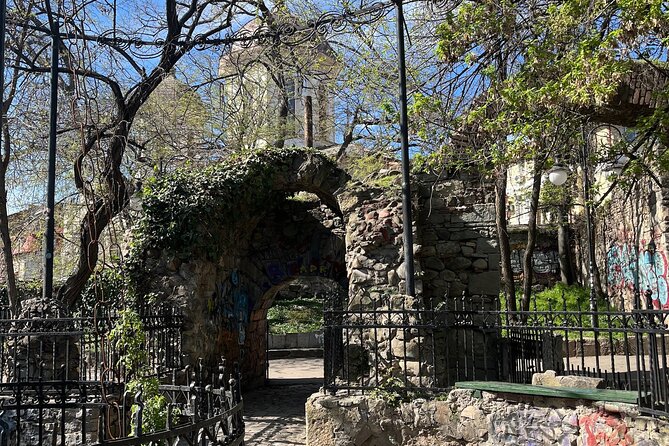
This is likely the most relaxed section of the walk. The park gives you room to move, breathe, and absorb the earlier discussion without standing beside a monument the entire time. The route includes a viewpoint over the park, the ruins of an old monastery, and several other points connected to the subject.
The park section also includes Gheorghe Lazăr National College, located at the entrance. The school receives its own 15-minute stop. Education is presented as a key to everything, and this well-regarded Bucharest high school gives the guide a concrete place to discuss that idea.
That connection is one of the tour’s more useful choices. A history of Roma people can easily focus so heavily on persecution that it leaves little room for progress, opportunity, or social change. A school provides a way to discuss education as a force that can shape a person’s future and a community’s place in society.
You should wear comfortable shoes. The tour information notes that the remaining time is spent walking between stops, so the pace is not limited to the official minutes listed at each landmark.
The Holocaust Memorial and the Forgotten Holocaust
The Holocaust Memorial receives about 15 minutes, but the subject deserves your full attention. Here you learn about the persecution of Roma people during World War II and what is described as the Forgotten Holocaust.
The memorial is presented as the most impressive monument built in memory of Holocaust victims in Romania. It is the emotional heart of the route. After the earlier stops on political power and 19th-century society, the memorial shows the terrible consequences of racial persecution in the modern era.
Fifteen minutes may sound brief for such a subject. The tour is only about three hours, though, and this stop works as one part of a wider story rather than a stand-alone memorial visit. You may want to spend extra time in the area later if you feel the need to reflect.
This section also gives the guide a chance to address why Roma suffering during World War II has received less public attention than other parts of Holocaust history. The title of the experience promises myths and truths, and this is where memory, omission, and public understanding become especially important.
Mihail Kogălniceanu and the written record
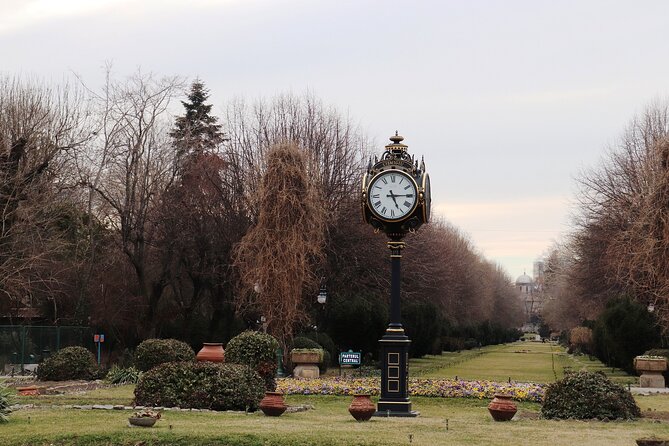
At Piața Mihail Kogălniceanu, you spend around 10 minutes learning about Mihail Kogălniceanu. He was a prominent politician and writer in Romanian history, and he is described as the first person to write about Romanian Gypsies.
The stop is short, but its purpose is clear. Written accounts help shape how a society understands a minority group. They can preserve information, but they can also reflect the attitudes and assumptions of the period in which they were produced.
This is another reason the walk feels more like a guided historical discussion than a standard city tour. The guide is not simply pointing out old buildings. You are being asked to consider who recorded Roma life, how Roma people were described, and how those descriptions affect the present.
Finishing with Roma craft at Mesteshukar ButiQ
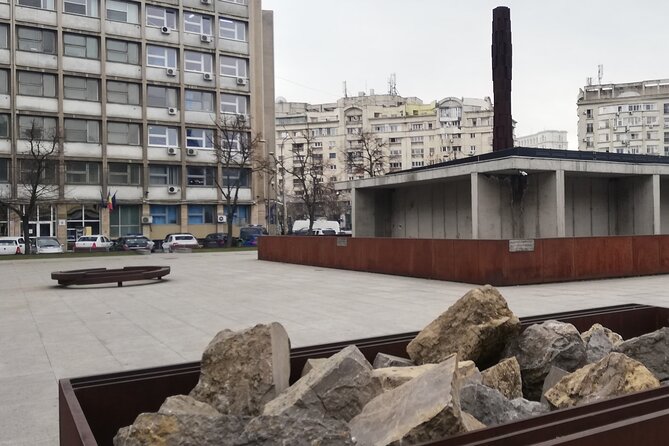
The final stop is Mesteshukar ButiQ, at Bulevardul Mihail Kogălniceanu 12. You spend about 20 minutes in this small shop, which sells authentic handmade pieces created by Roma craftspeople.
This is the most personal finish. After learning about slavery, politics, education, and wartime suffering, you meet Roma culture through objects made by Roma artisans. The shop provides a direct connection between tradition and current work, rather than leaving the subject in the past.
A five-star account singled out this ending as a highlight, particularly the handcrafted jewelry. I can see why. Buying or simply looking at handmade work gives you something tangible to remember, and it supports a setting where Roma talent and tradition are presented on their own terms.
The listed price does not include a shopping allowance. The shop visit is part of the tour, but any purchase is your responsibility. That separation is helpful because you can enjoy the stop without feeling that buying something is required.
The tour ends here, not back at the original meeting point. Plan your later arrangements from the Kogălniceanu address rather than assuming you will be returned to Piața Amzei.
What the $127.37 price buys you
At $127.37 per person, this is expensive for a three-hour walking experience with no paid entrance tickets. You are not paying for palace access, a concert, or a museum admission. The price rests mainly on the specialist subject, the English-speaking guide, the small group size, and the carefully connected route.
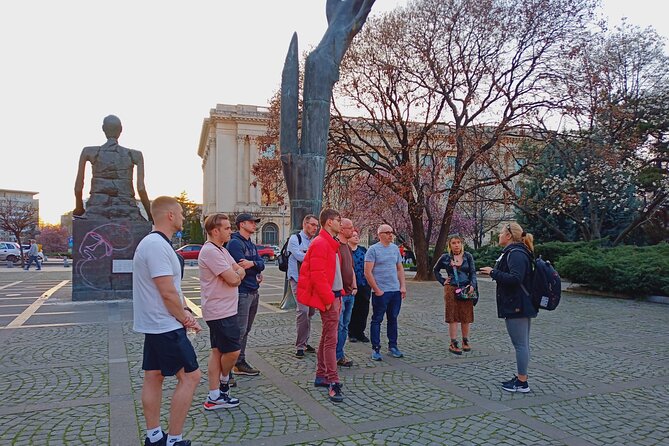
The maximum group size is 15 people. That matters more here than it would on a basic architecture walk. The topic can raise questions, and a smaller group gives you a better chance of hearing the guide clearly and asking something during the stops.
A cake snack is included. Coffee and tea are not, though there is a short stop on the way where you can buy them at your own expense. The snack is a pleasant touch, but it does not change the basic value calculation.
I would recommend comparing this experience with what you want from Bucharest. If you want a broad overview of the city, a cheaper general walking tour may cover more landmarks. If you want a focused account of Roma history with a guide who can connect political figures, memorials, and modern craft, the price becomes easier to justify.
The experience has a five-out-of-five rating from eight published assessments, and the strongest praise focuses on the information, the guide Mihai, and the craft-shop ending. That is a small sample, so I would not treat the rating as proof of perfection. It does show that the tour has made a strong impression on the people who chose this specific subject.
Who will get the most from this experience
I would choose this walk if you want:
- A serious account of Roma history in Romania
- An English-speaking guide rather than a self-guided reading
- A small group, with no more than 15 people
- A route through central Bucharest rather than a bus-based excursion
- A connection between past events and present-day Roma craftsmanship
- A thoughtful memorial visit during your time in the city
You should be comfortable walking for most of three hours and have moderate physical fitness. The tour is near public transportation, and service animals are allowed. No special access details are provided beyond that, so you should contact BucharestGuide if you need more specific assistance.
I would be cautious about booking it for young children unless they are ready for difficult material. The tour covers slavery and Holocaust persecution, and the information provided gives no age recommendation or child-focused format.
Practical timing and cancellation advice
The tour starts at 10:00 a.m. and lasts about three hours. Since the meeting point and ending point differ, do not schedule an appointment at the original theater immediately afterward. Give yourself time to walk between stops and find the final shop.
Confirmation is received when you book. Free cancellation is available if you cancel at least 24 hours before the local start time. Cancellations made less than 24 hours before the start are not refunded, and changes inside that period are not accepted.
That policy is fairly clear, but the deadline matters. If your Bucharest plans are uncertain, make your decision before the 24-hour cut-off.
Should you book the Roma history walk?
Book it if you want a focused, serious, and human account of Roma history rather than another quick pass through Bucharest’s famous buildings. The strongest parts are the connection between ordinary city landmarks and difficult historical questions, the small group size, Mihai’s praised guidance, and the final visit to Mesteshukar ButiQ.
Skip it if you mainly want interiors, paid attractions, or a cheap introduction to the city. The admission-free stops mean the $127.37 fee can feel high. But for you, the value may lie in the guide’s interpretation and the chance to understand a part of Romanian history that is often left out of standard sightseeing.
FAQ
Where does the tour begin?
It begins at Teatrul Ion Creangă, Sala Mare, at Strada Piața Amzei 13 in Bucharest.
What time does the tour start?
The start time is 10:00 a.m.
How long does the experience last?
The tour lasts approximately three hours.
Where does the tour end?
It ends at Mesteshukar ButiQ, located at Bulevardul Mihail Kogălniceanu 12 in Bucharest.
What language is the tour offered in?
The tour is offered in English and includes a professional English-speaking guide.
How much does the tour cost?
The listed price is $127.37 per person.
Are admission tickets included?
All listed stops have free admission. No paid entrance tickets are included because the stops do not require an admission fee.
Is coffee or tea included?
No. A cake snack is included, but coffee and tea during the short break are at your own expense.
How many people can join the tour?
The maximum group size is 15 people.
Just added around Bucharest
- 10 hours Private Apiary Tour in Romania – From Bucharest★ 5.0 · 3 reviews
- 4-Day Inside Transylvania & Transfagarasan Tour from Bucharest★ 5.0 · 3 reviews
- Bucharest: Charm of the Belle Époque Private Tour★ 5.0 · 3 reviews
- Bran & Peles Castles through the Best Road in the World: Transfagarasan road★ 4.5 · 3 reviews
- Private Wine Tasting at Bucharest’s First Wine Bar★ 5.0 · 3 reviews
- 2-Day Small-Group Tour in Transylvania from Bucharest – Maximum 5 Persons★ 5.0 · 3 reviews
- Bucharest to Brasov – Fast Private Transfer★ 5.0 · 3 reviews
- Probably the Best Restaurant and Wine Cellar near Bucharest★ 4.5 · 3 reviews
Bucharest Tours, compared.
Dracula’s Castle, Peles Castle, & Brasov Old Town
Read our review →
Dracula Castle, Peles Castle & Brasov Old Town
Read our review →
Dracula’s Castle, Peleș Castle & Brașov Day Trip
Read our review →
Day Trip to Dracula Castle, Peles Castle & Brașov
Read our review →
Bucharest to Dracula Castle, Peles Castle and Brasov Guided Tour
Read our review →