Reviewed · PRIVATE
Private: RedPatrol Bucharest Contrasts Tour in a Vintage Car
Bucharest tells its story in concrete. I like the way this private tour links royal Cotroceni, working-class Drumul Taberei, and troubled Ferentari in one clear route. I also like the restored Dacia 1300, which turns a standard city drive into a small piece of Romanian history. The main drawback is the car itself: it has no air-conditioning, ABS, GPS, power steering, or automatic transmission.
This is a strong choice if you want Bucharest beyond the usual center. You get hotel pickup, a local guide and driver, bottled water, a small tour gift, and a private outing for your own group. I would allow the full four hours, especially if you want time for photos and stories at the markets and former factory areas.
In This Review
- Key points to know before booking
- Why Bucharest makes sense from an old Dacia
- Uranus and Academia Română: demolition frozen in place
- From the first royal palace to Fântână
- Cotroceni’s gardens and belle époque Bucharest
- Drumul Taberei: working-class Bucharest in concrete
- Ferentari and Piața Rahova: the hardest contrast
- The old Rocar factory and the cost of collapse
- Broscuțe Park and the first Soviet-era housing
- The Palace of Parliament and a district erased
- What the three to four hours feel like
- Is the $126 price fair?
- Who will enjoy this tour most?
- Should you book RedPatrol’s Bucharest Contrasts Tour?
- FAQ
- Is hotel pickup included?
- How long does the tour last?
- Is the tour private?
- Can I drive the Dacia?
- Does the car have air-conditioning or automatic transmission?
- Are children and pets allowed?
Key points to know before booking
- A restored Dacia is part of the experience: You ride in a 1970s or 1980s Dacia 1300 or 1310, but you do not drive it.
- The route crosses sharply different districts: Royal neighborhoods, communist apartment blocks, abandoned industrial sites, and post-socialist Ferentari all appear in one circuit.
- Hotel pickup is included throughout Bucharest: You are collected and returned to your Bucharest address.
- The tour is private: Only your group takes part, giving you more room to ask questions and shape the conversation.
- The experience is best for history-minded adults: Red Patrol does not allow children under 10 or pets.
- The car has old-school limitations: It is restored and meets traffic safety rules, but you should expect a basic ride without modern comfort features.
Why Bucharest makes sense from an old Dacia
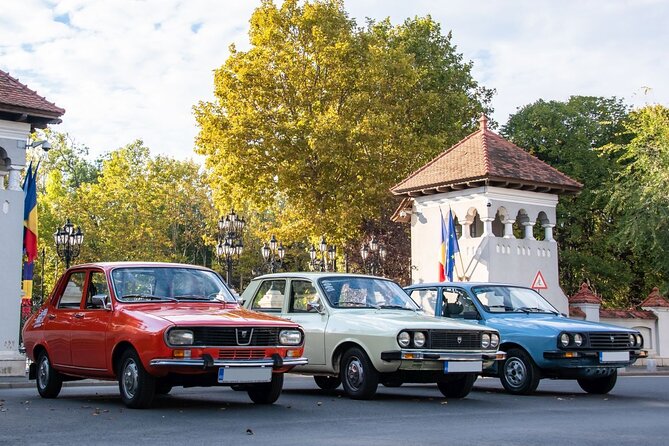
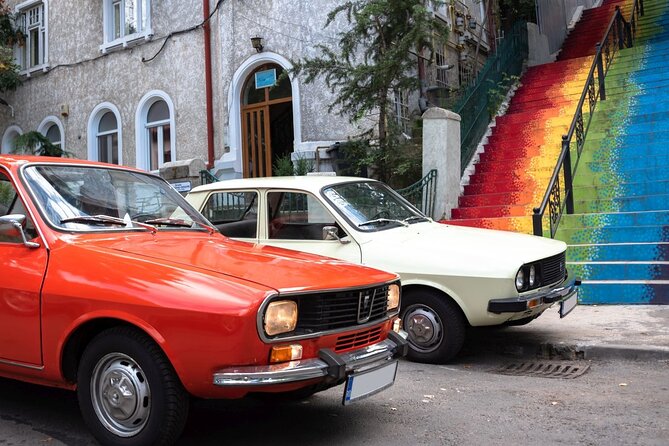
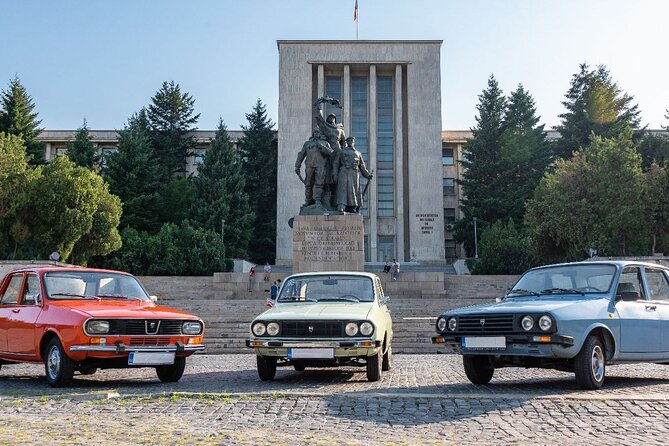
A Dacia 1300 is not just transportation here. The model belongs to the period covered by much of the tour, so the car gives the ride a physical link to Romania’s communist decades and the years after 1989.
The cars provided by Red Patrol are fully restored classics and meet current traffic safety regulations. Still, this is a classic car, not a luxury vehicle. You will not find air-conditioning, ABS, GPS navigation, power steering, or an automatic gearbox.
That matters most in warm weather and during traffic. If you like old cars, the tradeoff is part of the fun. If you want a quiet, smooth, modern ride, you may find the Dacia tiring over three or four hours.
The private format helps. Your guide is also your driver, and you can ask about a building, a neighborhood, or a change in the city without holding up a large group. The people who have taken the tour praised the friendly manner and storytelling of guides including Mihai, Ivan Crinu, and Crinu. Guide assignments can change, so those names are useful examples rather than a guarantee.
A few more trips worth weighing up before you book
- Bucharest: Dracula’s Castle, Peles Castle, & Brasov Old Town
★ 4.5 · 17,858 reviews - Bucharest: Dracula Castle, Peles Castle & Brasov Old Town
★ 4.6 · 10,891 reviews - Bucharest: Dracula’s Castle, Peleș Castle & Brașov Day Trip
★ 4.5 · 5,919 reviews
Uranus and Academia Română: demolition frozen in place
The first stop is around Academia Română in Uranus, an area shaped by Nicolae Ceaușescu’s massive redevelopment plans in the 1980s. The demolition of large parts of the district continued until the Romanian Revolution stopped the project.
This is a useful opening because it gives you the central question of the tour: what happens to a city when political power tries to erase its old form? You see the remains of a neighborhood that was not simply renovated. It was cut apart and remade according to an ideological plan.
The stop lasts about 20 minutes. Admission is not included, but the value here comes from the guide’s explanation and the view from the car and roadside stops, not from entering a formal museum.
One especially strong contrast connects this area with Bragadiru Palace. The palace was built by the capitalist Dumitru Bragadiru, while the nearby Academia Română building was tied to the communist era and Elena Ceaușescu. Their proximity helps show how different political and economic systems left their mark on the same city.
From the first royal palace to Fântână
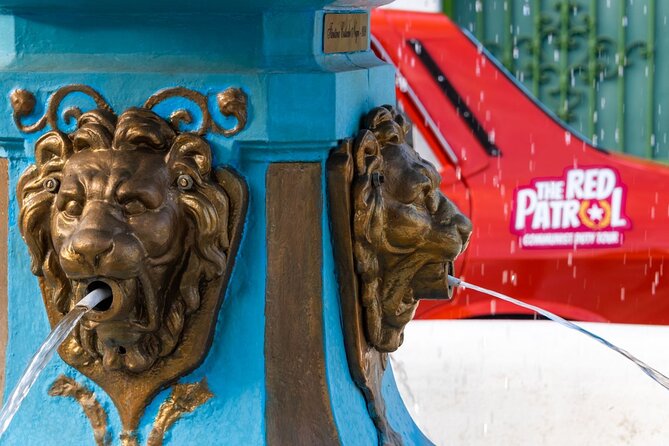
The Fântână stop introduces the bourgeois district that developed in the 19th century around Romania’s first Royal Palace. It is brief, about 15 minutes, and admission is free.
Do not expect a long palace visit here. This is a short presentation that sets up the social divide between old wealth, royal power, and the working districts you see later.
I like this change of pace early in the tour. Bucharest can seem visually confused if you only look at isolated buildings. The guide helps connect villas, royal institutions, and later apartment blocks into a larger story about who had power and where different classes lived.
Cotroceni’s gardens and belle époque Bucharest
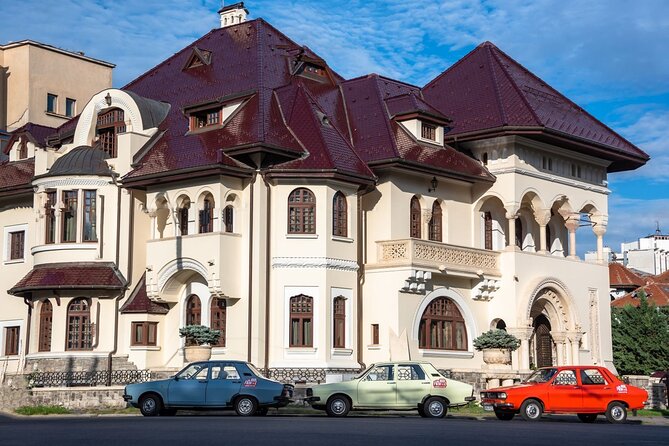
At Cotroceni Palace’s gardens, the tour turns to the Modern Monarchy Era and the belle époque city. The stop lasts around 30 minutes, though an admission ticket is not included.
The gardens provide a different kind of Bucharest from Uranus. Instead of demolition and unfinished planning, you get a setting linked with the royal period and the city’s early modern development.
The important point is comparison. You are not being shown a single polished version of the capital. The route places royal Bucharest next to communist Bucharest, then takes you toward districts that struggled after the socialist factories collapsed.
Because admission is not included, check what the visit involves when you book. The supplied details describe a presentation of the gardens and period rather than a guaranteed interior palace tour.
A completely different kind of day out around Bucharest:
- Bucharest: Palace of Parliament Tickets and Guide
★ 4.3 · 3,182 reviews - Bucharest: Day Trip to Dracula Castle, Peles Castle & Brașov
★ 4.4 · 3,049 reviews - Bucharest to Dracula Castle, Peles Castle and Brasov Guided Tour
★ 4.5 · 2,933 reviews - Bucharest: Palace of Parliament Tickets and Guided Tour
★ 4.4 · 1,877 reviews
Drumul Taberei: working-class Bucharest in concrete
Parcul Drumul Taberei introduces a large working-class district built around communist apartment blocks. The tour also explains how a shopping mall was later built on the ruins of a communist canteen.
This is the sort of detail that makes the stop useful. It shows not only what communism built, but also how post-communist Bucharest reused, replaced, or commercialized parts of that earlier city.
You get roughly 20 minutes for photos and stories. An admission ticket is not included, and the stop is mainly about seeing the neighborhood and hearing its background.
The apartment blocks may look plain, but they tell you how ordinary families were housed during the socialist period. Drumul Taberei also helps prevent an easy stereotype of communist Bucharest as one uniform place. It was a working district with daily routines, shops, transport, and community life, even when the buildings were repetitive.
Ferentari and Piața Rahova: the hardest contrast
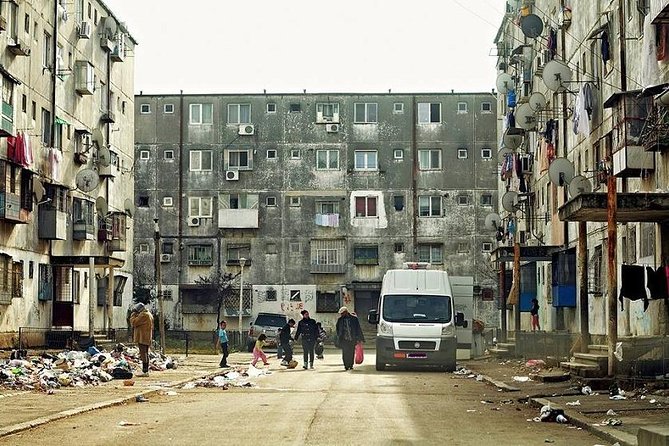
The tour then moves into Ferentari, a former industrial area built by the communist state in the 1970s. After the factories closed and the socialist system collapsed, the district changed from a workers’ area into one of Bucharest’s poorest neighborhoods.
This is the most sensitive section of the tour. Ferentari is not a theme park, and you should not approach it as a place for poverty photographs. The value is in understanding how factory closures, housing conditions, and the upheaval of the 1990s reshaped a real community.
Piața Rahova gives you about 30 minutes in the Ferentari blocks area and includes a visit to a peasant market. That market matters because it brings the tour back to ordinary life. You are not only looking at damaged buildings or discussing economic hardship. You also see a place where people buy food and carry on with daily business.
The guide’s role is especially important here. A good explanation can connect the physical condition of the district with Romania’s political and economic changes without reducing the area to a label.
You may find this part confronting. If you prefer monuments, churches, and central streets, it will feel rougher than a standard city tour. If you want a more honest look at how Bucharest changed after communism, it is one of the most important sections.
The old Rocar factory and the cost of collapse
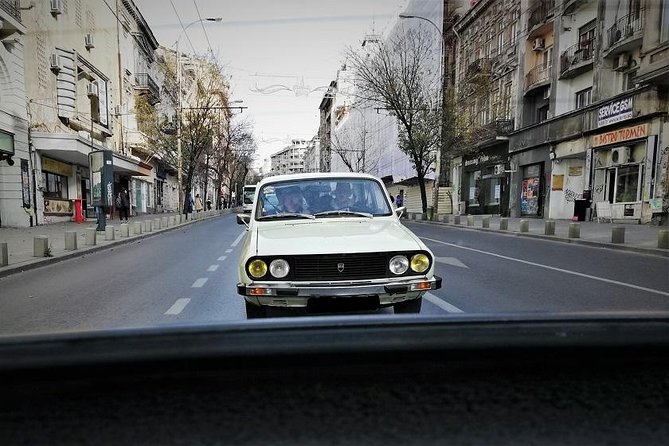
The former Rocar factory is an abandoned industrial area left behind after socialist factories collapsed. The stop lasts about 20 minutes, and admission is included.
Rocar gives the tour a clear before-and-after image. Under communism, industrial sites shaped employment and entire neighborhoods. Once those factories failed, the buildings and the social structure around them were left without their old purpose.
I find this stop valuable because it shifts the focus from political leaders to workers. A factory ruin can look empty, but the guide’s stories explain how the area once functioned and why its decline mattered.
The site is also a reminder that Romania’s economic growth did not erase every mark of the 20th century. New shops and roads may appear nearby, while old industrial buildings remain as physical reminders of a different economy.
Broscuțe Park and the first Soviet-era housing
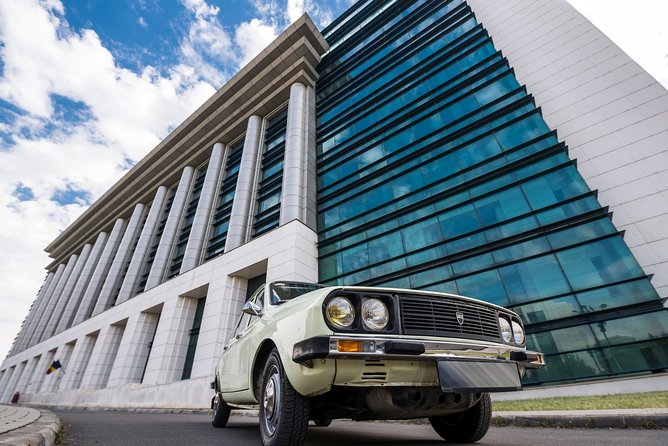
Broscuțe Park introduces the Colonel’s Quarter, described as Bucharest’s first neighborhood from the Soviet Occupation era. The presentation lasts about 20 minutes, and admission is included.
This stop adds an earlier communist layer to the story. Drumul Taberei represents a later working-class housing area, while Broscuțe Park takes you back to the Stalinist years and the first Soviet-influenced phase of postwar Bucharest.
The guide explains what daily life was like in those years. That human angle helps you read the architecture as more than blocks and streets. Housing design, neighborhood planning, and public space all reflected the political climate of the time.
For anyone trying to understand Romania’s 20th century, the sequence is well chosen. You move from monarchy to Stalinism, later socialism, industrial decline, and the uneven years after 1989.
The Palace of Parliament and a district erased
The final major stop is the Palace of Parliament, the enormous civil building created after a roughly 20-square-kilometer area was completely demolished and rebuilt.
The tour gives you about 20 minutes to hear the story of the building and the neighborhood around it. An admission ticket is not included, so this experience focuses on the exterior setting and the history of the cleared district rather than promising entry.
The scale is difficult to grasp from photographs. What matters here is not only the size of the Palace, but also what had to disappear to make it possible. Homes, churches, streets, and established communities were removed as part of Ceaușescu’s plan.
Placed at the end, the Palace of Parliament gathers together the ideas raised throughout the tour: power, demolition, forced modernization, and the long afterlife of political decisions. You finish with a better sense of why Bucharest can feel like several cities placed on top of one another.
What the three to four hours feel like
The tour is listed at three to four hours, and I would plan around the longer figure. There are several stops, photo pauses, neighborhood presentations, and time spent driving between very different parts of Bucharest.
Hotel pickup and drop-off from any Bucharest address make the timing easier. You do not have to find a meeting point or work out public transport to distant districts. Water is provided in the car, and the vehicle is heated during winter.
The private setup is a major advantage. You can ask for more detail at Uranus, spend longer at a market, or keep moving if the old-car ride becomes uncomfortable. The details do not promise unlimited customization, but a private group generally gives the guide more room to respond to your interests.
The tour is offered in English. Confirmation arrives when you book, and most people can participate, but Red Patrol does not allow children under 10 or pets.
Is the $126 price fair?
At $126.43 per person, this is not a bargain bus ride. The value depends heavily on your group size and your interest in the subject.
For a private group, the price includes a restored classic car, hotel pickup and return, a local guide who drives, water, a personalized gift, and a full half-day route across parts of Bucharest that are difficult to connect on foot. You are paying for interpretation and transport, not simply a series of photo stops.
The price makes more sense for couples or small groups who would otherwise need several taxis or a private vehicle. Group discounts are offered, which may improve the value if you are booking with friends.
I would not choose it solely for the Dacia. The car is memorable, but the real product is the explanation of how royal, communist, and post-socialist Bucharest fit together. If that subject interests you, the price is easier to justify.
Free cancellation is available if you cancel at least 24 hours before the start time. Changes or cancellations inside that window are not accepted for a refund.
Who will enjoy this tour most?
I would recommend it to you if you like urban history, political change, old cars, and places that do not appear on a standard Bucharest sightseeing route.
It also suits anyone who wants a clear introduction to the city before exploring alone. The route gives you useful bearings across several districts and explains why they look so different.
You may want another kind of tour if your priority is entering major attractions, seeing art collections, or spending a relaxed afternoon in a modern vehicle. Several stops do not include admission, and the emphasis is on neighborhoods, stories, and views from the car.
The Ferentari section also requires a respectful attitude. You are visiting a lived-in district with serious social problems, not a set built for entertainment. I would listen carefully, avoid treating hardship as a spectacle, and let the guide set the tone.
Should you book RedPatrol’s Bucharest Contrasts Tour?
I would book this tour if you want to understand why Bucharest looks so uneven and layered. The strongest features are the private format, the restored Dacia, the English-speaking guide, and the route from royal neighborhoods through communist housing and industrial ruins to Ferentari.
You should book with realistic expectations. The Dacia lacks modern comforts, palace admission is not generally included, and the tour deals with difficult parts of the city as well as attractive ones.
For a first visit, this is an unusually useful half-day choice. It gives you context that a central walking route cannot, and it does so with enough humor, local stories, and old-car character to keep the history from feeling like a lecture.
FAQ
Is hotel pickup included?
Yes. Pickup and drop-off are included from all addresses in Bucharest.
How long does the tour last?
The tour lasts approximately three to four hours.
Is the tour private?
Yes. Only your group participates in the activity.
Can I drive the Dacia?
No. You ride in the Dacia, but you do not drive it. The guide is also the driver.
Does the car have air-conditioning or automatic transmission?
No. The Dacia 1300 or 1310 does not have air-conditioning, ABS, GPS navigation, power steering, or automatic transmission. The cars are restored classics that meet traffic safety regulations and are heated during winter.
Are children and pets allowed?
Pets and children under 10 years old are not allowed. Most other participants can take part.
Just added around Bucharest
- 10 hours Private Apiary Tour in Romania – From Bucharest★ 5.0 · 3 reviews
- 4-Day Inside Transylvania & Transfagarasan Tour from Bucharest★ 5.0 · 3 reviews
- Bucharest: Charm of the Belle Époque Private Tour★ 5.0 · 3 reviews
- Bran & Peles Castles through the Best Road in the World: Transfagarasan road★ 4.5 · 3 reviews
- Private Wine Tasting at Bucharest’s First Wine Bar★ 5.0 · 3 reviews
- 2-Day Small-Group Tour in Transylvania from Bucharest – Maximum 5 Persons★ 5.0 · 3 reviews
- Probably the Best Restaurant and Wine Cellar near Bucharest★ 4.5 · 3 reviews
- Bucharest to Brasov – Fast Private Transfer★ 5.0 · 3 reviews
Private, compared.
Castles of Transylvania: Private Day Trip from Bucharest
Read our review →
Dracula’s Castle, Peles Castle and Brasov – Private Day Trip from Bucharest
Read our review →
Bucharest Panoramic Sightseeing – Private City Tour
Read our review →
THERME “Take It Easy” Pack: Full Spa Access + Private Transfers
Read our review →
Piatra Craiului National Park Private Hiking Tour from Brasov
Read our review →
4h Bucharest Private Tour (2h by Car and 2h Walking in Old Town)
Read our review →