Reviewed · BUCHAREST TOURS
Hidden charms of Mahallopolis
Bucharest keeps its best stories off the main square. Mahallopolis takes you from the Old Town by subway to Bellu Cemetery, then through local parks, railway history, former secret-police territory, and an old neighborhood most visitors miss. I like the unusual route and the way it connects serious history with everyday Bucharest life.
I also like that the tour includes a covrig or cheese pie, local bites, coffee or tea, water, and a 400-milliliter beer. Guide Mircea receives special praise for his humor, passion, and ability to surprise even people born and raised in Bucharest. The main consideration is physical effort: this is a walking tour over hills, stairs, and uneven city streets, and one outing lasted closer to five hours than four.
In This Review
- Key points at a glance
- Why Mahallopolis feels different from a normal Bucharest tour
- Bellu Cemetery: Bucharest’s open-air museum
- A local park and Bucharest’s quieter side
- Railway history inside Romania’s oldest station
- The former KGB headquarters and Bucharest’s complicated past
- An old factory becomes a cultural hub
- Secret stairs, high ground, and panoramic views
- The final mahalla and the meaning of the route
- Price, group size, and what you receive
- Who will enjoy Mahallopolis most
- Should you book it?
- FAQ
- Where does Mahallopolis begin?
- What time does the tour start?
- Where does the tour end?
- How long does the tour last?
- How many people can join the tour?
- Is food and drink included?
- Is the subway fare included?
- Is the tour physically demanding?
- What happens if the weather is poor?
Key points at a glance
- Bellu Cemetery becomes an open-air museum: Explore Bucharest’s oldest, largest, and most beautiful cemetery, with stories that bring its monuments and residents to life.
- The route leaves the Old Town behind: A one-way subway ride takes you into neighborhoods rarely covered on standard city tours.
- You climb Bucharest’s highest ground: Rolling hills, secret stairs, and panoramic viewpoints give you a different view of the capital.
- Former industrial space gets a new purpose: Stop at an old factory turned cultural hub for drinks, food, and unusual souvenirs.
- The group stays small: The maximum is 10 people, which suits a conversational tour with room for questions.
- The ending reveals an old mahalla: A secret passage leads into a traditional neighborhood, tying the tour to the city’s Ottoman and Balkan past.
Why Mahallopolis feels different from a normal Bucharest tour
Bucharest’s Old Town is useful for a first walk. You can see grand facades, churches, restaurants, and the busy core of the city in a compact area. But it can also give you a narrow picture of Bucharest, one built around nightlife and central landmarks.
Mahallopolis takes a more curious route. You begin at Piața Sfântul Anton, close to the Old Town, at 11:00 in the morning. From there, the group uses the subway to leave the central district. The return is on foot, ending at Piața Unirii.
That structure matters. You are not simply walking a loop around famous buildings. You are using public transport as locals do, then following a path through places connected by memory, work, religion, politics, and neighborhood life.
I especially like the contrast between the stops. A cemetery leads to a local park. A railway station leads to a former KGB headquarters. An old factory becomes a cultural meeting point. The final mahalla gives the route a human scale after the heavier historical material.
A few more trips worth weighing up before you book
- Bucharest: Dracula’s Castle, Peles Castle, & Brasov Old Town
★ 4.5 · 17,858 reviews - Bucharest: Dracula Castle, Peles Castle & Brasov Old Town
★ 4.6 · 10,891 reviews - Bucharest: Dracula’s Castle, Peleș Castle & Brașov Day Trip
★ 4.5 · 5,919 reviews
Bellu Cemetery: Bucharest’s open-air museum
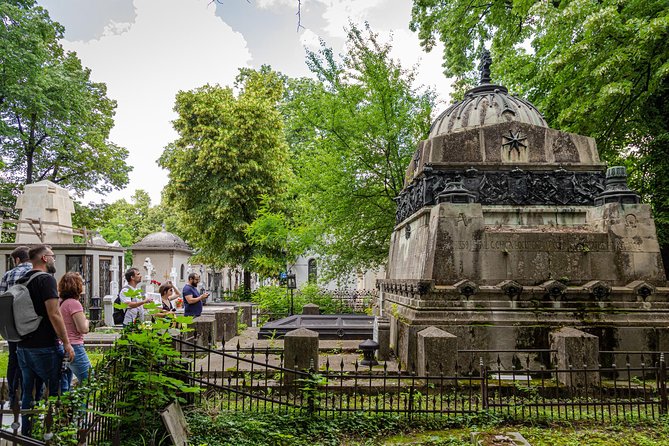
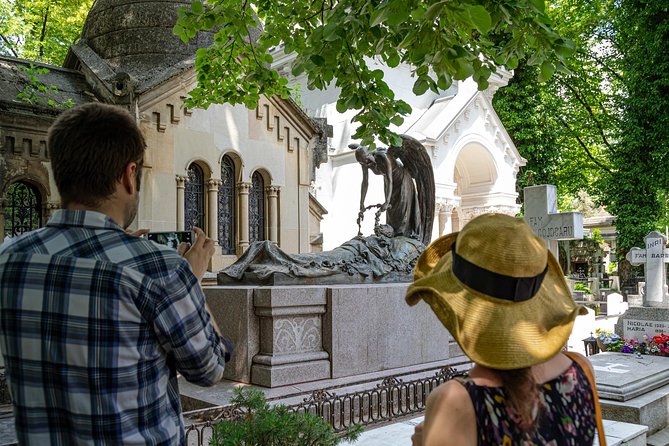
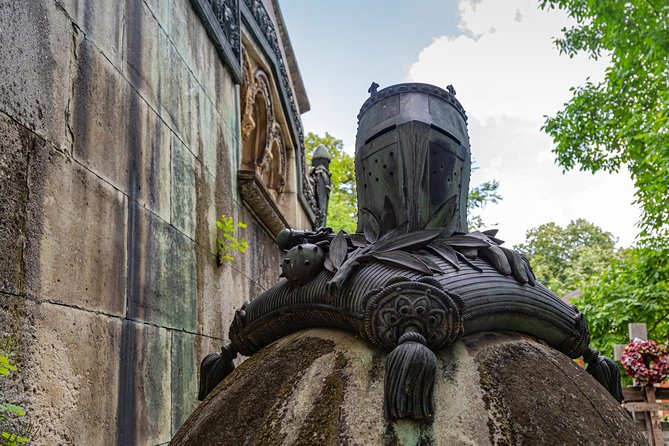
The strongest part of the experience is the visit to Bellu Cemetery, also called Bellu Cemetery Museum in the tour description. It is presented as the oldest, largest, and most beautiful cemetery in Eastern Europe, and the comparison to Paris’s Père Lachaise helps explain the idea: this is not only a burial ground, but also a place of sculpture, architecture, memory, and local stories.
A cemetery can be a difficult stop on a sightseeing tour if it is treated as a list of names. Here, the value comes from having a guide explain the people, monuments, and unusual stories connected with the site. Mircea’s style appears to suit this setting well. He uses humor and passion without turning the subject into a dry lecture.
I would allow yourself time to look closely. The appeal is not only the famous figures or grand memorials. It is also the atmosphere, the shifting styles of the tombs, and the way the cemetery reflects Bucharest’s changing society.
This stop works especially well for anyone interested in architecture, Romanian culture, or the personal side of history. It also suits repeat visitors and Bucharest residents. Several people who already knew the city said the guide showed them details they had overlooked for years.
The drawback is simple: this will not suit everyone. If you prefer lively squares, royal interiors, or quick photo stops, a cemetery tour may feel slow or solemn. If you enjoy stories with a little mystery and reflection, it may become the highlight.
A local park and Bucharest’s quieter side
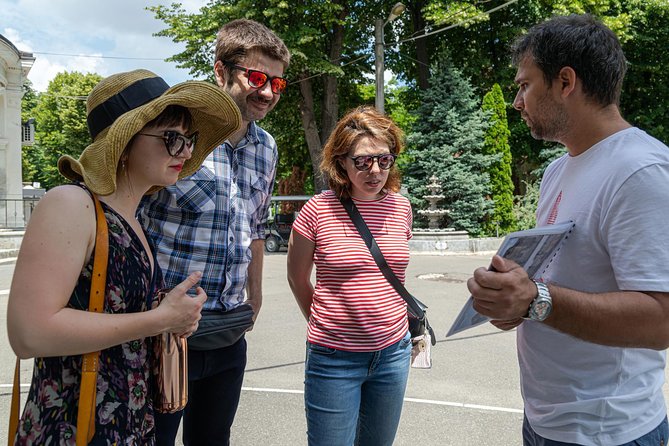
After the cemetery, the route turns toward a lively park that is little known to international visitors but well loved by locals. The exact park name is not provided, so you should think of this as a neighborhood stop rather than a headline attraction.
That is part of the charm. The park gives you a break from monuments and historical facts. It also lets you see how Bucharest residents use public space, with time to cool off, talk, and enjoy a snack or drink.
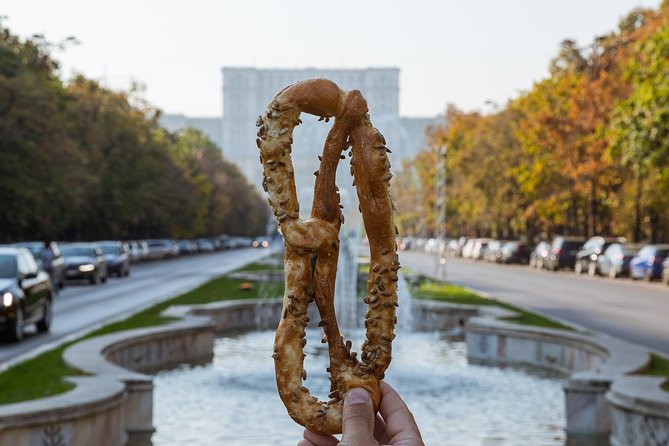
The food included here is modest but useful. You receive one street snack, either a covrig or cheese pie, along with traditional local bites. Coffee or tea, bottled water, and one 400-milliliter beer are also included.
A covrig is a Romanian pretzel-style snack, usually simple and filling. A cheese pie offers a different taste of local comfort food. These are not substitutes for a full meal, but they make the four-hour outing easier and help the experience feel less like a formal lecture.
The break also gives the guide a chance to talk with the group. Past comments describe the pace as well balanced, with humor and a relaxed afternoon feel. That combination matters in Bucharest, where a tour can become tiring if it strings together too many facts without a pause.
Railway history inside Romania’s oldest station
The route then moves inside the oldest train station in Romania. The station’s name is not specified in the available details, but the stop adds a useful piece of national history to the walk.
Rail stations tell you much about a city. They connect Bucharest to the rest of Romania, reflect industrial growth, and bring together workers, commuters, and visitors. This stop also breaks up the cemetery and park sections with a working piece of urban infrastructure.
Do not expect a long museum visit unless the guide’s live route adds more detail. The available description gives the station as one part of a moving tour, not as a separate extended attraction. Its value comes from the story of the building and its place in Bucharest’s development.
I like this kind of stop because it helps you read the city beyond decorative facades. A station can look ordinary if you do not know what you are seeing. With context, its age and purpose become part of the city’s larger story.
A completely different kind of day out around Bucharest:
- Bucharest: Palace of Parliament Tickets and Guide
★ 4.3 · 3,182 reviews - Bucharest: Day Trip to Dracula Castle, Peles Castle & Brașov
★ 4.4 · 3,049 reviews - Bucharest to Dracula Castle, Peles Castle and Brasov Guided Tour
★ 4.5 · 2,933 reviews - Bucharest: Palace of Parliament Tickets and Guided Tour
★ 4.4 · 1,877 reviews
The former KGB headquarters and Bucharest’s complicated past
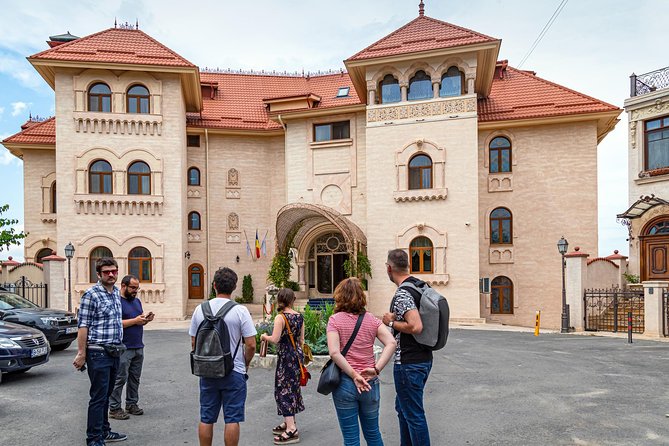
Close to the station, the group checks out the former KGB headquarters. The stop is brief in description but important in mood. It points to the political forces that shaped Romania during the twentieth century and adds a darker note to the route.
The experience does not appear to be a dedicated communist-era history tour. Instead, the building works as one piece of a broader story about Bucharest and its people. That approach may be ideal if you want political context without spending an entire afternoon inside a museum.
I would listen carefully here and ask questions. The value of a site like this depends heavily on explanation. A plain building can mean little without the story behind it, and the tour’s local perspective is what turns the address into a meaningful stop.
This is also where Mahallopolis gains some of its emotional range. You move from artistic memorials to public recreation, then into railway and political history. Bucharest is often a city of contradictions, and this route does not smooth those contradictions away.
An old factory becomes a cultural hub
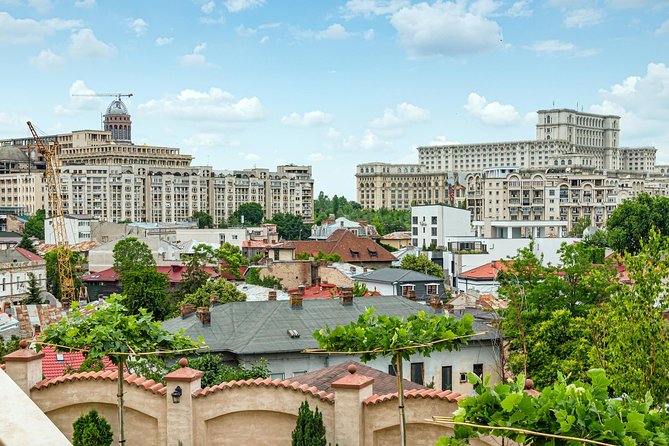
One of the most appealing stops is an old factory that now operates as a cultural and alternative hub. It offers a place to rest, have refreshments, and look for quirky souvenirs.
The change in use is the point. Rather than presenting Bucharest only through old monuments, the tour shows how an industrial building can take on a new social role. You get a sense of the city’s creative side without needing to seek out a separate art district.
The stop is practical, too. By this stage, a drink and a seat are welcome, especially if the walk runs longer than the advertised four hours. The included beer, coffee or tea, and water are helpful, while additional food and drinks are available at your own expense.
The souvenir angle is deliberately informal. You may find unusual items rather than standard city merchandise, but the details are not guaranteed. If you are hoping to shop, bring some extra money and treat the stop as an opportunity rather than a promise of a particular product.
Secret stairs, high ground, and panoramic views
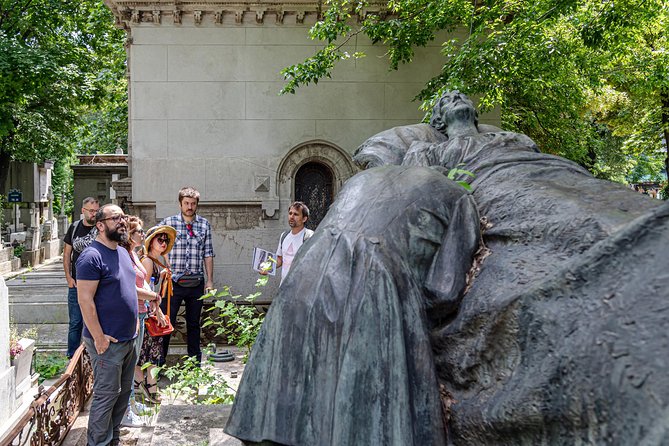
The route includes Bucharest’s highest altitude, rolling hills, secret stairs, and viewpoints suitable for photographs. This is a different physical experience from walking the flat central streets.
The views are one of the tour’s more visual rewards. You may find broad views across parts of the city, along with stairways and slopes that reveal how Bucharest’s neighborhoods change from one block to the next.
The wording about secret stairs should not lead you to expect a formal attraction with signs and railings. This is an urban walking route, and the details may depend on the exact path used that day. Wear comfortable shoes and avoid bringing luggage.
A moderate level of fitness is required. The group walks, uses the subway, climbs stairs, and returns on foot. Service animals are allowed, and the route is near public transportation, but the available information does not promise step-free access or suitability for people who struggle with hills and uneven ground.
The final mahalla and the meaning of the route
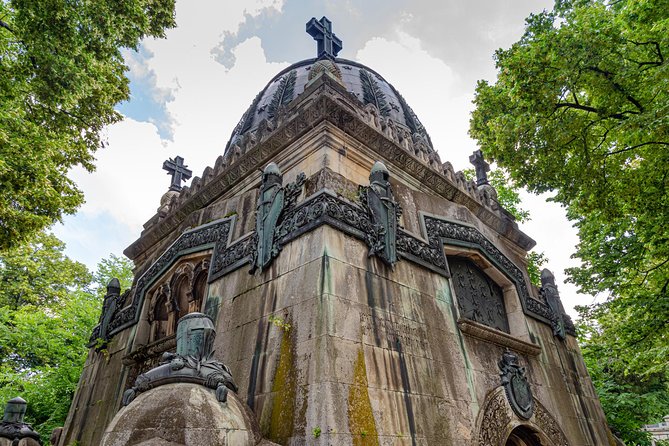
The tour ends by showing you a secret passage into an old mahalla. The word refers to a neighborhood, with oriental roots, and the stop brings the experience back to ordinary community life.
After cemeteries, political buildings, viewpoints, and an adapted factory, the mahalla feels like a fitting ending. It is not just another photo stop. It shows how a city can preserve old patterns of local life even as the surrounding capital changes.
The route’s title, Mahallopolis, makes more sense here. The focus is not on one single sight. It is on the layers that make a city readable: where people are buried, where they gather, how they travel, who controlled the country, how old factories find new uses, and how neighborhoods keep their identity.
You should not expect a polished performance with every minute fixed. The best parts seem to come from conversation and the guide’s personal connection to Bucharest. Mircea is the main guide named in the available information, while Tudi and Alina are also associated with the experience. Mircea receives the most specific praise for his storytelling, warmth, and humor.
Price, group size, and what you receive
At $137.57 per person, this is not a cheap walking tour. The price makes more sense if you value a small group, a local guide, public transport, several unusual stops, and included refreshments.
The maximum group size is 10 people. That is a real advantage for a route involving a cemetery, narrow stairs, neighborhood passages, and informal conversation. A smaller group also gives you a better chance to ask about Romanian history, local customs, and places you pass along the way.
The included items cover the basics:
- One-way subway fare from the Old Town
- One covrig or cheese pie
- Traditional local bites
- One 400-milliliter beer
- Coffee or tea
- Bottled water
You walk back toward Piața Unirii, so the return subway fare is not included because you do not use one. Extra food, drinks, souvenirs, and personal purchases cost more.
For comparison, a standard central sightseeing walk may cost less, but it is unlikely to include this range of places or the food and drink. I would book Mahallopolis for its access and interpretation, not because it is the most economical way to spend four hours.
Who will enjoy Mahallopolis most
I would choose this tour if you have already seen the Old Town or want something beyond the usual Bucharest checklist. It is particularly good for people who like urban stories, cemeteries, architecture, political history, street food, and local neighborhoods.
It also has unusual appeal for Bucharest residents. The experience has changed the way long-time locals look at familiar places, especially Bellu Cemetery and older districts. That is a strong sign that the route offers more than basic orientation.
You should think twice if you want a relaxed ride with very little walking. The tour requires moderate fitness, includes hills and stairs, and may run longer than four hours. Poor weather can also cause cancellation, with a different date or full refund offered in that case.
The free-cancellation rule is straightforward: cancel at least 24 hours before the 11:00 start for a full refund. Changes or cancellations inside that window are not accepted, and the tour also depends on a minimum number of participants.
Should you book it?
Book Mahallopolis if you want Bucharest presented as a lived-in city rather than a collection of postcard sights. The cemetery, old station, former KGB headquarters, cultural hub, and mahalla create a strong sequence, and the included snacks and beer keep the pace human.
I would not make it your only Bucharest experience if you have never seen the central landmarks. Start with the Old Town and major sights, then use Mahallopolis to understand the city’s quieter layers.
For repeat visitors, curious locals, and anyone who enjoys a good story told with humor, this is a strong choice. The price is high for a four-hour walk, but the small group, unusual route, local food, and guide-led context give it a clear purpose.
FAQ
Where does Mahallopolis begin?
The tour begins at Piața Sfântul Anton in Bucharest.
What time does the tour start?
The start time is 11:00 am.
Where does the tour end?
The experience ends at Piața Unirii in Bucharest.
How long does the tour last?
The stated duration is approximately four hours, though one described outing lasted about five hours.
How many people can join the tour?
The maximum group size is 10 people.
Is food and drink included?
Yes. You receive one covrig or cheese pie, local traditional bites, one 400-milliliter beer, coffee or tea, and bottled water.
Is the subway fare included?
One-way subway fare from the Old Town is included. The route returns to the Old Town area on foot, ending at Piața Unirii.
Is the tour physically demanding?
You should have a moderate level of physical fitness. The route includes walking, rolling hills, and secret stairs.
What happens if the weather is poor?
The experience requires good weather. If it is canceled because of poor weather, you will be offered another date or a full refund.
Just added around Bucharest
- 10 hours Private Apiary Tour in Romania – From Bucharest★ 5.0 · 3 reviews
- 4-Day Inside Transylvania & Transfagarasan Tour from Bucharest★ 5.0 · 3 reviews
- Bucharest: Charm of the Belle Époque Private Tour★ 5.0 · 3 reviews
- Bran & Peles Castles through the Best Road in the World: Transfagarasan road★ 4.5 · 3 reviews
- 2-Day Small-Group Tour in Transylvania from Bucharest – Maximum 5 Persons★ 5.0 · 3 reviews
- Private Wine Tasting at Bucharest’s First Wine Bar★ 5.0 · 3 reviews
- Bucharest to Brasov – Fast Private Transfer★ 5.0 · 3 reviews
- Probably the Best Restaurant and Wine Cellar near Bucharest★ 4.5 · 3 reviews
Bucharest Tours, compared.
Dracula’s Castle, Peles Castle, & Brasov Old Town
Read our review →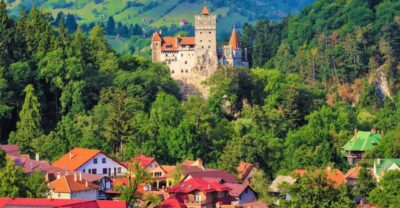
Dracula Castle, Peles Castle & Brasov Old Town
Read our review →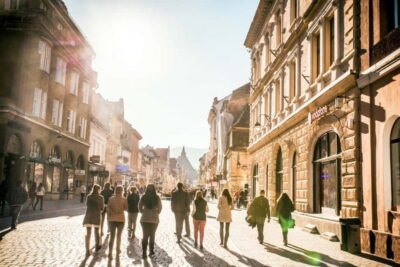
Dracula’s Castle, Peleș Castle & Brașov Day Trip
Read our review →
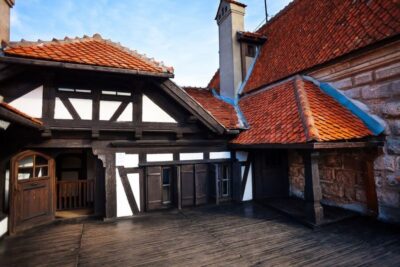
Day Trip to Dracula Castle, Peles Castle & Brașov
Read our review →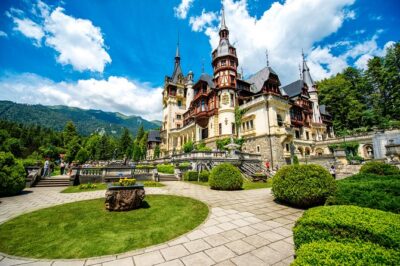
Bucharest to Dracula Castle, Peles Castle and Brasov Guided Tour
Read our review →