
Reviewed · CASTLE TOURS
From Sibiu: day trip to Dacian Fortress, Hunyadi Castle and Alba Iulia Citadel
Ancient stones, royal towers, and one long day. This private excursion from Sibiu links three major Transylvanian sights, from the Dacian world before Roman rule to the grand Hunyadi Castle and Alba Iulia’s layered citadel. It is an appealing way to see far more than you could manage easily by public transport.
I like the private vehicle and hotel pickup, which make a demanding route much easier. I also like having a personal guide for the history, especially since the tour covers Dacian origins, medieval power, Roman remains, and modern Romanian identity in one day. The main drawback is the pace: three important places in a single day means a long road day with limited time at each stop.
In This Review
- Key points to know before booking
- Why this Sibiu day trip is worth considering
- Leaving Sibiu at 8:00 am
- The Dacian Fortress and the world before Rome
- Hunyadi Castle, medieval power in stone
- Alba Iulia Citadel and several centuries of history
- The guide can make or break the day
- Is $191 a good value?
- Who should book this private route?
- Final verdict: book it for breadth and ease
- FAQ
- What time does the tour begin?
- Is hotel pickup and drop-off included?
- Is this a private tour?
- How many people are required to book?
- What transportation is provided?
- Are food and drinks included?
- How physically demanding is the tour?
- Can I cancel for a full refund?
Key points to know before booking
- Three major sights in one day: Visit a Dacian archaeological site, Hunyadi Castle, and Alba Iulia Citadel from Sibiu.
- Private touring: Only your group participates, so you can ask questions and avoid the fixed rhythm of a large coach tour.
- 8:00 am start: An early departure gives you the best chance of fitting all three stops into the day.
- History-focused guiding: The tour includes a driver-guide, local guide, and professional guide services.
- Moderate physical fitness needed: Expect walking around archaeological ruins, castle grounds, and fortified areas.
- $191 per person: The price reflects private transport and guiding, but you should confirm whether admission tickets are extra.
Why this Sibiu day trip is worth considering
Sibiu is an excellent base for exploring central Romania, but some of the most important historic sites lie well beyond the city. This tour solves that problem in one stroke. You get door-to-door transport, an air-conditioned minivan, and a guide who can explain what you are seeing instead of leaving you to puzzle over ruins and royal portraits.
I especially like the way the route joins three different chapters of Romanian history. The Dacian site looks back to the period before Roman conquest. Hunyadi Castle brings you into the medieval world of noble families, military defense, and dynastic ambition. Alba Iulia then widens the story to include Roman, medieval, Habsburg-era, and modern Romanian landmarks.
That range gives the day real purpose. You are not simply collecting three photo stops. You are following the changing political and cultural life of Transylvania across centuries.
The private format matters here. A group tour may be cheaper, but it usually gives you less control and fewer chances to ask about the details that catch your interest. With your own guide, you can ask about Dacian beliefs, John Hunyadi, the castle’s legends, or the meaning of Alba Iulia’s churches without waiting for a whole busload of people.
The cost is $191 per person, with at least two people required to book. For two people, that means $382 before any items not included in the package. That is not a budget day out, but it is reasonable for a full-day private trip with a chauffeur-driven vehicle, hotel pickup and drop-off, fuel surcharge, and guiding.
The value depends on your priorities. If you want the freedom and ease of private touring, the price may feel fair. If you mainly want transportation and are happy to explore independently, it may feel high.
More Alba Iulia citadel visits:
- Sibiu: Alba Iulia and Corvin Castle Guided Tour
★ 4.7 · 66 reviews - Exclusive Tour: Corvin Castle, Alba Iulia and traditional villages from Sibiu
★ 5.0 · 33 reviews - Tour to Corvin Castle in Hunedoara & Alba Iulia
★ 4.5 · 9 reviews
Leaving Sibiu at 8:00 am
The day begins at 8:00 am, with pickup from your hotel accommodation. That front-door service is a real help because the route includes several distant sights and the day is already tightly packed.
You travel in an air-conditioned private vehicle, described as a minivan, with a driver-guide. The trip is not designed for a large group, and only your party takes part. That gives the day a quieter feel and lets you spend your travel time listening to explanations or asking questions.
I would treat the early departure as essential rather than optional. Three stops require a full day, and arriving late would put pressure on the final visit. Bring water and plan to buy lunch along the way, since food and drinks are not included.
The tour calls for a moderate level of physical fitness. That does not necessarily mean strenuous hiking, but you should be comfortable walking around outdoor ruins, castle spaces, and a large fortified complex. Good walking shoes will serve you better than anything delicate or formal.
The Dacian Fortress and the world before Rome
The first major visit focuses on the Dacian past. The description refers to Sarmizegetusa Ulpia Traiana, described as the former capital of Dacia, and also names the UNESCO Sarmizegetusa Fortress. These names can refer to different archaeological locations, so I would confirm with the operator exactly which site is included in your departure’s route.
That point is worth checking before you book because the experience can differ greatly depending on the site. The tour promises an archaeological setting connected with Dacia before Roman conquest, including a sacred area associated with human sacrifices. Your guide’s explanation will be especially useful here, since ruins alone rarely show how a settlement worked or why a particular stone platform mattered.
This stop offers the most unusual subject of the day. Medieval castles are familiar to many people, but the Dacian fortifications speak to a much earlier society and to the origins of Romanian historical identity. The visit gives context to the idea of Romania before the Roman conquest, rather than beginning the story with Rome or the Middle Ages.
You should expect an outdoor archaeological visit rather than a polished indoor attraction. Weather may affect your comfort, and the moderate-fitness note suggests that walking is part of the experience. Allow yourself time to look beyond the main stones and ask the guide to explain the site’s defensive role, sacred area, and place in Dacian history.
The word mysterious fits the mood, but it should not replace solid explanation. This is where a good guide makes the greatest difference. Ion Dima has been praised for his English, historical explanations, welcoming manner, and sense of humor. If he is assigned to your tour, you can expect the kind of personal commentary that helps turn scattered ruins into a readable story.
Hunyadi Castle, medieval power in stone
The next major stop is Hunyadi Castle, connected with John Hunyadi and his son, Mathias Corvinus. The castle dates from the 15th century and is described as the largest medieval castle in Romania. Its size and architecture make it the visual centerpiece of the day.
This is not a simple fortress with bare walls. The building served both as a luxurious residence and as a strategic defensive point. Military innovations shaped parts of its design, while the presence of several architectural styles reflects changes made over time.
I like that combination of beauty and hard military purpose. The towers, walls, and grand rooms invite the usual medieval-castle fascination, but the site also makes clear that noble life depended on defense, control, and the threat of attack. Your guide can help you see why a castle needed both ceremony and serious protection.
The Hunyadi family gives the visit a strong human story. John Hunyadi was a powerful Transylvanian governor, and the castle’s association with him and Mathias Corvinus adds political weight to the stonework. This is the place to ask how family power, military leadership, and royal ambition overlapped in medieval Transylvania.
The castle is also associated with haunting legends. That adds a little fun, especially if your guide tells the stories with a light touch, but I would not book the visit mainly for ghost lore. The architecture and political history are the stronger reasons to come.
Expect the castle to attract attention because it is one of Romania’s best-known medieval sights. The private format will not remove the possibility of other people being present, but it does mean your own group can move through the visit with personal guidance rather than following a large organized crowd.
Check the admission arrangements before departure. Entrance tickets are not listed among the included services, so the advertised price may not cover them. This is a small but important point when comparing the total cost with other options.
More Romanian castles worth a day:
- From Sibiu: Day Tour to Brasov and Dracula’s Castle
★ 4.7 · 120 reviews - Exclusive Tour: Bran Castle, Brasov and Rasnov fortress from Sibiu
★ 5.0 · 13 reviews - Bucharest: Dracula’s Castle, Peles Castle, & Brasov Old Town
★ 4.5 · 17,858 reviews - Bucharest: Dracula Castle, Peles Castle & Brasov Old Town
★ 4.6 · 10,891 reviews
Alba Iulia Citadel and several centuries of history
The final major stop is Alba Iulia Fortress, a large historic complex with layers from ancient Rome to modern Romania. The tour presents Alba Iulia as a place where you can follow Transylvanian history across Roman, medieval, and modern periods.
The Roman connection reaches back to the 2nd century. You will see ruins associated with the Roman town, giving the day another link to the ancient world after the earlier Dacian focus. This creates a useful contrast: first the people and beliefs of Dacia, then the Roman presence that followed.
The medieval fortifications add another period to the visit. Later, the city received modern defenses in the Vauban style. These angular fortifications were designed for a different age of warfare, when artillery had changed how cities were attacked and protected.
That mix is what makes Alba Iulia more than a final photo stop. You are not looking at one monument from one era. You are seeing a city repeatedly reshaped by military needs, political control, religion, and national memory.
The religious buildings are central to the visit. The route includes the Catholic Cathedral, described as the oldest in Transylvania, and the Reunion Cathedral, which commemorates the union of Romania’s provinces in a single country.
Those churches give the final stop a different tone from the Dacian ruins and Hunyadi Castle. At the fortress, architecture carries both religious meaning and national symbolism. Listen closely to the guide here, since the significance of the Reunion Cathedral is not obvious from its exterior alone.
Alba Iulia is also a good place to slow down mentally. After a day of ancient remains and medieval defenses, the citadel gives you a chance to connect the separate periods into one broader account of Transylvania. The drawback is simple: if earlier stops run late, your time here may feel short.
The guide can make or break the day
This route covers subjects that are not always easy to understand without help. Dacian religious practices, Roman settlement, medieval dynasties, castle defenses, Vauban fortifications, and Romanian national history all require context.
The tour includes a driver-guide, local guide, and professional guide services. The exact arrangement may vary, but you should have access to more than simple transportation. That matters because the sites are spread out and the meaning of each one is easy to miss if you only walk around taking pictures.
Ion Dima is the guide name most clearly connected with the experience. He has been praised for speaking good English, explaining history well, using humor, and offering suggestions for further experiences in Romania. Those are practical strengths, not just pleasant extras. A long day in a vehicle goes better when the guide is welcoming and able to answer questions without making the history feel like a lecture.
A private tour also lets you shape the conversation. If you care more about military architecture than legends, say so. If the Dacian period interests you most, ask for more context there. You are paying for personal attention, so use it.
Is $191 a good value?
At $191 per person, this is a premium day trip. The minimum booking is two people, and the tour includes private transport, air conditioning, fuel surcharge, hotel pickup and drop-off, and guide services.
That package can be valuable in Romania because the sights are not clustered around Sibiu. You avoid planning several connections, arranging separate transport, and trying to make sense of unfamiliar archaeological sites on your own.
The main question is how much you value convenience. A private vehicle saves time and reduces stress. Hotel pickup means you do not need to find a meeting point at the start or return to one at the end. Personal guiding gives the route more depth than a self-guided drive.
Food and drinks are not included. Admission tickets are also not named in the included services, so ask for a clear list of extra costs before paying. That simple question will give you a more accurate final budget.
Group discounts are offered, though the provided details do not explain the discount structure. If you are booking for more than two people, ask how the price changes. A larger private group may improve the per-person value.
Who should book this private route?
I would recommend it to a couple, family, or small group staying in Sibiu who wants to see several major sites without renting a car. It is also a strong choice for first-time visitors who want history explained in clear English and prefer a personal guide to a fixed group schedule.
The tour suits people who like variety. You move from ancient archaeology to a medieval castle and then to a fortified city with religious and national importance. If you prefer spending an entire day at one site, this route will probably feel rushed.
It is less suitable if you dislike early starts, long road days, or outdoor walking. The moderate-fitness requirement should be taken seriously, and the three-stop schedule leaves little room for a slow, unhurried visit at every location.
You should also confirm the exact Sarmizegetusa site before booking. The wording combines Sarmizegetusa Ulpia Traiana with the UNESCO Sarmizegetusa Fortress, and knowing which archaeological area you will visit helps you set the right expectations.
Final verdict: book it for breadth and ease
I like this tour because it gives you a strong introduction to Transylvania beyond Sibiu. The private transport, hotel pickup, and personal guide remove much of the work, while the itinerary links ancient Dacia, medieval Hunyadi power, and Alba Iulia’s later political story.
The tradeoff is time. You are covering a lot of ground in one day, so this is a survey rather than a slow study of each site. At $191 per person, it makes the most sense for you if private service and expert explanation matter more than finding the lowest-cost outing.
Book it if you want three major sights, a flexible private setting, and a guide such as Ion Dima, whose English, humor, and historical storytelling have earned strong praise. Skip it if you want a relaxed schedule, included meals, or certainty that every entry fee is already covered. Before confirming, ask about the exact Dacian site and admission costs, then pack water, sensible shoes, and enough energy for a full day.
FAQ
What time does the tour begin?
The tour starts at 8:00 am.
Is hotel pickup and drop-off included?
Yes. Hotel pickup and drop-off are included for your accommodation.
Is this a private tour?
Yes. Only your group participates in the activity.
How many people are required to book?
A minimum of two people is required per booking.
What transportation is provided?
You travel by private, air-conditioned vehicle, described as an air-conditioned minivan.
Are food and drinks included?
No. Food and drinks are not included in the tour price.
How physically demanding is the tour?
A moderate level of physical fitness is required. The day includes walking at archaeological ruins, the castle, and the citadel.
Can I cancel for a full refund?
Yes. You can cancel at least 24 hours before the experience start time for a full refund. Cancellations or changes made less than 24 hours before the start time are not accepted for a refund.
Just added around Sibiu
- Private Transfagarasan&Balea Lake★ 5.0 · 3 reviews
- SB05 – Carpathian Heights: Hiking to Bâlea Cascada & Lake★ 5.0 · 4 reviews
- Private Walking Tour of Alba Iulia Citadel with Wine Tasting★ 5.0 · 4 reviews
- Explore the Beauty of Sibiu with Full-Suspension E-Bikes!★ 5.0 · 5 reviews
- Transfagarasan, Vidraru and Poenari Fortress Tour from Sibiu★ 4.5 · 5 reviews
- Tour of Sibiu – Church in Cristian – Village of Sibiel★ 5.0 · 7 reviews
- Exclusive tour: Sighisoara, Medias and Biertan tour from Sibiu★ 5.0 · 9 reviews
- Exclusive Tour on Transfagarasan, Balea Lake, Balea and Capra Waterfalls★ 5.0 · 9 reviews
Castle Tours, compared.
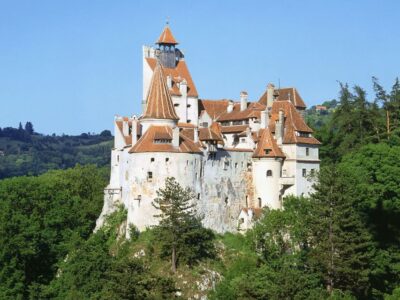
Dracula’s Castle, Peles Castle, & Brasov Old Town
Read our review →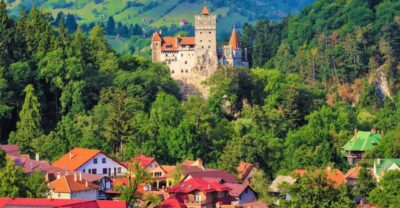
Dracula Castle, Peles Castle & Brasov Old Town
Read our review →
Dracula’s Castle, Peleș Castle & Brașov Day Trip
Read our review →
Day Trip to Dracula Castle, Peles Castle & Brașov
Read our review →
Bucharest to Dracula Castle, Peles Castle and Brasov Guided Tour
Read our review →
Dracula’s Castle, Peles Castle and Brasov Day Trip from Bucharest
Read our review →
Transylvania and Dracula Castle Full Day Tour from Bucharest
Read our review →
Browse the lists this tour appears in