Reviewed · BUCHAREST TOURS
Eastern Orthodox Church Art in Bucharest
Churches here hide in plain sight. This 2.5-hour walking tour links Bucharest’s painted Orthodox churches with the story of Wallachia, Byzantine art, and daily worship. I like the small group of no more than 10 people, which should make it easier to ask questions and see details without being pushed along. I also like the unusual route, which includes churches many people could pass without noticing. The main consideration is that these are active places of worship, not quiet museum rooms, so you need modest clothing, respectful behavior, and some flexibility around services or ceremonies.
The tour costs $57 per person, a fair price if you want interpretation rather than a quick look inside six churches. Guide Helen has earned especially warm praise for her clear explanations, friendly manner, and ability to adjust the walk to individual needs. One less positive experience involved a guide who was condescending after learning a participant was Catholic, so I would ask for a respectful, open discussion if your religious background matters to you.
In This Review
- Key points to know before you book
- Why Bucharest’s churches reward a closer look
- Starting near Saint Anton and the Old Princely Court
- Saint George and the art along Lipscani Street
- Saint Elijah, one of Bucharest’s Orthodox basilicas
- The Lady’s Church and Bucharest’s oldest preserved frescoes
- Stavropoleos Monastery, an ornate change of mood
- The final stop: Saint Demetrios or Saint Cyprian
- What Helen adds to the experience
- Is $57 a fair price?
- Practical advice for your visit
- Who should book Eastern Orthodox Church Art in Bucharest?
- FAQ
- How long is the Eastern Orthodox Church Art in Bucharest tour?
- How much does the tour cost?
- Which languages are available?
- How large is the group?
- Where is the meeting point?
- What should I wear?
Key points to know before you book
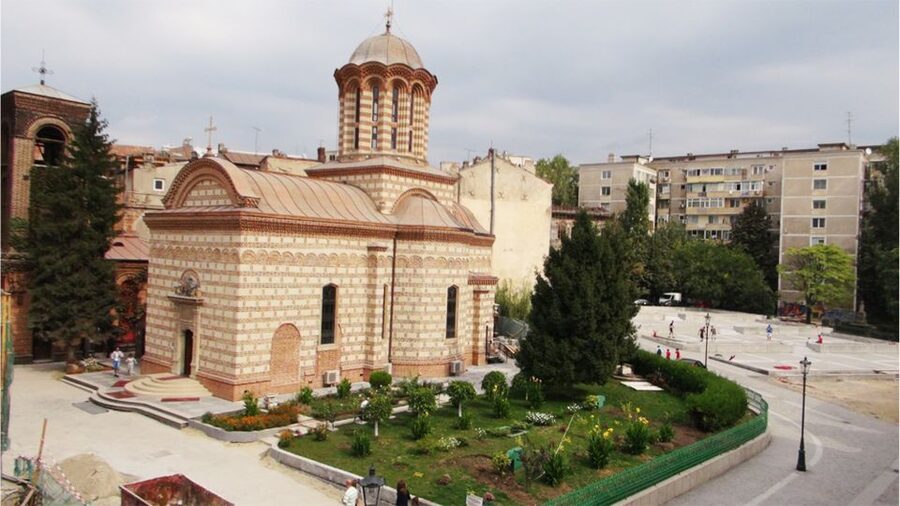
- Six central churches in 2.5 hours: The route moves from Saint Anton near the Old Princely Court to churches around Lipscani and the old center.
- Wallachian and Byzantine art: You will learn how Orthodox images, frescoes, architecture, and worship fit together.
- A small walking group: The maximum group size is 10, useful for questions and for looking closely at painted details.
- Active churches, not museums: Modest dress is required, and a service, christening, or other ceremony may affect your visit.
- A guide-led experience: Helen is praised for her command of Romanian Orthodox art and for tailoring the walk to the group.
- Confirm the final church: The route description names Saint Demetrios as the final stop, while the included list also names Saint Cyprian.
Why Bucharest’s churches reward a closer look
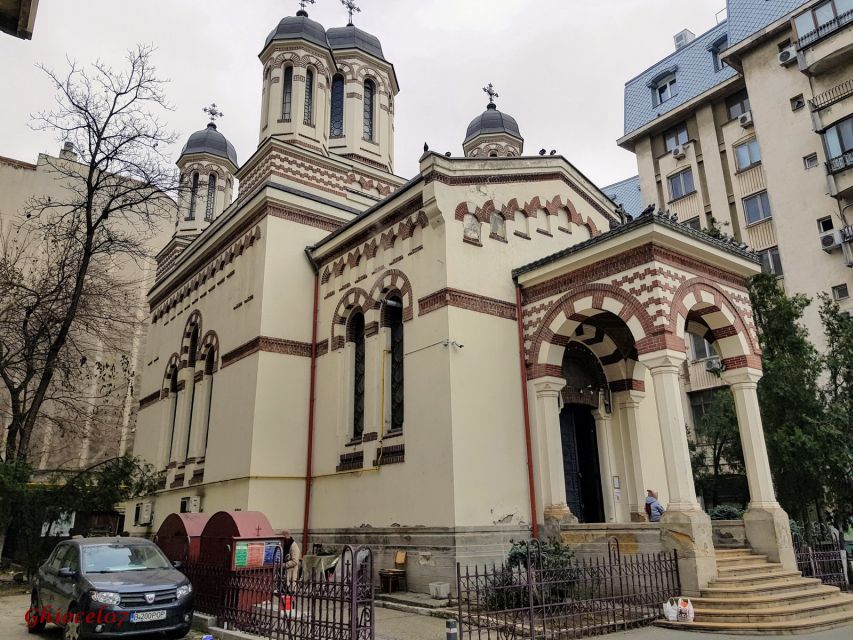
Bucharest’s historic center can feel like a collection of busy streets, cafes, old facades, and newer businesses. Yet behind some of those streets are small Orthodox churches covered with paintings, carved details, and layers of local religious history.
That is the real value of this walk. You are not simply ticking off places of worship. You are learning how to read an Orthodox interior, where images are arranged for religious meaning rather than decoration alone. A guide can point out what you might otherwise miss, explain why certain figures appear where they do, and place the buildings within Wallachia’s medieval past.
I would choose this tour if you have already seen Bucharest’s main squares and want something more focused. It also suits you if church art interests you but you do not know the difference between Byzantine and later Romanian styles. The pace is short enough to fit into a morning or afternoon, though six churches in 2.5 hours means the stops will not all be long.
A few more trips worth weighing up before you book
- Bucharest: Dracula’s Castle, Peles Castle, & Brasov Old Town
★ 4.5 · 17,858 reviews - Bucharest: Dracula Castle, Peles Castle & Brasov Old Town
★ 4.6 · 10,891 reviews - Bucharest: Dracula’s Castle, Peleș Castle & Brașov Day Trip
★ 4.5 · 5,919 reviews
Starting near Saint Anton and the Old Princely Court
The meeting point is in front of the Anton icon shop, near the Old Princely Court. This is a practical starting place because the tour begins with Saint Anton Church, placing you in one of Bucharest’s oldest central quarters from the first few minutes.
Saint Anton is part of the introduction to the Wallachian Middle Ages. I would pay attention here to the way the guide connects the church with the old princely center, rather than treating it as an isolated building. The surrounding area helps explain why religious foundations mattered so much to the rulers and residents of the old city.
The icon shop at the meeting point also gives the tour a useful visual beginning. You may see icons before you enter the churches, then hear how Orthodox images function in worship and private devotion. One person on a private tour appreciated being taken to an icon shop after the walk, but that extra stop should not be treated as a guaranteed part of every booking.
Saint Anton is an active church. You should not expect ropes, display labels, or a museum-style presentation. Dress with covered shoulders and knees, and avoid tight or ripped clothing. Strong fragrances are also not allowed, a small detail that matters in close indoor spaces.
Saint George and the art along Lipscani Street
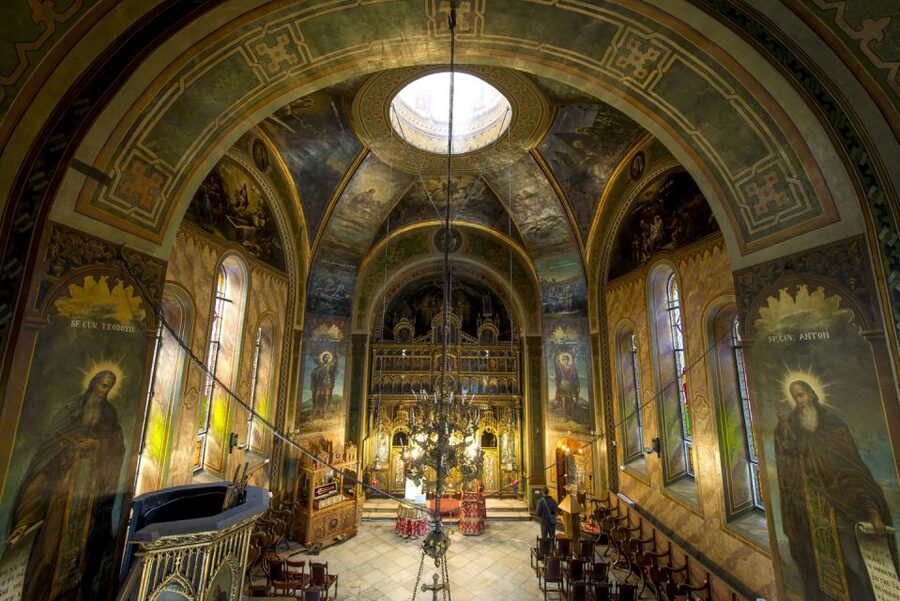
From Saint Anton, the route continues along Lipscani Street to Saint George Km0 Church. The central location makes this stop easy to connect with Bucharest’s modern city life, but the focus remains firmly on Orthodox painting and church history.
The key feature here is a fresco by one of Romania’s greatest church painters. That gives the stop a clear purpose: you are not just admiring a pretty interior, but looking closely at the work of a major Romanian religious artist. Your guide can help you notice the painting’s style and explain how it fits into the broader Orthodox tradition.
I like this part of the itinerary because it places art in its working setting. In a gallery, a fresco is separated from worship. Here, the image remains part of an active church. That can make the experience more meaningful, but it also means you may need to pause or keep quiet if prayers or church business are taking place.
The Lipscani section should also help you understand Bucharest’s compact historic center. You will be walking between stops rather than riding in a vehicle, so comfortable shoes are essential. The distance is not the main challenge. The harder part may be standing several times while listening to explanations, particularly if you use a cane or have limited mobility.
Saint Elijah, one of Bucharest’s Orthodox basilicas
Saint Elijah is one of the tour’s less obvious stops. It is described as an Orthodox basilica and one of only two in Bucharest, which gives the church importance beyond its painted surfaces.
This is where a guide’s background matters. Without explanation, a basilica can seem like another church on the route. With context, you can understand why its form and status are worth noting. I would ask Helen to explain what makes this building a basilica and how its design differs from the smaller churches nearby.
The route description also suggests that Saint Elijah can be hard to find, even for locals. That is a useful reason to visit with a guide. You save time searching and gain a place that might not appear on a standard first-time Bucharest walk.
Do not expect every stop to have the same visual impact. Some churches may appeal more through their architecture, age, or religious role than through one famous painting. That variety is a strength if you enjoy comparison. If you want a single grand monument with a long, uninterrupted viewing period, this tour may feel too scattered.
A completely different kind of day out around Bucharest:
- Bucharest: Palace of Parliament Tickets and Guide
★ 4.3 · 3,182 reviews - Bucharest: Day Trip to Dracula Castle, Peles Castle & Brașov
★ 4.4 · 3,049 reviews - Bucharest to Dracula Castle, Peles Castle and Brasov Guided Tour
★ 4.5 · 2,933 reviews - Bucharest: Palace of Parliament Tickets and Guided Tour
★ 4.4 · 1,877 reviews
The Lady’s Church and Bucharest’s oldest preserved frescoes
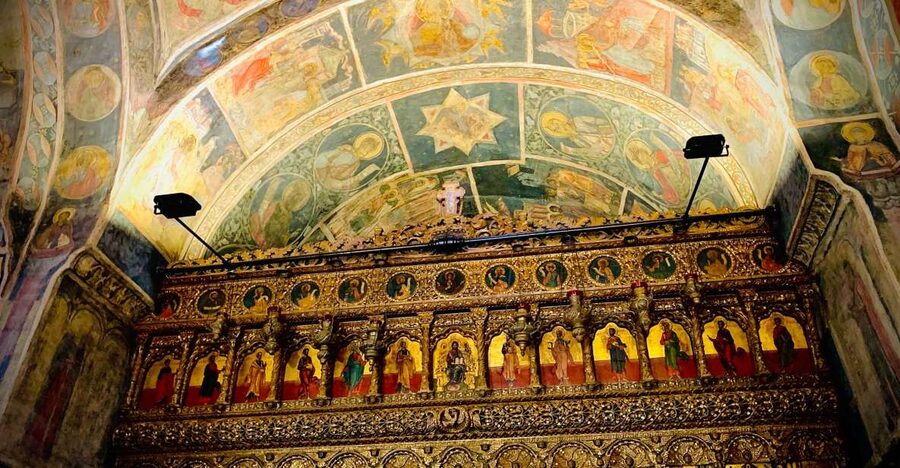
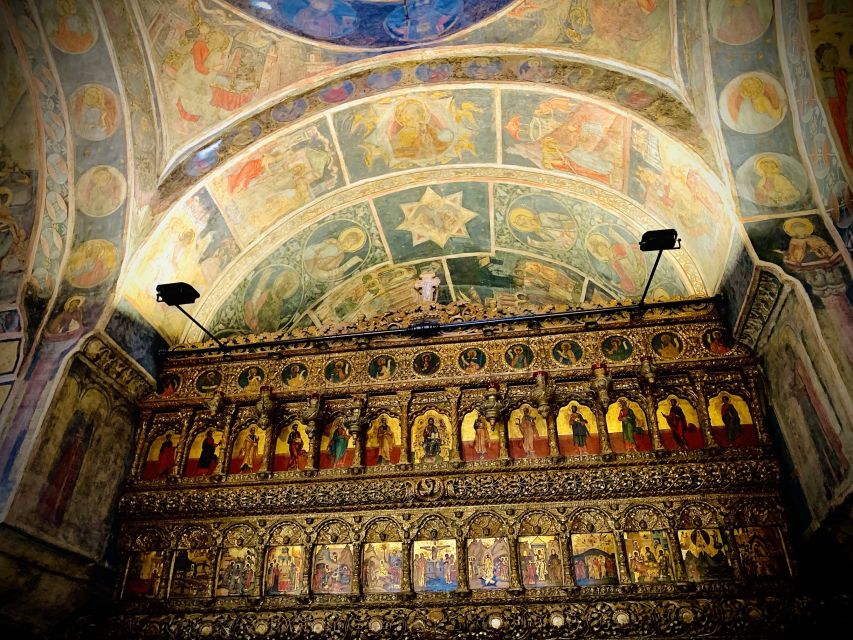
The Lady’s Church is another hard-to-find stop, and its main appeal is its preserved original frescoes. They are described as some of the oldest in Bucharest, making this one of the most historically important points on the walk.
Old paintings are not always easy to read at first glance. Colors can be muted, sections may be worn, and the interior may not offer much written information. This is a place where I would rely on the guide to explain what remains, what has changed, and why preservation matters.
The church also gives you a more intimate experience than a large, heavily visited monument might provide. You can focus on the relationship between the building, the painted program, and the people who still use it. At the same time, the age of the frescoes means you should be prepared for a quieter, less polished setting.
This stop may be especially rewarding if you enjoy traces of original material. You will not necessarily see bright, freshly restored walls. Instead, you might find older surfaces that show the passage of time. That is part of the appeal, but it requires patience and careful looking.
Stavropoleos Monastery, an ornate change of mood
Stavropoleos Monastery brings a different visual note to the walk. It is described as eclectic, so you can expect a shift away from the older and more restrained examples on the route.
The monastery is one of the better-known religious buildings in central Bucharest, and its presence makes sense late in the itinerary. By this point, you will have learned enough about Orthodox art to compare its decorative character with Saint Anton, Saint George, Saint Elijah, and the Lady’s Church.
I would not rush this stop. Look at how the ornament, structure, and painted elements work together. Ask the guide to explain what is specifically Orthodox, what reflects later Romanian taste, and what makes the monastery eclectic.
Because Stavropoleos is an active religious site, the same rules apply here as everywhere else. You may be asked to keep your voice low or wait during worship. The possibility of interruption is not a flaw in the experience. It is a reminder that these buildings have a present life, not only a past.
The final stop: Saint Demetrios or Saint Cyprian
The supplied details need clarification at the end of the route. The main description names Saint Demetrios as the last stop and calls it a 19th-century neo-baroque church. The included attractions list Saint Cyprian instead.
Those are not interchangeable names, so I would confirm the final stop before booking or at the meeting point. If the route ends at Saint Demetrios, you will finish with a 19th-century building whose neo-baroque style offers another contrast with the medieval and Byzantine material earlier in the walk. If Saint Cyprian is included instead, the exact emphasis may differ.
This uncertainty does not erase the value of the tour, but it affects expectations. A careful itinerary matters when you are choosing a short experience built around a fixed number of churches. I would also confirm whether both churches are visited or whether one name is an outdated entry in the description.
What Helen adds to the experience
The guide is central to this tour. Helen is praised for explaining Romanian Orthodox art, Byzantine art, and the Orthodox Church in a way that feels personal and clear. A Spanish-language comment uses the name Elena, which may be a spelling variation, but the English-language praise identifies Helen.
Her strongest advantage seems to be flexibility. She adjusted the walk for a participant using crutches and another using a walking stick. She also helped one person get back to a hotel after the tour. That does not mean every booking includes hotel assistance, but it suggests you should communicate mobility needs before the walk.
A private booking can also change the feel of the experience. One person ended up alone on the tour, allowing extra time for questions and a visit to an icon shop. The normal group limit is 10, so you should not book expecting a private tour. Still, the cap is small enough to keep the guide within reach.
There is one important caution. A Catholic participant described the guide as condescending after their faith became known. That is a serious concern, especially on a religious tour. Most of the available feedback praises the guide’s warmth and command of the subject, but you should expect respectful treatment regardless of your own beliefs. The best version of this tour explains Orthodox practice without pressuring you to share it.
Is $57 a fair price?
At $57, this is not the cheapest way to walk around Bucharest’s old center. You could see church exteriors on your own for little or no cost. The question is what you want from the visit.
I think the price is reasonable if you value interpretation, access to less obvious churches, and a small group. Six stops in 2.5 hours gives you a focused introduction without taking an entire day. The live guide is available in English, Spanish, or Romanian, which adds practical value if you want more than a self-guided look.
Food and drinks are not included. The group can stop at one of the cafes, bars, or restaurants nearby, but that is an optional pause rather than part of the paid experience. You should eat beforehand or plan your own refreshment budget.
The tour also offers free cancellation up to 24 hours before departure and a reserve-now, pay-later option. Those policies make it easier to fit the walk around a changeable city schedule, but the real value still depends on your interest in religious art. If you are not interested in churches, $57 may feel high for a short walking route.
Practical advice for your visit
Wear comfortable shoes and clothing that covers your shoulders and knees. Avoid short skirts, sleeveless shirts, tight clothing, ripped clothing, and strong fragrances. Pets are not allowed.
Keep your behavior quiet and respectful. Do not treat an icon or fresco as a simple photo backdrop, and be ready for the guide to pause if a service or ceremony is happening. One group encountered a christening and was invited to share sweets and drinks with the family. That was a warm local moment, but it was also spontaneous, not a promised feature.
The walking format may work for people with limited mobility, especially because the guide has adjusted the route for crutches and a walking stick. Still, you should discuss your needs in advance. The tour includes several churches and repeated stops, and the exact ease of access is not specified.
Who should book Eastern Orthodox Church Art in Bucharest?
I would book this if you want to understand Bucharest through its religious art rather than only its grand streets and secular landmarks. It is a good match for anyone curious about Byzantine images, Romanian church painting, Wallachian history, or the way old churches continue to serve local communities.
It is also a smart choice for a return visit to Bucharest. The less obvious churches give you a reason to explore beyond the most familiar central sights. The small group and multilingual guide make the experience feel more personal than a large general city tour.
I would hesitate if you dislike religious settings, standing indoors, or following modest-dress rules. I would also confirm the Saint Demetrios and Saint Cyprian discrepancy before paying. If the route and guide availability are clear, the tour offers a thoughtful, compact look at a side of Bucharest that is easy to miss.
FAQ
How long is the Eastern Orthodox Church Art in Bucharest tour?
The tour lasts 2.5 hours.
How much does the tour cost?
The listed price is $57 per person.
Which languages are available?
The live tour guide is available in English, Spanish, and Romanian.
How large is the group?
The tour is limited to 10 participants.
Where is the meeting point?
Meet in front of the Anton icon shop, near Saint Anton Church and the Old Princely Court.
What should I wear?
Wear modest clothing suitable for active churches. Short skirts, sleeveless shirts, tight clothing, ripped clothing, and strong fragrances are not allowed. Comfortable shoes are recommended.
Just added around Bucharest
- 4-Day Inside Transylvania & Transfagarasan Tour from Bucharest★ 5.0 · 3 reviews
- 10 hours Private Apiary Tour in Romania – From Bucharest★ 5.0 · 3 reviews
- Bucharest: Charm of the Belle Époque Private Tour★ 5.0 · 3 reviews
- Bran & Peles Castles through the Best Road in the World: Transfagarasan road★ 4.5 · 3 reviews
- 2-Day Small-Group Tour in Transylvania from Bucharest – Maximum 5 Persons★ 5.0 · 3 reviews
- Private Wine Tasting at Bucharest’s First Wine Bar★ 5.0 · 3 reviews
- Bucharest to Brasov – Fast Private Transfer★ 5.0 · 3 reviews
- Probably the Best Restaurant and Wine Cellar near Bucharest★ 4.5 · 3 reviews
Bucharest Tours, compared.
Dracula’s Castle, Peles Castle, & Brasov Old Town
Read our review →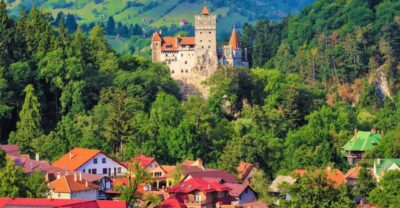
Dracula Castle, Peles Castle & Brasov Old Town
Read our review →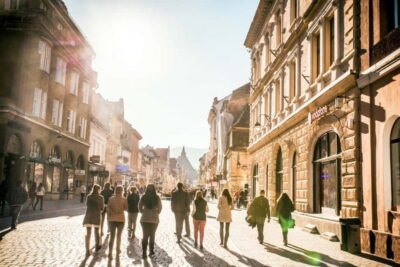
Dracula’s Castle, Peleș Castle & Brașov Day Trip
Read our review →
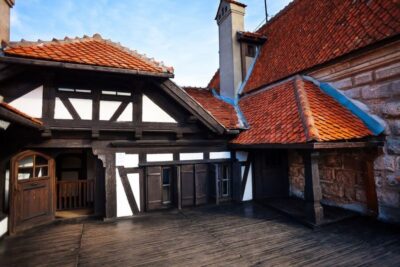
Day Trip to Dracula Castle, Peles Castle & Brașov
Read our review →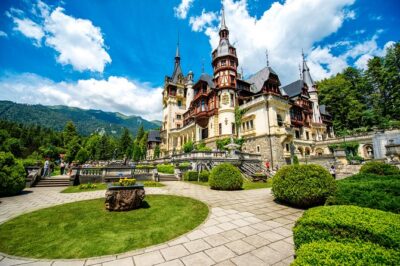
Bucharest to Dracula Castle, Peles Castle and Brasov Guided Tour
Read our review →