Reviewed · TOURS
Darkside Tour of Bucharest – small group
Bucharest keeps its darkest stories in plain sight. I like the Bellu Cemetery visit, where crypts, statues, love stories, and unsolved mysteries replace the usual city sightseeing routine. I also like the small group, capped at 12 people, which gives guides such as Vlad, Elena, Alex, Andra, and Bogdan room to answer questions and tell stories with personality.
The main consideration is the subject matter. This is not a light city stroll, since it deals with death, prostitution, dictatorship, prison life, shootings, and political violence. You will also walk for much of the three-hour tour, so comfortable shoes, moderate fitness, and sensible clothing for the weather matter.
In This Review
- Key things to know before booking
- Why this dark history tour is different
- Bellu Cemetery: an hour among Bucharest’s dead
- University’s Square and the voices of protest
- Calea Victoriei before Communist rule
- Revolution Square and December 1989
- The guides make or break the experience
- Walking, weather, and group size
- Who should book this Bucharest tour?
- Is the Darkside Tour of Bucharest worth $48.39?
- FAQ
- How long is the Darkside Tour of Bucharest?
- What time does the tour start?
- Where does the tour begin?
- Where does the tour finish?
- Is subway transportation included?
- Is a snack included?
- Are food and drinks included?
- How large is the group?
- Is the tour suitable for children?
- What happens if bad weather cancels the tour?
Key things to know before booking
- Bellu Cemetery takes about an hour: This is the tour’s most unusual stop, with ornate tombs, memorable characters, old scandals, and local mysteries.
- The route links four very different chapters: You move from cemetery stories to protest movements, pre-Communist scandal, and the fall of Nicolae Ceausescu.
- A subway ride is included: The tour begins near the National Theatre and uses Bucharest’s metro to reach Bellu Cemetery.
- The group is limited to 12 people: That suits anyone who prefers conversation over a large guide-led crowd.
- Storytelling is the main attraction: The strongest guides add humor, family memories, folklore, and clear explanations to difficult subjects.
- You finish at Revolution Square: The final stop gives the tour its political weight, focusing on December 1989 and the end of Communist rule.
Why this dark history tour is different
Many first visits to Bucharest focus on grand avenues, churches, cafés, and Communist-era architecture. This tour takes another route. It asks you to look at the people behind the monuments and the events behind the official story.
The tone is serious, but it is not grim from start to finish. The guides use humor carefully, answer questions openly, and connect major events with small human details. That balance matters. A lecture about political repression can feel distant, while a story about a family, a cemetery monument, or a local custom can make the past easier to understand.
The experience is offered in English and lasts about three hours. At $48.39 per person, I consider it good value if you want context rather than a quick checklist of sights. The price includes the guide, subway transportation, and a street snack. It does not include extra food or drinks, so do not expect a full meal.
The tour is booked, on average, 32 days ahead. That is a useful sign that you should reserve early during busy travel periods, especially if you want a small group and a particular afternoon.
A few more trips worth weighing up before you book
- Bucharest: Dracula’s Castle, Peles Castle, & Brasov Old Town
★ 4.5 · 17,858 reviews - Bucharest: Dracula Castle, Peles Castle & Brasov Old Town
★ 4.6 · 10,891 reviews - Bucharest: Dracula’s Castle, Peleș Castle & Brașov Day Trip
★ 4.5 · 5,919 reviews
Bellu Cemetery: an hour among Bucharest’s dead
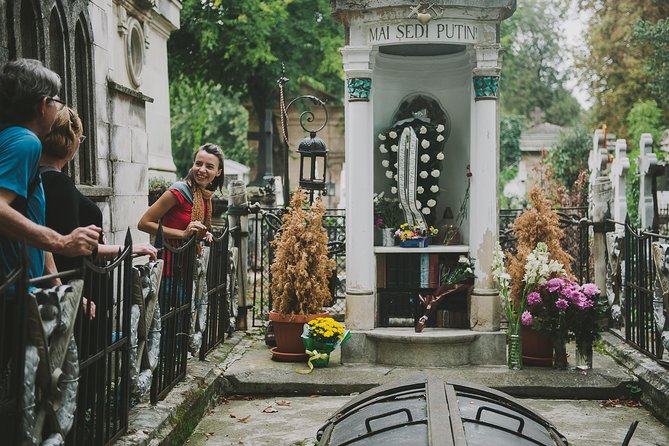
The tour begins at the National Theatre, on Bulevardul Nicolae Bălcescu, at 3 p.m. From there, the group takes the subway toward Bellu Cemetery, also called Cimitirul Șerban Vodă-Bellu.
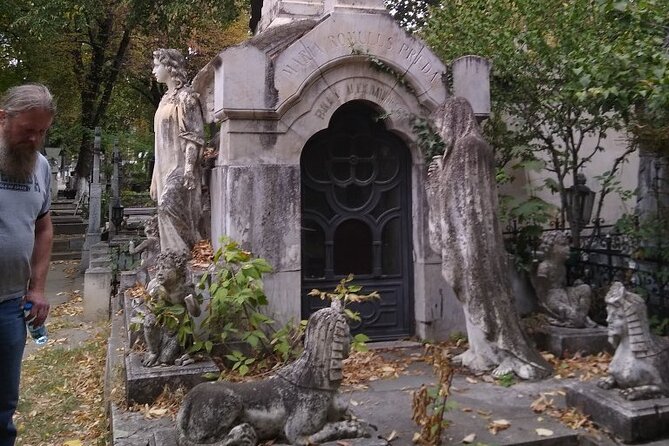
The metro ride is more than a practical transfer. It gives you a quick look at how the modern city moves before the tour shifts into a quieter setting. Once inside the cemetery, the pace slows. You have time to look at tombstones, crypts, sculptures, and unusual architectural details while the guide explains the people and stories connected to them.
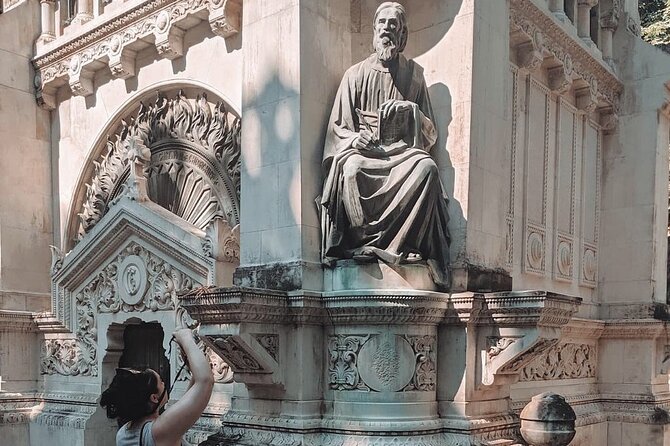
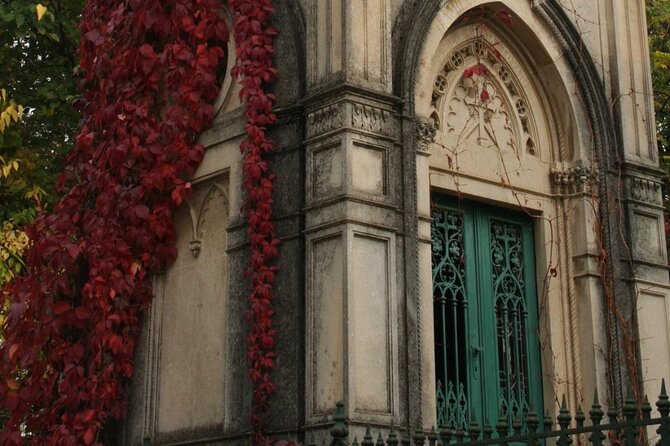
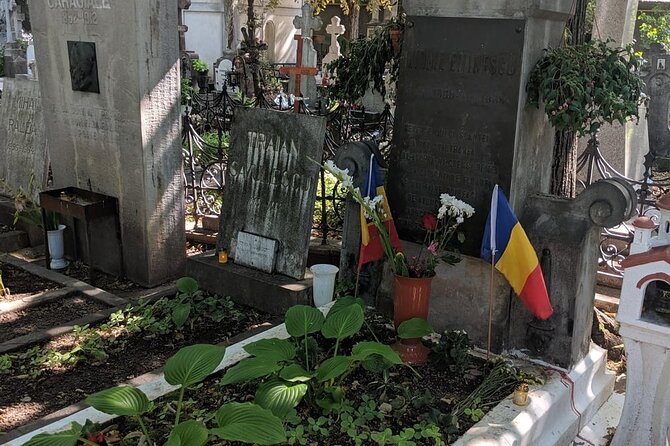
Bellu is described as Bucharest’s first modern graveyard, and its appeal is not limited to famous names or formal monuments. The cemetery contains love stories, personal tragedies, dramatic deaths, and mysteries that have not been fully resolved. That mix gives the stop a human scale. You are not simply looking at old graves. You are learning how Bucharest remembers its artists, politicians, public figures, and ordinary families.
I would give this part your full attention. Several people who took the tour especially valued the cemetery and felt it could easily fill an entire day on its own. You might find the monuments more compelling than expected, especially if you enjoy sculpture, local folklore, or social history.
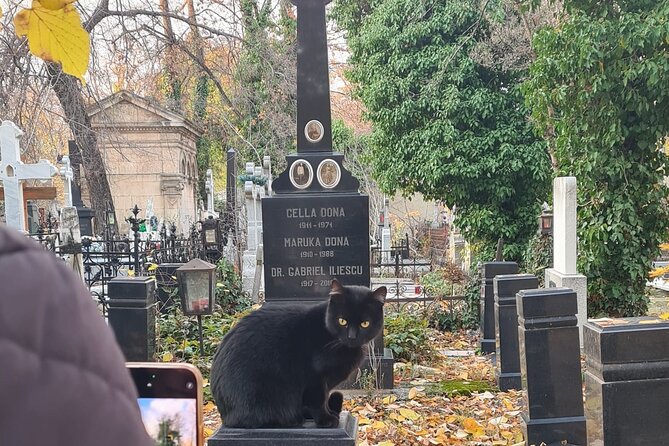
The guide’s personality makes a real difference here. Vlad has been praised for strong storytelling and clear English. Elena is known for bringing individual monuments to life with warmth, humor, and personal insight. One memorable story concerns a woman remembered in connection with her cats, an example of the strange and deeply human details that give this cemetery its character.
There can also be small, unscripted moments. One guide stopped to feed cats in the cemetery, which suited the tone of a place where tenderness and oddity sit side by side. Do not book this expecting a polished museum presentation. The pleasure comes from walking, listening, asking questions, and noticing details you would probably pass without a guide.
University’s Square and the voices of protest
After Bellu Cemetery, the route returns to central Bucharest and continues at University’s Square. This stop lasts about 20 minutes, but its importance reaches well beyond the time spent there.
The square is presented as a starting point for several major protest movements in recent Romanian history. The discussion includes those who fought during the 1989 Revolution, people who wanted a more Western future, resistance to the miners’ actions in the 1990s, and the more recent struggle against corruption.
This section helps you see political change as a continuing process rather than a single event. The fall of Communism did not instantly settle Romania’s direction. The square became a place where arguments about democracy, public power, corruption, and national identity continued to play out.
The stop is short, so expect a focused explanation rather than a long historical lecture. It works best if you ask questions. Guides such as Alex and Andra have been praised for making difficult political topics understandable while keeping the conversation open and approachable.
Calea Victoriei before Communist rule
The walk then turns to Calea Victoriei, one of Bucharest’s best-known central streets. Here, the story shifts back to the early 20th century, before the Communist regime took power.
This is the tour’s most scandalous chapter. Bucharest in the 1920s had a large sex trade, and the guide discusses the estimated 12,000 prostitutes and escorts working in Romania in 1927. One figure tied to this period is Zaraza, a beautiful Roma dancer whose story became part of the city’s popular memory.
The point is not simply to shock you with a statistic. The story shows a Bucharest shaped by nightlife, class divisions, entertainment, romance, and public scandal. It also complicates the idea that the city’s difficult past began with Communism. Earlier Bucharest had its own sharp contrasts and troubled corners.
Calea Victoriei is also a good place to connect history with the street under your feet. You are not confined to a museum room or a set of photographs. You walk through the same central city while hearing about an older social world, one filled with performers, clients, gossip, and ambition.
The subject matter is adult in tone, so I would not choose this experience for children. The stated guidance says it is not recommended for anyone aged 15 or under. That advice makes sense given the treatment of prostitution, death, repression, and political violence.
A completely different kind of day out around Bucharest:
- Bucharest: Palace of Parliament Tickets and Guide
★ 4.3 · 3,182 reviews - Bucharest: Day Trip to Dracula Castle, Peles Castle & Brașov
★ 4.4 · 3,049 reviews - Bucharest to Dracula Castle, Peles Castle and Brasov Guided Tour
★ 4.5 · 2,933 reviews - Bucharest: Palace of Parliament Tickets and Guided Tour
★ 4.4 · 1,877 reviews
Revolution Square and December 1989
The final stop is Revolution Square, in front of the Ministry of Internal Affairs. This is where the tour reaches its most painful and emotionally charged material.
You hear about Romania’s prison system under Communism, the harsh rule of Nicolae Ceausescu, and the shortages and hardships of daily life in the 1980s. The guide then brings the story to December 22, 1989, when shootings took place and civilians faced the Securitate, the secret police.
Revolution Square is important because it marks the symbolic end of Communist rule in Romania. Yet the story is not presented as a clean, simple victory. Innocent people died, and the road out of dictatorship was chaotic and dangerous.
This ending gives the earlier stops more meaning. Bellu Cemetery showed how Bucharest remembers individual lives. University’s Square showed how people challenged political power. Calea Victoriei revealed an older city shaped by scandal and inequality. Revolution Square brings those themes together through the experience of ordinary people confronting a regime.
Allow yourself a little time after the tour to think about this stop. The walk ends here, rather than returning you to the starting point, so you can continue exploring central Bucharest on your own. The location is also useful for reaching nearby streets and sights, though the tour itself does not include hotel drop-off.
The guides make or break the experience
The guide is the central reason to choose this tour. The route is interesting, but the stories determine how much you take from it.
Several guides are associated with especially strong feedback. Vlad is praised for his ease in English, enthusiasm, careful answers, and practical care in hot weather. Alex is valued for his clear discussion of Romania and the Revolution, along with a thoughtful sense of humor. Andra is described as passionate and good at keeping the tour moving.
Elena receives particular praise for combining history, folklore, family background, and personal insight. Her approach makes the past feel close rather than abstract. Bogdan is also noted for explaining lesser-known facts and answering many questions.
Guide assignments can change, so you should not assume you will receive a particular person. Still, the range of strong guides is encouraging. The best experience here comes from an open conversation, not from memorizing dates. Bring your questions about superstitions, customs, Communism, local politics, or the city’s changing identity.
A street snack is included, and one guide handed out a pretzel during the walk. Food is a small detail, but it adds a friendly touch to a serious tour. You should still bring water, especially in warm weather. One group walked in a heat index of 38 C, and the guide made a point of supplying water and watching for overheating.
Walking, weather, and group size
The tour uses public transportation and covers several areas on foot. You need moderate physical fitness, comfortable shoes, and the ability to keep walking for roughly three hours.
There is no hotel pickup or drop-off. The meeting point is the National Theatre, at Bulevardul Nicolae Bălcescu 2, and the tour begins at 3 p.m. The end point is Revolution Square, in front of the Ministry of Internal Affairs.
The small group limit of 12 is one of the strongest practical features. You can hear the guide more easily, pause for questions, and move through the cemetery without feeling like part of a large procession. It also makes the stories more personal.
The tour requires good weather. If poor weather causes cancellation, you can choose another date or receive a full refund. For your own comfort, check the forecast and wear clothing suited to a long outdoor walk. Service animals are allowed, and the meeting area is near public transportation.
Free cancellation is available up to 24 hours before the start time. Changes or cancellations made inside that window are not accepted and are not refunded.
Who should book this Bucharest tour?
I would choose this experience if you want to understand how Romania’s past still shapes Bucharest. It suits people who enjoy cemeteries, political history, folklore, unusual biographies, and guided walks with plenty of conversation.
It is especially useful early in your stay. The stories about Communism, protest, social change, and local customs can give later visits to Bucharest more meaning. You may look at a square or street differently after learning what happened there.
I would skip it if you want a relaxed sightseeing walk with bright, easy subjects. The tour discusses death, prostitution, dictatorship, police violence, and political killings. It is also a poor fit if you dislike walking or need a hotel transfer.
Is the Darkside Tour of Bucharest worth $48.39?
For me, the price is justified by the small group, the subway ride, the included snack, and the depth of the guiding. You are paying less for entrance tickets than for interpretation. Bellu Cemetery is free to enter, as are the public squares and streets, but finding the right stories and connecting them takes local expertise.
The tour earns a 4.9 rating from 139 reviews, with 98 percent recommending it. Those figures match the main strength of the experience: warm, engaging guides who turn difficult material into something understandable without stripping away its seriousness.
Book it if you want the Bucharest most people miss, especially if Bellu Cemetery sounds appealing. Skip it if you prefer monuments without difficult stories. For the right person, this is one of the city’s most memorable three-hour walks.
FAQ
How long is the Darkside Tour of Bucharest?
The tour lasts approximately three hours.
What time does the tour start?
The tour starts at 3 p.m.
Where does the tour begin?
It begins at the Ion Luca Caragiale National Theatre, Bulevardul Nicolae Bălcescu 2, Bucharest.
Where does the tour finish?
It finishes at Revolution Square, in front of the Ministry of Internal Affairs.
Is subway transportation included?
Yes. Subway transportation is included in the tour.
Is a snack included?
Yes. A street snack is included.
Are food and drinks included?
Only the specified street snack is included. Additional food and drinks are not included.
How large is the group?
The group has a maximum of 12 people.
Is the tour suitable for children?
The experience is not recommended for children aged 15 and under.
What happens if bad weather cancels the tour?
You will be offered another date or a full refund if poor weather causes cancellation.
Just added around Bucharest
- 4-Day Inside Transylvania & Transfagarasan Tour from Bucharest★ 5.0 · 3 reviews
- 10 hours Private Apiary Tour in Romania – From Bucharest★ 5.0 · 3 reviews
- Bucharest: Charm of the Belle Époque Private Tour★ 5.0 · 3 reviews
- Bran & Peles Castles through the Best Road in the World: Transfagarasan road★ 4.5 · 3 reviews
- 2-Day Small-Group Tour in Transylvania from Bucharest – Maximum 5 Persons★ 5.0 · 3 reviews
- Private Wine Tasting at Bucharest’s First Wine Bar★ 5.0 · 3 reviews
- Bucharest to Brasov – Fast Private Transfer★ 5.0 · 3 reviews
- Probably the Best Restaurant and Wine Cellar near Bucharest★ 4.5 · 3 reviews
Tours, compared.
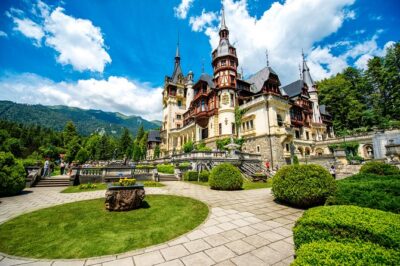
Bucharest to Dracula Castle, Peles Castle and Brasov Guided Tour
Read our review →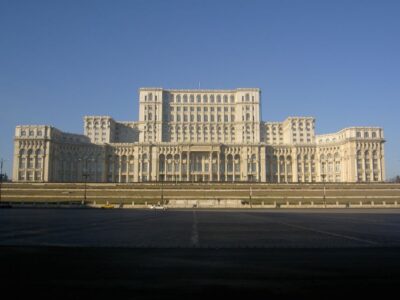
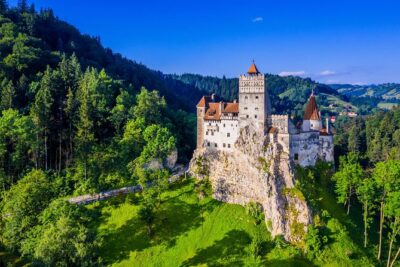
Transylvania and Dracula Castle Full Day Tour from Bucharest
Read our review →
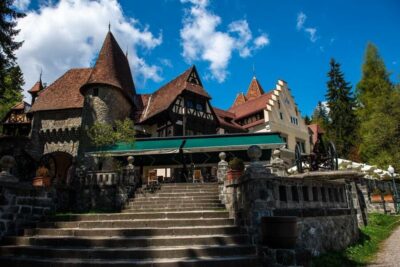
Peles Castle, Bran Castle, & Brasov Old Town Tour
Read our review →
Small-group tour Bran, Rasnov, and Peles Castles
Read our review →